
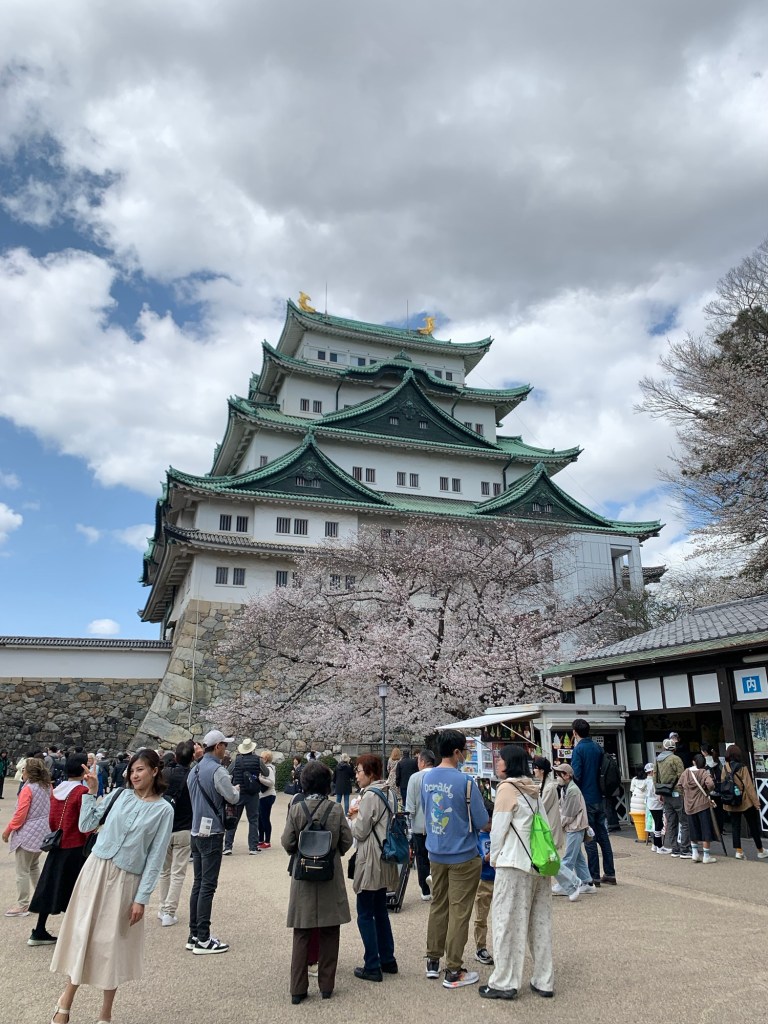
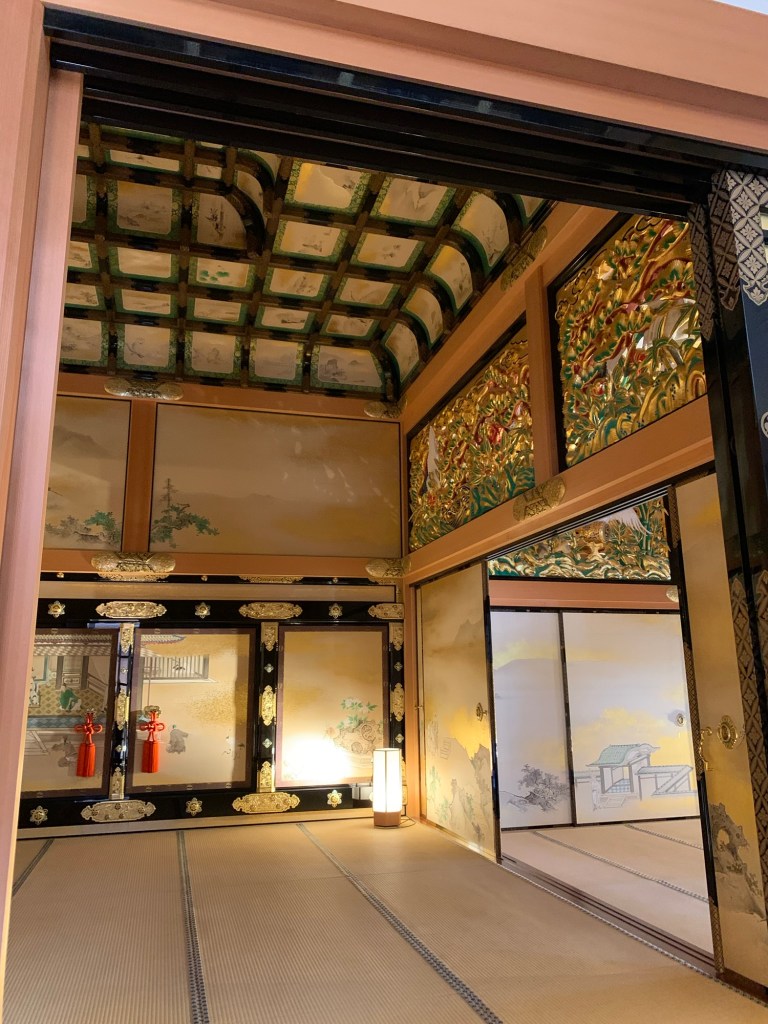
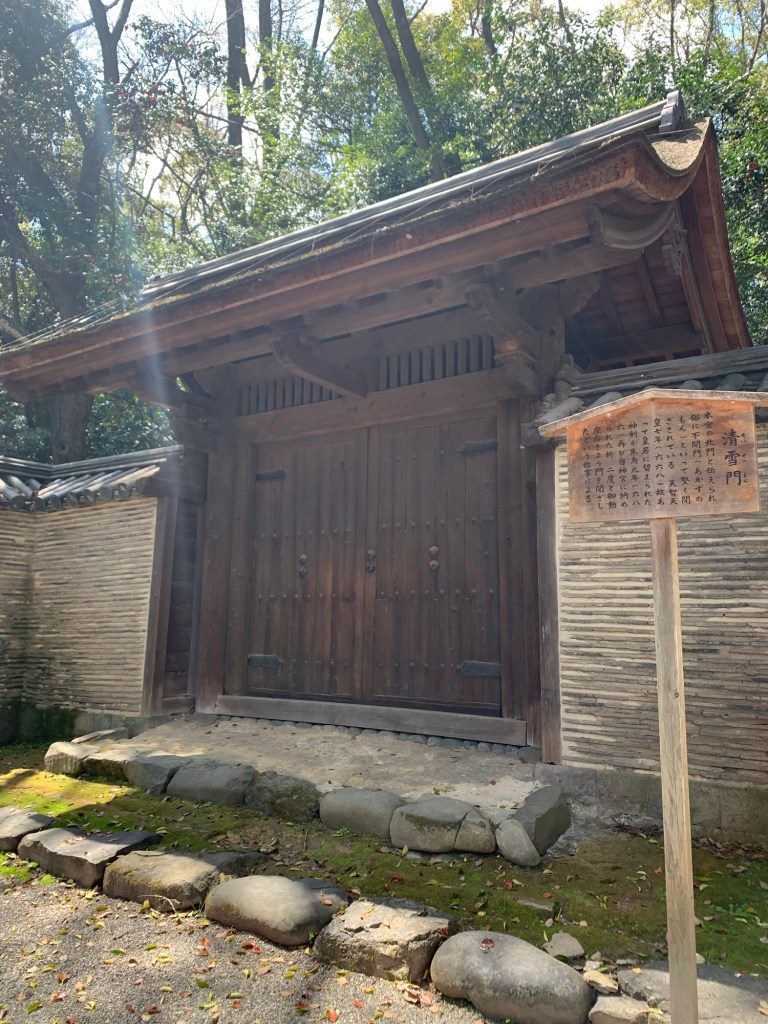
Luxury to a Shogun looks like the Nagoya castle: expansive grounds, spacious palace, ceramic tile triangular roofs, golden drain spouts, massive armored gates, coffered ceilings, gold-leaf paintings, heart pine crossbeams, elaborately carved transoms, hardwood floors. A cast of thousands of visitors played the part of the Shogun’s retainers. JG and I joined the festive throngs milling around the castle grounds and toured the beautifully restored interior of the Honmura as well. JG: “Needs Furniture.”

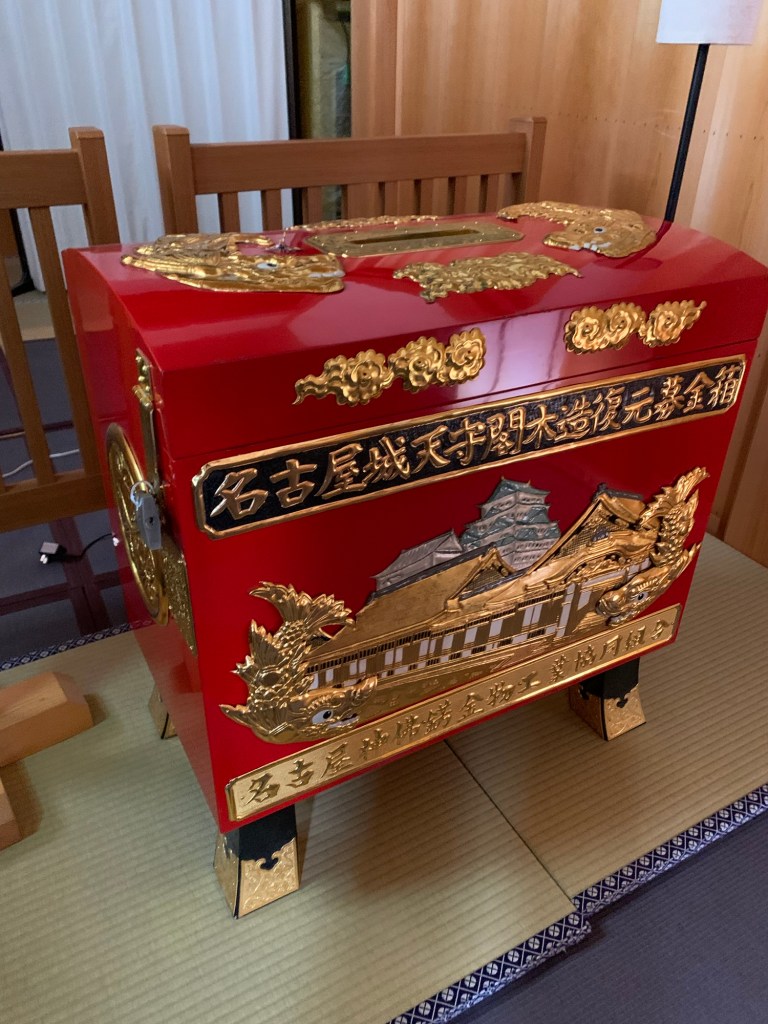

Then we visited the Atsuta Shrine, a verdant oasis mid-city. In the Atsuta Museum, JG especially admired the distinctive Samurai swords. They are forged from soft and hard steel folded together at precisely the right temperature, heated and cooled to give them their signature bend, then honed for months. If you’re arming up for a sword fight, you’d be getting the best weapon. Forging Samurai swords was a sacred craft, which might explain why the swords ended up in a Shinto shrine.
Nagoya is a company town for Toyota. I’ve collected some of the English placard model names on Made in Japan cars here: Hi Jet, Hi Lux, Hi Ace, Passo, Spike, Voxy, Minicab, Star. I learned “Camry” is based on the Japanese word “kanmuri” meaning crown.
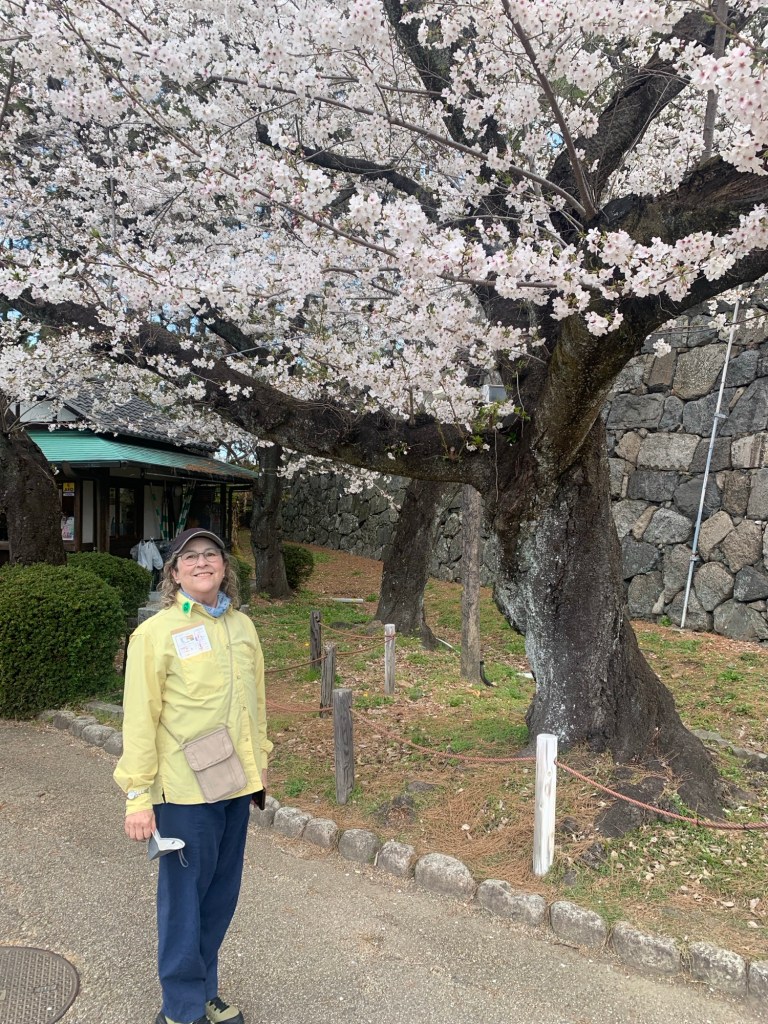
We’ve been basking in cherry blossom season. Cherry blossoms to Westerners might symbolize renewal because every year they come back. Christians see rebirth after the death of winter. To Japanese, they are another symbol of how transitory life is: nothing lasts. Cherry blossoms are here one week and gone the next.
 JohnandJanet'sJourney
Pretty!! I like the blossoms, and nice to see you included in the pictures too!
Love,
Shosh
LikeLike