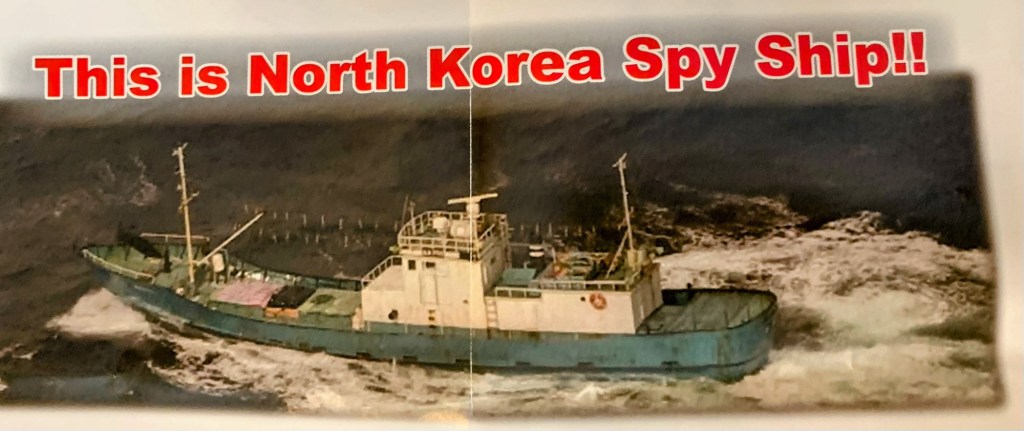
In Yokohama we docked close to a Japanese Coast Guard museum which turned out to contain only a single exhibit: the raised wreck of a North Korean spy ship.
On December 22, 2001, a Japanese Coast Guard patrol boat ordered a suspicious-looking fishing (?) boat sailing near Kyushu to stop. Instead the boat accelerated to more than 30 knots and tried to escape. (Fishing boats can’t go this fast.) It responded to a warning shot across its bow with automatic weapons fire and rocket-propelled grenades. Three Coast Guard sailors were wounded. The Coast Guard returned fire. A huge explosion, apparently deliberately triggered on the boat, caused it to sink rapidly.
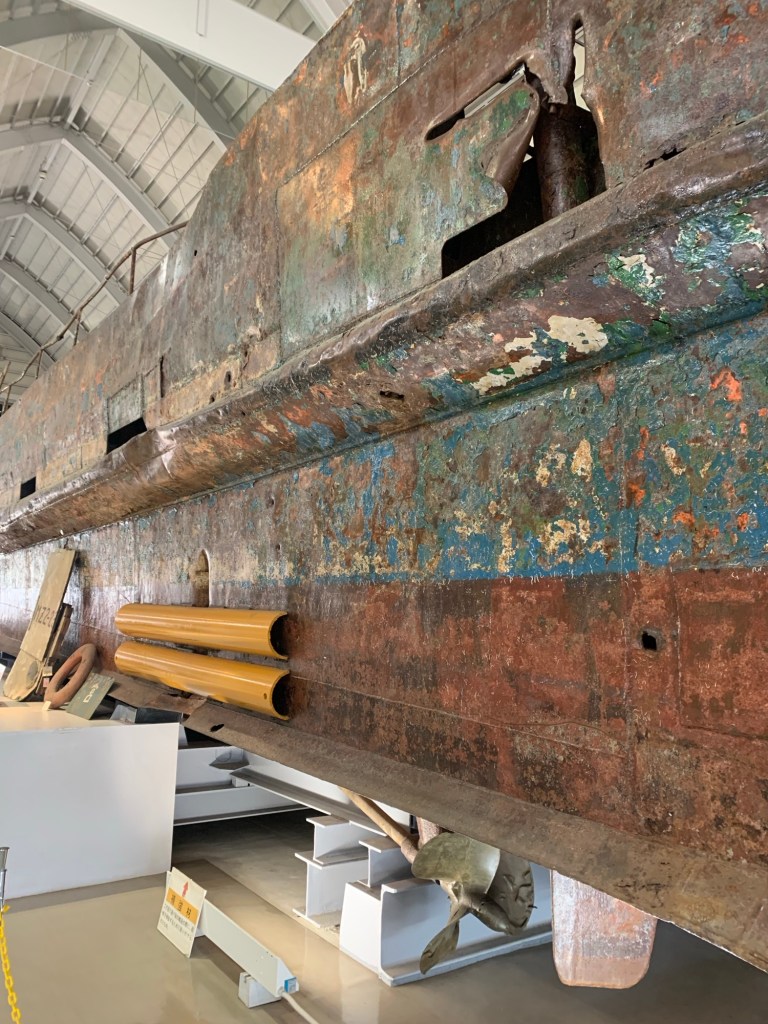
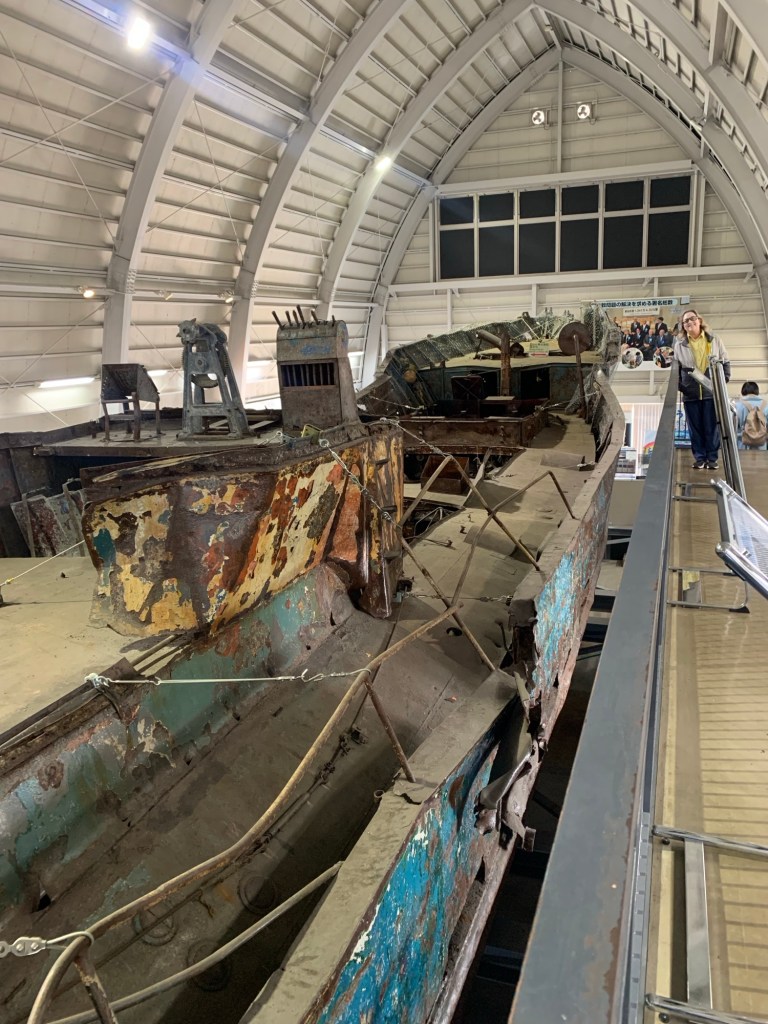
In 2002 the Japanese raised the wreck and found it to be a craftily constructed spy ship. Powered by 4 separate 1100-horsepower engines, it carried a smaller boat which could land on a beach, many automatic weapons, scuba gear, and multiple North Korean-made items, including a Kim Il Sung badge. The Japanese believe the vessel was supplying arms and drugs to Japanese criminals.
Spy Ship HullSpy Ship Lovingly Protected by Its Own Building
This irrefutable evidence of North Korean perfidy is now prominently displayed at the Yokohama harbor.
Some of the photos that don’t fit into prior posts:
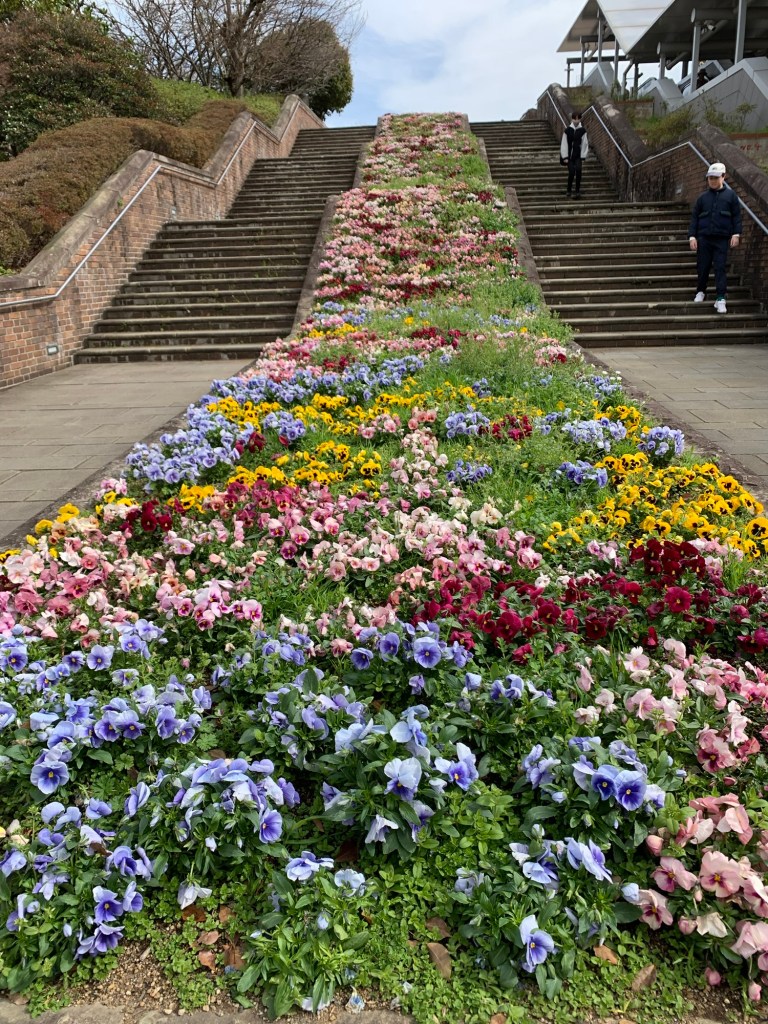
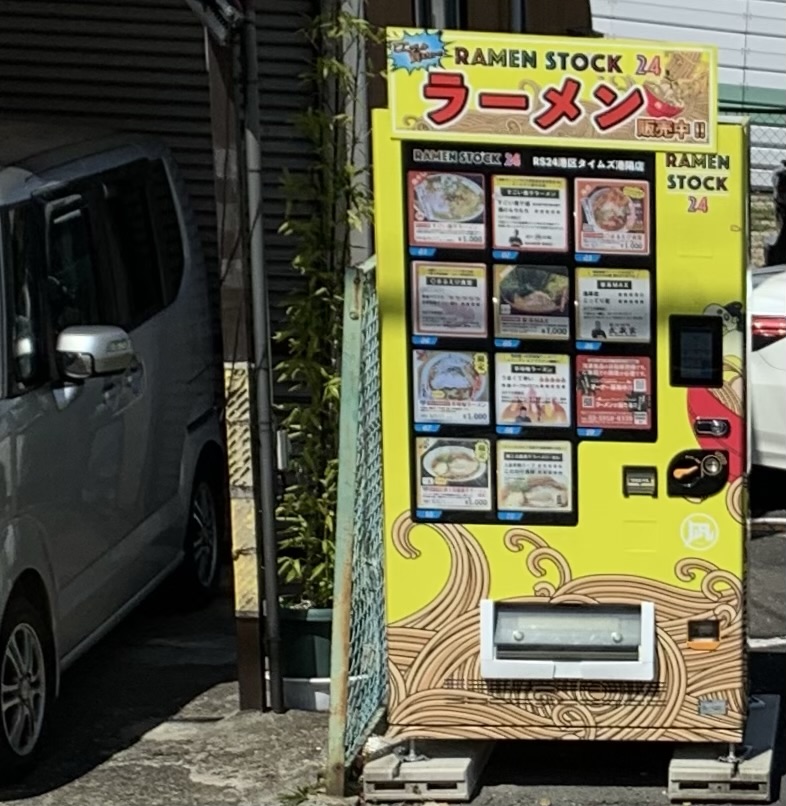
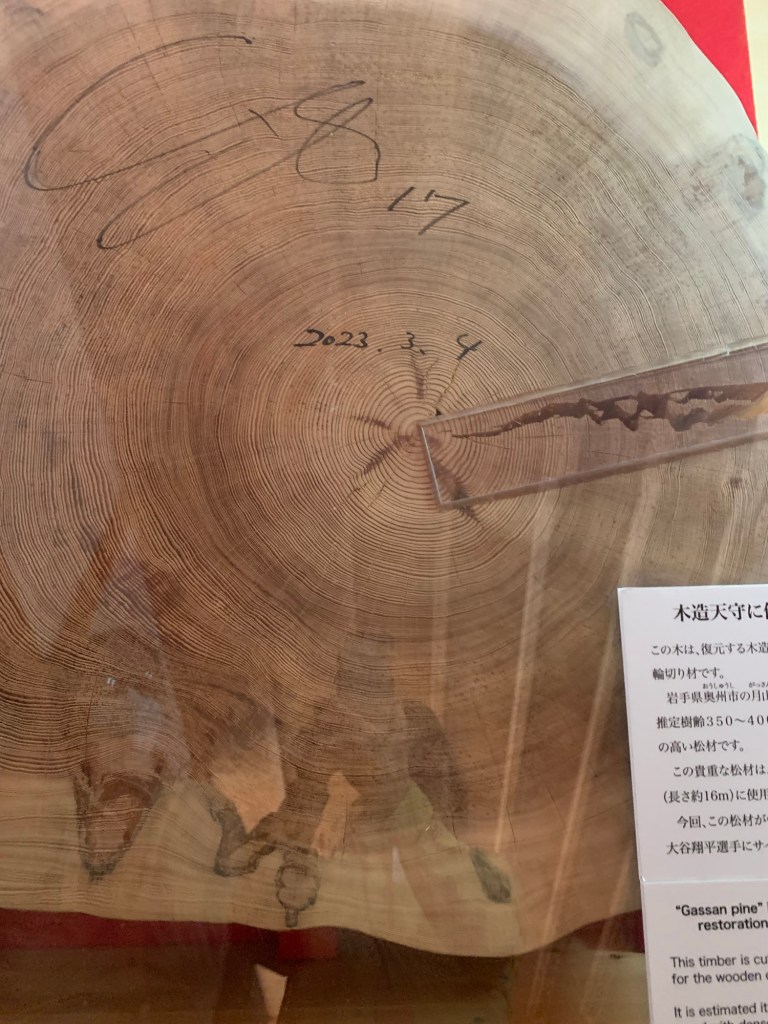
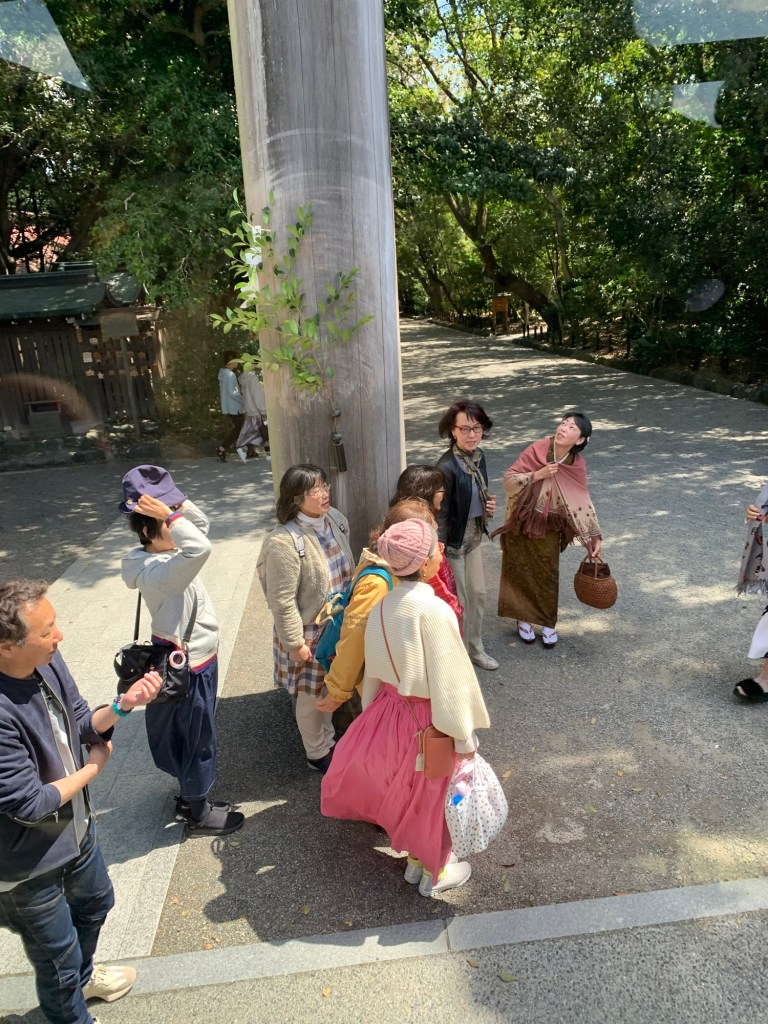
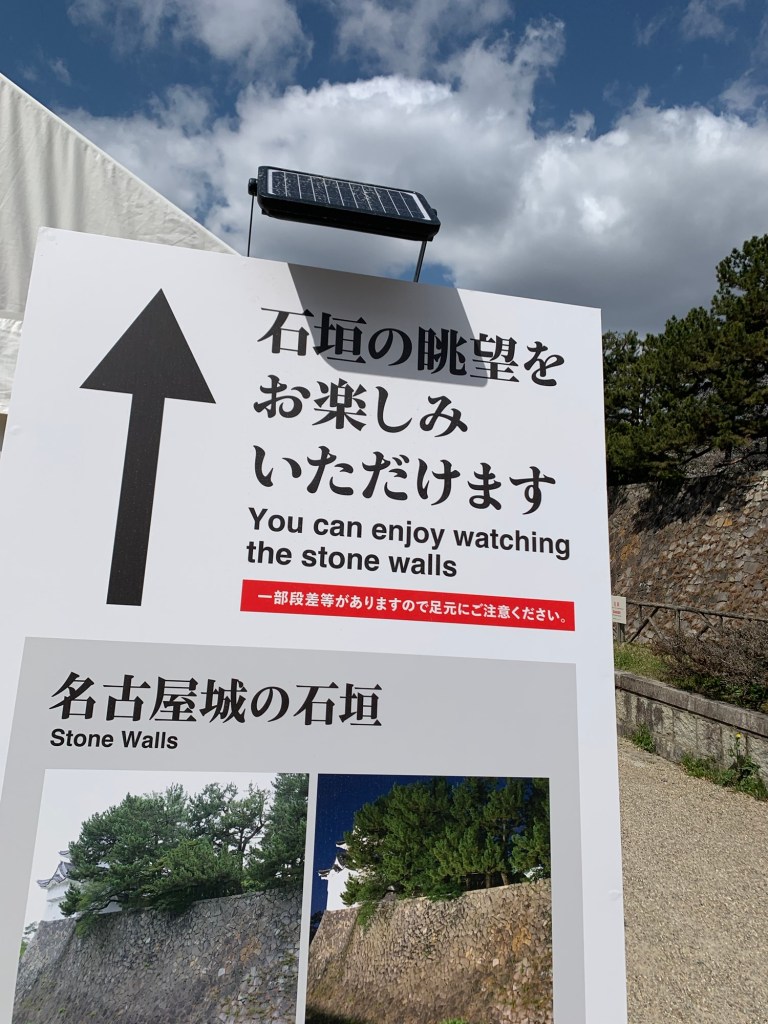
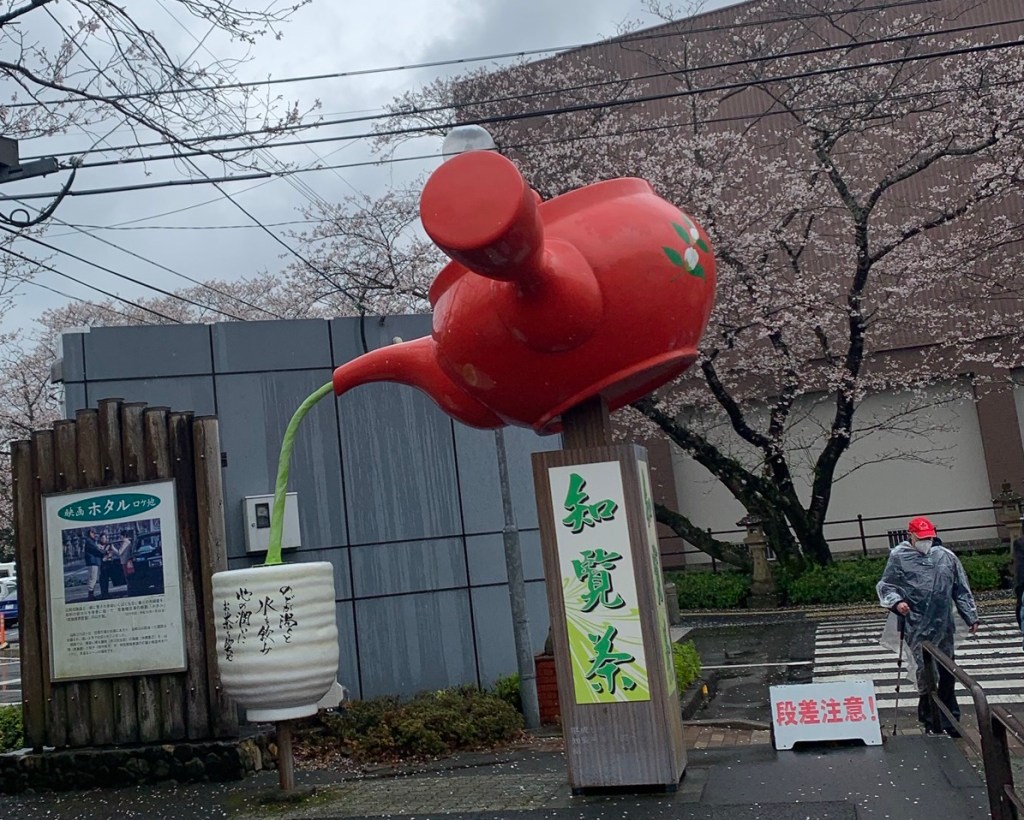
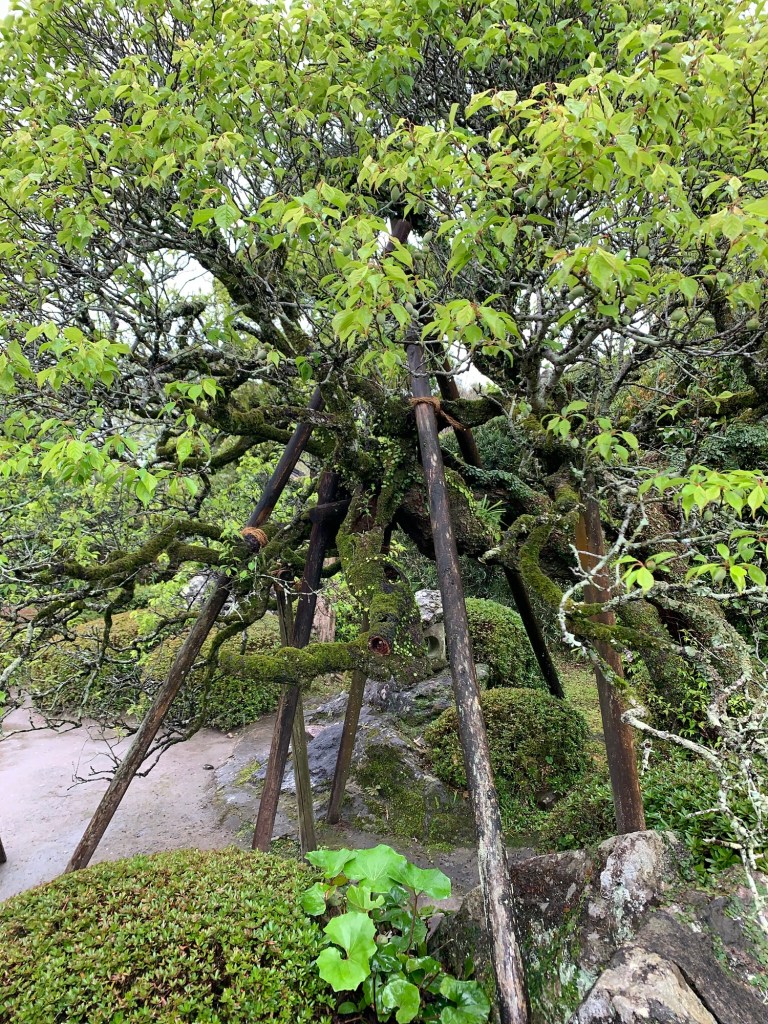
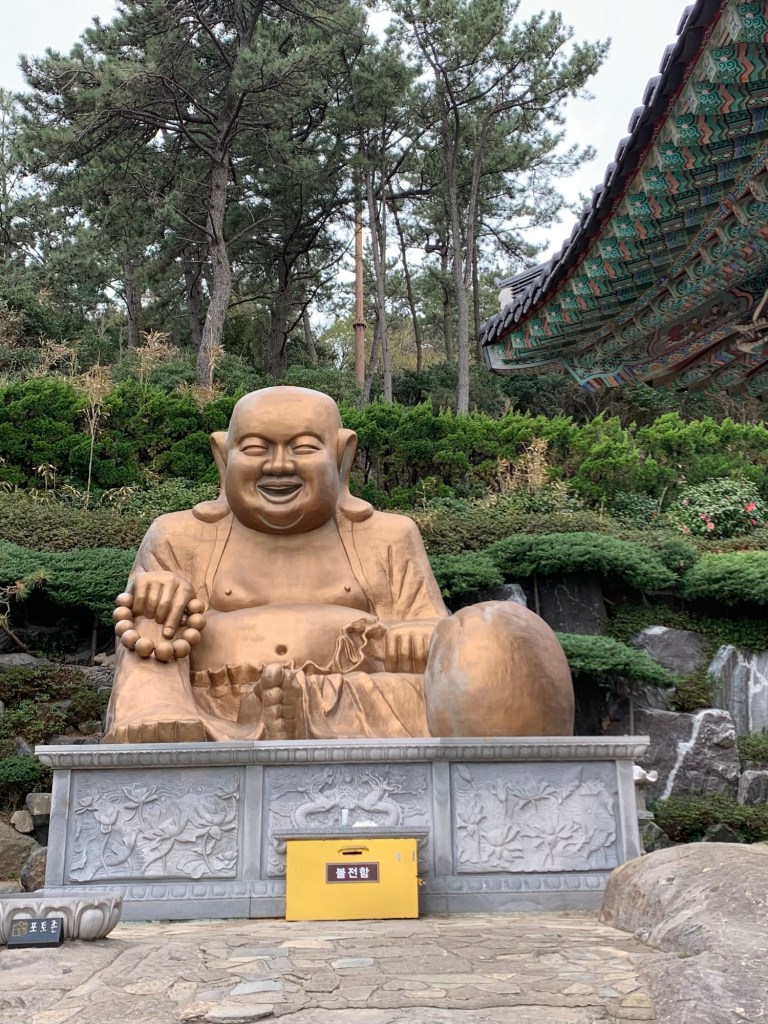
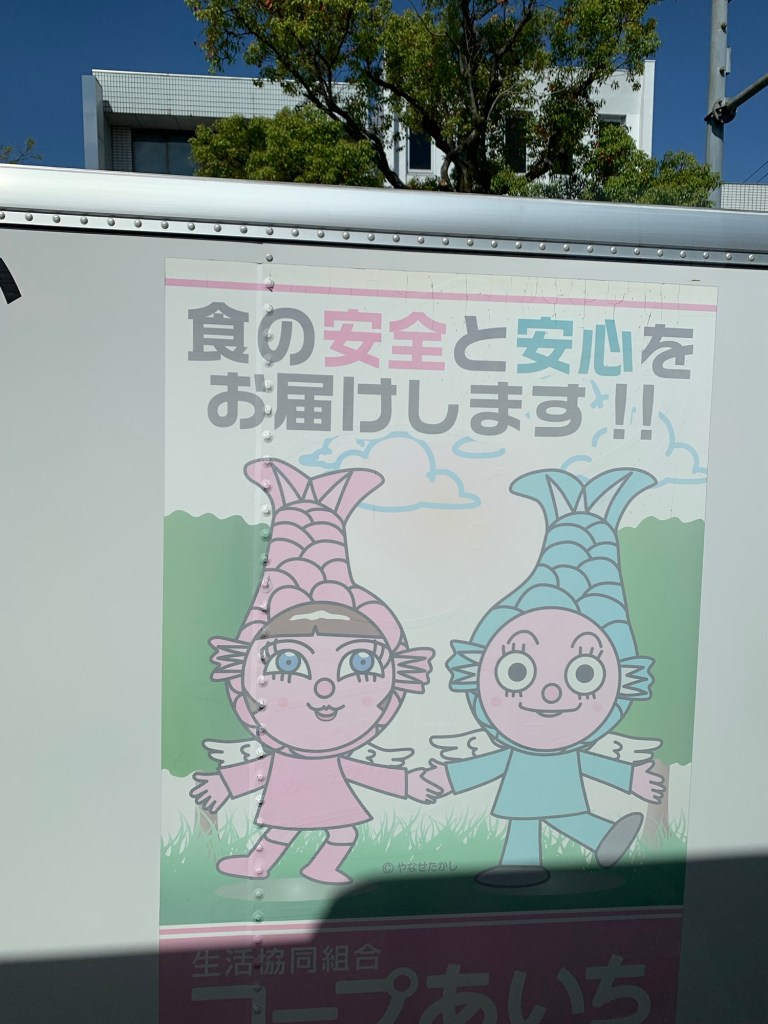
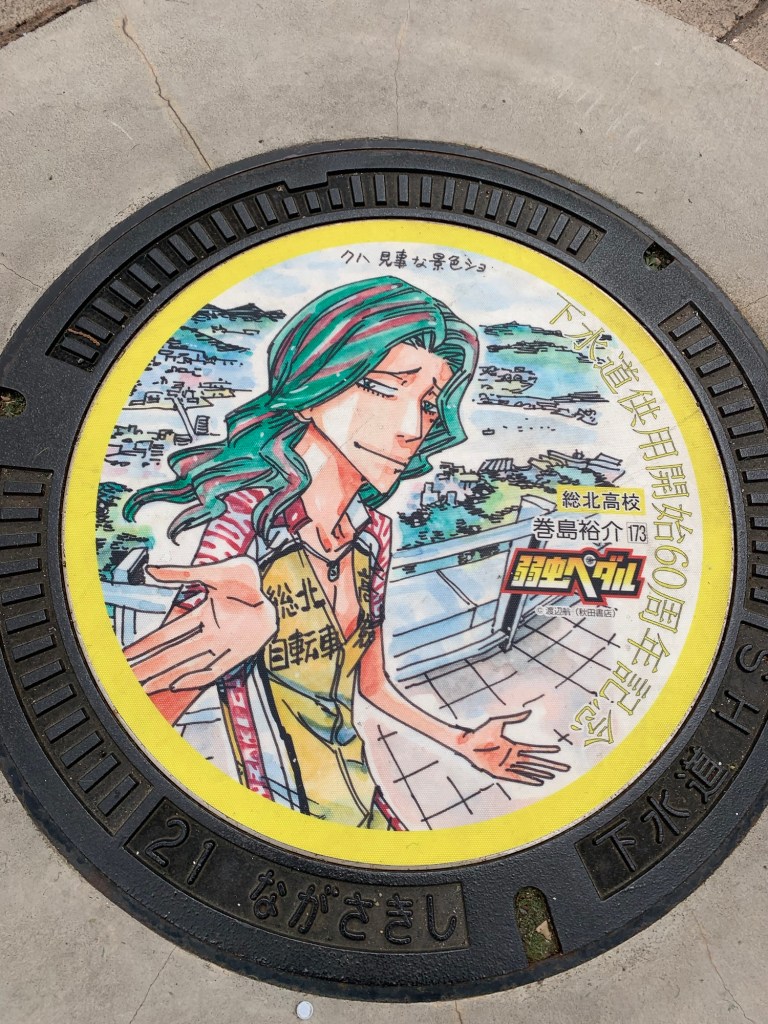
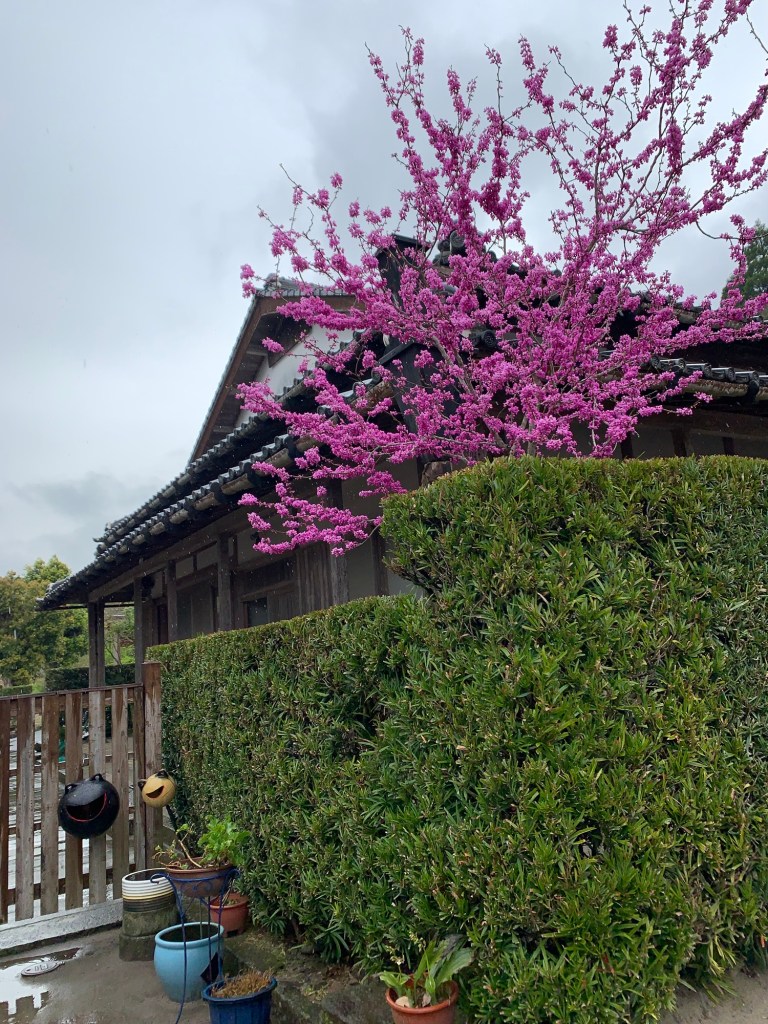
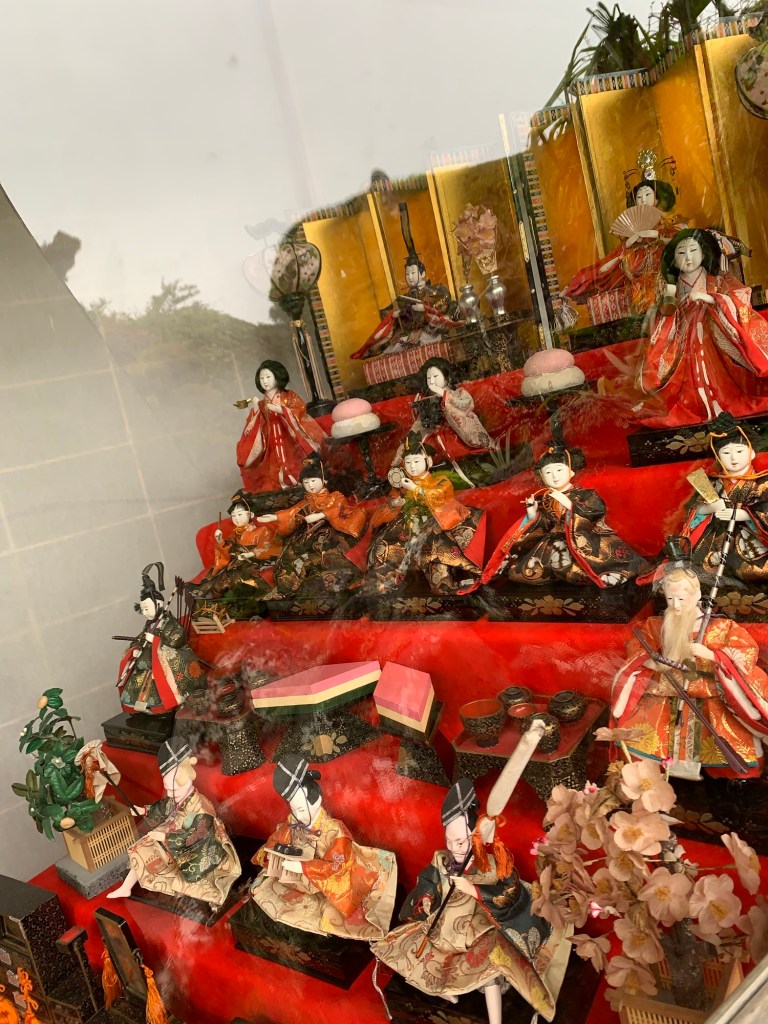
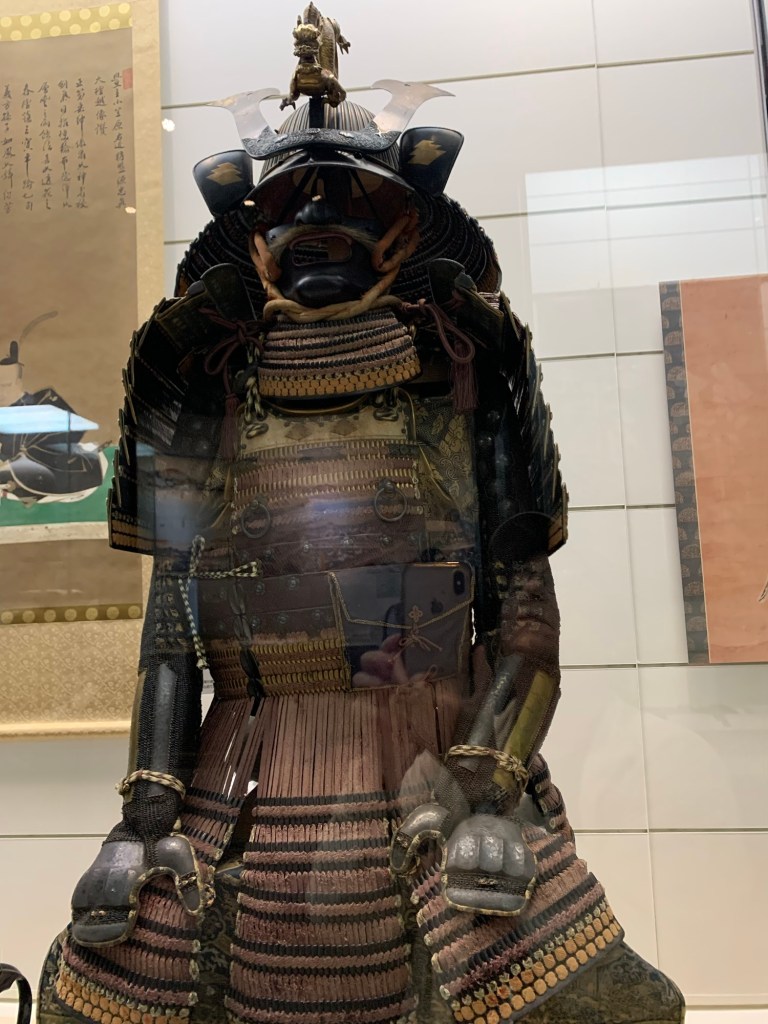
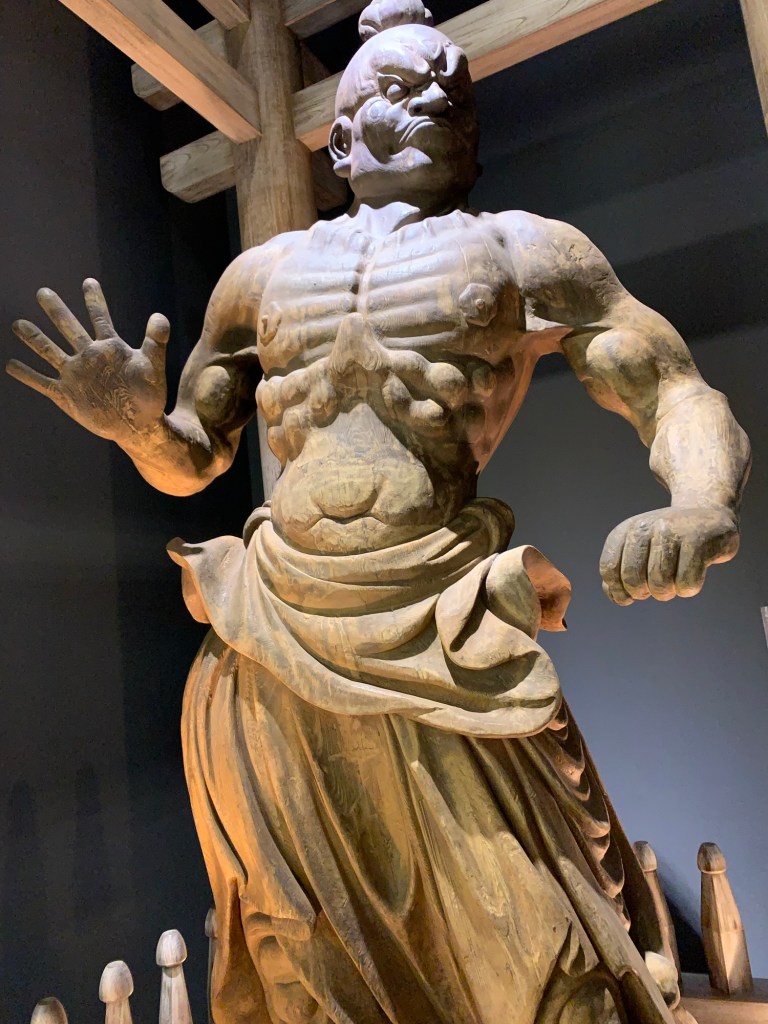
Path From the Air Raid Shelter, NagasakiBroth from a Vending MachineShohei Otani’s Autograph on a Pine RoundLadies’ Outing to the Shrine Dry Stack Walls in NagoyaPublic Art in ChiranOld Tree Needs Crutches in ChiranKorean Buddha“We will Deliver Food Safety and Peace of Mind!”Nagasaki Drain-SpottingFlowering PlumJapanese Doll Collection in ChiranSamurai Armor in Kitakyushu Temple Guardian Kitakyushu
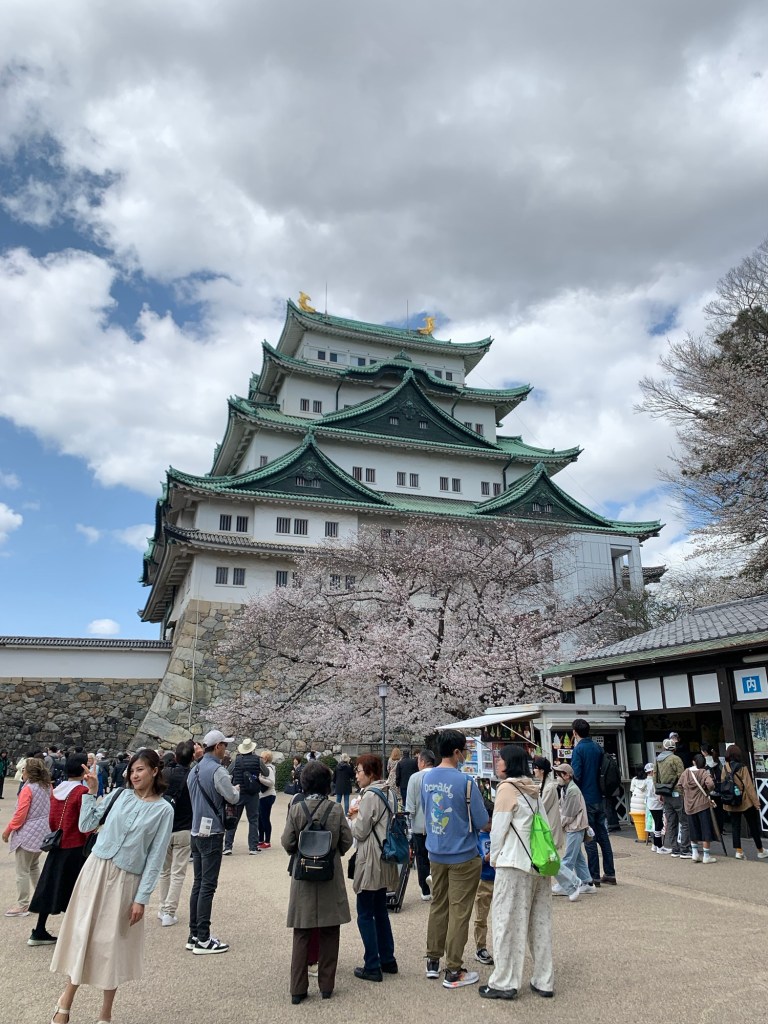
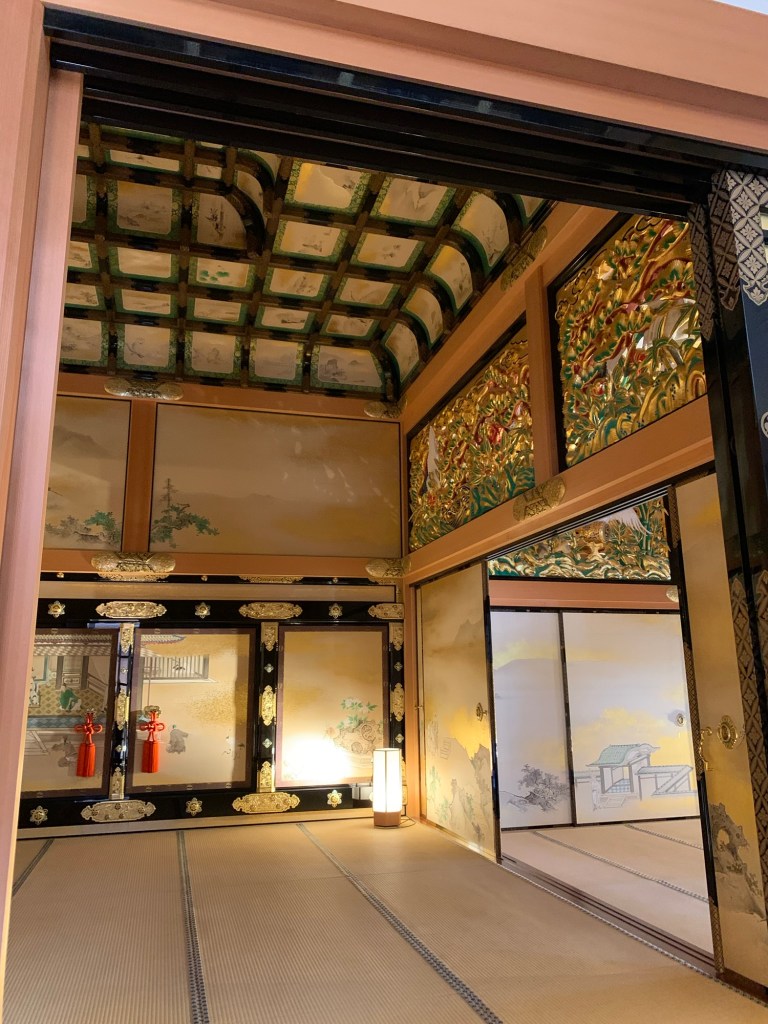
Luxury to a Shogun looks like the Nagoya castle: expansive grounds, spacious palace, ceramic tile triangular roofs, golden drain spouts, massive armored gates, coffered ceilings, gold-leaf paintings, heart pine crossbeams, elaborately carved transoms, hardwood floors. A cast of thousands of visitors played the part of the Shogun’s retainers. JG and I joined the festive throngs milling around the castle grounds and toured the beautifully restored interior of the Honmura as well. JG: “Needs Furniture.”
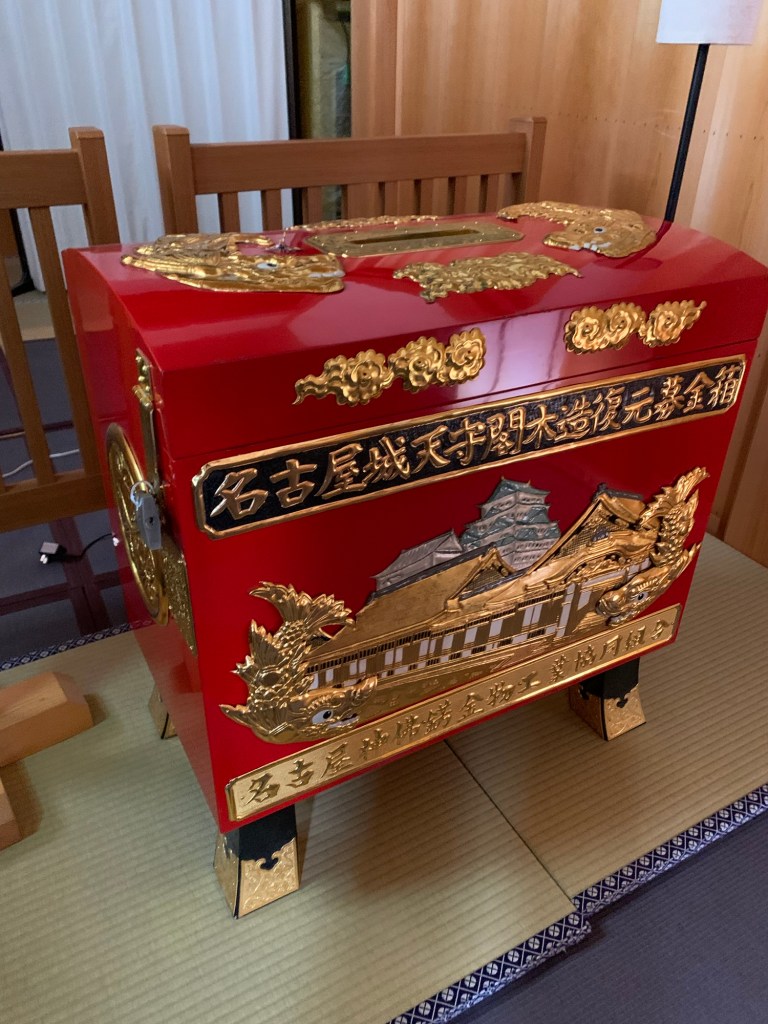
A Reception RoomTouring the CastleDonations for Castle Accepted HereFriends Meet at the Castle Grounds
Then we visited the Atsuta Shrine, a verdant oasis mid-city. In the Atsuta Museum, JG especially admired the distinctive Samurai swords. They are forged from soft and hard steel folded together at precisely the right temperature, heated and cooled to give them their signature bend, then honed for months. If you’re arming up for a sword fight, you’d be getting the best weapon. Forging Samurai swords was a sacred craft, which might explain why the swords ended up in a Shinto shrine.
Within the Atsuta Shrine
Nagoya is a company town for Toyota. I’ve collected some of the English placard model names on Made in Japan cars here: Hi Jet, Hi Lux, Hi Ace, Passo, Spike, Voxy, Minicab, Star. I learned “Camry” is based on the Japanese word “kanmuri” meaning crown.
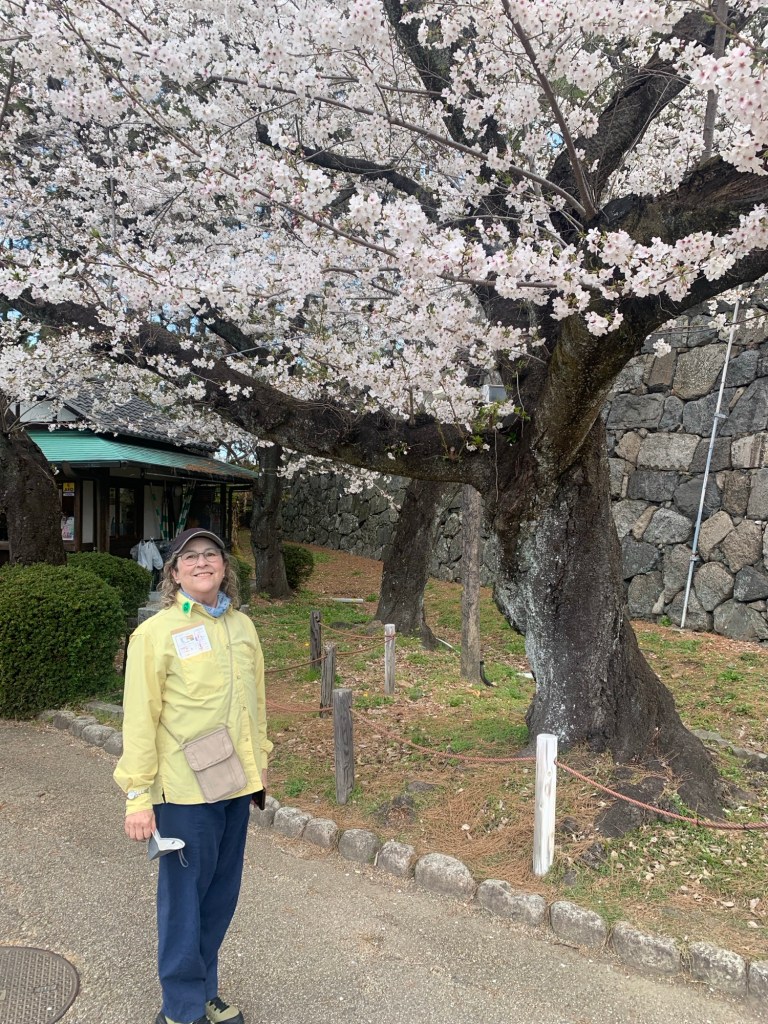
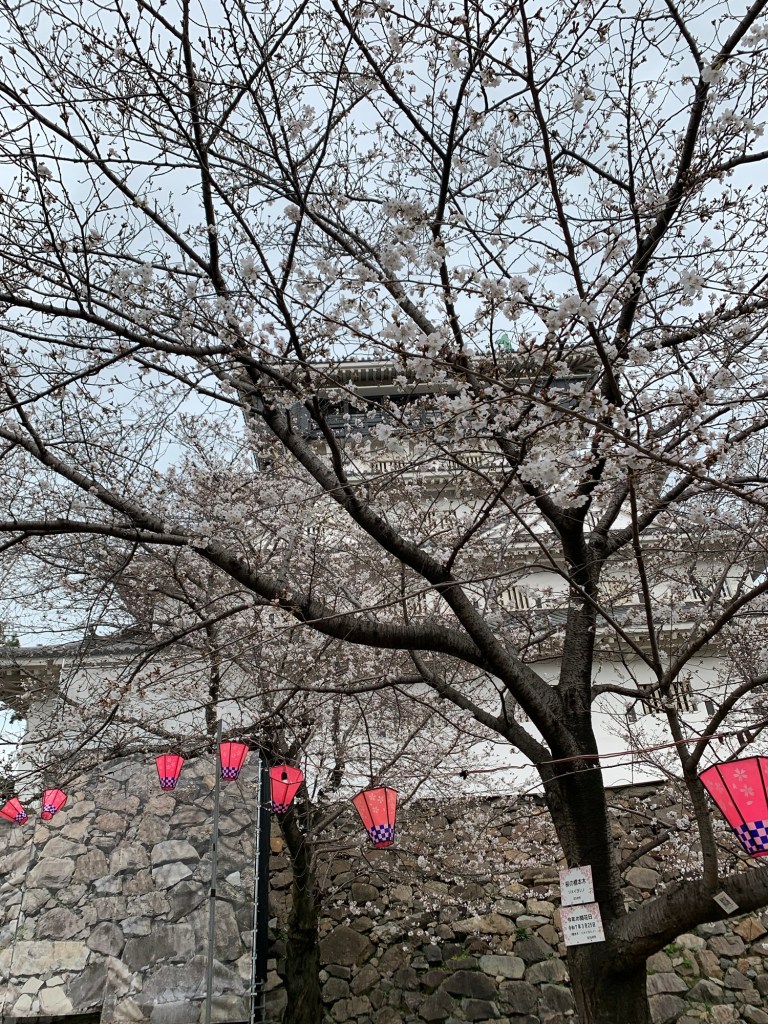
We’ve been basking in cherry blossom season. Cherry blossoms to Westerners might symbolize renewal because every year they come back. Christians see rebirth after the death of winter. To Japanese, they are another symbol of how transitory life is: nothing lasts. Cherry blossoms are here one week and gone the next.
We rode the bus an hour inland from Kagoshima to arrive in Chiran, a town with a well-preserved 19th century street. Our guide, Yoko, attempted to fill us in on the history of the Samurai warrior class, 1185-1868. Japanese society was organized into tiers of a wedding cake, or castes. As the uppermost cake decoration sat the Emperor, but the cake beneath him was composed of the Shogunate, the local lords. They in turn were supported by the Samurai, the knights. Below the Samurai were the farmers, who paid protection money for the Samurai. Then came the artisans, fishermen, builders. At the bottom of the pyramid sat the merchants, who were not seen as adding much value. Stop right here to see why bargaining, so prevalent in Indonesia, is frowned on in Japan.
The Samurai of Chiran served the Satsuma Shogun. The Satsuma Shogun was one of the two mighty lords who formed an alliance to overthrow the Emperor in 1868, ending the Edo period. So these houses were not pillaged and burned by the opposing clan. Then the Samurai rebelled when an edict of 1871 forbade the wearing of a sword in public and stated anyone slaying a peasant for perceived disrespect would be prosecuted. They rose up against the Meiji emperor and were defeated after seven years. One of the Samurai leaders, Saigo Takemori, is honored with a monument in Kagoshima.
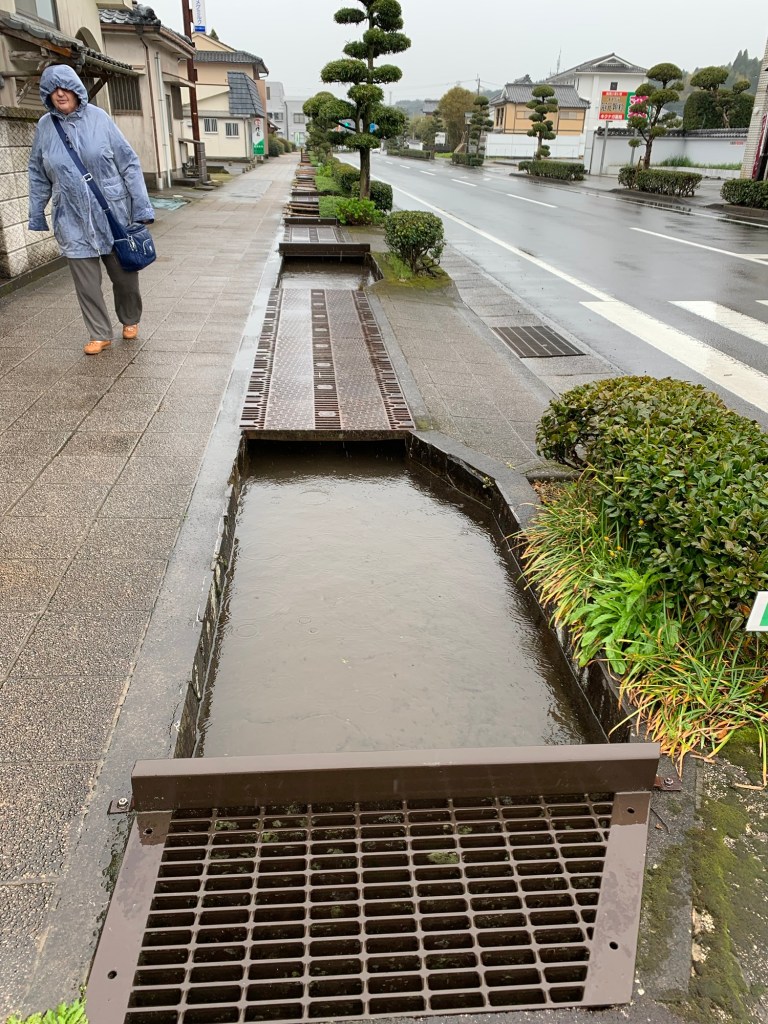
Elegant stormwater drains in Chiran
The steep mountains were covered with cedar, pine and maple. I couldn’t see what the understory looked like. We saw some tea farms, built into the hills. This region gave its name to at least two California fruits, the Satsuma mandarin and the Satsuma plum.
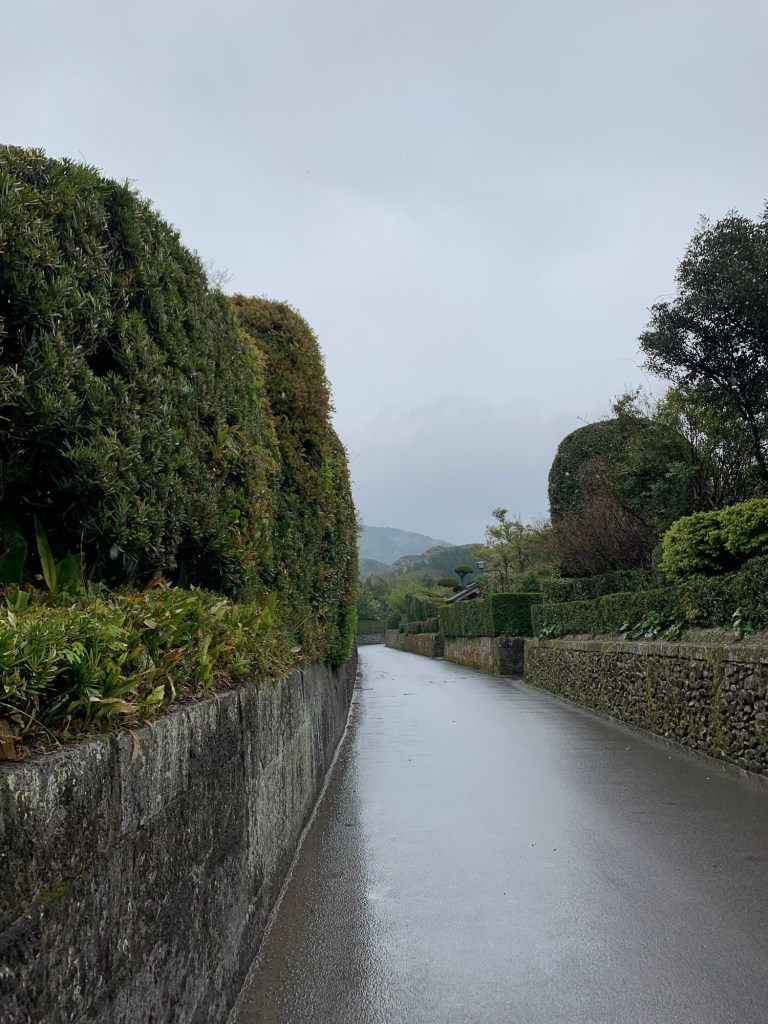
The tourist destination called “one of the best walks in Japan” consisted of a paved street parallel to the Chiran main street, with a rock or cement wall, a short Camellia sinensis hedge in front of a tall Podocarpus gracilior hedge trimmed with a wavelike top edge.
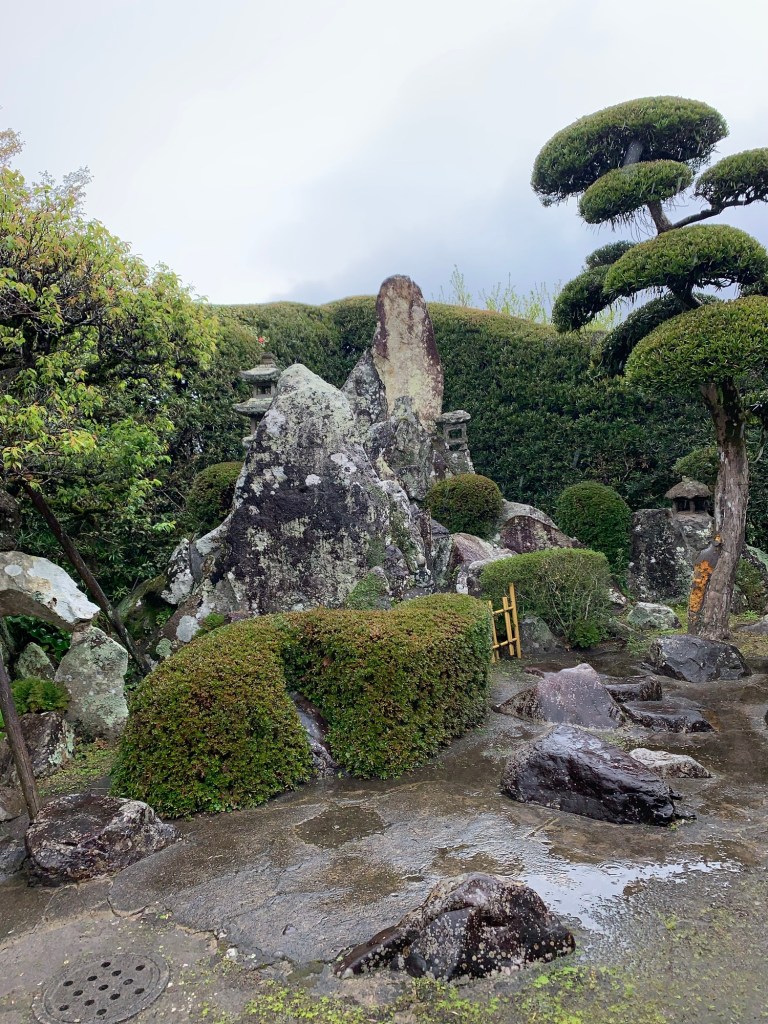
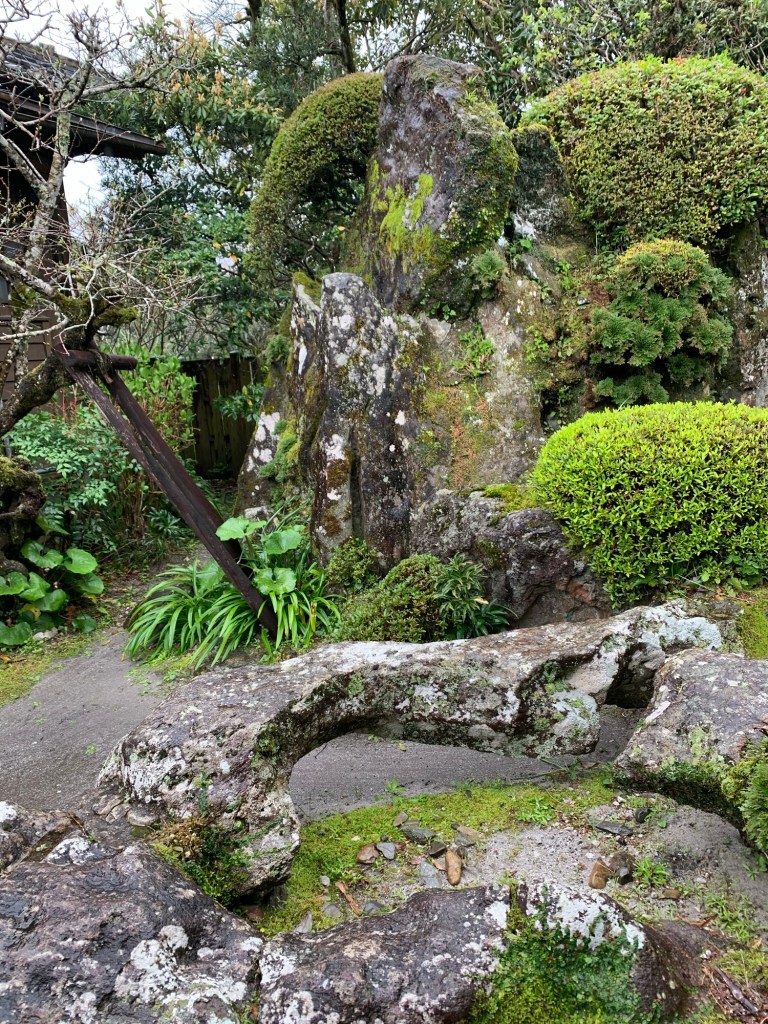
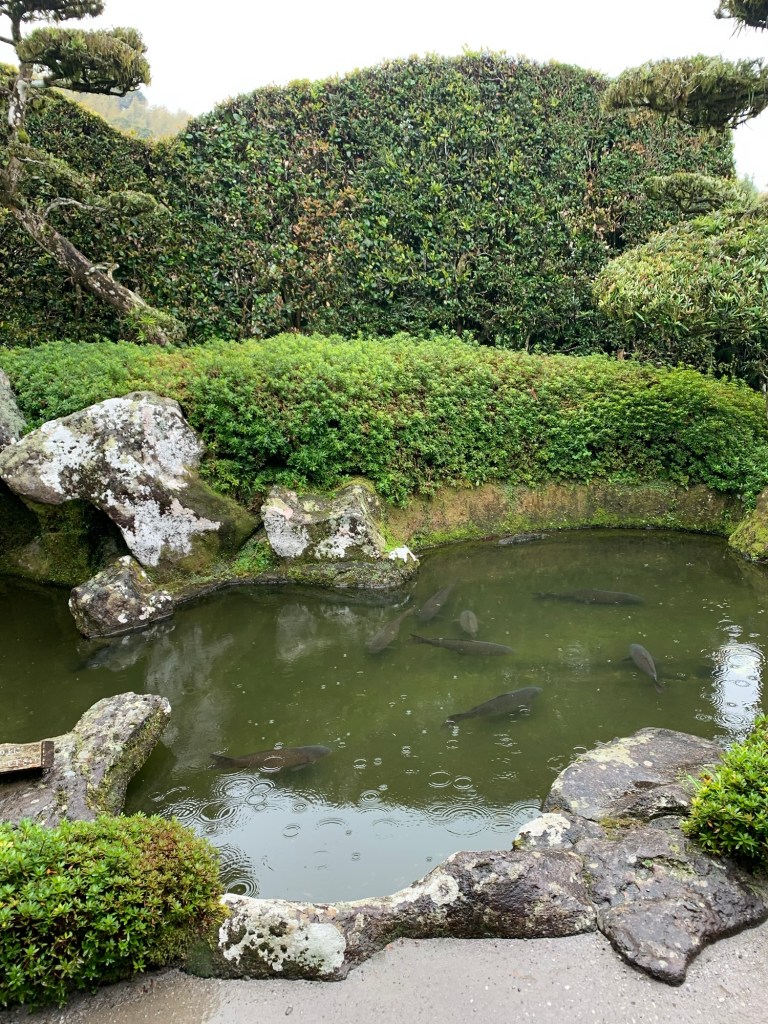
We stopped to look at several attractive walled gardens. A private trust supervises the gardens and the homes are privately owned. The river rock elements were quarried upriver and carried on the backs of oxen to be placed in the yards. I liked the pond with carp best. No birds seen or heard.
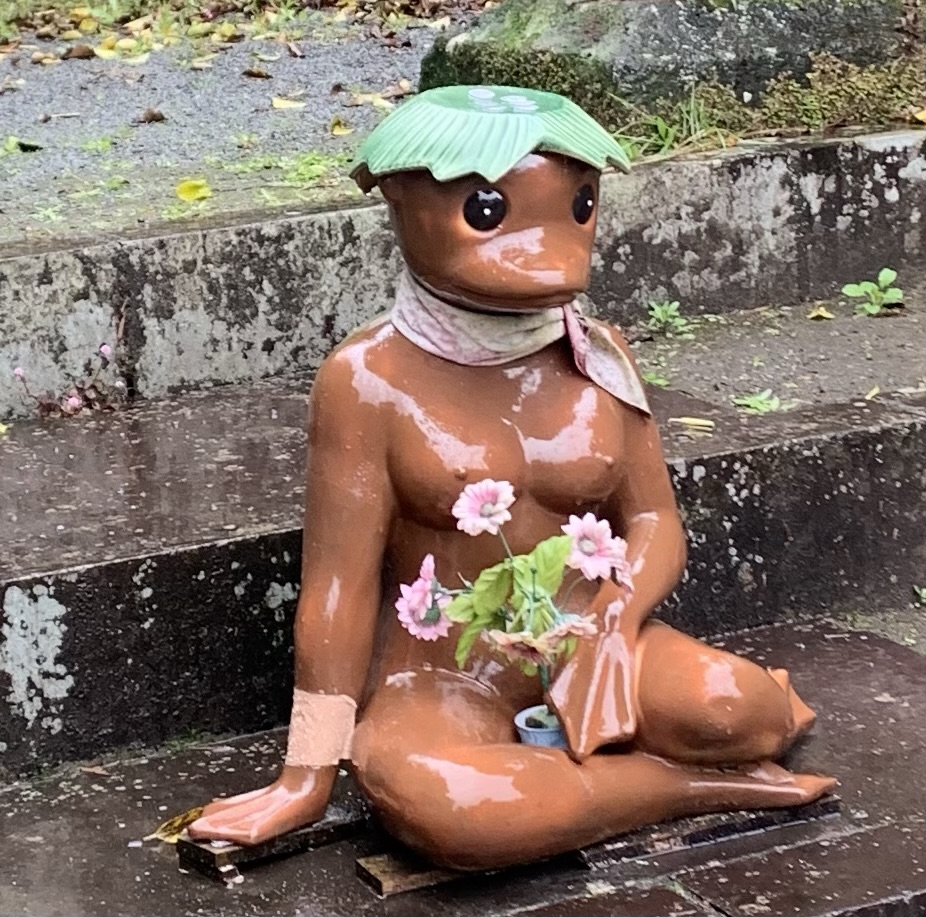
The only wildlife sighting was this image of a river sprite, a Kappa.
A KappaLucky Carp
At a tea shop we were grudgingly offered a tiny cup of greenish hot water, allegedly green tea, included with our admission fee. On the scale of hospitality, New Zealand ranks up top and Japan dead last. Tourists are an irritant, even if they bring money. Japanese don’t fake that they are glad to see you.
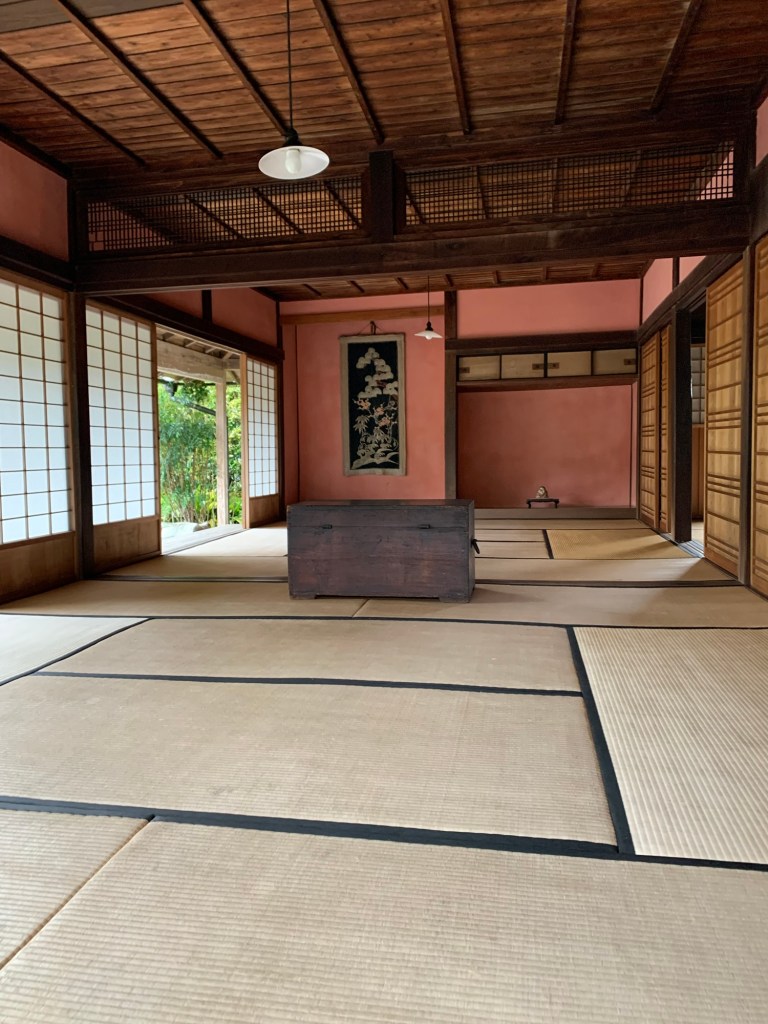
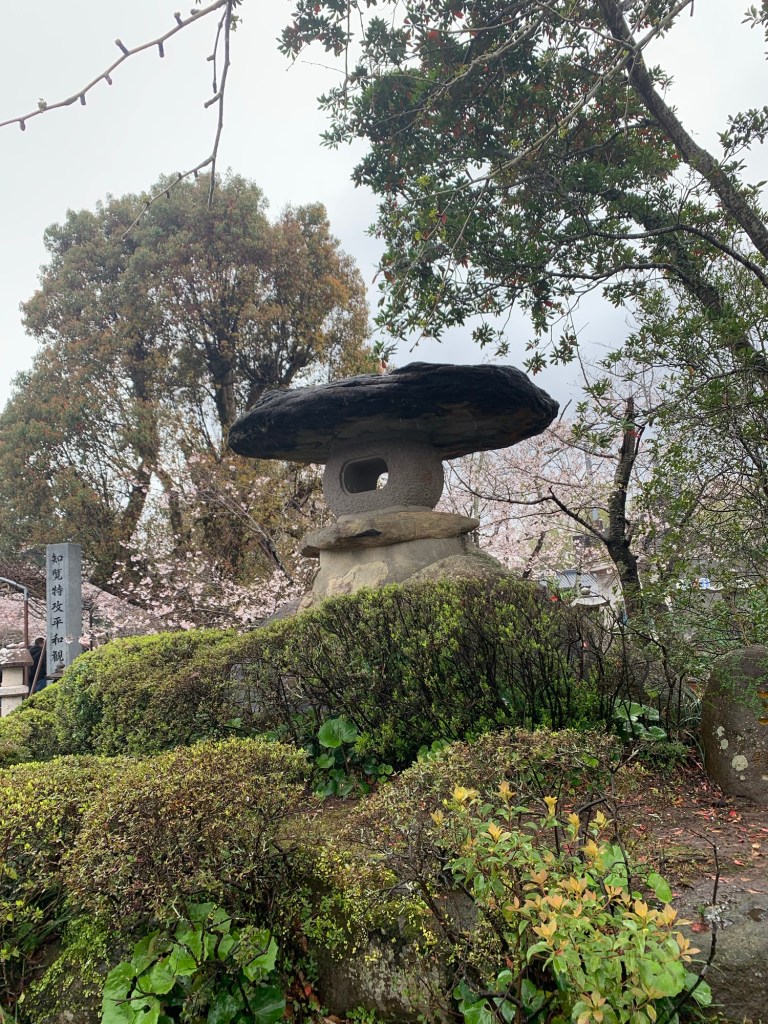
Samurai House Interior Chiran LanternFrom Zero to Hero
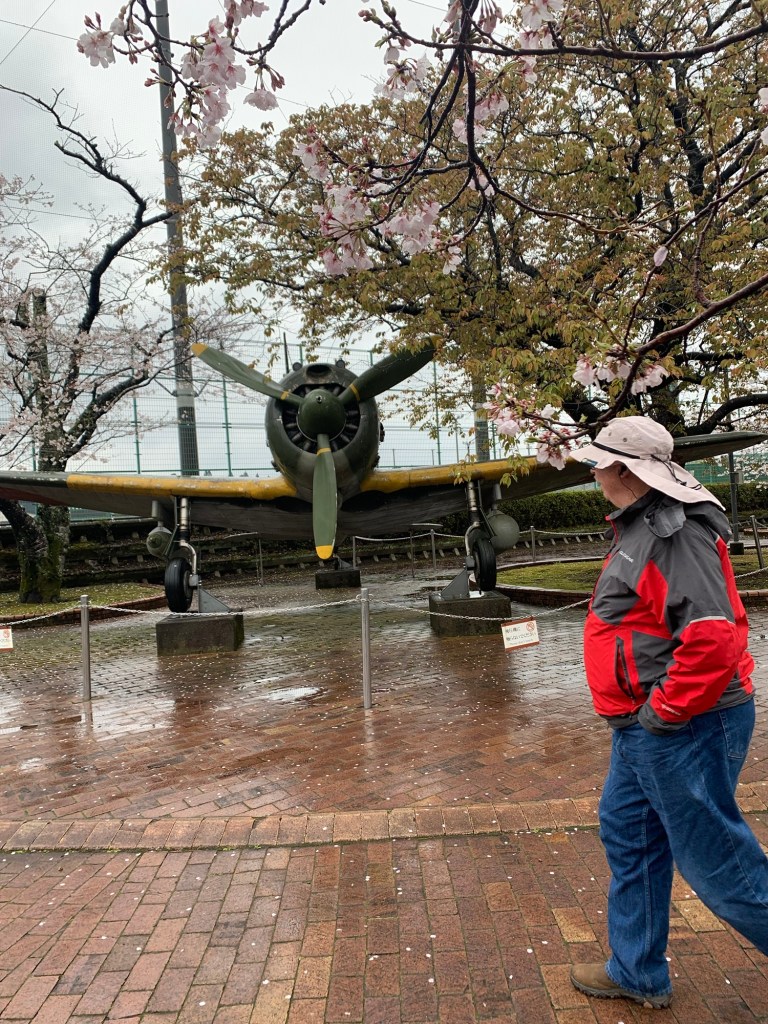
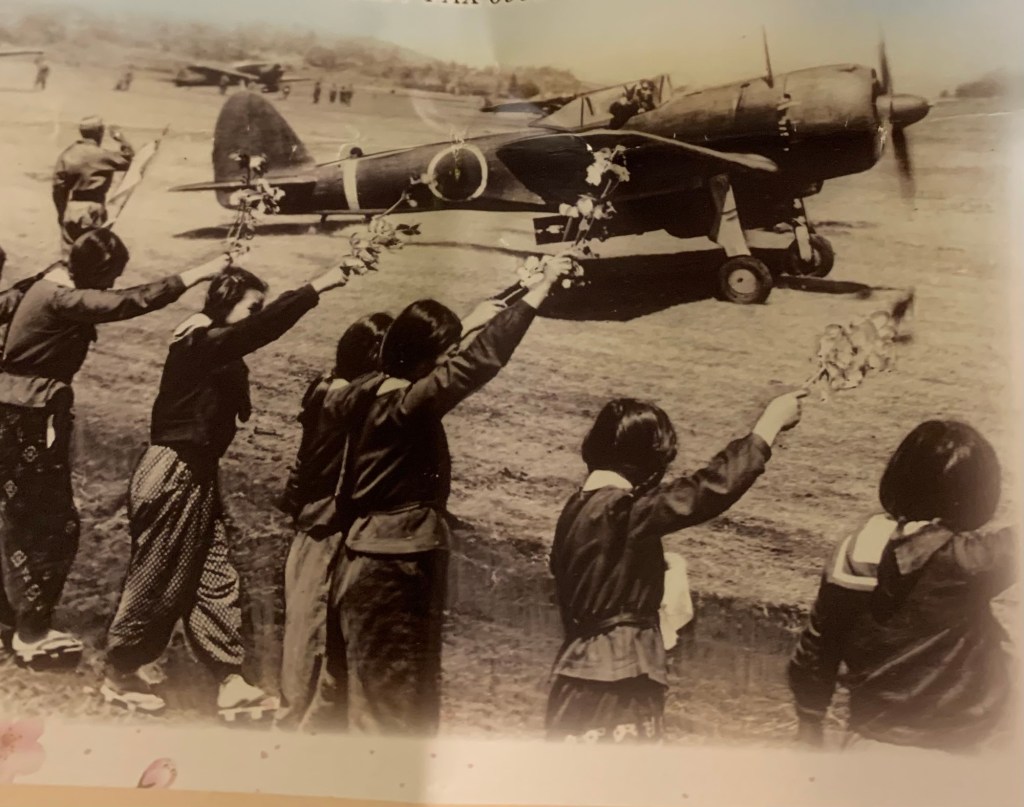
I didn’t fake that I was glad to see the Chiran Kamikaze Museum (1975). JG had warned me, from his trips to Japan 30+ years ago, that Japan celebrated its WWII casualties and veterans as brave heroic patriots. My stomach turned at the glorification of teen boys, poor second sons, who were mostly coerced into becoming suicide pilots. No photos are allowed inside the museum to make fact-checking the texts more difficult. Using my lit-major memory, I fact-checked their copy and found it to be propaganda, not history. The museum claimed the Kamikaze made a noble difference in the war. Though they inflicted casualties, they did not have an effect against the overwhelming military superiority of the Allies. Who benefits from lionizing the Kamikaze? The Right. They seek a biddable underclass willing to sacrifice without questioning the authority figures who talk up patriotism. I was reminded that democracy is a garden that needs tending, not a watch that runs on its own once crafted.
JG enjoyed looking at the Zero and Ki aircraft. He thought that the Kamikaze pilots flew by sight only and that the instrument panels had been stripped out so as not to waste them. That was not what was portrayed.
Schoolgirls saluting the pilots in training camp makes a good propaganda photo.
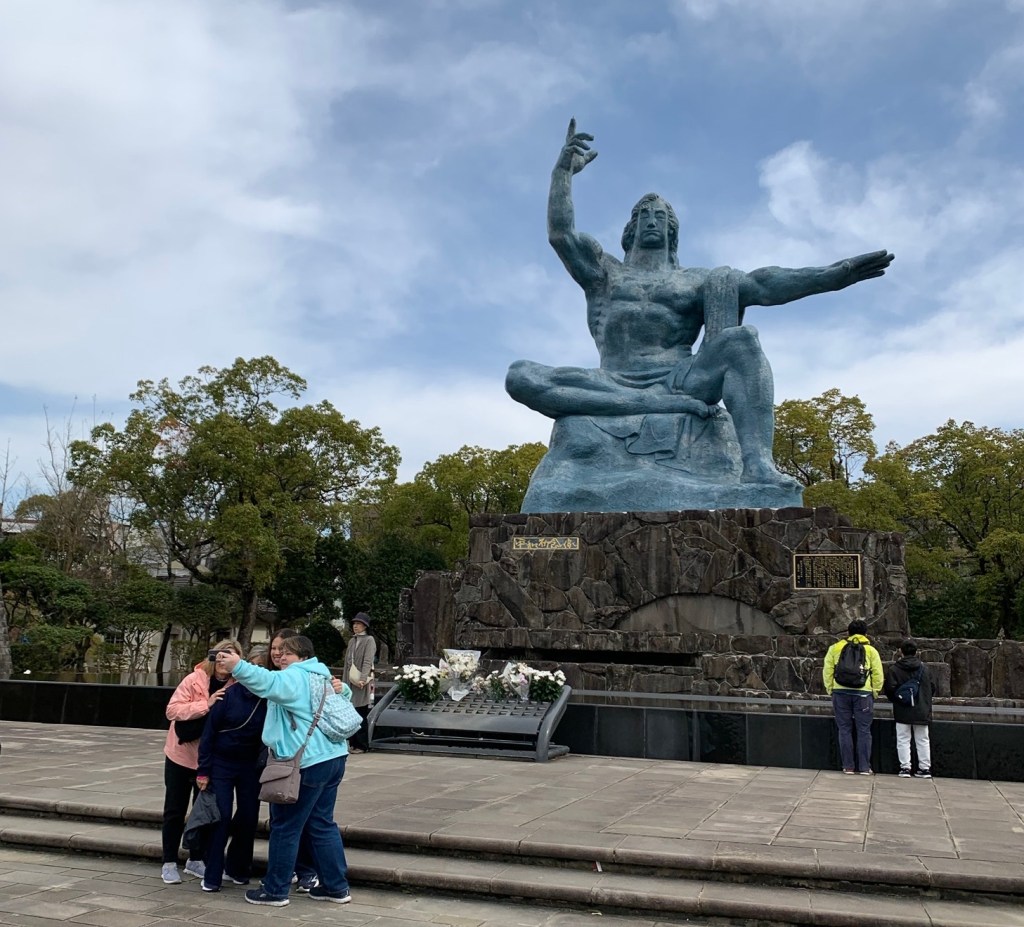
We visited the setting for Madame Butterfly, the busy port of Nagasaki. Nagasaki has one big blue bronze dude symbolizing peace, not heartbreak. One may find strings of origami cranes in little shelters on each side of Big Blue.
Folded Paper Cranes
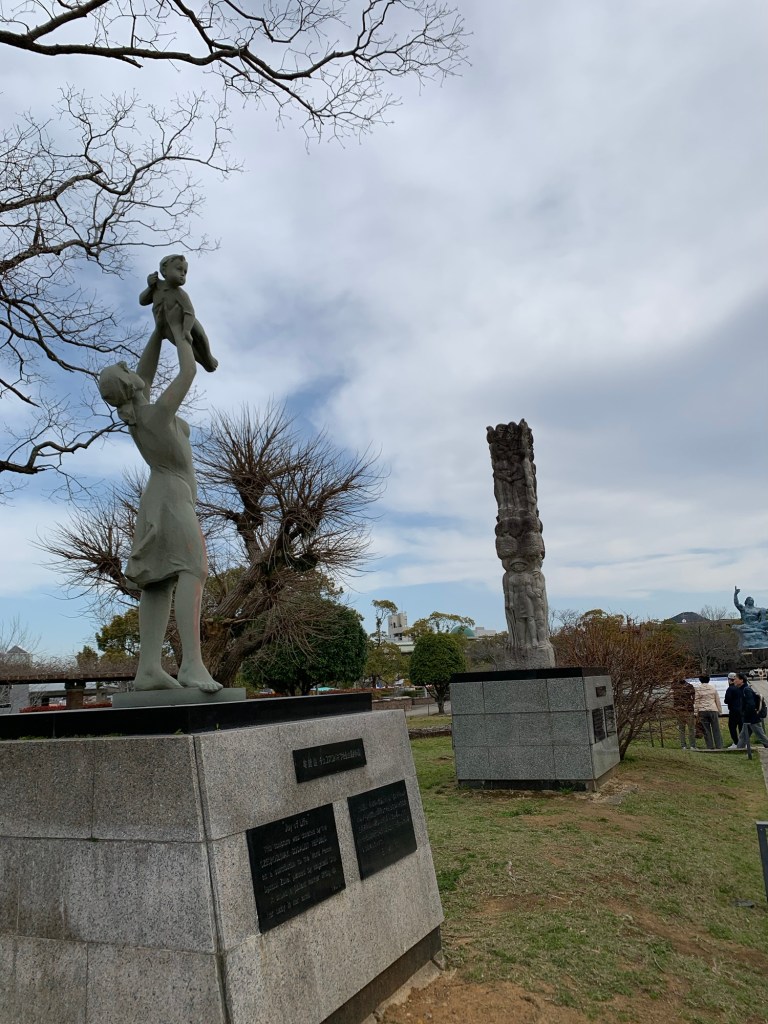
Countries and some cities have sent sculptures symbolizing peace to be erected at Nagasaki Peace Memorial Park. The East Bloc in the 1980’s was especially well-represented, with works from Bulgaria, Poland, Czechoslovakia, Yugoslavia offering their interpretations on the theme. There were lots of stone women tossing babies in the air and a few doves and abstracts. I agree that airplaning a baby is a fine representation of peace. Doves: irritating stupid birds but a biblical reference.
Poland: Airplane the Baby. GDR: Workers of the World Unite
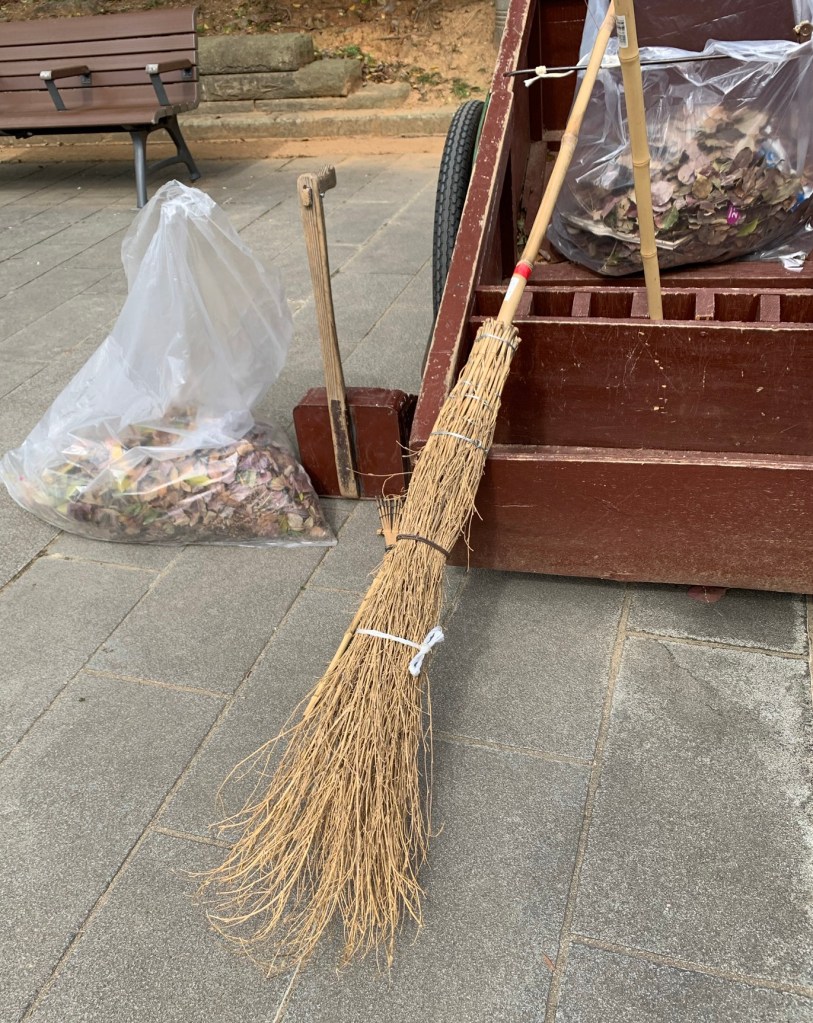
Someone tidies up all day, every day.
Straw Broom
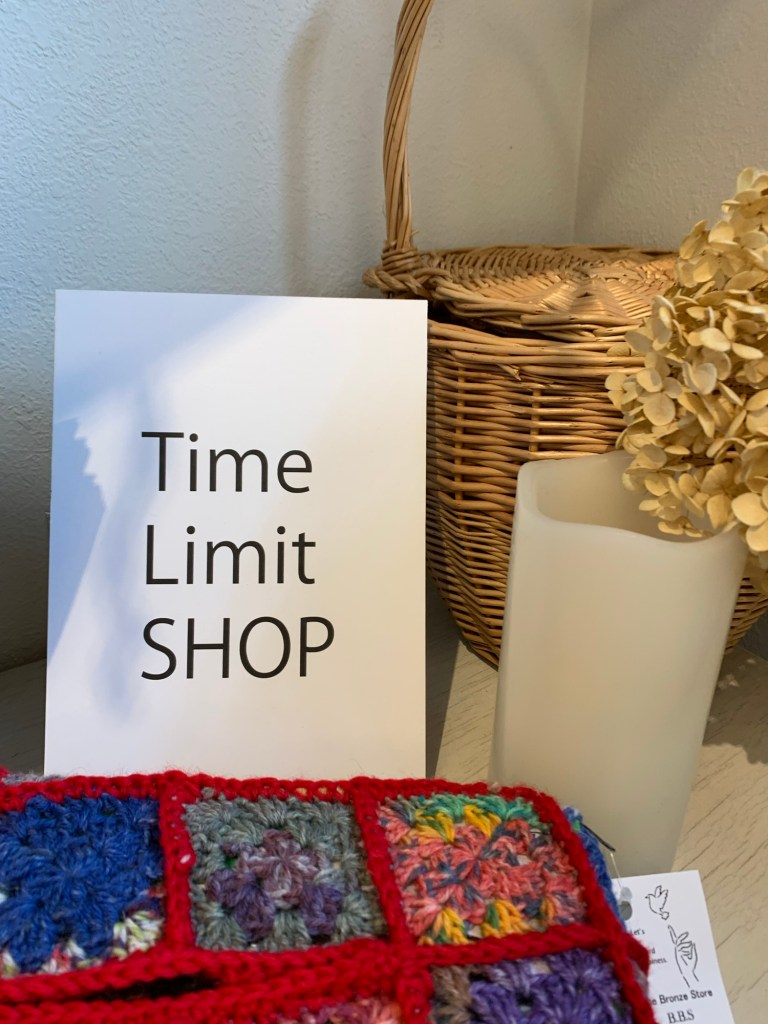
Enough about peace. I popped in the shops and was dismayed to see this sign, also the price of ¥18,700 including tax ($125) on an ordinary cotton sweatshirt-like top.
Granny Squares, Ye Yarn Lovers
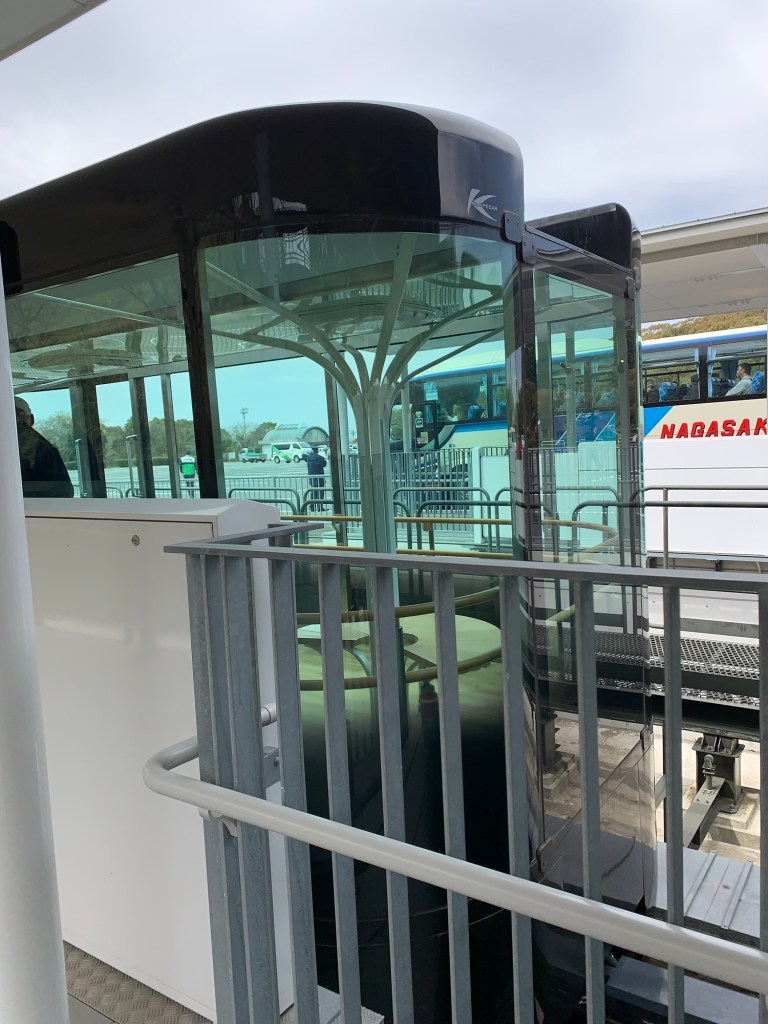
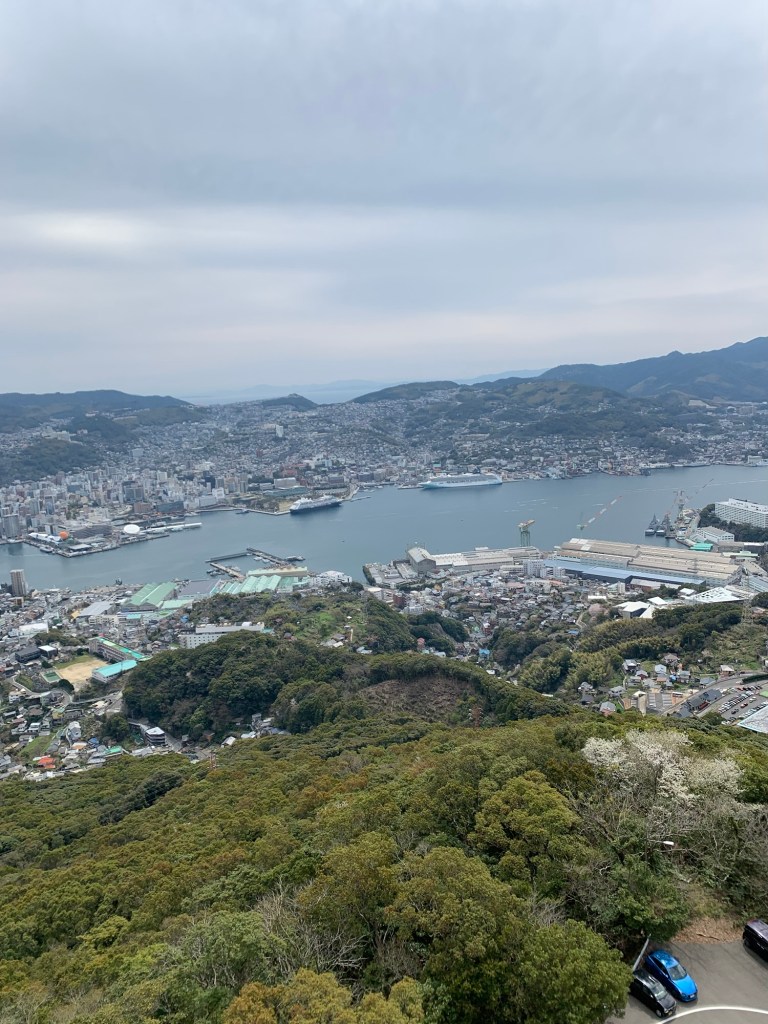
Later I rode the Nagasaki Slope Car (2020) to the top of Mount Inasa. There were three wonderful antennas spreading communications and good cheer. I can’t tell you how the Slope Car works, but it stayed level as it climbed up a steep single track.
On the way to the summit we passed a pen filled with Sika deer. They lobbied unsuccessfully for their own blog entry.
Seeing Japan while being from Central California means I am already familiar with some Japanese cultural signifiers.
I have nodded along at some cultural displays because they are so familiar: sushi, matcha, green tea, Taiko, Karate, Kimonos, Akitas, Aikido, Bento, Bonsai, Bon dancing, Shiatsu, sliding doors, futons, karaoke, origami, ikebana, taking shoes off at the doorway, Pokémon, Zen, Buddhist retreats, chopsticks, Japanese gardens. But another cultural phenomenon is less known to me: Manga.
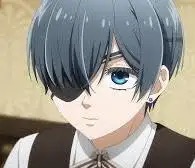
Manga is a bold style of graphic storytelling, like comic book art. Animé is Manga animated. This kind of cartoon character pervades the gamer, gema, and otaku, fan culture. We skipped the Museum of Manga in Sakaiminato because it looked like lots of photo ops with Manga characters and no English text. Manga accounts for 25% of all printed books in Japan. It is the top cultural export. I read that internet piracy threatens the livelihood of Manga artists because pirated translations, scanlations, are posted within hours of a new Manga release.
Manga’s origins are distinctly Japanese. During the Chinese Revolution against the Qing, 1910-1911, bold graphically illustrated pages were used as propaganda to convince illiterate Chinese to join Dr. Sun Yat Sen. Japanese adapted the propaganda to control its non-Japanese speaking occupied territories, like Taiwan and Korea, 1910-1945. And in Post-War Japan, Manga artists emulated the comic books brought by GI’s. That’s when the big-eyed androgynous look of Manga characters emerged. The dramas are no-holds-barred twisty plots of unintentional heroes, evildoers in disguise, supernatural forces, super powers, switched at birth twins, amnesia, dysfunctional families, a stranger walks into town, and more. Some of you know all about Manga and can better explain its appeal.
The ship parked in a fairly new harbor built on fill. Massive new skyscrapers were being constructed bayside and we wondered who would fill them. Maybe vacation condos for Chinese. ROK motto: We are so not Japanese and not Chinese, Nunh uh! Second ROK motto: We’ve got the catchiest dance beats! Even when we’re destroying wooden planks in Tae Kwon Do!
Busan Port
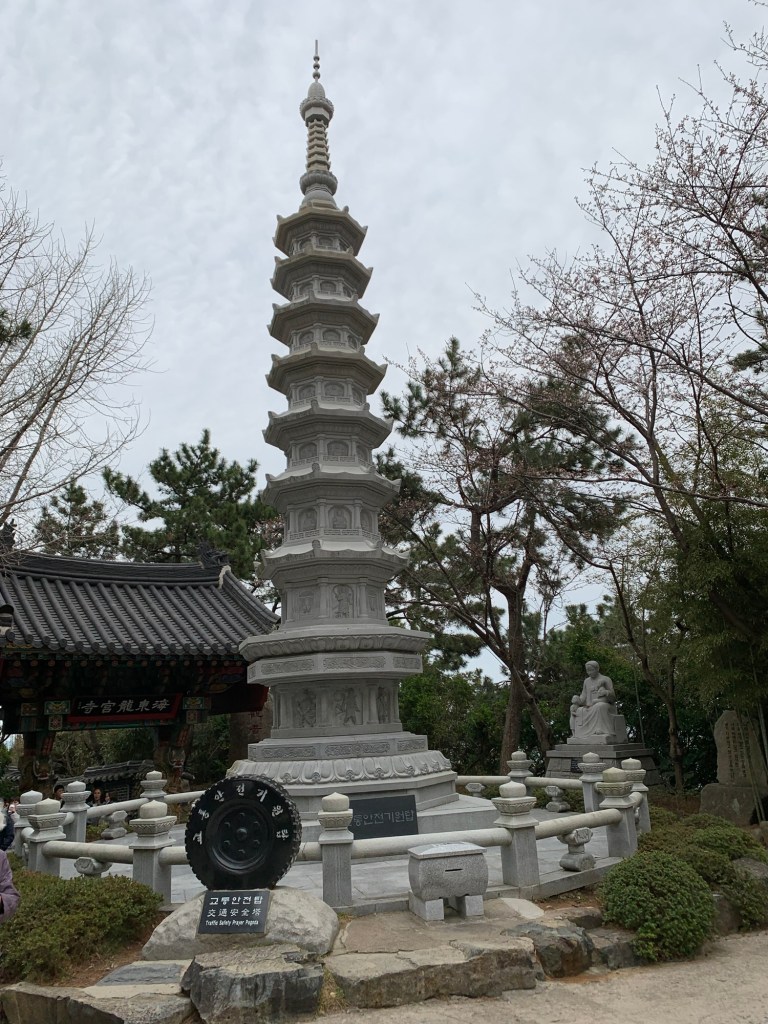
Busan, population 3.3 Million, served as the headquarters of the UN forces during the Korean War, 1950-1953. Thanks to this war, Japan developed an export-based economy, saving itself from economic depression and the lure of communism. In the last 50 years, the Republic of Korea, population nearly 52 Million, has industrialized its economy. Almost all cars on the busy highways are Kia and Hyundai. Here one drives on the right, showing US influence. We saw a couple of churches, a rare sight in Japan. But this “traffic safety pagoda” is more unusual.
Road Safety Prayers Directed Here
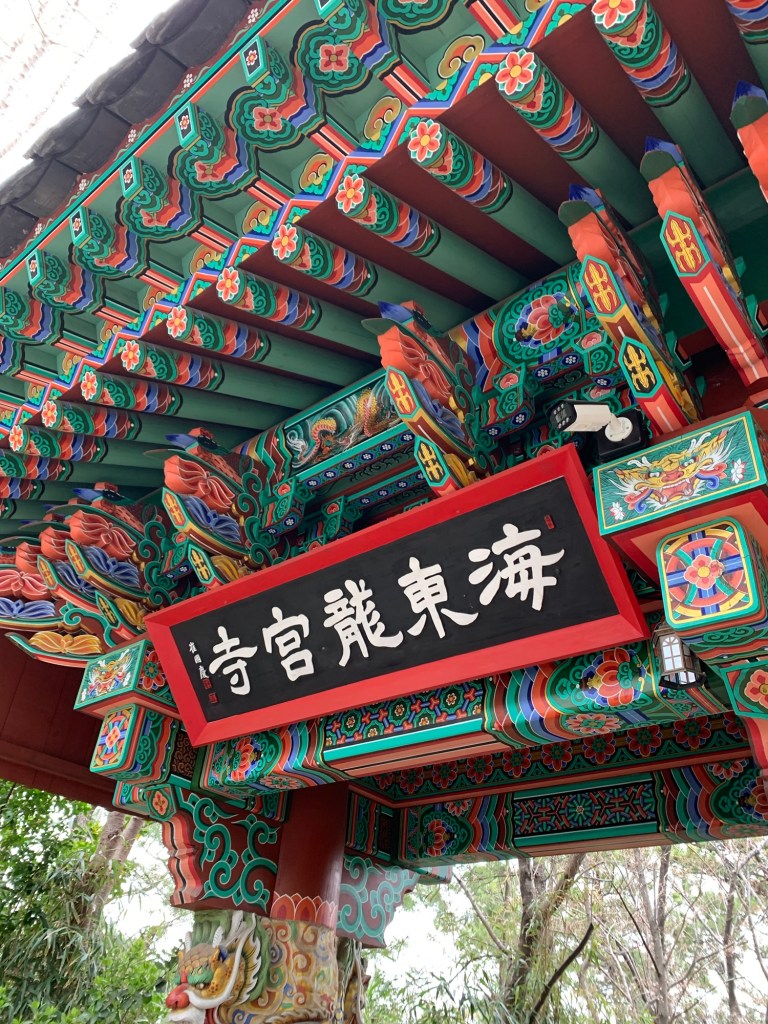
We were driven an hour north of Busan to “the most beautiful temple in Korea,” HaedongYounggungsa. Dating from the 1730’s, it was built into the cliffs, giving it exceptional views.
Harmony with Nature
The visitors’ wishes were written on colorful leaves and paper lanterns. Being under the rainbow of wishes felt pleasantly festive, like being on a parade float.
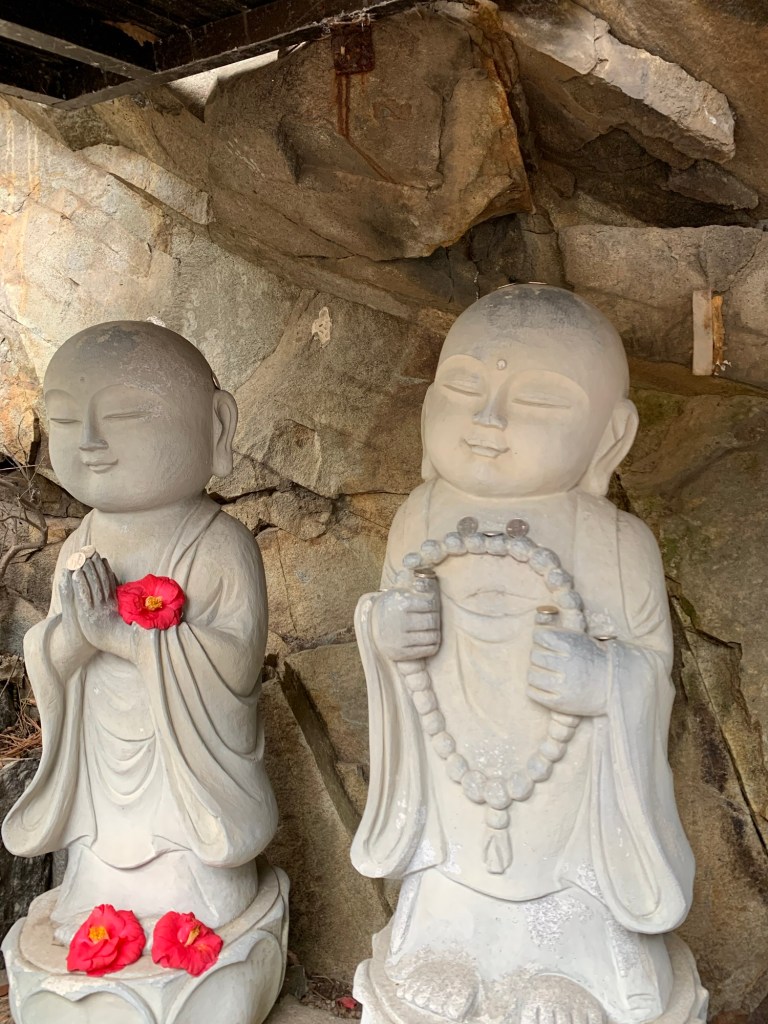
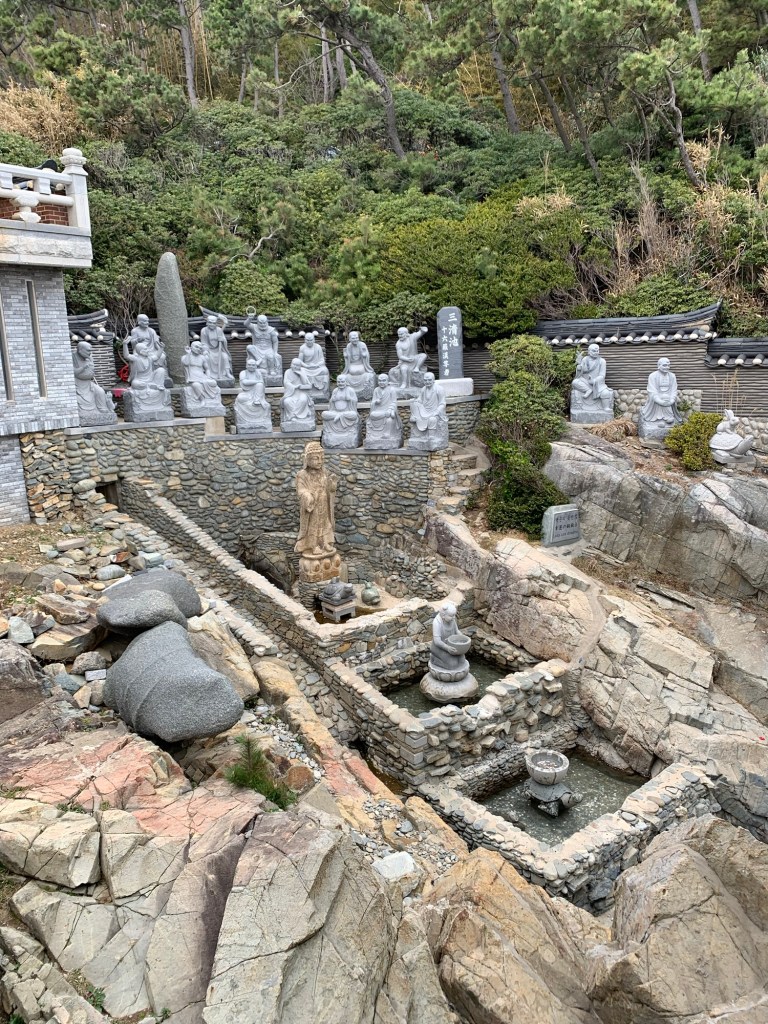
These charming childlike boddhisattvas comfort parents with a sick or dead child.
Your baby will be okay.
The supplicants make a game of tossing their coins into the stone monks’ baskets.
Donations Here
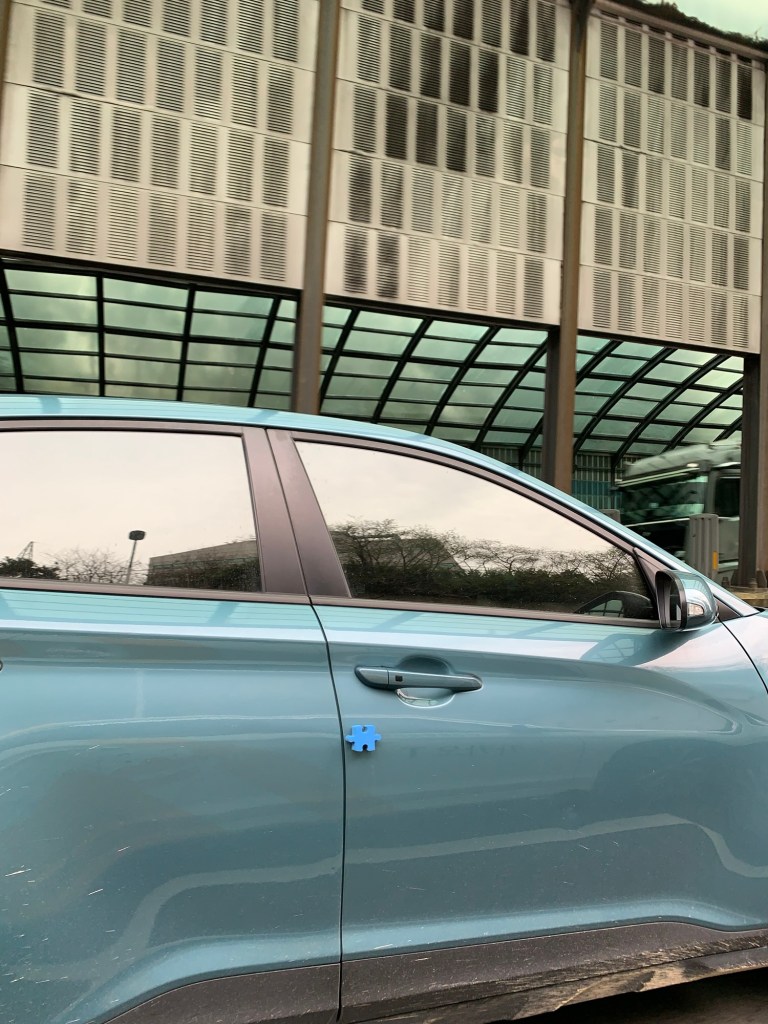
JG especially enjoyed the suspension bridges, tunnels, and modern elevated highways en route. Some cars had little foam pieces stuck on their doors as ding prevention.
¡No Me Toques!
During the drive, JG conversed with our taxi driver through Google Translate. I was amused that JG’s Korean avatar had a deep bass voice, while our driver replied in American English in a woman’s voice. JG wanted to say his daughter bought a Kia. The taxi driver wanted JG to know that 1% of the world’s richest people live in Busan. He also wanted to show us cherry blossoms, but we passed on this opportunity.
At the brisk clip of one city every day, the locations begin to blur. Culture I have a lot to comment on. On geography not so much. In post-War times these cities have rebuilt around a mega corporation, or what used to be a zaibatsu, a vertically integrated conglomerate. Hiroshima equals Mazda. Kitakyushu equals Nippon Steel Works. Kitakyushu was originally the second target, after Hiroshima, for the atomic bomb. But the locals defended. They burned coal and created smoke and steam so the pilot could not visually verify the target. So the pilot dropped the A-Bomb on Nagasaki instead.
Japanese and Americans agree the atomic bomb was devastating. Everyone agrees there should be peace. No one yet has insulted our hosts by calling out their guilt, bad guilt in starting a ferociously lethal World War. There is a polite saving of face. The locals start their modern history round up with 1963. Our wonderful guide Joyama put history in perspective this way: “ We had to wait until 1945 for our democracy.” Actually it was 1947, but there was a lot of chaos and rubble in those 1945-47 years. Women finally could vote, practically not just nominally, and hold down jobs and inherit property. Only 18 military leaders and 9 politicians were prosecuted for war crimes through the IMTFE, the International Military Tribunal of the Far East. General MacArthur, he of MacArthur Freeway fame, had a three-point plan: dismantle the war machinery, create a parliamentary democracy, and build a sound economy. At first Japan was not allowed a military force, but with the Chinese Civil War 1945-1949 threatening, Japan was allowed to rearm. MacArthur wanted the Japanese to democratize quickly to create an ally with the West against Mao’s Communist Army. The occupying Allies gave Japan back, keeping only Okinawa for a US military base.
There is a Japanese way of doing almost everything. When I described eeling at the Inari Shrine, we were marooned in a sea of gaijin, foreigners. On walkways Japanese walk left and pass on the right, just as when they drive. A milling, selfie-snapping crowd muddies the directional attributes of Japanese-style pavement walking.
Sometimes I enjoy tidiness in places I don’t expect. I admired how organized the bus pick-up and drop-off zones are, with designated queues and lanes and Hi-Vis Vested monitors helping drivers park.
I also appreciated how well regulated traffic is. Pedestrians wait for the signal to change, even if there are no cars around.
But I also note excessive adherence to rules at the expense of common sense. For example, our admission tickets are checked both at entrance and exit. Or we must proceed to the left of the dividing ribbon even when both lanes end up at the same place and no opposing traffic threatens. Japanese Border Control policies are too strict so the force on the ground enforces the policies arbitrarily. Who would enforce that cruise ship passengers should take all their Japanese shopping out of their cabins, display it for Customs and Border Control’s perusal, then march their shopping back up to their cabins again? No reporting threshold is specified. Border Control is looking for criminals where the best working conditions are, not where the crimes might be.
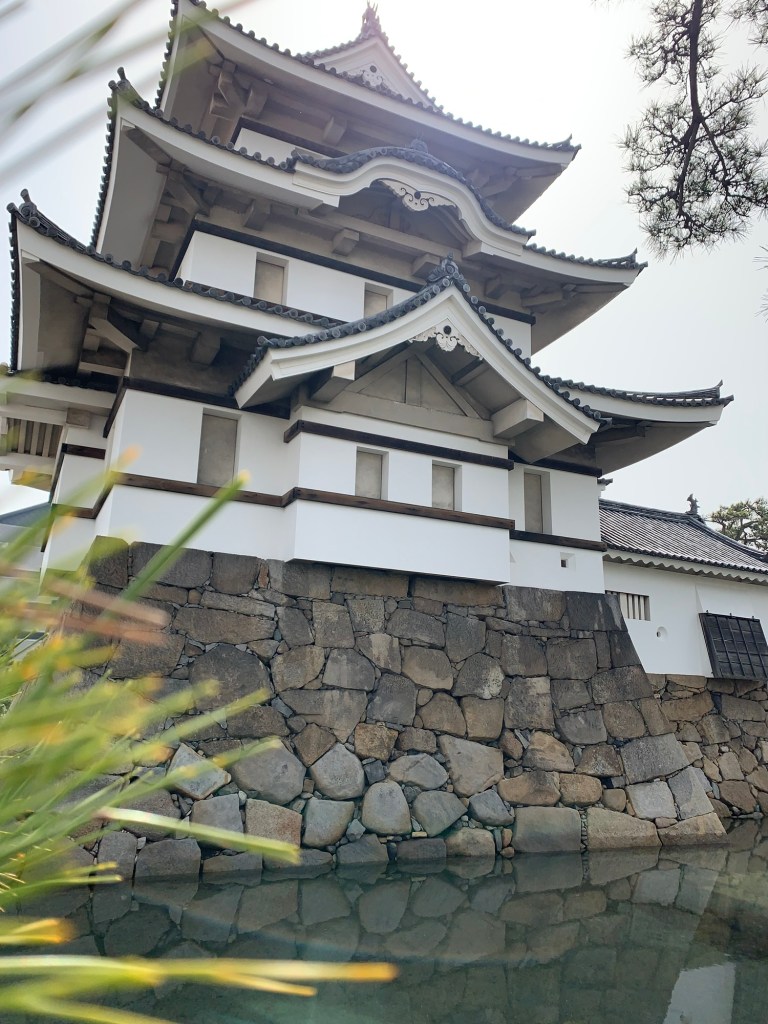
In this city of 420,000 we visited a park built on the ruined castle of Tamamo and its adjacent history museum. We had beautiful weather and about had the place to ourselves. Here’s one reason why. As JG was pointing Google Translate at the inscription on a boulder, a threesome of Toronto folks we knew from our ship hailed JG from afar to ask for directions to the entrance. Because the man said, “Excuse me, Sir!” when I was standing right next to JG, I did not reply, letting Sir answer. JG did not know the way in, but I did. I let them walk away in the wrong direction. No more trail-momming! So this is the only the second port in which I have not been asked for directions.
Takematsu Castle Tower
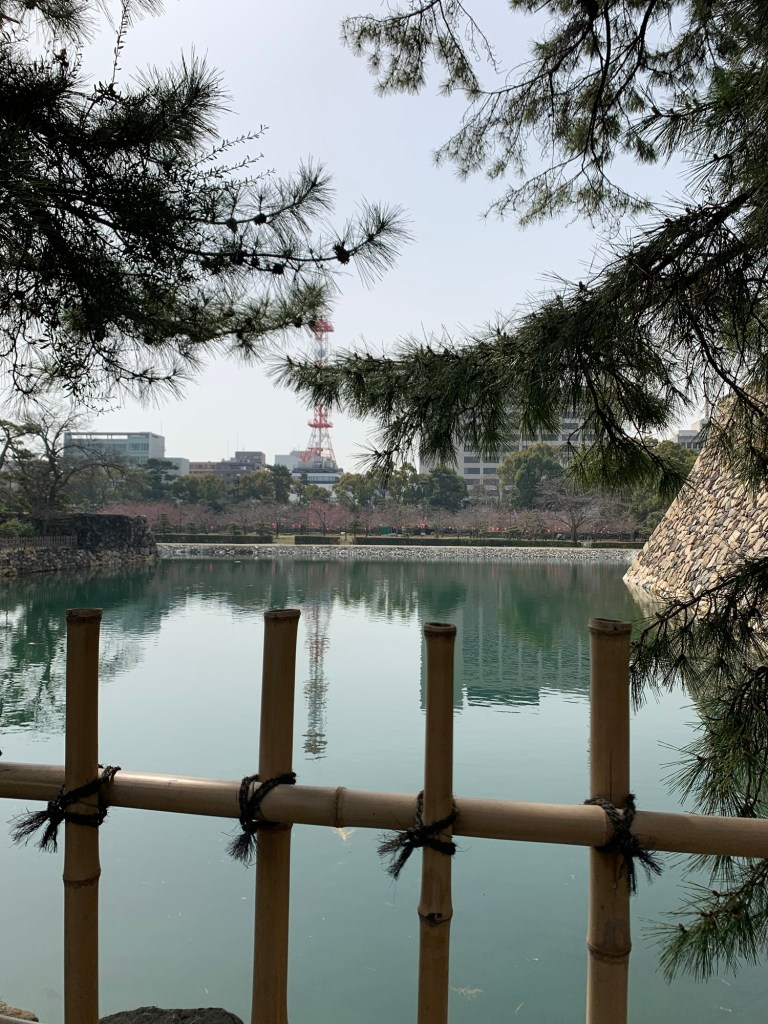
The castle was one of only three seaside castles in Japan. It had two saltwater moats around a keep with a freshwater lake fed by an underground spring. The Ikoma clan built it in 1590, getting rich from rice farming, then the Emperor gifted the fiefdom to the Matsudaira clan. I couldn’t find out what the Ikoma did wrong. Matsudaira owned it for twelve generations through the Edo period, (1660-1868) and beyond. We learned that castles were built of wood and built to impress. We’d call it a palace. Castles were not built for defense. Warring clans burned down their rivals’ palaces and surrounding samurai housing. The Takematsu castle had been restored several times, most recently after Allied bombing in 1945.
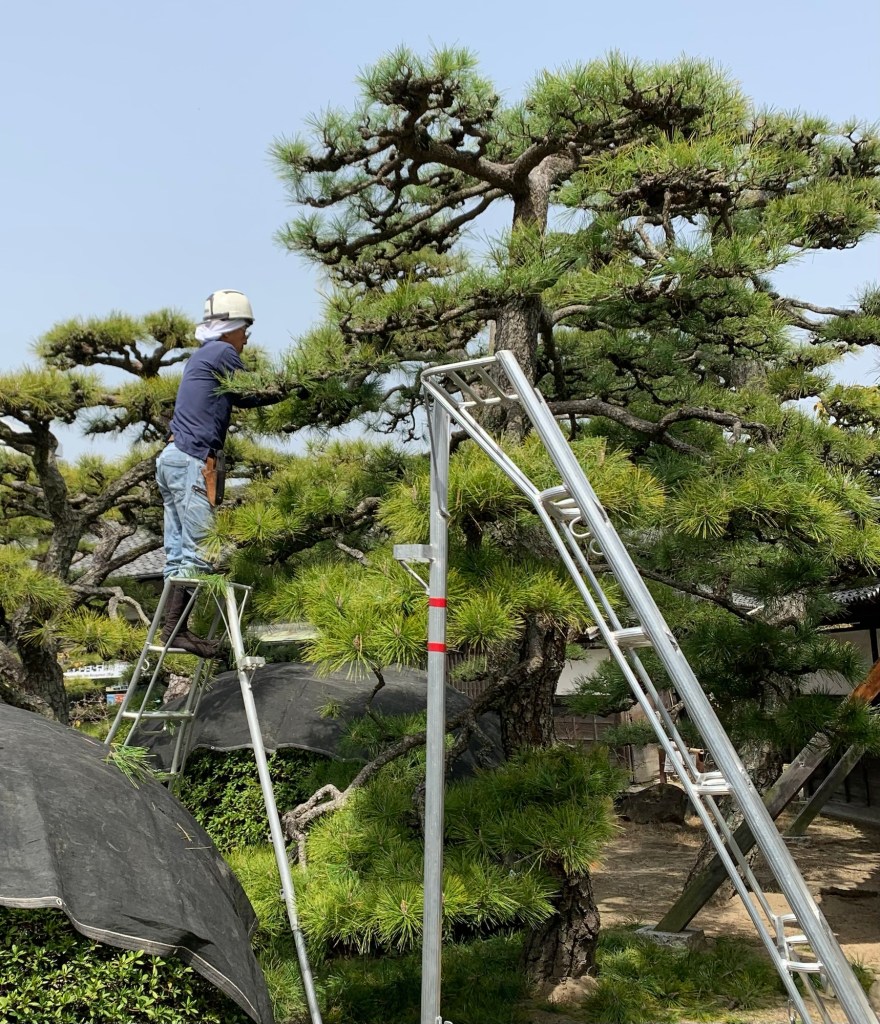
This morning the park hosted almost as many gardeners as tourists. The style of gardening does not appeal to me. The workers clip from the interior of the tree. Those leaves will die back naturally. Then they rake up every bit of fallen leaf litter, removing the humus layer that shelters insects. At our house we have many insectivorous birds who peck in the leaf litter. Here I noticed only two birds, a crow and a hawk.
Gardeners Clipping
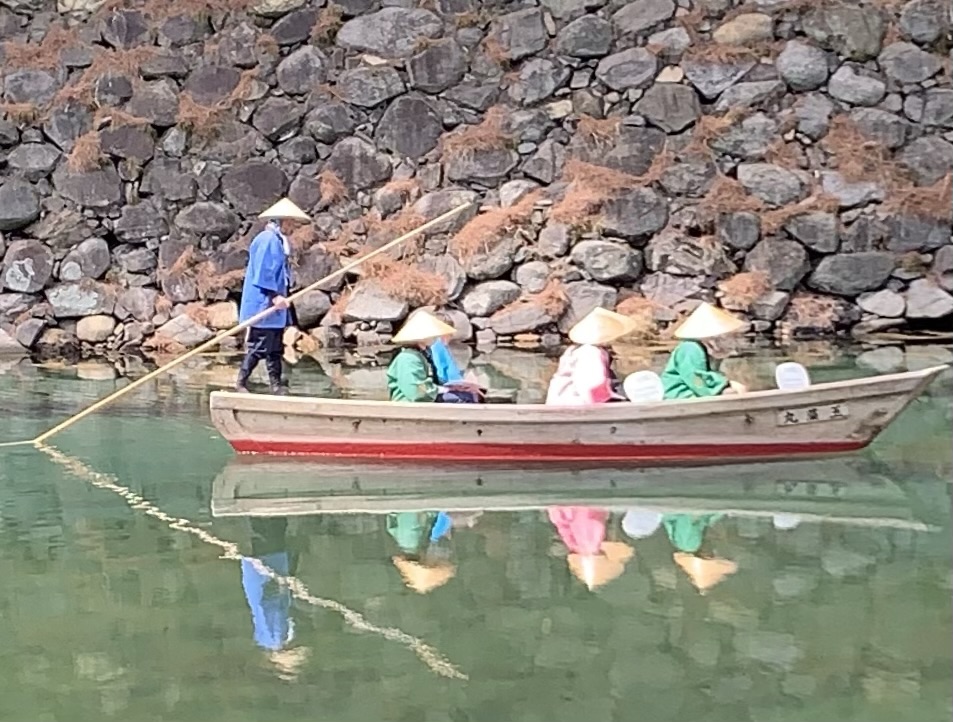
There was a pleasure boat concession selling sedate boat rides. The passengers dress up in kimonos and cone hats, then climb into a wooden boat propelled by a gondolier. I thought that one daughter would like it if she could pole the boat herself, but not if she could only sit.
Boat Concessionaire
Carp are lucky in Japan. They are especially lucky if you pay ¥100 for a handful of fish pellets that you throw to the waiting fish in the innermost moat. I enjoyed this activity. It reminded me how one girl liked to drop her fish food just so, to favor the littlest ones. A red sea-bream had joined the carp and pushed them around. I told the red sea-bream there was plenty of luck to go around.
Carp, Red Sea-Bream
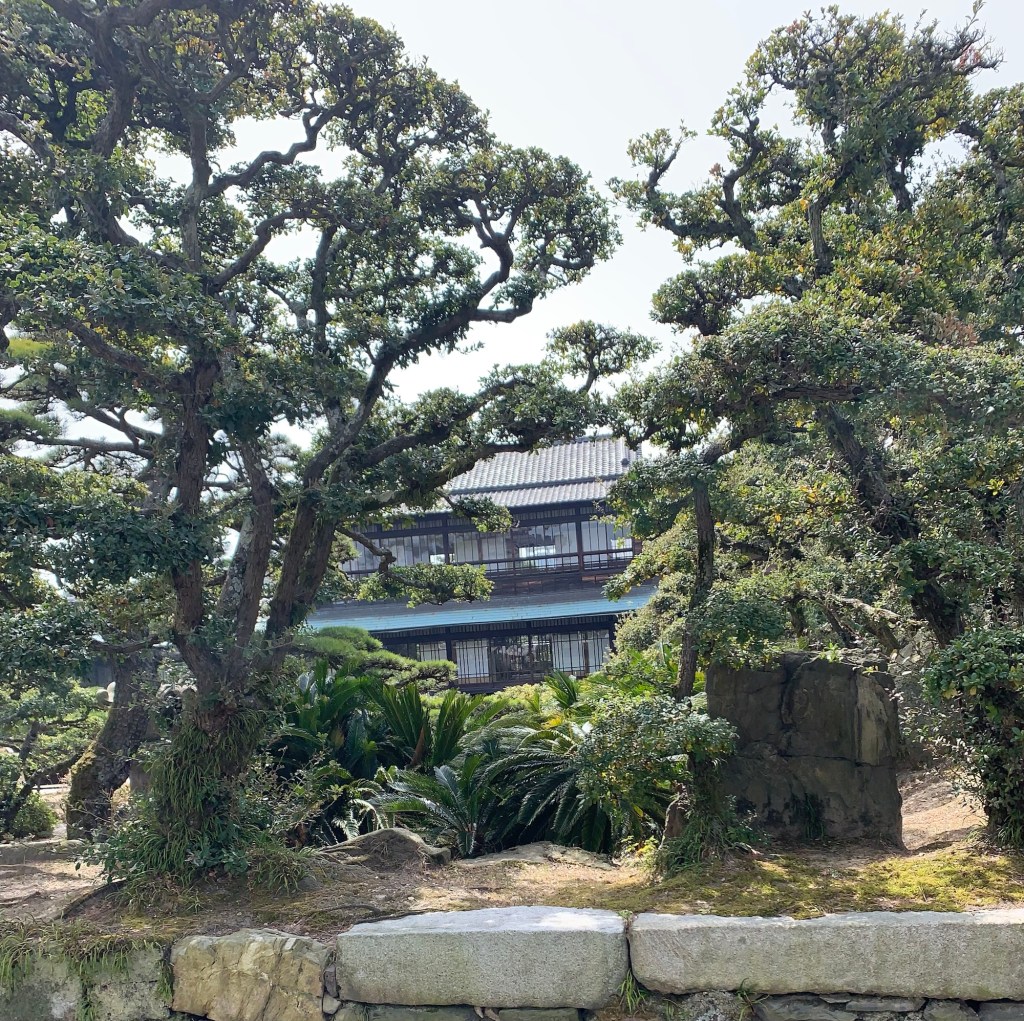
There is a lot of symbolism in Japanese gardens relating to the transitory nature of life: stepping stones, rock islands, bridges, and sand patches are also about the passage of time. When these elements are built on top of a ruined castle they become even more meaningful in an Ozymandias way: how the once mighty have fallen.
The once mighty Matsudaira swam daily and dictated that all subjects must learn to swim. To this day there is an annual all-comers swim event. The current Matsudaira family head has registered a special swim stroke as intellectual property.
Japanese swimming, called NihonEiho, is a classical folk sport. Swimming is “squid style,” never timed, and practiced all life long.
The history museum showed us a really good video of how the castle used to look in animated diagrams. We also saw some original downspouts shaped like frolicking carp, a theme from Kobe. The gift shop offered a large selection of takeaway Bonsai treelets.
Interesting to note that there were no rubbish bins around the park. I picked up trashlies and then gave them to the cashier at the entrance.
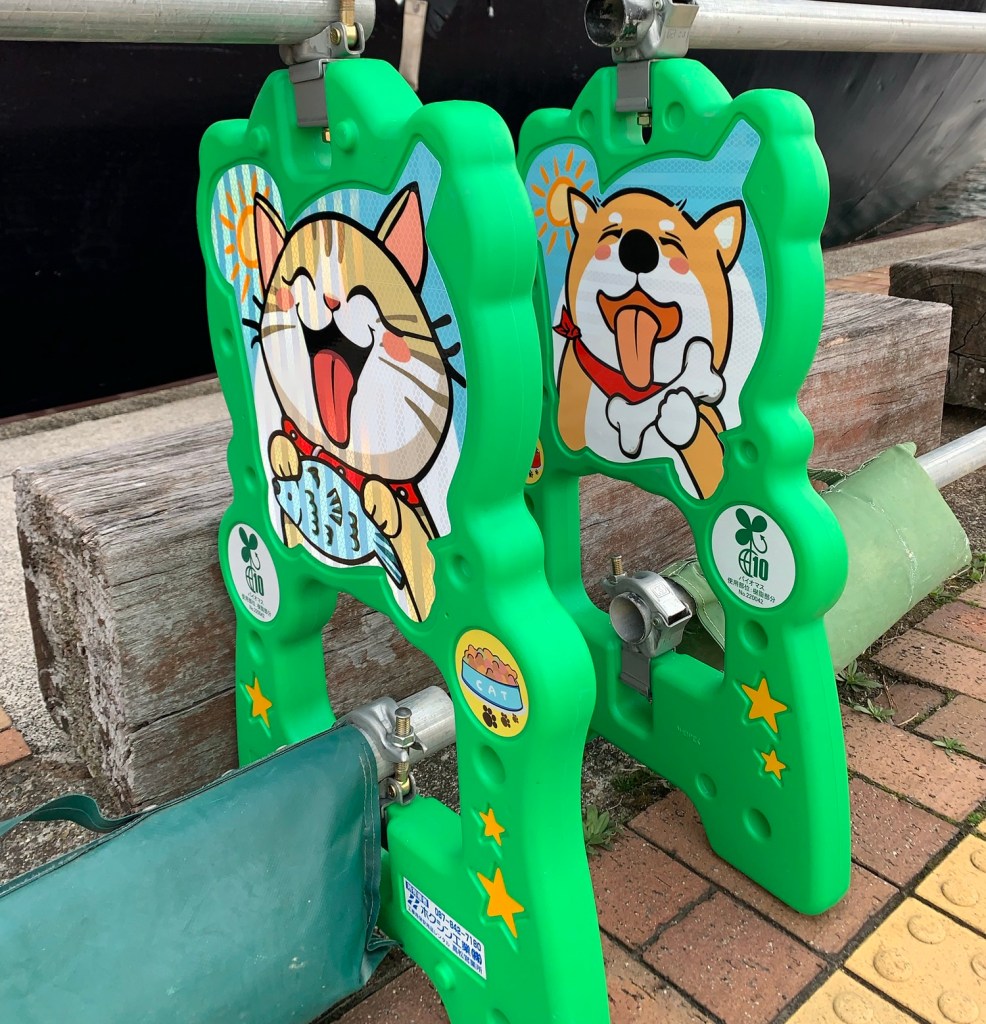
The port of Takematsu sported some of the cutest bollards I’d ever seen. Cartoon characters illustrate all kinds of ads and signs here.
Other fun fruits like pineapple, watermelon, and durian are unlikely to be smuggled in one’s pants and are therefore not pictured. I have eaten most of these, plus snake fruit, passion fruit, apricot, cumquat, loquat, and persimmon. Fruit bats and I have taste!










 JohnandJanet'sJourney