
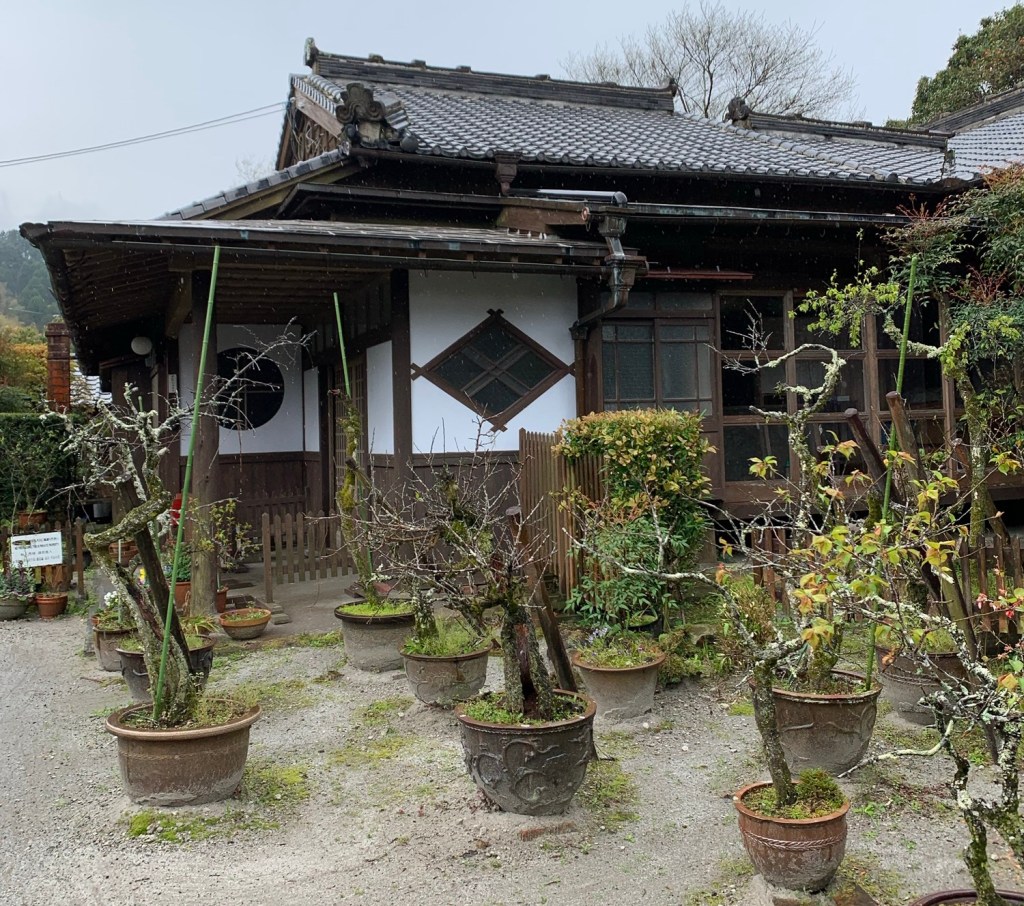
We rode the bus an hour inland from Kagoshima to arrive in Chiran, a town with a well-preserved 19th century street. Our guide, Yoko, attempted to fill us in on the history of the Samurai warrior class, 1185-1868. Japanese society was organized into tiers of a wedding cake, or castes. As the uppermost cake decoration sat the Emperor, but the cake beneath him was composed of the Shogunate, the local lords. They in turn were supported by the Samurai, the knights. Below the Samurai were the farmers, who paid protection money for the Samurai. Then came the artisans, fishermen, builders. At the bottom of the pyramid sat the merchants, who were not seen as adding much value. Stop right here to see why bargaining, so prevalent in Indonesia, is frowned on in Japan.
The Samurai of Chiran served the Satsuma Shogun. The Satsuma Shogun was one of the two mighty lords who formed an alliance to overthrow the Emperor in 1868, ending the Edo period. So these houses were not pillaged and burned by the opposing clan. Then the Samurai rebelled when an edict of 1871 forbade the wearing of a sword in public and stated anyone slaying a peasant for perceived disrespect would be prosecuted. They rose up against the Meiji emperor and were defeated after seven years. One of the Samurai leaders, Saigo Takemori, is honored with a monument in Kagoshima.
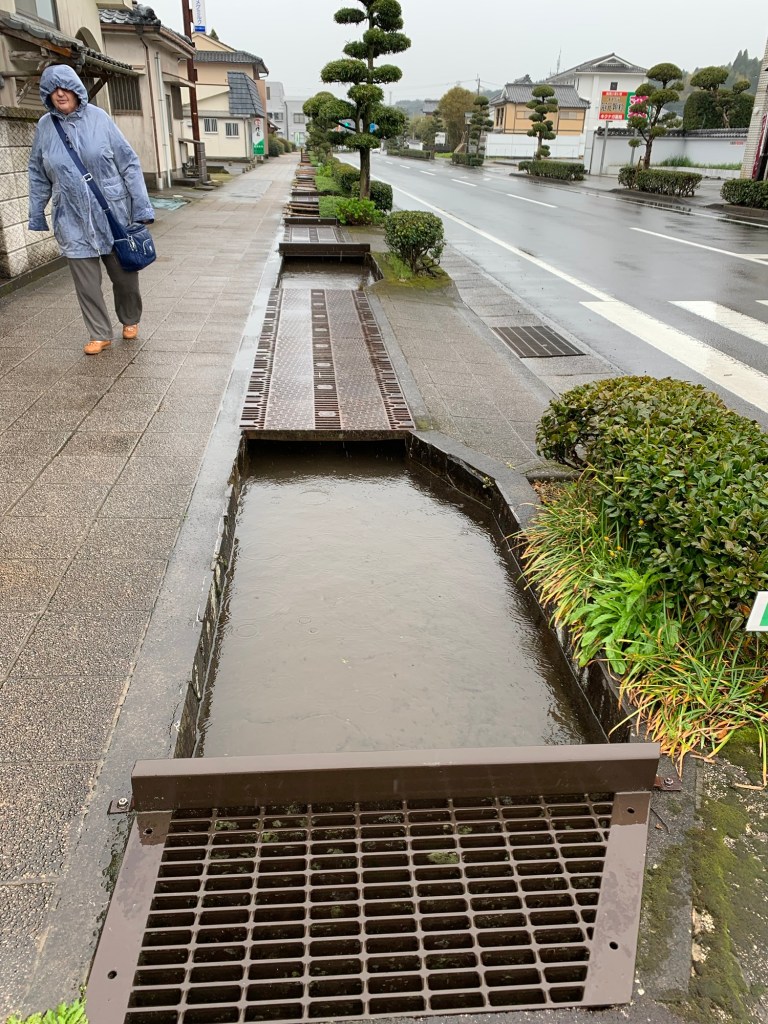
The steep mountains were covered with cedar, pine and maple. I couldn’t see what the understory looked like. We saw some tea farms, built into the hills. This region gave its name to at least two California fruits, the Satsuma mandarin and the Satsuma plum.
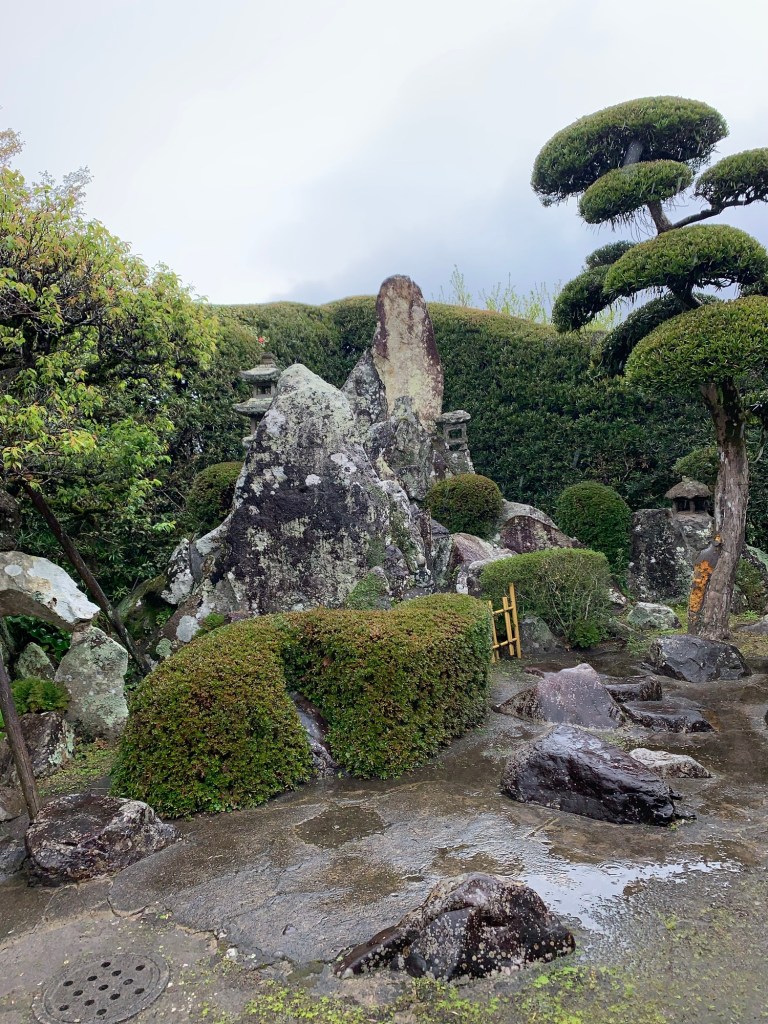
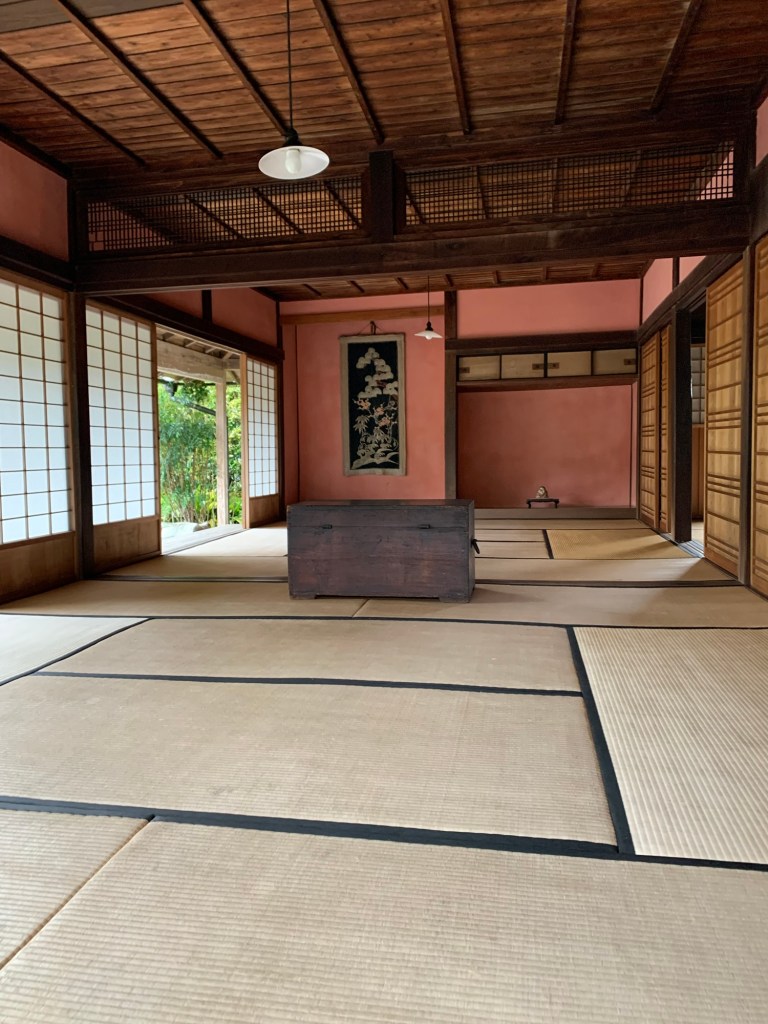
The tourist destination called “one of the best walks in Japan” consisted of a paved street parallel to the Chiran main street, with a rock or cement wall, a short Camellia sinensis hedge in front of a tall Podocarpus gracilior hedge trimmed with a wavelike top edge.
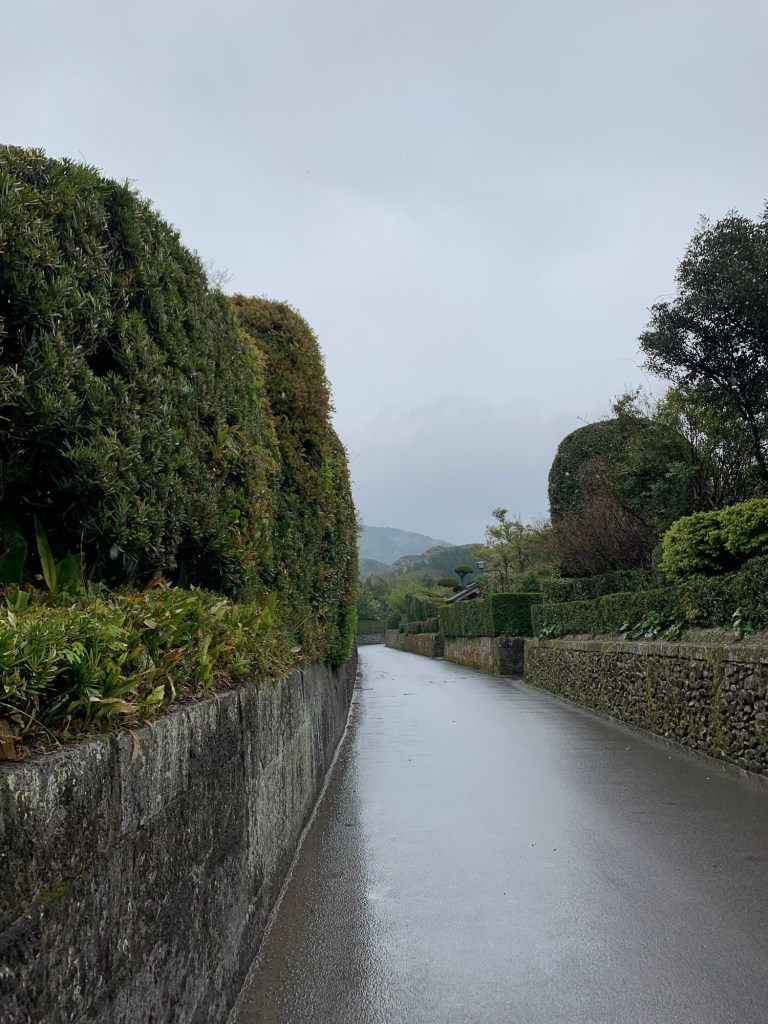
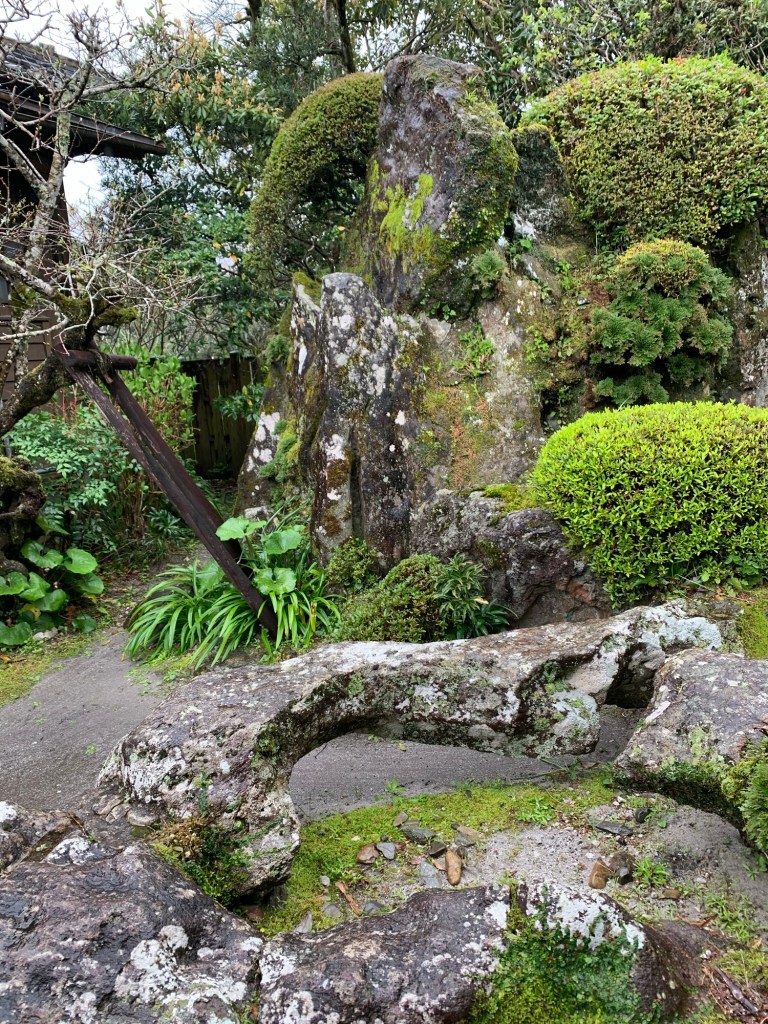
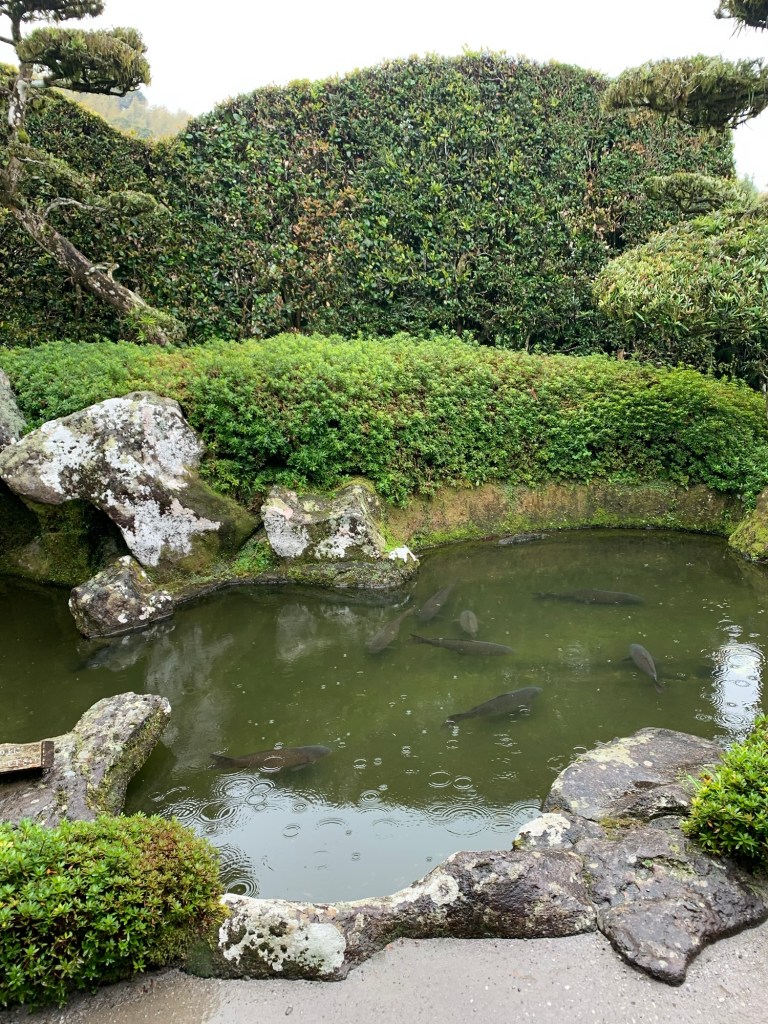
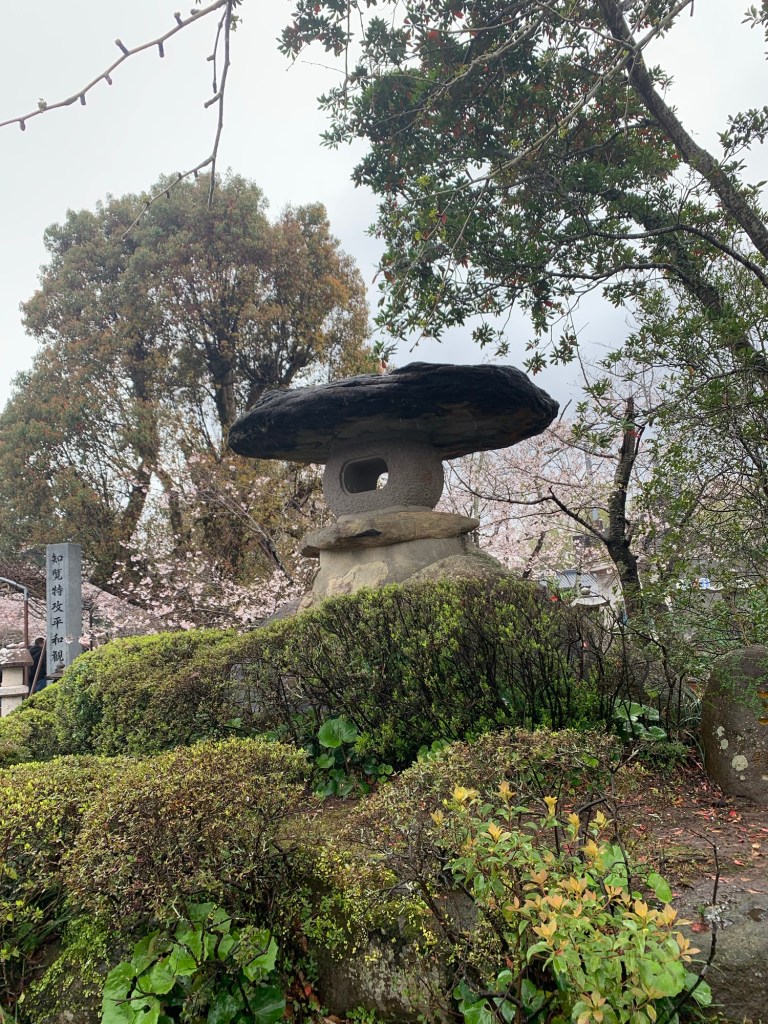
We stopped to look at several attractive walled gardens. A private trust supervises the gardens and the homes are privately owned. The river rock elements were quarried upriver and carried on the backs of oxen to be placed in the yards. I liked the pond with carp best. No birds seen or heard.
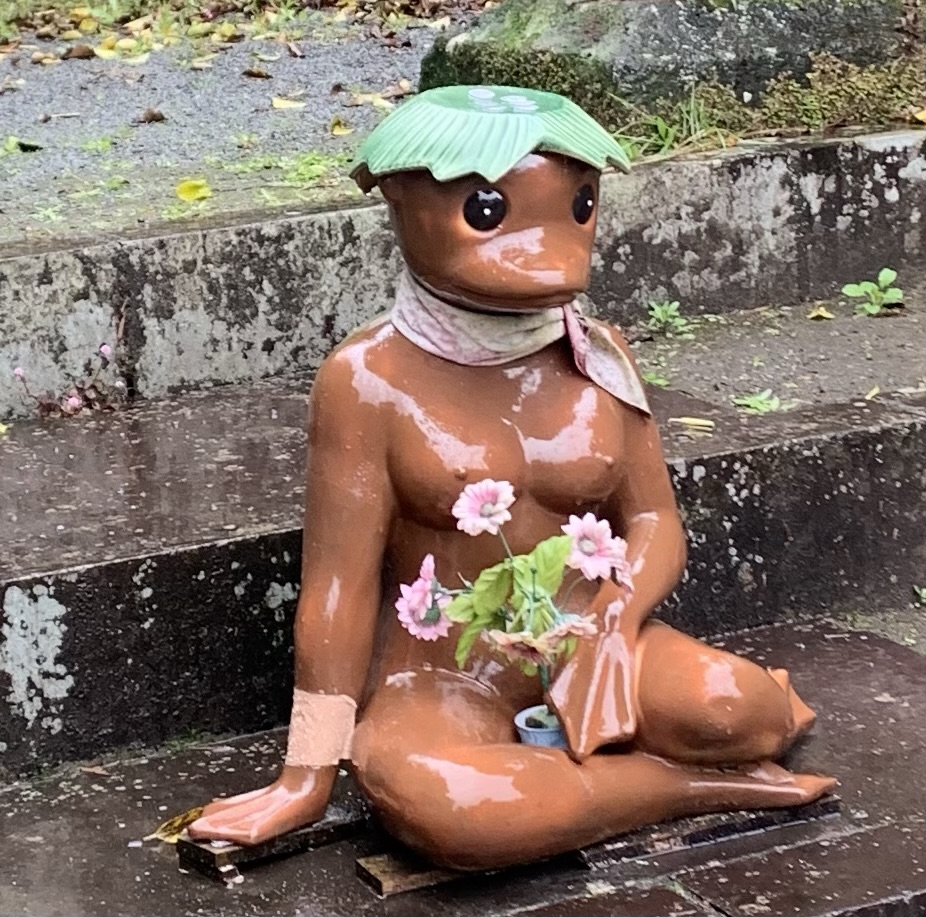
The only wildlife sighting was this image of a river sprite, a Kappa.
At a tea shop we were grudgingly offered a tiny cup of greenish hot water, allegedly green tea, included with our admission fee. On the scale of hospitality, New Zealand ranks up top and Japan dead last. Tourists are an irritant, even if they bring money. Japanese don’t fake that they are glad to see you.
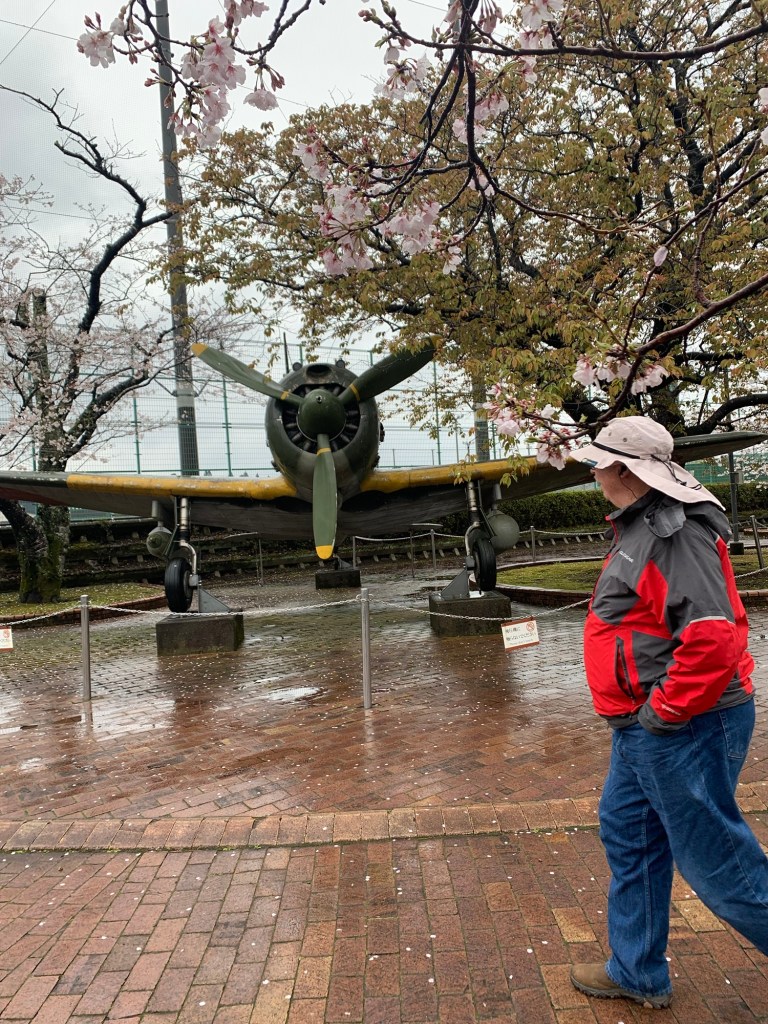
I didn’t fake that I was glad to see the Chiran Kamikaze Museum (1975). JG had warned me, from his trips to Japan 30+ years ago, that Japan celebrated its WWII casualties and veterans as brave heroic patriots. My stomach turned at the glorification of teen boys, poor second sons, who were mostly coerced into becoming suicide pilots. No photos are allowed inside the museum to make fact-checking the texts more difficult. Using my lit-major memory, I fact-checked their copy and found it to be propaganda, not history. The museum claimed the Kamikaze made a noble difference in the war. Though they inflicted casualties, they did not have an effect against the overwhelming military superiority of the Allies. Who benefits from lionizing the Kamikaze? The Right. They seek a biddable underclass willing to sacrifice without questioning the authority figures who talk up patriotism. I was reminded that democracy is a garden that needs tending, not a watch that runs on its own once crafted.
JG enjoyed looking at the Zero and Ki aircraft. He thought that the Kamikaze pilots flew by sight only and that the instrument panels had been stripped out so as not to waste them. That was not what was portrayed.
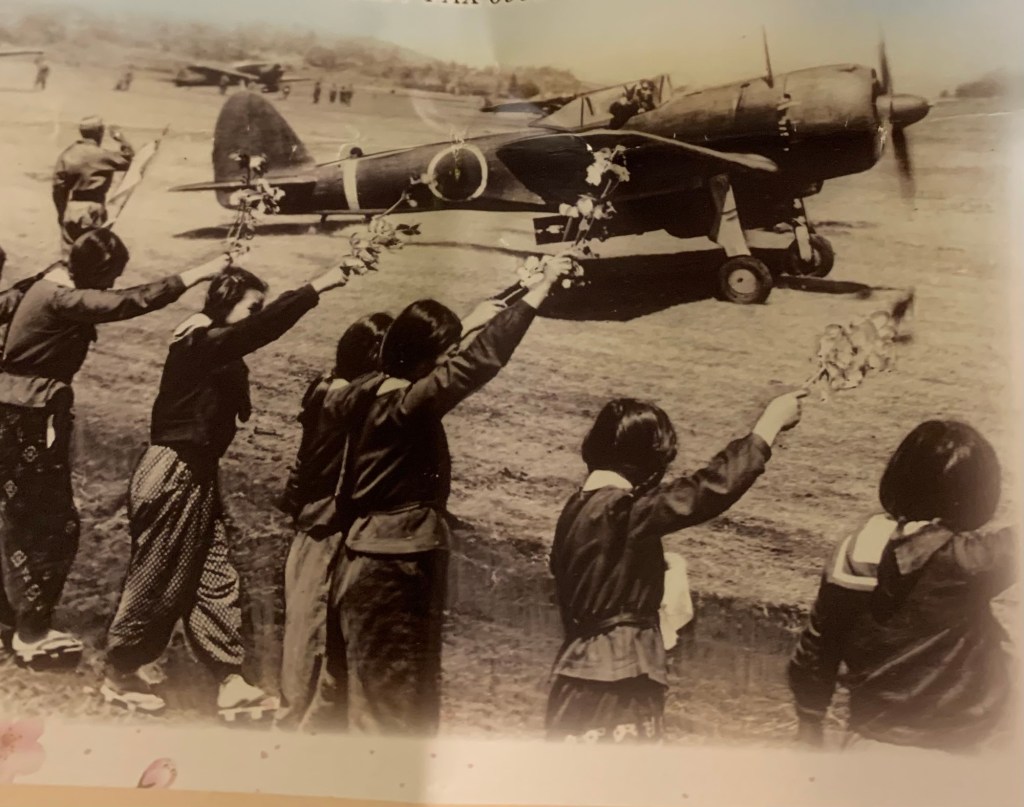
Schoolgirls saluting the pilots in training camp makes a good propaganda photo.
 JohnandJanet'sJourney
The wedding cake is a neat analogy for the social hierarchy. I think it’s interesting that farmers outranked artisans, who outranked merchants. That’s different from the European pattern.
Those are some nice rocks!
I can see why they would need to tell the story that the kamekaze pilots were brave and effective; without that story, how could they possibly defend the practice?
LikeLike