
From the online H— K— Free Press:
The city’s most prominent pro-democracy politicians had been jailed, left the city, or quit politics.
Hitler built the Autobahn, made the trains run on time, and ended unemployment. People mention these to say there are positive attributes to totalitarian government. After visiting the fourth nation in a row without free elections, I’m at a loss to chirpily describe the tourist attractions. Dystopia lurks beneath the skyscrapers. Today I read online that the stepfather of a noted dissident hiding abroad has been arrested for questioning about his stepson. The message is: even if you escape the country, we will come for your family.
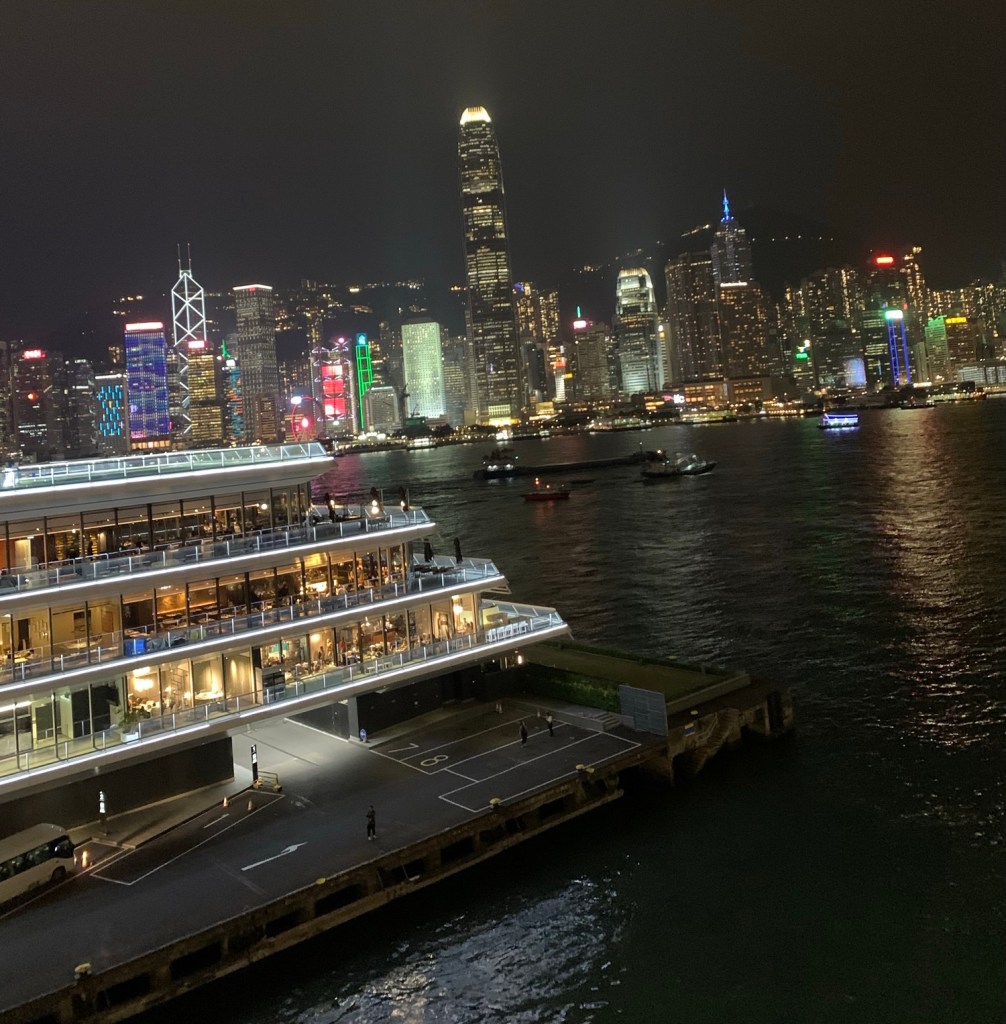
We stayed two days in H—- K—-, a beautiful port city at the mouth of the Pearl River. Ten years ago, we went sightseeing to the islands, the markets, the tramway, and the history museum. We have changed and so has this city. The umbrella protests, a brawl in the local council over democracy, mass migration from H—— K—— to the West and mass migration from PRC to H—- K—- have altered the city. In these ten years, this city lost and gained about 1% of its population annually, about 68,000. “One Country, Two Systems” has expired. See https://ash.harvard.edu/wp-content/uploads/2024/02/overholt_hong_kong_paper_final.pdf We had delved into local history at the wonderful “Story of H—- K—-“ exhibit at the Museum of History. It has been closed for over five years. Now the museum offers a huge exhibit on the importance of national security. Will they expunge the role of the British in toppling the Qing dynasty in 1911 and leave it just to the Kuo Min Tang and Sun Yat-Sen?
It is not illegal to own a Bible here, but it is illegal to sell or distribute them. Reminds me of the old marijuana laws: personal use is tolerated, but pushers will be prosecuted.
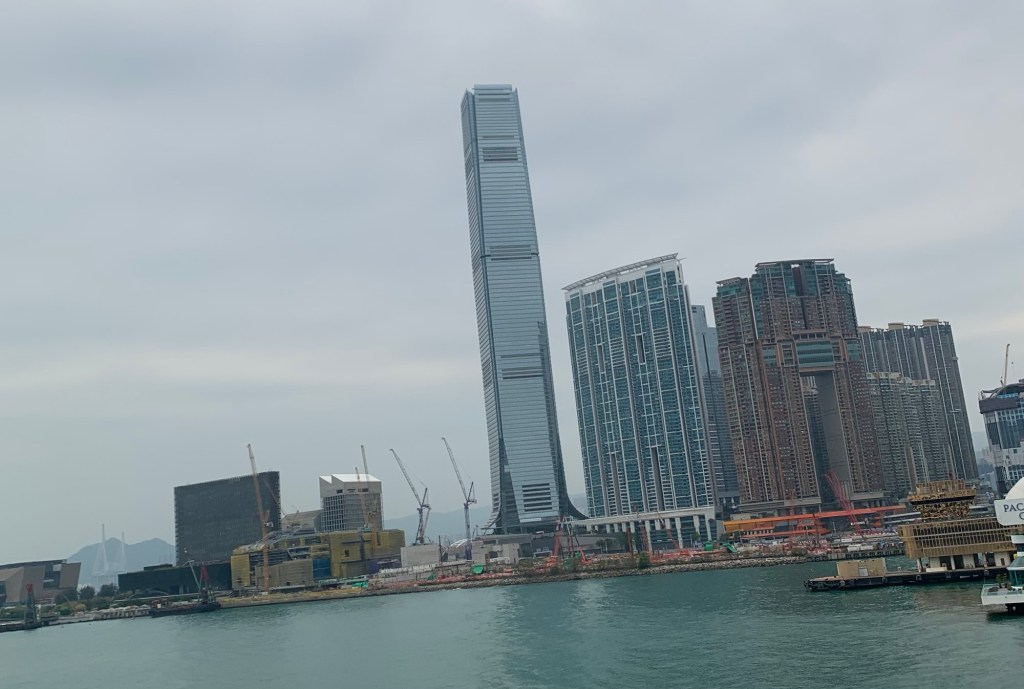
JG and I took a rapid elevator to the 100 floor high viewing platform of the “Sky 100.”
We ate Peking duck and sea blubber jellyfish at a restaurant. We noticed the streets were clean and traffic signals observed.
We were happy we’d found each other because neither of us wanted any luxury goods. I have a higher tolerance for shopping, while JG actively avoids malls and stores except grocery and hardware stores. He was queasy just passing through the Harbour City Mall. We took a wrong turn in the cavernous shopping mall and ended up at a Toys-R-Us, not out of business here.
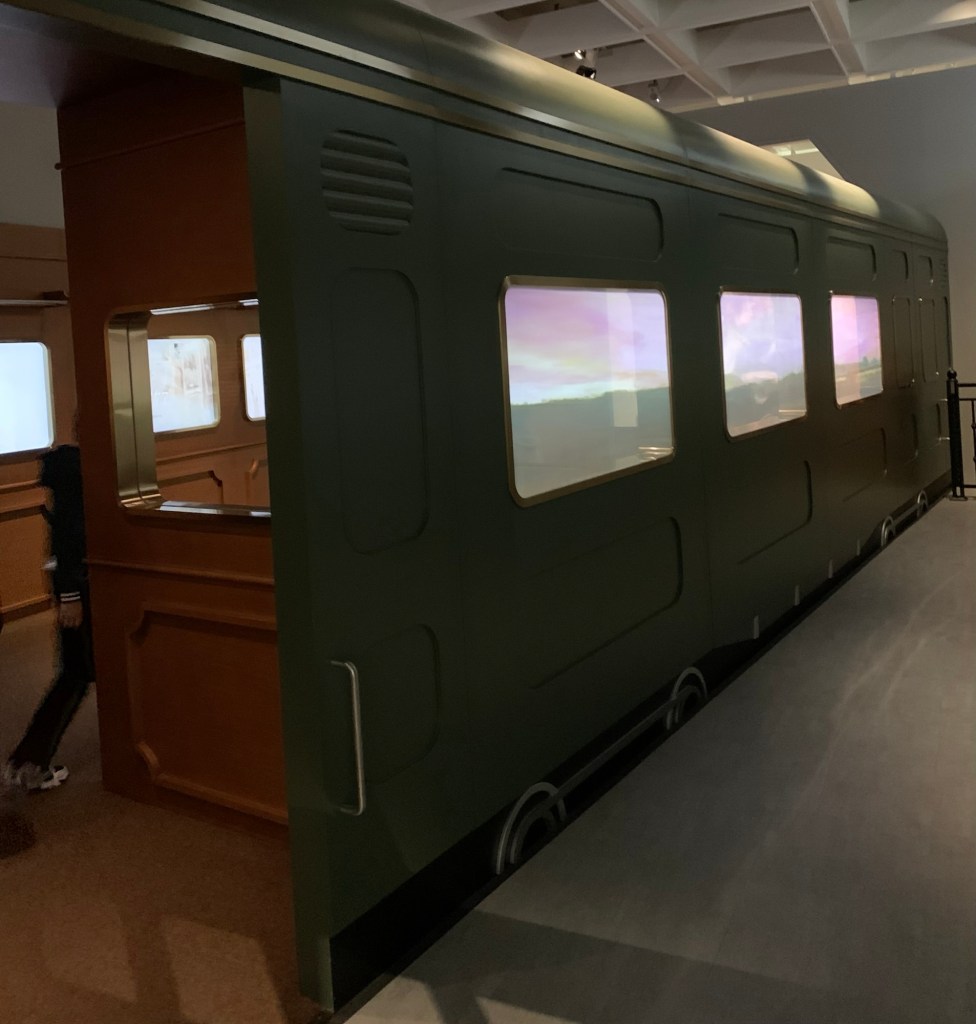
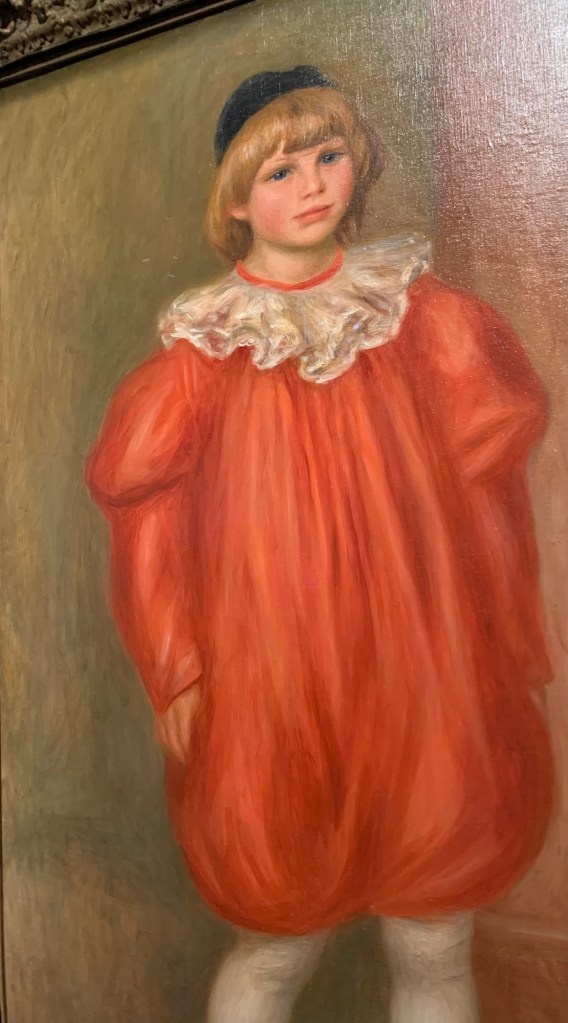
We saw an exhibit on the friendship between Cezanne and Renoir at the local art museum. It sounds wonderful to be friends with someone who lives close by and shares your interests. The two friends painted together, sometimes en plein air, out on the open. JG praises the technical innovation of squeezable metal paint tubes, which made plein air painting possible. The exhibit features a modified train coach. As we sit in the bench seats, the landscapes racing by out the window are computer animations of Cezanne landscapes. Looking out the train window emphasizes the subjective, fleeting moment captured by the Impressionist painter.
Renoir painted his son, who reminded me of someone dear to me.
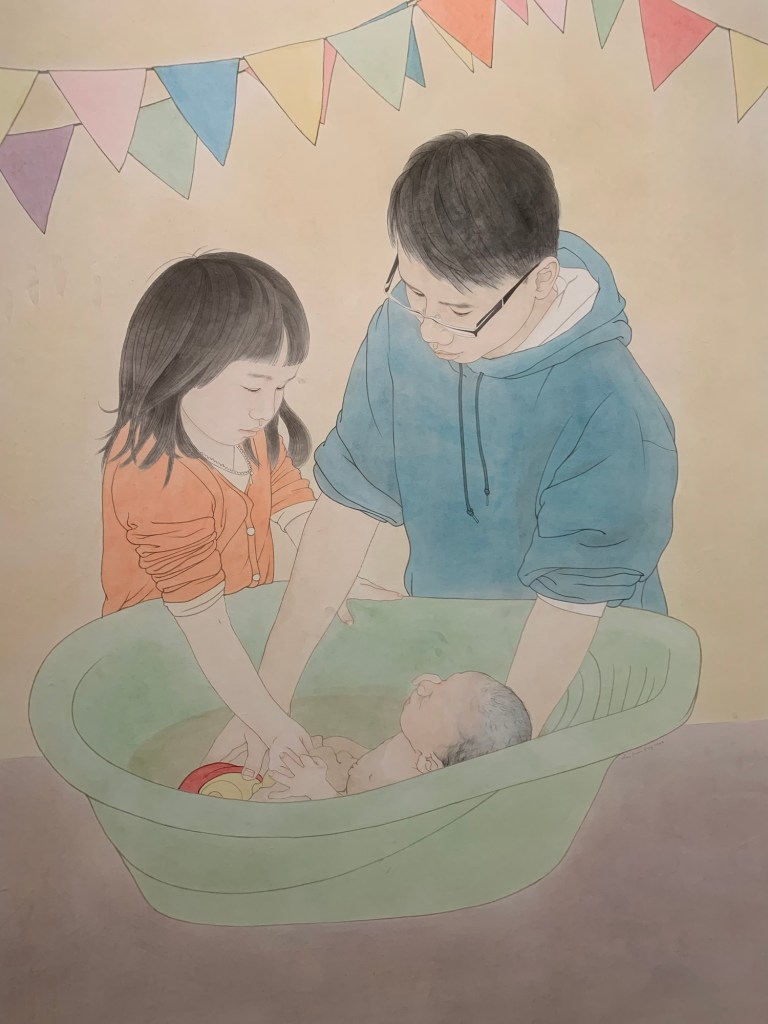
I also liked an exhibit of a contemporary Chinese artist who paints her family.
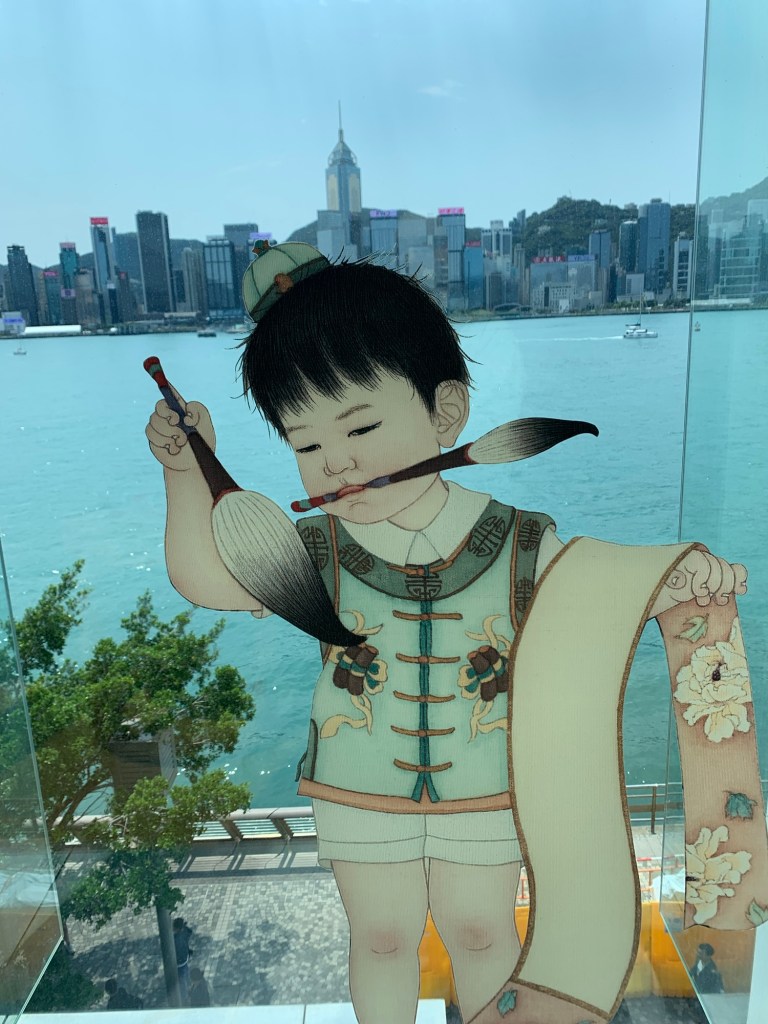
And children were praised for being virtuous.
And we enjoyed an exhibit on trade in Canton in the 18-19th centuries. I learned the origin of Pidgin English. The Qing Emperors forbade the speaking of English by Chinese tradesmen. Only through state-sponsored linguists could the Chinese communicate with the foreigners. Some started breaking the rule by means of a translation chapbook. English words and phrases were spelled out in Chinese script, called Han Zi, the characters in this post’s title. There is no R or L. So “little” and “writer” might both be said as “widow.” Because spoken Chinese words don’t end in consonants, Pidgin English adds vowels or drops the ending. Lookee! No tickee. No washee!

Another story about bargaining: Ke is Chinese and an officer on the ship. She helped a guest bargain down the price of a “Rolex” at the Ladies Market. The seller wanted US$180 (Amazon Price US$199) for the knock off and, thanks to Ke haggling in Cantonese, ended up accepting US$90, all the money the guest had on him. Ke related how happy everyone was with this purchase, but I’m still judgmental.
I like the H— K—- history of success in Entrepôt Trade. They welcomed, collected, stored, traded, and dispatched wares from the Far East. They needed good laws and language skills. Small scale free market capitalism prevailed. A rising tide could indeed lift all boats, although maybe the British boats were lifted more.
California has benefited from the migration of Chinese. Chinese helped build the railroads, did the laundry, worked in fields, fished, cooked, and mined. Santa Cruz, San Jose, Sacramento, and especially San Francisco had thriving Chinatowns. Although the Chinese Exclusion Act of 1882 forbade Chinese migrants, many had already settled in California.
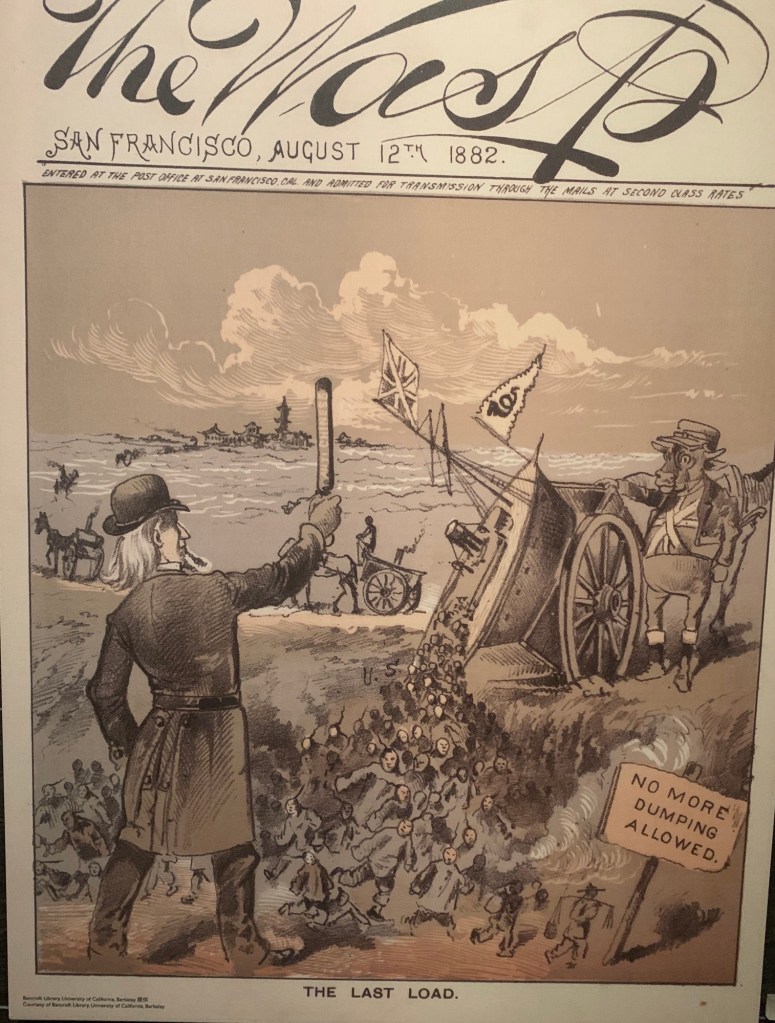
In 1943 the Act was repealed to deny Japanese propaganda that might weaken the US-China alliance. Then more Chinese came to California to escape from the Communists. The Chinese-Americans I know work and study hard and they vote.
 JohnandJanet'sJourney
The changes in the history available in museums sounds chilling.
LikeLike