


This museum combines natural history and art exhibits. First I learned about local animals.

Tasmania hosts carnivorous marsupials like the Tasmanian Devil and herbivorous but touchy marsupials like the Pademelon and Wombat.


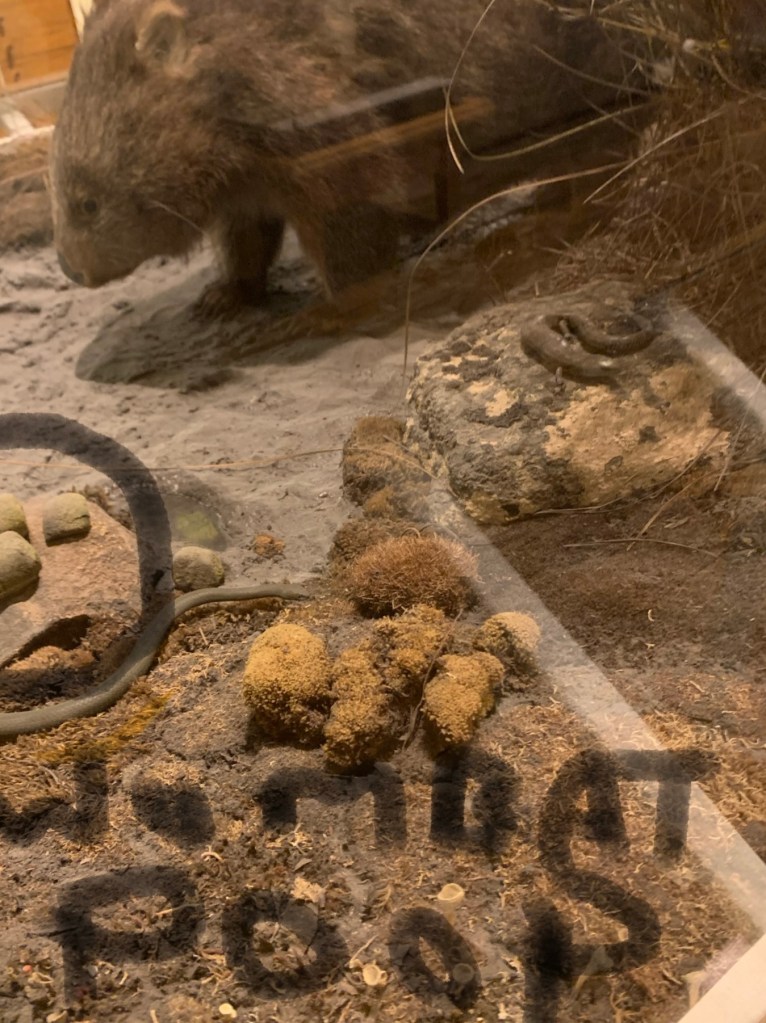
Of interest to the poop enthusiasts, some of the taxidermied animals were displayed alongside their feces. The wombat produces about a hundred of these cube-shaped nuggets a day owing to their slow digestion of tussocky grasses.
Strange animals are symbolic of Australia, like the charismatic Echidna and Platypus.

The now-extinct Thylacine, a carnivorous marsupial, has a woeful story based on a misunderstanding.
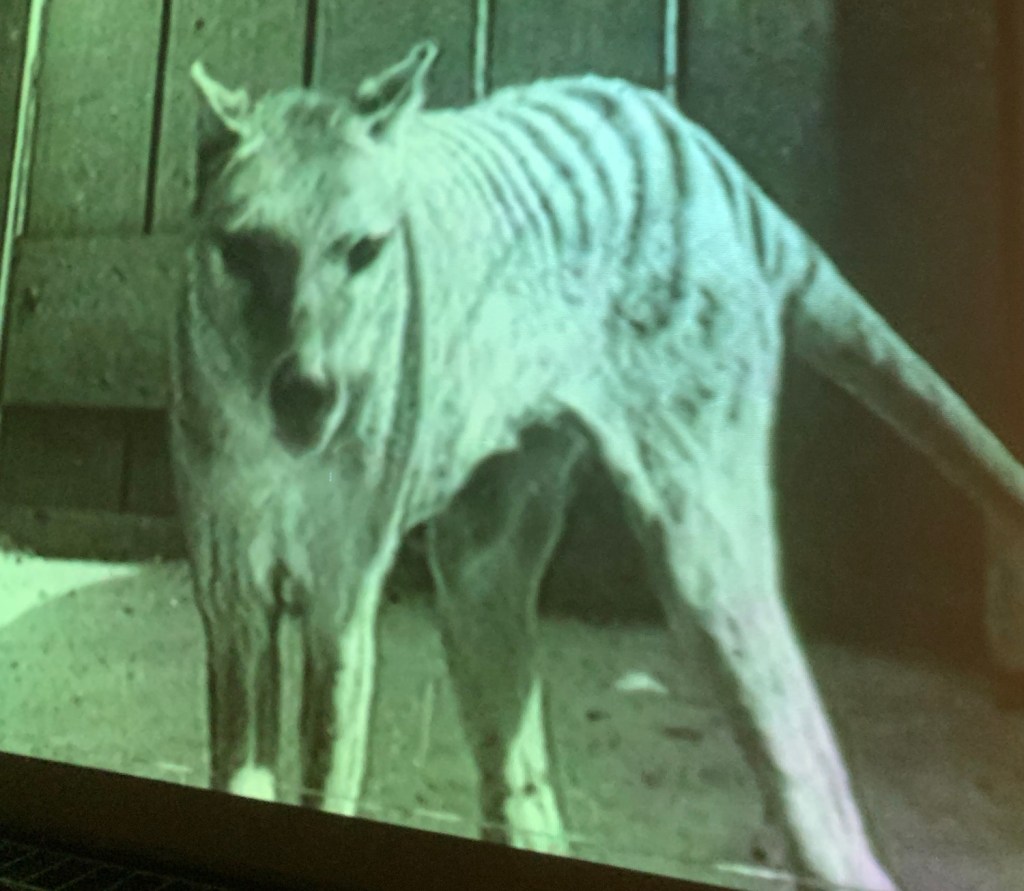
Also called the Tasmanian Tiger, it was hunted to near-extinction because it was thought to prey on livestock. In the 1890’s the state government even offered a bounty of £1 per adult and 10 shillings per pup. Thousands were slaughtered. Later, upon closer examination of its skull, scientists agreed it was unable to kill large mammals because of the narrow shape of its jaws and teeth. The thylacine was related to jackals, not wolves. It might have managed to eat a dead sheep but not kill a live one.


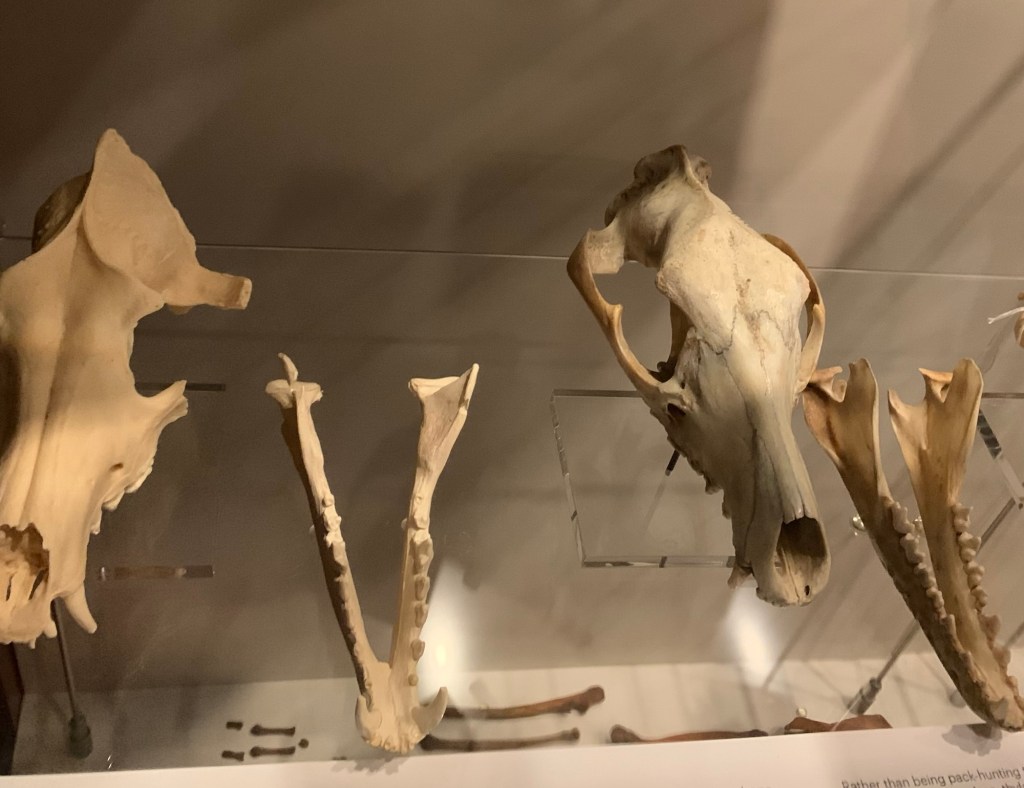
The last known Thylacine died in captivity in 1936 in the Hobart zoo. Her remains are preserved for future generations to study. The thylacine is the symbol for the local government as well as for the local Australian Football Federation Team.

And you can dress up your dog as a thylacine if you buy one of these striped dog coats in the gift shop, sizes Small, Medium, and Large.


 JohnandJanet'sJourney
Thanks to your post, local poop enthusiast learned two delightful synonyms. We look forward to sharing these with preschool!
Love,
Shosh
LikeLike
However, the non-verbal poop enthusiast would not like to be dressed up as a thylacine.
LikeLike