
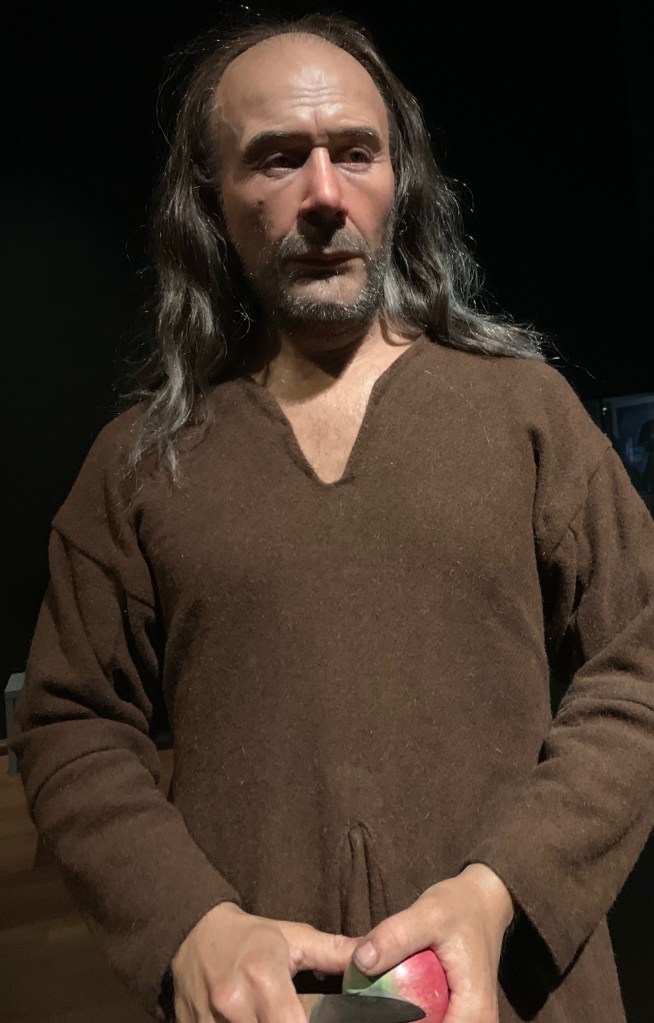
In Denmark, we were asked to pity the poor misunderstood Vikings. They’re not really seafaring raiders who ransom, pillage and sail away. They’re traders and farmers, with only their fair share of bad actors. They didn’t rape; they married into the Scottish communities. They converted to Christianity and settled down. They brought their village structure, in which women could both vote for an elected chief and also hold property, to the less progressive Scottish towns. No, they never wore horned helmets. I think that idea came from Wagnerian Ring of the Nibelungs costume design. Here’s a Viking wax model in Denmark:
Then in the islands we saw so much Nordic influence in the houses’ curled eaves we thought it could be true. Viking reputation rehabilitated! They only pillaged in England, not in Scotland.


Kirkwall is the capital of the Orkney Islands, home to a beautiful sheltered harbor, tourist infrastructure, and honest-to-Odin Nordic influence. I was impressed that the entire population was invited to attend a citizen’s funeral procession and service.
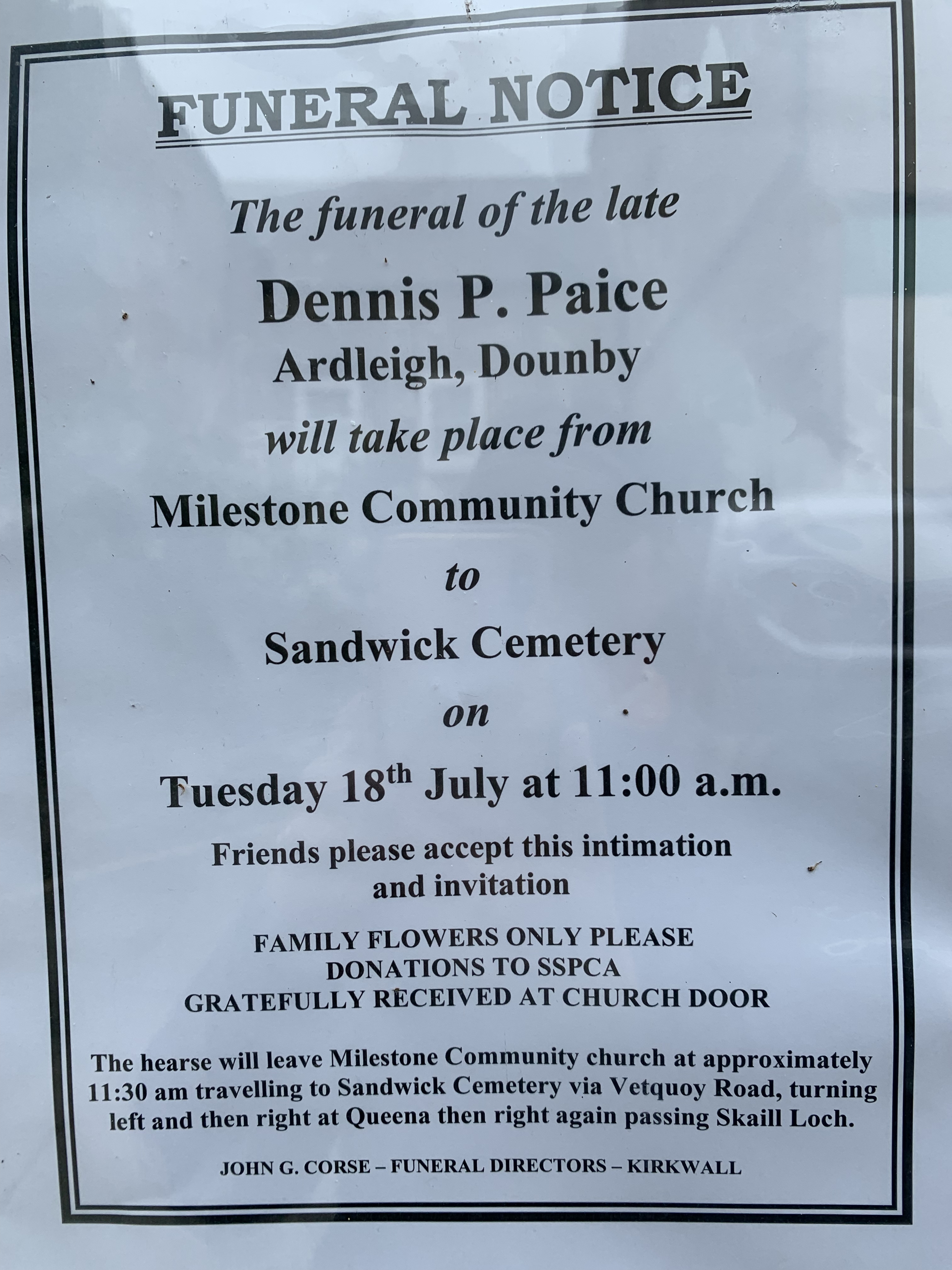
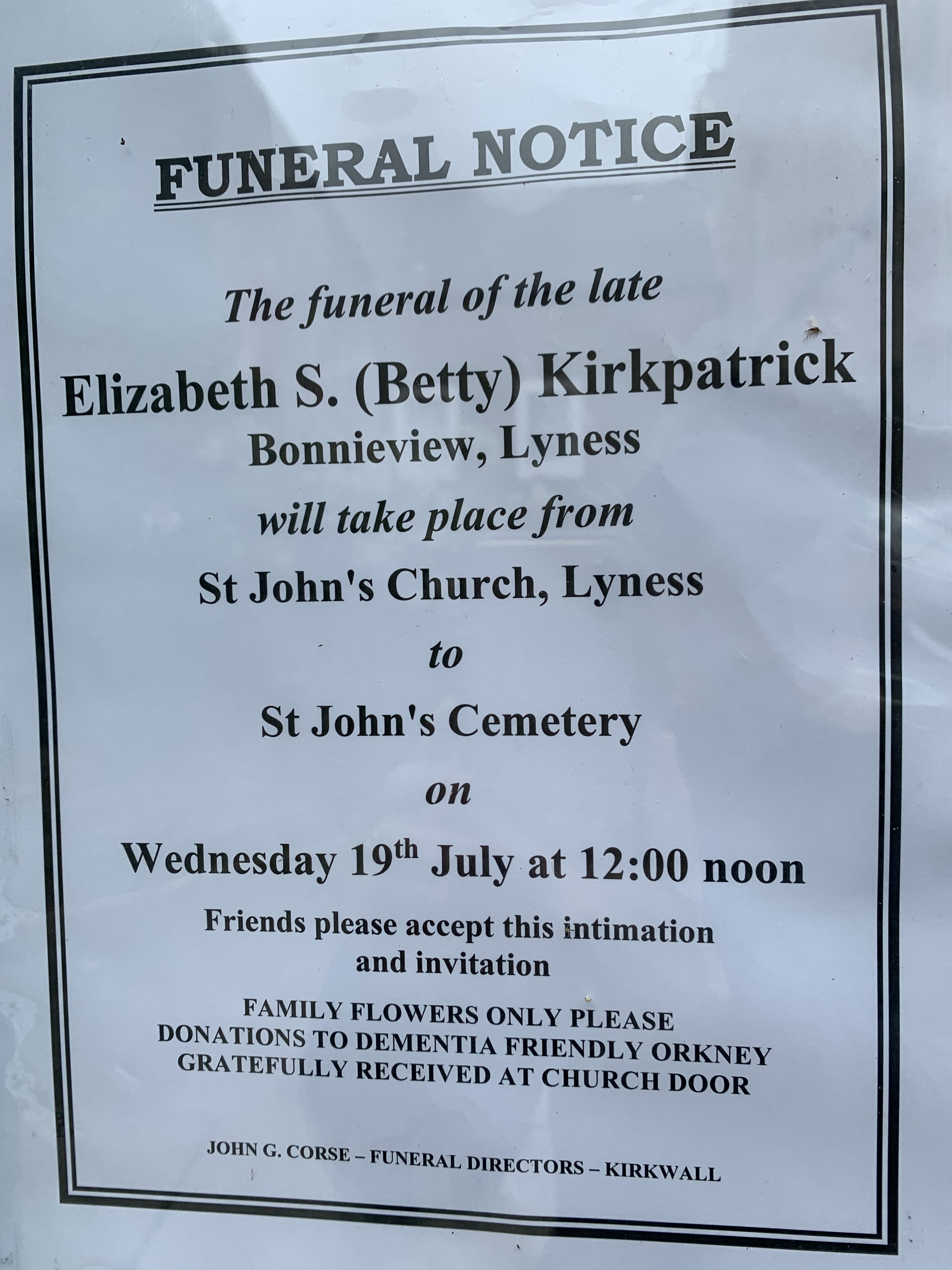
These posters invite everybody. I explored a couple of ruined Renaissance palaces by myself. Both were well-presented and free of safety advice.


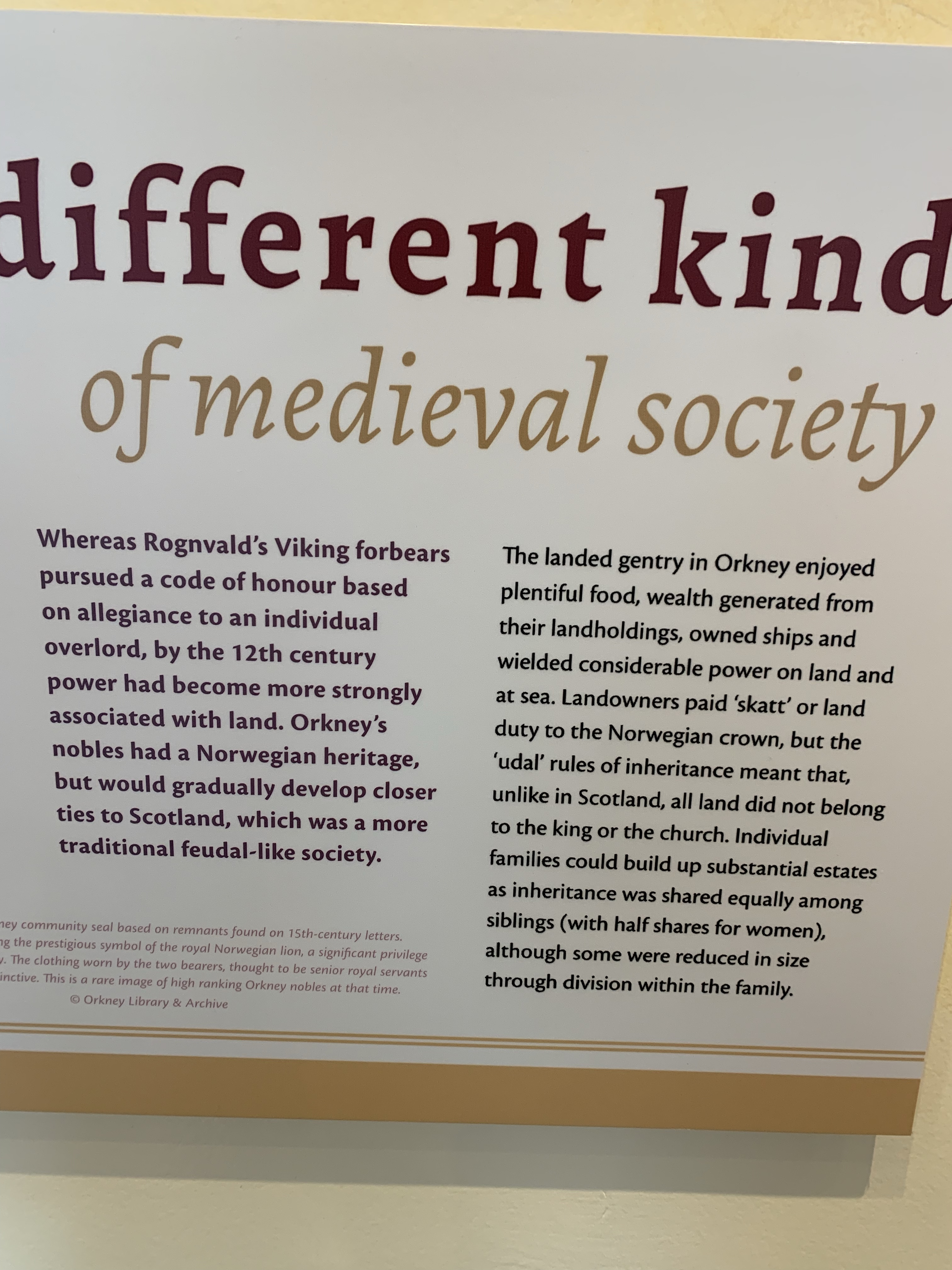
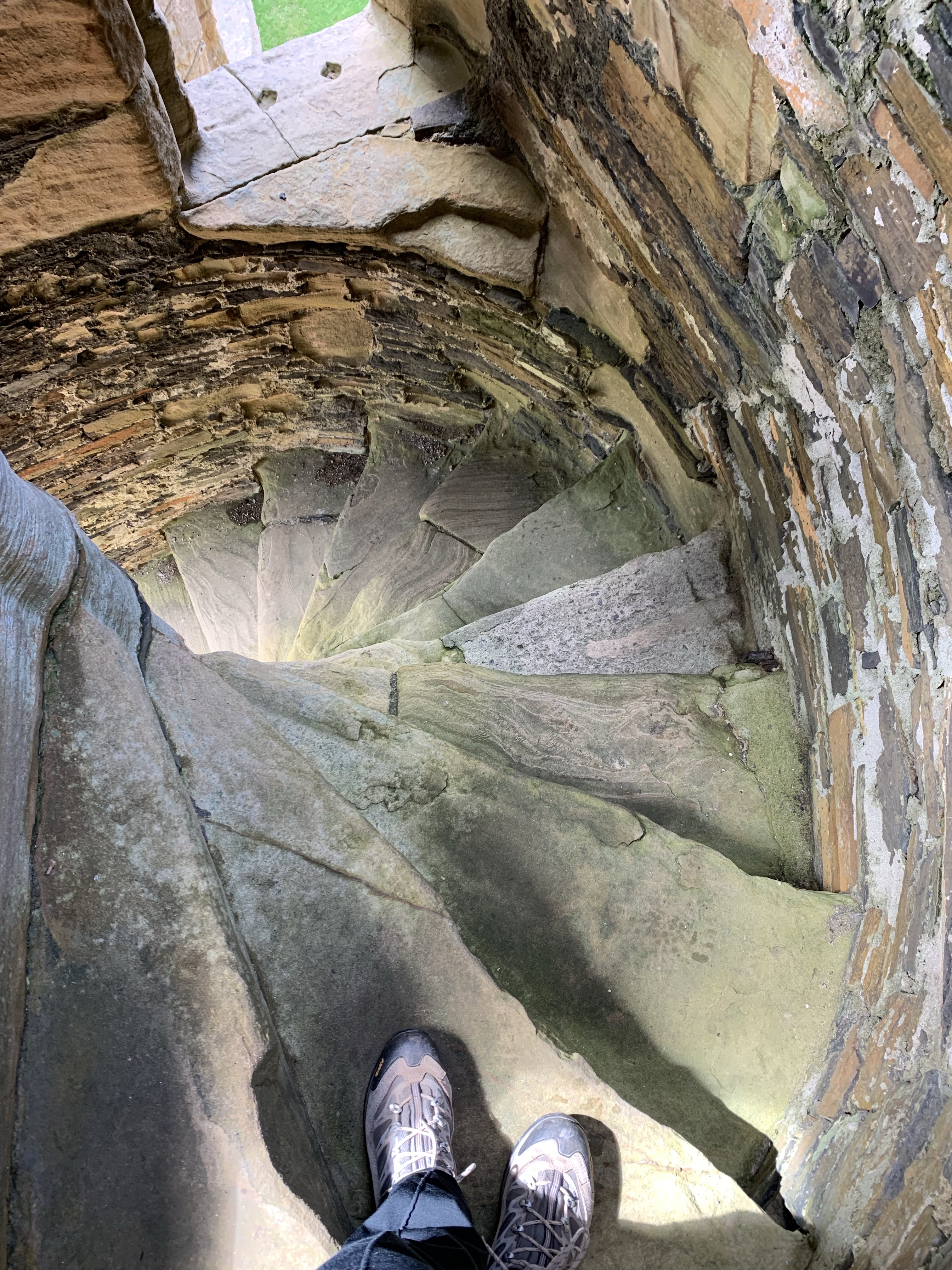
I met an English couple, Clive and Sheila, on holiday in Kirkwall. They showed me photos of their daughter shaking hands with King Charles III. In return, I showed them a snapshot of the little grands covered in Aptos Creek mud. We bonded over gardening and good dog stories. People really are the same all over.


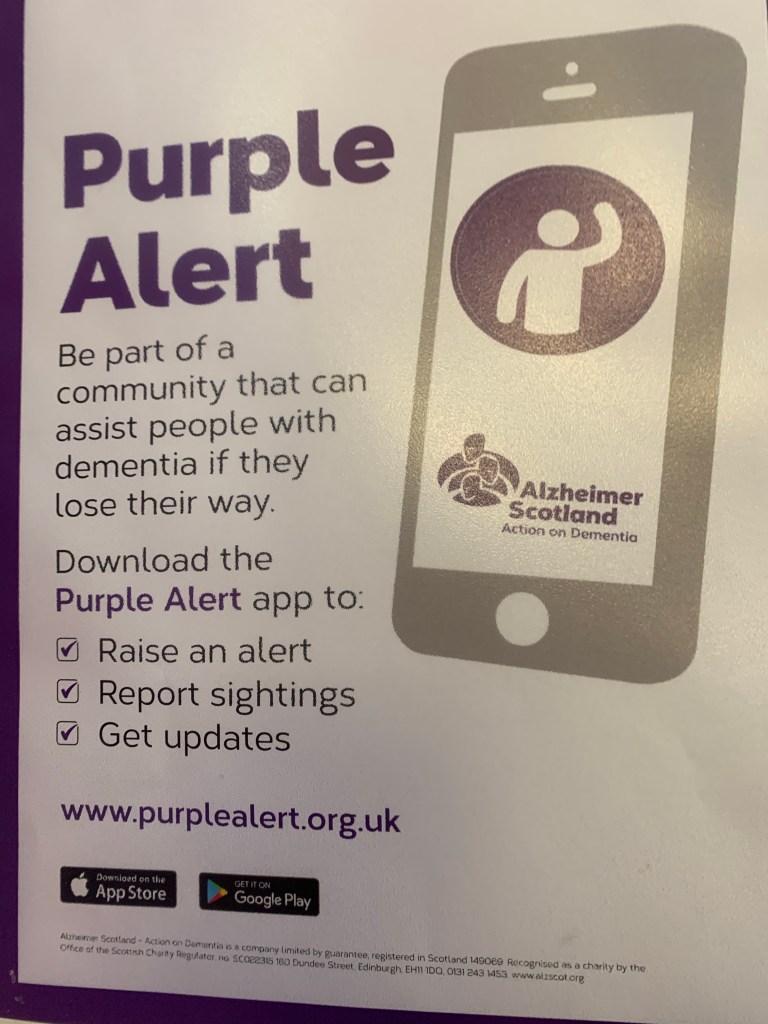
In Stornoway, you can enroll in a Purple Alert App to sight and track others’ loved ones who might have wandered away. Then whenever the Aged Parent is spotted, the spotter notes the precise location within the App. This seems like a great small town response, instead of calling the police, to the problem of corralling truant elders.
Stornoway is famous for tweed and for black pudding. Neither of these interested me or JG. Instead, we attended yet another museum. The British Museum had mounted an exhibit about Iron Age archeological finds. The noble detectorists prowl the bogs and pastures, listening for beeps on their metal detectors. When they find something, they get a finder’s fee and turn over the findings to the Royal Archeological Institute.


Hi Janet:
Thanks for your travel blog which is, as always, so interesting and fun to read.
<
div>Since this blog seems to involve passwords and logins which I have no patience with, rest assured th
LikeLike
Liebe Janet und John Ich freue mich an den Berichten und das ihr so eine schoene Zeit habt !Landschaftlich ist es dort so schoen !! Geniest Eure schoene Zeit, Love, Uki
>
LikeLike