
One reason I wanted to visit Scotland was the language. The dialect sounds almost, but not quite, like English. Scottish dialect is divided geographically, roughly along the Clyde River, into the north Highland version and the south Lowland version. In the north, the dialect derives from Norn, an old Norse dialect. The southern dialect in origin is low Germanic, as in northern German. In the Highland dialect, a creek is called a “wick,” as in Lerwick. The Norse would be “vik.” See the term “Viking,” which means one who camps by a creek. My example for a low Scottish dialect word might be “ken,” which means “know,” a direct import of the German “kennen.”
To prepare for this trip, I researched a little Scottish. One of my favorite expressions was “many a mickle makes a muckle.“ This translates to “ every little bit adds up.“
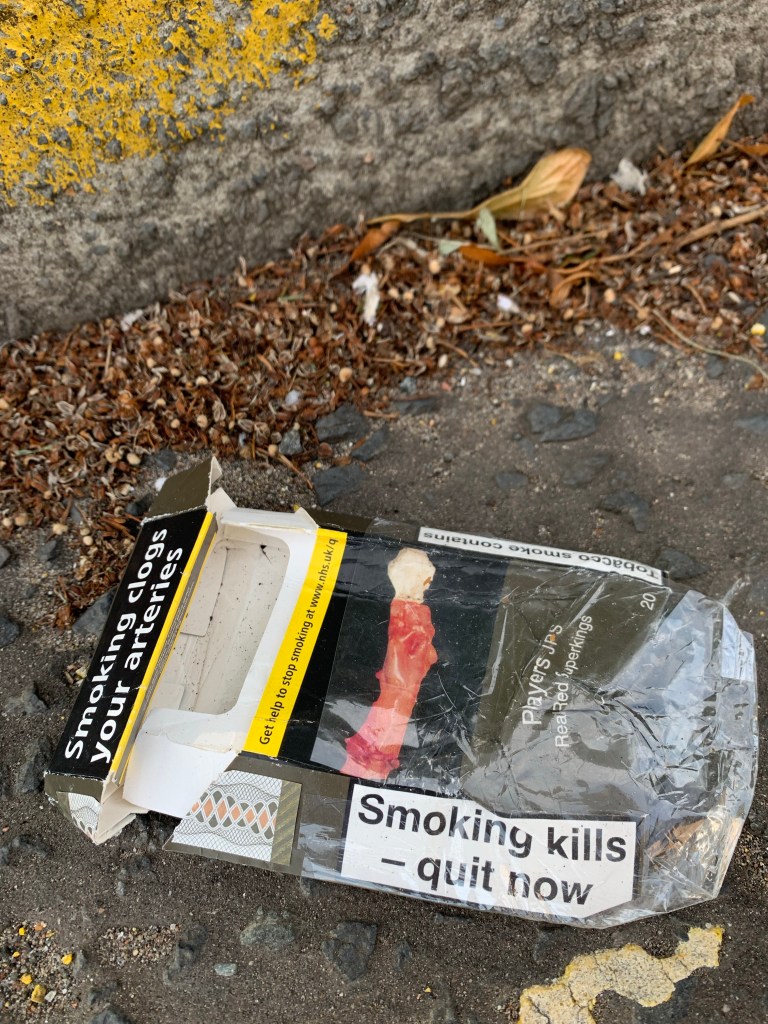
Here in the Hebrides, road signs are written both in Scots Gaelic and in English. Similarly, the explanatory plaques in the local museum were written both in Scots Gaelic and in English. But the really important communications were all in English only. For example, there was a stencil on the rubbish bin which commanded, “Bag that poo!“ I have found tampons and sanitary pads in Ladies’ public restrooms under a sign that says “Stop Period Poverty!” And the command found on cigarette packages:
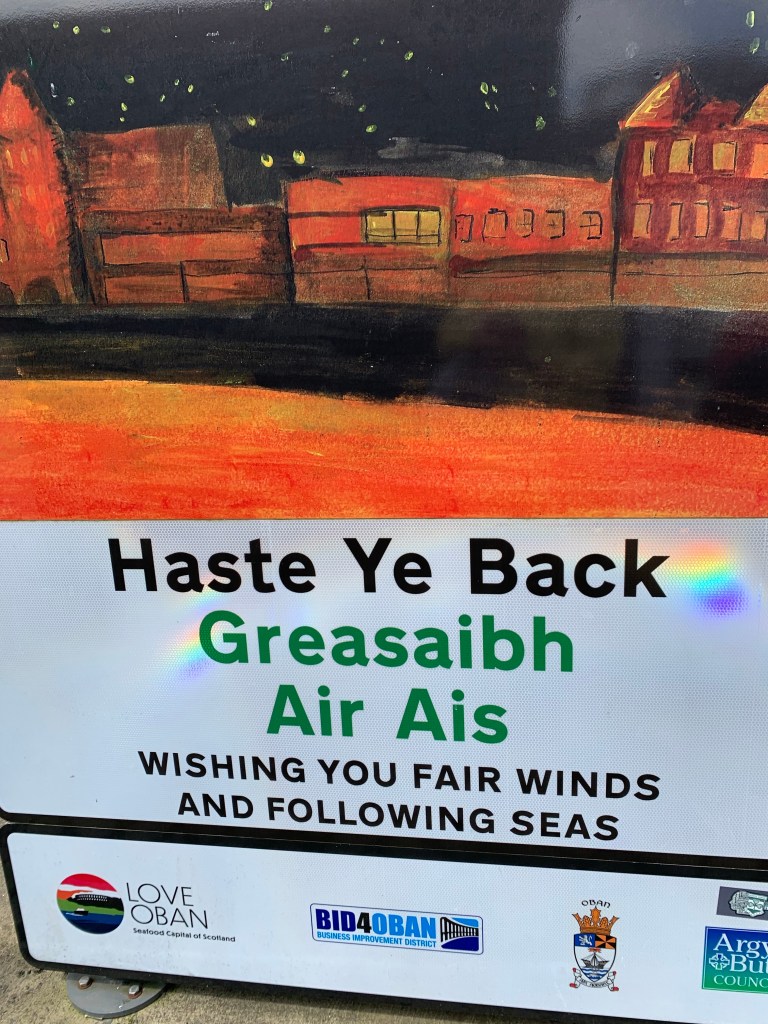


It seems to me that using Scots Gaelic is reverent rather than practical. Maybe the motto is, “we want some of what Ireland is having!”
Some fun Scottish terms:
Skerries — rocky outcroppings
Bra — fine, stout, well-turned out
Dreich — foul, as in bad weather
Scottish people have been invariably friendly, not reserved or dour. They seem happy to advise us about what to see. Some have gently voiced criticism of Trump and of the many guns in the USA. One line I’ve heard a few times is that Scotland is relatively new to the UK, “for only 300 or so years.” They refer to the Act of Union in 1707.
The people we’ve talked to tell us about their children, grandchildren, and dogs, the great commonalities. They like to tell us where we can find free tea and cakes in the church hospitality room or where we could eat a good, affordable meal.
 JohnandJanet'sJourney
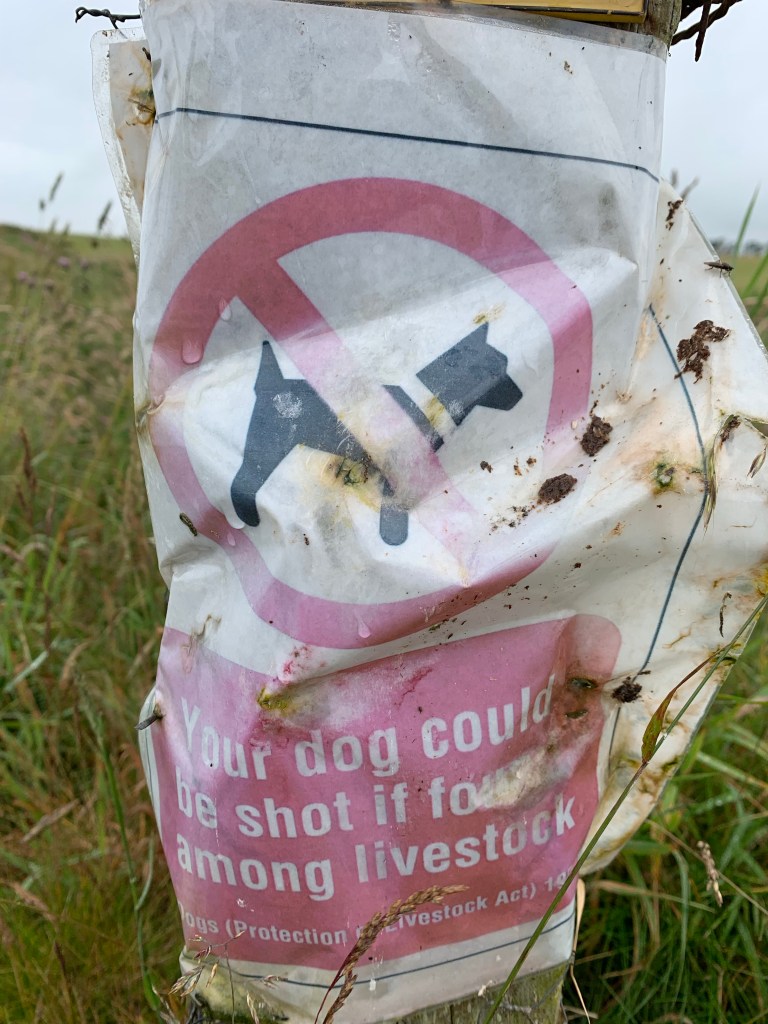
I love seeing the signs from other countries, thank you for sharing! I love the breastfeeding one, of course, and the dog sign is curious– makes me think that the shepherd had a problem not just with a dog ambling onto a corner of their lands but mingling with and trying to infiltrate the livestock herd.
LikeLike