

From my father I have inherited a nose for sniffing out bakeries when traveling, as well as a keen interest in administration of justice. I’ll save the reviews of tray bakes and shortbread for another time and write about punishment.
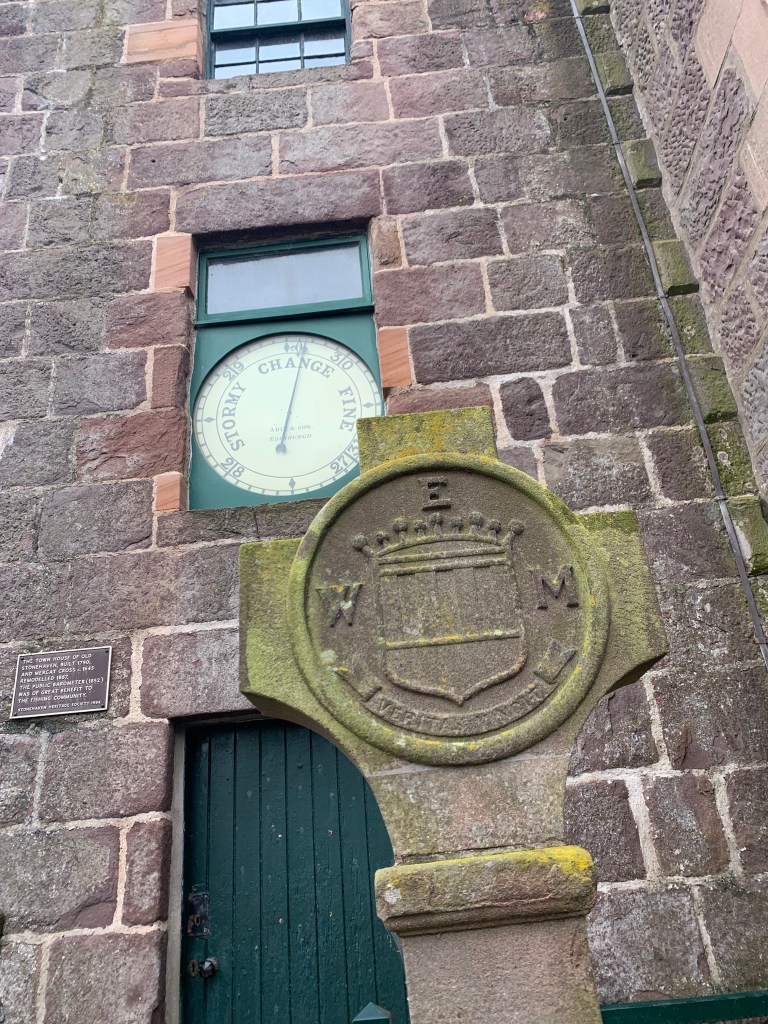
Every Scottish town must have three structures: a Kirk, a tollhouse, and a Mercat cross, which represents a combination of the other two. The Kirk was the church, the tollhouse was the court house, repository of tolls and of prison cells, and the Mercat (pronounced like market, not like Meerkat) cross was the public spot for pronouncements, proclamations and punishments. Having no separation between church and state, both the Kirk and the toll house could accuse criminals and seek redress. The local Kirk authority could convict the accused of sins of comportment and thought, such as disobeying the Ten Commandments. For civil crimes, according to English Common Law, a jury would rule guilty or not guilty. For the past two hundred or so years, a third verdict of “not proven“ could also be reached, which had the same result as “not guilty .” Currently Scotland Parliament, when they get around to it, want to abolish this third option.
So what did code enforcement look like in the Burgh? First, the nobility could get away with almost anything. They were the earls and they adjudicated trials. People believed in noble blood, which meant nobility did not commit base crimes. Second, justice meant punishment. Criminals were pilloried, flogged, maimed, beheaded, and burnt, in approximate order of severity.
In Scotland until 1685, women convicted of theft were likely to be drowned. Drowning was also the method to test for witchcraft. It was believed that a witch would float and an innocent woman would sink. This was a lethal test, but in those days death was not the end. If an innocent woman died unjustly, she entered Paradise. Justice was not merely for the present lifetime, but stretched into eternity.
Some punishments were reserved for women. For talking back a woman’s head might be enclosed in a hockey mask-like iron mask with a sharp tongue depressor, causing great pain to the wearer. This implement was called a brank, or scold’s bridle.

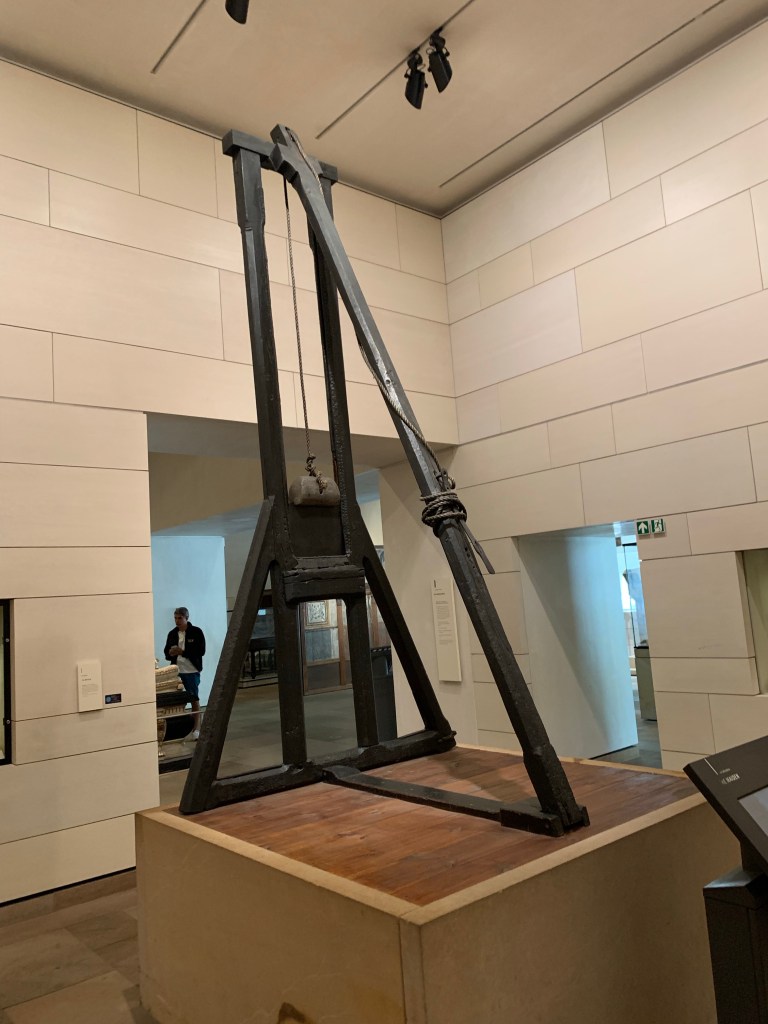
Beheadings were accomplished by means of a portable guillotine, named with black humor “the maiden.” An execution carried out in this way was called “the Maiden’s kiss.” The placard describing the Maiden in the national Museum of Scotland boasted that the Scottish people used a guillotine long before the French. It was considered humane both to the victim and to the less-traumatized executioner. In fact, two other Scottish tour guides described the Maiden as being an example of Scottish mercy.
The Condemned knelt before the Maiden with his head on the block. Then the rope attached to the stone on top of the blade was released. And to top off the display of justice, the head of the Condemned was impaled on a spike and left out as a warning in a prominent place.
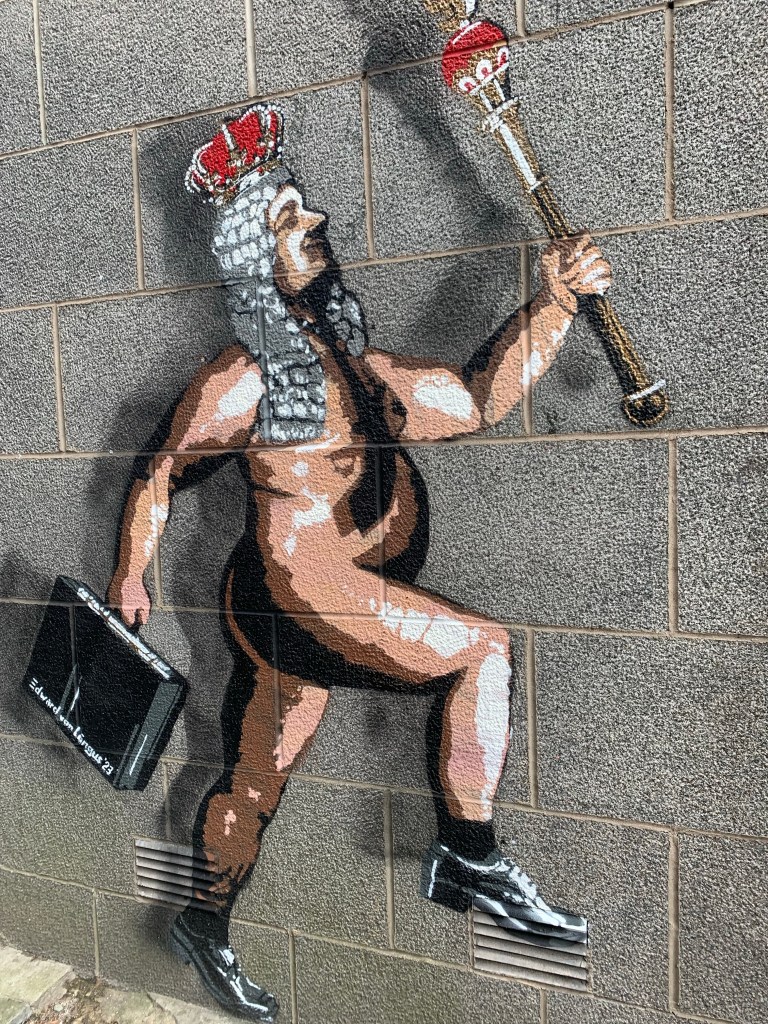
And to lighten this stern and stomach-churning post, I close with a happier image of a mural in Aberdeen.
 JohnandJanet'sJourney
Hallo ihr Lieben, I read your story with great enjoyment !!! You have a wonderful way to tell about your outings, which make me feel like I am there with you ! I am glad we don’t have the scottish judicial system here !!! Nothing like fear to keep people in line ! I love you both and am looking forward to seeing you soon. I miss you !!! Love, UKI
>
LikeLike
Systems of justice are interesting, but I’m glad not to live under the jurisdiction of that one! Though, status and money still play an appallingly big role in access to justice on our world today.
Thanks for writing up your adventures!
LikeLike