


We drove to Portland just in time to skip PDX Pride Weekend. We missed the craft fair, the bands, and the parade. But our hotel is displaying a rainbow flag so we don’t feel too left out. It’s also a graduation and wedding weekend, so I’m seeing a lot of cocktail dresses and perfect hair despite the showery weather. My guess is that the cocktail dresses and perfect hair folks are not going to Pride.
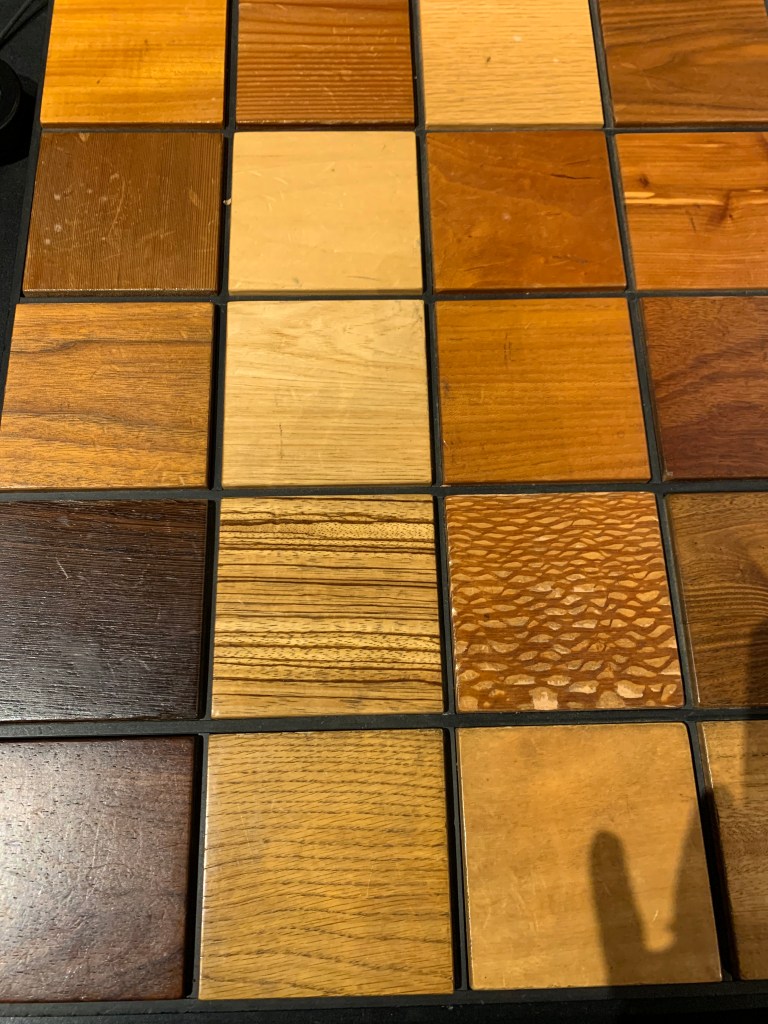
Unlike its neighbor the Portland Children’s Museum, the Discovery Museum World Forestry Center survived the pandemic. It had just reopened this week when we dropped by. Appealing to children, it had a two-pronged message. First, forests are interesting and endangered places. Second, people make nifty things out of wood. The special installation on wildfire featured an artist who creates shadowy encaustic abstracts that look like char and smoke. I took issue with the reductive message the artist promulgated, to wit, we colonists have suppressed wildfire so long that now our wildfires burn too destructively. We should live more in harmony with natural forces, including wildfire, like “the native people have since time immemorial.” A professor from Arizona State is quoted as saying, “Logging removes the big trees and leaves the little. Wildfires remove the little and leave the big.” So according to this perspective, all we need to do is more selective thinning and more prescribed burns. Alas, no. Due to global warming we will see conflagrations that will burn the littles, the bigs, the houses and the towns. We must prepare for cataclysmic weather events.


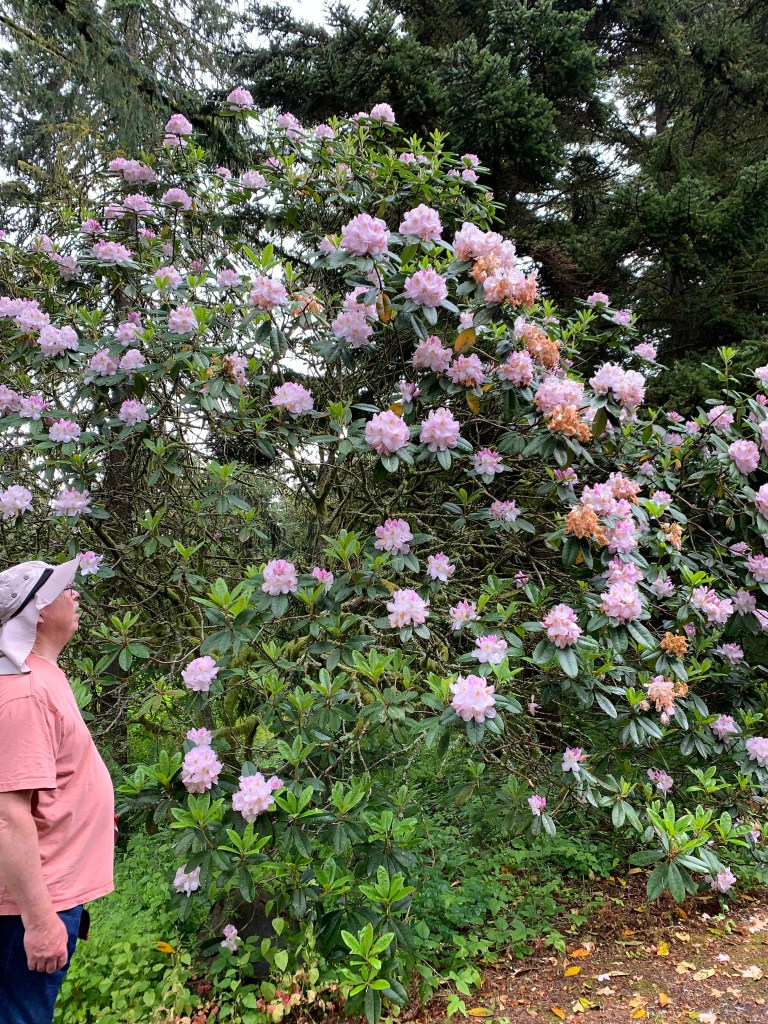
On the other hand, at the Hoyt Arboretum, I learned about hero arborists breeding a disease resistant Port Orford Cedar.https://nivemnic.us/restoring-port-orford-cedar-a-role-for-you/ The Hoyt Arboretum trees are grouped by genus in early 20th Century style: here are the spruces, here are the redwoods, here are the beeches, etc. More modern arboretums mix trees according to shared habitat, so the result looks more natural: here is the oak savannah, here are subalpine pines, here are mixed conifers. But all tree devotees are worthy. The Talmud teaches we should all be metaphorically planters of trees.

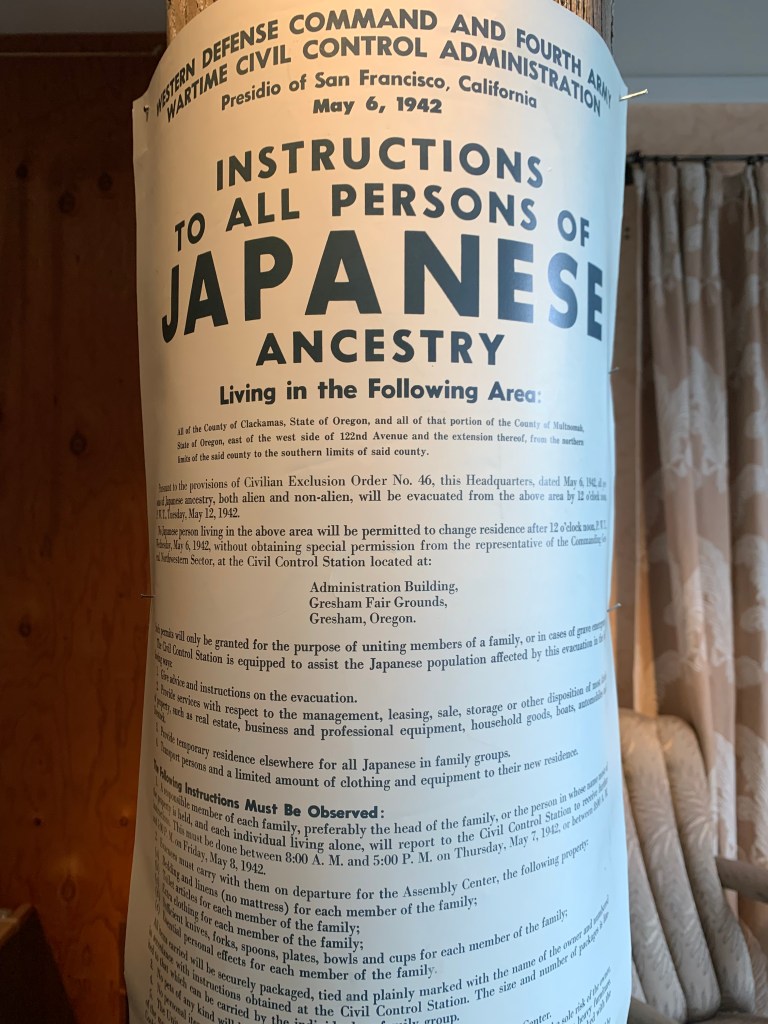

The Japanese American Museum of Oregon tells the stories of Nikkei, emigrants from Japan in Oregon. Their immigration stories differ from other ethnic populations in several ways. First, they didn’t look Caucasian or Christian or speak unaccented English so there could be no passing for white. Next, most Issei (Born in Japan) came from the land-owning peasant class during a time when Japan was undergoing an industrial revolution. Even though they got jobs in timber and railroads, they had experience working the land and desire to purchase land. Due to racist immigration laws, only women engaged to be married were allowed to enter the US from Japan. This led to the unhappiness of “picture brides,” who had their husbands pre-selected for them and were often isolated and abused. And finally, Japanese-Americans were treated shamefully 1942-1945, when they were incarcerated in remote internment camps. I learned the important story of Min Yasui. https://www.minoruyasuilegacy.org/ The first Japanese American admitted to the Oregon Bar, he protested the imprisonment of Japanese Americans and spent eight months in solitary confinement awaiting trial. He is a true American hero.
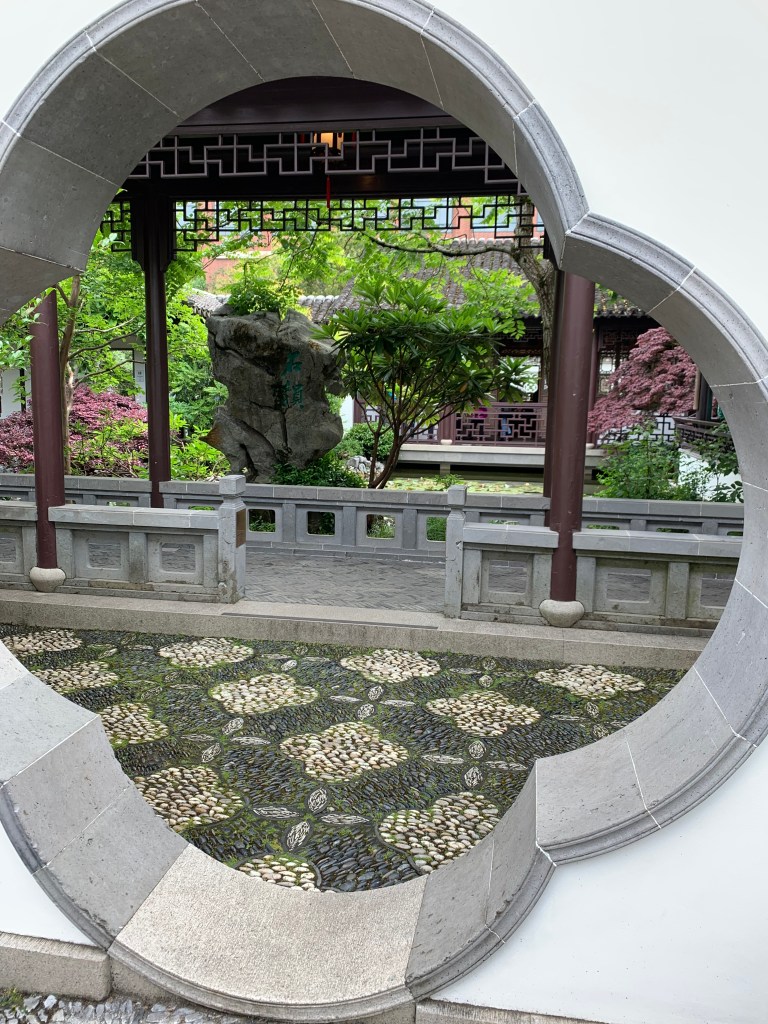
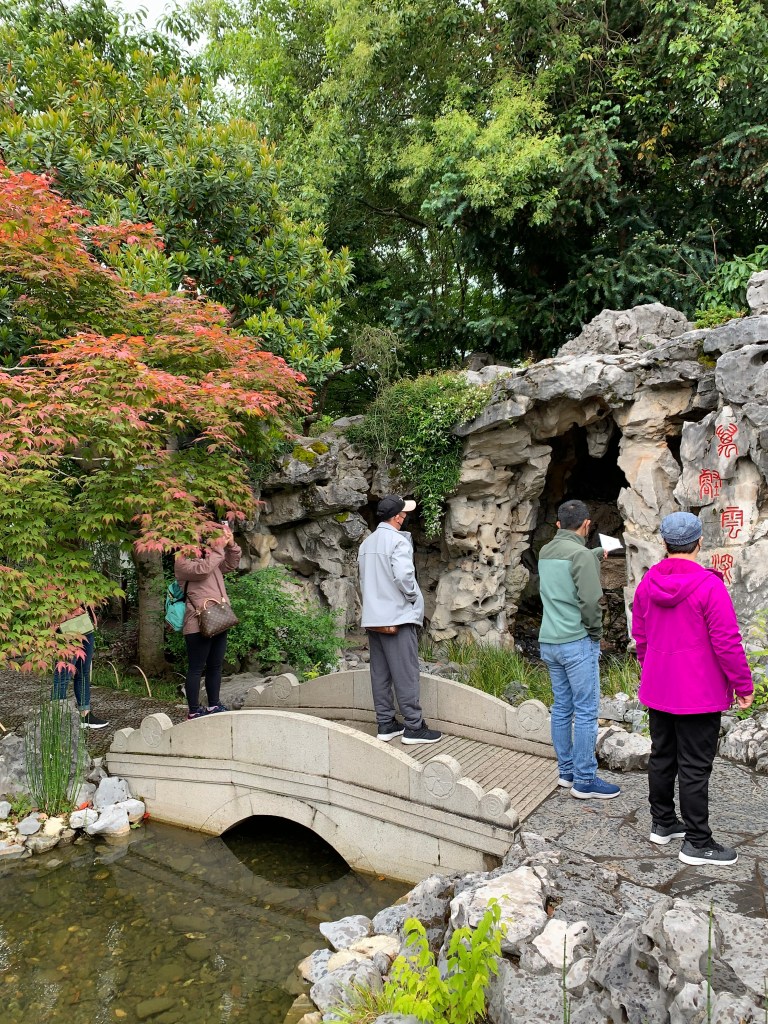

We strolled the lovely and fairly new Lan Su Chinese Garden. Su Zhou is Portland’s sister city and Lan Su comes from pieces of the names of both cities. The garden is built from Chinese materials, including limestone dredged from a Chinese river, and only Asian species of shrubs were selected.
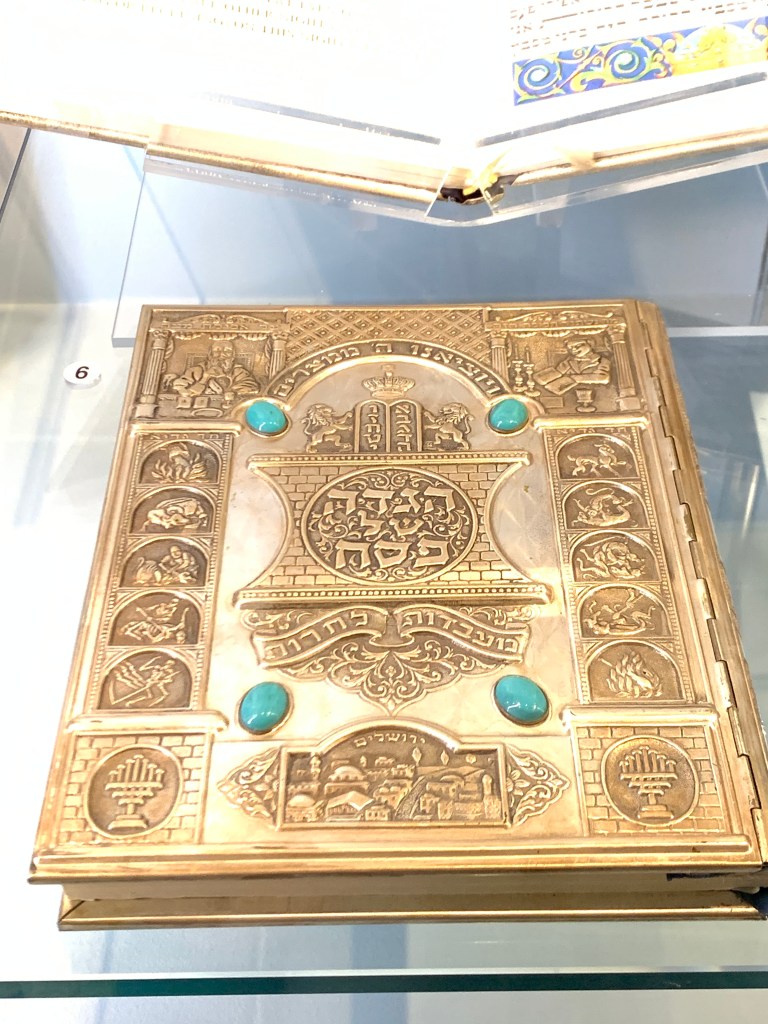


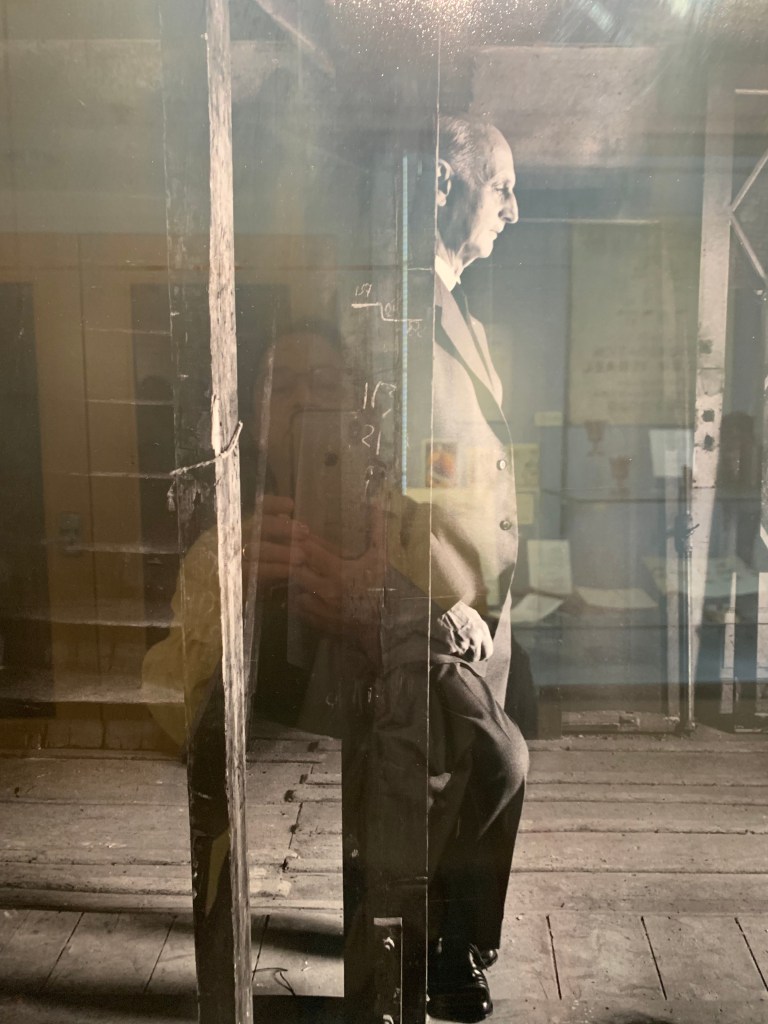
And we popped in at the sincere Oregon Jewish Museum and Center for Holocaust Education, https://www.ojmche.org/ They were hosting a selection of works by Judy Chicago, which both of us liked. We had read about them engaging with Spiegelman’s Maus to support educators, but visitors were not the target audience for this work. We also both liked this haunting portrait of Otto Frank in the Annex.
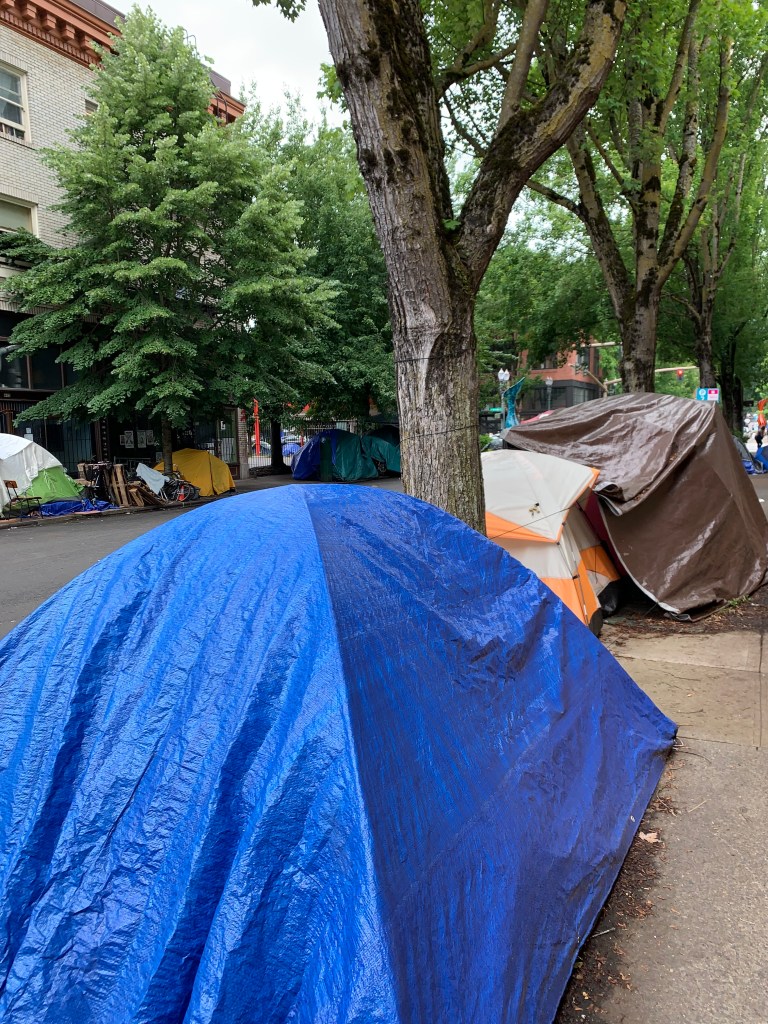
Yes, there are tents on the streets. As we walked by, I heard TV playing and smelled tent residents hotboxing their weed. It seems there is a subcity within Portland and I hope the tent people look after each other.


That sounds like quite an adventure! The plants are certainly beautiful. I didn’t realize that the older style was to sort trees by genus, not by habitat. Cool!
LikeLike