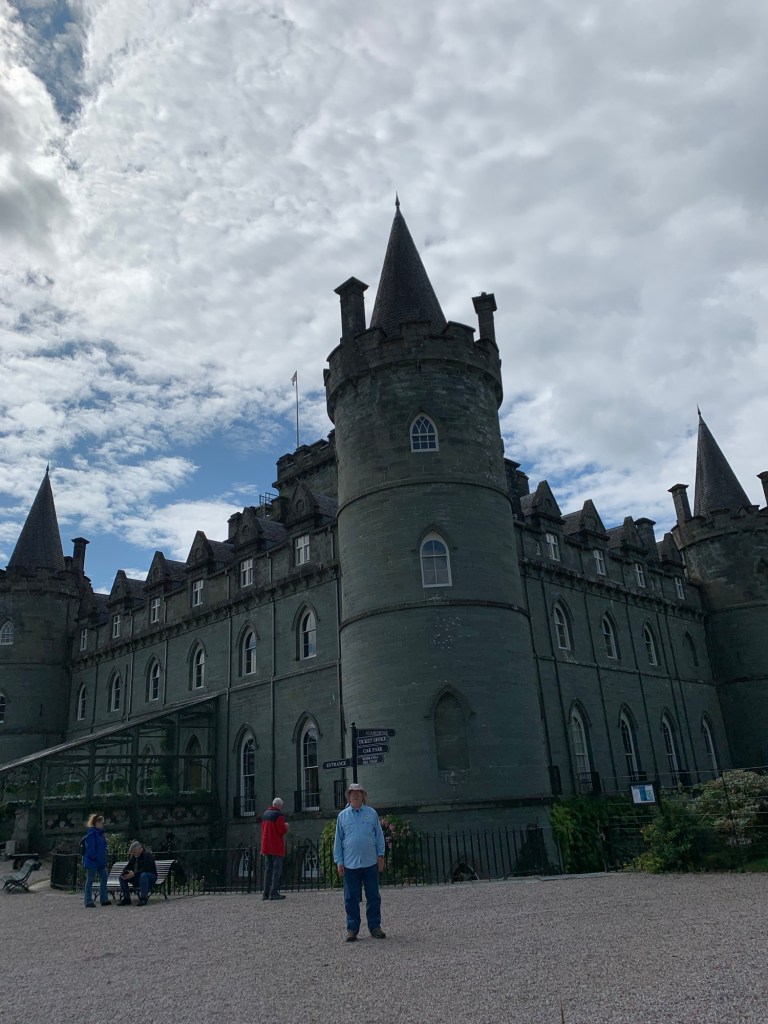
Inveraray Castle

Inveraray

In West Scotland, on the shores of Loch Fyne, lies Inveraray, the ancestral home of the Dukes of Argyll, clan Campbell. We visited last year and joined a group tour. The 13th Duke of Argyll manned the cash register in the gift shop. Her Grace the Duchess greeted tour guests in the Hall. Before I describe a few remarkable oddities in the Castle, I’d like to link to this description of the tempestuous marriage of the 11th Duke of Argyll. Some of my readers love to hear how the rich and powerful are actually unhappy sleazebags. See: https://www.huffingtonpost.co.uk/entry/a-very-british-scandal-real-story-what-happened-next-duke-duchess-argyll-margaret-ian-campbell_uk_61c45fa5e4b04b42ab68f4a7

Clan Campbell is still distrusted by the clan Macdonald. Clan Campbell, loyal to the English king, heinously slaughtered their unarmed guests, clan Macdonald, in 1762 at the Massacre at Glencoe. Although poor communication and bad timing contributed to the massacre, Scots agree that clan Campbell too zealously “put the Macdonalds to the sword” not just to impress the Royalists but to gain Macdonald property. So with this historical background, I wanted to see what the winners of history did with their wealth.

Argyll Estates comprise over 200km2 of land devoted to tourism, forestry, cattle, and water resources. When the duchess mentioned having “300 mouths to feed” I think she was colorfully referring to her employees. Her three teenage children, also good eaters, were kept off stage. Our tour guide referred to the nobility jauntily as “Torquil and Eleanor” but also cautioned us to address them as “Your Grace.” Her Grace the Duchess of Argyll made herself available for selfies with the tour guests in the Great Hall and asked them to use #InverarayCastle when posting.

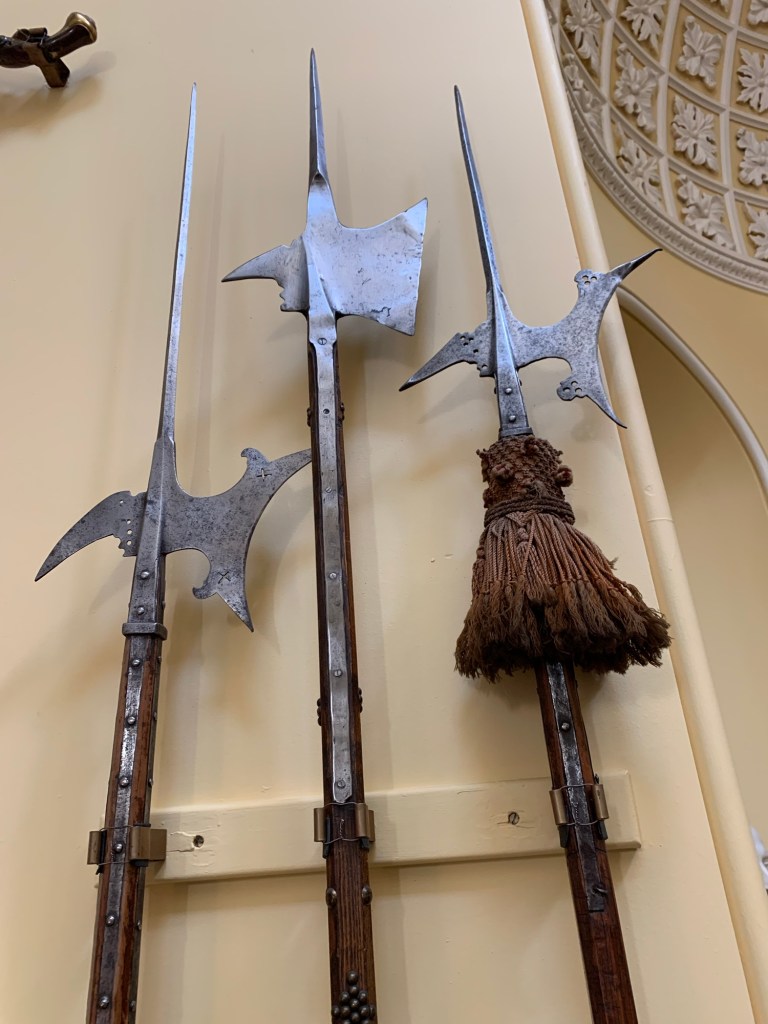
The Great Hall displays trophies, war medals, and artifacts from the Dukes of Argyll. Sometimes the Dukes were engaged in acts of service to king and country and diamond-patterned knee socks. It wasn’t all just wastrels carousing. The Duke of Argyll holds a ceremonial post of Keeper of the Keys, like a steward, for the British monarchy. The Great Hall hosts a collection of rifles and a collection of halberds, both fanned out in semicircles as decor. Call me a bumpkin, but I am not impressed by outdated weapons.
I enjoyed the portrait gallery more than the porcelain tea services. Seen one china cup and saucer, you’ve seen ‘em all. Our guide said the china sets were on display in what was formerly the library. Authors and fans sent the Duke books from all over the world. The books were not suited for display, thus the books were removed and the china sets took over the shelves. Darn, I thought. I would be interested in the book titles the dukes owned.

Our Guide

Just before the tour reached its climax in the gift shop hosted by His Grace, https://en.wikipedia.org/wiki/Torquhil_Campbell%2C_13th_Duke_of_Argyll, I spotted framed newspaper clippings on the wall that our guide did not point out. Our host has been captain of the championship elephant polo team of the UK! I was transfixed by thoughts about elephant polo. Did the elephants enjoy it? Who plays it besides the rich landowners of the Scottish countryside? Where is it played? And especially, why? Now, I’m not someone to yuck someone’s yum, or, as the grands put it, to “stupid someone’s train tracks.” And between my spouse and myself, we have a goodly number of unconventional interests. But whose idea of sport is it to galumph on elephants steered by mahouts, whacking at a ball? Can’t they just skip the game and go drink together like regular men? I decided it was a learning experience for me. Travel is broadening and I am now acquainted with elephant polo.

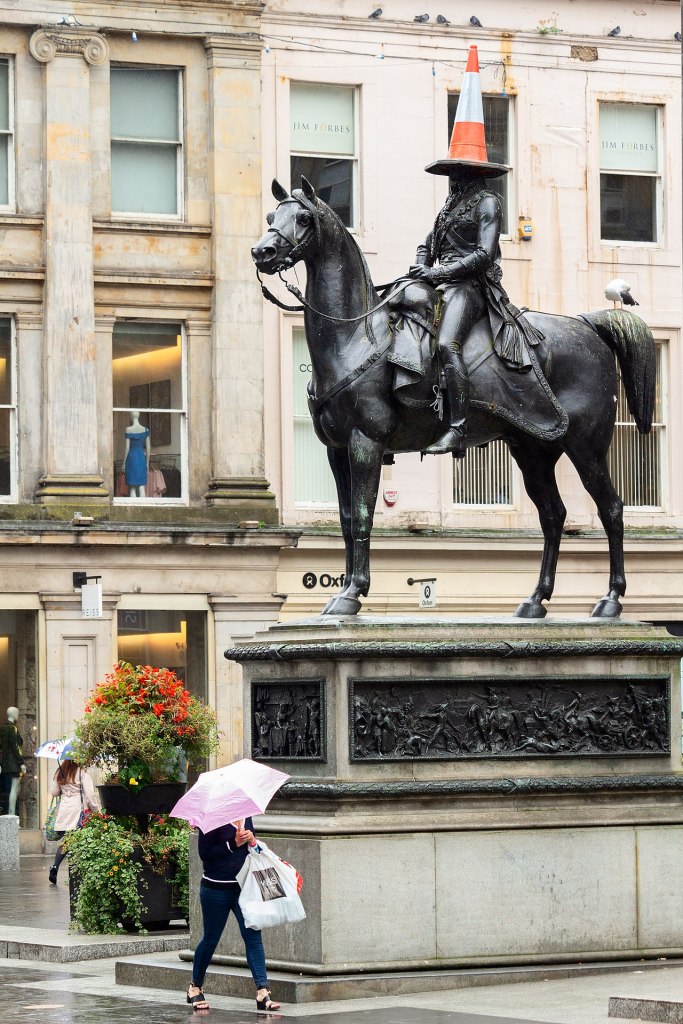
Duke of Wellington, Glasgow

“Trust the horse, Luke! Trust the horse!”

“All my life I had this terrible cloud of dandruff hangin’ over my hay-yed.”

“Rerouting. . . You have arrived at your destination.”

“An honorary Scottish clansman”

“We’re having interference problems with our repeater.”

“Finally found a way to keep the bloody pigeons off me haid.”

“Momma said there’d be days like this.”

A bonnet is not just for Easter anymore!”

Kirkwall, Stornoway, and Vikings

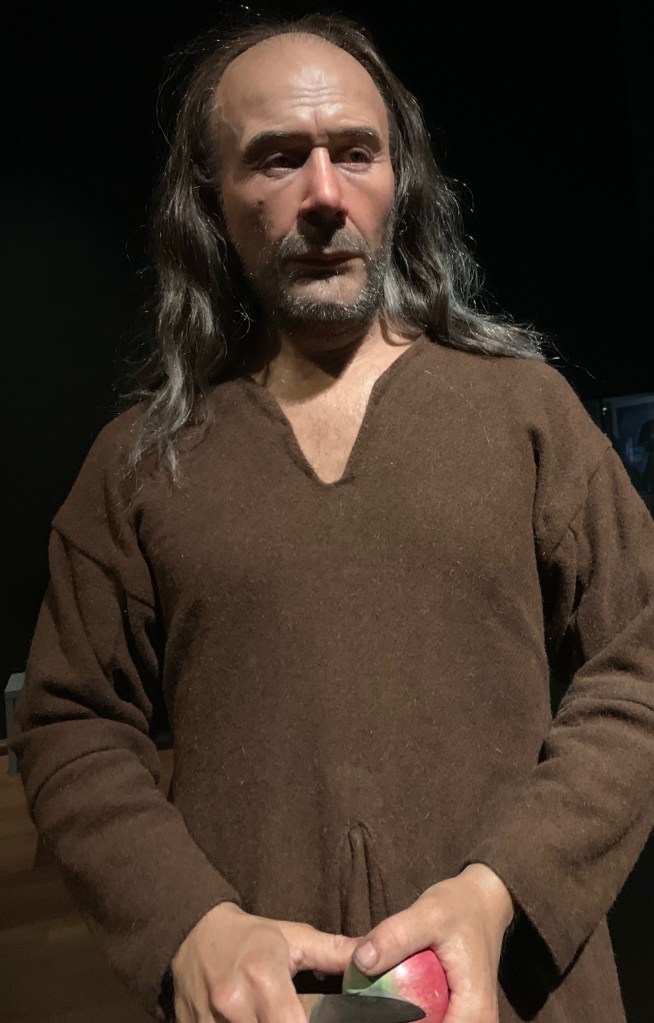
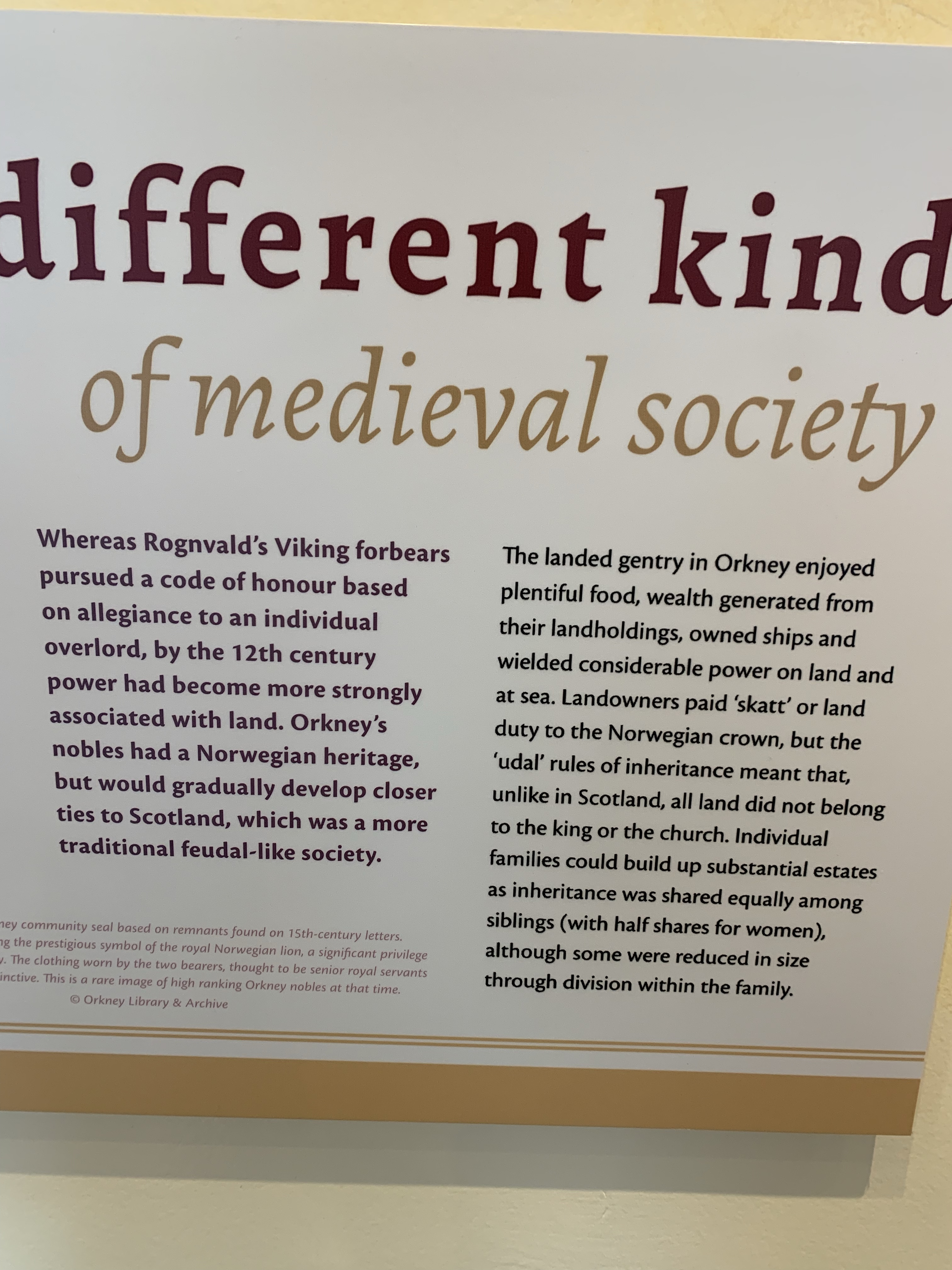
In Denmark, we were asked to pity the poor misunderstood Vikings. They’re not really seafaring raiders who ransom, pillage and sail away. They’re traders and farmers, with only their fair share of bad actors. They didn’t rape; they married into the Scottish communities. They converted to Christianity and settled down. They brought their village structure, in which women could both vote for an elected chief and also hold property, to the less progressive Scottish towns. No, they never wore horned helmets. I think that idea came from Wagnerian Ring of the Nibelungs costume design. Here’s a Viking wax model in Denmark:

Then in the islands we saw so much Nordic influence in the houses’ curled eaves we thought it could be true. Viking reputation rehabilitated! They only pillaged in England, not in Scotland.

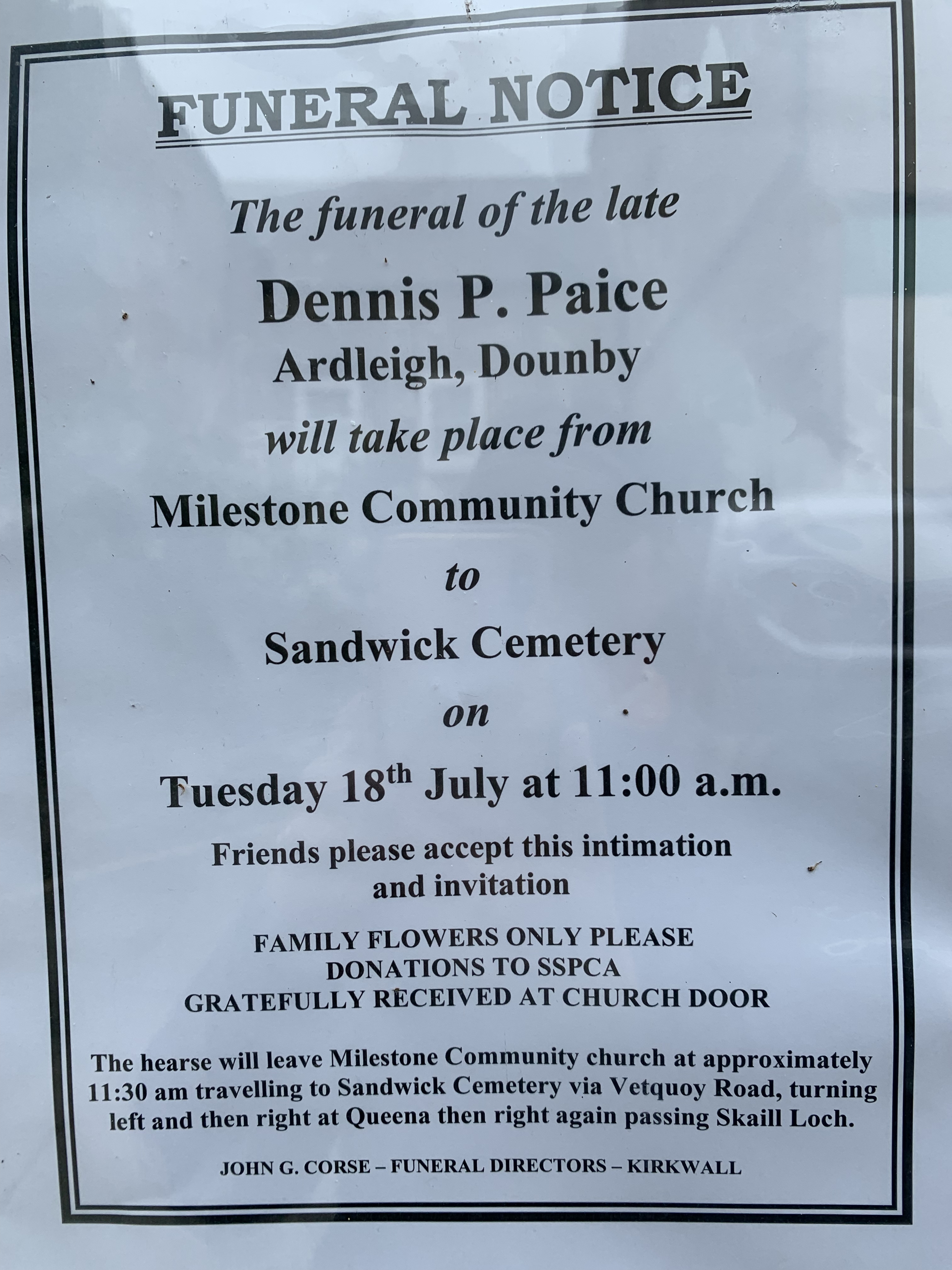
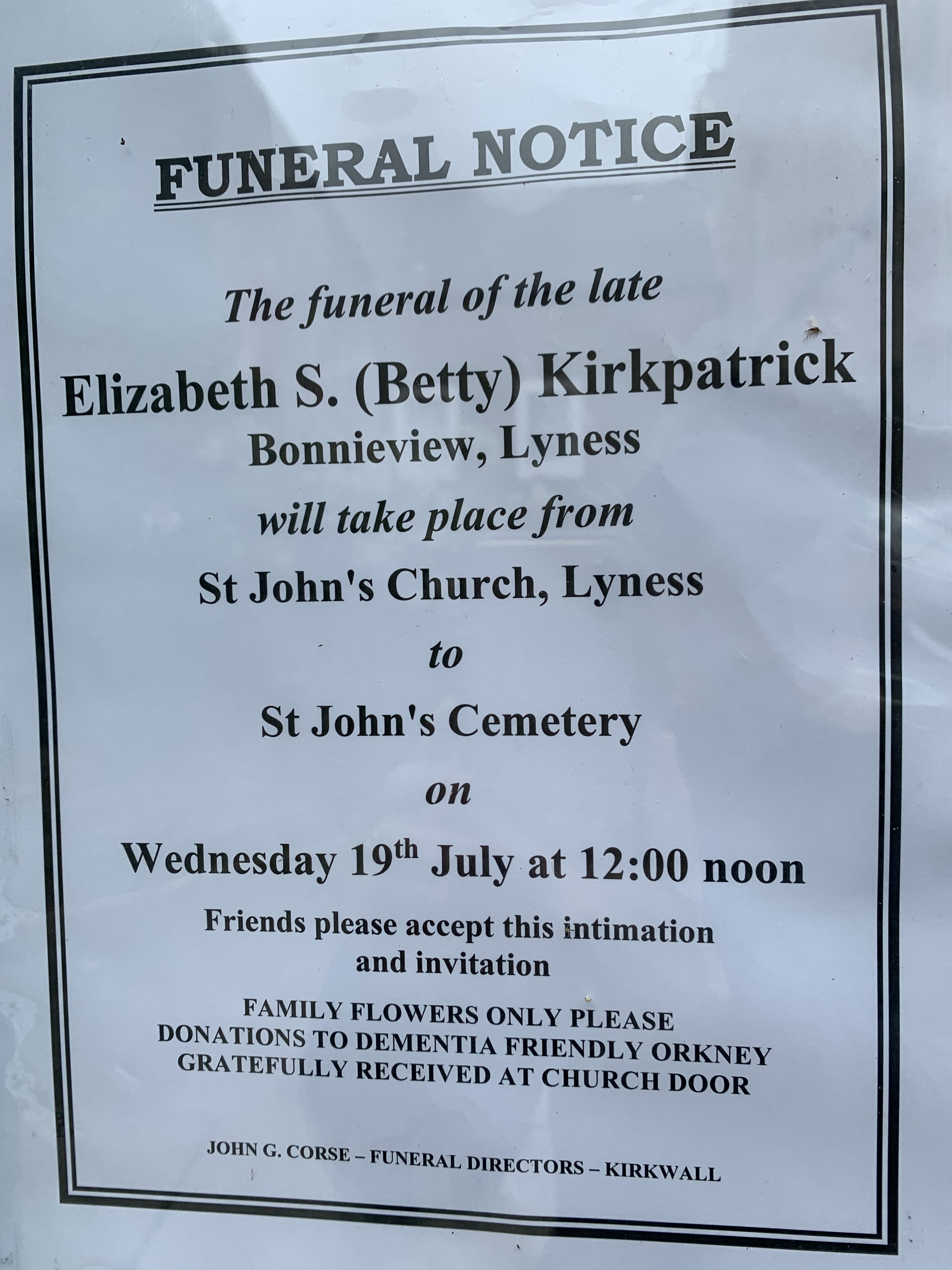
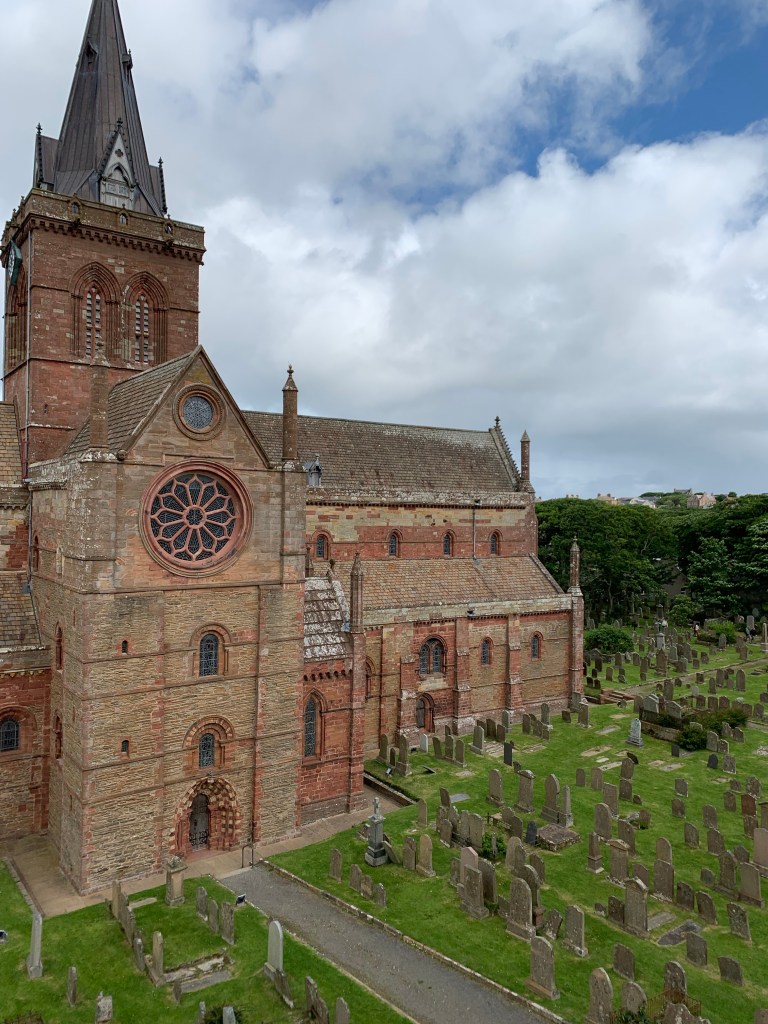
Kirkwall is the capital of the Orkney Islands, home to a beautiful sheltered harbor, tourist infrastructure, and honest-to-Odin Nordic influence. I was impressed that the entire population was invited to attend a citizen’s funeral procession and service.

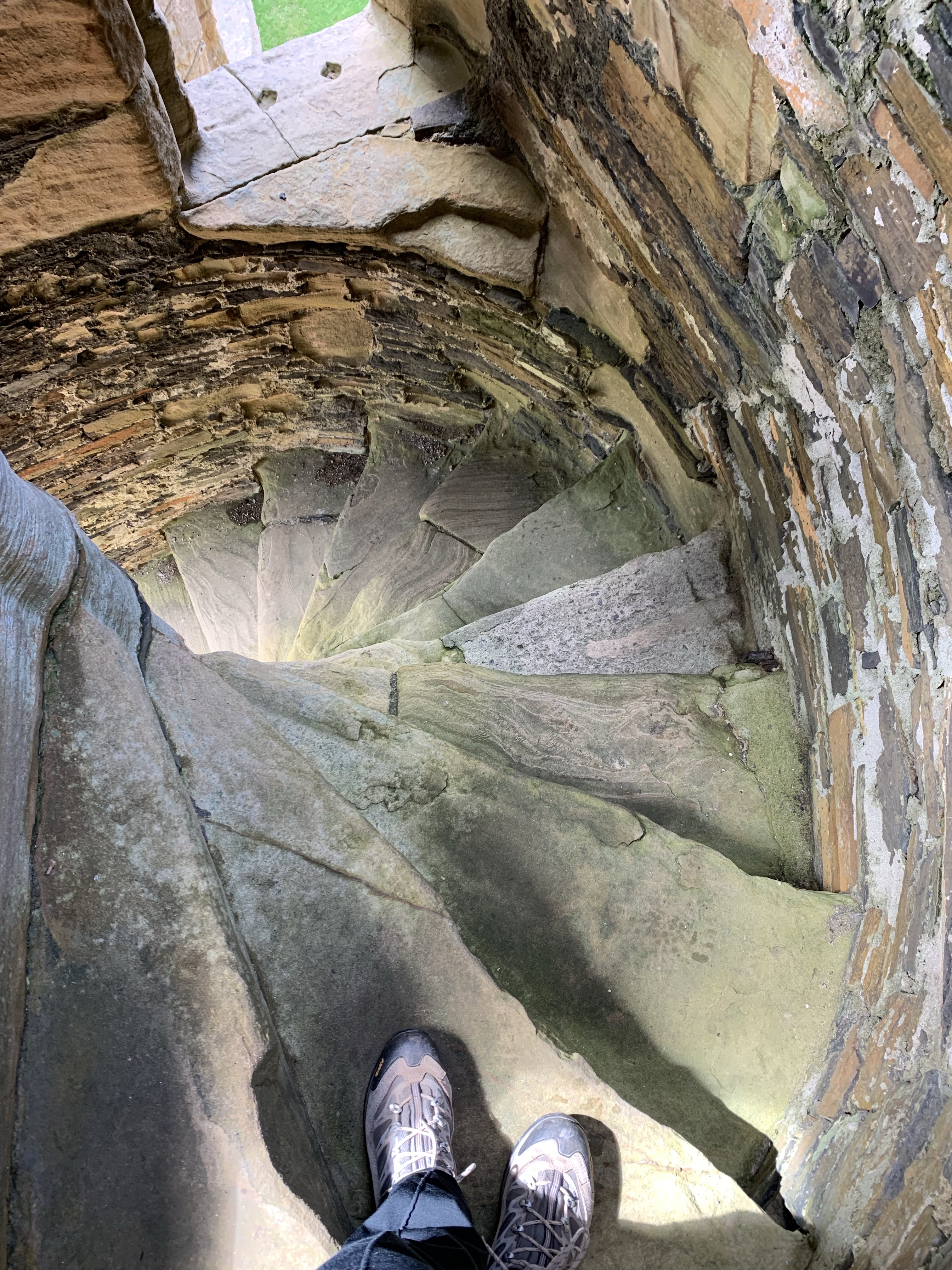
These posters invite everybody. I explored a couple of ruined Renaissance palaces by myself. Both were well-presented and free of safety advice.

I met an English couple, Clive and Sheila, on holiday in Kirkwall.  They showed me photos of their daughter shaking hands with King Charles III. In return, I showed them a snapshot of the little grands covered in Aptos Creek mud.  We bonded over gardening and good dog stories. People really are the same all over.

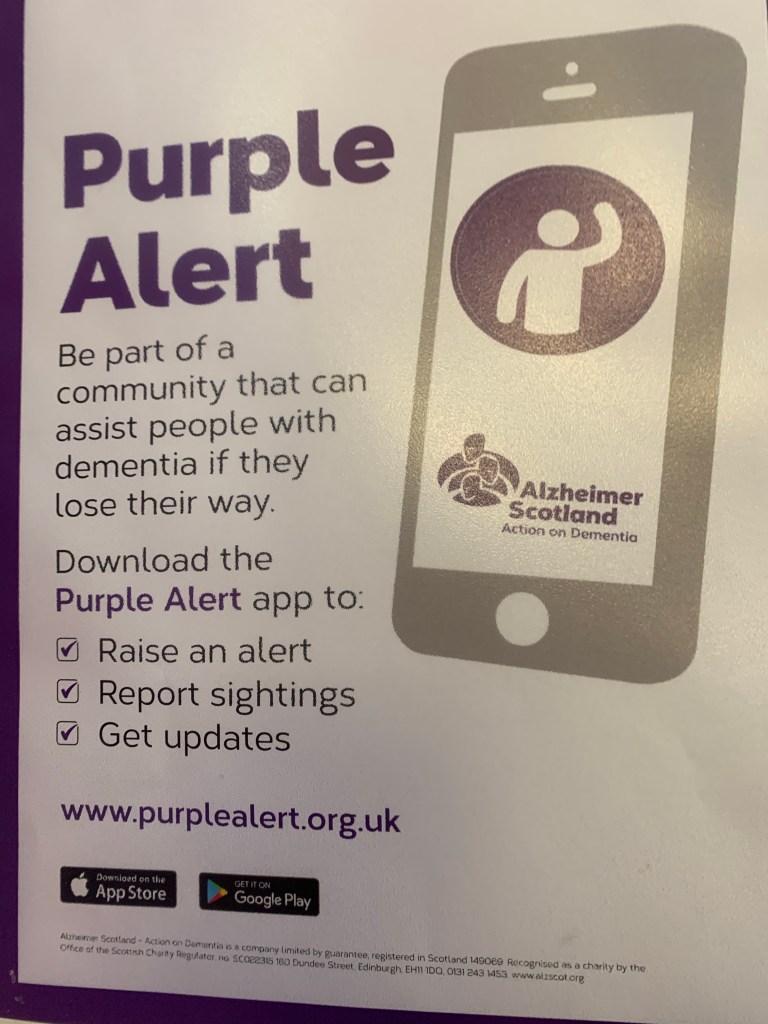
In Stornoway, you can enroll in a Purple Alert App to sight and track others’ loved ones who might have wandered away. Then whenever the Aged Parent is spotted, the spotter notes the precise location within the App. This seems like a great small town response, instead of calling the police, to the problem of corralling truant elders.

Purple Alert App, Stornoway

Stornoway is famous for tweed and for black pudding. Neither of these interested me or JG. Instead, we attended yet another museum. The British Museum had mounted an exhibit about Iron Age archeological finds. The noble detectorists prowl the bogs and pastures, listening for beeps on their metal detectors. When they find something, they get a finder’s fee and turn over the findings to the Royal Archeological Institute.

Also in the Outer Hebrides

Church of Scotland

I happen to like visiting temples, cathedrals and churches. Only when I see what matters spiritually to the natives can I form an idea of who they are. Here’s a brief summary of the Church of Scotland.

In the beginning Christian missionaries converted the Celts, Picts, and Vikings. Unlike Roman Catholic saints, early Scottish saints were not martyred for their faith. Instead, they often lived to a ripe old age, preaching and teaching to their flocks. Early Viking saints like Olaf and Magnus were killed by pagan rivals.

After several centuries’ success, Roman Catholicism was called into question by reformers of the 16th century. Along with an explosion in literacy contemporaneous with movable type (Gutenberg Bible 1450’s) and a suspicion that priests who sold indulgences might not be so godly, the first Reformation leaders were motivated to change the Mother Church, not abolish her. But in 1533, when Henry VIII was excommunicated by Pope Clement VII for annulling his marriage to pious Catholic Katherine of Aragon to marry Protestant Anne Boleyn, Henry took the battle to the Pope, claimed all Church property in England for the Crown, and declared himself the Head of the Church of England. In Scotland, King James V was named Defender of the Faith by Pope Clement VII. But when he went to war against Henry VIII, James V lost. But for about 85 years after the death of Tudor Queen Elizabeth, the Scottish Stewarts ruled England, with only a bump in the Divine Right of Kings Road when Charles I was beheaded by Parliamentarians in 1649. In Scotland, the first English royal James is styled “James I and VI” for the sovereign who was spirited away from his mother Mary, Queen of Scots, to be educated as a Protestant and who ascended the throne at age 13 months. The second royal James, styled “James II and VII”, brother of Charles II, converted to Catholicism, and was deposed in favor of William of Orange and Queen Mary in 1688, when James had a male heir, James Francis, who might have founded a Catholic dynasty.

Thanks to the influential preacher John Knox, Scottish Presbyterianism took shape in the 16th century.

Think of the Roman Catholic Church as being structured like a wedding cake: the parishioners on the bottom tier, then above them are the priests, who in turn are obedient to the bishops, who then bow to the cardinals, and then the Holy Father, the Pope, reigns over all. Now think of Presbyterianism as a crocheted afghan of granny squares (credit to M. for supplying the metaphor). The granny-square congregation builds a single self-supporting unit of faith that is also connected, without domination, to others in their faith. Each church was directed by Elders, in Greek Presbytery, who were not more holy than other worshippers, but more sage. I can see the appeal in Spend Local, Decide Local, Pray Local. The Scottish did not want to swap one Holy Father at the tip of the wedding cake for another.

And what do these Christians believe? They believe in God and in the Sacraments. John Knox adapted stern Calvinism, that God chooses some for salvation and some for hellfire, into a theology of believers striving to do God’s Will and God bestowing Grace upon them. For some reason, this theology reminds me of the game of golf. Golfers keep striving, striving to sink the ball in the hole. Yet they’re continually reminded how inept and clumsy they are, with no excuses for their bad shots. Knox espoused an “only yourself to blame” attitude. This is not predestination, in which you bear your present suffering and hope for better times in Heaven as part of God’s vast plan. This is maximum Divine judgment with minimum Divine relief.

What if you think God’s sublime Will is unknowable without the Holy Mother Church as Intercessor? You’d be a Catholic.

But back to Church of Scotland. Theirs is a flexible, functional Christianity for the literate. And since the 1707 Act of Union they are allowed their differences with the Anglican Church. But attendance is falling off. Many churches were locked. They’ve become event spaces rather than sanctuaries. The churchyards are full. The pews, not so much.

I have a special fondness for the Presbyterians. I can’t forget that JG attended and later rejected the Presbyterian Church. So the person I love has been shaped by this faith. That is a close-to-home connection.

The Scottish Burr

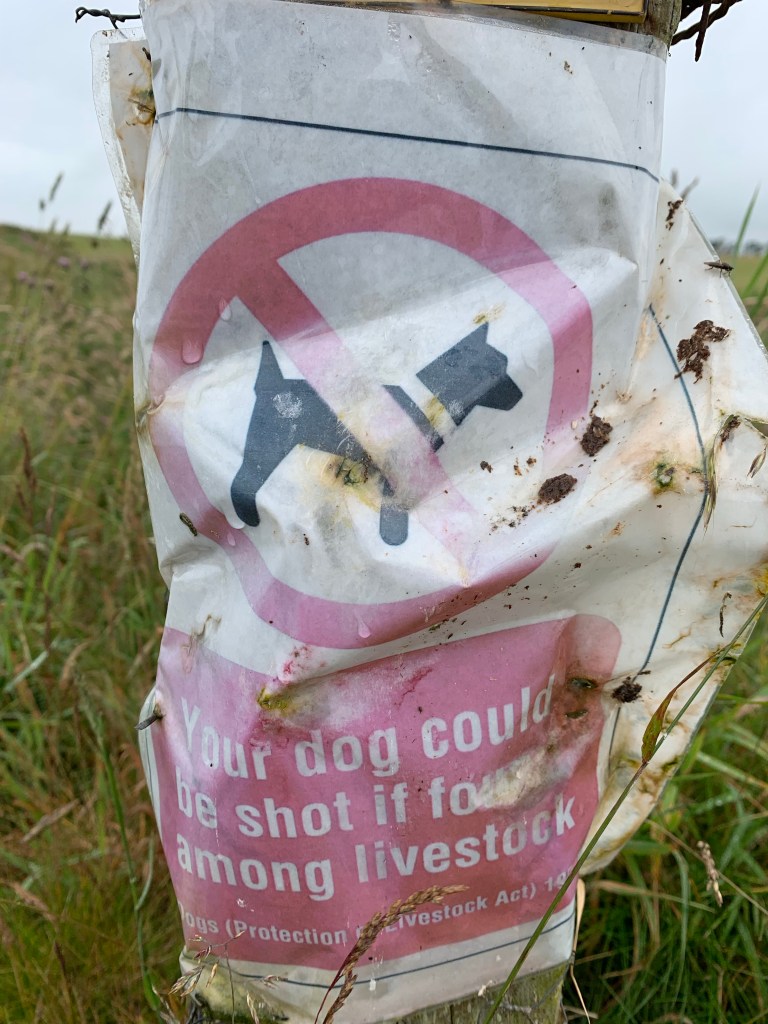
Do Not Let Your Dog Near the Livestock

One reason I wanted to visit Scotland was the language. The dialect sounds almost, but not quite, like English. Scottish dialect is divided geographically, roughly along the Clyde River, into the north Highland version and the south Lowland version. In the north, the dialect derives from Norn, an old Norse dialect. The southern dialect in origin is low Germanic, as in northern German. In the Highland dialect, a creek is called a “wick,” as in Lerwick. The Norse would be “vik.” See the term “Viking,” which means one who camps by a creek. My example for a low Scottish dialect word might be “ken,” which means “know,” a direct import of the German “kennen.”

To prepare for this trip, I researched a little Scottish. One of my favorite expressions was “many a mickle makes a muckle.“ This translates to “ every little bit adds up.“

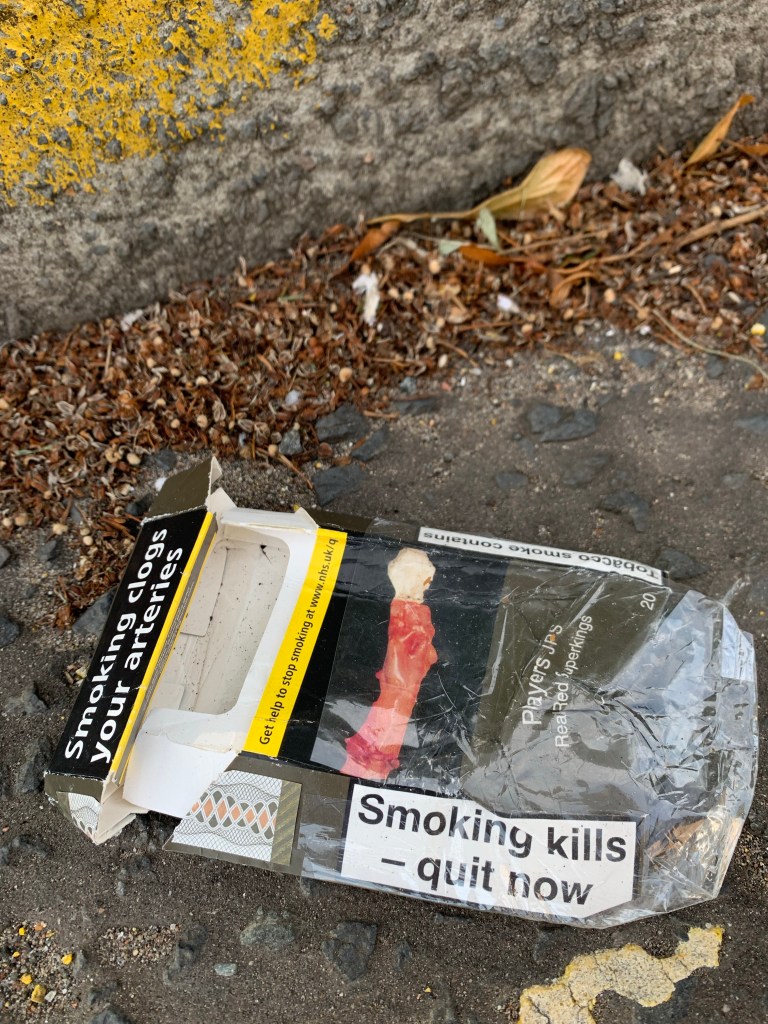
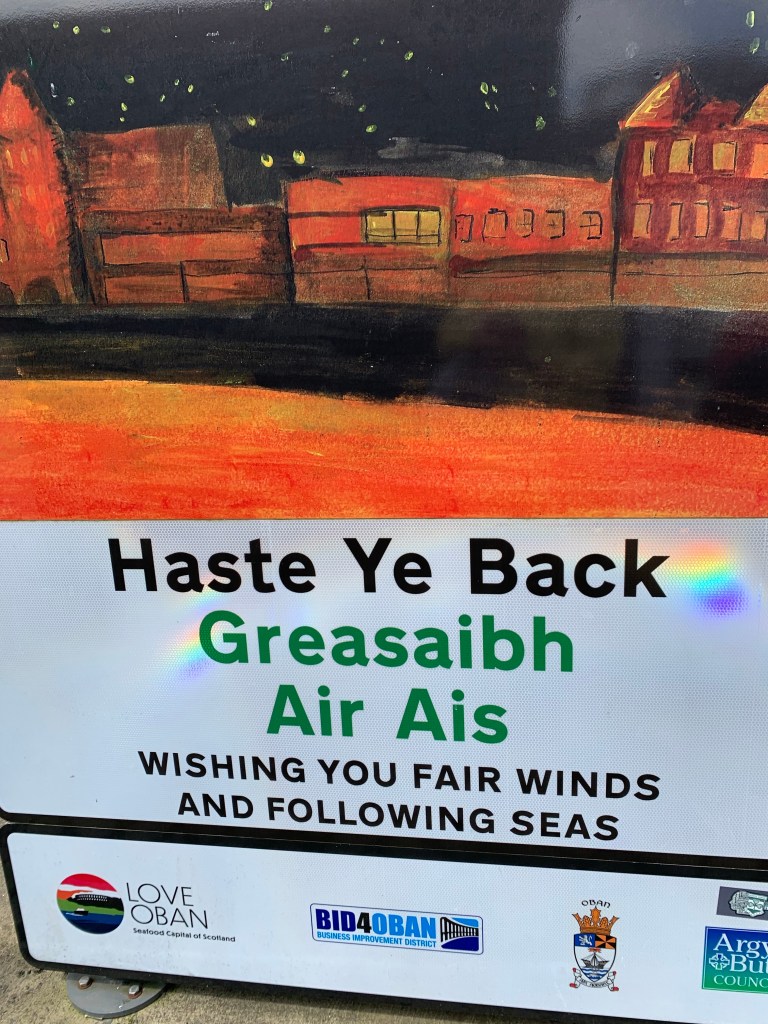
Here in the Hebrides, road signs are written both in Scots Gaelic and in English. Similarly, the explanatory plaques in the local museum were written both in Scots Gaelic and in English. But the really important communications were all in English only. For example, there was a stencil on the rubbish bin which commanded, “Bag that poo!“ I have found tampons and sanitary pads in Ladies’ public restrooms under a sign that says “Stop Period Poverty!” And the command found on cigarette packages:

It seems to me that using Scots Gaelic is reverent rather than practical. Maybe the motto is, “we want some of what Ireland is having!”

Some fun Scottish terms:

Skerries — rocky outcroppings

Bra — fine, stout, well-turned out

Dreich — foul, as in bad weather

Scottish people have been invariably friendly, not reserved or dour. They seem happy to advise us about what to see. Some have gently voiced criticism of Trump and of the many guns in the USA. One line I’ve heard a few times is that Scotland is relatively new to the UK, “for only 300 or so years.” They refer to the Act of Union in 1707.

The people we’ve talked to tell us about their children, grandchildren, and dogs, the great commonalities. They like to tell us where we can find free tea and cakes in the church hospitality room or where we could eat a good, affordable meal.

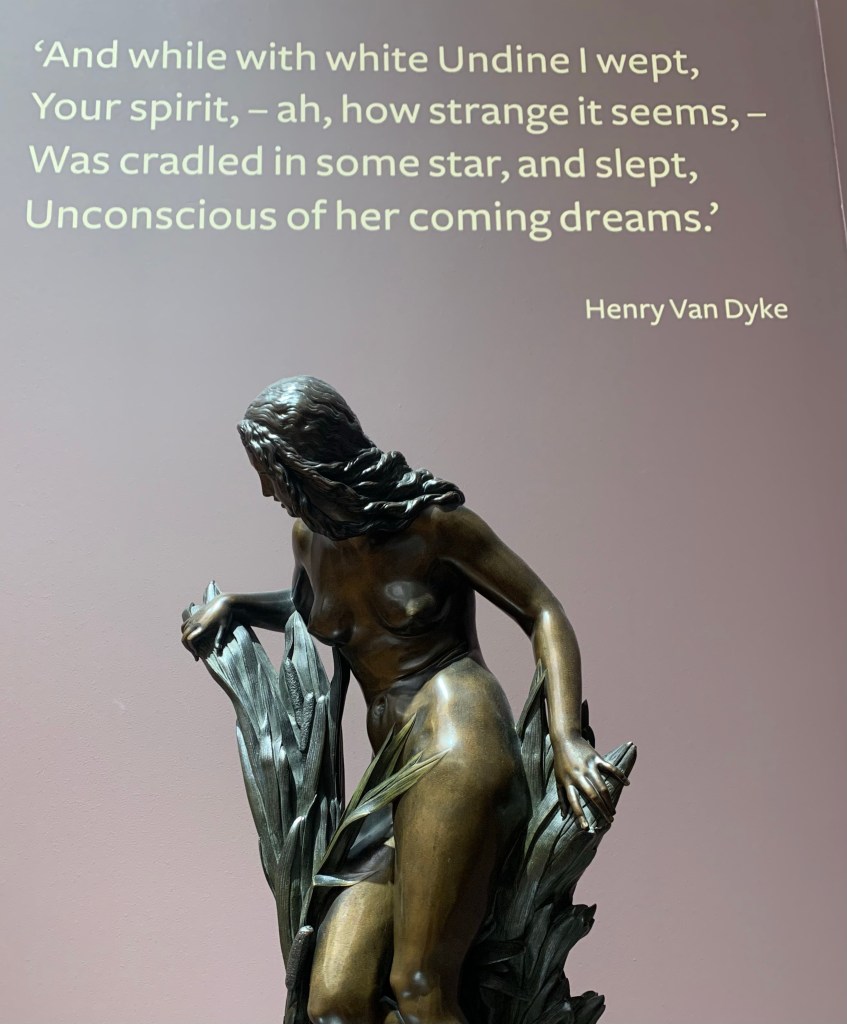
Poetry and Sculpture

Aberdeen Art Gallery

Maternité
Flood in the Highlands
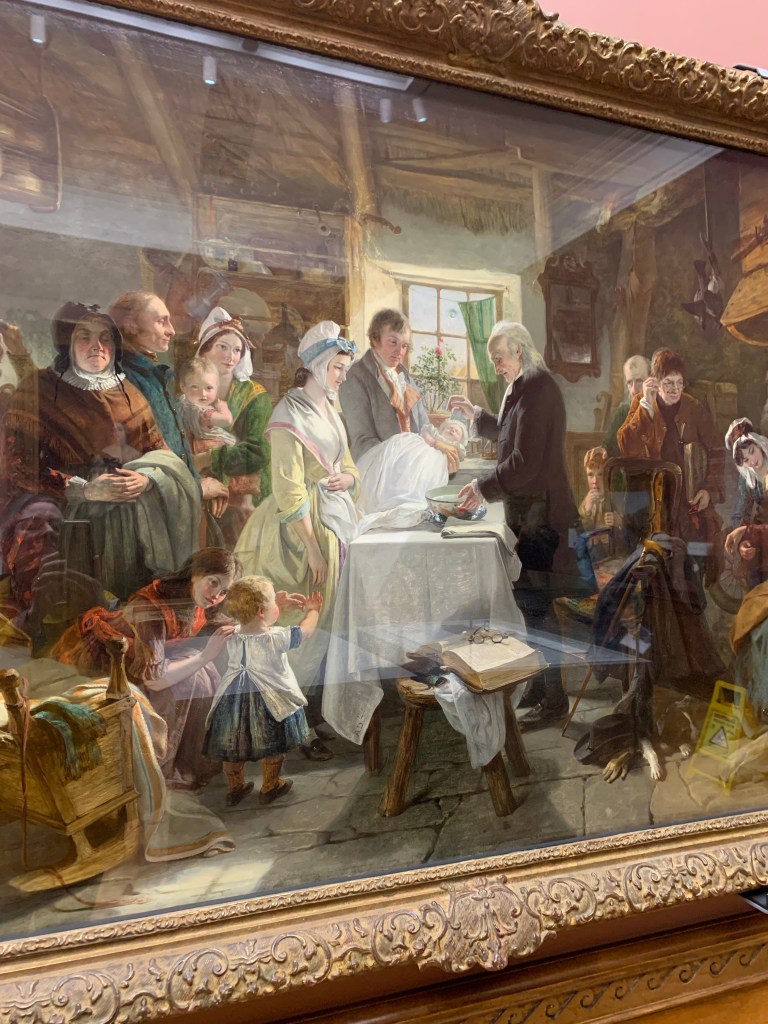
Baptism in Scotland

The Aberdeen Art Gallery is famous for trendy, provocative curating. When we visited, the curators had shuffled and scrambled the collections, added framed mirrors and empty frames, and covered up the dates, titles, and attributions of the artworks. Make of them what you will! Ask questions! No wrong answers! You belong here! Art for the people!
But I just wanted to hunt down a key to tell me what I was looking at. So go ahead and lash me with a lock of my Sainted Mother’s hair; I love sentimental Victorian-era art. So I’ll share three Victorian-era favorites on the family theme:

Maternité by George Hitchcock 1889 American

Flood in the Highlands by Sir Edwin Landseer 1860 English (based on 1829 flooding)

Baptism in Scotland by John Phillip 1850 Scottish

These are amazing, full-size oil paintings of strong and vivid emotion.
Maternité is grounded and peaceful, with the figures rooted in their wild natural surroundings. We are invited to find Christian imagery in the shadow of crossed vines and the basket on the mother’s head. Flood in the Highlands shows animals in distress and animals huddling with their people to survive. I love the expressive postures of the animals in this painting. The onlooker might be reminded of Noah’s Ark. Research indicates the painter was depressed and lonely at the time. And finally, this Baptism scene of humble domestic tranquility brought me into the frame and involved me in the blessing. I shared their joy. It isn’t avant-garde. But it’s pleasant.

Friendly Journalist Sara in Aberdeen

Mousa and Moose-key

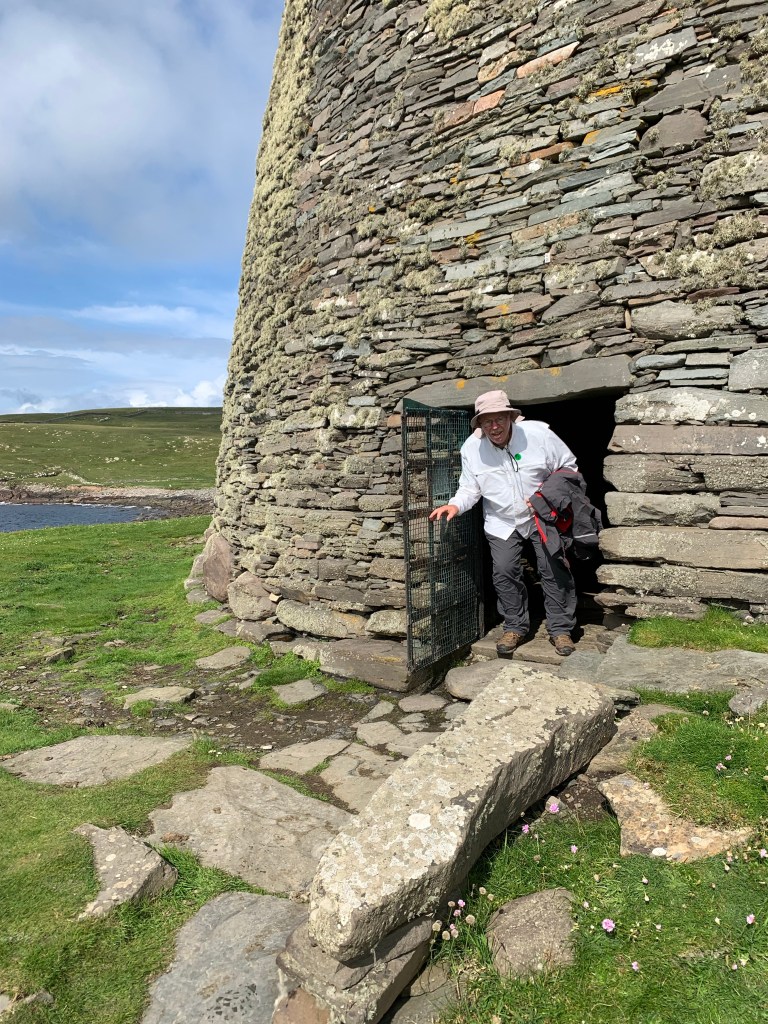
Mousa Island Broch

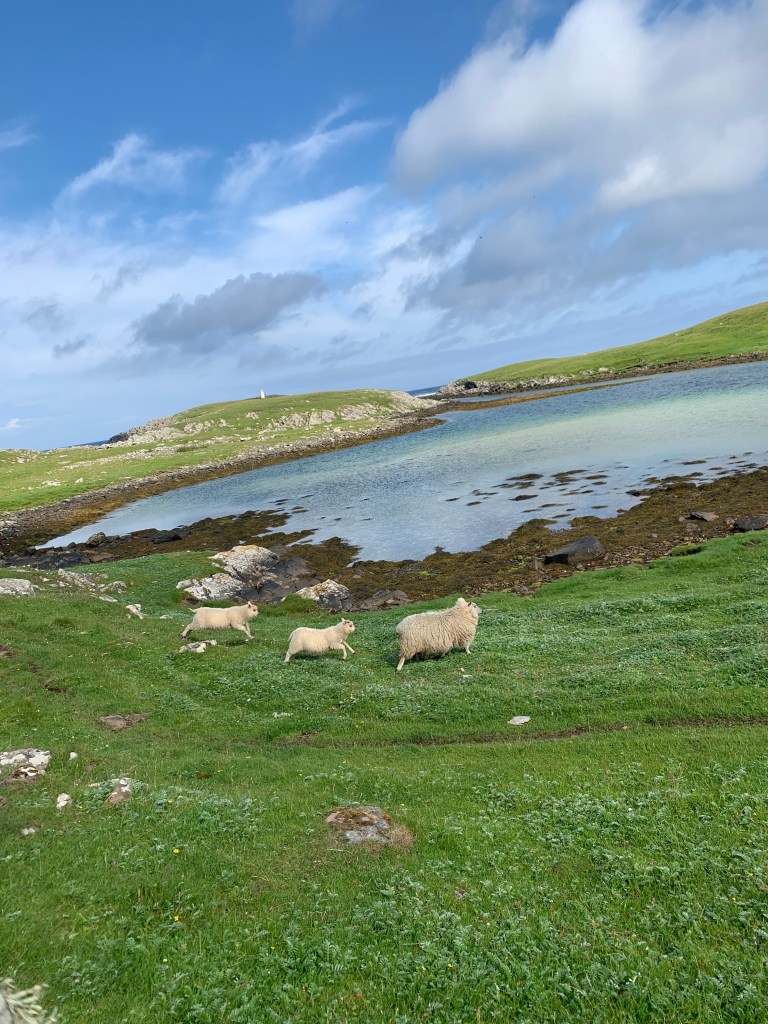
Aside from a hundred sheep and a handful of storm petrel watchers from the Royal Society for the Protection of Birds, Mousa Island, at 60 degrees latitude off the coast of Lerwick, Shetland, is uninhabited. JG and I were touring Mousa, home to one of the largest and best-kept brochs in Scotland. A broch is a double-walled dry-stacked stone Iron Age tower from 400-200 BCE. No one really knows what a Broch was used for. The best theory I heard was that it was the home for a chieftain.

 Mousa attracts bird watchers for the arctic terns, puffins, and storm petrels.

“Breton folklore holds that storm petrels are the spirits of sea-captains who mistreated their crew, doomed to spend eternity flying over the sea, and they are also held to be the souls of drowned sailors. A sailing superstition holds that the appearance of a storm petrel foretells bad weather.” I am not impressed by the local lore. There are visible storm petrels and it is often windy and rainy. Correlation is not causation, as they say. Here is my view of the puffins. Yes, those white blobs stuck on the cliff are the charismatic, sought-after originals of plush puffins.

Puffins on Mousa


Shetland wool is world famous. The Shetland sheep, however, look very much like Watsonville sheep.

It was Sunday and all the shops were closed. Our Shetland tour guide related that her town, Lerwick, hosts a wild costume and dance party every January called Up Helly Aa.

https://www.uphellyaa.org/ As well as tanker lorries full of beer and grown men dressed in fake-fur vests and loincloths, the festival features squads (they’d be called Crewes in New Orleans) of partiers performing a routine that is a cross between a flash mob and a mock battle. Then a stylish wooden Viking galley is ceremonially burnt by the revelers. As she narrated this story of torch-lit parades, of joviality and of stirring pageantry, we looked out at unbroken kilometers of rainy windswept sheep pasture. My hike was enlivened by a whimsical fellow tourist from Chicago. In his backpack, Jerry carried a plush moose in a Finland T-shirt. The moose, named Moose-key, was looking for a plush puffin friend. I understood completely.
National Portrait Gallery Scotland

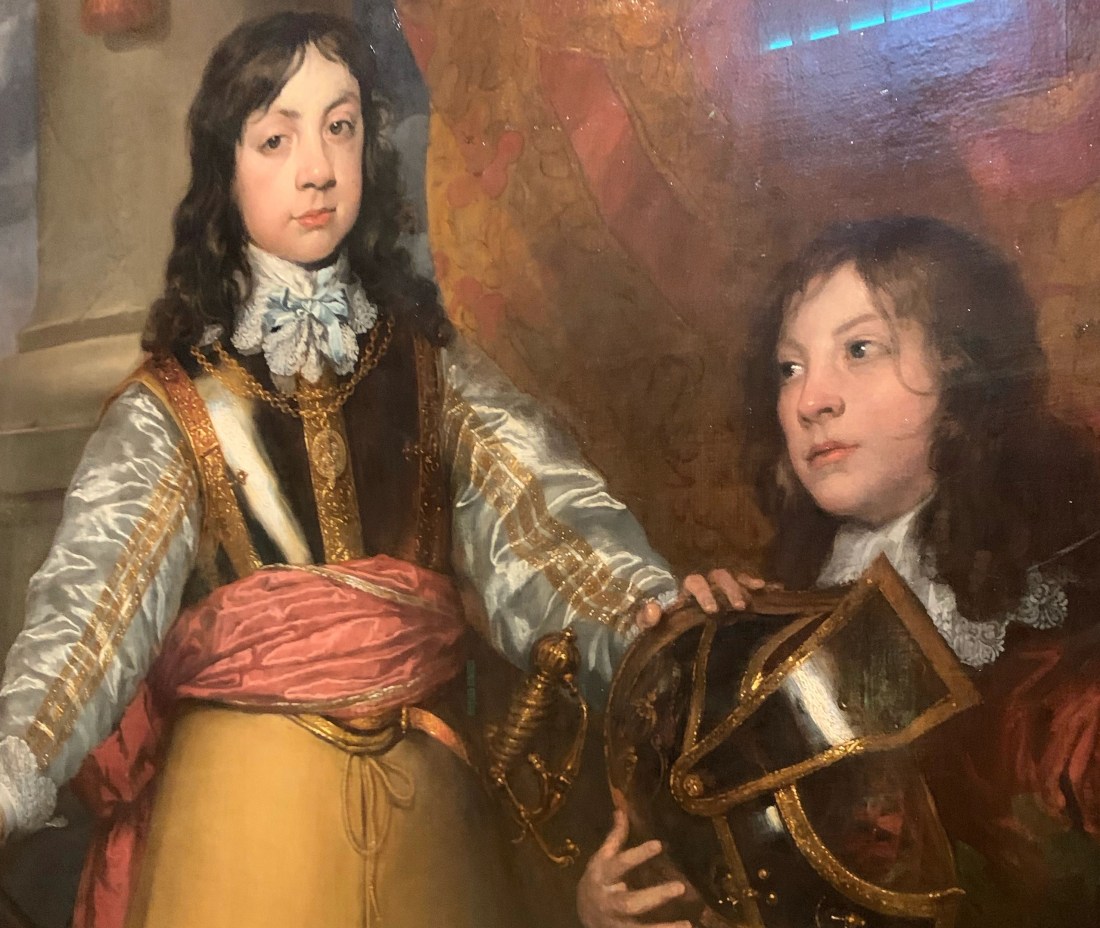
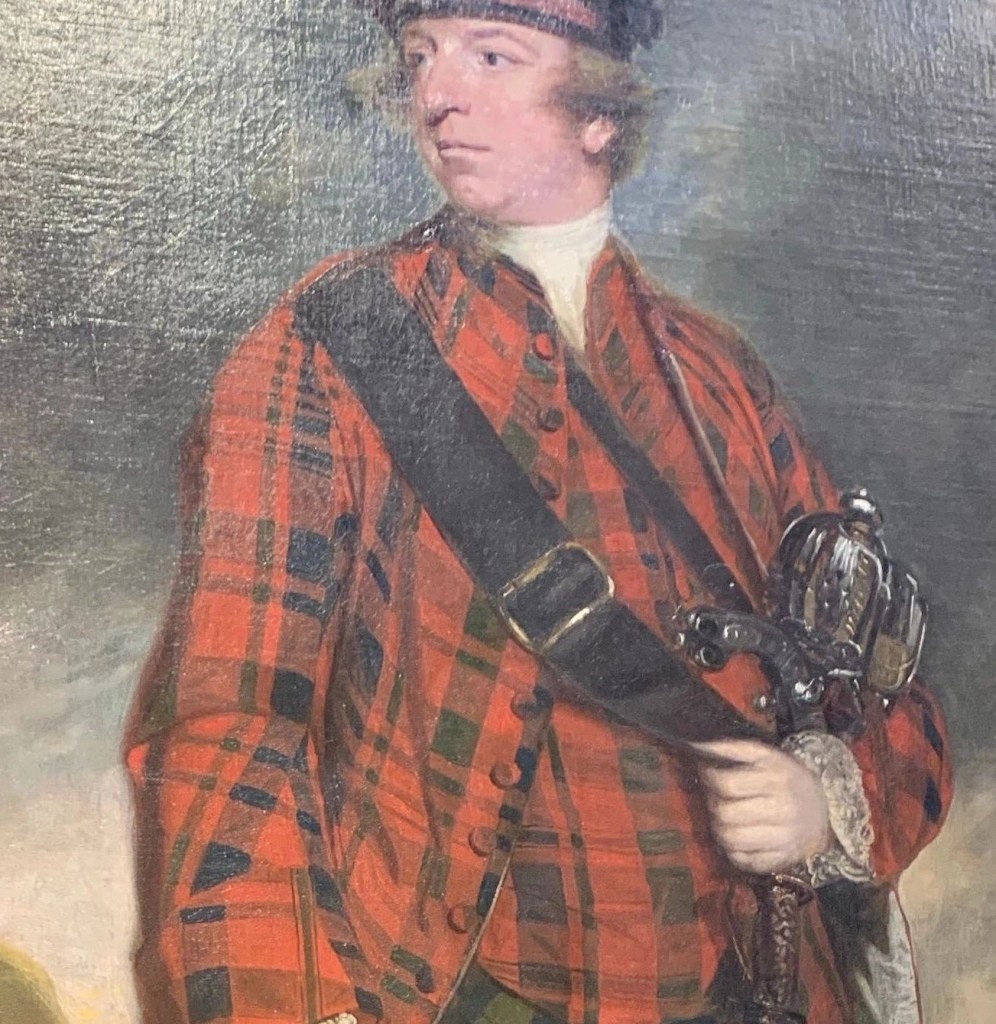
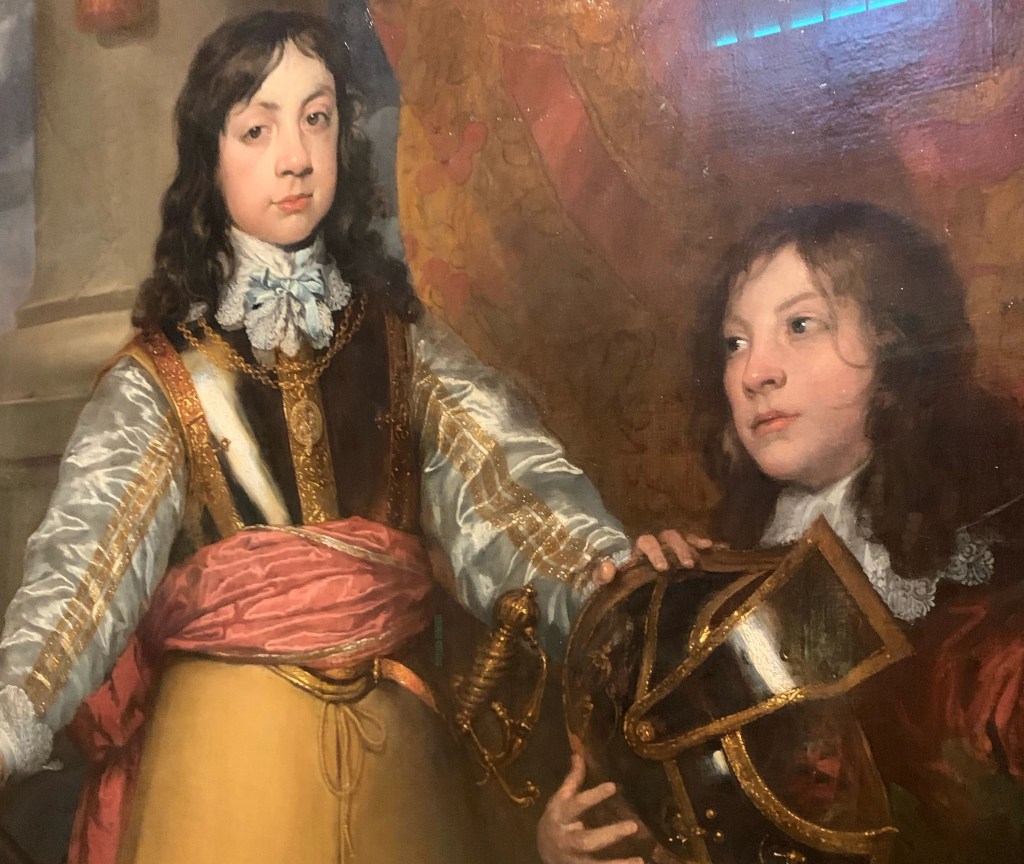
We are born with a love of looking at faces. In Europe for hundreds of years, a portrait signified social importance. A portrait meant you mattered to contemporaries and to posterity. You were admired! I had come to the Portrait Gallery of Scotland in Edinburgh to admire faces. But what I ended up doing was lots of reading. The two-paragraph description accompanying each oil painting was a fascinating encapsulation of the subject’s life and importance. The curators employ such succinct and trenchant English that the placards were a joy to read. We lingered over the pictures and summaries of a dizzying procession of kings, would-be kings, dukes, queens, and noble ladies. In the USA, the King is Elvis, the Duke is John Wayne, and the Princesses are Disney.

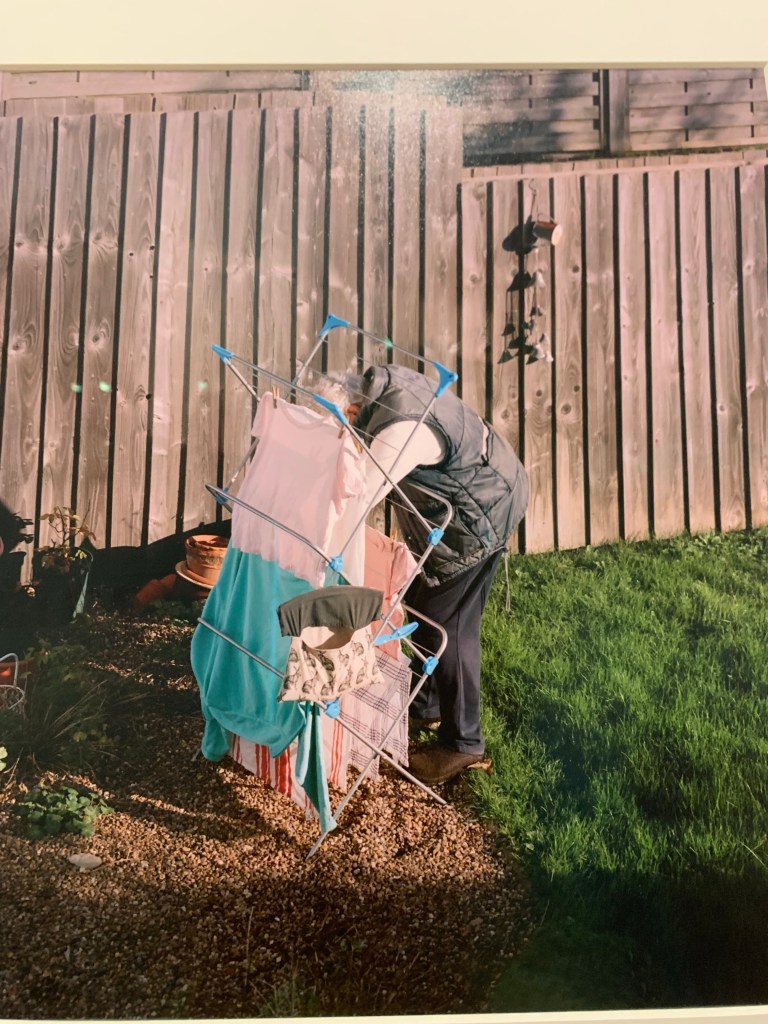
The National Portrait Gallery also displayed the top contestants of a national portrait photography contest. £15,000 was bestowed on the winner, featured below:

I do not understand about judging portrait photos. But I’m happy that such a prize exists and an artist will benefit.

Legendary Marine Creatures

In Invergordon, JG rejected a tour I had proposed to Loch Ness to cruise the lake and look for Nessie. While I would have enjoyed the chance to cruise a beautiful large lake, surrounded by volcanic scenery, John categorically dismissed the opportunity to listen to tall tales about the sea creature called Nessie. Maybe if the tour involved geology or natural history he would have enjoyed the boat trip, but there should be absolutely no campfire-type tales about a sea monster.

We’ve seen the rise of imaginary creatures turned into marketable mascots on T-shirts and made into plush toys. Hello Bigfoot! Looking at you, Tahoe Tessie!

Nessie, Puffin as Plushies

Are other tourists enchanted with guides who spin yarns instead of being scientifically knowledgeable? As I am a lit major allied with an engineer,  I must provide my own Nessie tales instead of a local guide’s. To wit:

o    Nessie surfaces wearing Granny‘s expensive prescription eyeglasses athwart her forehead after Granny leaned over the side of the tour boat and the glasses fell in. Only Granny saw Nessie, but of course she waren’t wearing her glasses so who knows what she saw. 

o    Nessie spots a lonely boy hugging his knees on the shore. She slithers up and rests her head on his feet and allows him to pet her for a while. When he later relays the story, his account is not believed because the boy is neuro-divergent. 

o    Nessie nudges a fishing boat away from crashing on the rocky shore when the captain has fallen asleep. The captain often drinks too much and nobody believes him when he says Nessie saved his boat.

Sometimes truth is better than fiction. The Santa Cruz Sentinel reports that sea otter 481 has been causing problems among surfers off the coast of Santa Cruz. The little monster climbs aboard surfboards and harasses surfers, biting at them and biting their boards. Sea otter 481 is a five-year-old female who had been raised at the Monterey Bay aquarium and then released to the wild. Obviously, she has turned to the dark side and is bent on biting the human hands that used to feed her.  The marine mammal specialists at the aquarium are trying to recapture sea otter 481 in order to imprison her for “rehabilitation.”  “Cute am I?  Make a plush toy out of me, will you? I’ll show you interlopers whose Bay this is!” 

Aye, the keepers at the MB Aquarium knew 481 was trouble when she kept swiping matches from the cafe and trying to start fires in her pen. Or when she tied kelp into nooses and tried to lure her keepers into a snare baited with a smartphone. 

481, Recidivist