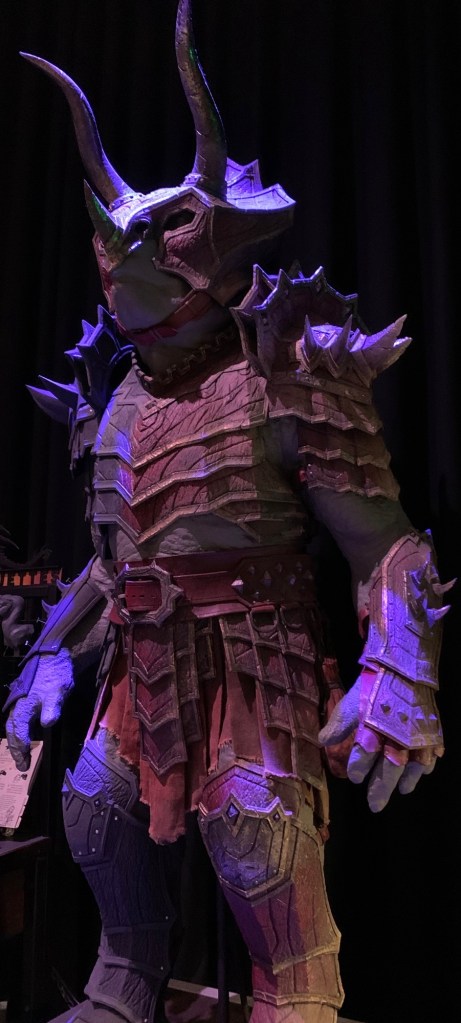
Wēta Workshop Tour

Big dumb easy to topple monster

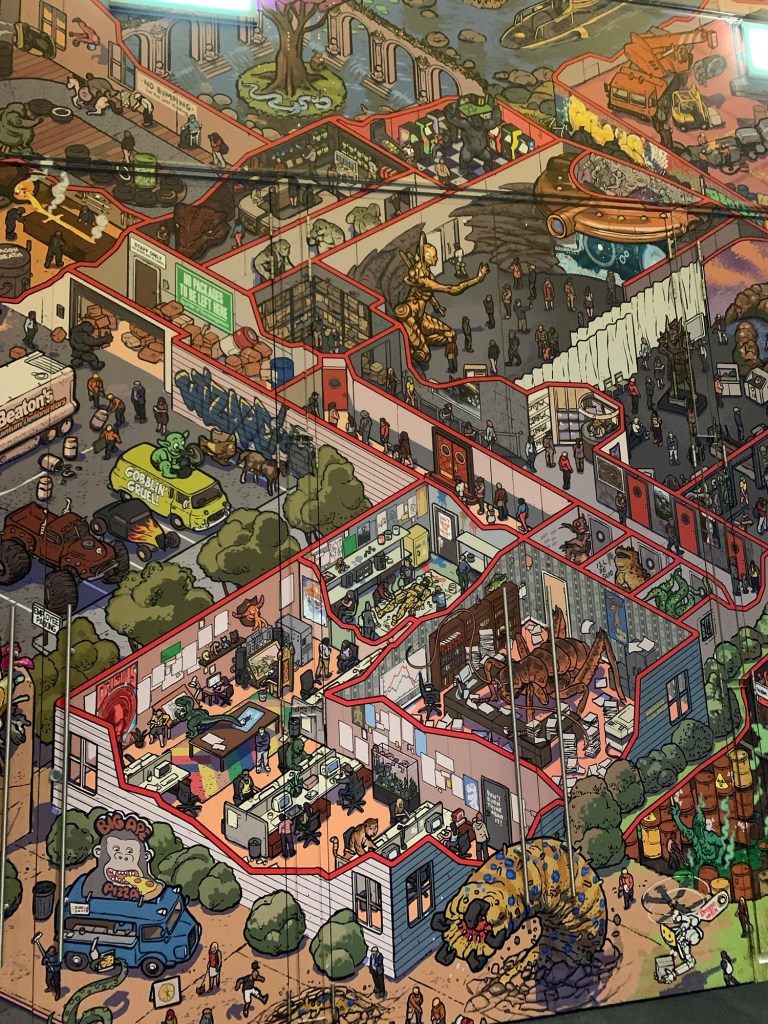
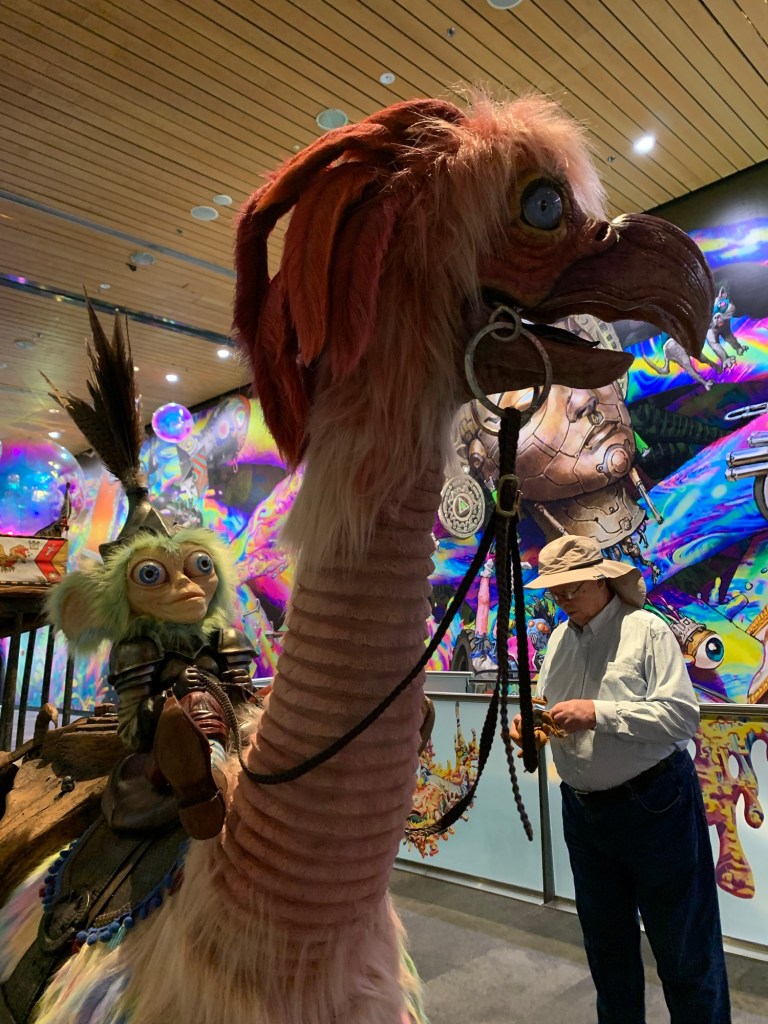
Kiwis excel at more than friendliness, yachting and rugby.  We’ve traveled to the heart of Middle Earth creature-making. The descendants of Professor Tolkien chose the Wēta Workshop to design the inhabitants of Middle Earth for the Peter Jackson Lord of the Rings movies (2001-2003). These are the folks who gave hobbits, dwarves, elves, orcs, balrogs, trolls and ents their visual presentation. I persuaded JG, who had managed thus far to avoid reading or watching anything set in Middle Earth, to accompany me on a tour of Wēta’s fun props, stitched together with back story, photo ops, and computer-generated interactive exhibits.  In Kiwi: some pahts weyah chahming. I especially liked the winking self-referential humor and treating the foam creatures as if they were real and asleep. 

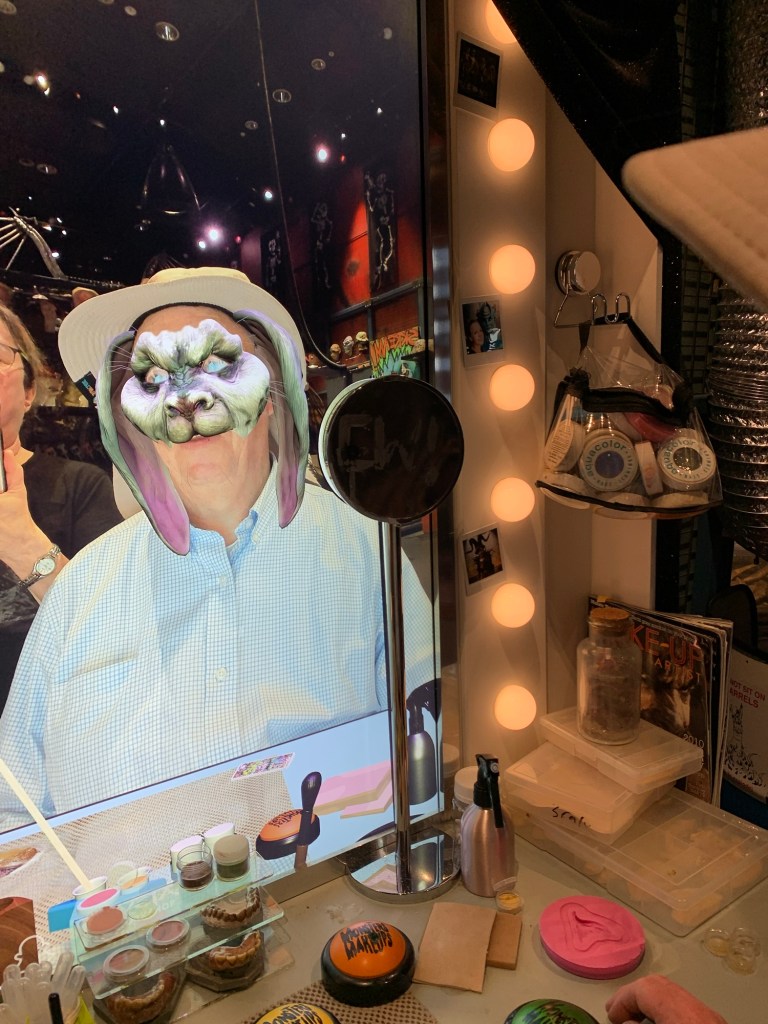
The older grandchildren are in the target demographic for the interactive exhibits. They would have enjoyed manipulating a latex creature with levers, sculpting a fantasy creature, talking to an animatronic up close, watching their own mirrored faces be transformed into monsters by a special effects artist, playing with fake blood, admiring a small-scale detailed fantasy castle, and walking through a haunted house.

But I was also a bit unsettled by the artists’ physiognomic choices, showing who was attractive and who was ugly. Fair essentially means Northern European flat faces with small noses, round cheeks and even teeth. Middle Earth humans can digest lactose but suck at basketball. Ugly means hooked nose, protruding ears and lips, prominent brow, darker skin tone, and darn, they’re musical. Ugly also means extra wrinkles and chins. I was surprised to learn that the shape of the dragons’ faces was based on the New Zealand native tuatara (not a lizard), which also served as a model for creatures in Jim Henson’s Dark Crystal Movie. As Disney princesses have become more diverse, maybe someday someone will also re-imagine Middle Earth inhabitants.  But leave the ents alone; they were glorious. 

There were some fun photo ops.

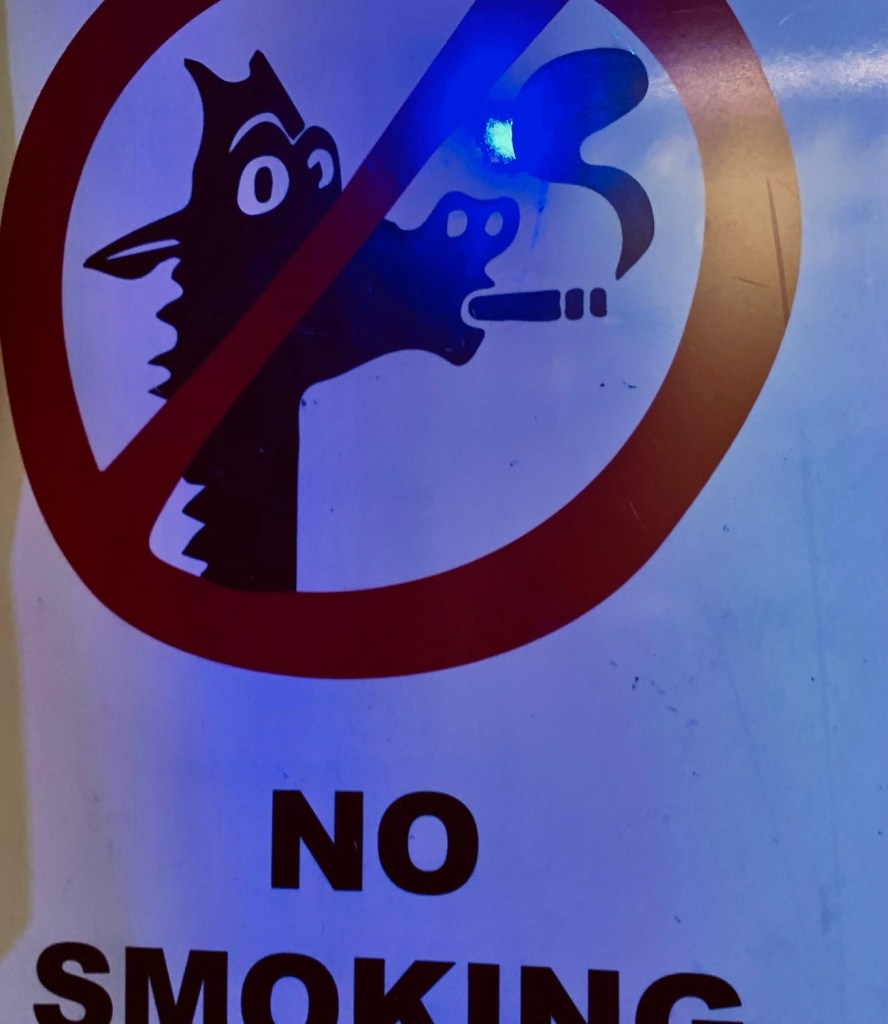
I liked the awards the team created on the 3D printer. “Is this a workplace or a kennel?” The Woolitzer Prize was awarded for knitting. “Most Confusing Mixed Metaphor.”

And here’s the animatronic:

Friendly Kiwis

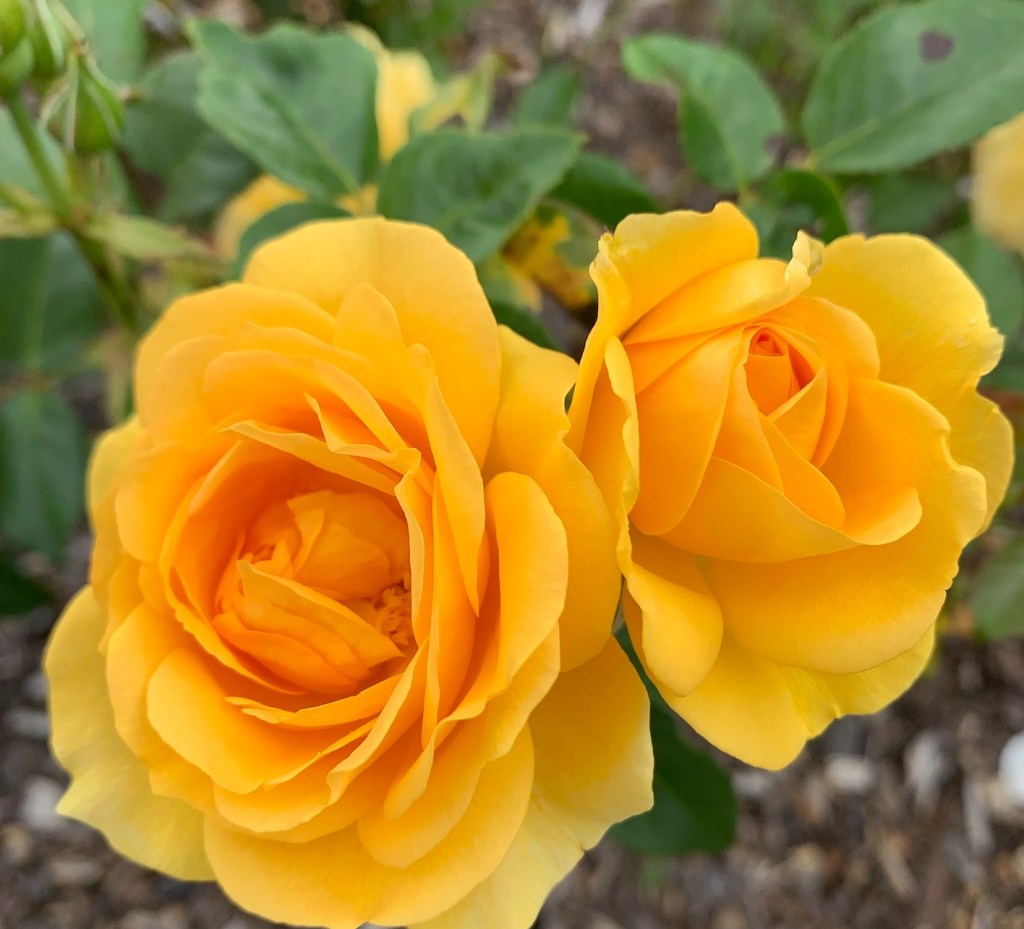
Time to Smell the Roses

Seldom have I witnessed such genuine hospitality and friendliness as among Kiwis. No “I’m only waiting tables until I hit the big time” wanna-be’s, no “I hate my life” depressives, no “take this job and shove it” powder kegs, no obsequious “My name is Jaden and I’ll be taking care of you tonight” toadies. So many good-looking smiling young people work in the service trades and seem to enjoy it. At our hotel breakfast four waitstaff check in on our table. And tipping is not customary in New Zealand. The worst service and the worst food I’ve experienced here was in a French restaurant operated by a cold, almost hostile, French-speaking couple. Coincidence.

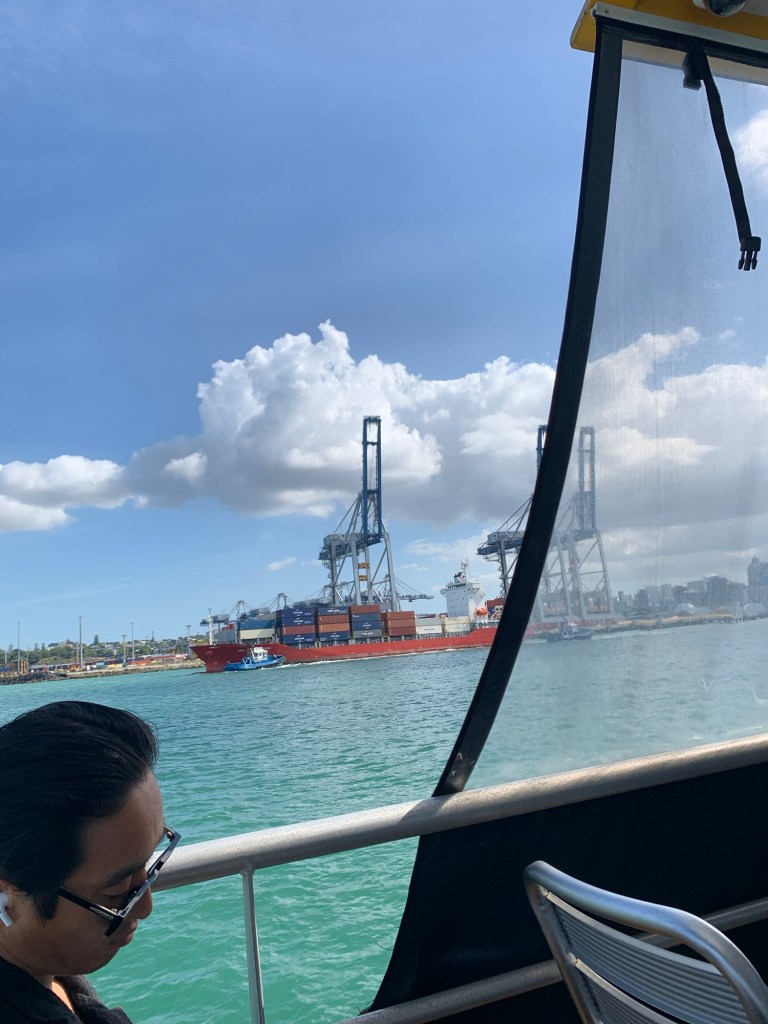
On the Ferry

I celebrated the Year of the Wood-Snake dancing Taiwanese and Chinese folk dances in Saint John’s Ambulance Hall in Pakuranga. Thanks to Adony and friends, who created global folk dance Zoom parties during the pandemic, I had a local contact, Bronwena. Thanks also to the Folk Dance Federation and to all my dear teachers. The ladies and I followed Sherry, a gracious, generous and precise dancer who received the dances from now-retired elders. At first I danced with too much zhuzh for their styling and needed to tone it down. Partners touch palms together like a light caress, not like a high-five.  There is no extra upbeat for syncopation. Absolutely do not give weight; we are delicate flowers. And though they use all their music to complete a figure, the styling is to flow gently from one figure to the next without flourish. 

Dancers at Tea Time

After an hour of dancing in the afternoon, the ladies took a break for tea. They happily invited me to join them for refreshments. Though they spoke Mandarin, catching up with their friends, we shared the common language of food. Then we danced another hour. Bronwena gave me a lift to the ferry and we parted, knowing we’d see each other on the dance Zooms. 

This proud country of 5.4 million people (Bay Area population 7.7 million) has universal health care, free compulsory education through high school, and a culture of helpfulness. I have been surprised to see large bottles of sunscreen available to share in public places like the zoo and the hotel gym. Our culture is much more “I got mine, Jack, sorry about you!” There are several boot-cleaning stations at the docks and trampers use them before going to the nature preserves on the islands.   New Zealand biosecurity and environmental measures are strict. If you’re caught smuggling undeclared food, you’ll owe NZ $400.   It is difficult to purchase a plastic bag. Kiwis carry their shopping in reusable bags. Shopkeepers will offer a paper bag, not plastic. Tableware for take-away is made of bamboo, not plastic. JG dissuaded me from hoarding my bamboo forks. I had the idea to plant them, tines up, to discourage dogs from defecating in the front yard. But he reassured me they would be available stateside as well. 

Pride in their Waste Water Works
Looking down at Aotea Square, City Hall

Scents and Sensibility

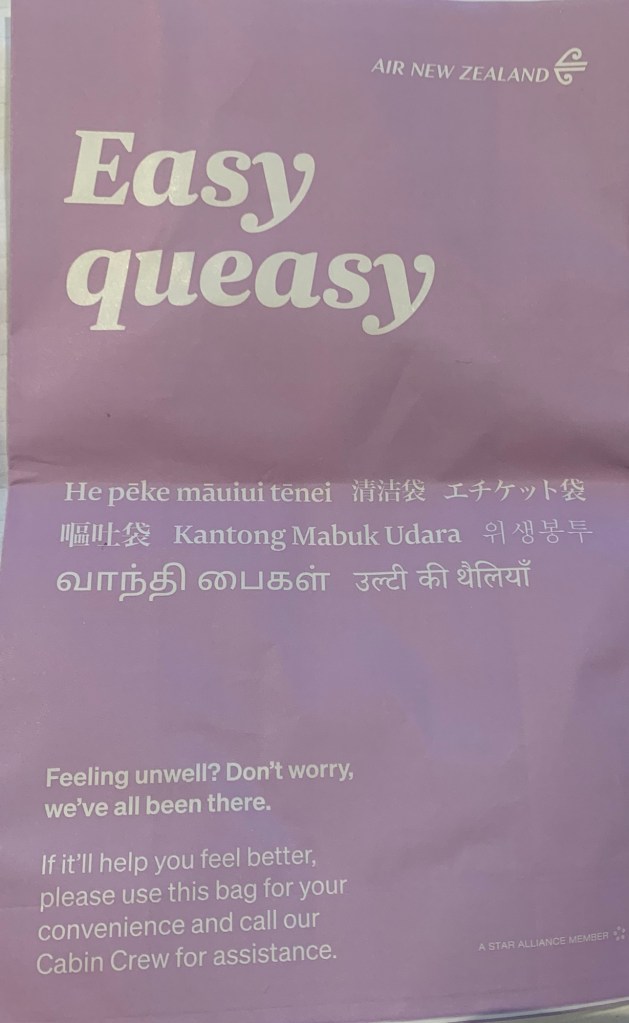
Barf Bag in 8 Languages

We didn’t let the 13 hour flight dissuade us from visiting Aotearoa, New Zealand. So far, the country compares to the UK, but more egalitarian and with better climate. Kiwis have been friendly, from the maternal Air New Zealand flight attendants calling me “luv” to the patient, almost apologetic customs official who cleaned JG’s boots for him before he could enter the country. They wish to prevent the spread of infectious diseases. Here’s NZ on bird flu: https://www.mpi.govt.nz/biosecurity-in-nz/bird-flu-be-ready/?utm_source=Google&utm_medium=paidsearch&utm_campaign=Bird_flu_2425&utm_content=Search&gad_source=1, sounding truly worried.
Now compare that to our friends at the CDC: https://www.cdc.gov/bird-flu/situation-summary/index.html, essentially downplaying the threat. 

At the airport we also read about how to stop the spread of Foot and Mouth Disease, also known as Coxsackie Virus, which one of our children had contracted at preschool. So one of my first impressions is that Kiwis care more about preventing infection than Americans do. In fact, in the USA I have frequently heard that exposure to germs strengthens the immune system and therefore one need not disinfect. That opinion is held by those who prefer not to clean as a lifestyle choice. My immune system is kaput, thanks, and you can pry the bottle of Lysol from my cold dead hand.

First Person Singular to Apologize for Needing Maintenance

Similarly, compared to Santa Cruz, where scented anything is usually banned on people attending indoor events, Kiwis are okay with deodorant, scented soap, and scented dryer sheets. The strongly rain shower-scented hotel soap brand salutes vigor and economy, calling itself “Activ” without that vestigial “e.”

Before we left home, I saturated sawdust packets with cedar essential oil and tucked them around our garage. I hope the smelly sachets will deter rats from colonizing our garage. Maybe they’ll think, “oy, I’m a sensitive Santa Cruz rodent, and I can only be in a scent-free environment, so I’ll go next door!” Shout out to our neighbor remodeling her yard! I expect her resident gophers will be disturbed by the construction and relocate. Let’s see if the putrid dried rotten egg solids I poured into their burrows on our side deter them, or maybe they’ll just dig extra far.

Pre-Travel Preparation

Ready to Travel

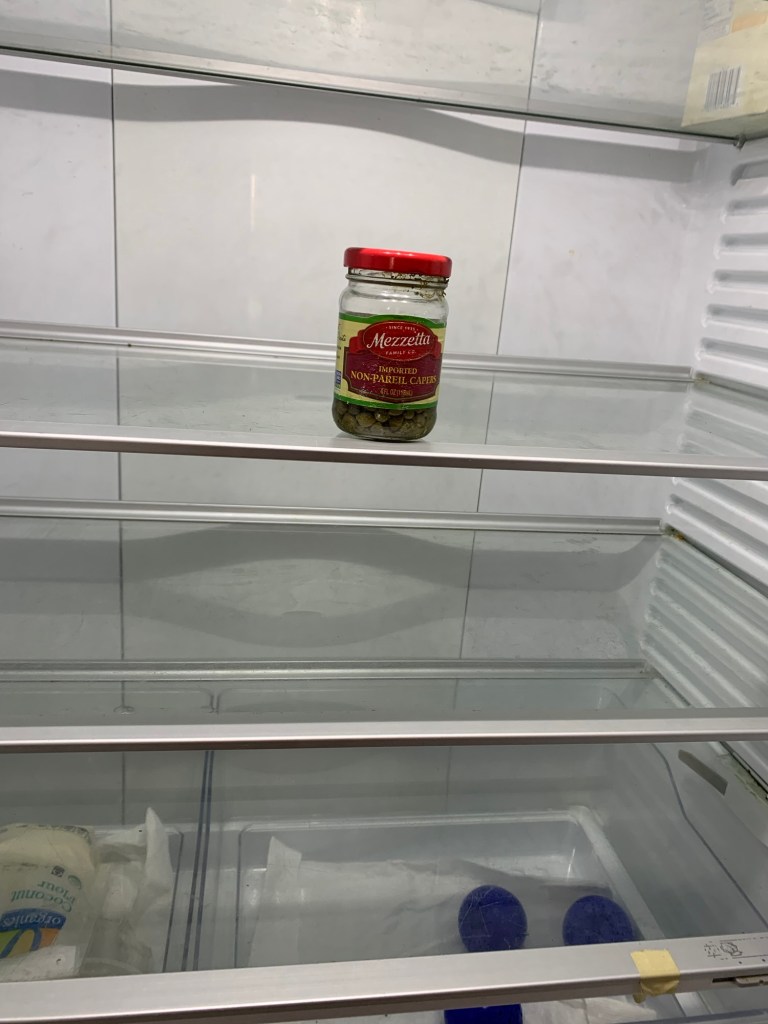
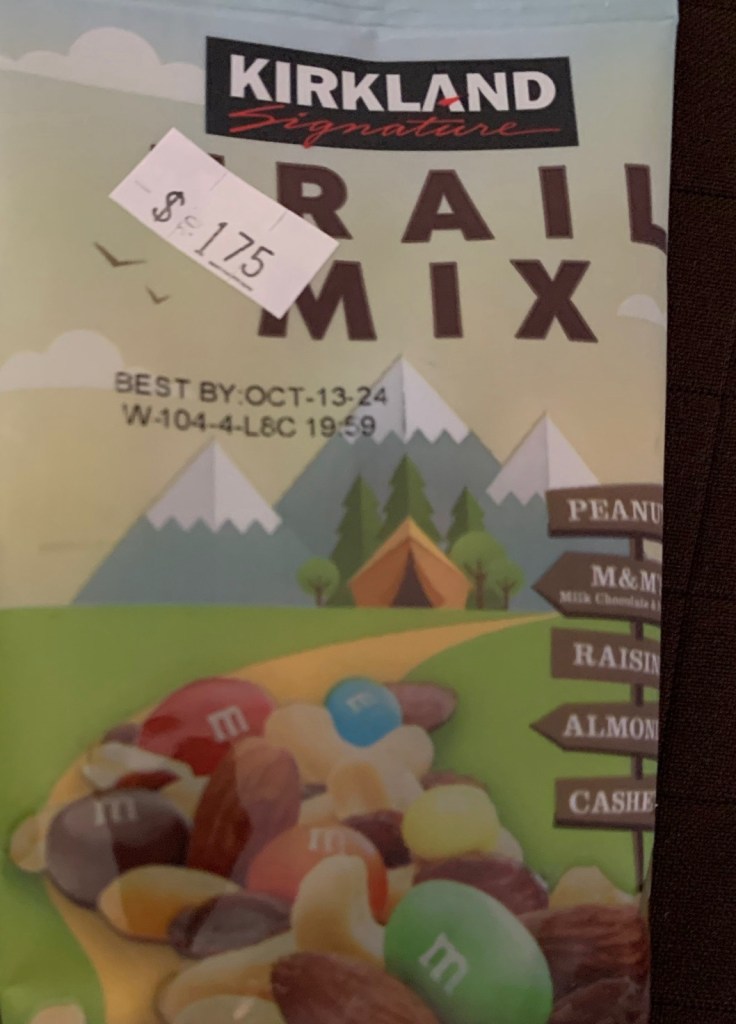
If I didn’t travel, I would never clean out my refrigerator. There is a secret pleasure to a comfortingly full fridge that sometimes spills over into collector’s mania. My fridge contained the usual condiments like pickles, olives, sauerkraut, maple syrup, streusel, chocolate sauce with and without alcohol (I see you, M), dairy and nondairy:  milks, spreads and toppings, and the unusual: four kinds of cultures to make cheese, rennet, coconut, almond, spelt, whole wheat pastry and whole wheat flours, three kinds of butter. There is family lore about JG’s fridge, when I first dated him. My first time over at his place I peered into the vast deserted wasteland of a fridge containing only beer and a jar of capers. Thanks to the 44 years of our association, he now adds taco sauce and Italian dressing to his fridge must-haves. Where did all the contents go? Some of you who received goody bags of sesame oil, jam, mayonnaise, Meyer lemons, and goat cheese know. I gave it away to those who would be untroubled ingesting food close to or past its Best By date. Thank you for not wasting! 

The Graspable and the Ideal

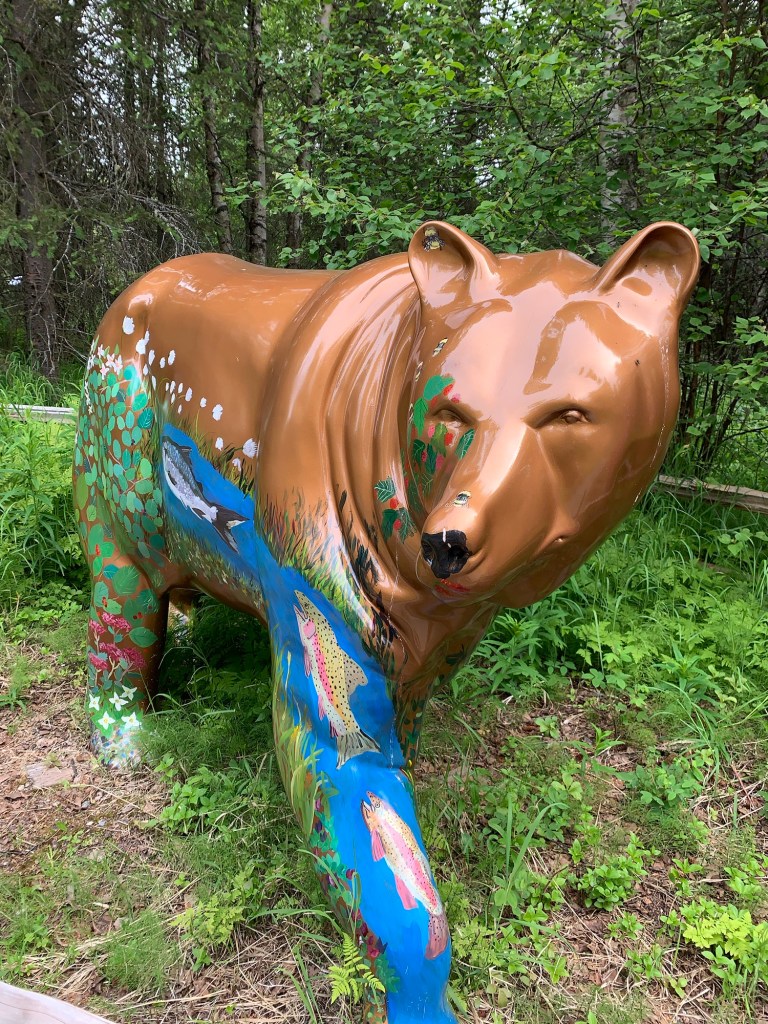
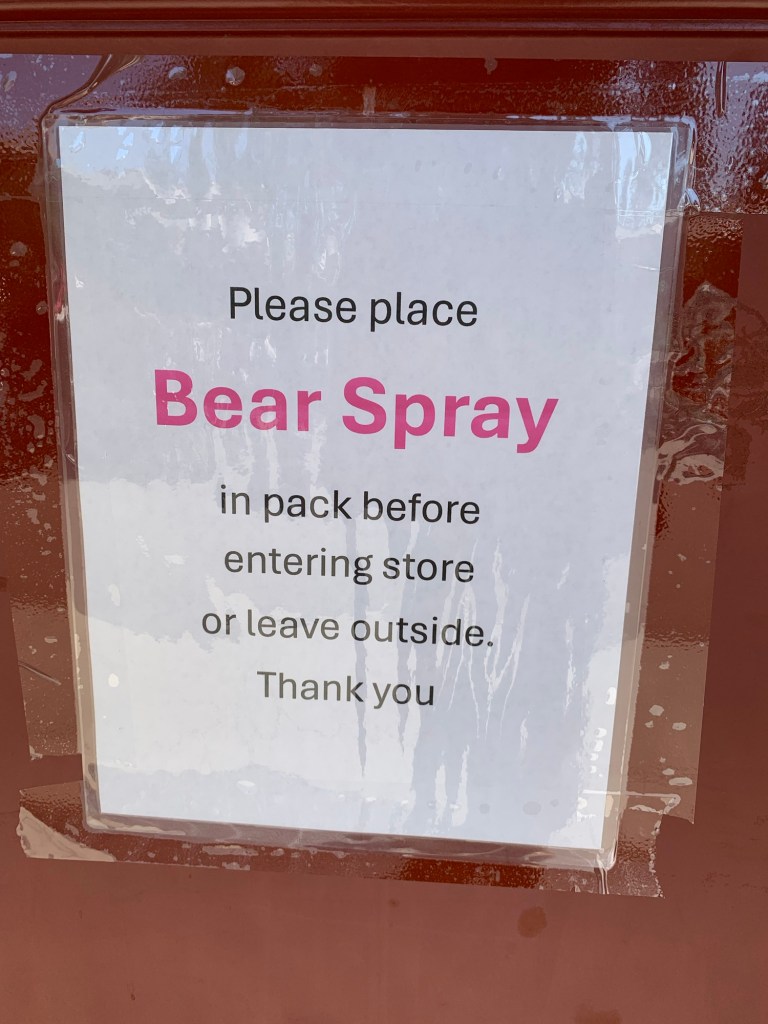
Botanical Garden Bear

What can you grasp or comprehend? What is beyond your grasp? What is the Ineffable, the Platonic Ideal? That there is more to life than meets the eye or the comprehension is a cornerstone of Platonic thought.

Where Plato Keeps his Skeletons

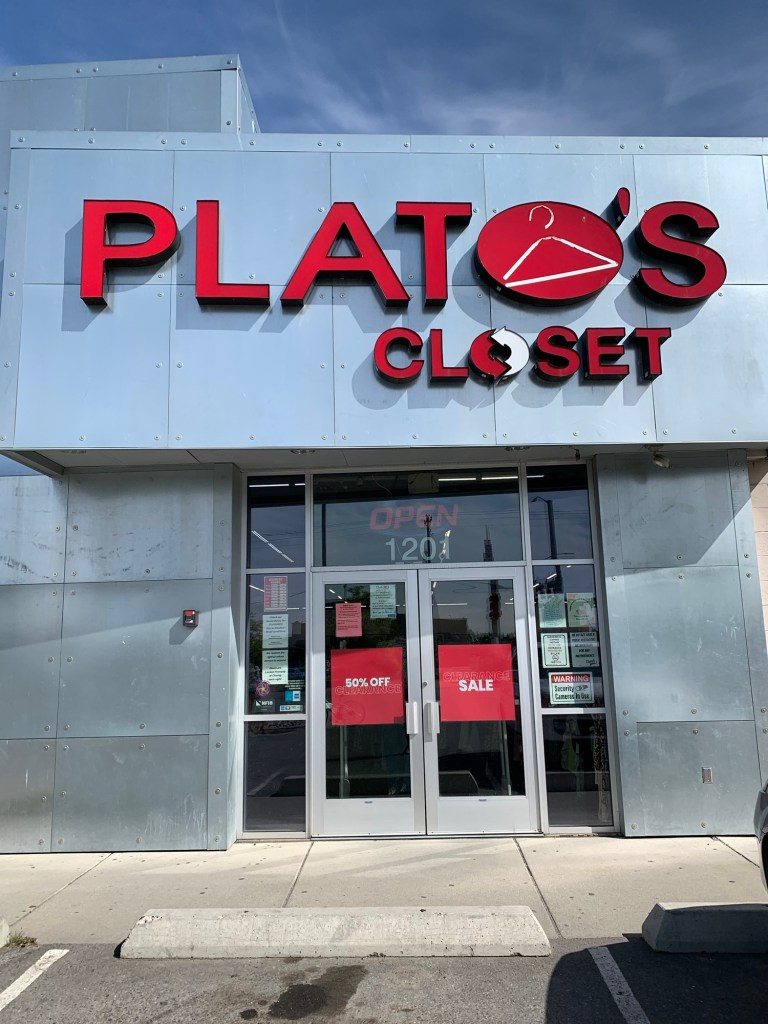
On our jaunt through Anchorage I stopped to photograph the sign for a shop called “Plato’s Closet.” The lit major in me wondered whether it was related to Plato’s cave wall. While photographing, I was accosted by a large blonde in a larger SUV who asked why I was taking a photo of the sign. I smiled my guileless smile and replied that the name was the same as the Greek philosopher who gave us the idea of the “ideal.” She told me it was her store and asked why hadn’t I heard of Plato’s Closet? She looked perplexed so I asked if she might be Mrs. Plato. No, but she graciously invited us in to check out her store, even as she wondered why this tourist lady found her store’s name so quaint.

Continuing the theme of projections on the wall, I must report that Anchorage hosts two theaters showing video footage of the Northern Lights. How baffling. The Aurora Theater will sell admission to a seat to watch a narrated movie of Aurora Borealis. So will “Lumalim.” They offer this: “experience the Northern Lights through augmented reality.” And then audience members may tell the folks at home they’d seen the Northern Lights in Alaska. Does it matter that it was on a screen?

What about turning off all the lights and selling tickets to a simulated solar eclipse?

Double-flowering Cherry

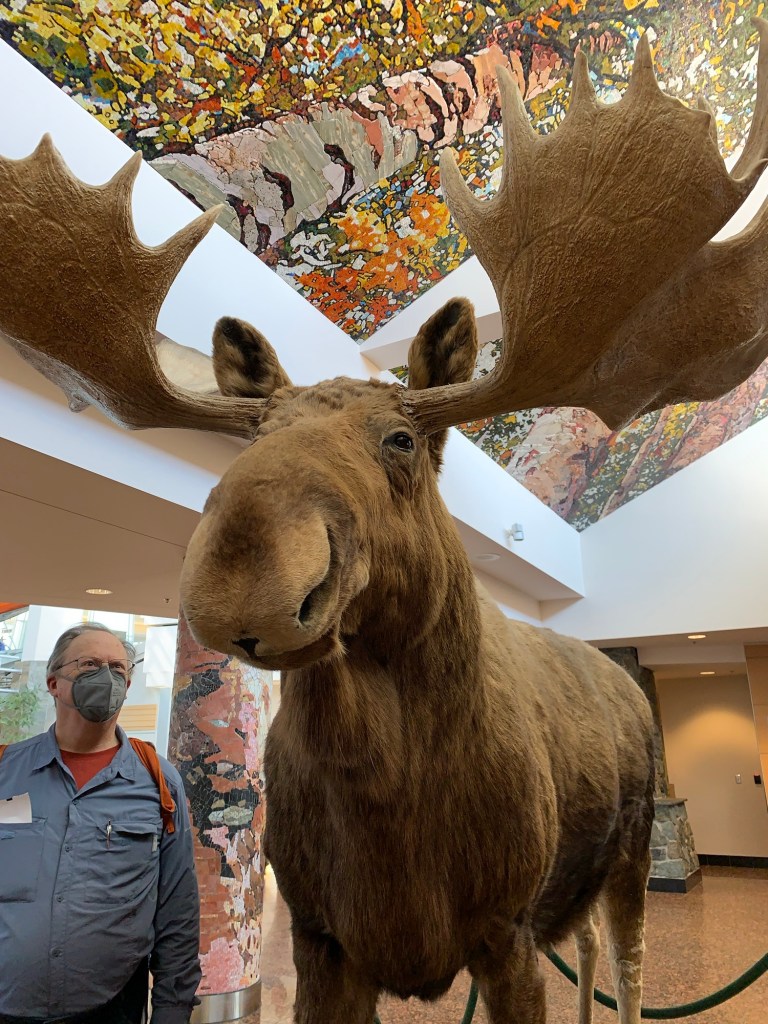
Similarly, the NP bus tours have a ranger with a spotting scope on board. She spots wildlife and links her scope’s active feed to screens placed on the bus. Thus the passengers can ogle the wildlife on screen with the same magnification as her spotting scope. So that increases the likelihood of wildlife viewing, but does it count if it is on a screen? Why not just Google “moose image” and skip the bus ride? Or take a photo at the ANC airport:

Look Out for Moose
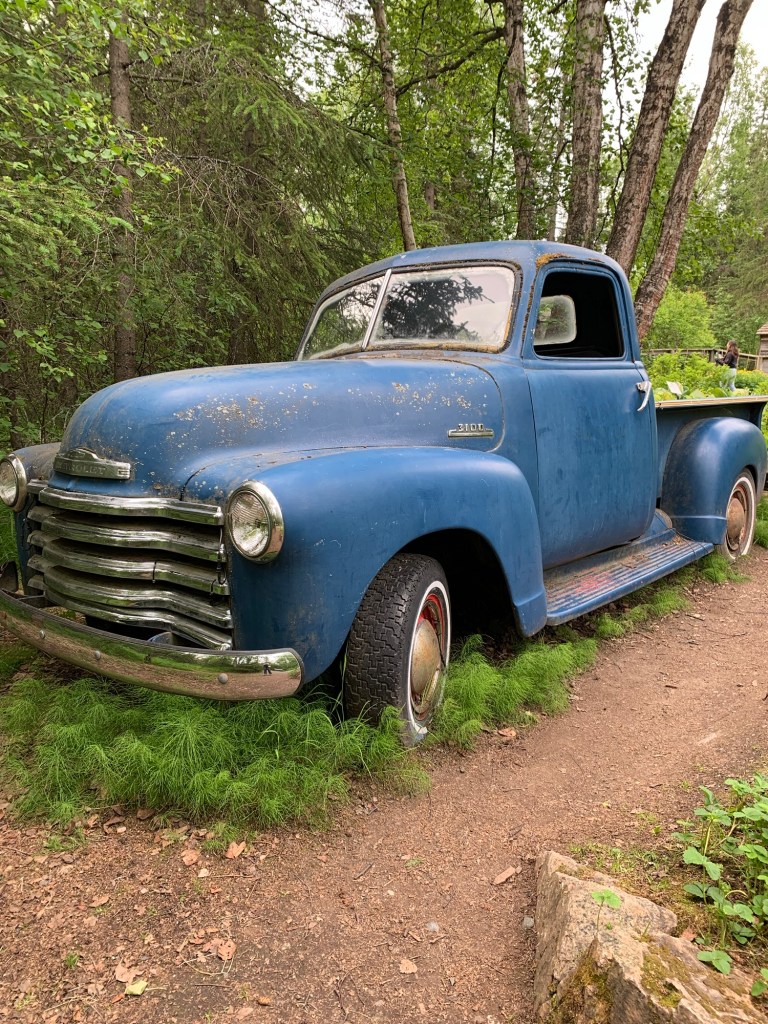
‘47 Chevy: Old Friend, Not Forgotten

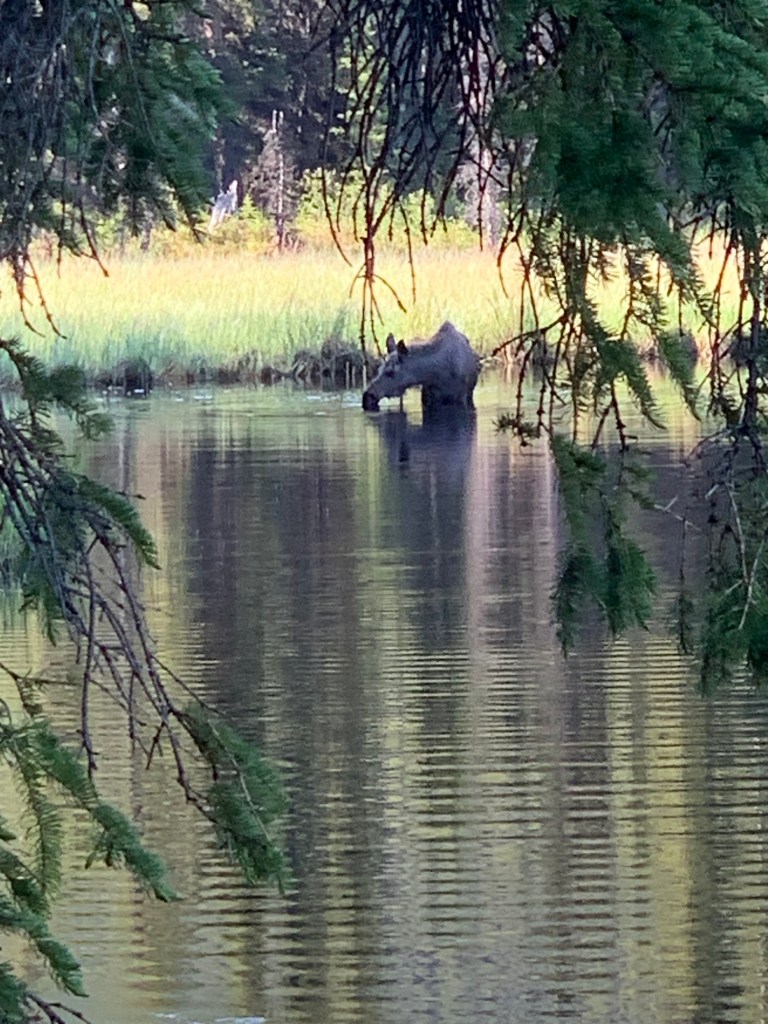
Traveling confers on the traveler the sense of seeing something different from the usual. I think Alaskans greet tourists with “Watch out for moose!” the way we’d say, “Surf’s up!”  There’s pride in that warning. I got a lengthy spiel from an Alaskan who told me what to do if chased by a moose. She delivered it with practiced gravity, the way I’d tell a beach newcomer about what to do if caught in a riptide. By the way, the answer is: run in a zigzag and climb or hide behind a tree because moose have poor depth perception and lose interest quickly. What was it I was chasing? Naw, better just go back to eating swamp goo.

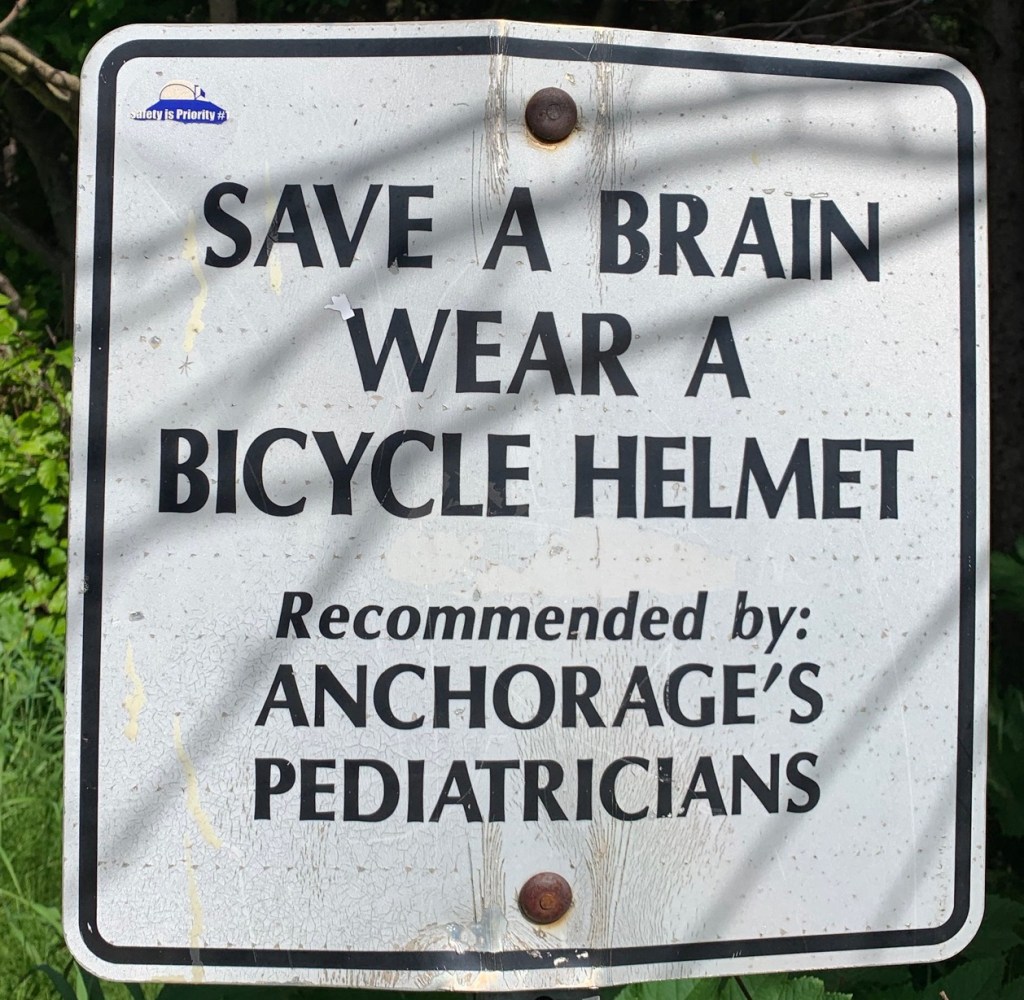
Sign on the Coastal Trail in Anchorage. There are neither helmet laws nor leash laws, only suggestions.

The state department that administers the annual dividend to residents is called the PFD: Permanent Fund Dividend. This is not “Personal Flotation Device.”

It’s worth noting that JG looks at the world through an engineer’s eyes. So when we cross a river, he’s looking at the bridge construction while I look at the plants. In a rough climate like Alaska, structures deteriorate fast. So a lot of labor is needed just to keep up with maintenance. The “Pretty Rocks Slide” has closed the single road in Denali at Mile 43 and no repairs are forecast. JG was already musing how to fix the road with a bridge. He really enjoyed the many different kinds of bridges we’ve crossed while I admired the plant life. Top five best things about Alaska:

5. Glaciers. I have no words.

4. Rivers: mostly named after the glaciers from whence they flow.

3. Frontier: not many roads or trails, lots of public land 

2. Ability of the hardy young population to thrive outside city limits with no internet

1. The “eat the wilderness” mindset, called “subsistence,” that, as I reported from Louisiana, examines everything in the wild as “good, bad, or good eatin’.”

Seagull Nests on Totem Pole

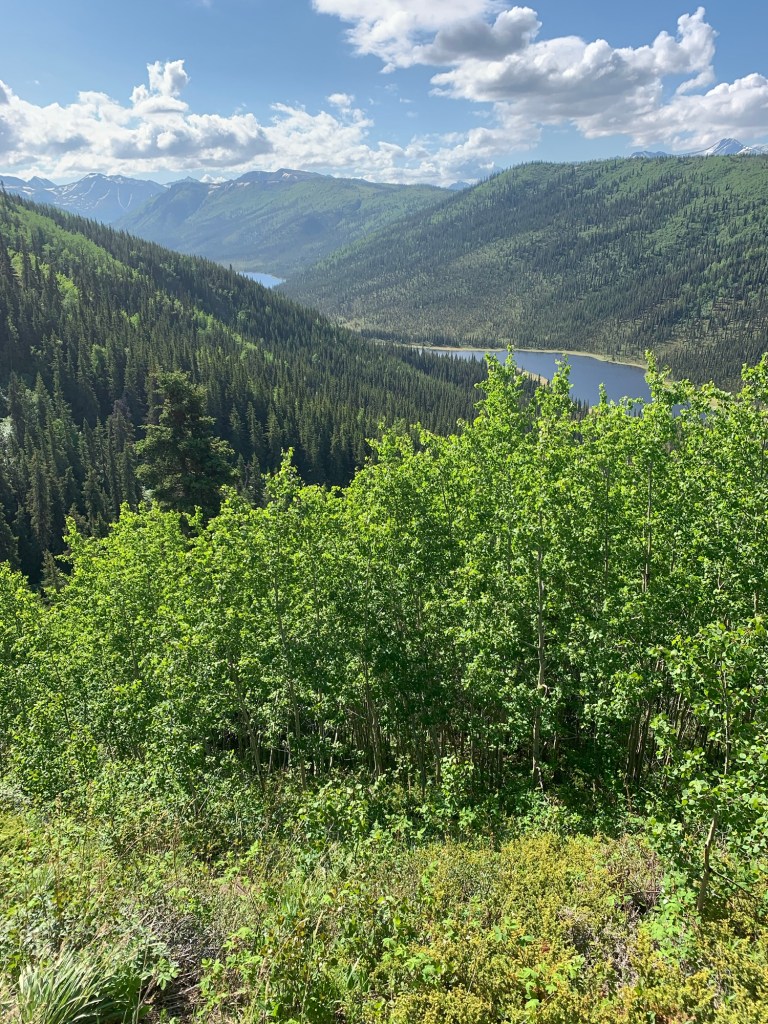
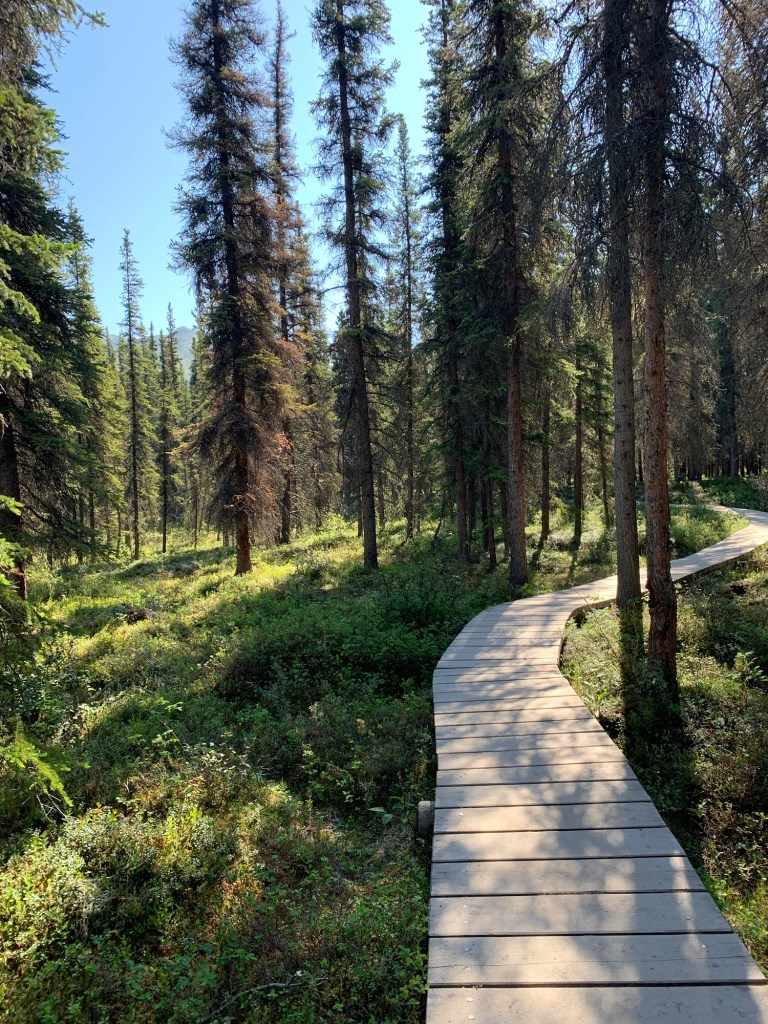
The Boreal Forest

Lakes 2 and 3
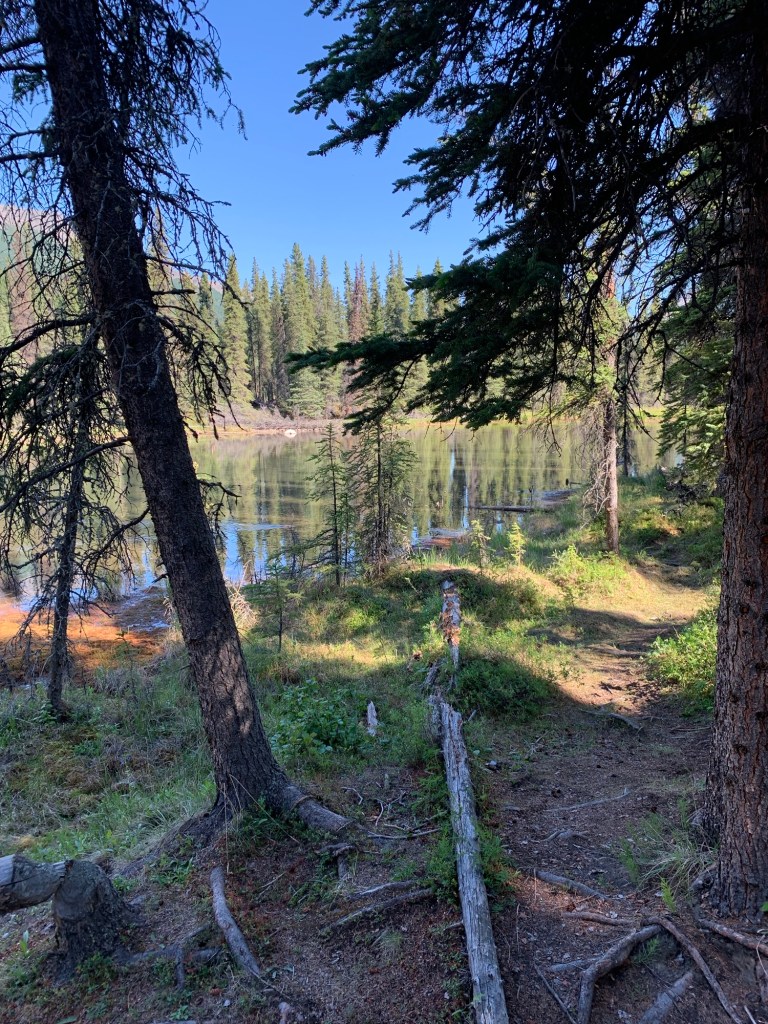
Trail at Horseshoe Lake

Trees light up my world. Here in Alaska I’m visiting the relatives of the dwarf conifers in our front yard. I admire what the trees do: keep growing until they die and feed the next generation. The witches’ broom, that’s that cluster of tiny branches growing herky-jerky on the pole of Alaskan spruce, is a response to fungal infection.

Witches’ Broom

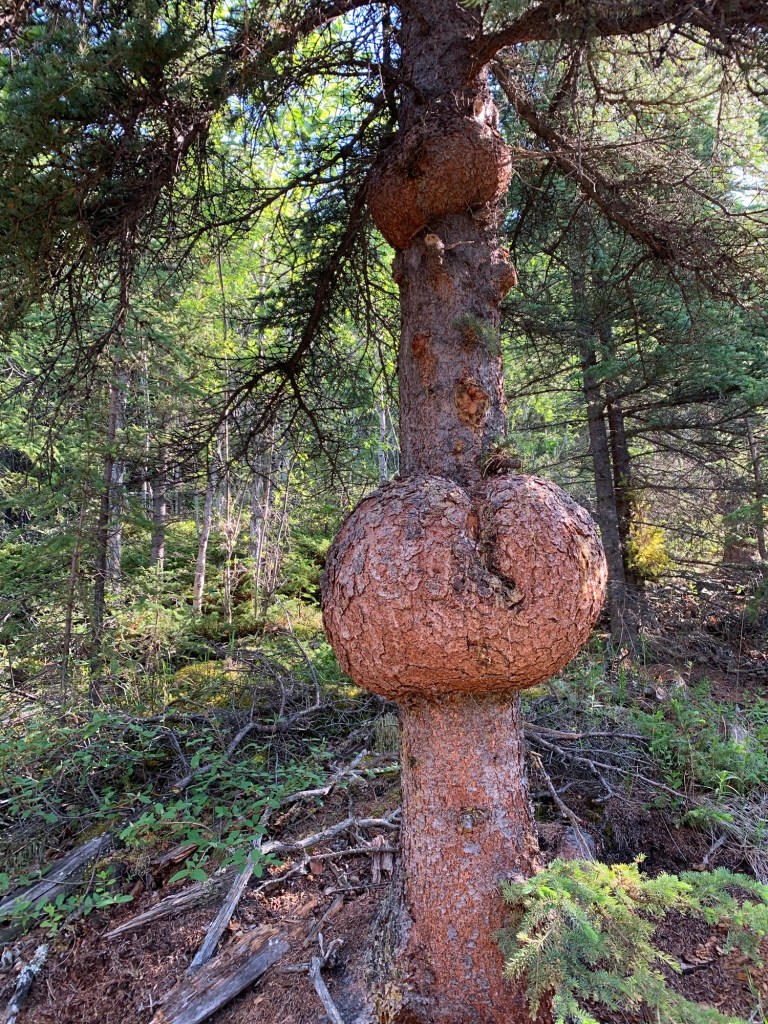
Here is an irresistibly callipygian spruce burl:

Spruce Burl

A nursery tree reminds me that new life comes from dead trees.

Nursery Tree

There is an enchanting combination of rock and shrub that makes my heart beat faster.

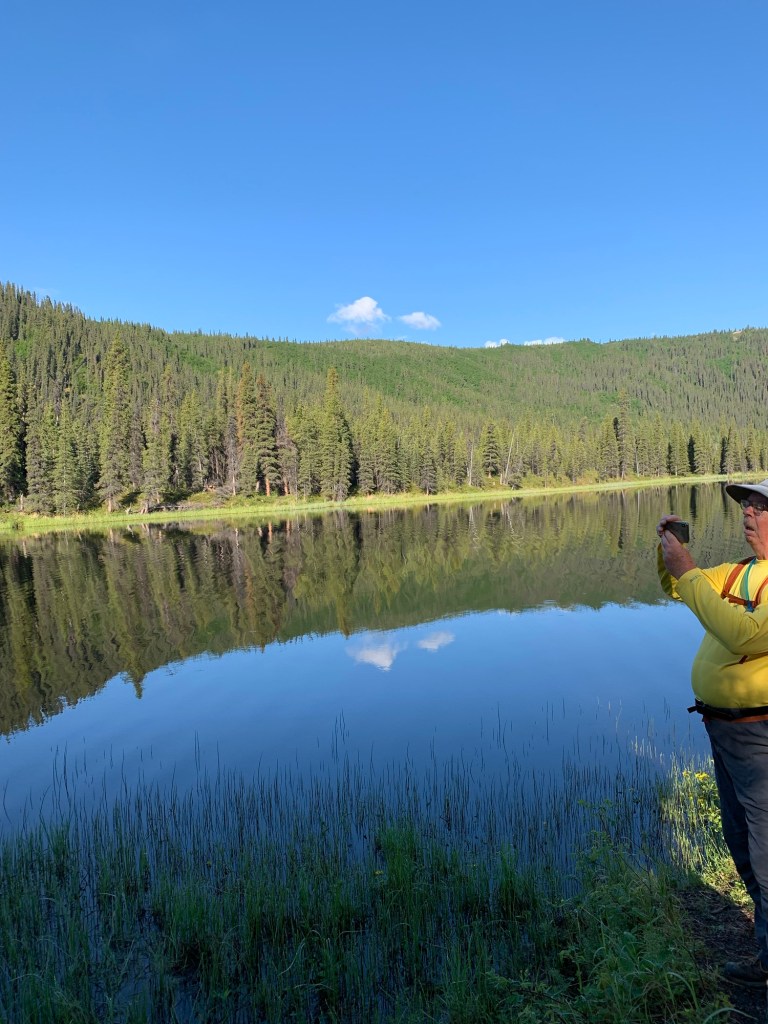
I noticed the lakes named 1, 2, and 3. The trail is really new, like the other recent Denali NP trails. And there are so many unnamed lakes and ponds. JG thinks the NPS is waiting for a benefactor to name the lakes after, the way Oracle Park is the home of the SF Giants. I think it’s interesting to be in a place with unnamed water features.

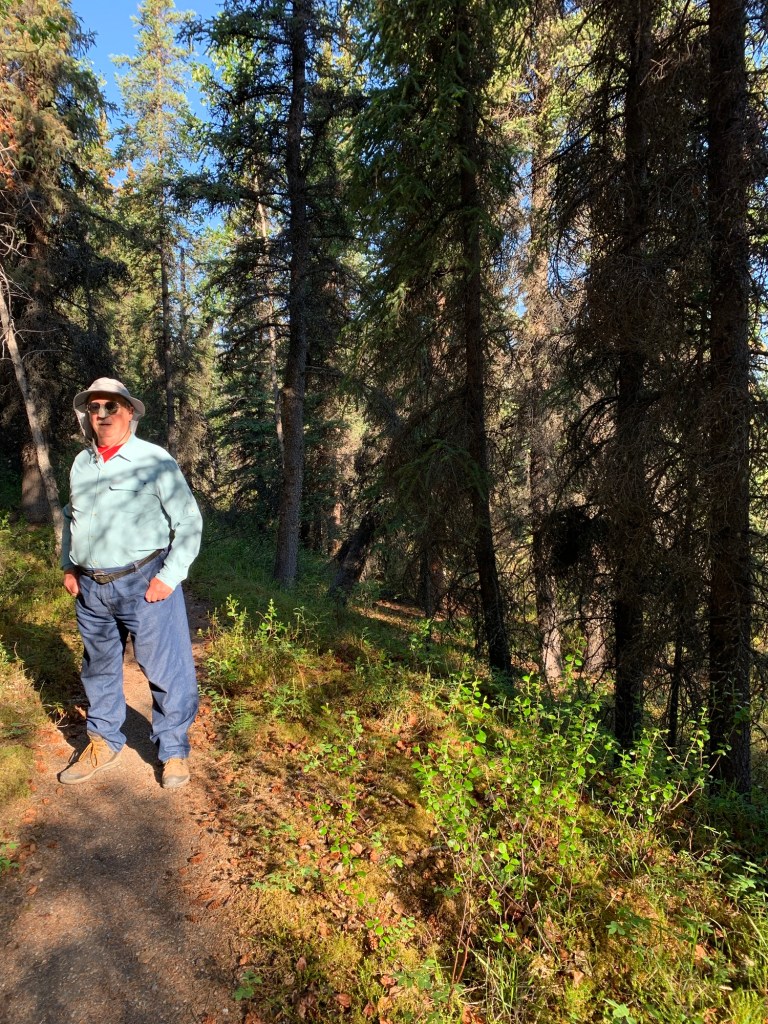
Maybe when I’m old I’ll enjoy a nice sightseeing bus trip, the way my mother used to. But today I’m getting up early to go out in the woods with my boots and my daypack. I’ll listen for birds as I smell the catmint and the geranium, rejoice over every creek crossing — water features! —, giggle when I mistake my spouse’s sonorous eructation for a bullfrog’s call, admire the shapely dead or living tree trunks, watch the clouds for approaching T-storms, and feel most expansive, most enriched, and most alive.

People and Animals

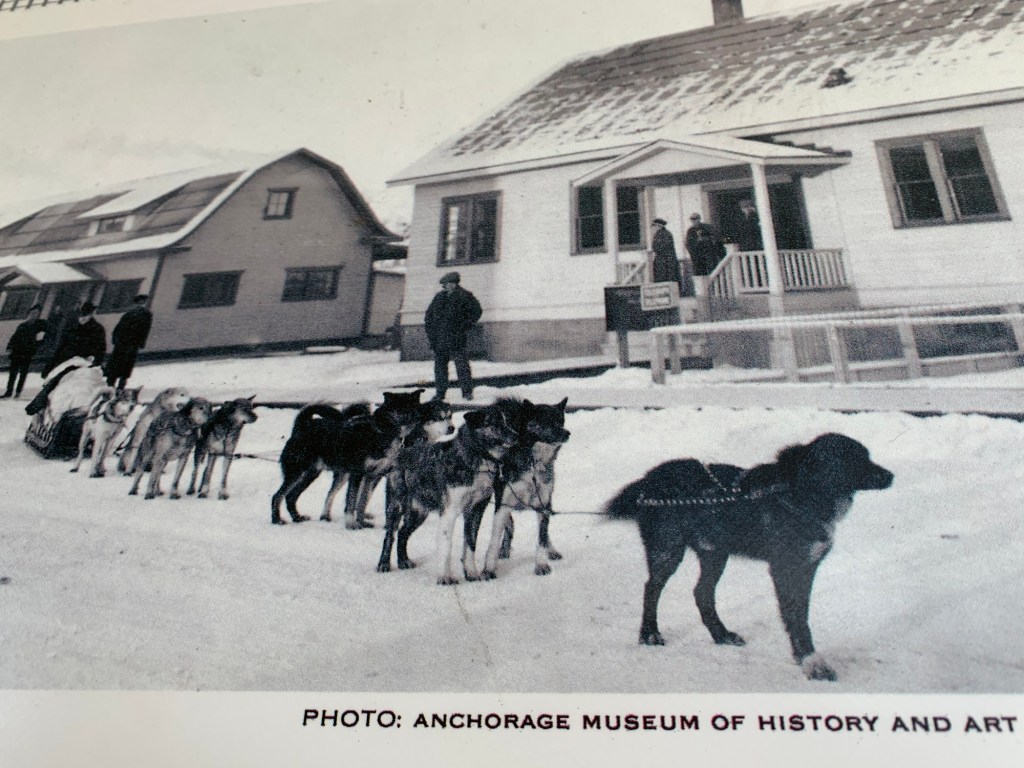
Real Sled Dogs

I have nothing against the fancy manicures or spiffy attire of my fellow bus passengers visiting Denali. It may have come out like snark, but really I was observing how they dressed in context of a see-and-be-seen event. When I dress for the mountains, I wear practical hiking outfits. My wardrobe includes the brands Ex Officio, Solumbra, Icebreaker, and Arc’Teryx, so I’m not bargain-hunting. I spend money on clothes.  But I was surprised to see ladies wearing their diamond jewelry in Denali, risking its loss or damage.  And I saw lots of crucifix necklaces, the Amy Coney Barrett look.  I didn’t feel at home among them, as I usually do with trail friends. I like to think the mountains humble us all and we dwell as guests in the majesty of wild places. Is it that access to Denali is at once so restricted and also so ubiquitous, for a good price, that I have nothing in common with these good folks?  

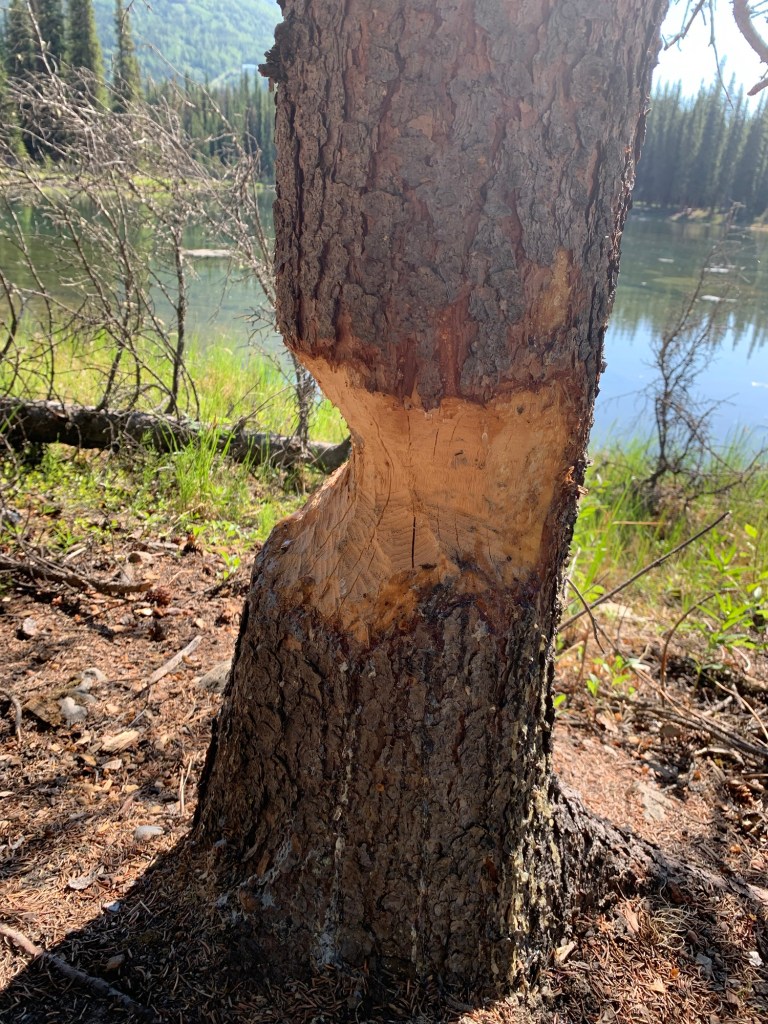
I just don’t like sitting with others for hours, especially not on a bus, and it affects my natural bonhomie. The park service and tour guides tell us how special we are that we are in Denali, which of course anagrams to Denial. Much is made of wildlife sightings. The tourists are not making memories, they’re hoarding up bragging rights. “Did you see a moose? Well, I saw two.” “You saw two moose? I saw two moose and two caribou.“ “That’s nothing. I saw moose, caribou, and three Dall sheep*.”  Oy, I had my pocket picked by an Arctic ground squirrel. JG to the importunate rodent: “Scram! Take your Hanta virus elsewhere!”  We saw lots of red squirrels and Arctic ground squirrels, snacky bites for predators. We enjoyed seeing a beaver, the prosperous rodent cousin. They are one of JG’s favorite animals because beavers are engineers and build lodges and dams. 

*actually rocks, but for this story they were sheep. 

Alaska Observations

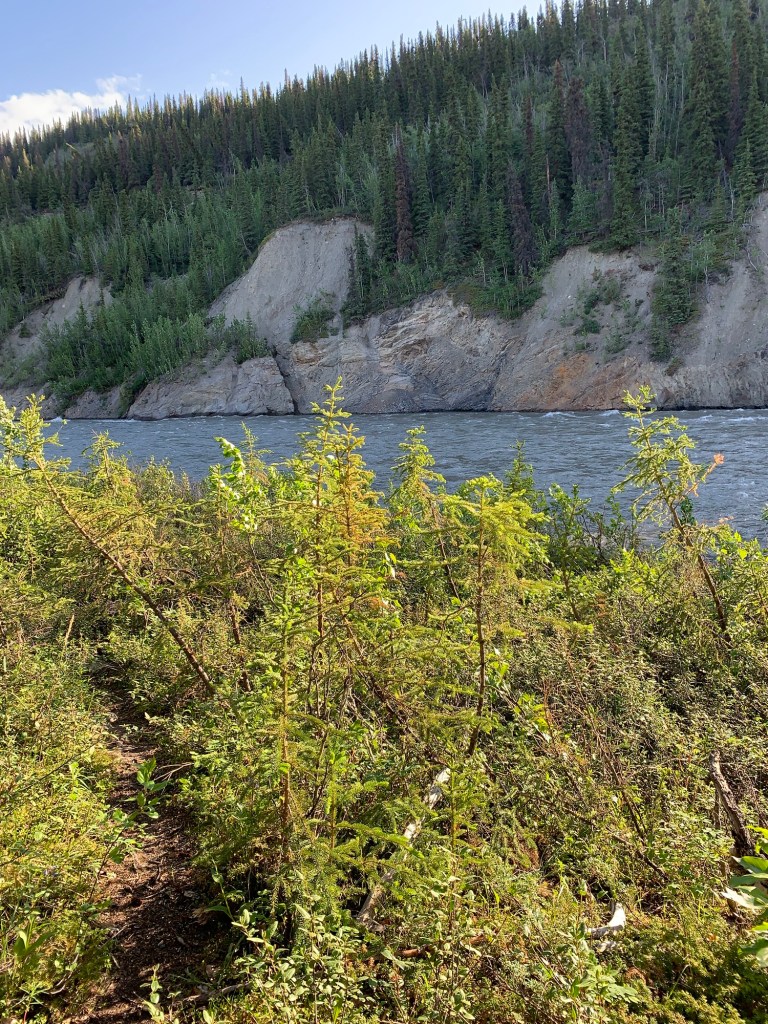
Nenana River

My trip to Alaska began before the plane ride, when I started telling friends where we were headed. I heard some fascinating stories of Alaska in the 1970’s, in the heady days of building the Alaska Pipeline from Prudhoe Bay to Valdez. R. told me he’d worked as a carpenter for years in Alaska, building homes for the newly rich. While there, he camped and explored and got his bush pilot’s license so he could get around. Later he got bored and returned to CA, where he has been an industrial engineer. L. lived in Sitka during the 70’s and worked as an architectural consultant to help the local tribes spend their federal allocations to build in the most foresightful way. L. came back to CA to give birth in a hospital. Then she and her infant son drove the Alcan Highway for weeks to return to Alaska. If that’s not adventure enough, she was flying in a pontoon boat back to Sitka and one of the pontoons fell off while landing. She was quickly rescued, but what she recalls of the experience was how matter of fact everyone was that the plane fell apart. 

Oxbow Trail

So here are a few salient facts. There is no state sales tax nor personal income tax in Alaska. Compare that with the 9.25% sales tax in Santa Cruz County and about 9.3% in our income bracket in personal income tax. So that’s the best of Oregon (no sales tax) and Washington state (no personal income tax) combined. And the state of Alaska pays its residents a dividend each year just for living there. This bonus comes from the Alaska Permanent Fund (oil money) and came to $1312 per eligible person in 2023. 

The labor pool here among tourists is seasonal. We have been served by adept young internationals, probably holding H2B visas. According to their name tags, they come from Thailand, Poland and Romania, among other countries. I am impressed by their command of English, although their accents sounded acquired from movies like “The Lion King.” Our Romanian server Valentin addressed us as “you guys” with New York Nathan Lane flavor and liked to say “no worries!”  One Love, Mon! 

I’m trying to be less judgmental of my fellow travelers but not succeeding. The park is set up for bus tourists. See the Denali NP brochure, above.

Why does the rapture therein described elude me? Even if we did spot charismatic megafauna out the window, I’d be seeing the baseball-capped head of the next guy, choking on his Old Spice, hearing the rustle and farts of the old and sedentary, hearing people talking, thinking “those are lingonberries, not blueberries” and feeling trapped, confined, and getting antsier by the minute. Dear God, help me extend grace to my fellow bus passengers so I don’t feel like firing unending snark in their general direction.

So I’m people-watching, thinking about conservation and the irony of all these visitors here loving the wilderness to death.

In order to amuse the tourists, the NP Service hosts “Dog Demos” of sled dogs pulling a wheeled cart on an asphalt track. JG and I passed on this entertainment. Folks, horses are more practical for pulling carts. Dogs work better in the snow. This idea of sled dogs pulling carts on a track is an oddity of NP Service imagination. There is not enough for the busloads of tourists to do. Unlike the other kind of dog track, now illegal, you can’t bet on the dogs because the lead sled dog always wins. My dog demo would involve Marco demonstrating how to claim treats by fishing Q-Tips out of the wastebasket. Or demo real working dogs: sheep dogs, drug-sniffing dogs, service dogs. Or funny dog tricks. The local hospital used to host a dog parade of staff pets in front of the windows of the pediatric ward. That is a good use of dog demos.

Even Beavers Get A Case of the F**k-its

Dall Sheep

Dall Sheep – Stock Photo

In an effort to fill audio feed and amuse visitors, tour guides have told me some tales. It seems they point out the possibility of wildlife. Today I heard: see those three dots over there, those are Dall sheep. I’m supposed to be thrilled. Watsonville sheep are just as charming and charismatic. Long ago my stepdaughters raised two sheep for 4H and named them Woolly One and Dead Meat. The Dall sheep played a role in the founding of Denali NP by allowing themselves to be hunted to near extinction. Yes, strong men shot the innocent sheep because, as my stepdaughters know, raising sheep is a lot of work. Then Charles Sheldon rallied the Boone and Crockett Club members, among them Teddy Roosevelt, to set aside this area as a park and preserve. Sheldon shouted: “Shtop shooting sheep!” One Act of Congress later, 1.6 million acres of Mount McKinley Park were set aside in Alaska. Today the Park comprises over 6 million acres. Maybe the sheep have recovered, but I didn’t see them. Maybe those three dots were rocks. 

Denali NP

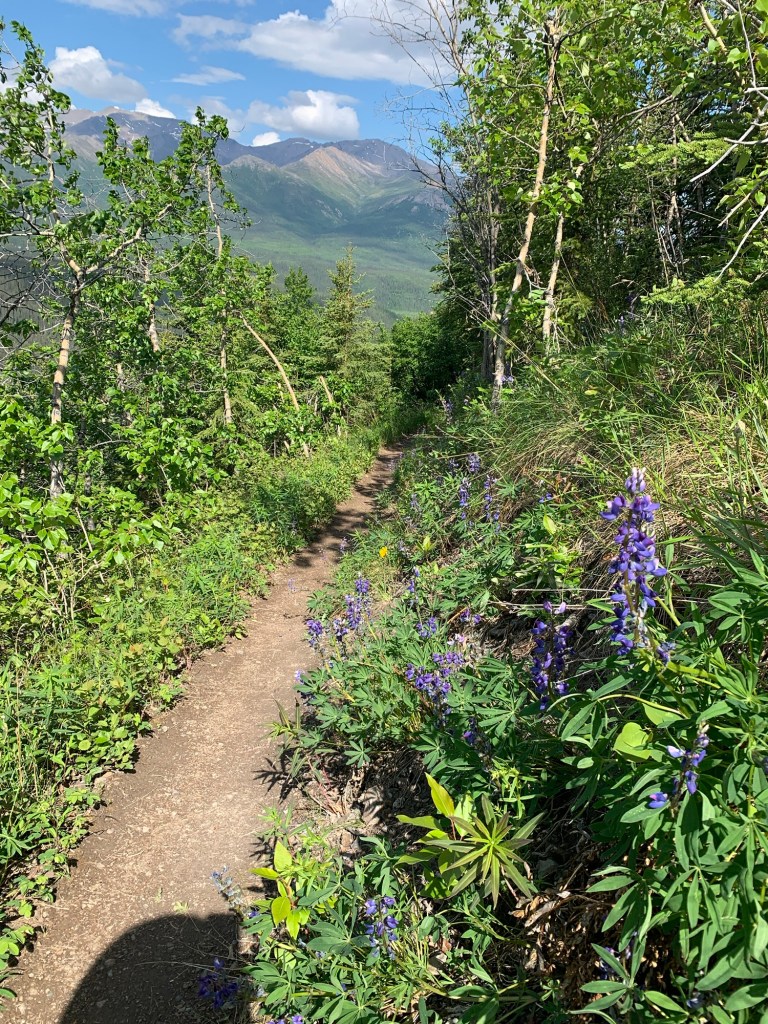
Lupine, Triple Lakes Trail

It’s June 2024 and we’re off on an adventure of JG’s choosing: Alaska. He planned this trip and then our wonderful travel agent Deborah worked out the details. First moral of today’s story: use a travel agent unless you really like spending hours shopping on the internet. Thanks to JG, to Deborah and to the accumulation of Marriott loyalty points, I have not been involved with the pre-trip planning. Of course, during the days packing for this trip, JG and I hurled quotes at each other, one of us citing Ed Viesturs and the other, Rick Steves. Look them up, Pilgrims. 
Second moral of today’s story: the locals make like the wildlife. Just as the moose and the bear spend the months between May and September eating constantly in order to survive the cold months, the Alaskans need to make all their tourist money during the warmer six months in order to survive the cold months. In the summer of the $22 sandwich and the $10 coffee, maximum coin to the natives during the warm months enables them to kick back during the winter. Coming from the Bay Area, I thought Alaskan prices are almost reasonable. But I overheard a lot of sticker shock among the patrons from America’s heartland. 
The visitors here are mostly large, pinkish, older and well-groomed. They smell like cologne and like Downy fabric softener. The women have expensive multi-toned hairstyles and fancy manicures with high-carat diamonds on their fingers. The men wear jackets with yacht club or golf club insignia. Denali Park visitors have come from the salon and the country club. Where were the long-haired dirt bags who live in their vans? My wanna-be tribe in the BTS (Beat to Shit) Subarus eating cashews, wearing Keens, smelling like B.O. and lecturing on climate justice?  

I overheard an Ohioan describing the river rafting trip he took as being like “Pirates of the Caribbean” at Disneyland. Fascinating, how Disneyland shapes the cultural landscape. But one of the scariest things I saw was this sign at the Denali Visitor Center. 

While waiting for our bus to leave, I saw two out of about fifty ladies fall while trying to board the neighboring bus. Heavens, they are frail and vulnerable out here away from help. 

Most of the tourists arrive by train or bus. Then they view the sights by bus. There is a crapton of scenery. Guides talk up the possible wildlife sightings. “Keep your eyes peeled. Look through the trees, not at them. Maybe you’ll see a moose! Or maybe an eagle!” I am unmoved. It reminds me of the stupid little tricks we played on each other when we were kids. “Look! There’s an eagle! … Aw, you missed it!”
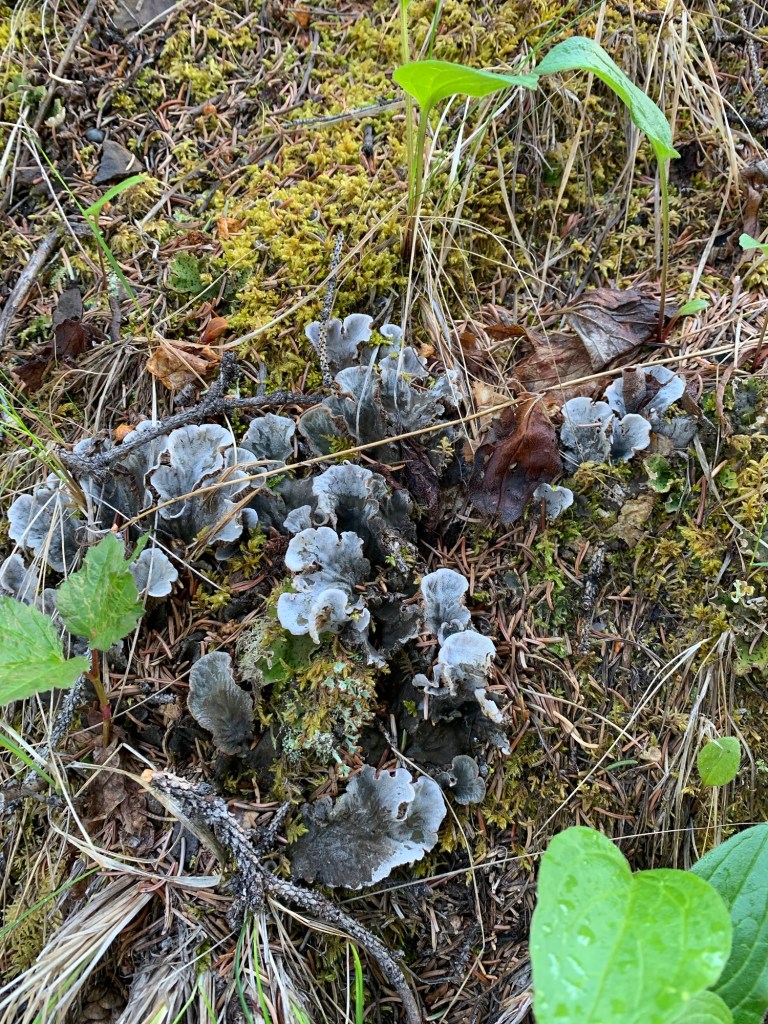
Interesting is the wet spongy diverse micro-plant life covering the native soil. It forms valleys and hillocks and looks like moss, creepers, evergreens, and tiny flowers. The seep gardens of central California are often based in limestone or basalt. These seep gardens seem based on swamp. 

Triple Lakes Trail Denali NP

I am fascinated by tree formations that look like dragons. 

Triple Lakes Trail

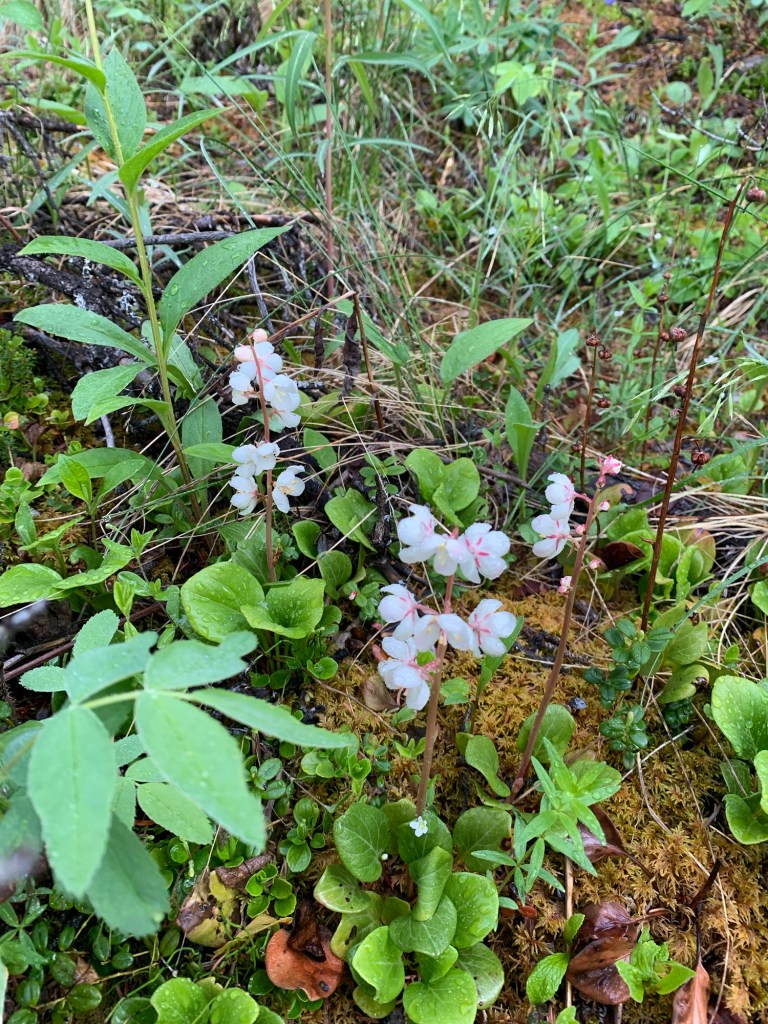
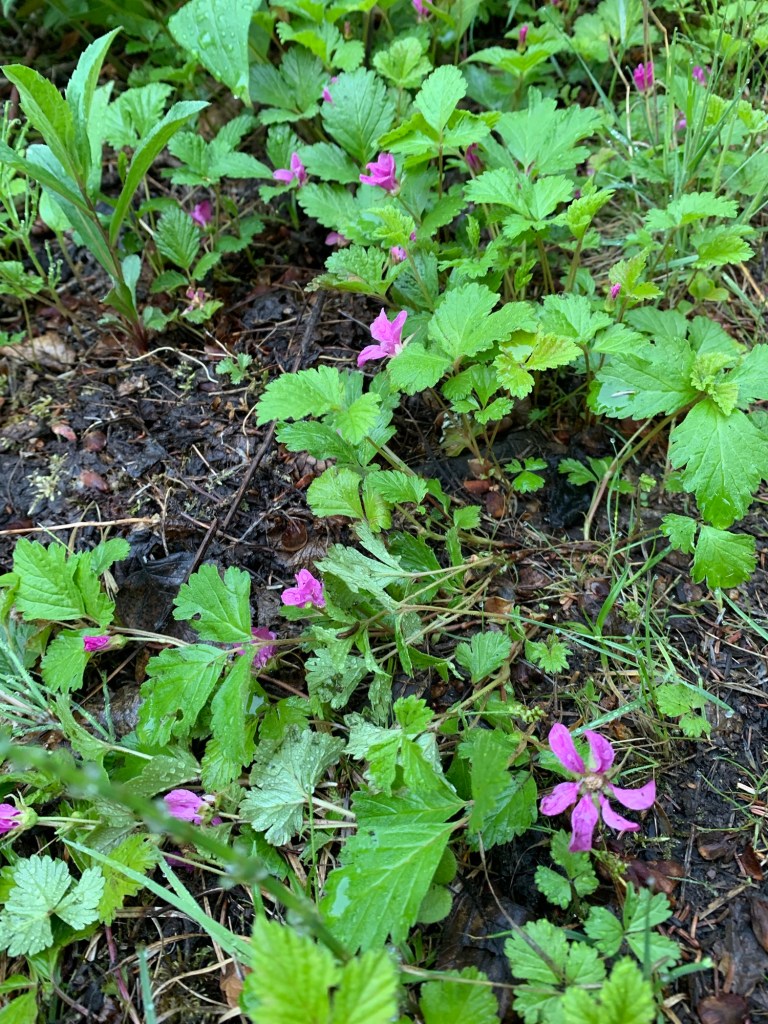
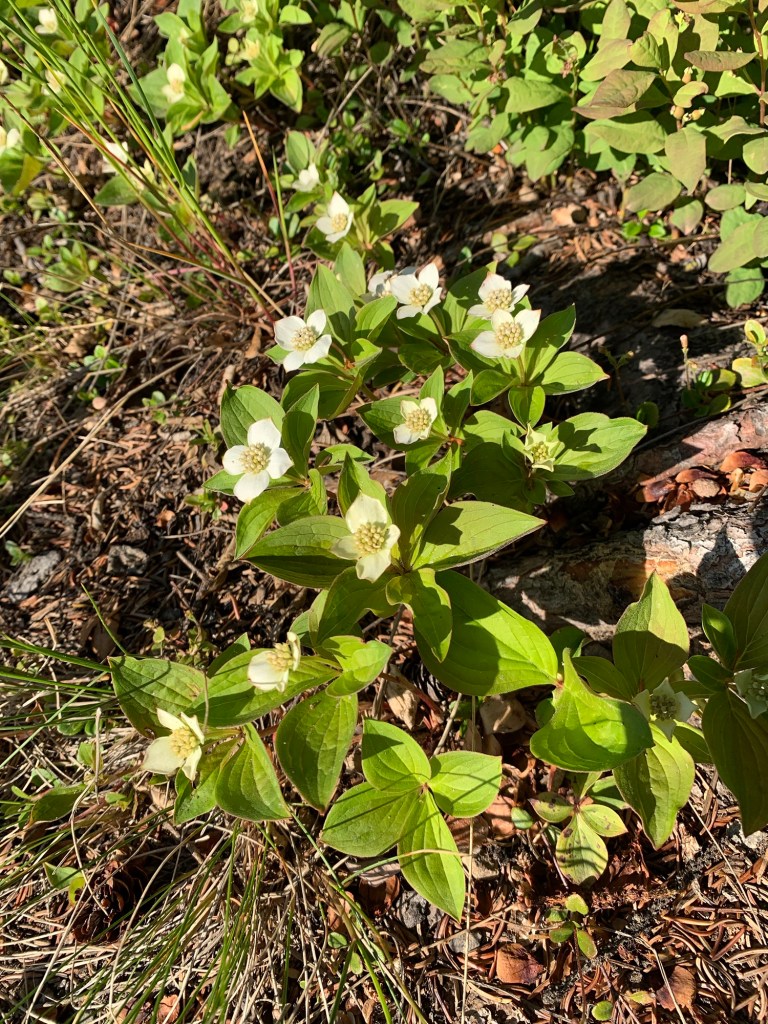
Also wildflowers catch my eye, many familiar from our trips through the PNW. 

As the onboard naturalist for this trip, I look for Nature. And by Jiminy, Nature looks for me.