Dunedin in Otago

Settled in 1848 by Free Church of Scotland worshippers, “Dunedin” means Edinburgh in Scots Gaelic, or Edwin’s Fort.  With the exception of the red light district, called The Devil’s Half Acre, Dunedin gleams with clean streets, gingerbread Victorians, prosperity and free parking. It’s built on several hills rolling between the Sound and the South Pacific Ocean. Here almost nothing is in Māori. They have a beautiful 1871 train station which hosts only tourist trains once or twice a day.
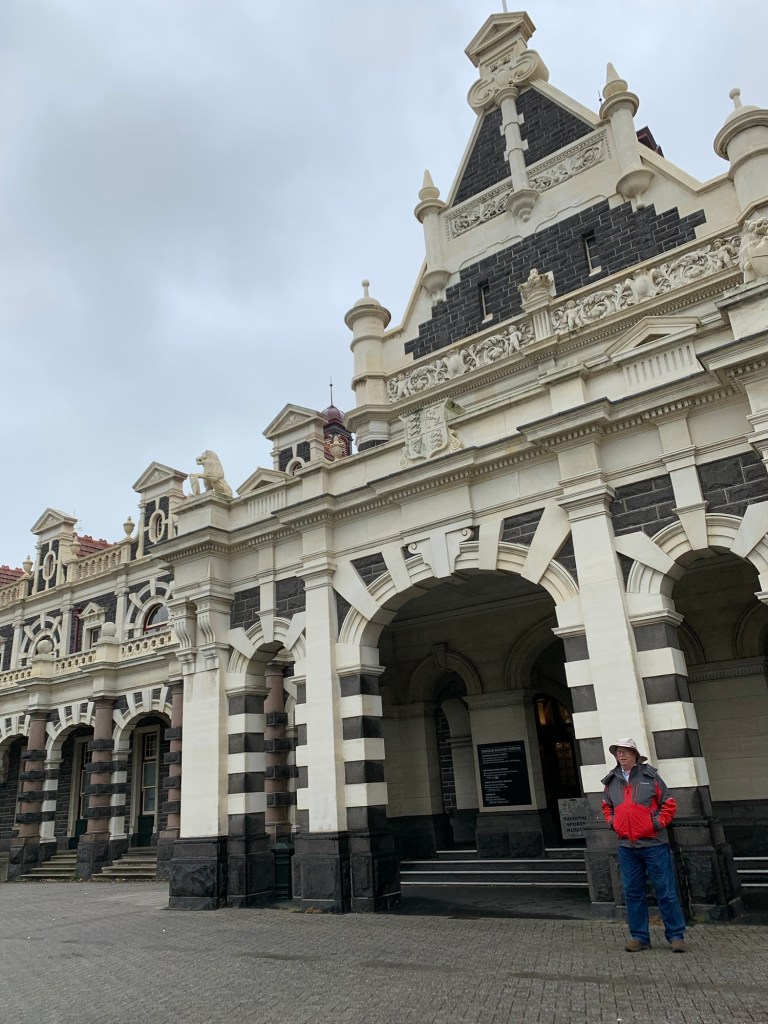
Train Station in Dunedin

The University of Otago is architecturally split: older Neogothic Arts and Letters buildings and newer modern glass and cement Science buildings. Thanks to John Larkins Cheese Richardson, the Chancellor in 1868,  it was the first university in Australasia to admit women.
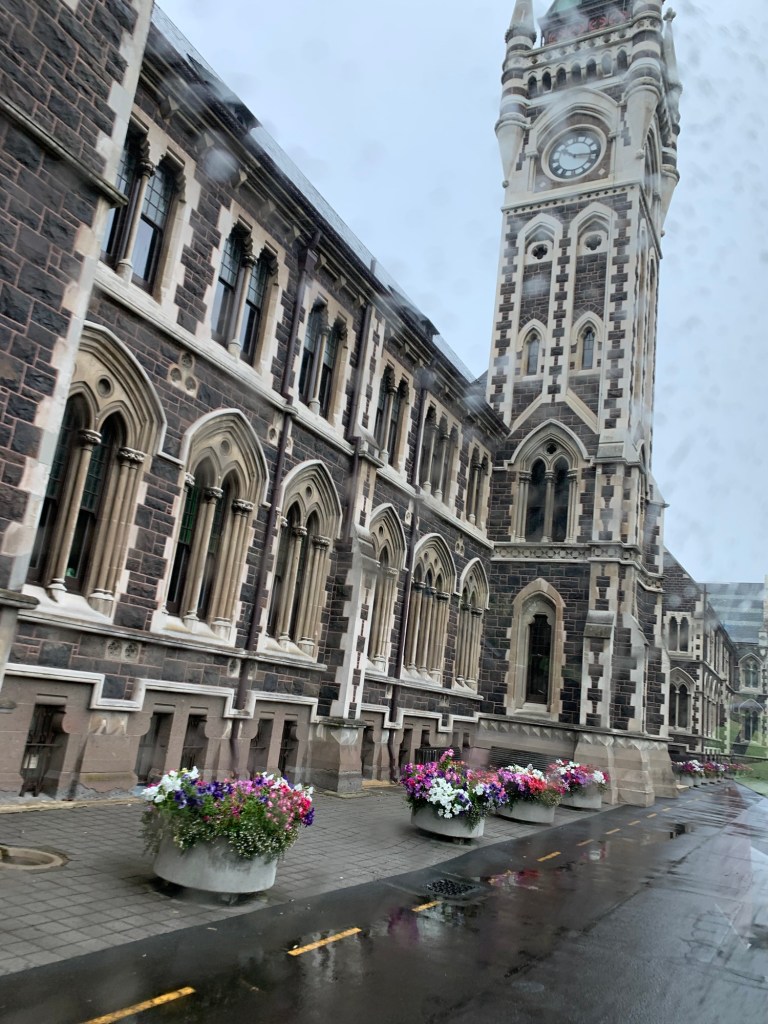
1871 University of Otago

We have joined a tour led by Gregor Campbell called “Tales from Darkest Dunedin,” found on Viator. Gregor turned his hobby of digging up info on cemetery residents into a paying gig, driving a van of tourists around Dunedin while he tells us tales of bad hombres. I am pleased to report he was a good driver, good speaker, and  good tour guide.

Gregor (Van in Background)

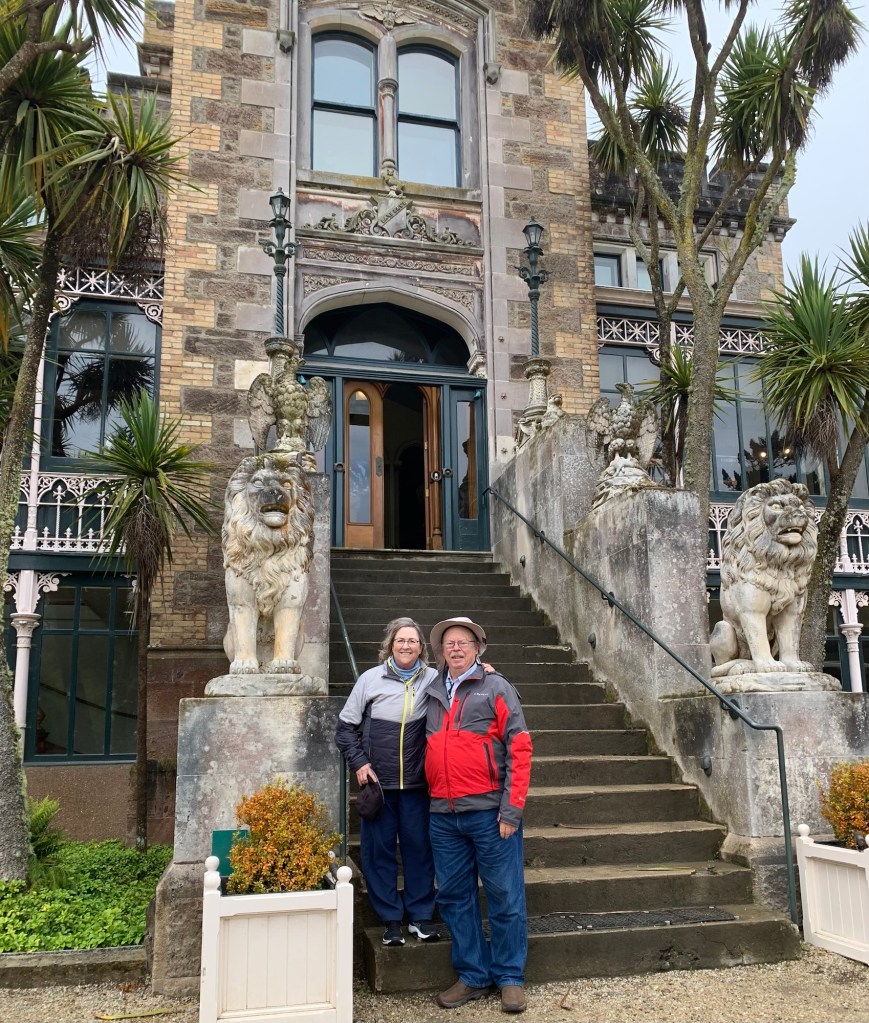
The main tourist attraction is Larnach Castle, costing hundreds of thousands of pounds, and mostly finished in 1871. Its coat of arms shows two Scottish wildcats rampant. Its motto is “Sans Peur.”  William Larnach enjoyed good fortune as a banker and MP when the Gold Rush of 1861 changed Otago from sleepy to raucous. He was a director of mines while the gold flowed. The entrepreneurial Mr. Larnach spared no expense on fine woodworking. He had six children with his first wife and married twice more after her death at age 38. But when his fortunes changed and the money dried up in 1898, he shot himself in the head in his office in Wellington.  He died intestate. The scandal behind his death is what Gregor would tell us that we couldn’t hear from the current castle owners. Based on rumors at the time, Larnach’s third wife Constance was having an affair with her stepson Douglas. After William’s death, Constance went home to England and had a child. The remaining five children, as Kate the eldest died in her twenties, were left house-rich and cash-poor. They held an estate sale to get rid of the furnishings and sold Larnach castle. Donald shot himself in the head twelve years after his father’s death, in 1910. Freud popularized the term “Oedipal Complex” in 1910 as well. 

Georgian Mahogany Hanging Staircase with carved Kauri handrail
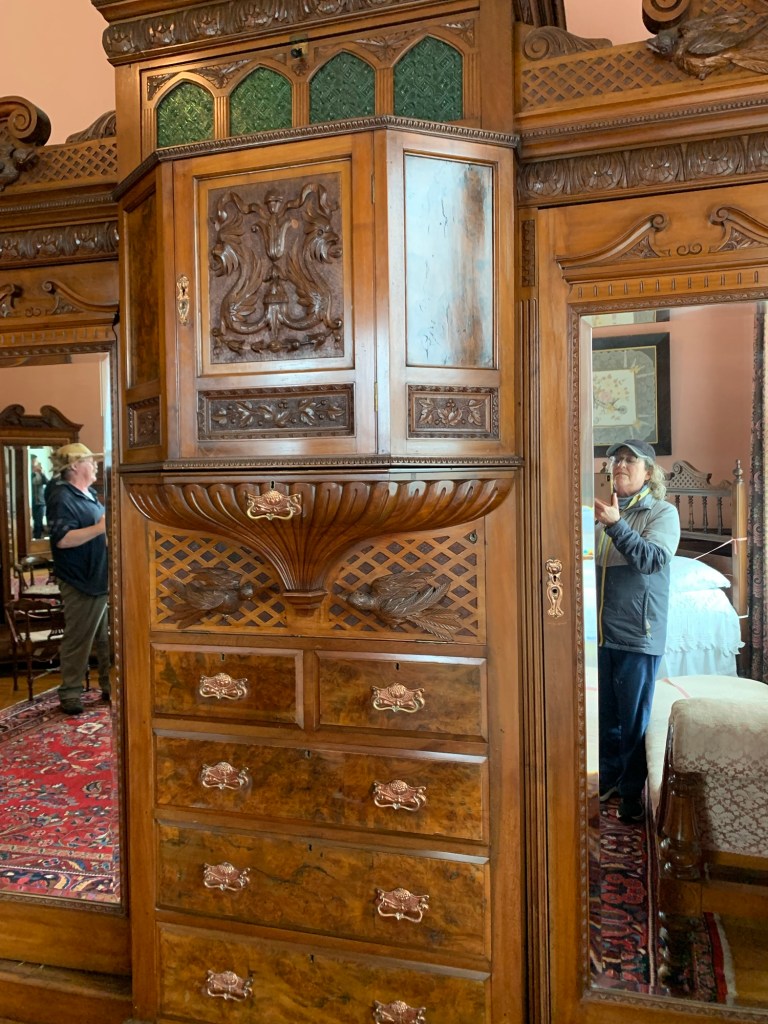
Important Armoire with Gregor and Myself
Larnach Castle Entrance

In its next chapter the castle became an Insane Asylum. In 1967, the current owners bought it for a song and began restoring its Victorian glory after they fixed the roof.  Now it is repurposed as a private tourist attraction and upscale event space. I completely understand why the owners hush up the scandal. Who would want to hold a wedding at a castle with such a sordid past? Secular wedding venues grow in popularity as the social media generation gets married and as churchgoers decline in numbers. So the castle owners, the Barkers (not barking mad), are riding two trends. The Barkers tell the story of the renovation, which thanks to HGTV most of us can relate to.  The debts, cruelty, adultery, betrayal, suicide and insanity less so. Suicide I can understand. But for a titan of industry like William Larnach, blessed with six children, why did he die intestate? I suspect more to the story.

Mausoleum of William Larnach

I notice Olefin carpet and other practical, non- Victorian details.  Running tours and hosting events: it’s a living. 
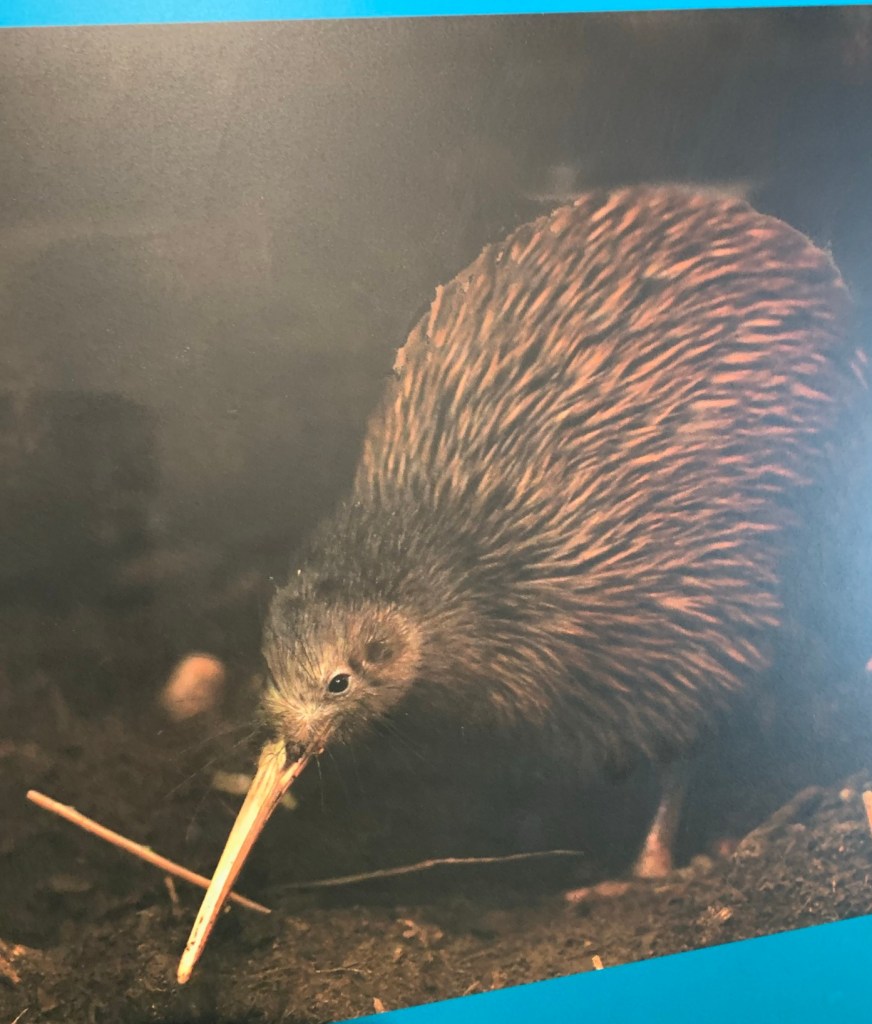
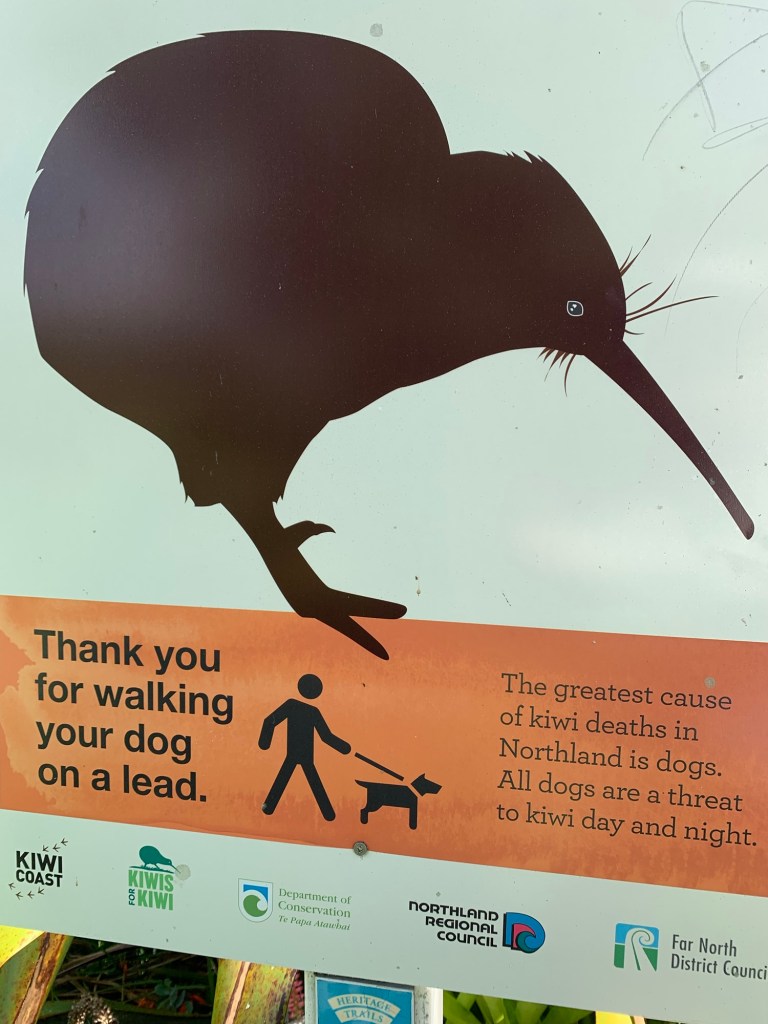
Kiwi Bird

Endangered Kiwi

Beloved flightless nocturnal symbol of an island nation, the Kiwi has universal appeal. Too bad people’s dogs don’t share their appreciation and wonder. Dogs see prey that can’t fly away and attack and kill Kiwi before the owner can say “Leave it!” The possums are not wholly responsible for Kiwis being endangered; it’s especially the dogs and cats. So the DOC and the Save the Kiwi Foundation create fenced preserves, incubate Kiwi eggs, and practice Hatch and Release. 

We watched a dark enclosure at the Auckland Zoo, waiting for a Kiwi to show. Eventually we observed one, but the photo is too obscure to share.  Interesting people-watching made up for the lack of mascot-bird. 

Save the Kiwi Foundation

Wilding Pines, Feral Goats

Wilding Pines: pesty trees

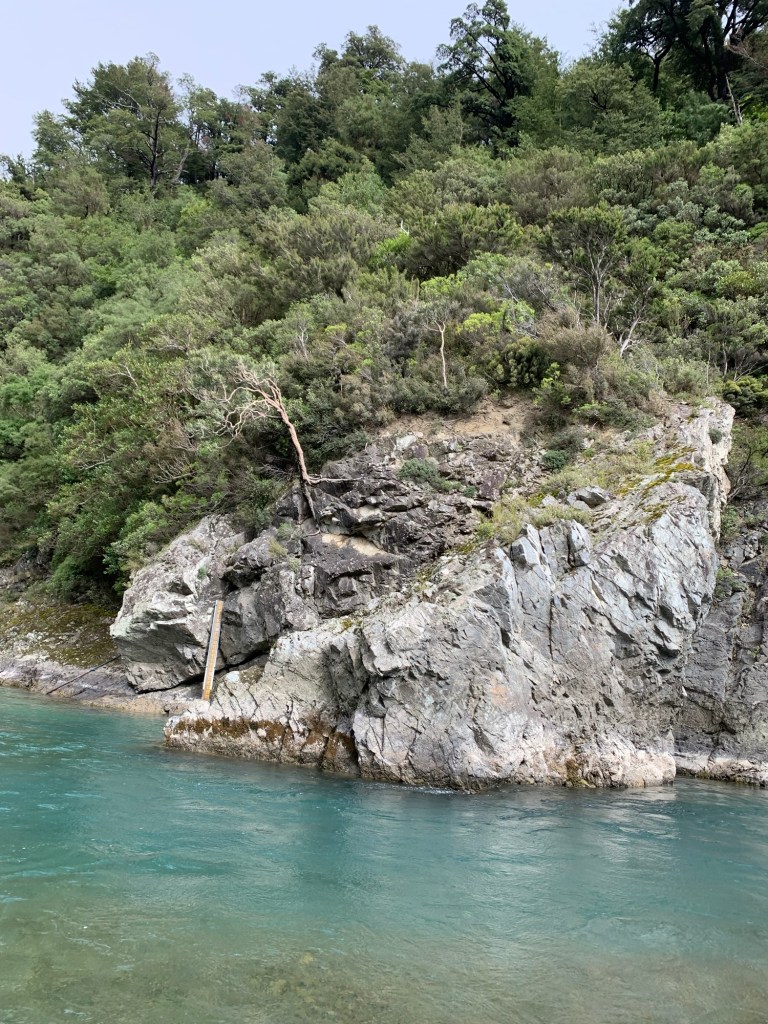
It’s not just the 70 million possums. The New Zealand ecosystem is also under attack from a long list, including wilding pines and feral goats. We noticed a widespread die-off of pines in the hills along Queen Charlotte Sound. Turns out it’s a kill-off. The DOC and local conservation groups banded together to drill into the invasive pines and inject them with poison. This is the first step in restoring the area. Next, the dead pines will be removed and then the area will be planted with native trees. 

The feral goats, descendants of imported goats that escaped the station and fled to the hills, are trickier combatants. To kill them, DOC hired hunters in helicopters to reduce the goat population, culling 400 in one year. I hope the hunters collected the carcasses and used them. I have not seen a single vulture. 

There is a campaign here called “Predator-Free by 2050” hiring trappers and teaching citizens to trap and kill stoats, rats, possums, ferrets, and weasels. The eradication of these predators is estimated to cost NZ$8 Billion. The feral ruminants are not part of this campaign. It interests me that Kiwi conservationists focus on killing. They missed preserving the Moa, but succeeded in exterminating a pesky parrot, the Rainbow Lorikeet. 

Canterbury Upcountry

Canterbury Plains

Christchurch is spread out like LA. Our bus driver/guide, Ross, specialized in pub humor more than careful driving. He was a retired nurseryman tapped to escort us into the upcountry west of Christchurch. He drove us through the flat exurbs of Canterbury, pointing out the local dairy and telling anti-Ozzie groaner jokes. “Winding each other up” seems to be cultural. Polite Americans avoid making ethnic jokes, but when it’s Kiwis vs. Ozzies, bring on the toilet humor and the dumb jokes. He told a single anti-woman frat boy joke, but stopped after it was stonily received. Thanks for that, Yanks. 
I did see two interesting sights. First, I saw deer, probably Red Deer, grazing in a fenced pasture. Sign me up for cattle or goats, because I would not want to herd deer. The Blacktail Deer I’ve met are skittish. In LG we called Autumn “Stupid Deer Season” and a homeowner on Summit Road tallies the “Suicidal Deer” each season. The flap on the poster stood at “5” when I last drove past in January. Maybe the farmer stupefies the deer before slaughter by shining bright headlights at them. Maybe the herd control is outsourced to a Border Collie.  Border Collie: Get along, little dogie!  Deer: Yipe!  Eat my hoof, you brute! 
Also, I saw two Australian Shepherd dogs being trained to herd, with real sheep cooperating. Aussie 1: I got the North-South Axis! Aussie 2:  I got the East-West Axis! Yes! Together we’ll put them in the pen! Sheep: Um, yeah, don’t bite me, don’t glare, okay! I better follow the flock. 

Waimakariri River

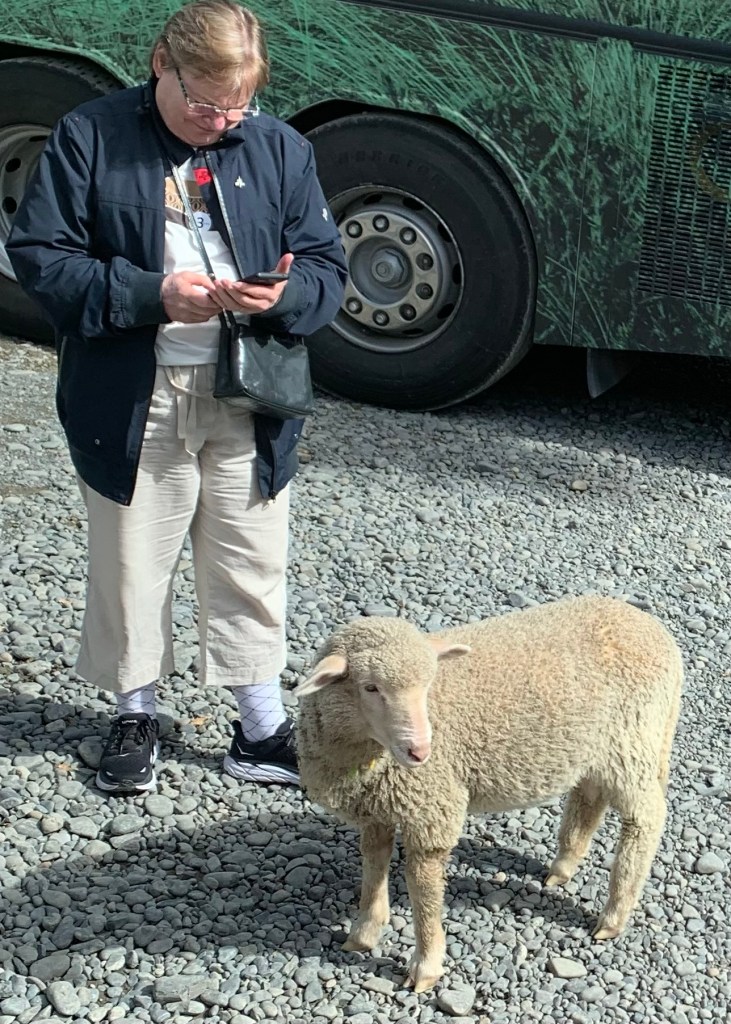
We rode a jet boat on the Waimakariri River. We stood around in two sheep pastures. We were treated to a sales pitch about Kiwi crafts. Wildlife sighting: one hawk, one fantail.

PJ is ready for his close-up.

Ross nearly drove our bus in front of a fast-approaching coal train. There are no guard-arms to keep opposing traffic off the tracks. Luckily the train sounded its horn and Ross braked. Obviously he is not a professional bus driver.

Christchurch suffered an earthquake in 2011. Many of its 1850-1890 era buildings collapsed. The newly constructed buildings look like blocks, not photo-worthy.  This is a glimpse of what was lost.

Two Kinds of Bad Taste: Gun Reference, Licorice Candy

Picton

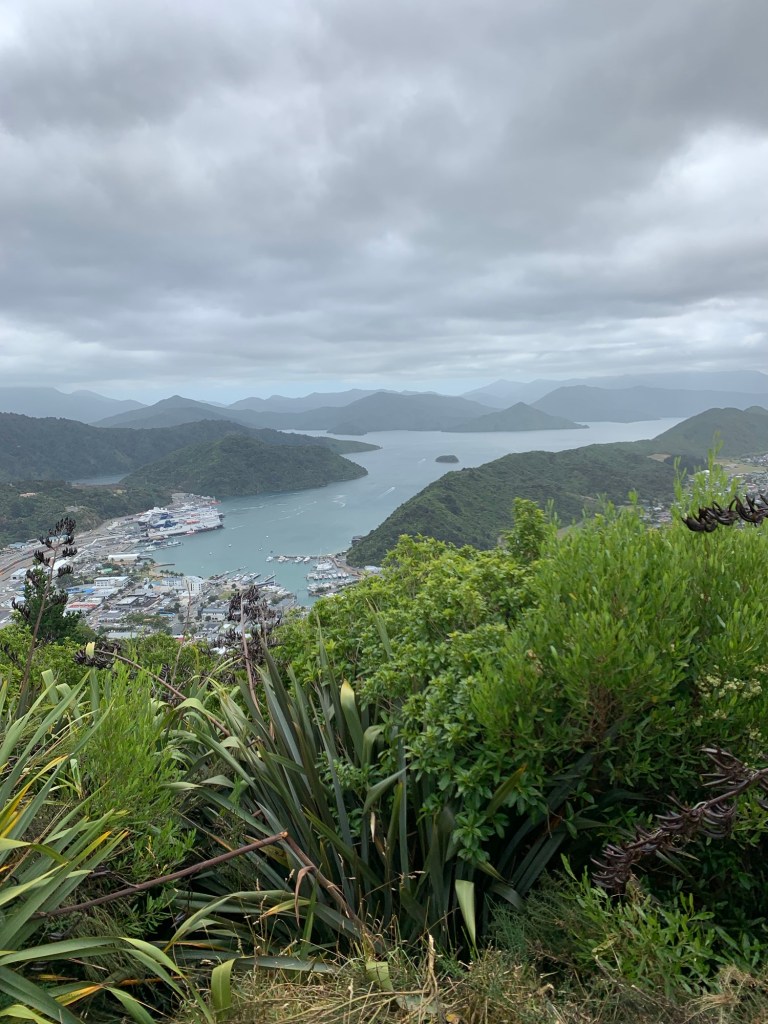
View from the Tirohanga Track

On our bus we were welcomed by the Picton Flower Ladies, who offered us each a fresh boutonnière. One wife cried out, “are those roses?” and when the hostess waved one in her direction, she shouted that her husband was “deathly allergic” while said husband stood up and left the bus. Mrs. Deathly Allergic looked around for someone to sue or at least to scold. The Picton Flower Ladies were surprised and then departed our bus to offer flowers in the fresh air.

 I’m not inspecting the oldest merchant ship in the world, nor visiting the maritime museum to see what life onboard a convict ship was like. I’m also not sailing around Queen Charlotte Sound in a small boat looking for dolphins. And I am 100% not visiting the Picton Whaling Museum. Sometimes world heritage and I take a break from each other.

Tirohanga Track

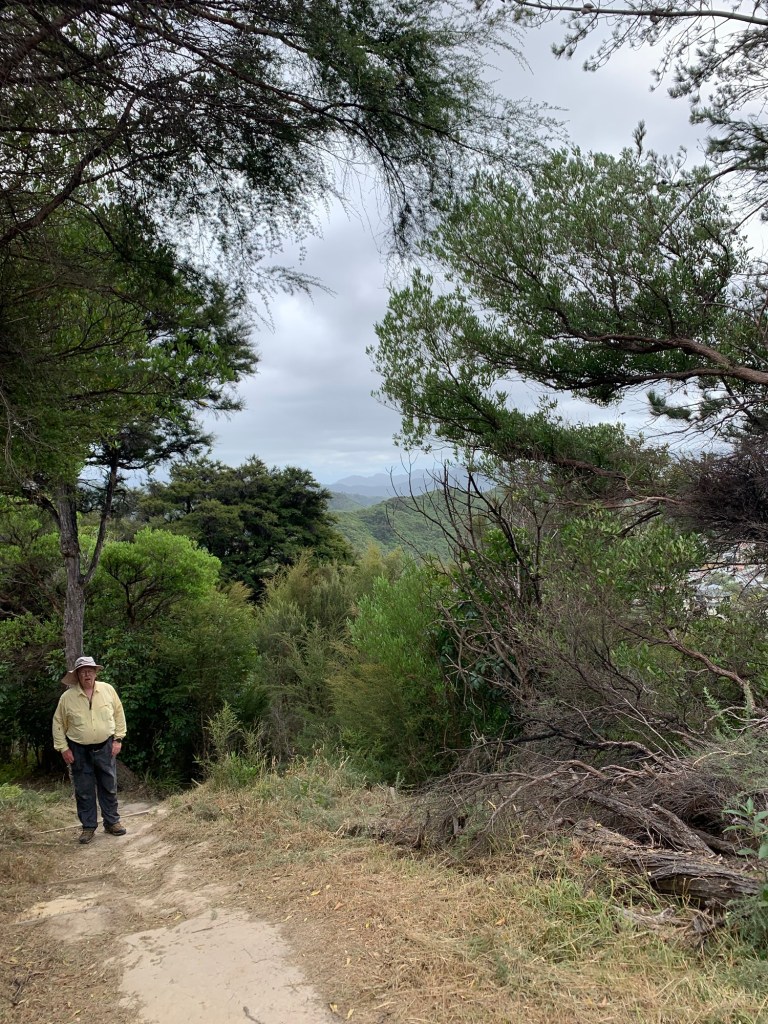
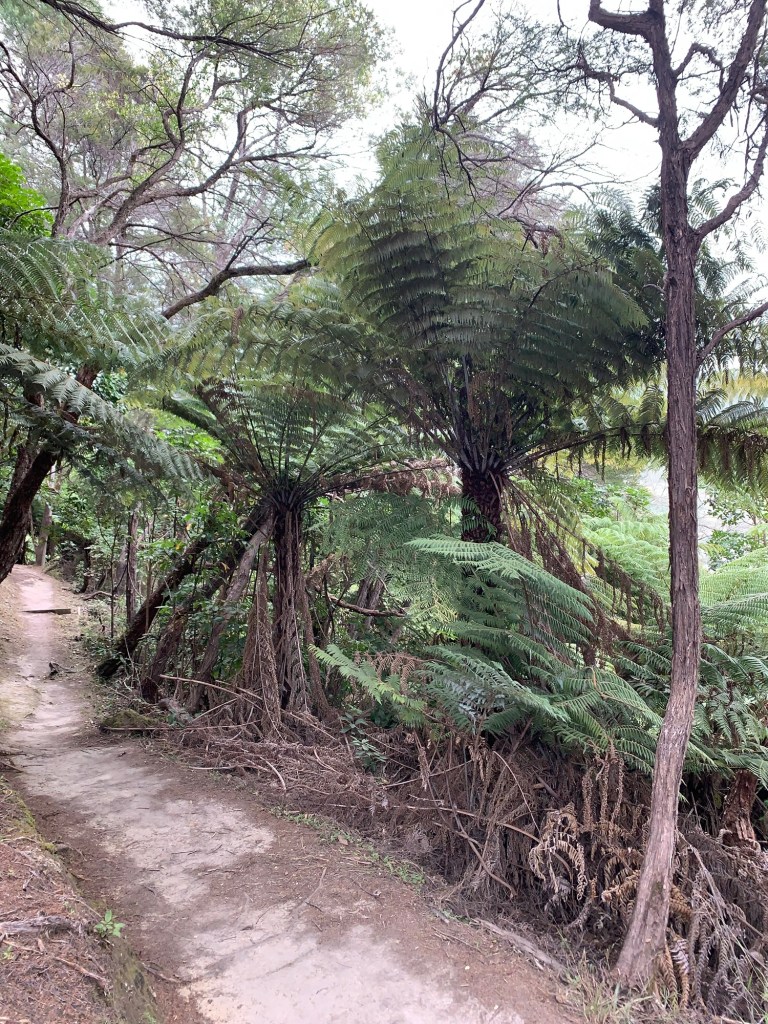
So we sauntered up the Tirohanga Track. We climbed switchbacks in the clay soil to a lookout, then looped around on the other side of the hill to walk back through town. We met Steve, a park ranger, who maintains the track. The track reminded me of Saint Joseph’s Hill south of Los Gatos but with tree ferns and palms. We saw sporty runner girls in sports bras and shorts, locals with thirsty doggies, and other visitors. Wildlife sightings: two Wēka, large flightless birds. The clerk in the Environment Centre shop scoffed and said they were pesty natives who ate endangered species and used their sharp beaks to spring the traps set for rats and possums. The Picton Dawn Chorus, a nonprofit, protects the birds, but not the Wēka. 

Napier

Founded in 1858 as a garrison for two regiments, Napier today has plenty of women. I counted three quilting shops, three fiber arts shops, and one “Husband Parking Area” within one block. In 1924 the city fathers built the area’s first Women’s Rest Station with public toilets, an excellent claim to fame. 

Emerson Street

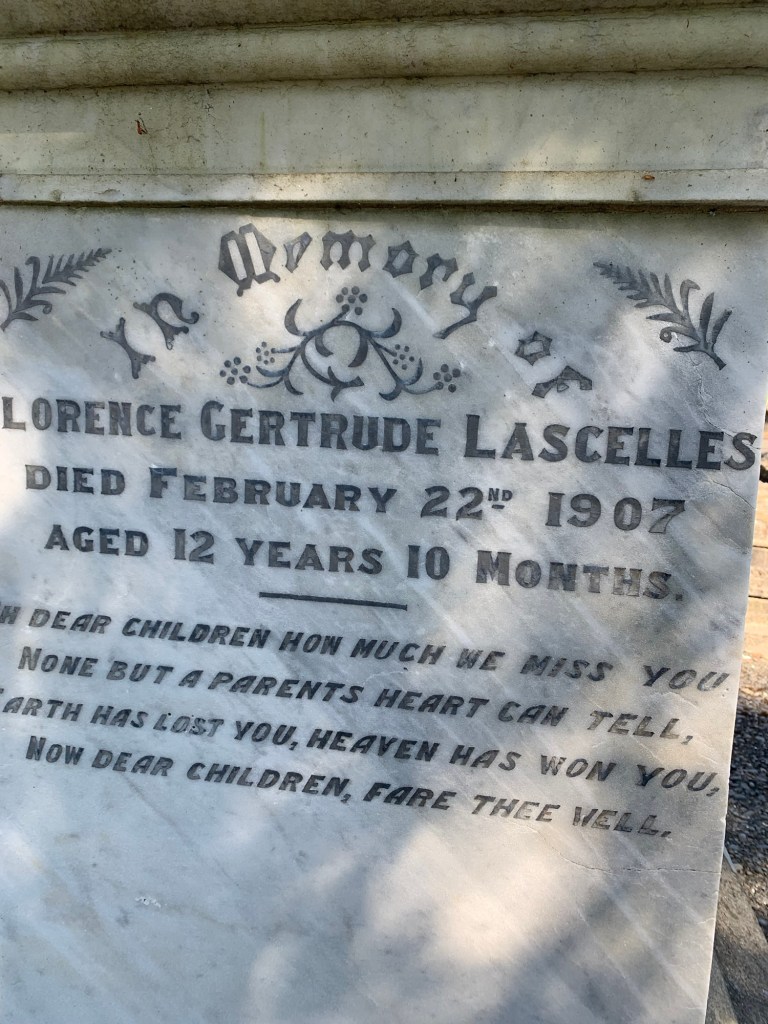
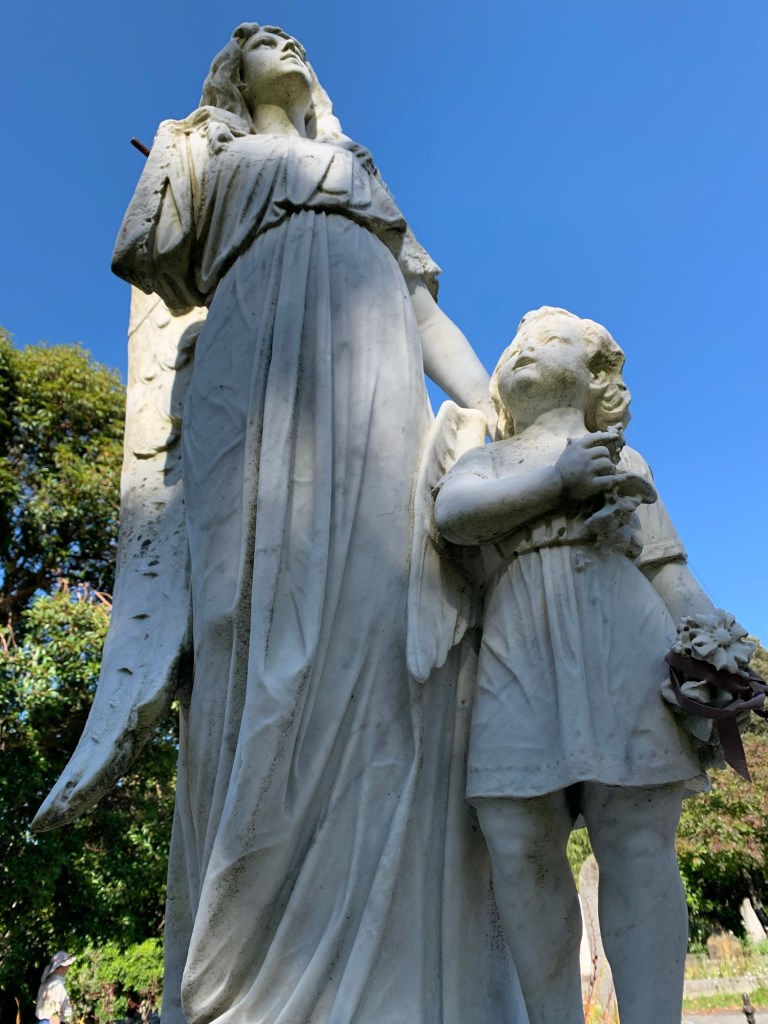
In the cemetery, mostly the husbands died first, with the wife’s name on the tombstone after “Also.”  Dog walkers, some lovely sentimental Victorian epitaphs and statuary, and lots of birds, trees and flowers made it a very pleasant place to walk. 

12 and 3 1/2 year old Lascelles sisters

We had an extensive chat with Rod, retired tour guide, walking Teddy and Georgie, a Bichon frisé and a Bichon/poodle mix. Rod thinks that coddling the Māori has gotten out of hand. Twenty years ago, nothing was bilingual, there were no Māori TV channels, and there were no special favors granted like there are now. Too many live on public assistance. (Oo, really? It’s that much? I innocently murmured.) The eke, chieftains, keep the aid money and the poor use drugs on the street. He bemoaned the loss of the Napier local hospital, which had served his community of 60-70 thousand. Now he and others needing hospital care must drive an hour to Hastings. That’s the ugly flip side of universal healthcare; it is rationed. 

Napier has charming streets named after poets and scientists: Carlyle, Milton, Chaucer, Harvey and Faraday.

In the botanical garden we spoke with this lady, who was allowing her deaf beagle a blissful moment to stand in the stream. She heard we were Americans and praised RFK Jr and Trump. It takes all kinds, even the tinfoil-hat royalists who freely surrender democracy. 

Beagle Cools Off

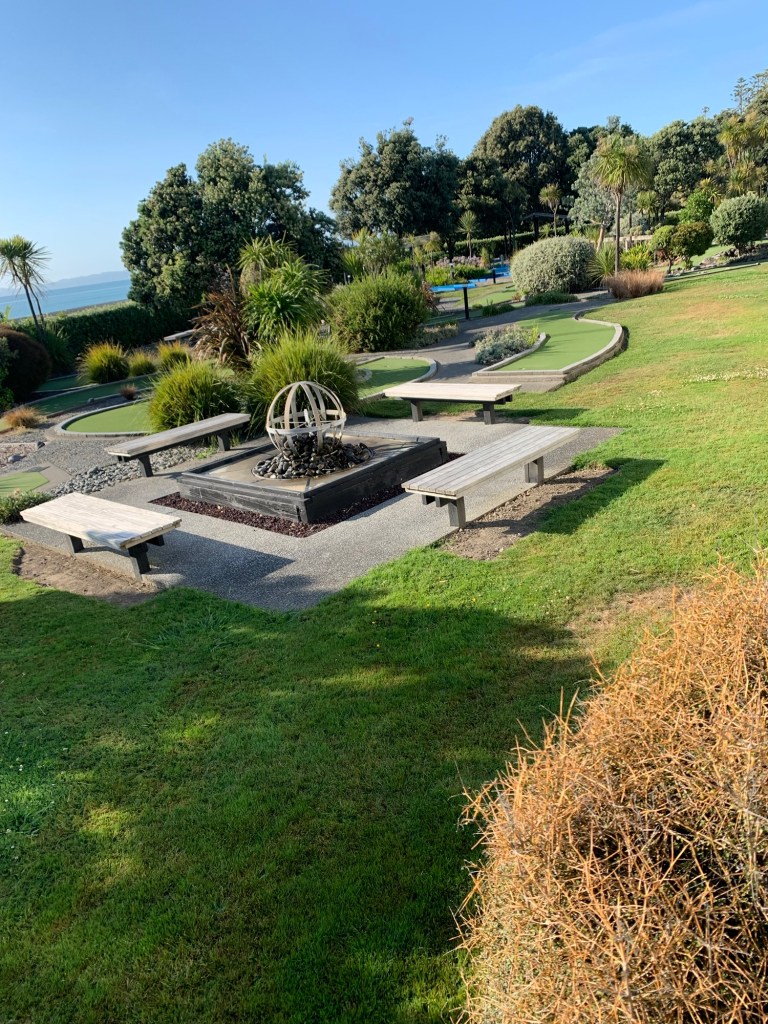
For fun, locals could go to the casino or the indoor archery and ax-throwing facility. There is a mini-golf course next to a beautiful outdoor swimming pool. I have seen lots of children and teens on this holiday, Waitangi Day. 

Possum

Kiwis aim their cars at them

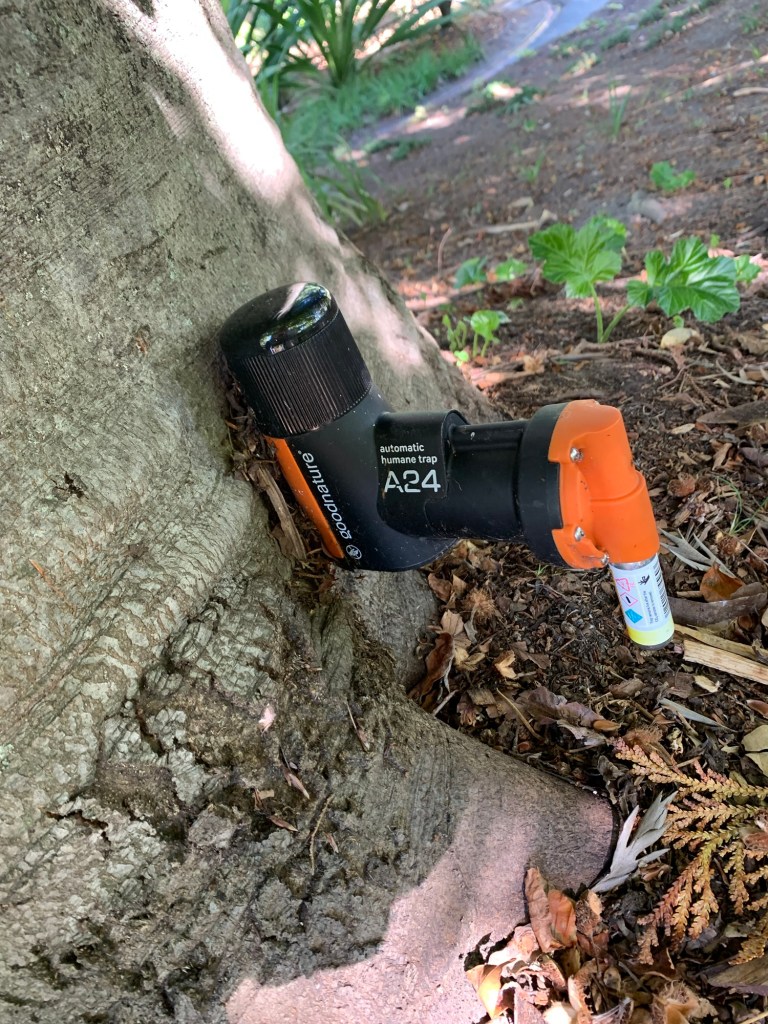
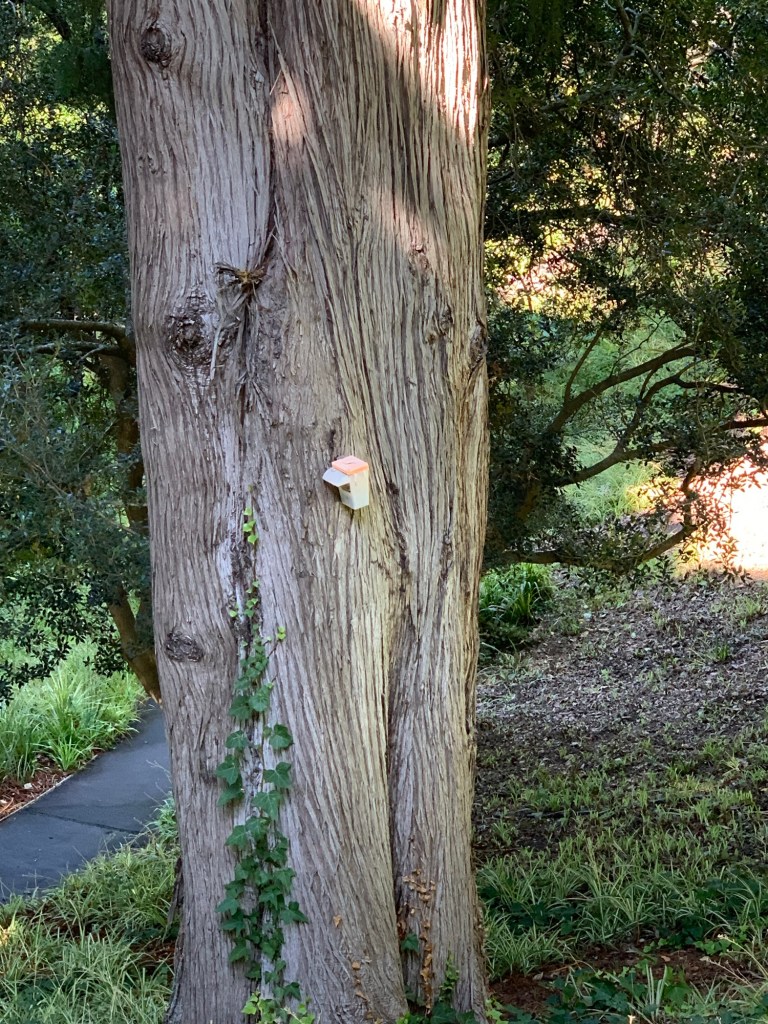
As a form of local pride, Kiwis have been educating me about their unique wonders. Stop calling it flax, it’s Phormium or Harakeke. No, that’s not a lizard, it’s a Sphenodon or tuatara. And do not confuse the New Zealand brushtail possum, Trichosurus vulpecula, with its North American country cousin Opossum, Didelphus. Let’s focus on the brushtail possum, the most despised predator on the Department of Conservation (DOC) invasive species list. Their population is estimated to be 70 million. The possum is the scourge of farmers, orchardists, and conservationists. The brushtail possum was introduced to NZ by opportunistic trappers seeking to replicate the material bounty of beavers and minks. Unfortunately for the environment, the possums said thanks and be seeing ya and ate trees and bird eggs and bred like rabbits, no, like possums. They ravenously chow down on only the tastiest buds of the tree, leaving it unable to grow, and then move on to the next tree without finishing up the whole tree. The DOC employs full time possum killers, but what has worked best against the possums is higher tech. The DOC used a crop duster to airdrop poisoned cereal bait in possum-infested areas. That did away with many possums, but the by-kill included birds and household pets. Now we see little poison houses and humane electric current zapper traps attached to trees.

The Zapper
Poisoned Bait for Possum

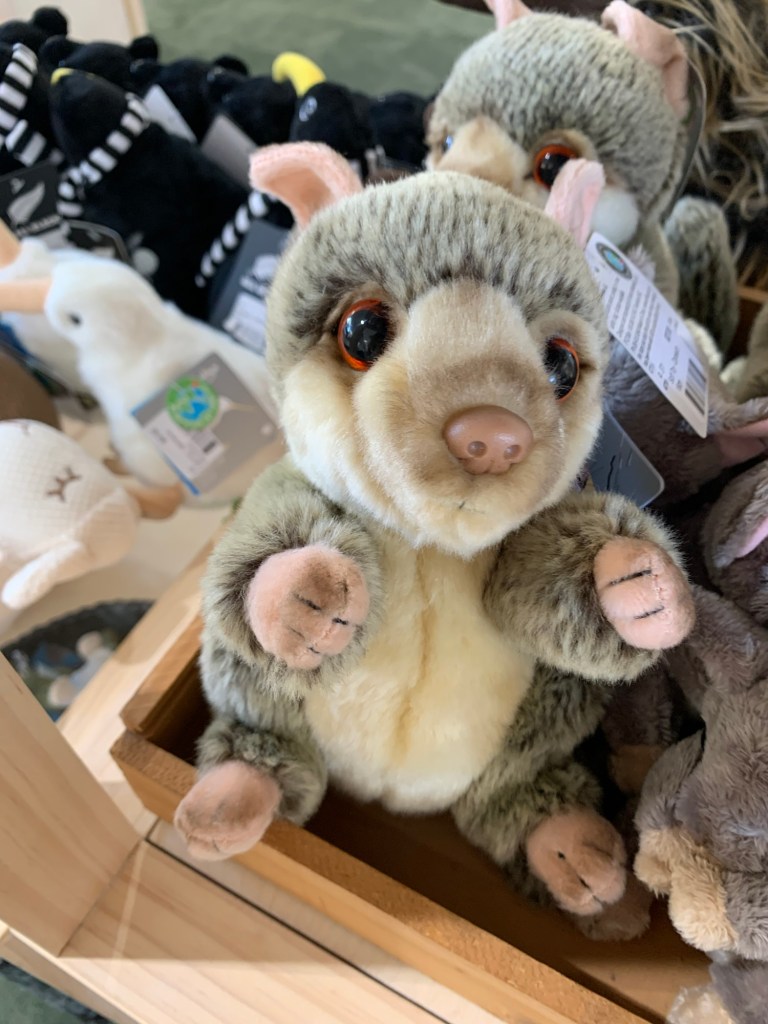
I am a tourist, so I don’t carry traps and a hammer to dispatch possums I encounter. Unlike in the western US, where opossum roadkill is ubiquitous and is rumored to taste like chicken, NZ food scientists are working to create possum recipes both tasty and nutritious. They are hampered by tedious process of skinning and butchering. One possum means hours of work for less than a kilo of meat. On the other hand, possum fur blended with merino wool is unique to New Zealand. Wear your Kiwi pride with possum-blend wool socks!
Gift Shop Possum

Bay of Islands

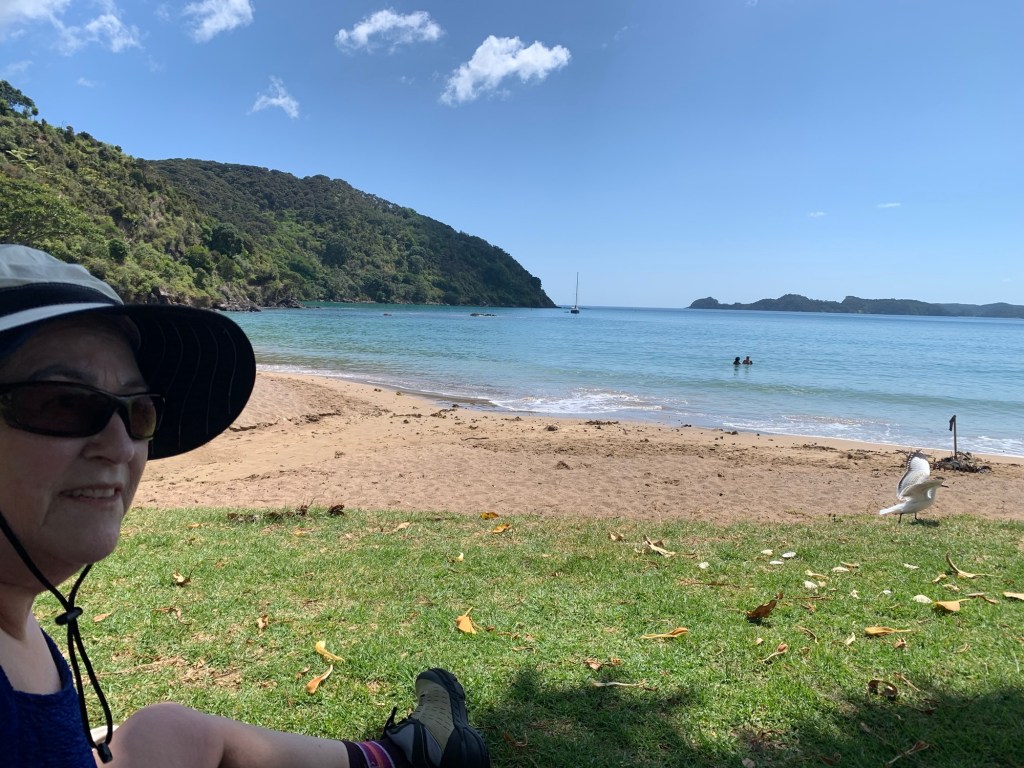
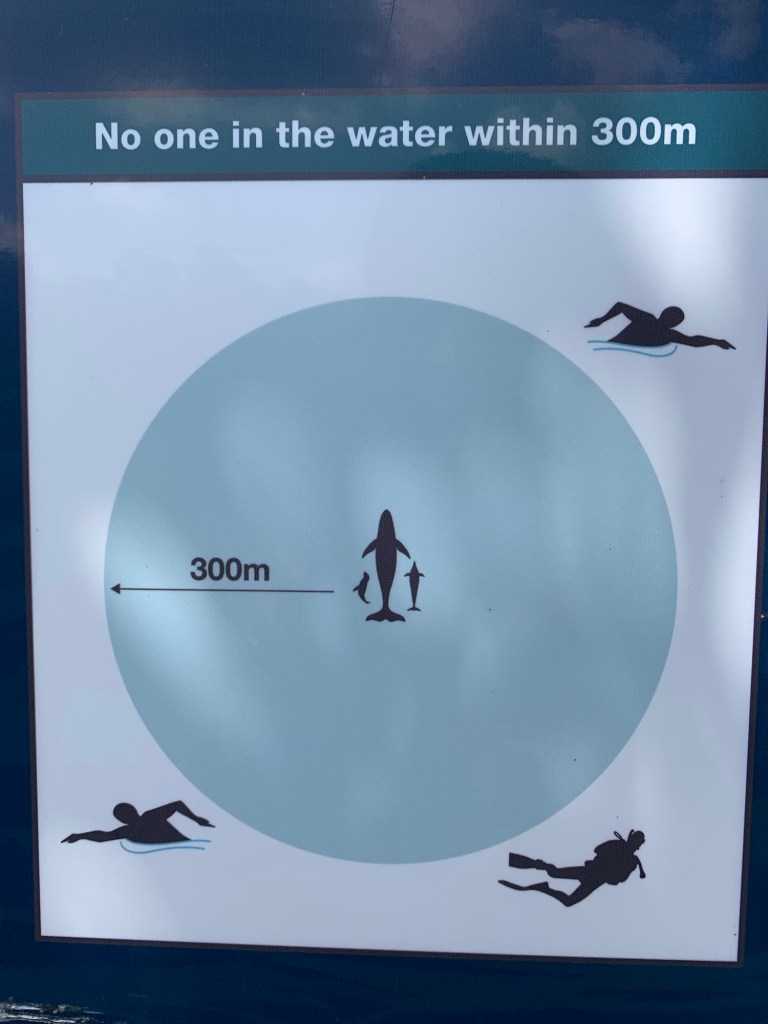
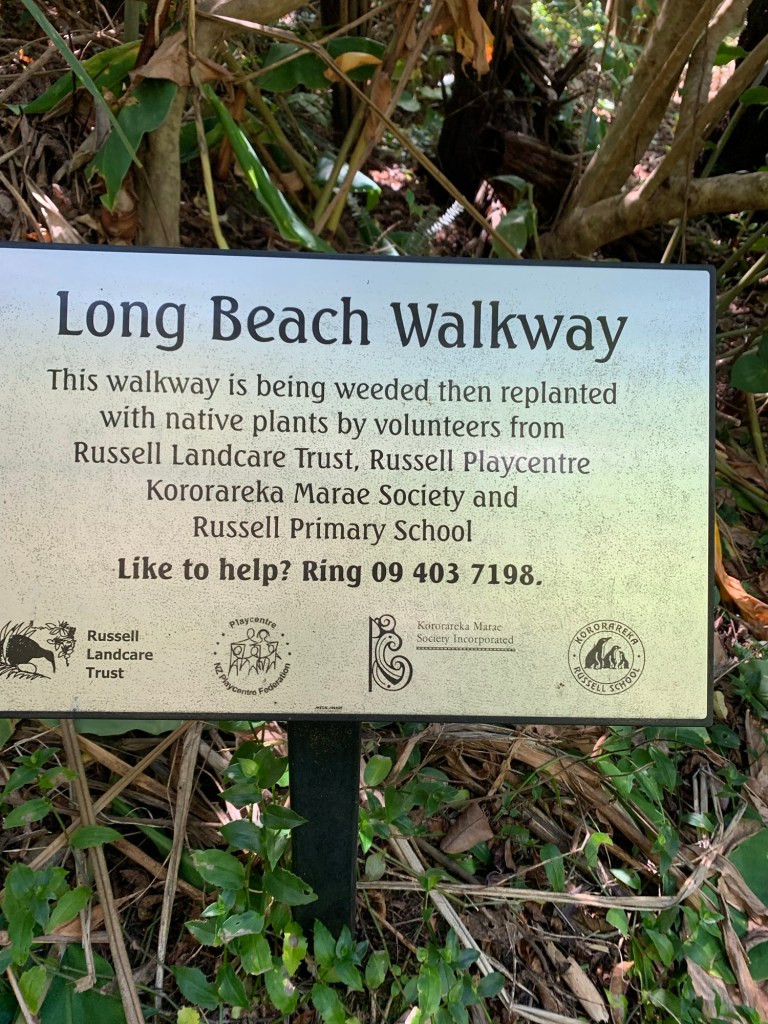
My first impression of Bay of Islands (BOI) came in the form of a multimillion dollar mega yacht gliding by our ship. It must have had a crew of ten to maintain and polish it. BOI seems like a quiet place for millionaires to lurk unobtrusively. There are dozens of uninhabited volcanic islands offering secluded coves cropping up out of the turquoise Pacific. The Treaty of Waitangi (1840) was signed here, between the Māori King and the British Queen. We anchored among the islands and tendered to the dock at Paihia. Then we ferried across the bay to the town of Russell. The climate and vegetation seemed tropical like Hawaii. From the jolly Customs official in Paihia we learned that one side of the Bay, Paihia, was colonized by missionaries and the other side, Russell, by rough seamen, escaped convicts, and pirates: heaven and hell. Russell was once called the “Hell Hole of the Pacific.” Now it appears to be a laid-back boating Mecca. There’s nothing to do here except drink. We walked 2 km to Long Beach.  I heard but did not see a dolphin. I saw but did not hear a sooty shearwater. I swam off the beach and enjoyed the quiet vibe. The public toilets at the beach were clean and had changing tables. A poster informed us that NZ marine mammals get 300 meters of distance from human passersby, whereas in our Monterey Bay the marine mammals only get 100 yards. We admired a cute Labradoodle, who didn’t want any distance from passersby. We chatted with Australian golfers on holiday, looking for something to do. And then we’d had enough of Bay of Islands. 

Bay of Islands

My first impression of Bay of Islands (BOI) came in the form of a multimillion dollar mega yacht gliding by our ship. It must have had a crew of ten to maintain and polish it. BOI seems like a quiet place for millionaires to lurk unobtrusively. There are dozens of uninhabited volcanic islands offering secluded coves cropping up out of the turquoise Pacific. The Treaty of Waitangi (1840) was signed here, between the Māori King and the British Queen. We anchored among the islands and tendered to the dock at Paihia. Then we ferried across the bay to the town of Russell. The climate and vegetation seemed tropical like Hawaii. From the jolly Customs official in Paihia we learned that one side of the Bay, Paihia, was colonized by missionaries and the other side, Russell, by rough seamen, escaped convicts, and pirates: heaven and hell. Russell was once called the “Hell Hole of the Pacific.” Now it appears to be a laid-back boating Mecca. There’s nothing to do here except drink. We walked 2 km to Long Beach.  I heard but did not see a dolphin. I saw but did not hear a sooty shearwater. I swam off the beach and enjoyed the quiet vibe. The public toilets at the beach were clean and had changing tables. A poster informed us that NZ marine mammals get 300 meters of distance from human passersby, whereas in our Monterey Bay the marine mammals only get 100 yards. We admired a cute Labradoodle, who didn’t want any distance from passersby. We chatted with Australian golfers on holiday, looking for something to do. And then we’d had enough of Bay of Islands. 

Aotearoa

Haka

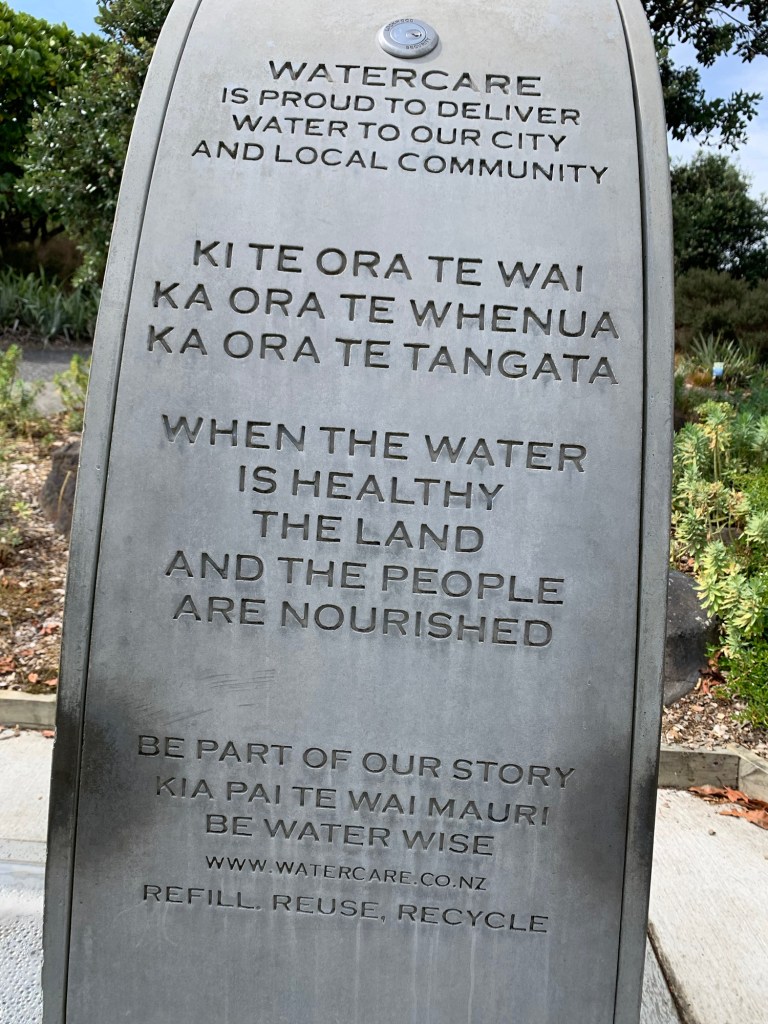
What if the descendants of Costanoan Indians lived among us in Santa Cruz? What if they drove buses, broadcast TV news, taught school, and also got together to strip and paint themselves, wave clubs and spears, and perform a dance-chant, Haka? What if all public communication were printed in two languages, English and Native? Then it’d be like Māori in Aotearoa. They are integrated into all levels of society and are only distinguished culturally by, say, wearing sacred rocks around their necks where a crucifix might go. I’ve watched the fascinating Māori channels on TV by wresting the remote away from my spouse — who had vowed to keep watching cricket until he understood the rules. I’m impressed with the commitment to native islanders; none of this annoying lip service to Land Acknowledgement that we are subjected to. I’m often greeted with Kia Ora and wished strength in Māori.

Drinking Fountain

What I know about Māori is that they are descended from Pacific peoples, thus related to Fijians, Tahitians, Tongans, Samoans, Hawaiians, who outrigger-canoed to NZ between 1200 and 1300 CE. Because of Aotearoa’s remote location, those Europeans who could infect the native population with contagious disease either died or recovered by the time they landed. So unlike the Costanoans decimated by smallpox and measles brought by Spaniards, the Māori mostly lived side by side with European settlers, warring against each other as much as against Whites. The Treaty of Waitangi, 1840, constituted a peace treaty between the British Queen and the Māori King. It is celebrated with a national holiday each 6 February. Maori fought on both sides of the New Zealand Wars, 1843-1872. When the overwhelming force of thousands of British soldiers could not defeat the Māori rebels in traditional siege warfare, the British governors passed laws against them and starved them into submission.

There goes the neighborhood.
Public Health Warning