First Peoples

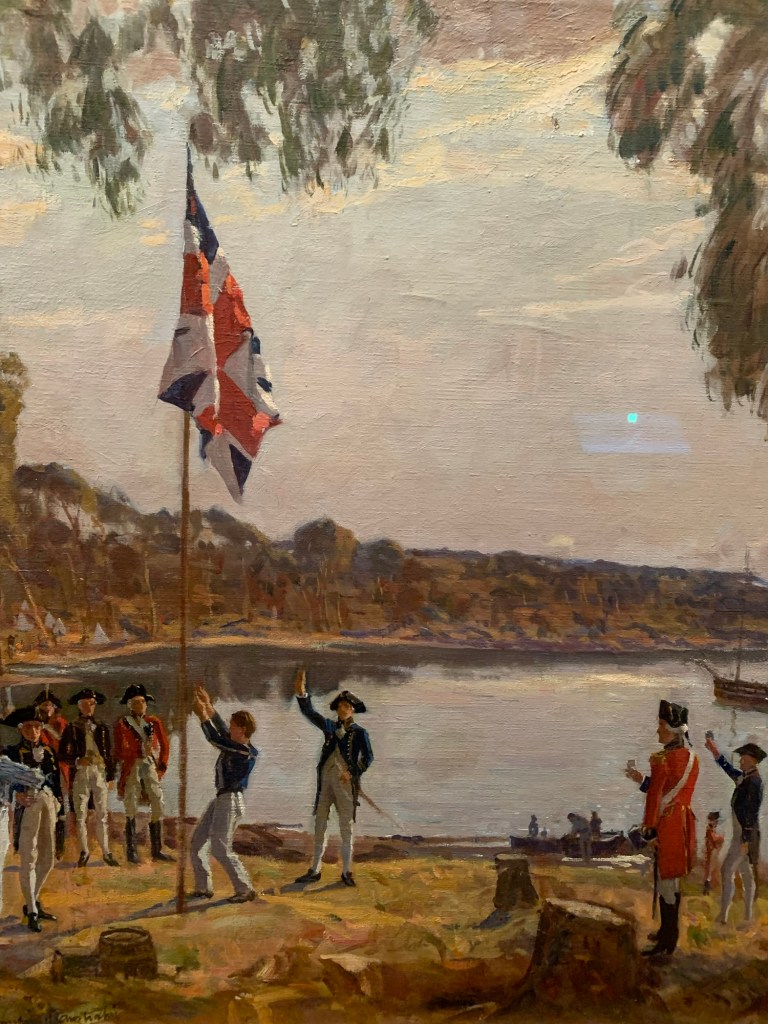
Gov. Philip, Lt. Dawes, Judge Collins Toasting George III in Sydney

“Are we supposed to feel guilty about this?” asked an Aussie next to me at the Museum of Sydney. We were looking at models of the 11 grotty wormy wooden scows that conveyed convicts to Sydney in 1788.

Not only did these English abuse their prisoners, they warred against the indigenous population. And the Aussie’s question goes to the core of this museum’s mission: to preserve a legacy. 

Models of the First Fleet, 1788

How uncomfortable should a person feel when hearing about the misdeeds of one’s people?  Yes, my people mistreated other races. I am steeped in the USA “manifest destiny” culture. I am part of the settlers who murdered or kidnapped Natives. I see that my people have committed atrocities. I feel ashamed. 

The story of settlers vs. natives in Australia is similar to the story of some tribes in California. Bracket out the Indians who worked on the California Missions and you have many stories like this one: 

The Kawaiisu (people) lived as hunter-gatherers in Southeastern California. During a drought, some Kawaiisu helped themselves to a rancher’s steer. The whites called it stealing. The Kawaiisu had no concept of property ownership so they did not agree that they did wrong. Skirmishes ensued. The US Calvary pursued the Kawaiisu, took their food caches, rounded them up, and forced their relocation to Fort Tejon in 1863. JG and I visited Tomo-Kahni (winter camp) State Historic Park near Tehachapi in May 2024 and heard this story. 
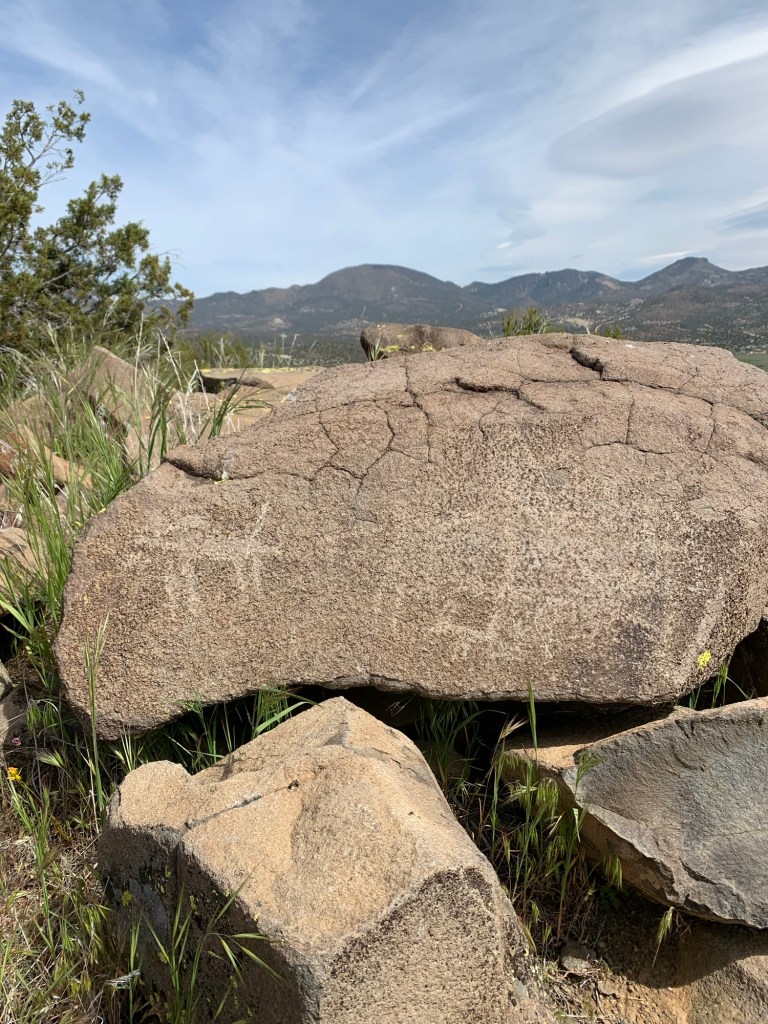
Pictographs at Tomo-Kahni, May 2024

Now here’s the way the English dominated the Bidjigal and Gadigal tribes around Sydney. Source: the contemporaneous Diary of Watkin Tench.

In 1790 a Dutch farmer had offered some of his potatoes to the natives as a gift. He complained then to the Governor when the natives came back to his farm and dug up all his potato crop. They had no concept of property ownership, so they didn’t understand they were stealing.  The governor’s gamekeeper, McIntyre, was ceremonially speared by Pemulwuy as a payback wound for shooting natives. When Governor Philip ordered a posse to hunt and kill some natives as punishment, the tribe disappeared into the bush. A Guerilla war followed for the next twelve years, until the death by 7 bullets of the leader Pemulwuy. 

In both cases and many more, the clash of peoples begins when the natives are hungry and have no concept of stealing. Then it ends with their death or relocation. For a country that celebrates Thanksgiving with its attendant acceptance of cultural differences, the US does not walk the talk. 

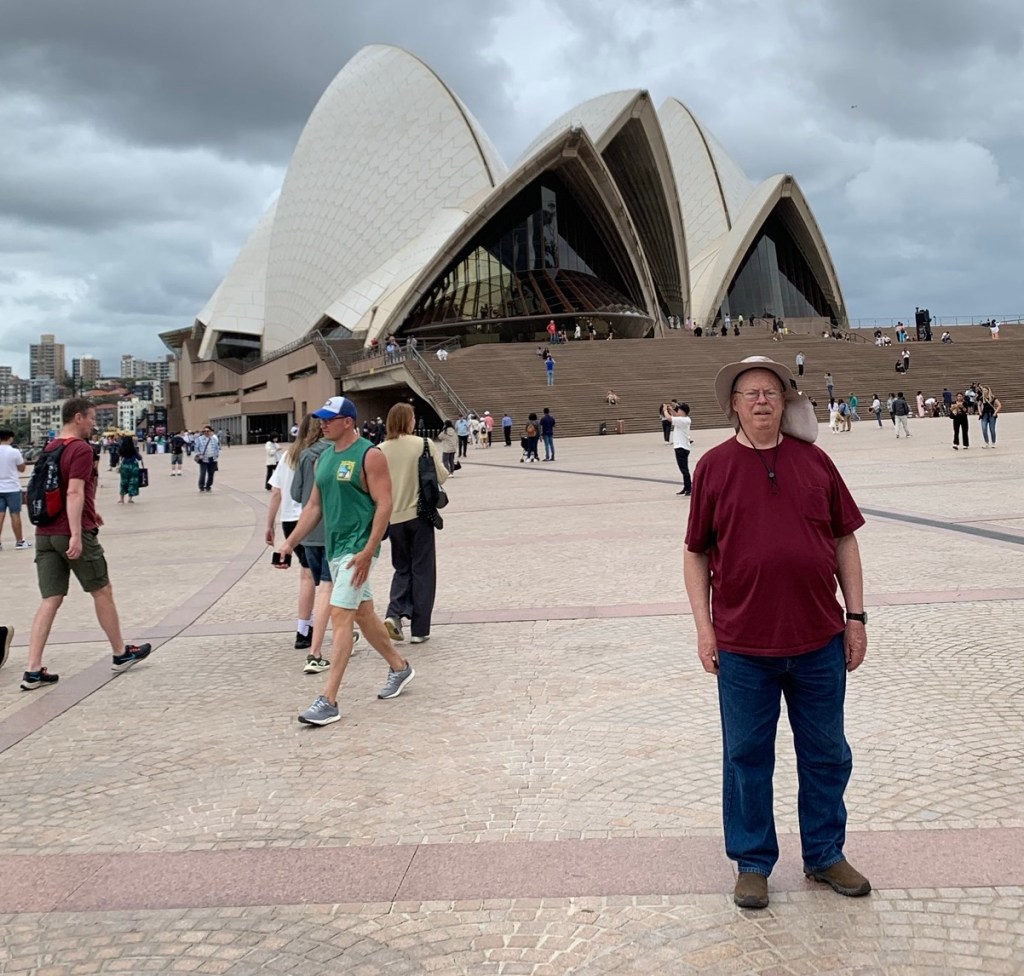
Sydney, NSW, AU

View from the Royal Botanic Garden

We spent two days soaking up attractions in Sydney, one day indoors and one outdoors. First off we admired historical Sydney Sandstone buildings, then did some lazy bird-watching of stuffed specimens at the Australia Museum, dined at the North African restaurant Aalia, browsed the small Museum of Sydney, and checked out the local art collection at the Library of New South Wales. Then we capped off our highbrow day watching Opera Australia perform “The Barber of Seville” at the Sydney Opera House.

They gave us a sturdy show filled with comic stage business. Their conductor, Daniel Smith, gestured charismatically, making a show all by himself. 

I learned enough Sydney history to nod with comprehension when a local Captain Cook Cruises ferry was named “Pemulwuy” after the fierce Bidjigal shaman. From 1790-1802 Pemulwuy made Guerilla war against the settlers in spite of being outgunned. More about him later. And the restaurant in the opera house is named after Bennelong, an important black who learned English and lived in the Governor’s House. Bennelong and Governor Arthur Phillip both tried for understanding, but the overwhelming force of the Crown decimated the natives in just a few years. There is a statue of Captain James Cook, the navigator, celebrated in Sydney. He is reviled in Hawaii, where he was killed by Hawaiians while trying to kidnap their king. 

The following day we followed the advice in the Judy Small song and rode the ferry to Manly. Manly is a scenic spit with three kilometers of pink sandy beach. I swam between the two “okay to swim here” flags and felt the pull of the surf. The world’s first surfing contest was held here in 1964. How surfing is finely judged seems opaque to me. As with figure skating and freestyle skiing, falling means you lose. But beyond that, I have no idea what makes one dude a champion and the next dude a dog. The lifeguard had impressive equipment at his command: dune buggy, jet ski, radio. 
There was a memorial to Manly soldiers who lost their lives 1951-1972, following the US into battle. Australia is like the little tagalong kid in the neighborhood: “take me along, I’m small but I’m with you, Big Fella.”

May their memories be a blessing
New South Wales Government House


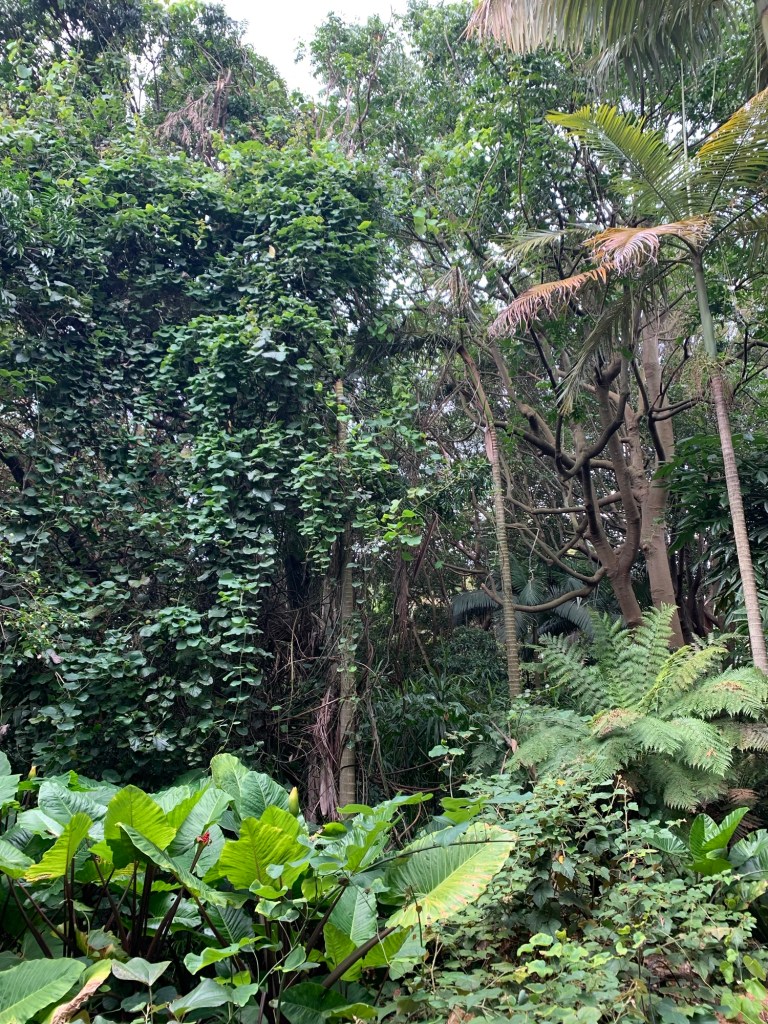
Then I spent a few hours looking around the Royal Botanic Garden.

Wood Sprite

I especially liked the Australian rain forest area, though I can never pass up a rose garden in summer.


Wildlife sightings: white ibis, egrets, and two weddings.

Eden, NSW, AU

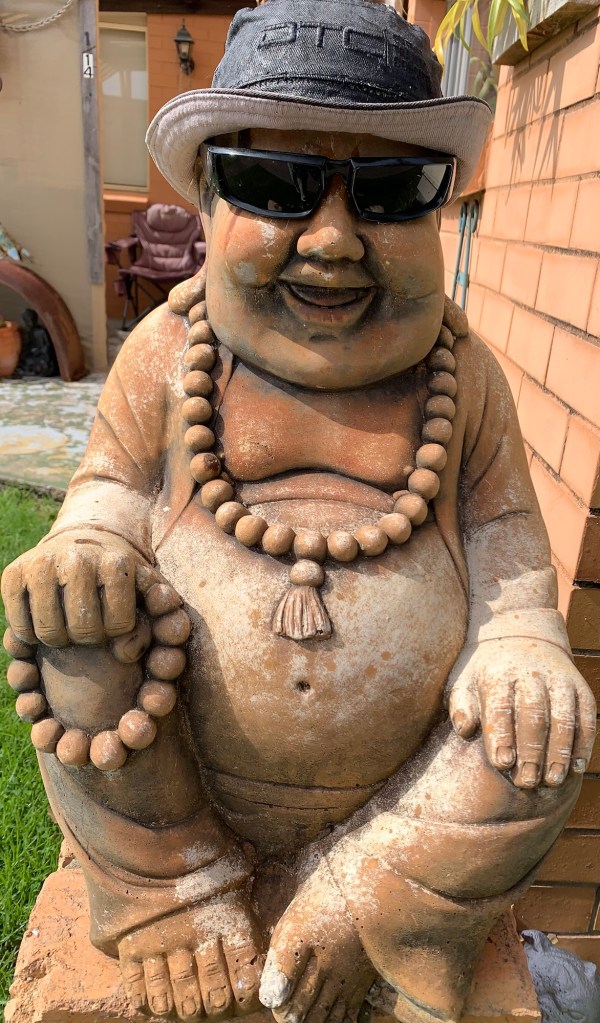
Maitreya in Eden

What a beautiful quiet little bay they have in Twofold Harbor! Eden is pronounced “Aid En”as in Gahden of Aiden. Some of the town’s 3,150 inhabitants fussed over us and attempted to sell us handicrafts. Two locals also mentioned that the fuss would be much greater on Saturday when the Ovation of the Seas (5000+ passengers) came to port. This town was so small that I was not asked for directions even once. 

Wildlife sightings: magpies, a kookaburra, wrens, parrots, a crested cockatoo, white pelicans, and plenty of gulls. Six parrots squawking in a Eucalyptus tree captured my attention, but the photo doesn’t convey their image.  

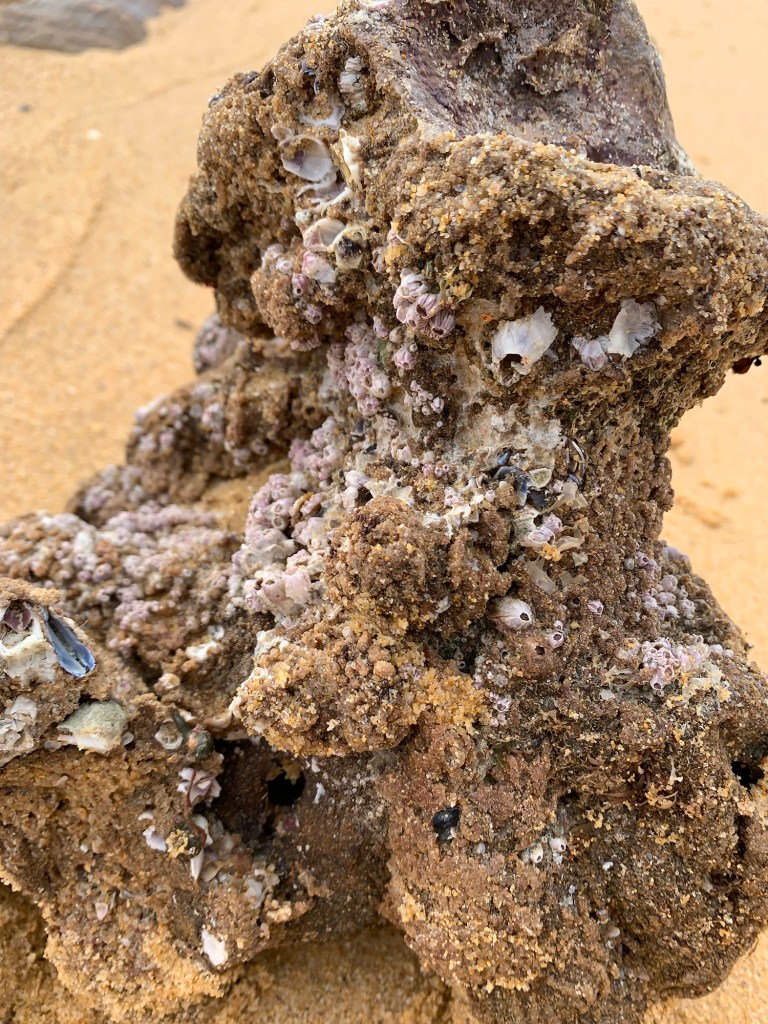
Reef Creature

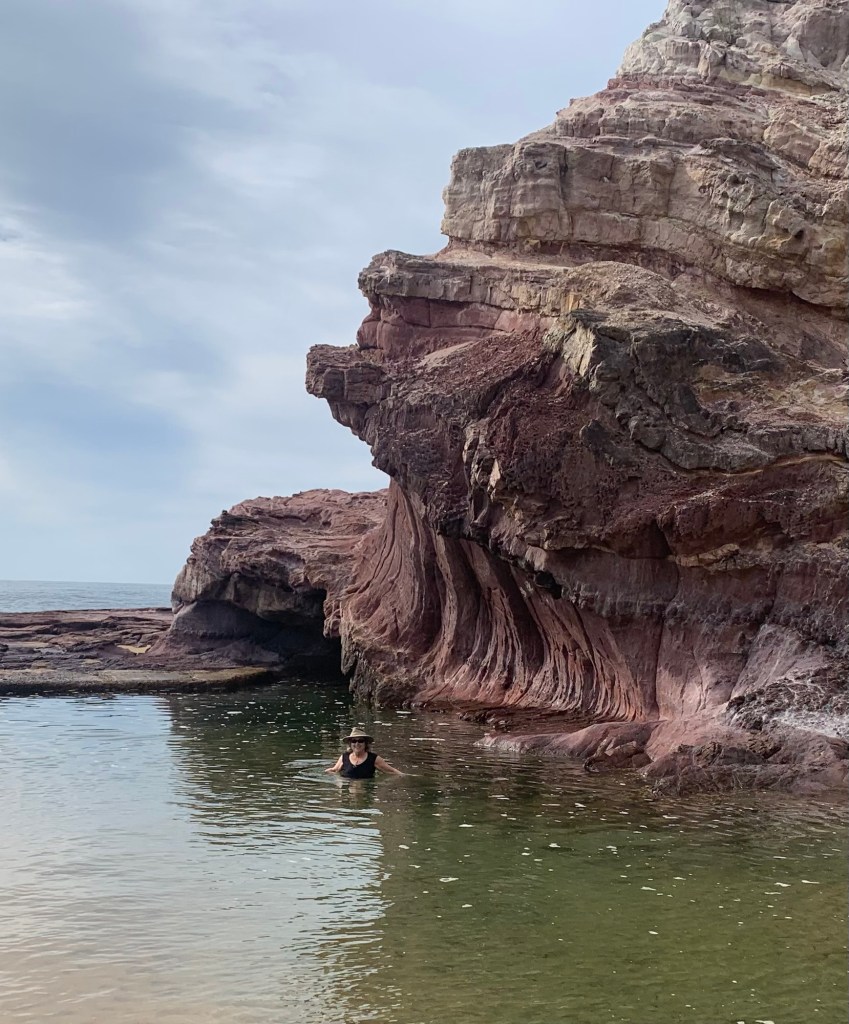
We walked to Asling’s, pronounced “Ass Lings,” Beach. I bathed in a man-made South Pacific tide pool. 

We admired charming seep gardens in the pink sandstone cliffs. 

Asling’s Beach

We stopped for refreshments at a café. When I ordered chai latte with cow’s milk, the barista asked, “cuppa or a mug?” I answered, “a mug, please” for the larger size. It was pleasant not to order the Starbucks way. 

Melbourne, VIC, AUS

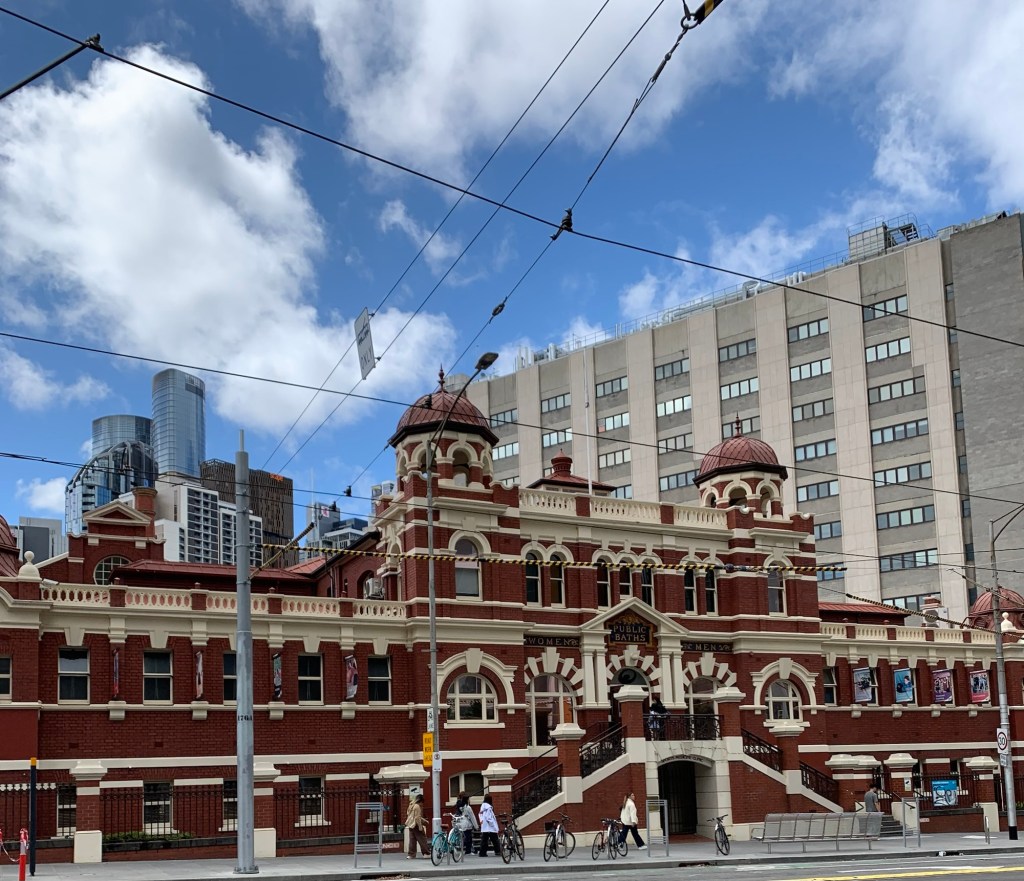
I was familiar with Melbourne as the setting for the fun Netflix TV series Fisk. Melbourne, pronounced Mell Burn, through the bus window looks prosperous and functional. I see only late model cars in the city center and no empty storefronts. The skyscrapers seem modern and the sidewalk, erm pavement, is free of dog droppings and broken glass. 

Public Bath House

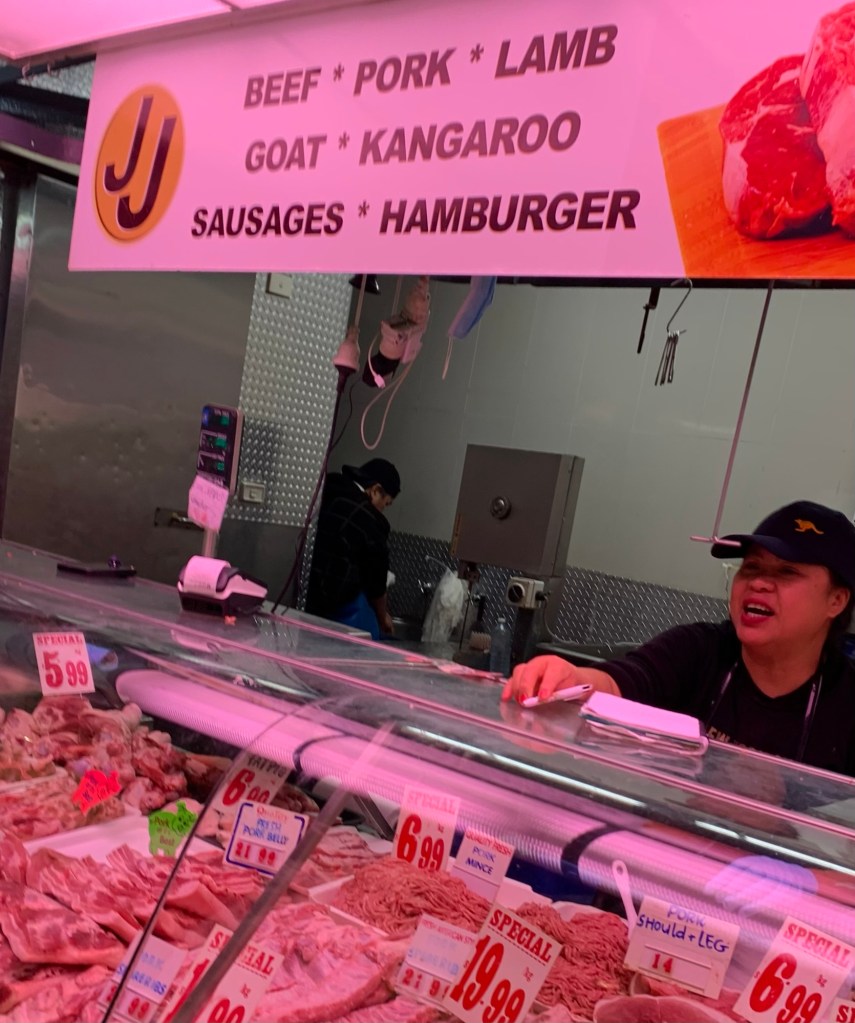
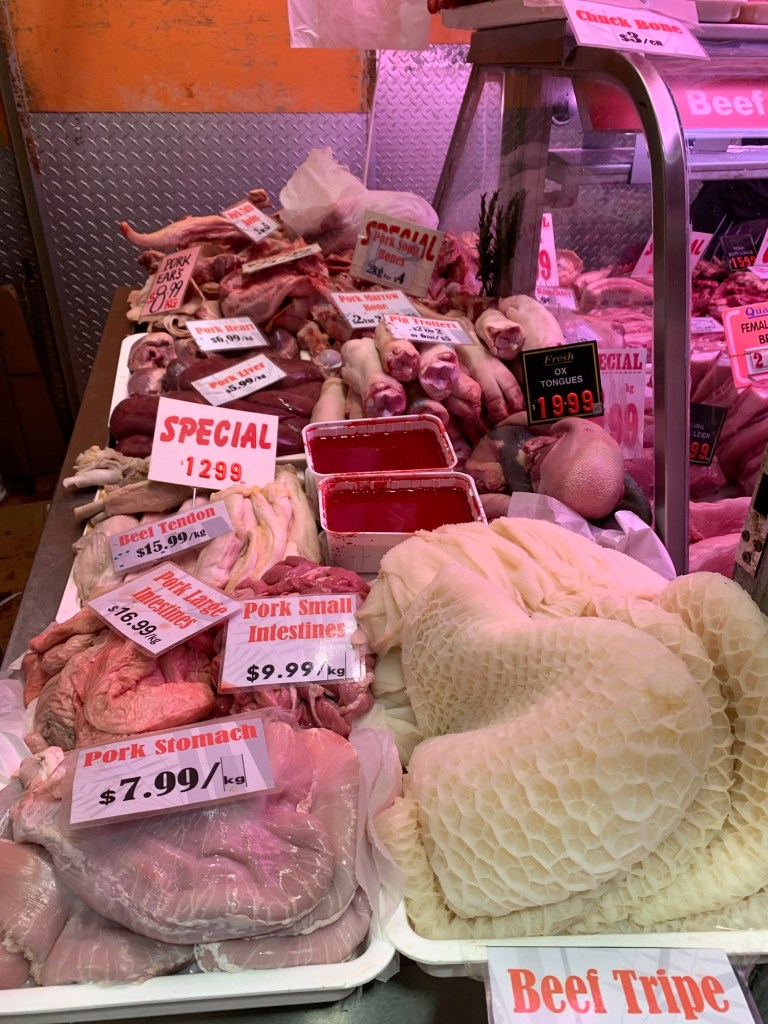
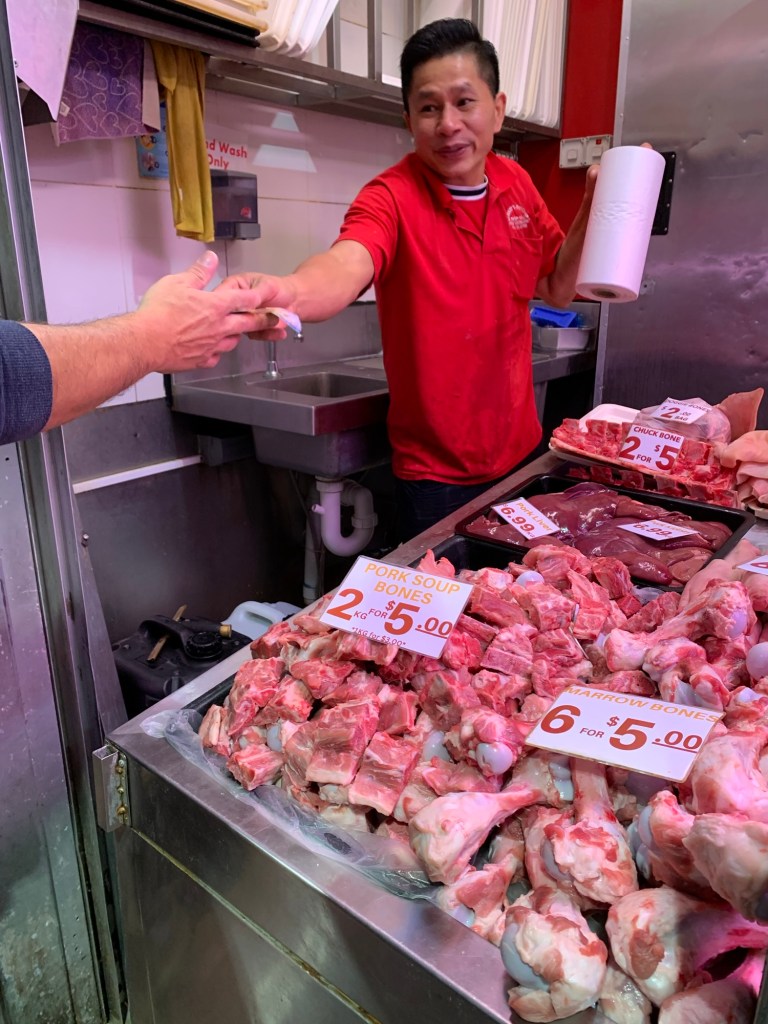
We followed the herd to the Queen Victoria Market, a huge open air arrangement of stalls. The prices are not flea market low, but there’s a sense that local shopping is entertainment and community for all. The meat hall was indoors, with A/C and pink light.

Kangaroo Meat For Sale

I especially liked the meat hall, where kangaroo was on offer. 

Our grandma used to buy only fresh meat from Shopper’s Corner, where she could talk to the butcher and get exactly what she wanted. She was suspicious of supermarket meat in plastic and styrofoam. Who knows how long it has been out? What about the “B” side that one can’t see? I thought of her as I saw the wares attractively laid out, under pink lighting, and actively hawked. They have different standards for sanitary conditions. They sell organ meats. Generally meat here costs less than half the price in Santa Cruz. Australian beef is pastured on large-scale farms, which accounts for the cheaper prices.

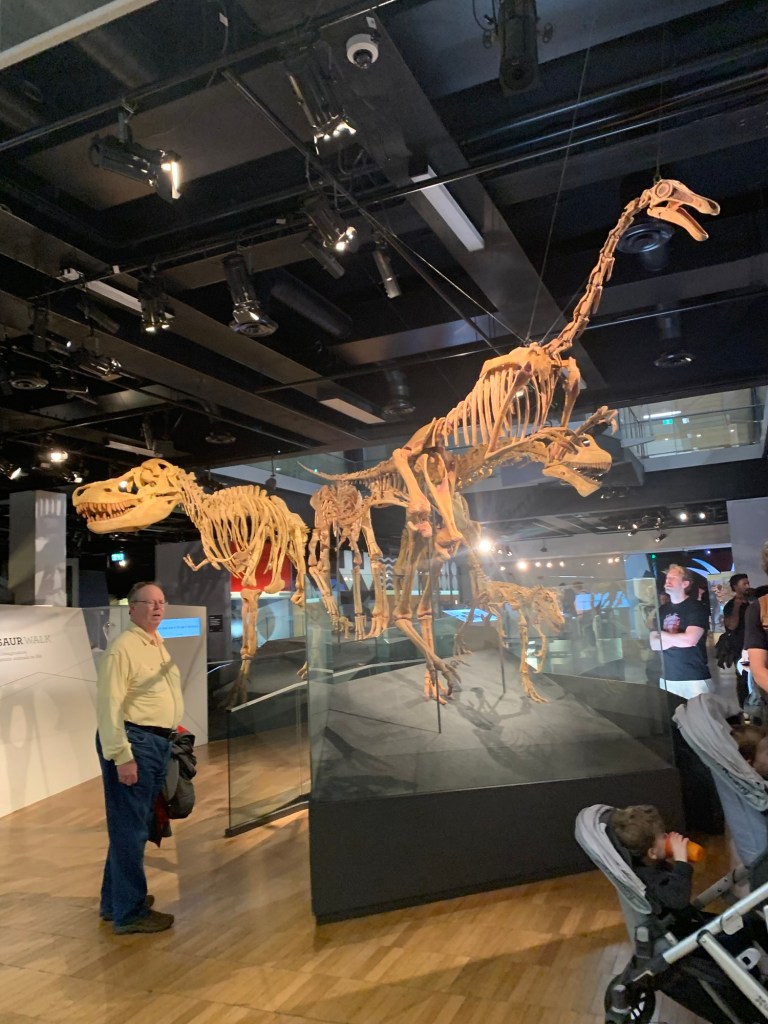
Good Bones

Then we walked to the Melbourne Museum to see more bones: dinosaur bones.

Melbourne Museum

We also stumbled in to Antopia, an interactive multimedia exhibit about ant life. It was filled with frenzied children. 

Mother-Queen Ant

We’ve only just scratched the surface of Australia, so it is presumptuous to extrapolate from just a few days. We have another two weeks of Australia. The Aussies, pronounced Ozzies, I’ve talked to seem a bit like Texans: confident, expansive sports fans willing to accept multi-cultural society if it’s good for business, or bidness in Texan. Although they sound like Southern England, they shorten words and drawl like Texans. Also, I have not heard the typical understatement common in England. But then on holiday everyone is cakes and jam. Australian slang sometimes draws from indigenous terms, so words like billabong have history. My favorite Aussie term so far is “Mozzies” for mosquitoes. In Texas they’d be “skeeters.” I am listening for colorful words I don’t understand. That makes travel interesting.

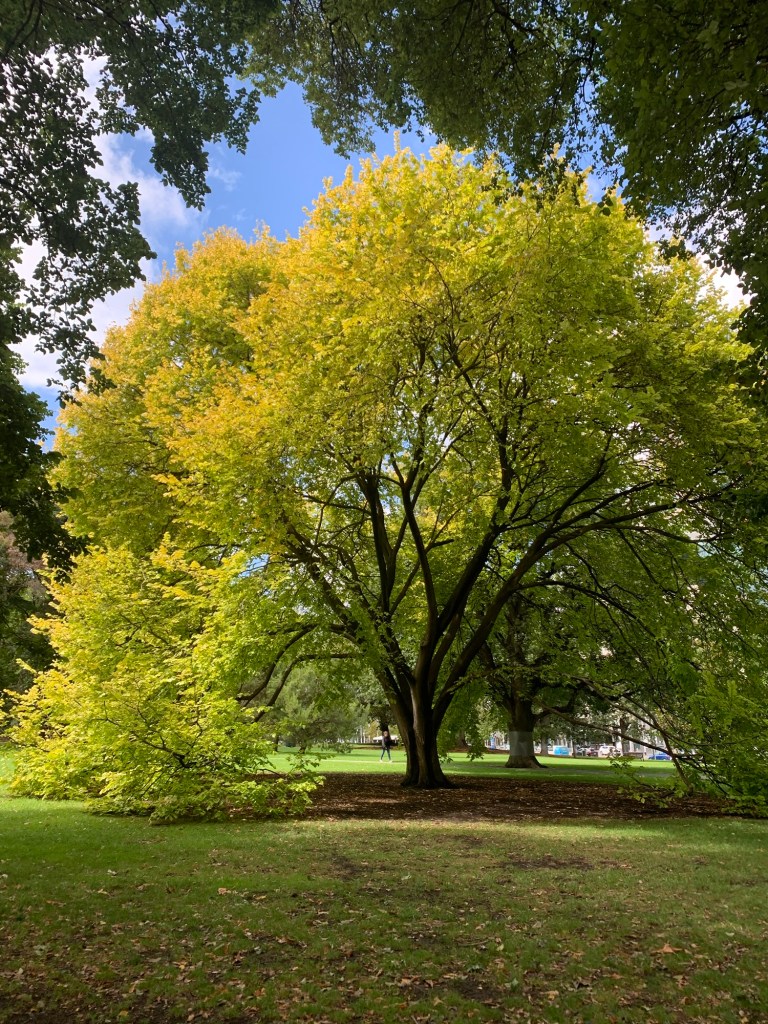
Beech in Summer

Museum of Tasmania 2

Trout on a Hook

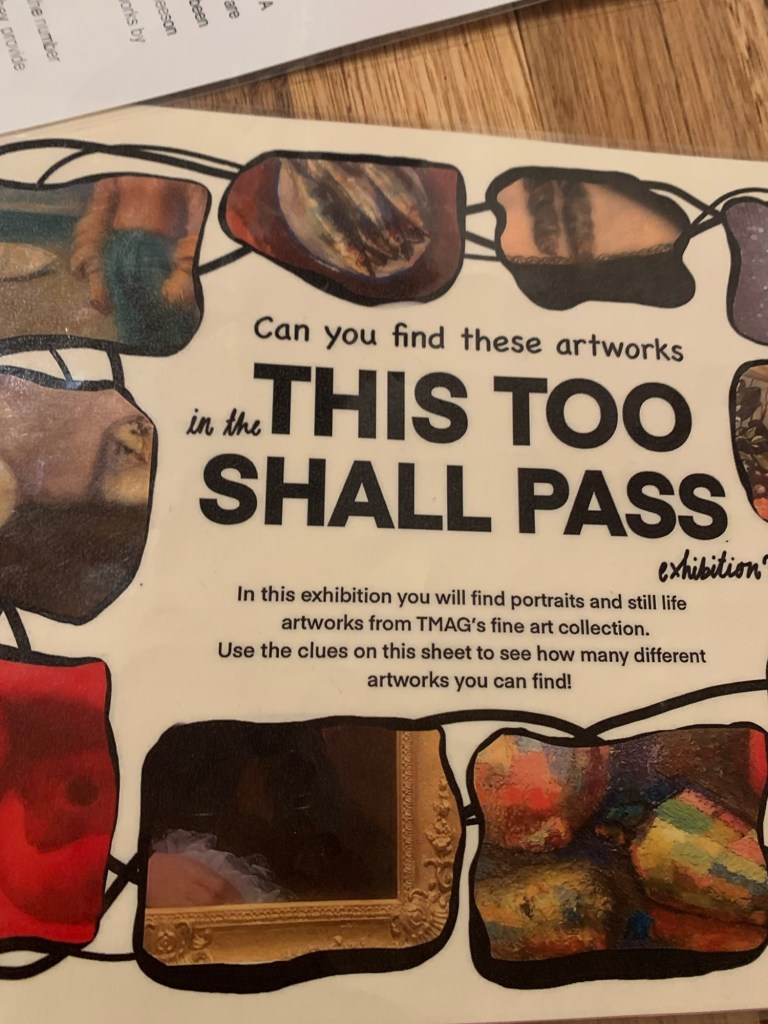
“I may not know much about art, but I know what I like.”  This phrase sounds the death knell for the Humanities. If all viewers are equally adept, if all opinions are equally valid, if Liking matters more than heritage, then welcome to the world of modern art museum-going.

Auckland Art Gallery

The art museum chooses to be thought-provoking. That’s fine if your idea of a good time is to look at weird images and then talk shite about them with your mates. 

Surrealism

The art collection of the Museum of Tasmania is free to the public, unlike the Museum of Old and New Art (MONA) across the Derwent which requires AU$35 plus a ferry ride of AU$28 for a small collection. I did not visit the MONA, but that doesn’t stop me from judging it negatively. 

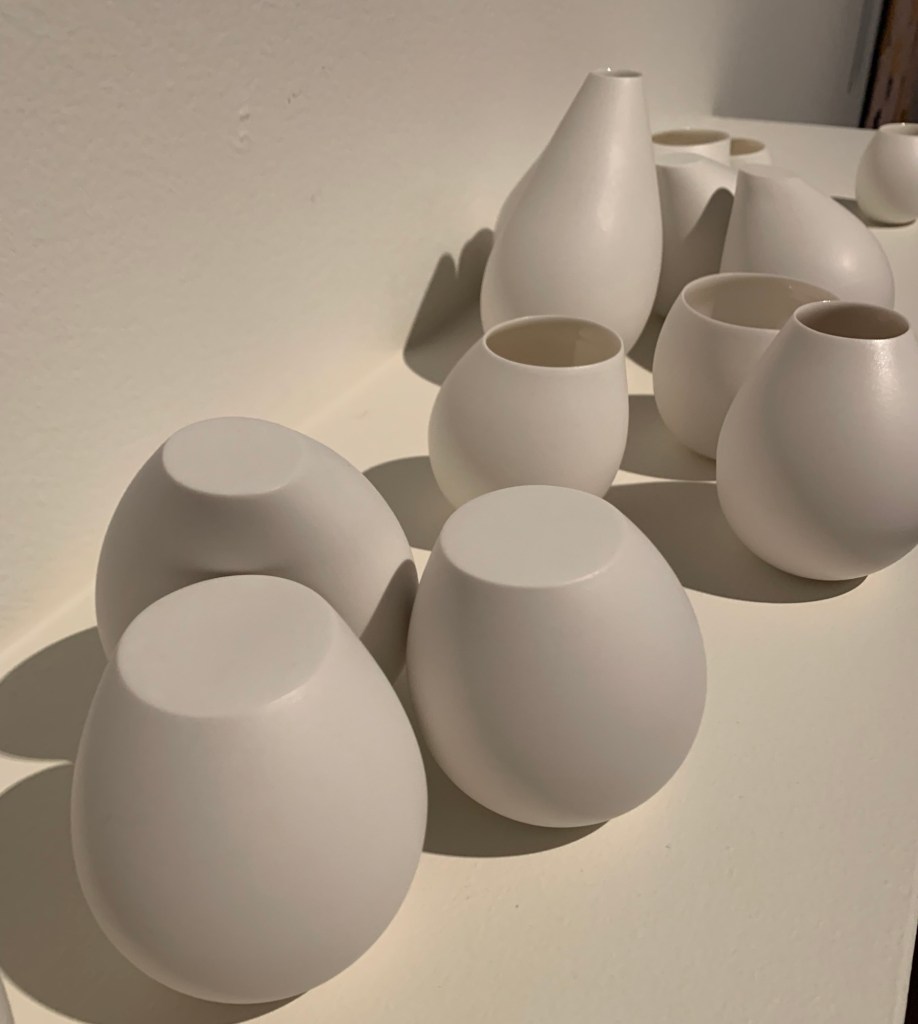
I joined a tour of new local art led by Jan, a former professor of Art. She pointed out that non-representative works of art could still be aesthetically gripping. Here she praises ceramic objects that are decidedly not functional. M would call them frivolous. 

Jan and Objets

These little pots reminded me of wombat scat, since several are solid shapes. 

Art Pottery

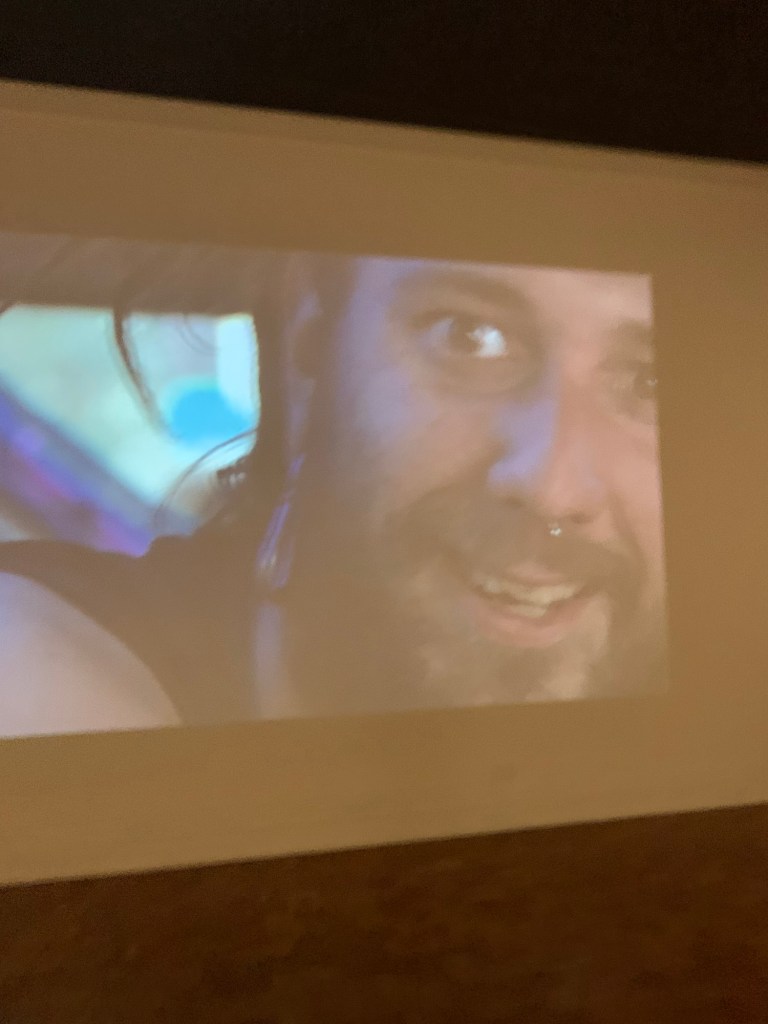
There was an installation on film about protesters camping out to deter logging in Tasmania. They looked like quaint environmentalist hotheads, chaining themselves to trees. Tasmanian environmentalists won an important vote and court decision forbidding the damming of the River Franklin in 1982. This film was more contemporary. 

Looks like Someone I Know

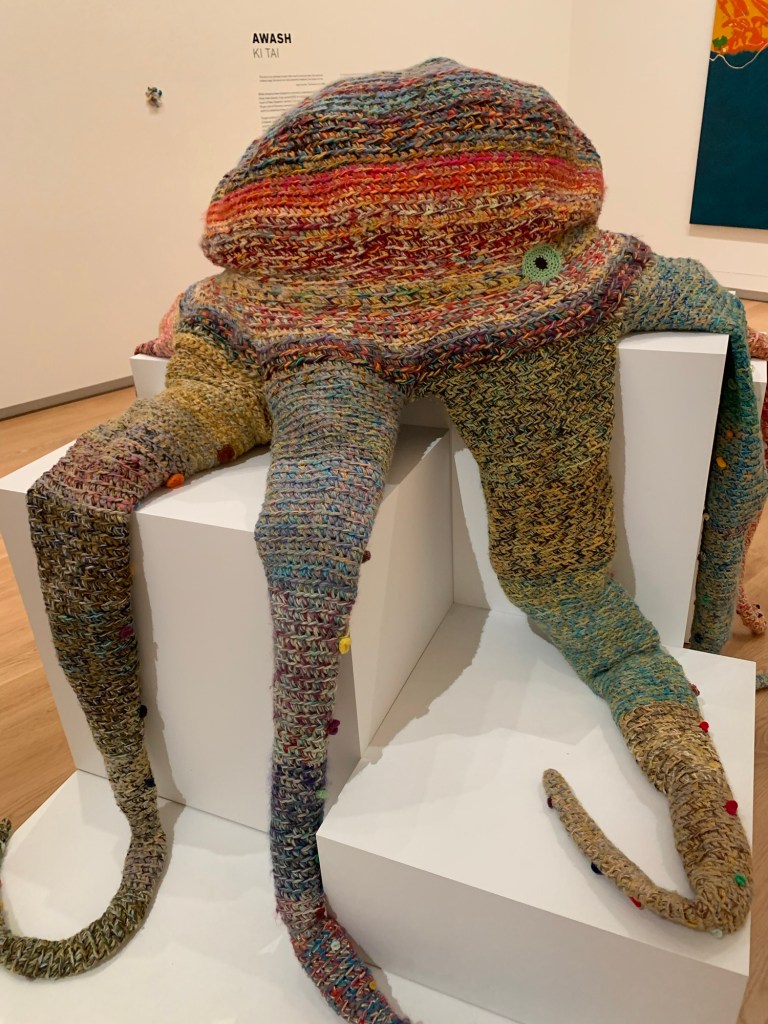
Here’s a sculpture from the Auckland Art Gallery that I thought the fiber arts lovers would appreciate. 

Finally, I had the traditional pleasure of admiring beautiful naked bodies. The abstracts in the gallery may be viewed up close, but the lovely nudes hang up high in the stairway.  Sadly, Bouguereau’s “Cupid and Psyche” is displayed too far away for the viewer to contemplate the minutiae of every curve. 

Museum of Tasmania 1

Sperm Whale Skull

This museum combines natural history and art exhibits. First I learned about local animals.

Endangered Tasmanian Devil

Tasmania hosts carnivorous marsupials like the Tasmanian Devil and herbivorous but touchy marsupials like the Pademelon and Wombat.

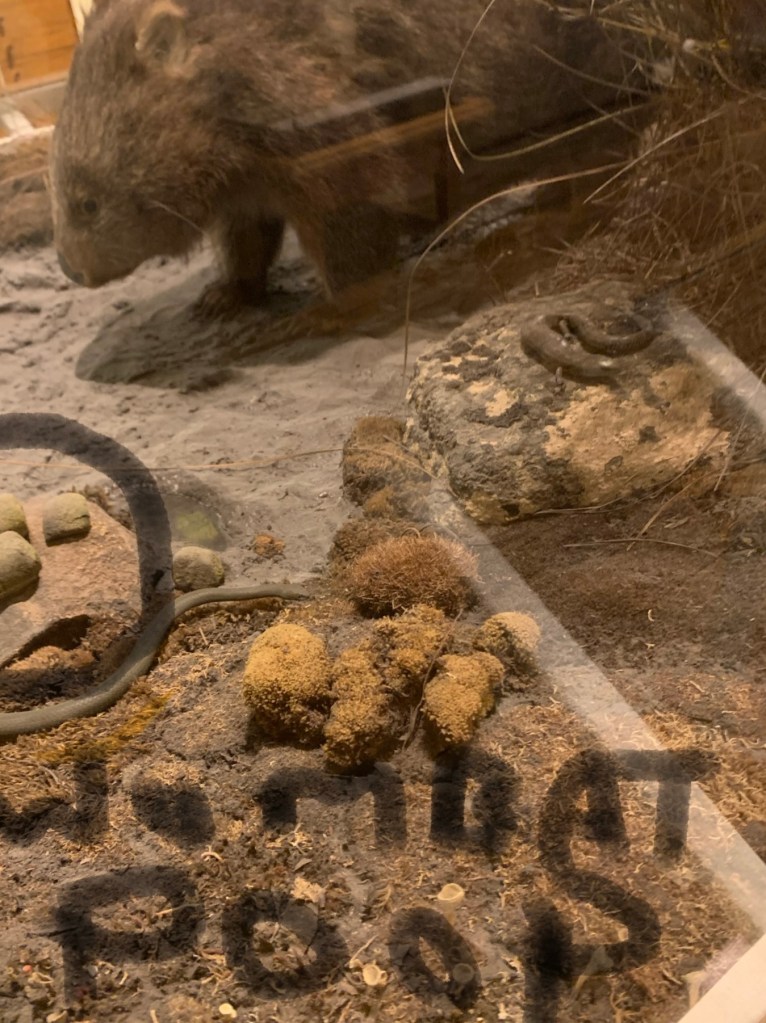
Tasmanian Devil Excrement
Pademelon, Wallaby

Of interest to the poop enthusiasts, some of the taxidermied animals were displayed alongside their feces. The wombat produces about a hundred of these cube-shaped nuggets a day owing to their slow digestion of tussocky grasses.

Strange animals are symbolic of Australia, like the charismatic Echidna and Platypus.

Echidna and Platypus

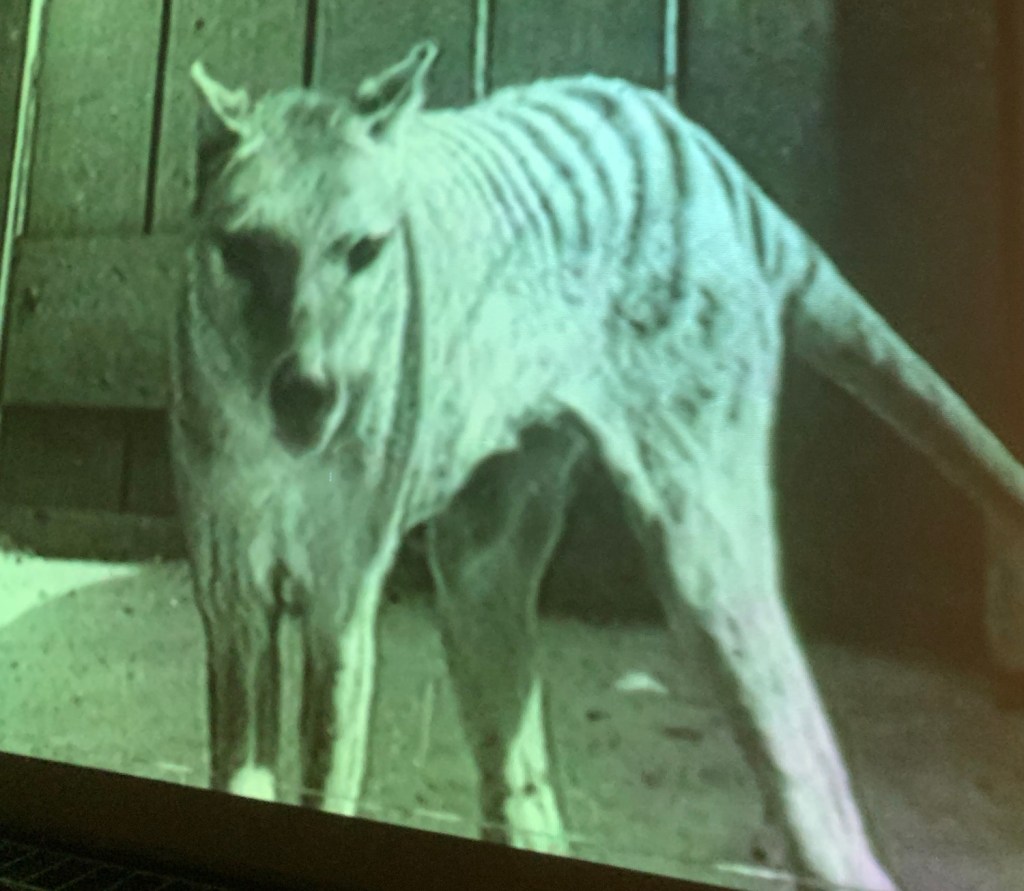
The now-extinct Thylacine, a carnivorous marsupial, has a woeful story based on a misunderstanding.

Thylacine in 1930’s Hobart Zoo

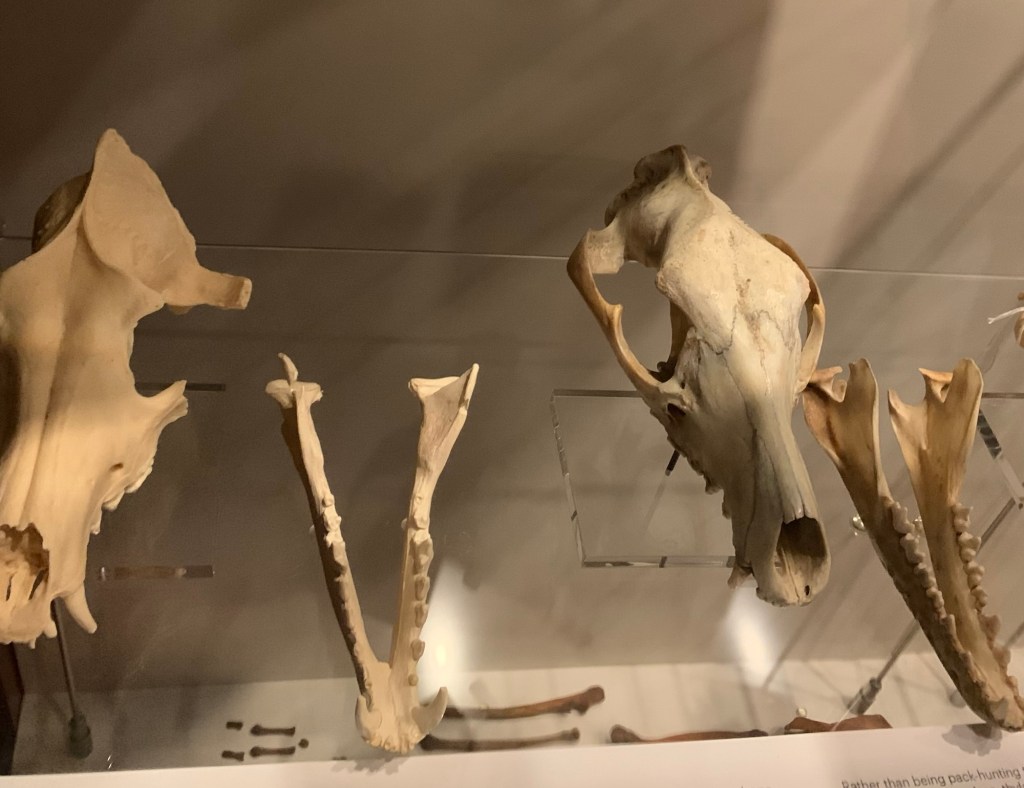
Also called the Tasmanian Tiger, it was hunted to near-extinction because it was thought to prey on livestock. In the 1890’s the state government even offered a bounty of £1 per adult and 10 shillings per pup. Thousands were slaughtered. Later, upon closer examination of its skull, scientists agreed it was unable to kill large mammals because of the narrow shape of its jaws and teeth. The thylacine was related to jackals, not wolves. It might have managed to eat a dead sheep but not kill a live one.

The last known Thylacine died in captivity in 1936 in the Hobart zoo. Her remains are preserved for future generations to study. The thylacine is the symbol for the local government as well as for the local Australian Football Federation Team.

The Last Thylacine

And you can dress up your dog as a thylacine if you buy one of these striped dog coats in the gift shop, sizes Small, Medium, and Large.

Pretend Play for Dogs
Regional Symbol: Thylacine

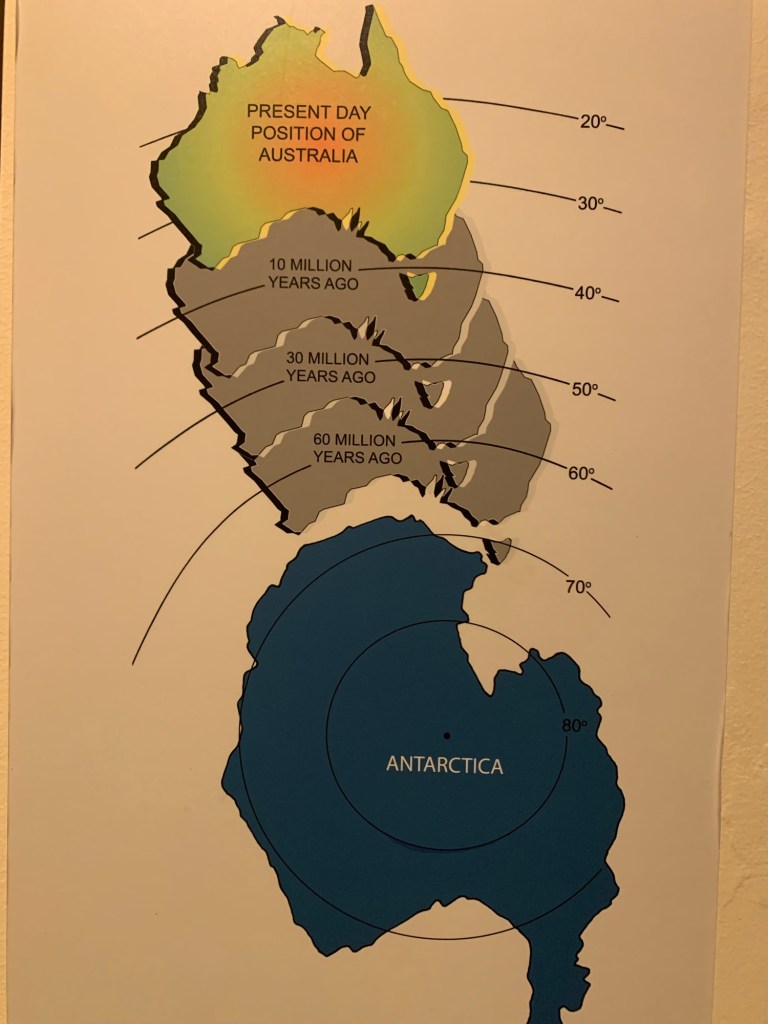
Antarctica

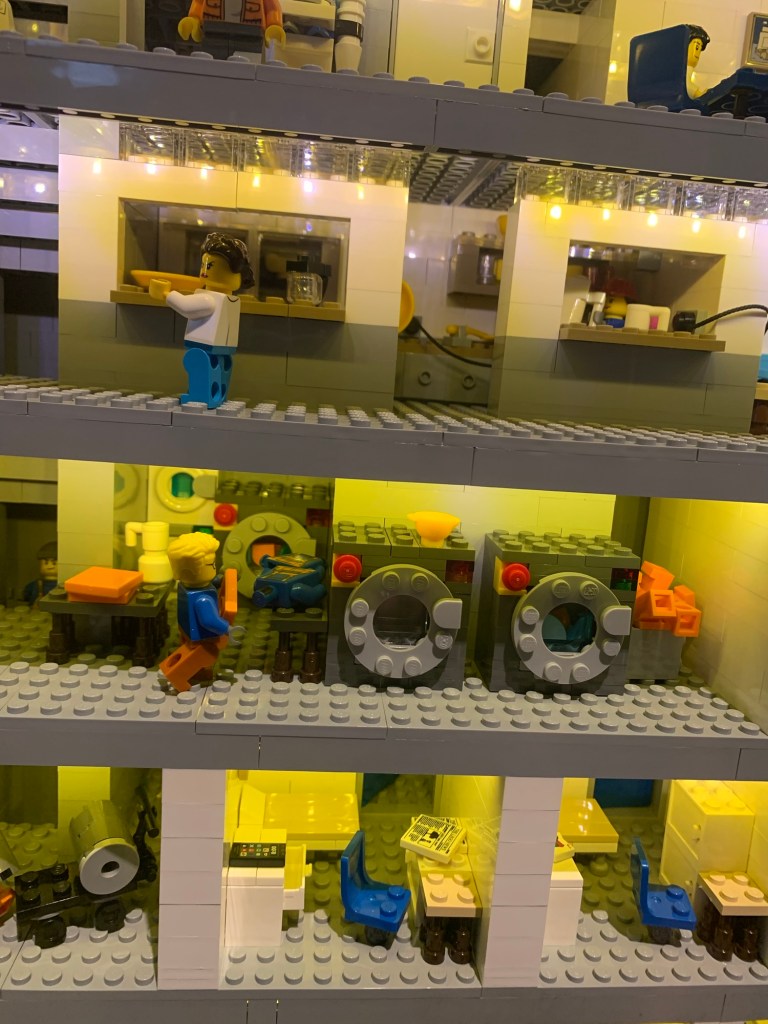
Hobart is as close as I’m ever going to get to Antarctica. The Mawson Expedition left from Hobart and explored Antarctica from 1911-1914, asserting Australia’s claim to the continent. Today the Australian icebreaker RSV Nuyina is the main supply ship to the Aussie scientists living in outposts there. Too bad the Nuyina doesn’t fit in Hobart’s harbor. It’s built like a fortified floating city. There’s a Lego model of the Nuyina in cutaway in the Museum of Tasmania:

RSV Nuyina Model in Cutaway

Huskies helped colonize Antarctica by pulling sledges. They lived side-by-side with their people until the 1990’s, when animals were outlawed on the fragile continent by international treaty.  Their traces looked a lot like Starlight’s harness. 

In the Royal Botanical Garden there was a unique exhibit on Antarctica plants displayed in a refrigerated room. I liked the dioramas of Antarctic plant life. 

Hobart

Famous One Line Philosophy

Australian Border Control eventually scanned and searched us at Hobart. Beware the biohazard offense! What if Grandma tucked a breakfast roll “for later” into her day bag? That would result in a $400 on the spot fine and maybe her AUS Visa would be revoked. No worries, Mate. Grandma’s bag was searched and passed inspection.

Hobart could only get better. I ruled out visiting any of the convict sites. I travel for beauty and intrigue, not to pay $30 to watch a video and hear a guide tell me about the petty crimes convicts were sentenced for and the subsequent hardships they faced. 

An aside about Australia’s convict past: between 1788 and 1868 over 162,000 convicts were transported to South Australia from the UK. Their sentences varied, but it was difficult to return to England after serving their sentences. The prisoners, mostly from the working class, had been sentenced for crimes as minor as petty larceny, being too drunk in public, talking smack about the Crown, or getting pregnant out of wedlock. The British Empire needed a biddable underclass to colonize Australia and convicts supplied them with cheap labor. Breaking up families was a means to social control, just as with enslaved people in the US. Convict labor developed the agriculture and built the infrastructure for South Australian cities. In comparison, New Zealand was always intended to be a colony of free settlers. Having a convict ancestor is an Aussie point of pride; see how tough my people are. In Hobart there is a searchable database to help the user identify possible convict antecedents. 

Mussels and Oysters in the Harbor

I looked at old buildings in the suburbs and city center. From the bus driver I learned two anecdotes to share. First, fifty years ago a ship crashed into the bridge over the River Derwent, causing four cars to fall into the water and sinking the vessel for all time. The bridge was rebuilt around the sunken ship because it could not be hauled up.

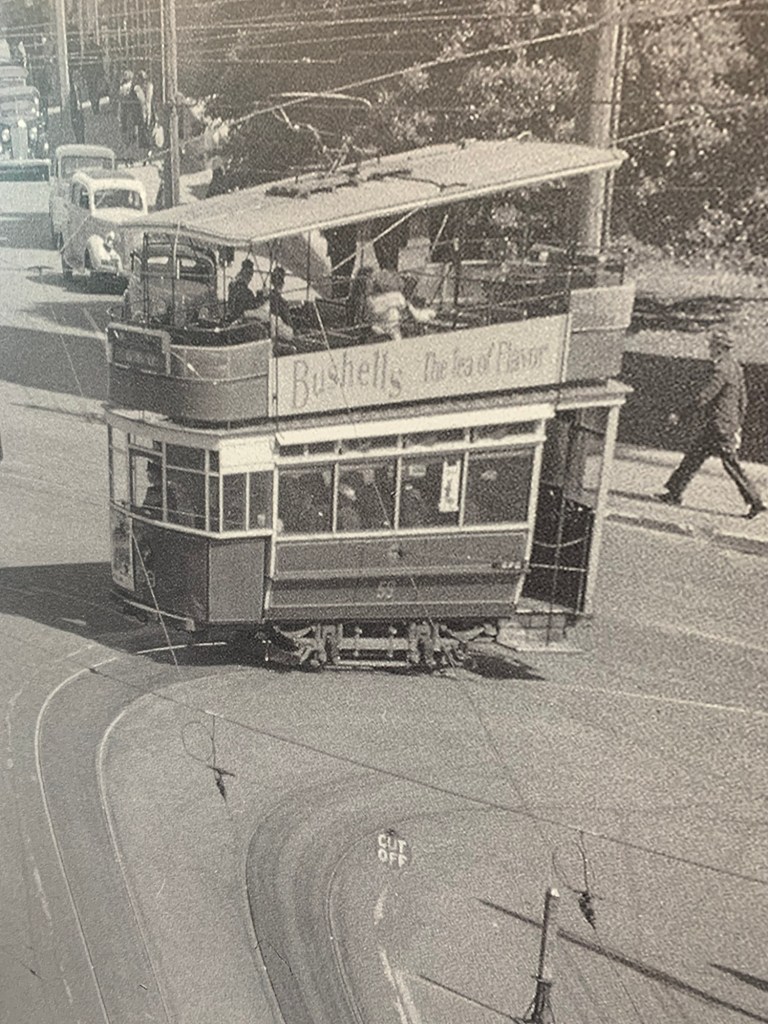
Ill-Fated Tram

The second story involves early public transit in Hobart. The Hobart tram was built to look like the beloved double decker trams of London. But unfortunately the trams kept tipping over. (JG likes this story.) So the city only has buses now. There were schoolchildren in uniform taking public buses, so their summer holiday is over.  

Cascade Brewery

I overheard three arguments in about an hour. First, a security guard in a High-Vis vest shouted at three teenage boys in school uniforms to return the wallet. They replied with a shower of profanity and ran away. Second, a chemist (pharmacist or pharmacy tech) was trying to soothe a young man having a breakdown in the shop. The raggedly dressed, unwashed man, who was losing his unbelted trousers to gravity, needed medication, had a script, and had spilled his cash out all over the floor. Swearing ensued. The chemist was kindly helping him even though the man was behaving erratically. Third, a woman and a man were arguing. She began walking away from him and he unleashed a loud stream of verbal abuse. She got away from him. I thought, in all our staid NZ cities combined I had not heard so much conflict in public. 

So Australia does seem different. After I had seen so much rowdiness in public, I better understood the Border Control’s severity.  

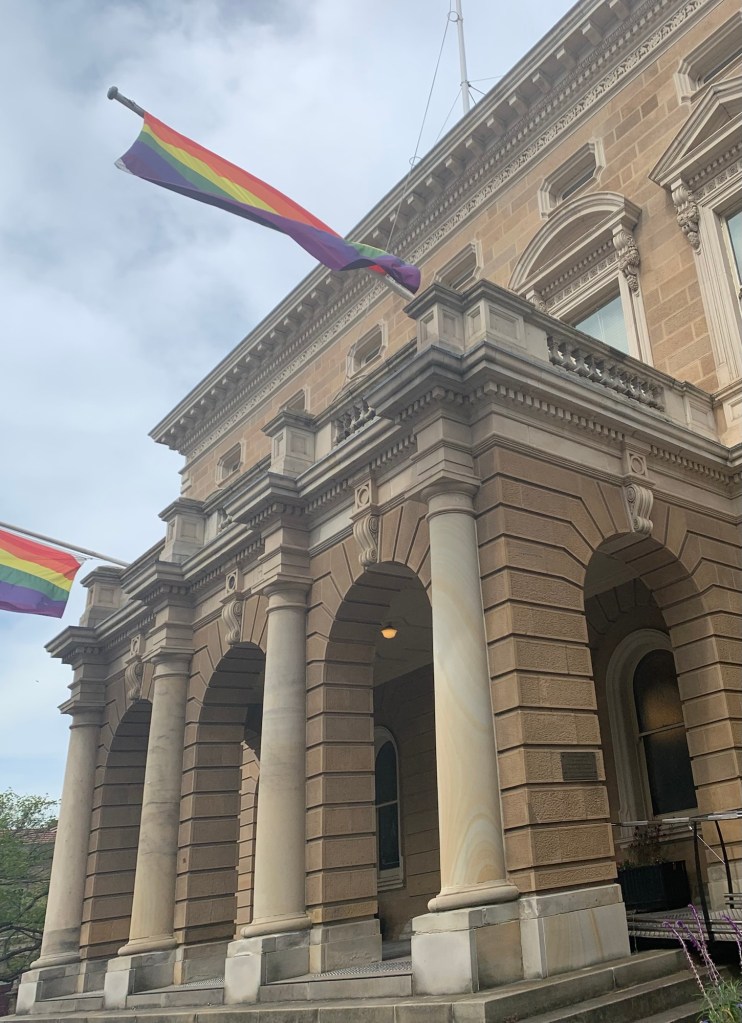
Tasmanian Government Hall
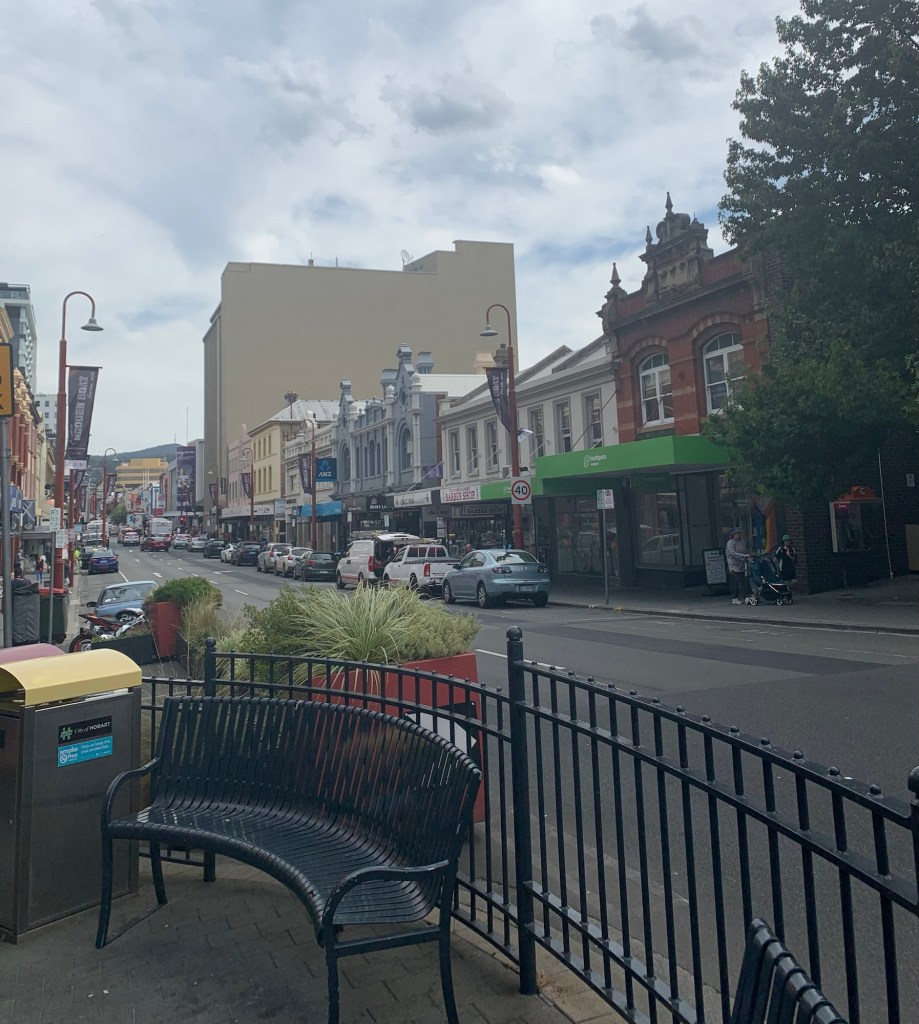
1880’s Buildings
Hobart City Hall
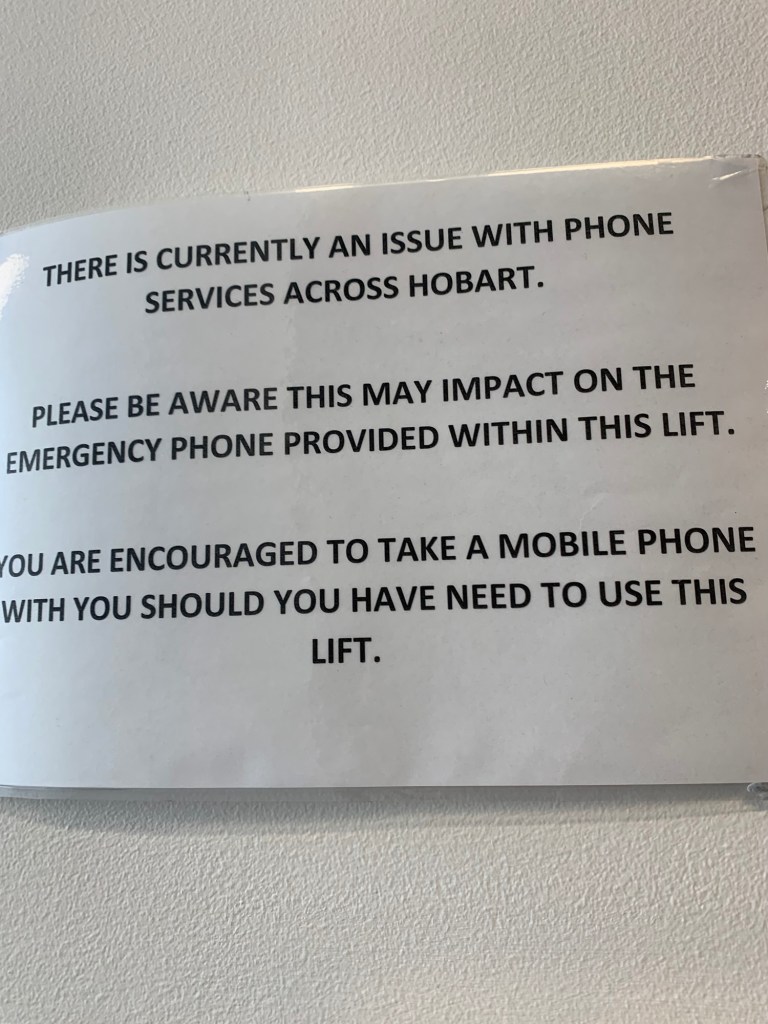
Sign in the Elevator
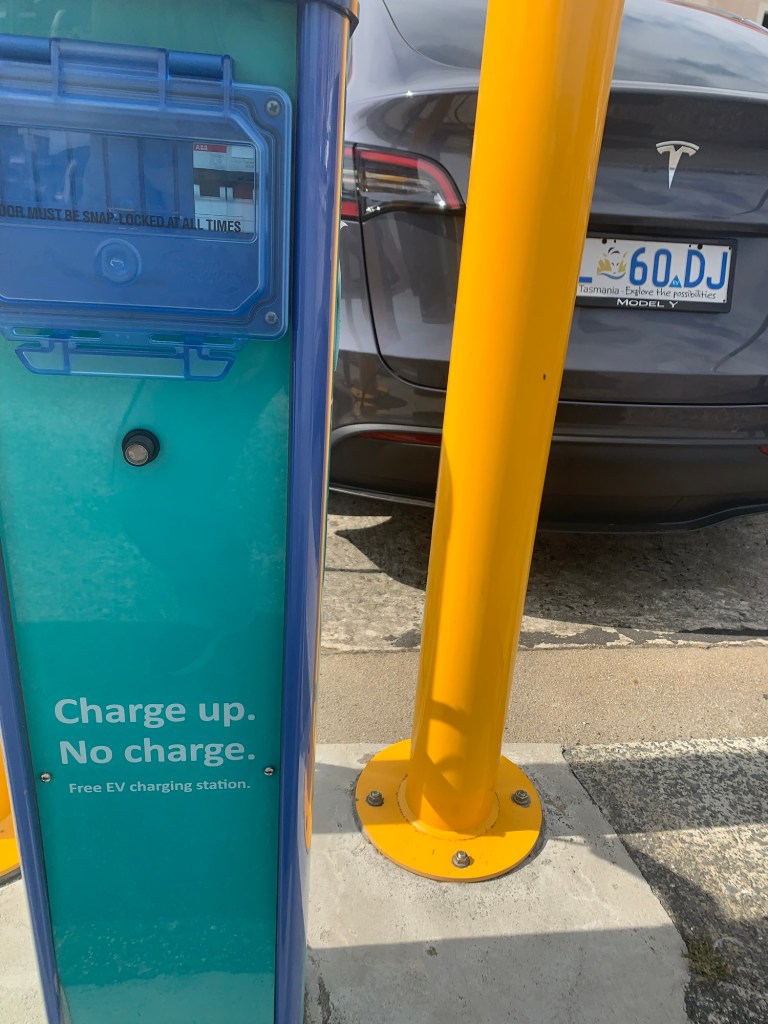
Free EV Charging

Fjordland NP

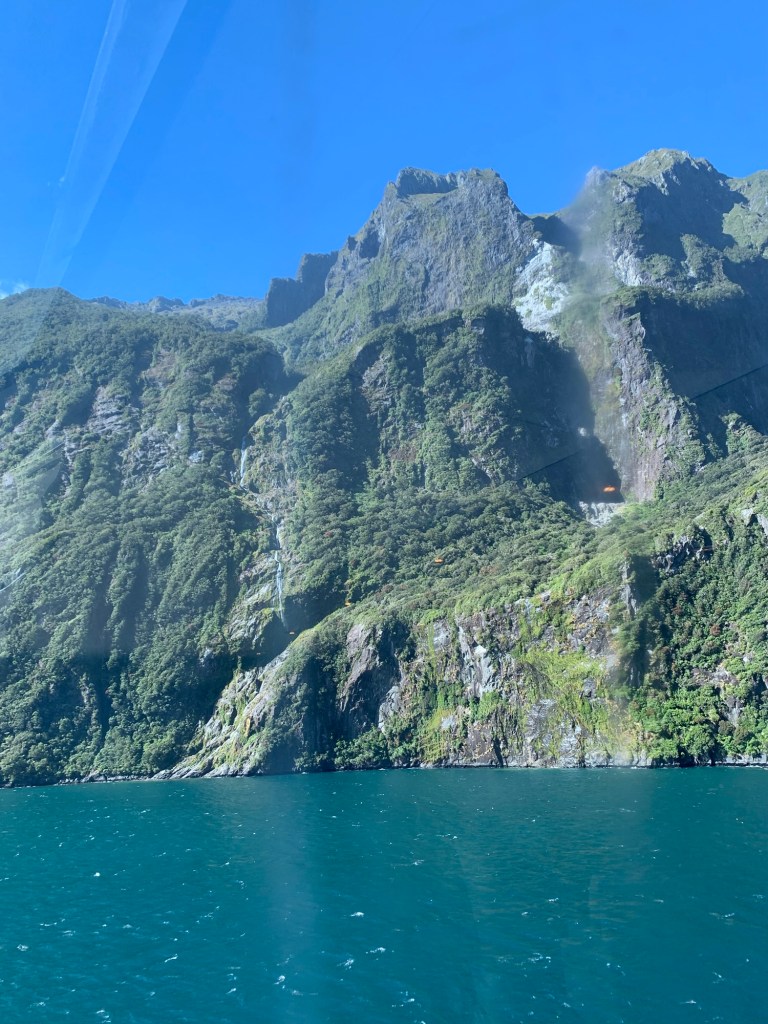
Stirling Falls

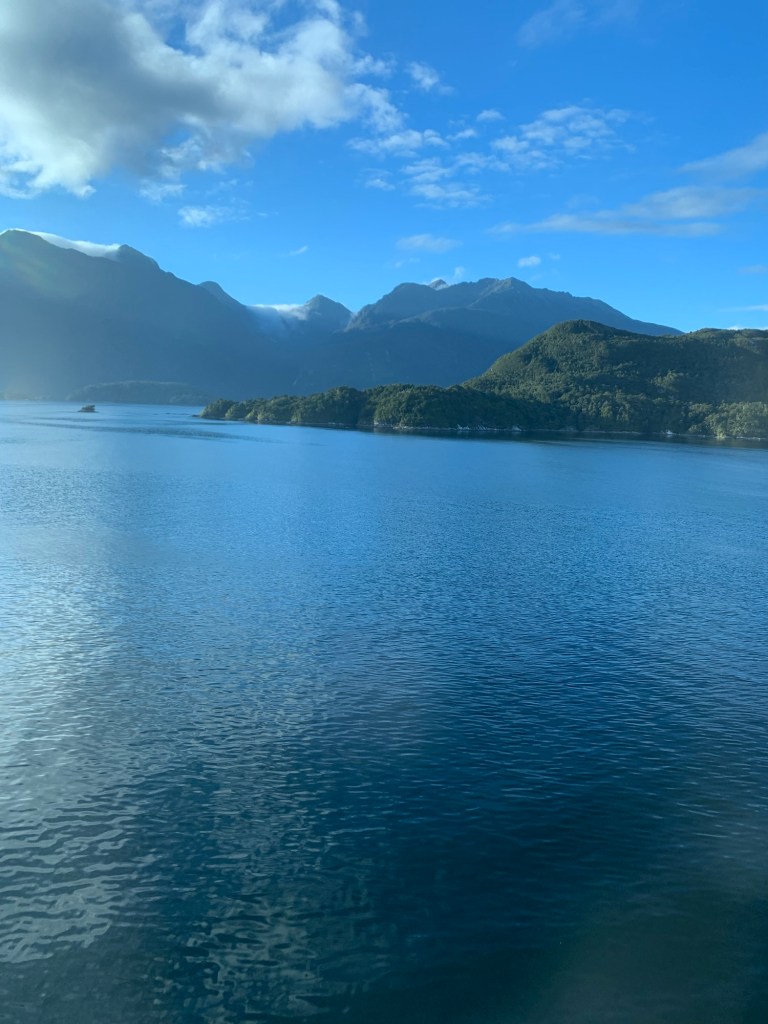
We saw gorgeous fjords. It was scenic and we were comfortable, putting the lie to JG’s bromide that views are better when you hike to them. In Fjordland, our ship joined a few pleasure boats, three double kayaks, and the Norwegian Sun. Milford Sound receives massive rainfall of 236 — 315 inches a year, so we were lucky to see it in sunshine. Milford Sound hosts over 1 million visitors annually, many arriving as we had, lounging and ogling.

I look out at miles of steep forest with no poison oak and think… darn possums! Also incredible beauty and grandeur.

The inlets we saw are named Doubtful Sound, Dusky Sound, and Milford Sound, which Kiwis will tell you is a fjord because it ends in land. A fjord is a glaciated arm of the sea. A sound is a body of water between two land masses. Shout out to the geography lovers!

New Zealand Trees

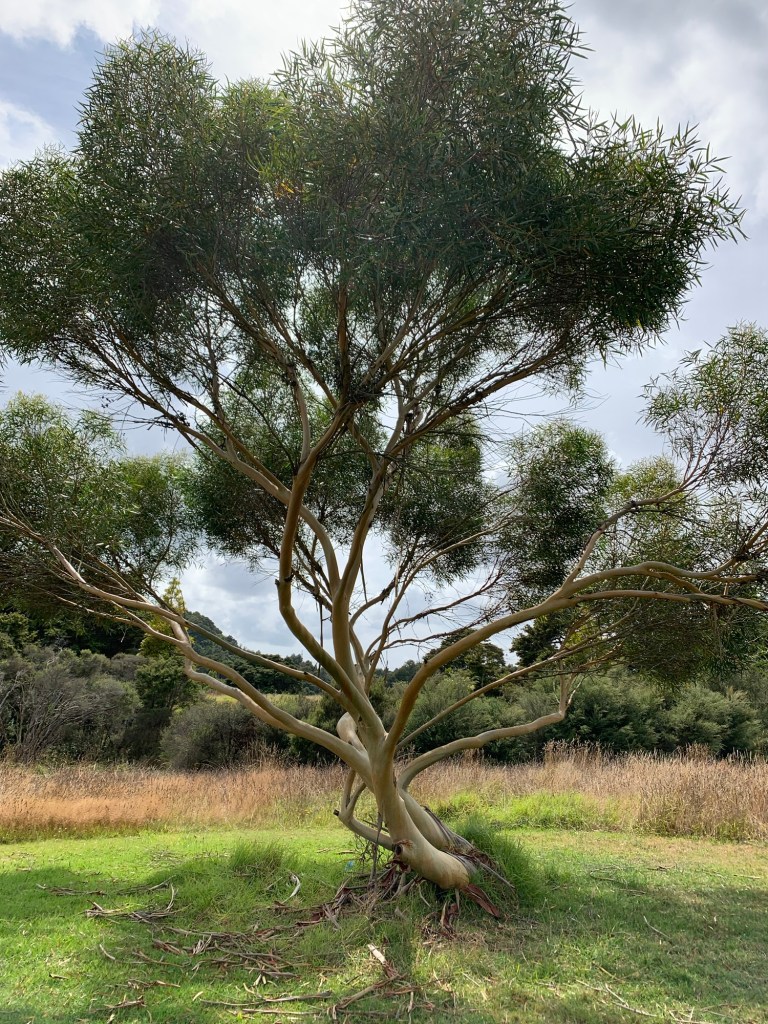
Eucalyptus

Over 80% of NZ forests are composed of natives.  The DOC wants to ensure the sustainability of the ecosystem by removing invaders and replanting with natives. That they are supported by the population pleases me. The US equivalents are suspected and distrusted. The Bureau of Land Management favors big ranchers over small ones. The Department of Agriculture is on the take. There is never enough money for parks. Outdoor education is a pipe dream. 

Aside: my and probably your Aunt Frances used to regale me and probably you with travel tales, including descriptions of the various toilets she’d visited. Let’s all raise a seat in memory of Aunt Frances, who pioneered family travel narratives!

Banyan

I am amazed at how clean the NZ public toilets are, when a trip to the trailhead Plumpsklo (vault toiletin the US takes more grit than climbing the mountain. Here I’m outing my spouse, who prefers to answer Nature’s call in Nature, while I brace myself for the vault toilet. 

Auracaria

I wanted to visit New Zealand, not for the clean public facilities, but for the irresistible botany. There is a difference between Nature and Horticulture and NZ blurs the distinction by naturalizing their gardens and weeding and hunting in their preserves. I have seen NZ native species that I have planted myself: Leptospermum, Pittosporum, Podocarpus, Sophora, Veronica (Hebe). I greet these trees and shrubs like cousins, happy to see them in their habitat. 

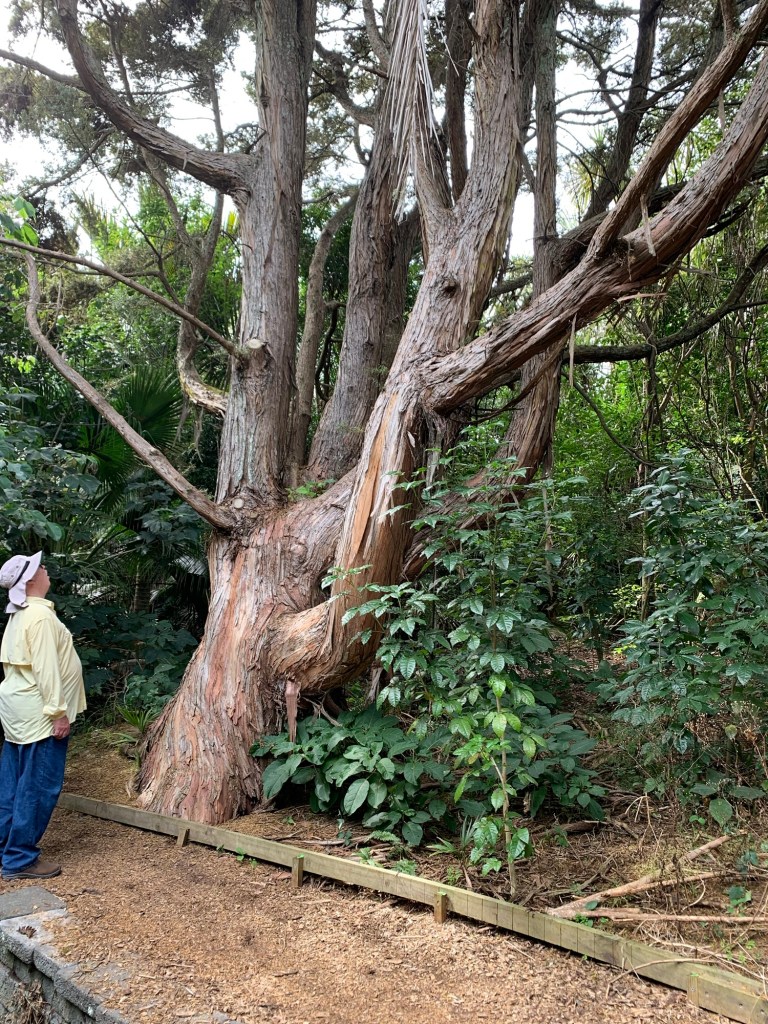
And I have met some amazing old trees: Banyan, Moreland Fig, Kauri.

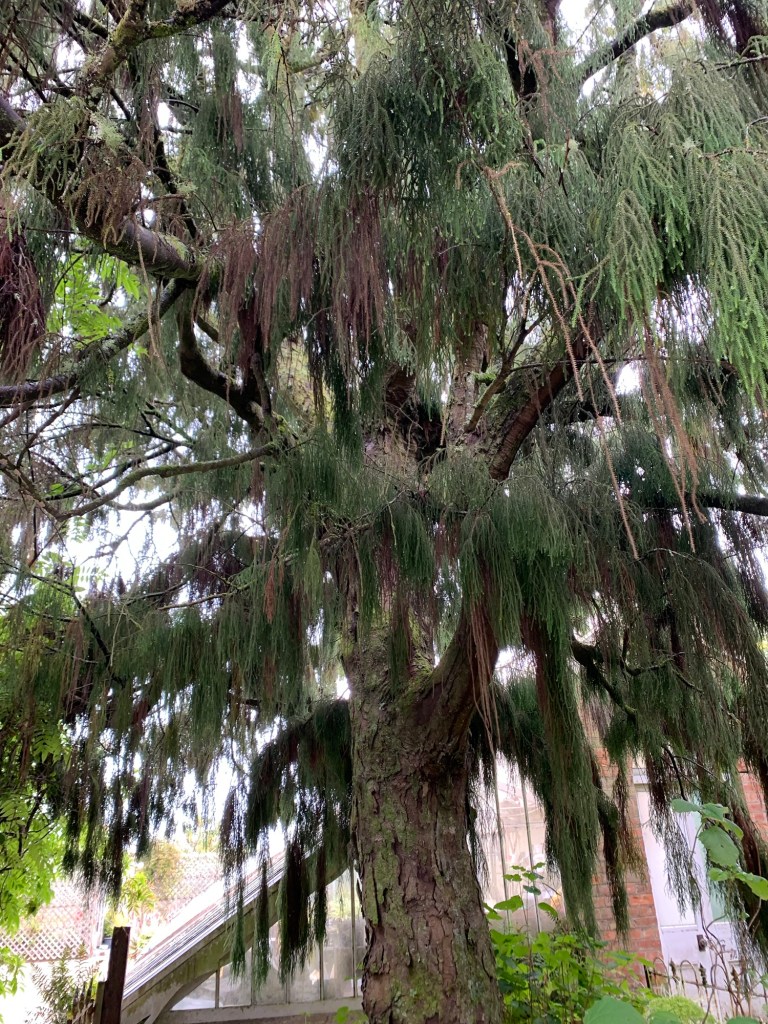
Rimu