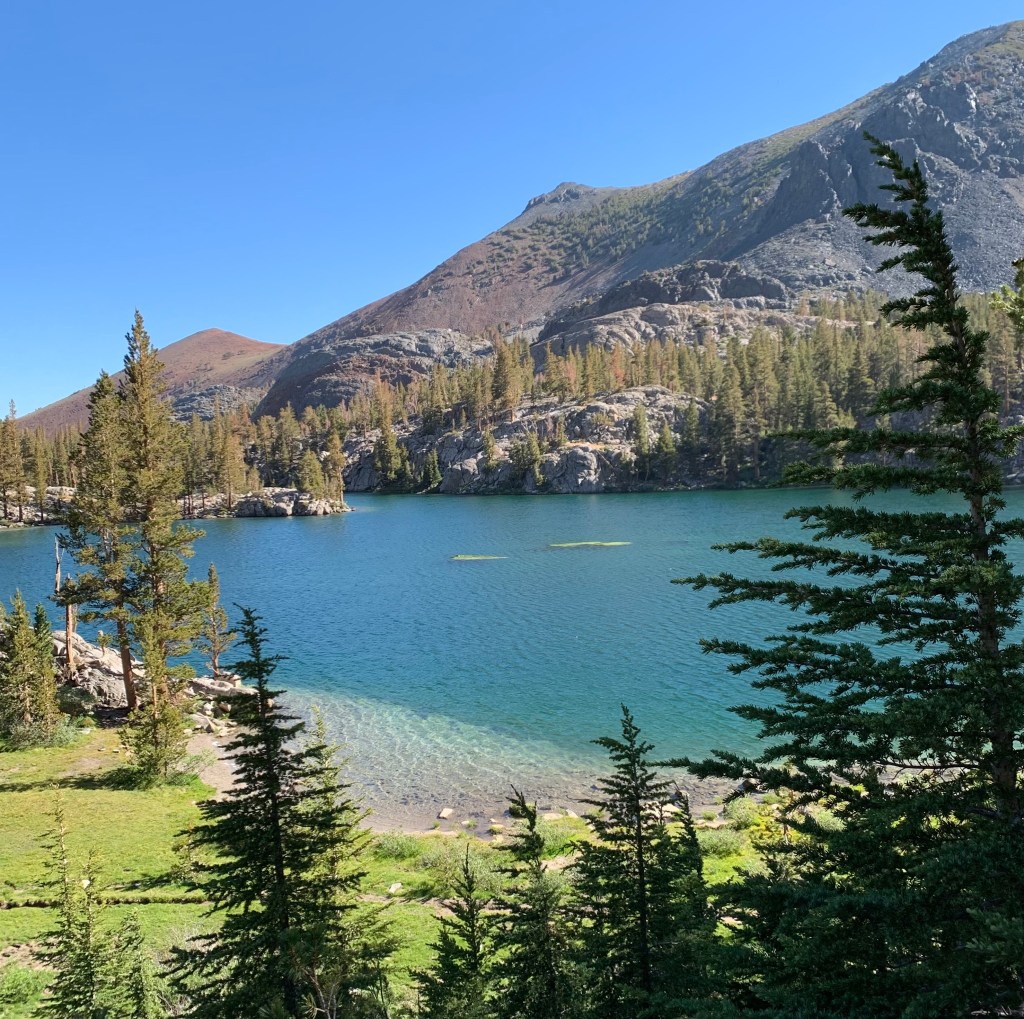
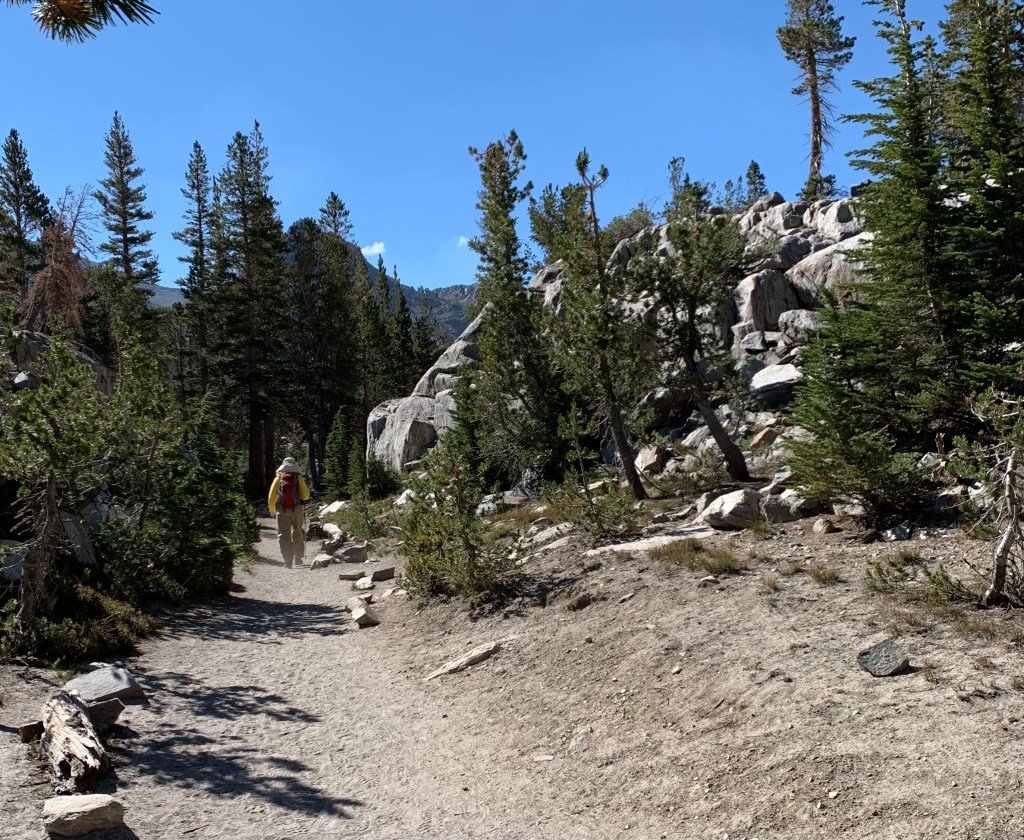
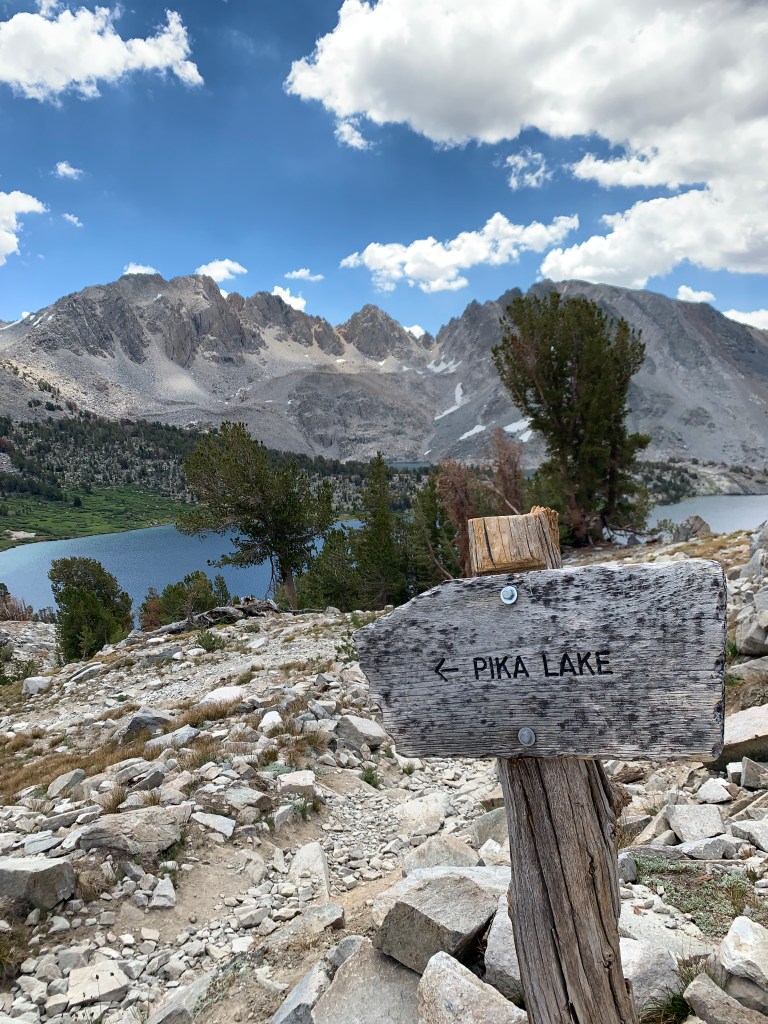
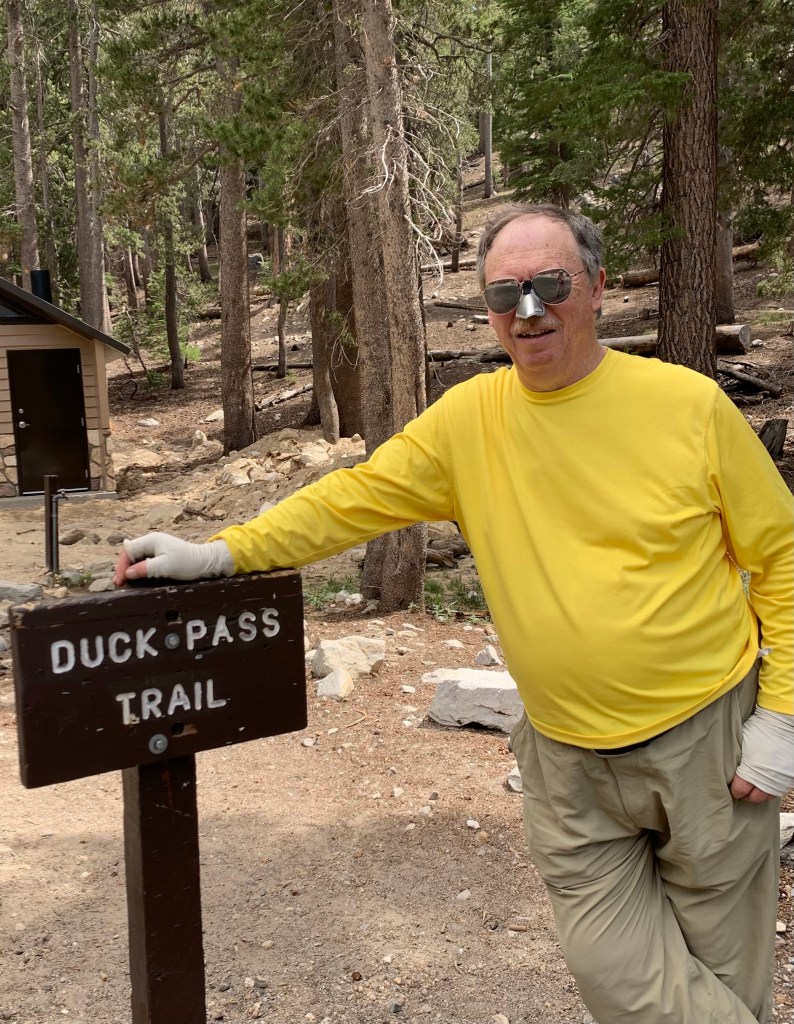
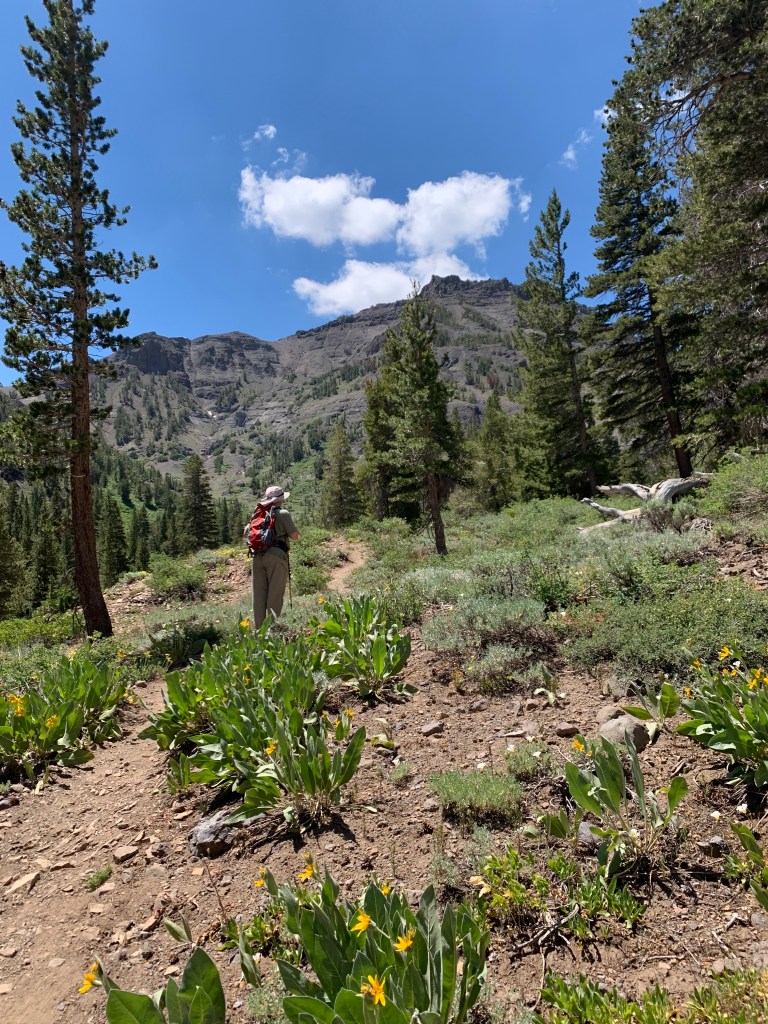
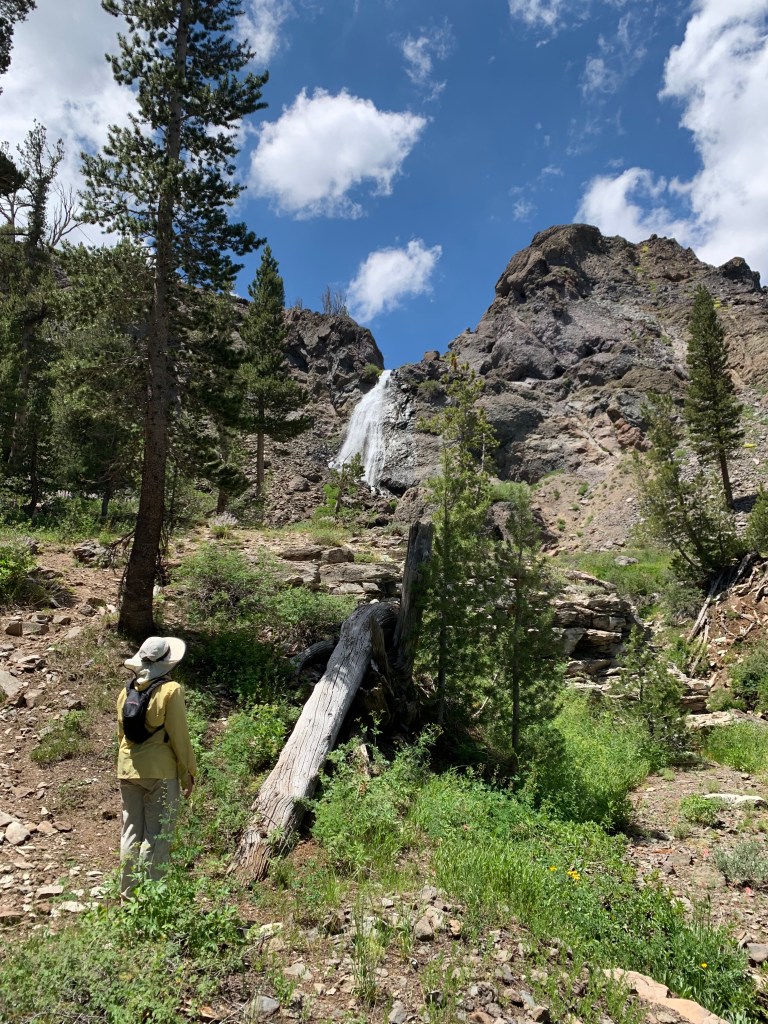
We rose early the next day to tackle the hike to Duck Lake, on the far side of Duck Pass, elevation 10,800. It’s not so breathtaking when the trailhead from the end of Lake Mary Road starts at 9,120. After a couple of miles of shaded switchbacks, we hiked alongside a series of lovely alpine lakes in a glacial basin. After Barney Lake, the trail climbs up and over the pass, offering stunning views behind us. We met mostly backpackers headed for the high country, but also a group of outdoor educators fooling around on a free day, and a dedicated trio of trail runners from the SF Peninsula training to summit Mount Whitney two days hence. One of the three was headed to Switzerland after Whitney to peak-bag Jungfrau, Eiger, or Moench from base camp in Zermatt. Now that earns him bragging rights when he gets back to sea level in San Carlos. We admired actual children backpacking down from Pika Lake: four blond brothers toting fishing poles and hiking way ahead of their father who was carrying the gear of the smallest boy, who looked about eight. JG received many admiring compliments on his sun-protective nose piece attached to his sunglasses. I accquired the schnozguard for him after his second Mohs procedure, code-named “Dig We Must.” He looks like he’s part Tin Man, because the schnozguard is silver. Google “Nozkon” if you want one, too.
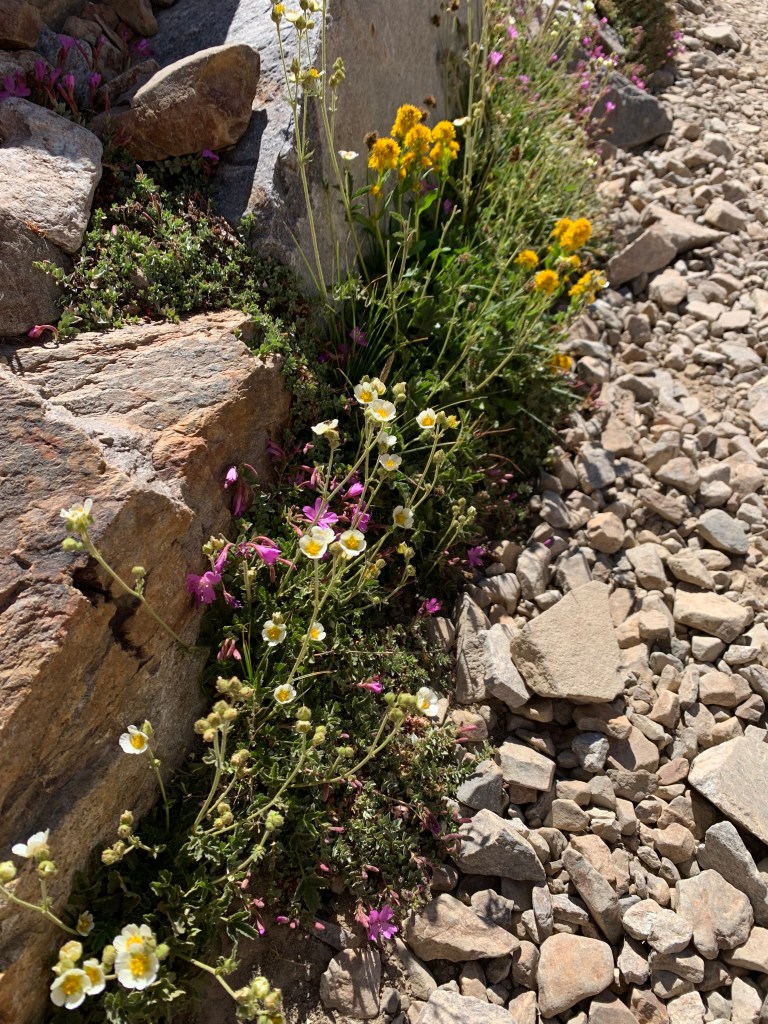
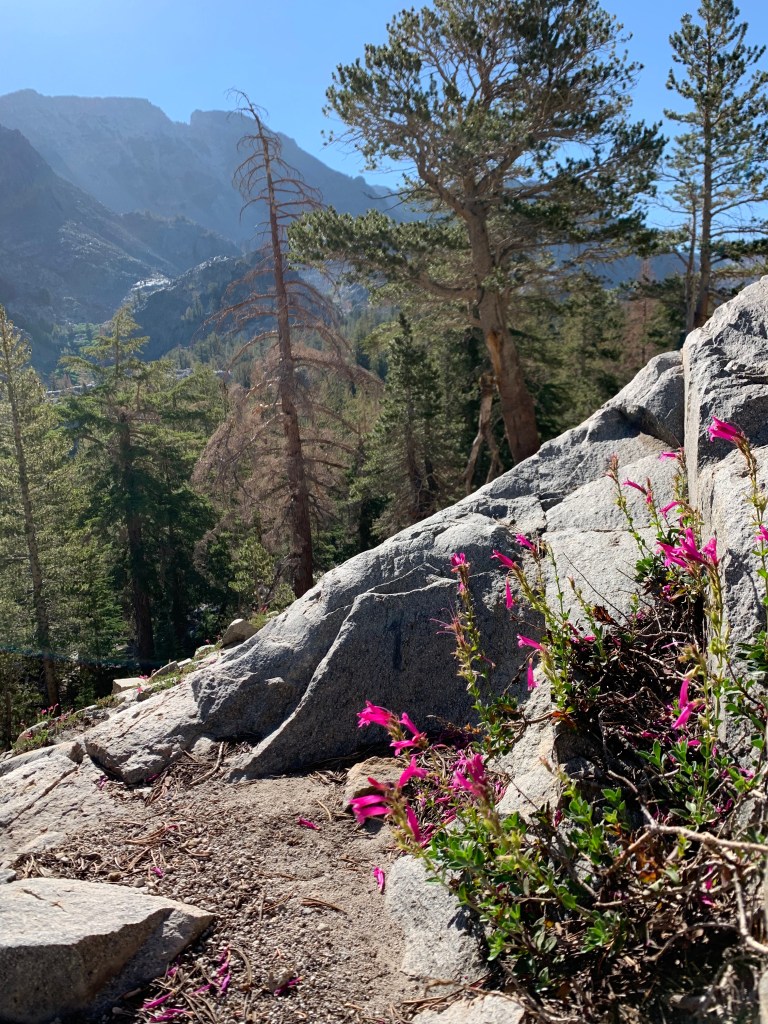
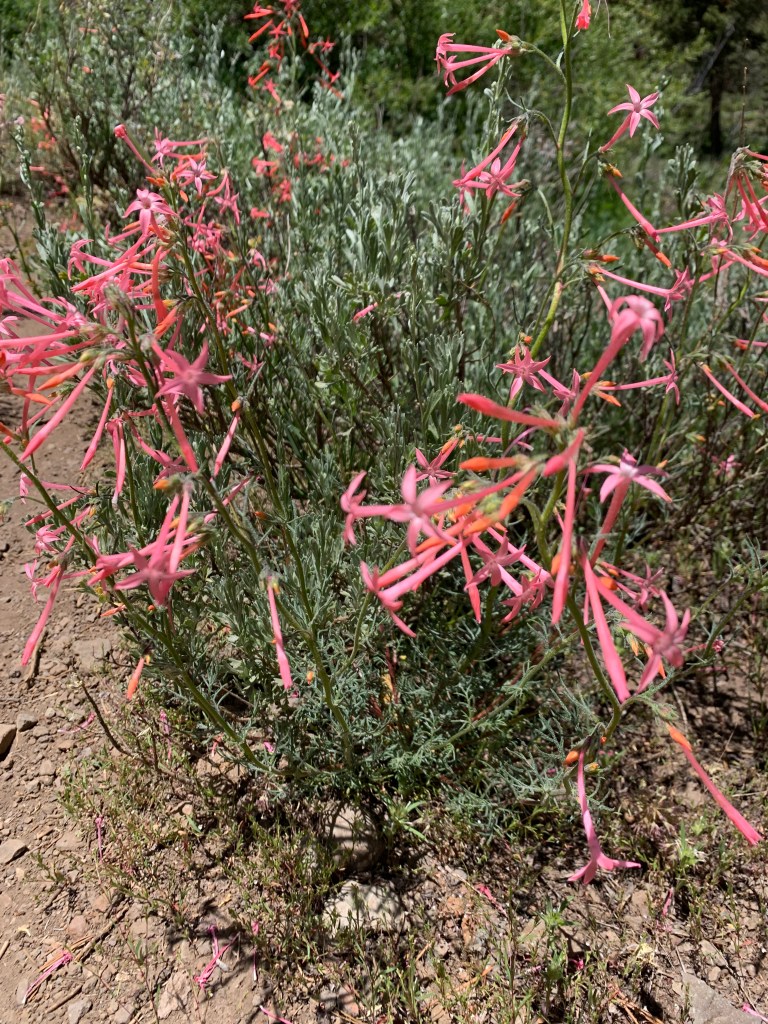
Barney LakeDuck PassAquilegia in a Seep GardenGlobe MallowDuck LakePenstemonPika LakePost-Hike Victory Dance Limber Pine at Duck Lake
I could rhapsodize about the Eastern Sierra scenery: water features, rock formations, old trees, wildflowers, mountains, clouds, trail. Instead I’ll invoke the Psalm: the mountains are my Church. I receive spiritual refreshment from wild spaces. I think I hear God better in the mountain wind. “I lift up mine eyes to the mountains whence comes my help,” wrote the Psalmist. If I lift up mine eyes while hiking, mine feet may stumble, but I do try to stop and smell the Horse Mint. Alpine adventures rock.
From the rah-rah Go Bears! of the Bear’s Lair and the crowds of Pinecrest Lake, Highway 108 over Sonora Pass presented quite a contrast. Once we past Strawberry, we ran out of towns and had the road to ourselves. My mood was ebullient as we climbed through a burn scar toward the next adventure. The engineer in the family was in charge of charging. He had located the EV chargers in Camp Oski and prepared Joulie for the climb over the pass and then the descent to at least Bridgeport, CA. Finding EV chargers tucked in along the our mountain routes is a surprising thrill. The Bridgeport EV charger was in the back of an historic, charming, idiosyncratic resort called Virginia Creek Settlement on Highway 395. There was a mannequin in a homemade jail, exuding more Don’t Mess With Me vibes than a bulldog. But before we rolled around to the Tesla “T” on the Destination Charger, we hiked to Sardine Falls.
If there had been a trail to Sardine Falls, its trailhead would be unmarked. We looked for a pull-out at the Google mileage. As we tromped through the grassy pasture, JG pronounced a linear clearing as “trailish” and when it petered out, found another line “that could be a trail.” The first water feature provided us well-placed rocks to hop across. The second stream crossing demanded a ford. I tend to search up and downstream looking for a narrower gap and slower water, while JG is willing to crash through the creek and get wet. If there were an easier ford, we didn’t find it. Stream crossings are such a joyous, fun, and risky part of Sierra hiking that we jump and flail and never forget the hiking poles. After a short walk, we saw the falls pouring out of a dark lava crevice. Wildlife sighting: golden-mantled ground squirrels, jays, and, whenever the wind ceased, pesky little black flies. We returned to Joulie and ate our sandwiches in air-conditioned comfort. Sure, we love the outdoors, but let’s not overdo it.
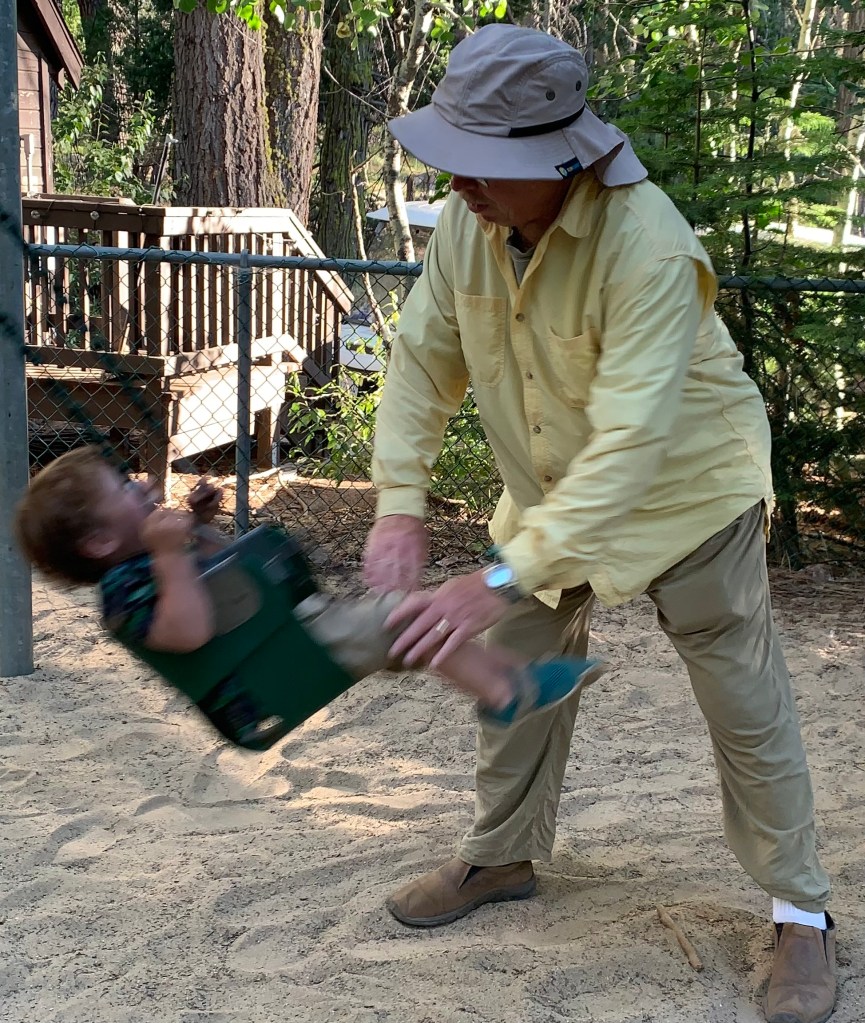
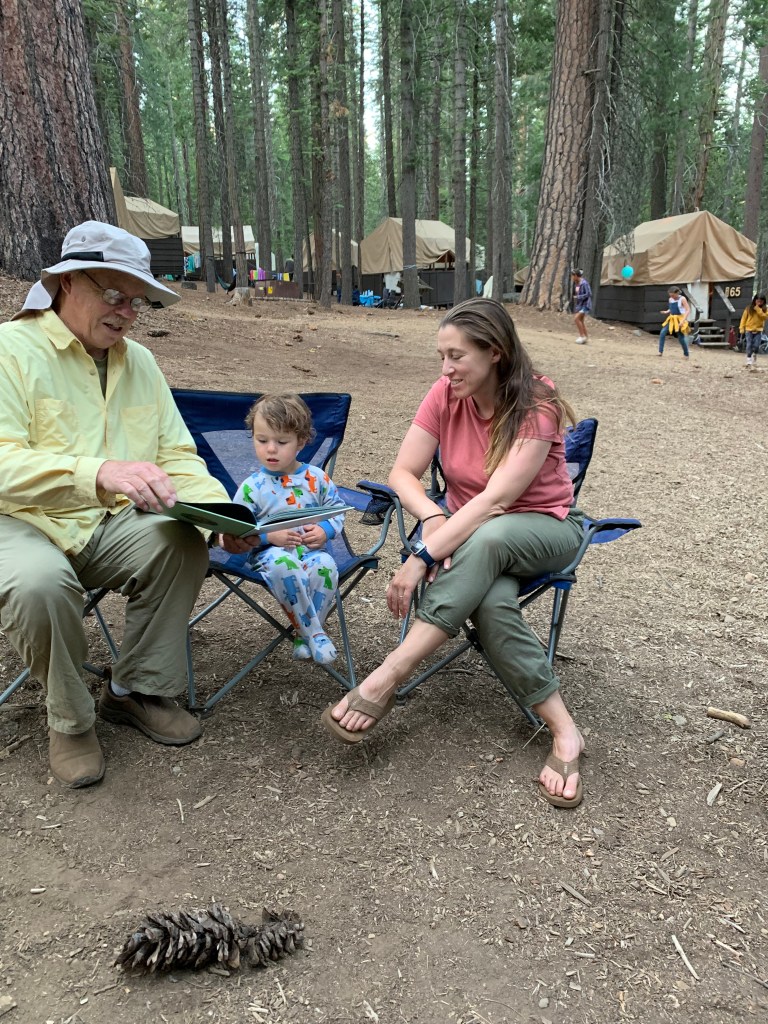
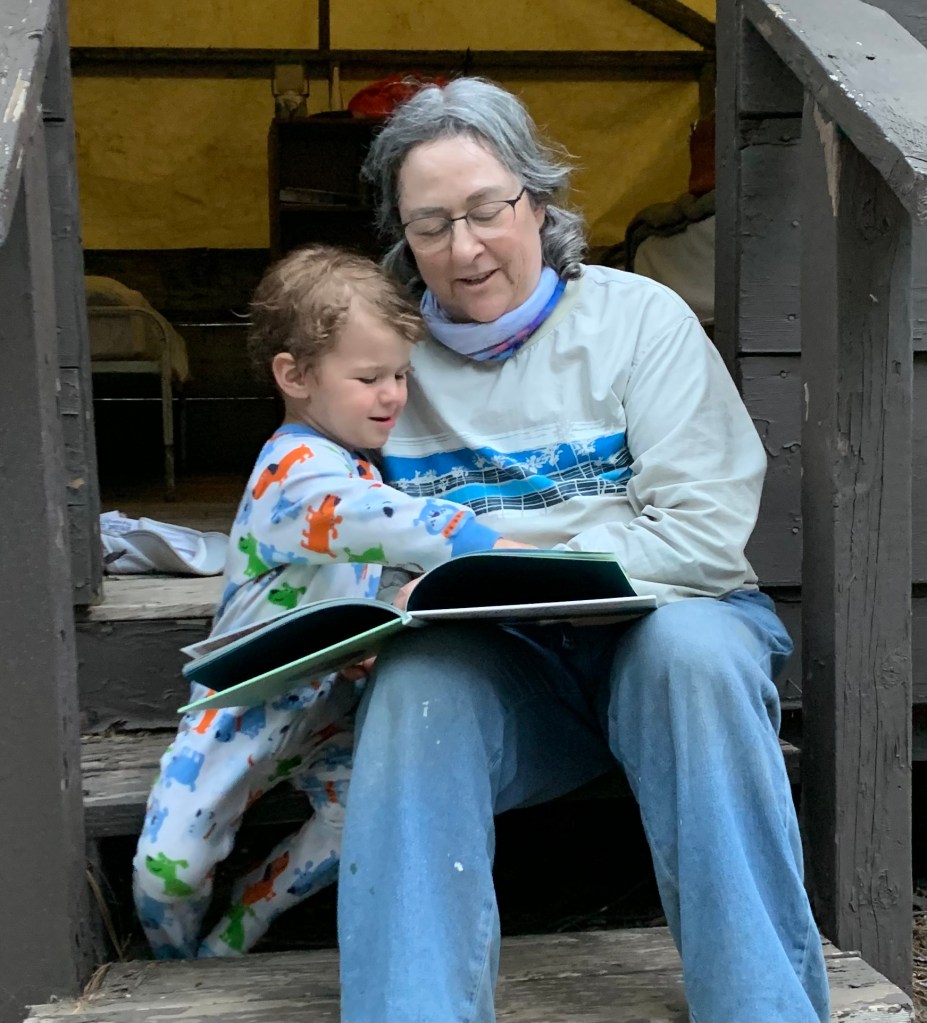
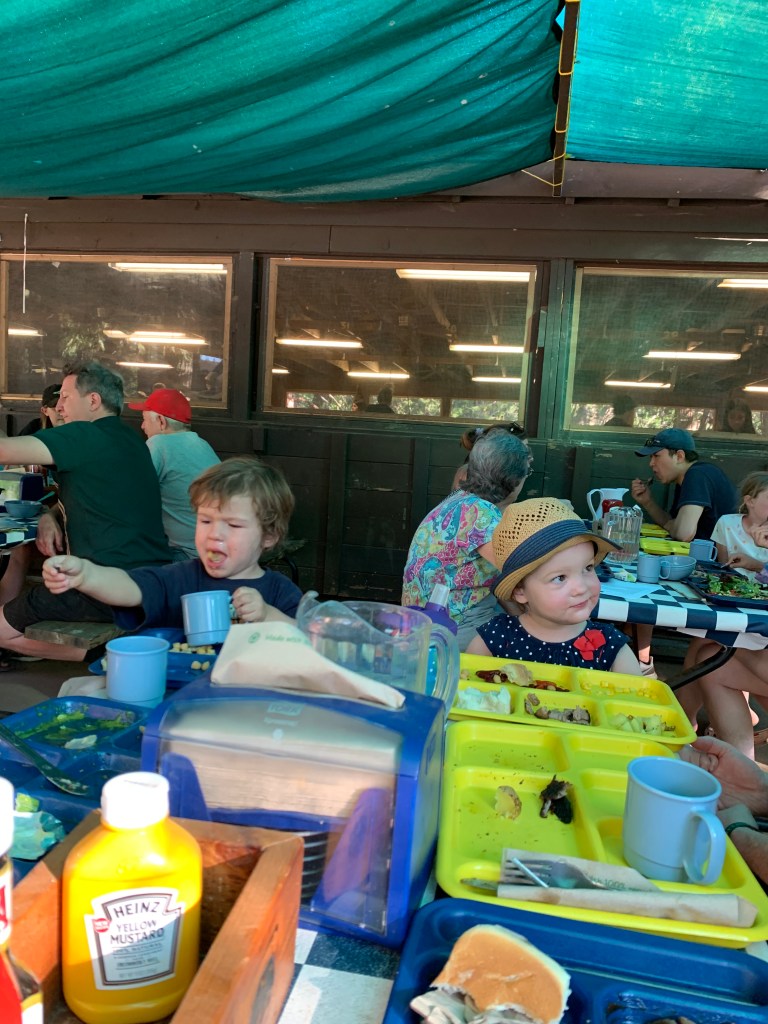
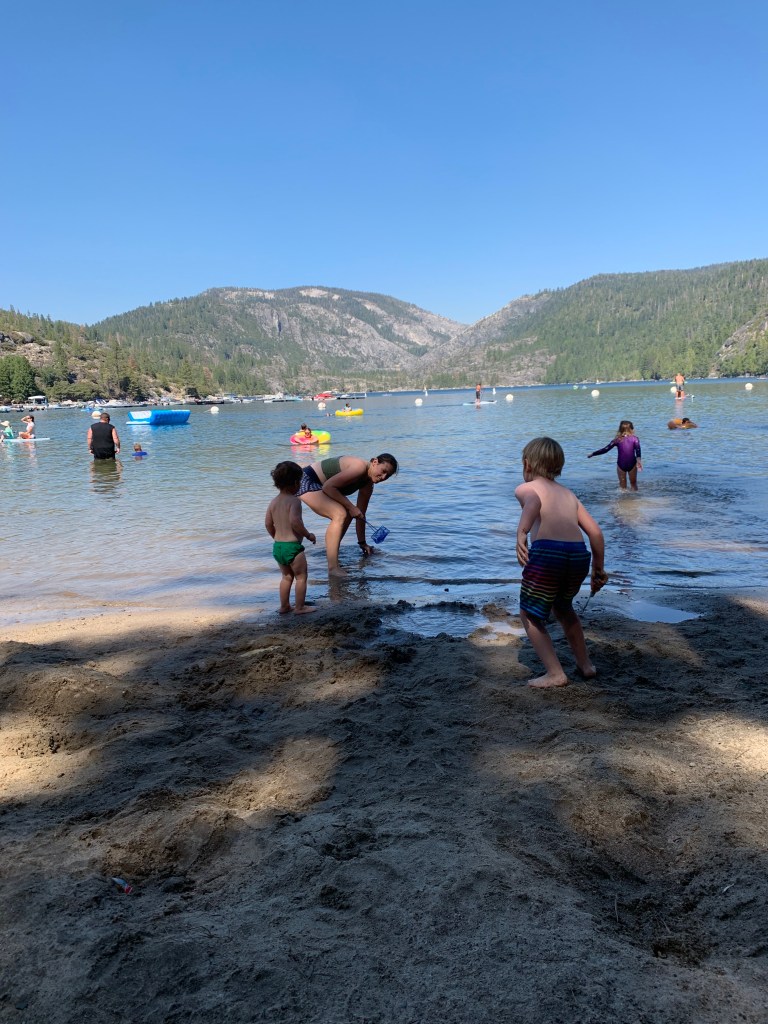
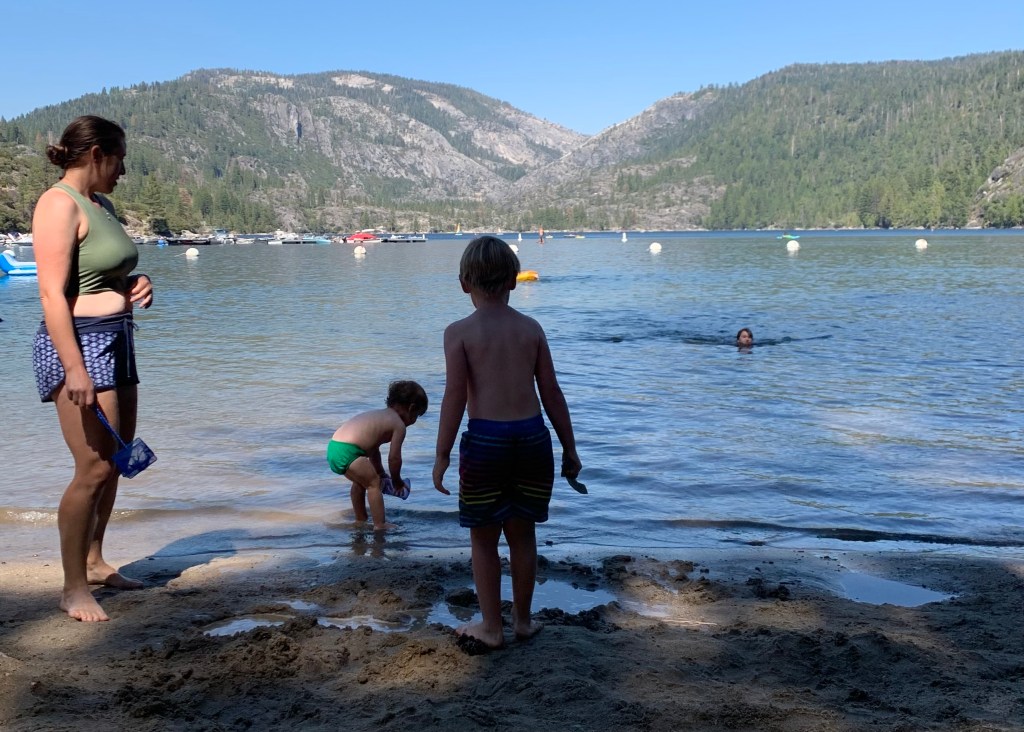
Maybe it was our niece B’s idea to relive carefree family camping times with the next generation. I was there with her, her brother, and her Grandpa in 1988. Maybe JG got a burr in his bonnet. Maybe enough time had passed since our last visit in 2008 for me to want to visit the Bear’s Lair again. July 2022 found B’s family, S’s family, M, JG and me in Pinecrest, CA, in California Alumni Association’s family camp. From the hot blur of general schmutz with a side of dreck, only a few memories stand out. So many fresh-faced young camp counselors made eye contact and smiled at me that I remarked in wonder about it to our nephew. “Probably because they’re paid to,” was his blunt rejoinder. The six year old seemed to be having a blast, roaming around the camp, joining pick up games of Gaga Ball or Red LIght Green Light. The two and a half year old played happily with other kids’ wheel toys in the dirt, or in the sand at Kub Korral. The two year old was more overwhelmed by the general commotion and quietly explored her world with a parent very close by. I have a happy memory of the 2 1/2 year old clambering around on boulders, self-narrating “Me c’imbing! Me c’imbing!” I enjoyed the time with family. I drove to Pinecrest Lake in the afternoons and that was very pleasant. It is possible that a golden squirrel left behind a golden pine cone for the six year old to find and gleefully show off. It is rumored that B. wove a lanyard. It is confirmed that M and S threw pots on the wheel. It is completely true that the six year tried many new activities and even more new types of dessert. It is an impressively manifest truth that the older children were able to polish off entire ice cream novelties without losing a single drop down their shirts. JG kept his clean sheet of “never having given Cal a nickel” since I bought the ice creams.
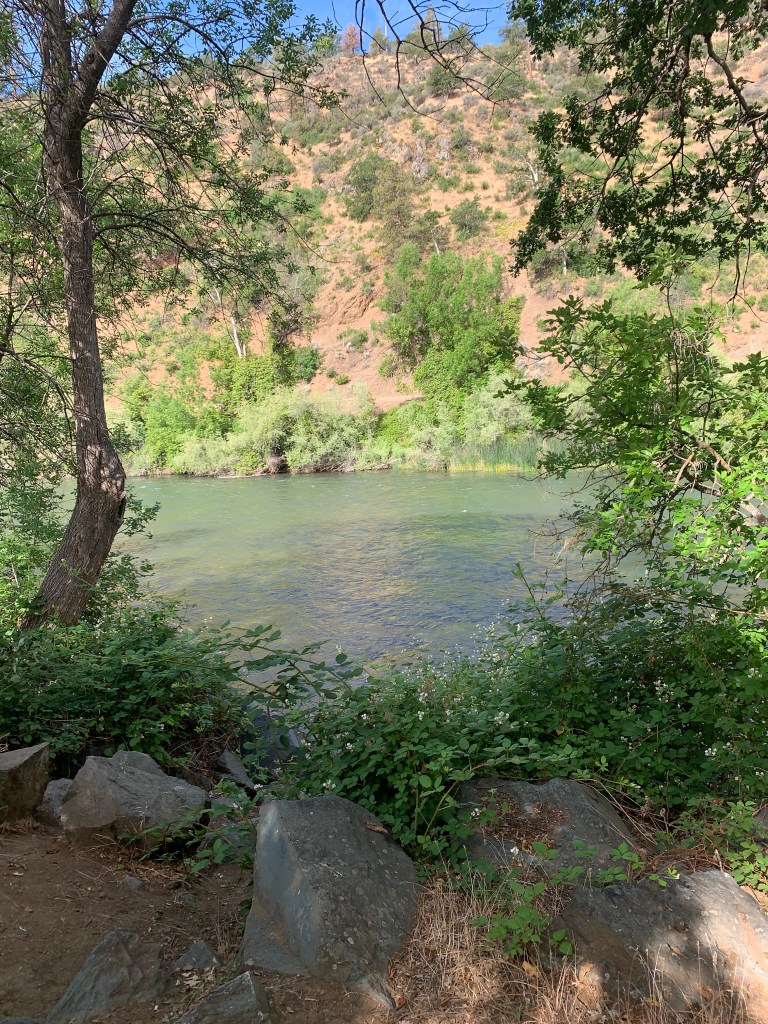
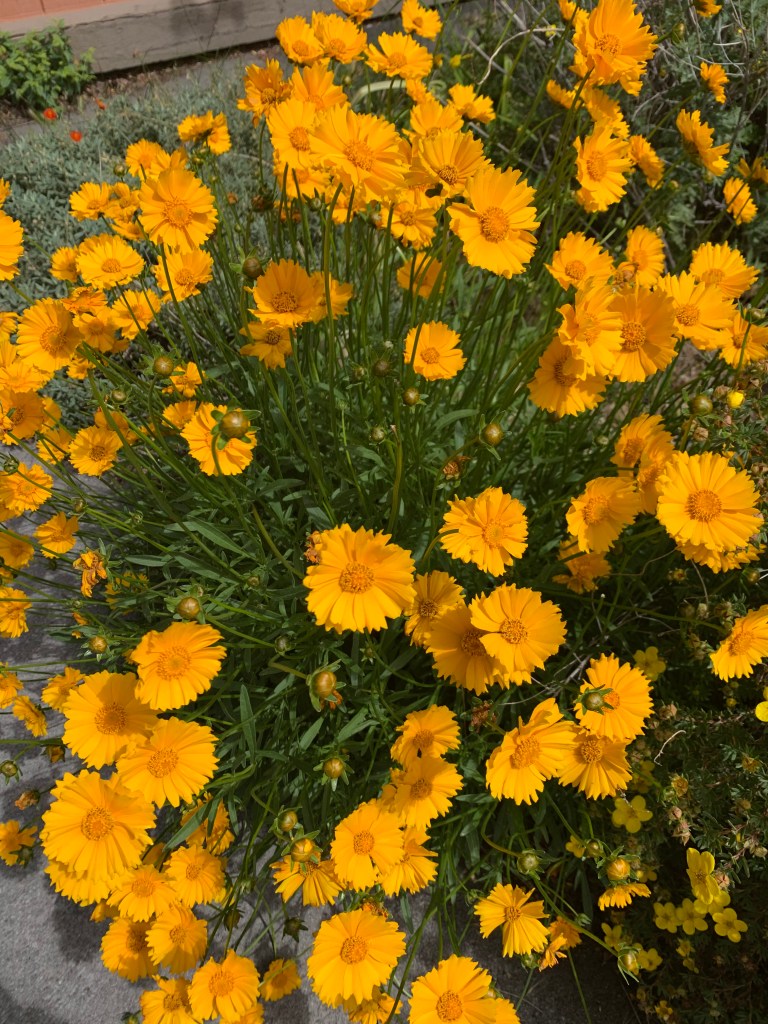
Klamath River by the border Good to be in CA AgainCoreopsis Mt ShastaPublic art in Mt Shasta Town
Having run out of both Wanderlust and hotel points, we are headed south for home. The Cascades are no longer as empty as in 2018, the pandemic having driven many rookies into the woods. This is also true of the Sierras. But while the mountains are calling and I wish they’d shut up, I still find my most thrilling times in steep wild places. Next month we’re going back to the Eastern Sierras and the White Mountains. Back to the Little Lakes Trail at Mosquito Flats! Back to the Schulman Grove of bristlecone pines! Maybe I’ll write more then. Love to all!
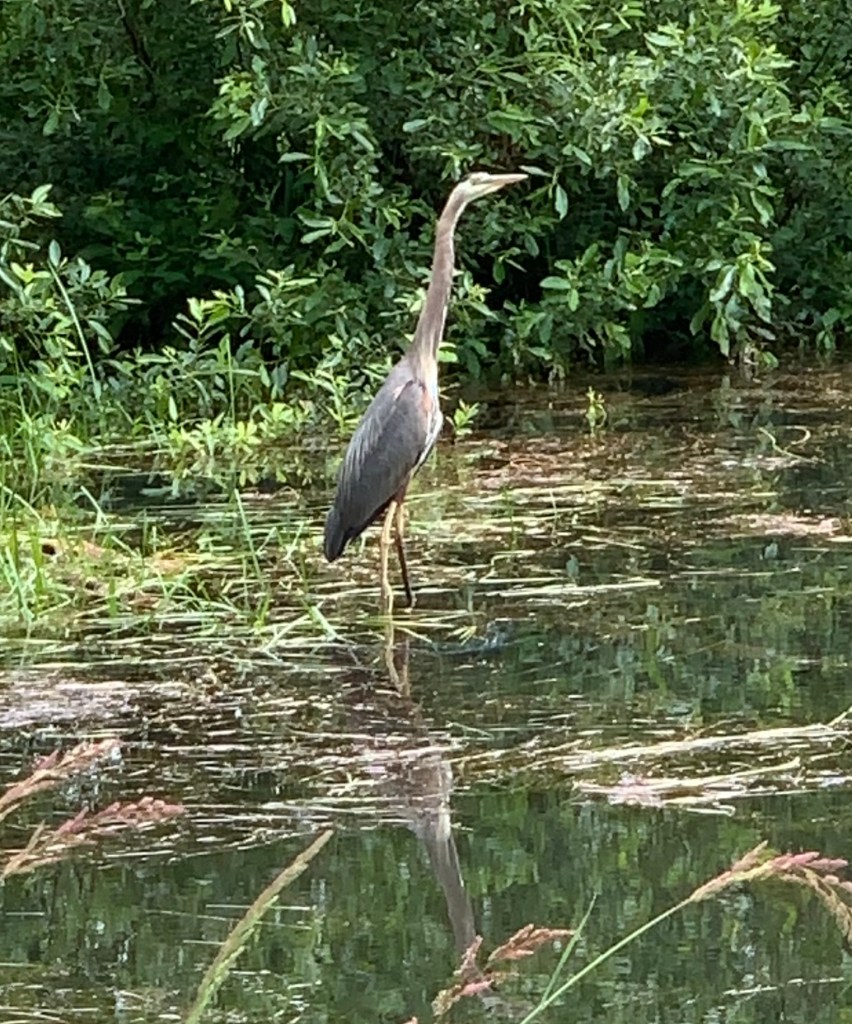
The towns fade into pasture or orchards or natural areas. Walmart has colonized the edge of towns and expanded into more rural areas. I am a Walmart shopper and I think Amazon has done more to murder Main Street than Walmart. Although there is a jarring contrast to see Walmart next to wetlands, it makes sense for them to build where land is cheap. Wildlife sightings: two Western Pond Turtles, two black-tailed mule deer, a Great Blue Heron. We zipped down I-5 and ended up in Grants Pass again. We enjoyed our stay at Riverside Lodge next to the Rogue River, in case anyone needs a lodging recommendation. The following day we continued down I-5, rather than visiting the Lost Coast. Something about exploring redwoods and the shore seemed too familiar. I think the attraction was to return to old haunts and gloat. Before Kids JG and I had camped in Redwood National Park and in Prairie Creek SP. So we thought of returning and staying in a comfortable hotel this time. But I also didn’t want my fond memories disrupted by noisy crowded reality. The roads have improved and the area is no longer isolated. So we chose to drive expeditiously south.
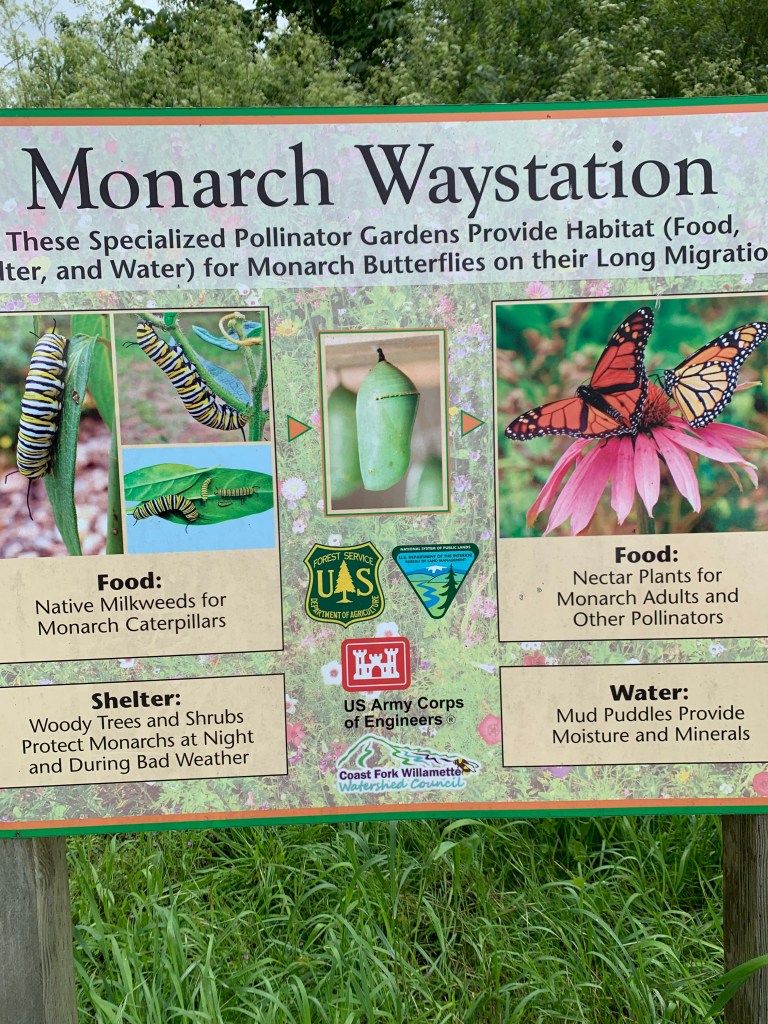
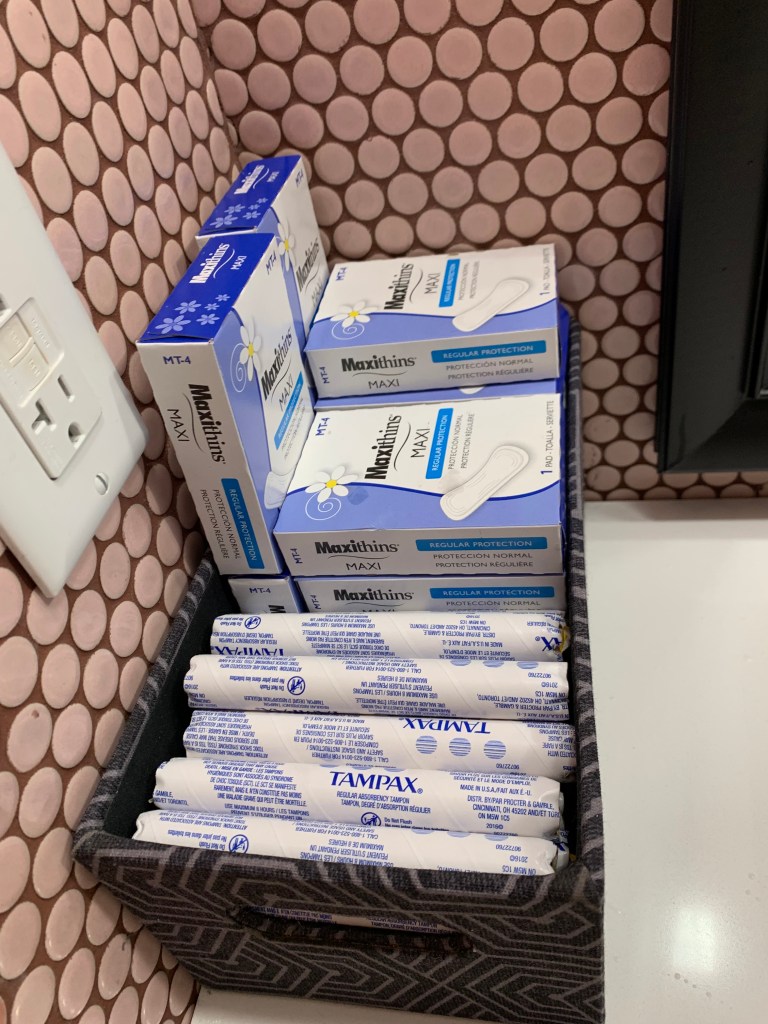
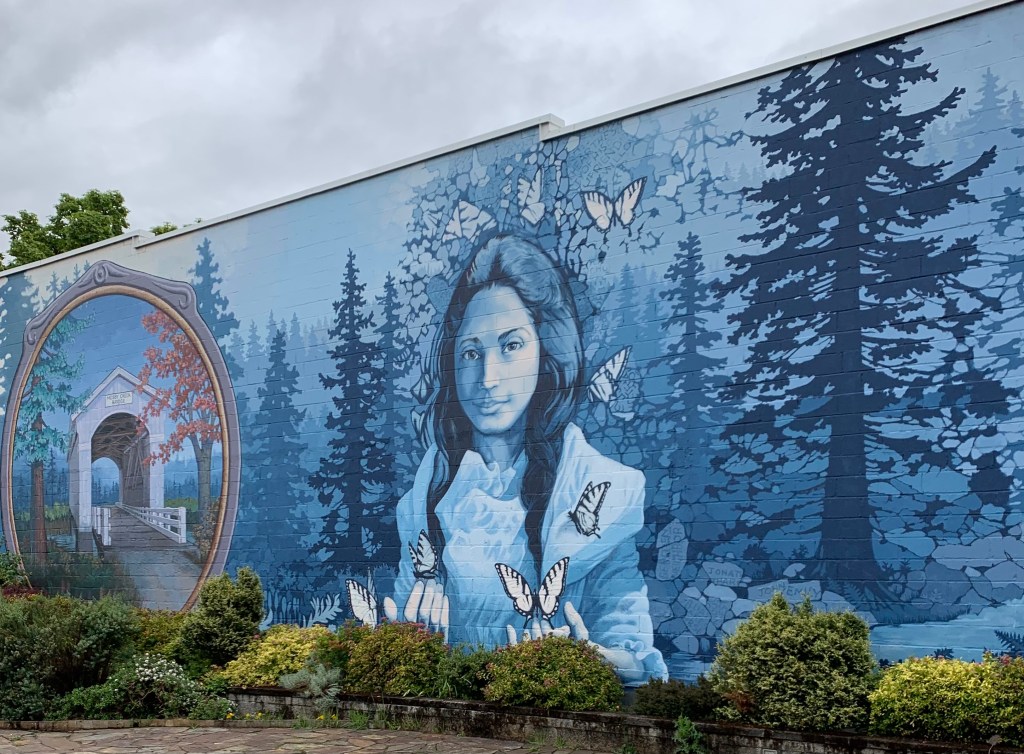
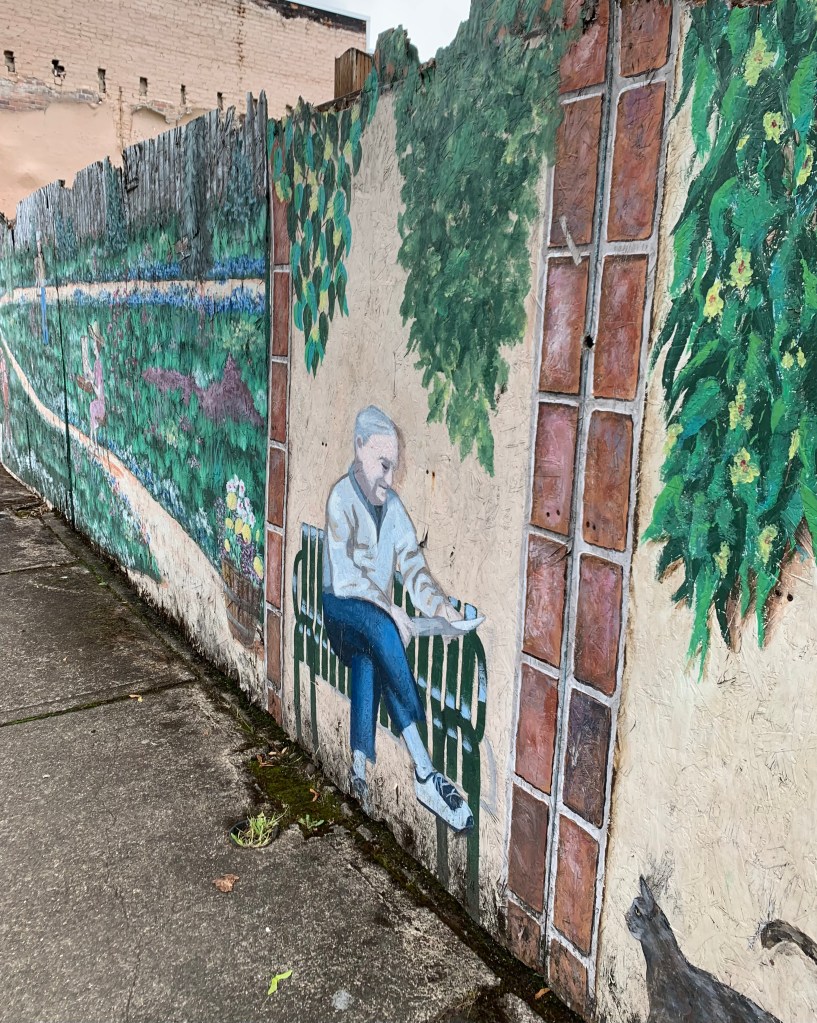
Familiar Monarch StoryJoulie receives an homageIf it Bleeds, It Leads – Hotel Ladies Room ’Your Kindle Can’t Do ThisArt in Cottage GroveMore Art in Cottage Grove
We drove to Portland just in time to skip PDX Pride Weekend. We missed the craft fair, the bands, and the parade. But our hotel is displaying a rainbow flag so we don’t feel too left out. It’s also a graduation and wedding weekend, so I’m seeing a lot of cocktail dresses and perfect hair despite the showery weather. My guess is that the cocktail dresses and perfect hair folks are not going to Pride.
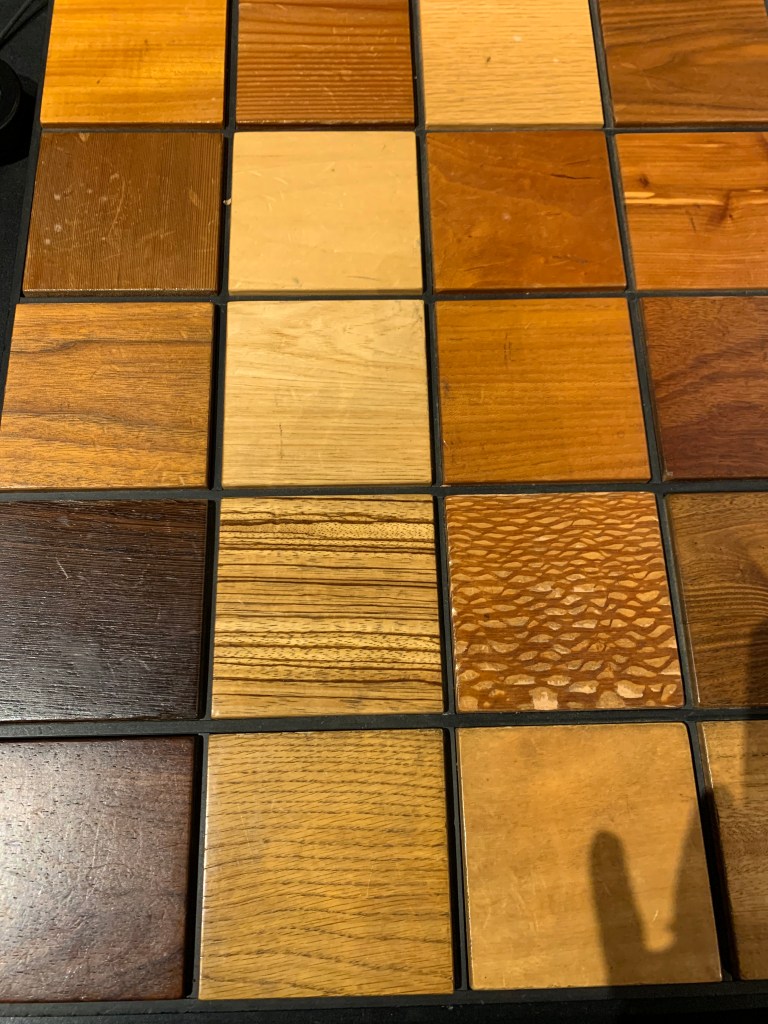
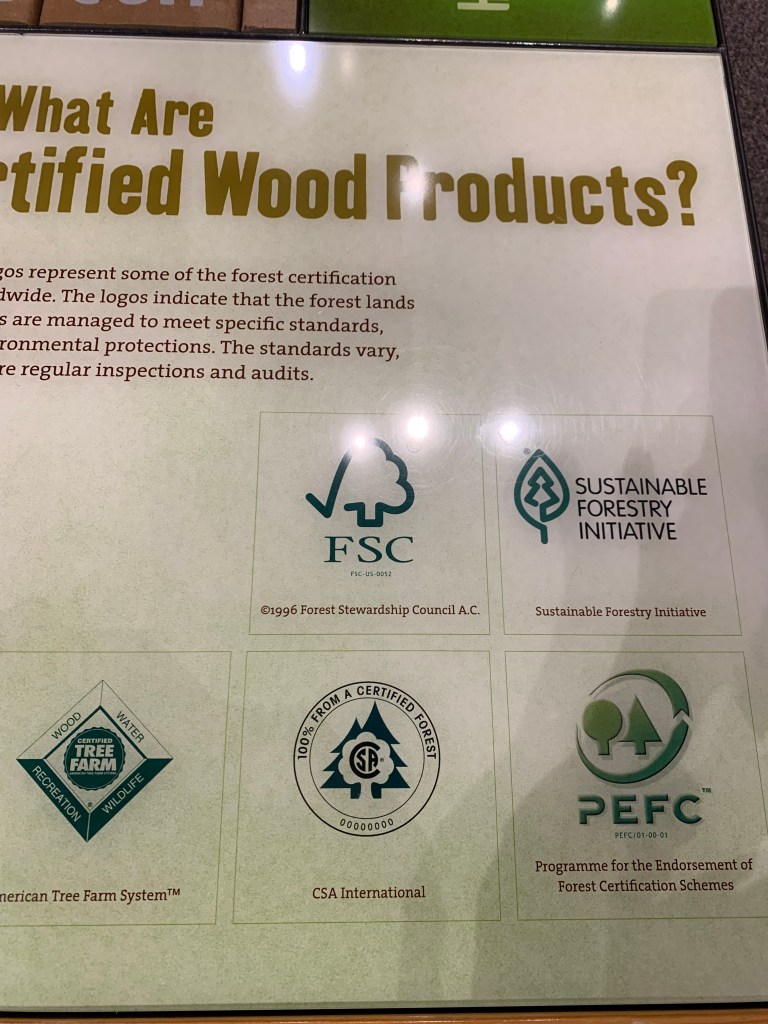
Unlike its neighbor the Portland Children’s Museum, the Discovery Museum World Forestry Center survived the pandemic. It had just reopened this week when we dropped by. Appealing to children, it had a two-pronged message. First, forests are interesting and endangered places. Second, people make nifty things out of wood. The special installation on wildfire featured an artist who creates shadowy encaustic abstracts that look like char and smoke. I took issue with the reductive message the artist promulgated, to wit, we colonists have suppressed wildfire so long that now our wildfires burn too destructively. We should live more in harmony with natural forces, including wildfire, like “the native people have since time immemorial.” A professor from Arizona State is quoted as saying, “Logging removes the big trees and leaves the little. Wildfires remove the little and leave the big.” So according to this perspective, all we need to do is more selective thinning and more prescribed burns. Alas, no. Due to global warming we will see conflagrations that will burn the littles, the bigs, the houses and the towns. We must prepare for cataclysmic weather events.
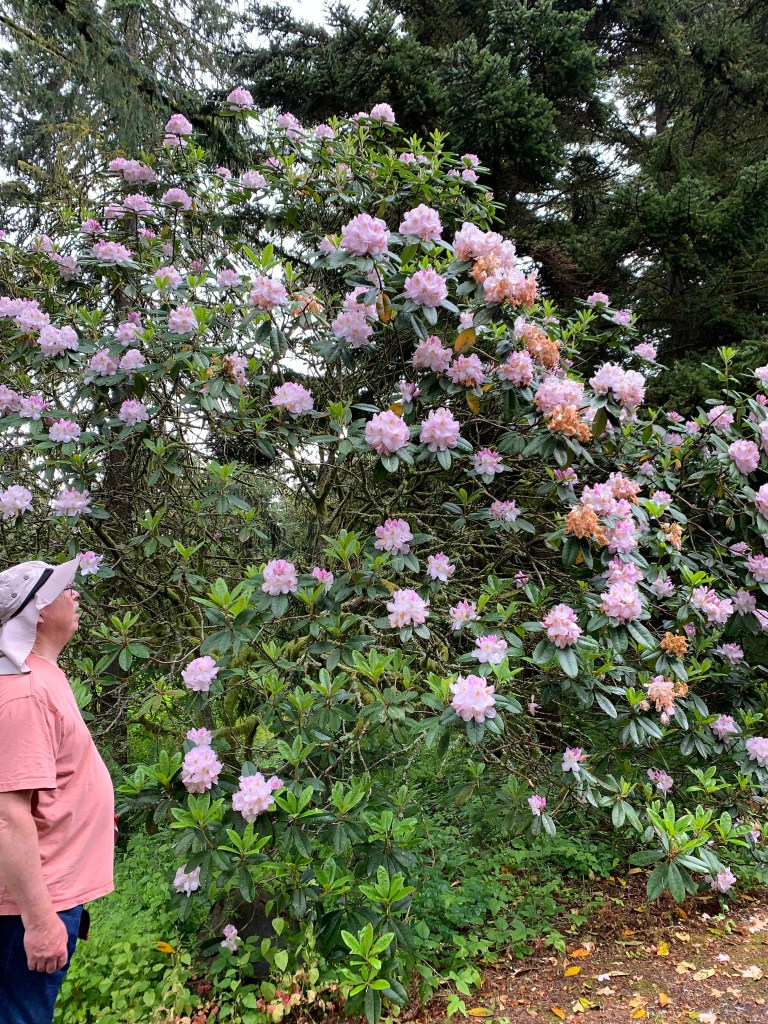
MapleMagnoliaRhododendron
On the other hand, at the Hoyt Arboretum, I learned about hero arborists breeding a disease resistant Port Orford Cedar.https://nivemnic.us/restoring-port-orford-cedar-a-role-for-you/ The Hoyt Arboretum trees are grouped by genus in early 20th Century style: here are the spruces, here are the redwoods, here are the beeches, etc. More modern arboretums mix trees according to shared habitat, so the result looks more natural: here is the oak savannah, here are subalpine pines, here are mixed conifers. But all tree devotees are worthy. The Talmud teaches we should all be metaphorically planters of trees.
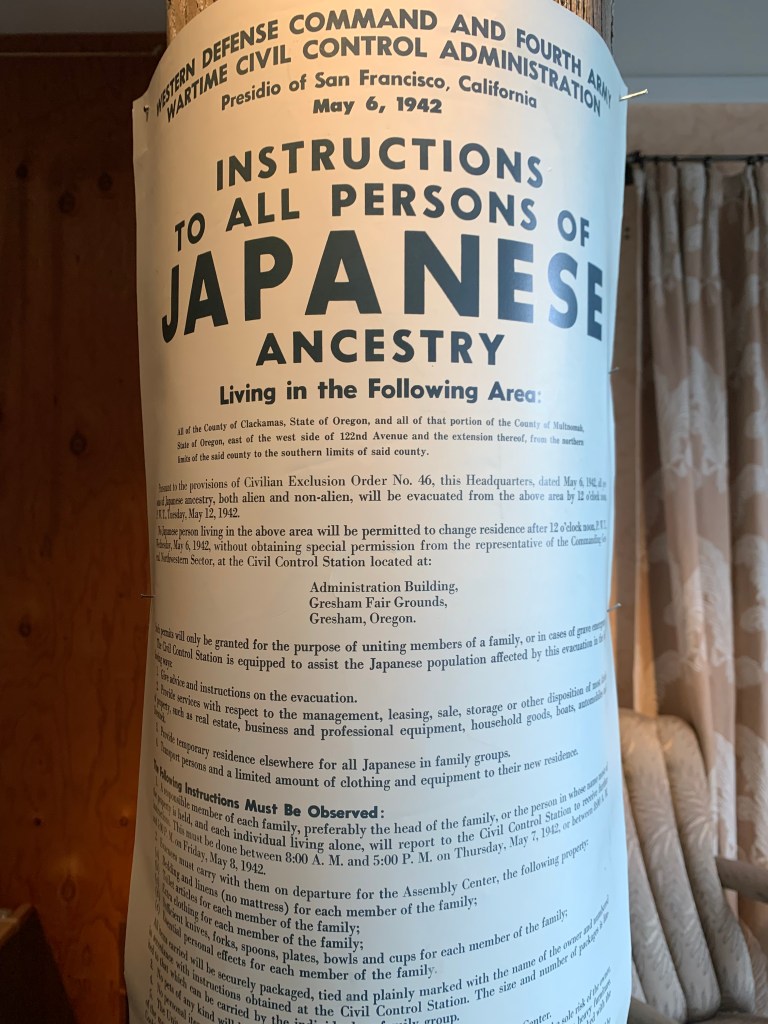
Unjust ArrestThe Poster for InternmentThe inmates organize vegetables.
The Japanese American Museum of Oregon tells the stories of Nikkei, emigrants from Japan in Oregon. Their immigration stories differ from other ethnic populations in several ways. First, they didn’t look Caucasian or Christian or speak unaccented English so there could be no passing for white. Next, most Issei (Born in Japan) came from the land-owning peasant class during a time when Japan was undergoing an industrial revolution. Even though they got jobs in timber and railroads, they had experience working the land and desire to purchase land. Due to racist immigration laws, only women engaged to be married were allowed to enter the US from Japan. This led to the unhappiness of “picture brides,” who had their husbands pre-selected for them and were often isolated and abused. And finally, Japanese-Americans were treated shamefully 1942-1945, when they were incarcerated in remote internment camps. I learned the important story of Min Yasui. https://www.minoruyasuilegacy.org/ The first Japanese American admitted to the Oregon Bar, he protested the imprisonment of Japanese Americans and spent eight months in solitary confinement awaiting trial. He is a true American hero.
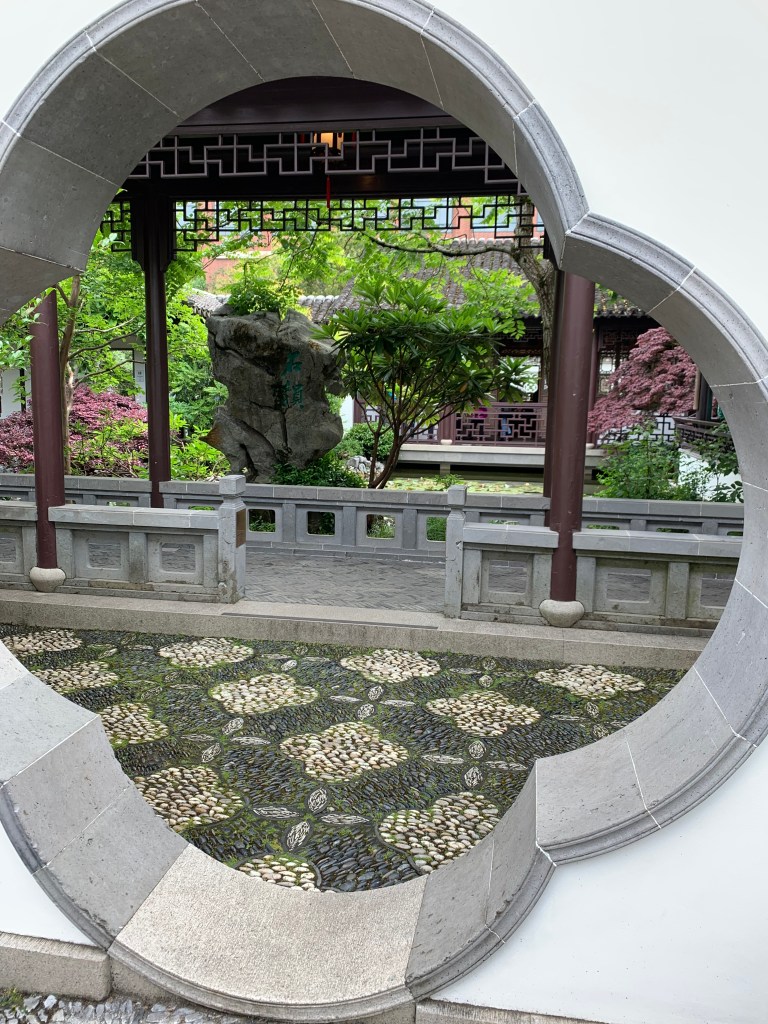
Window on Zither LakeFountainChinese Limestone
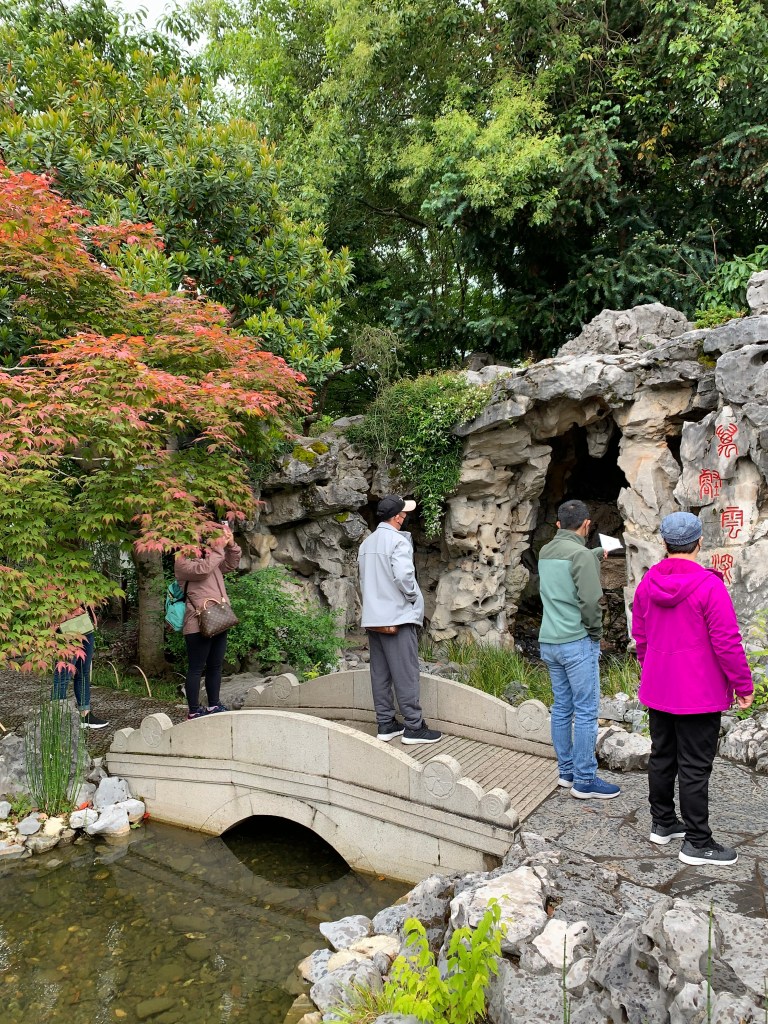
We strolled the lovely and fairly new Lan Su Chinese Garden. Su Zhou is Portland’s sister city and Lan Su comes from pieces of the names of both cities. The garden is built from Chinese materials, including limestone dredged from a Chinese river, and only Asian species of shrubs were selected.
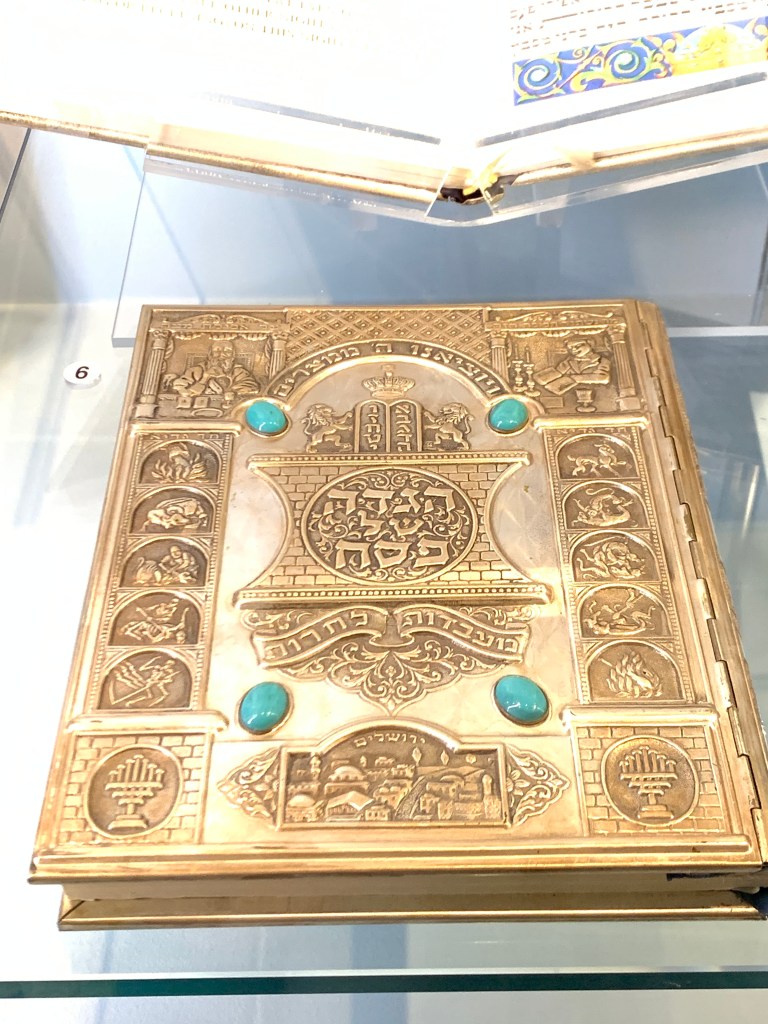
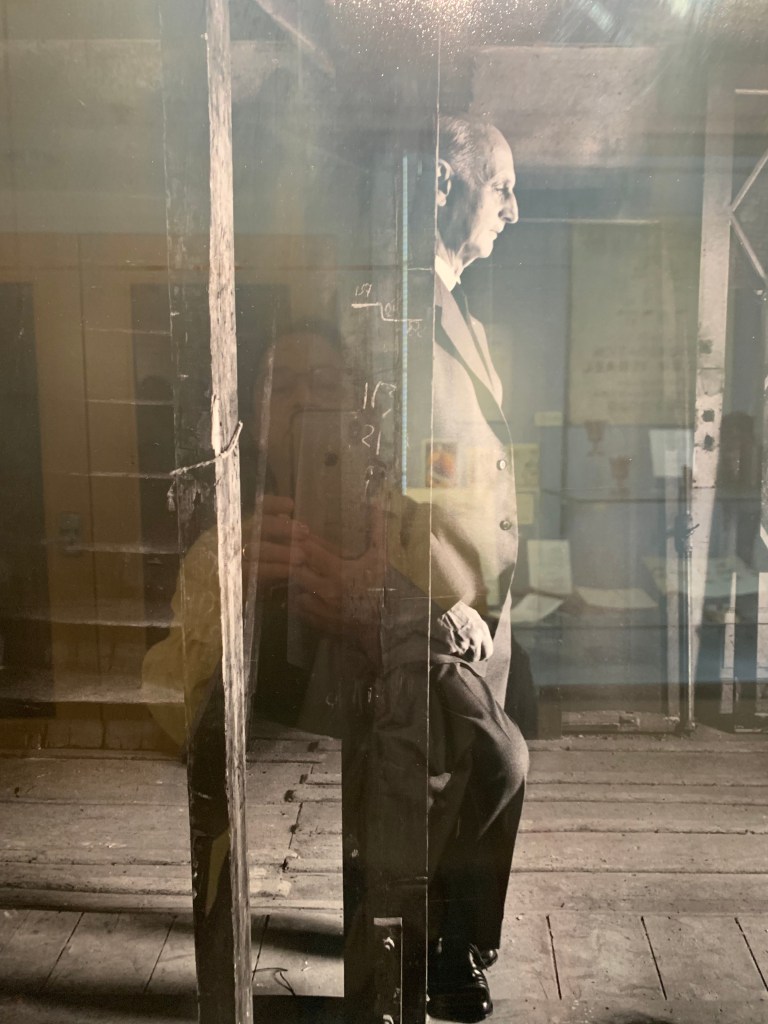
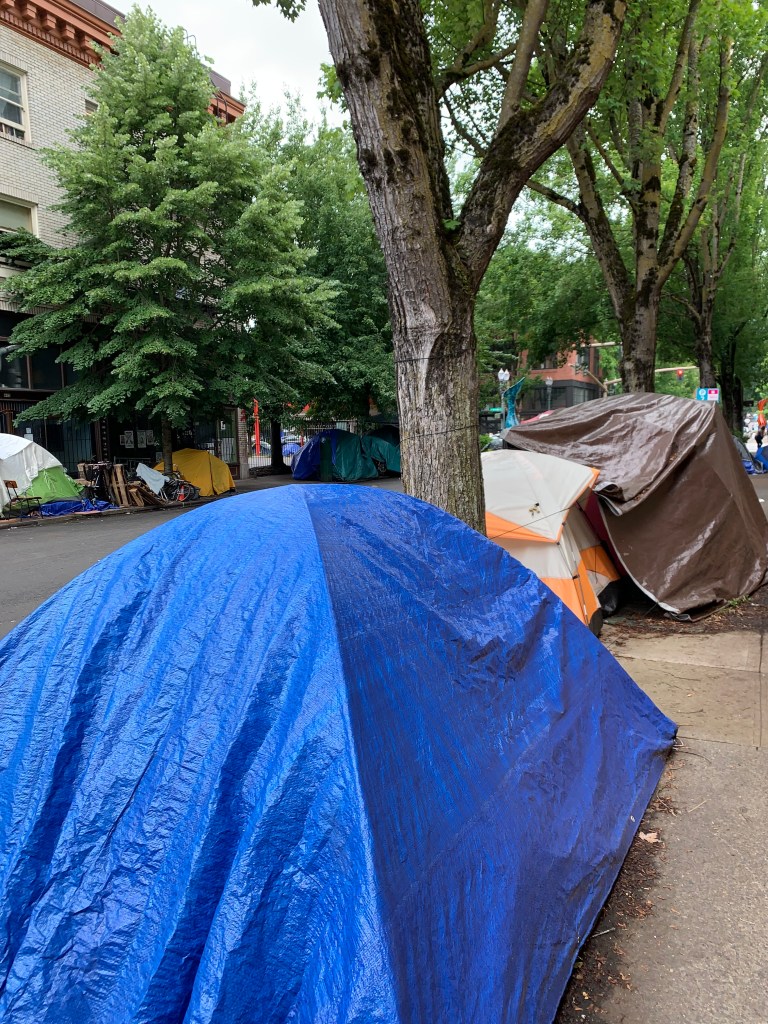
Szyk Haggadah 1934By Judy ChicagoFair Employment Practice Demo in PortlandOtto Frank by Arnold NewmanTent City in Portland
And we popped in at the sincere Oregon Jewish Museum and Center for Holocaust Education, https://www.ojmche.org/ They were hosting a selection of works by Judy Chicago, which both of us liked. We had read about them engaging with Spiegelman’s Maus to support educators, but visitors were not the target audience for this work. We also both liked this haunting portrait of Otto Frank in the Annex. Yes, there are tents on the streets. As we walked by, I heard TV playing and smelled tent residents hotboxing their weed. It seems there is a subcity within Portland and I hope the tent people look after each other.
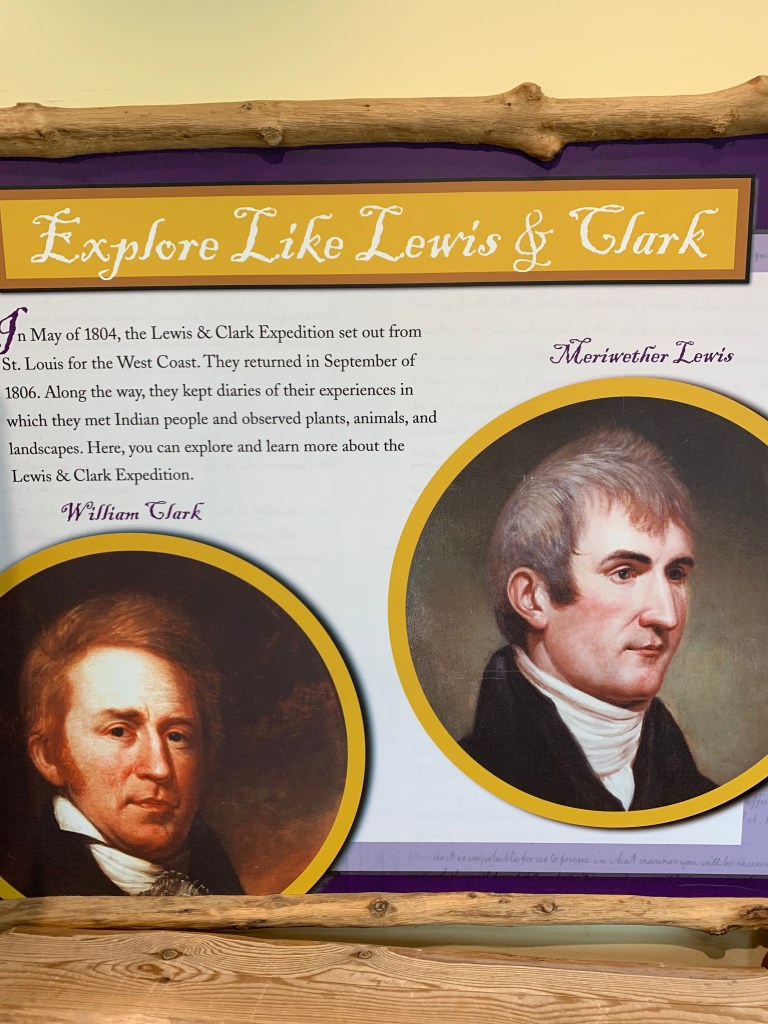
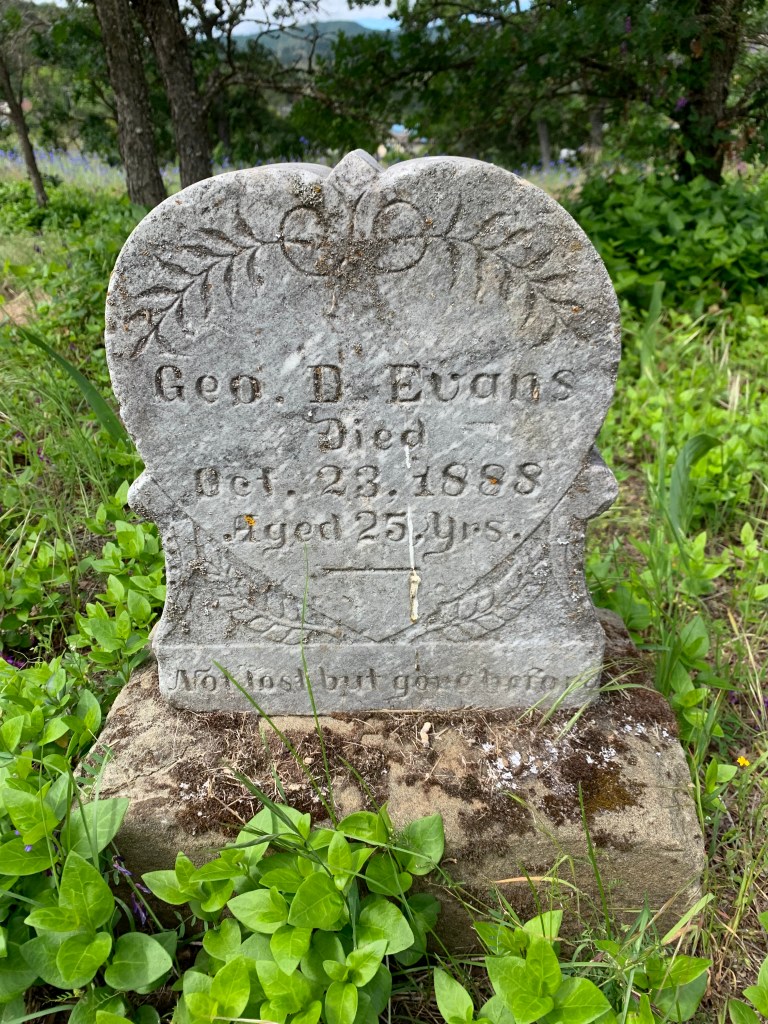
There were acts of undaunted courage in the Gorge, and then there were acts of undaunted clean up. First, in 1803 Lewis and Clark and the Corps of Discovery, including Lewis’ Newfoundland Seaman, paddled across the country, then down the Columbia to the Pacific, then returned to DC to tell Jefferson the story in 1806. Then the Gorge opened up to white settlers, not just trappers and Natives. They led tough lives. Edward Crate and his wife Sophia had 14 children and 1000 sheep. They lost all their sheep in 1861. George D. Evans, born in Illinois, died in Wasco, OR in 1888 at age 25. His tombstone, pictured above, includes five words: “Not lost but gone home.”
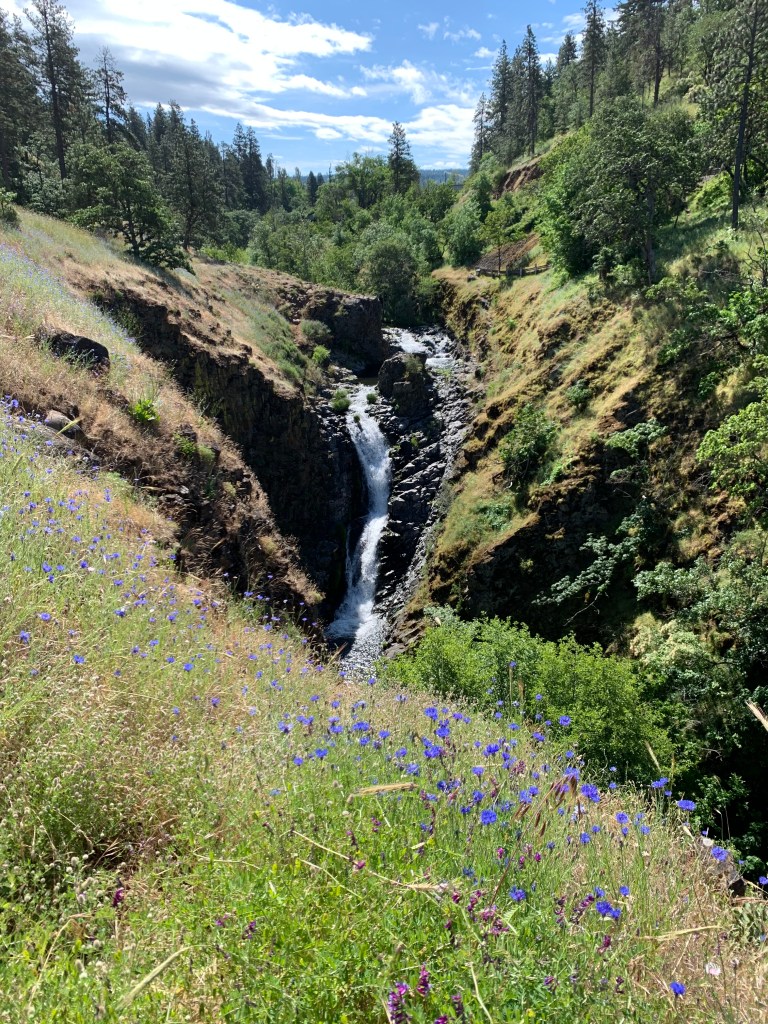
Mosier FallsCornflowers on the TrailWhite Oak
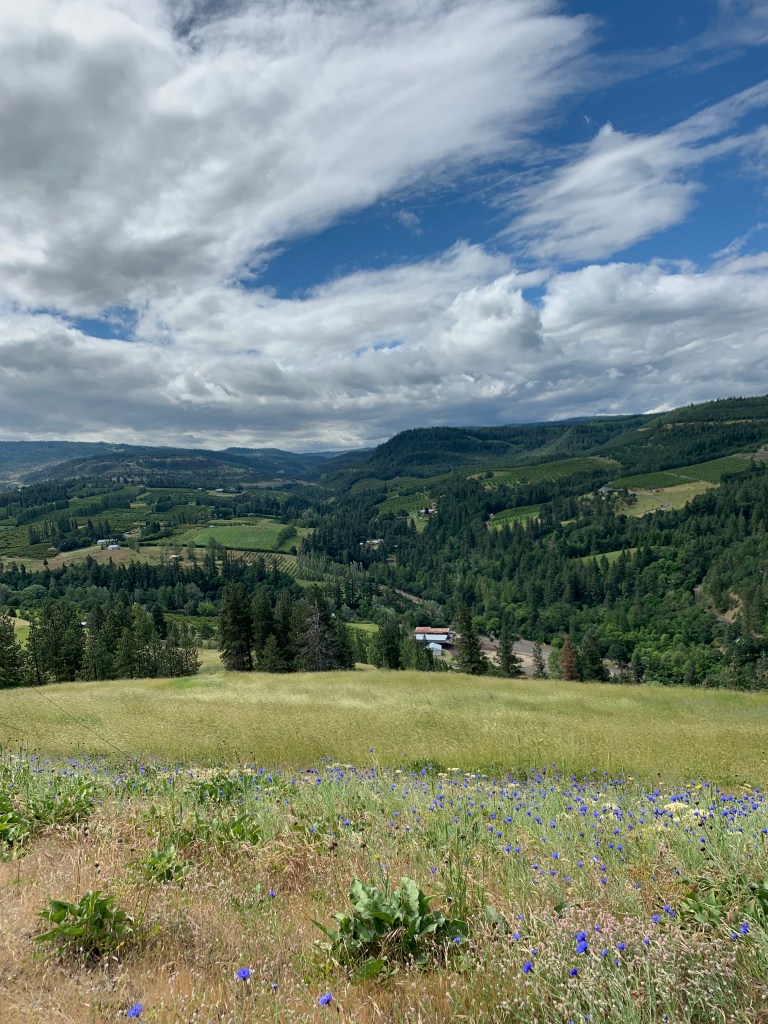
We hiked the Mosier Plateau on the dry eastern side of the Gorge. The cornflowers colored the hillside blue. Locals swim in the pool below Mosier Falls, above. I much prefer a smaller, isolated waterfall to the marquis attractions along the Waterfall Scenic Corridor.
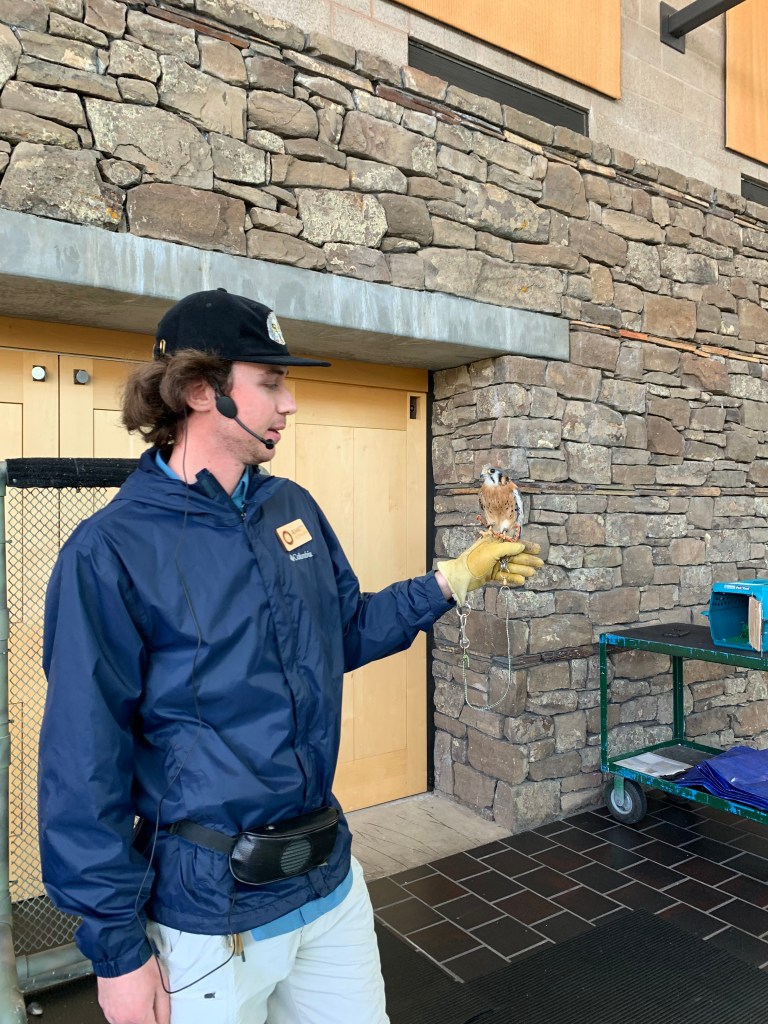
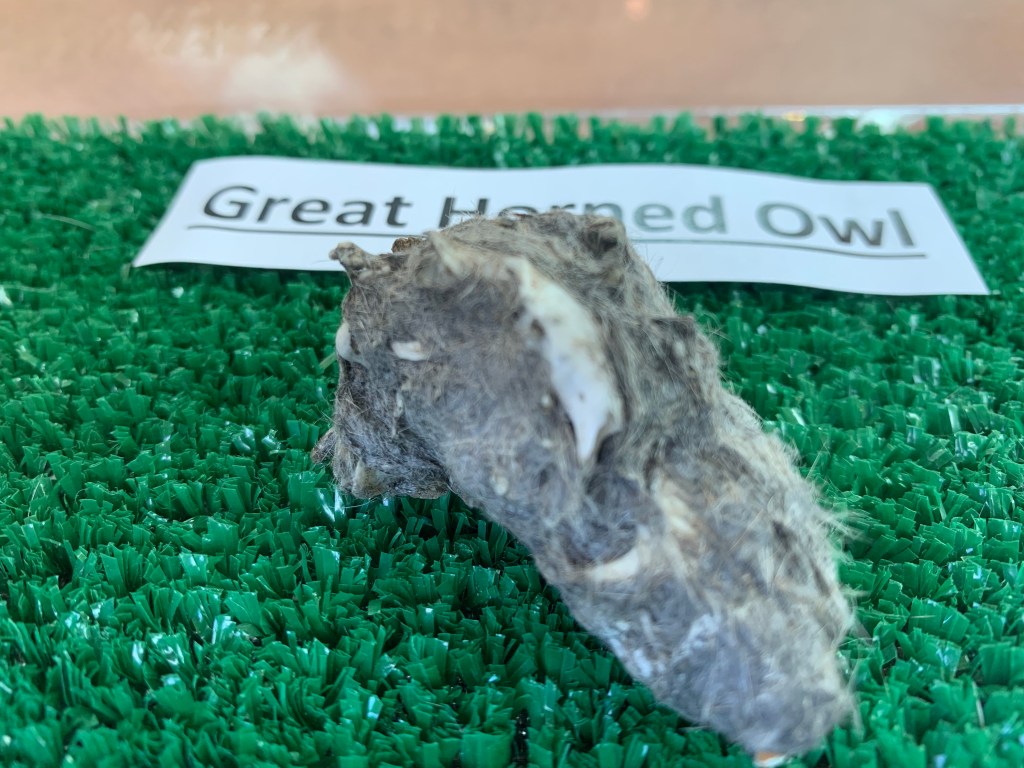
Bennett and HankMosier Plateauowl pellet
In Mosier Canyon we saw two Golden Eagles spiraling together in a double helix. A naturalist employed by the Columbia Gorge Discovery Center agreed with JG that it could have been a courtship display, called sky dancing. Bennett the Naturalist introduced us to a Kestrel named Hank. Hank cannot survive in the wild because he was kidnapped as a chick and his kestrel identity subverted with human imprint. He is now 14 years old, living on frozen mice and entertaining visitors with his preening and his tiny cries of “Kee-Ah! Kee-Ah!” I am uncomfortable seeing raptors in captivity, but knowing that Hank would die if released assuages my worry.
At the museum, I especially enjoyed learning more about vultures. They are easy to spot; they hunt smarter not harder. I have assigned them a verb, vulching. I have met the crafty and destructive black vultures in Everglades NP, where they contently prey on the rubber bits around car windows or on wiper blades. I enjoy Condor sightings in Pinnacles NP. And no hike is complete without a few turkey vultures, hanging out in a tree or circling overhead. Fun turkey vultures facts: They do not build nests, but lay eggs in rock and tree crevices. They do not have a voice box, but hiss and grunt to communicate. They can smell something dead within a five mile radius. That’d be like me smelling the candy apples on the Boardwalk from my backyard. When they feel threatened, they will vomit on their attackers, up to ten feet away. When I took a Women’s Self Defense Class, this method was also suggested to us, to fend off amorous advances. To cool themselves down and kill off any bacteria on their feet, vultures will urinate down their legs, a behavior known as “urohydrosis.” So if I pee myself, it is a hazmat detox shower if I’ve been thigh-deep in rotting carcass. That way the germs don’t land in my drinking water. We must all do what we can to protect vultures, because they are nature’s clean up crew.
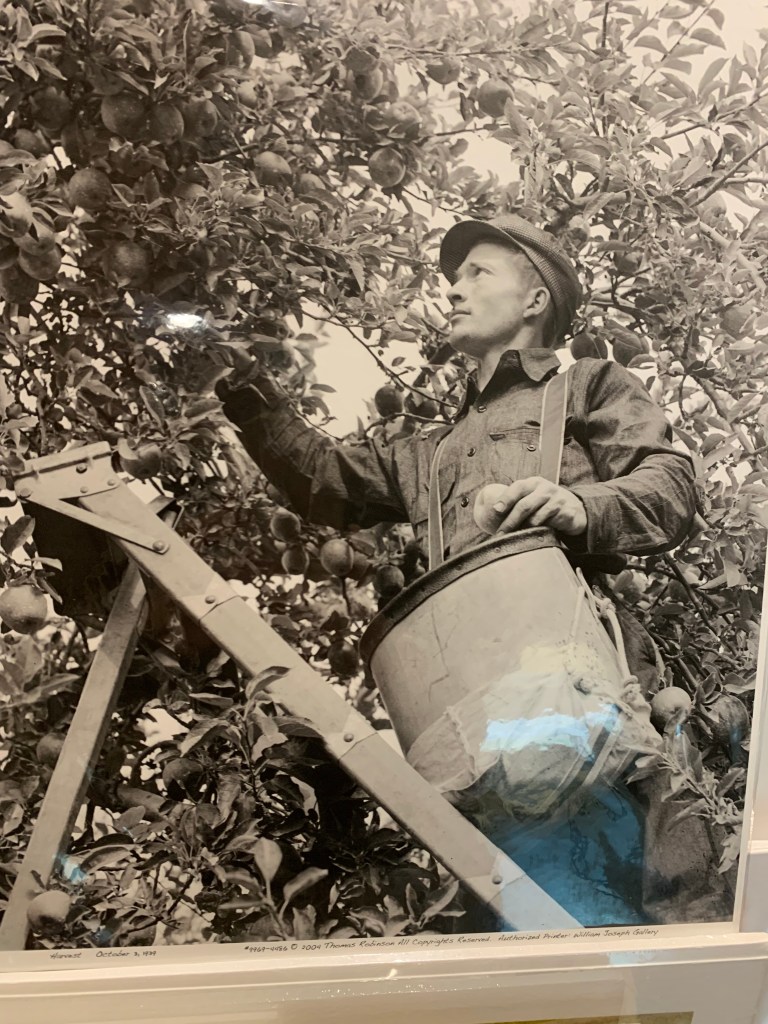
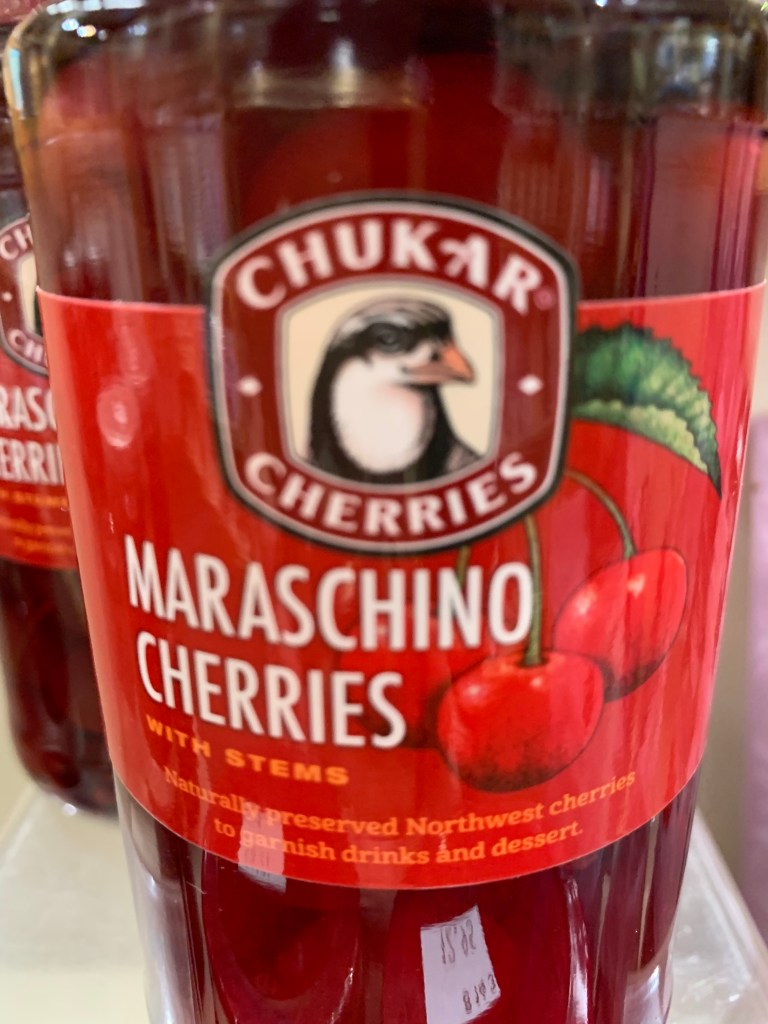
Roll On, Columbia! The Gorge Is a transport thoroughfare for cargo barges, semi trucks, and freight trains, not just a fun vacation spot. The river separates Oregon from Washington. The tax rules vary greatly by state, so I’ll summarize them here. In Oregon, there is no state sales tax, but there is a steeply-tiered personal income tax. In Washington, there is no state personal income tax, but sales tax starts at 6.5% plus whatever the county adds on. Capital gains tax in Oregon is 9.9%, in Washington 7%. Savvy individuals keep an address on each side of the Gorge to maximize tax savings. Somewhat savvy individuals live on the Washington side but shop in Oregon. So the Gorge also creates its own microeconomic climate. Now for a story of economic ingenuity, chemical tinkering, and good timing. Fresh cherries have a delightful but sadly brief window of consumption between harvest and spoilage. Farmers in the Old World had been soaking cherries in spirits to preserve them and fancy them up. In the late 1800’s, hoteliers imported the first Maraschino cherries to garnish society cocktails. During this time, cherry trees were planted and thriving in Wasco County. Two Oregon food processing scientists, Miller and Weygand, patented a method to preserve cherries without alcohol. The cherries were bleached in peroxide and lime, sugared, and dyed before heat-processing. Then they successfully lobbied Washington for tariffs on imported cherries. Finally their genius crested in marketing a product that both cost less than its alcoholic antecedent and also became the signature garnish denoting upscale flair, the “cherry on top.” Weygand denied that Prohibition had anything to do with the widespread success enjoyed by the maraschino cherry, but sometimes world-historical forces disguise themselves as sheer dumb luck.
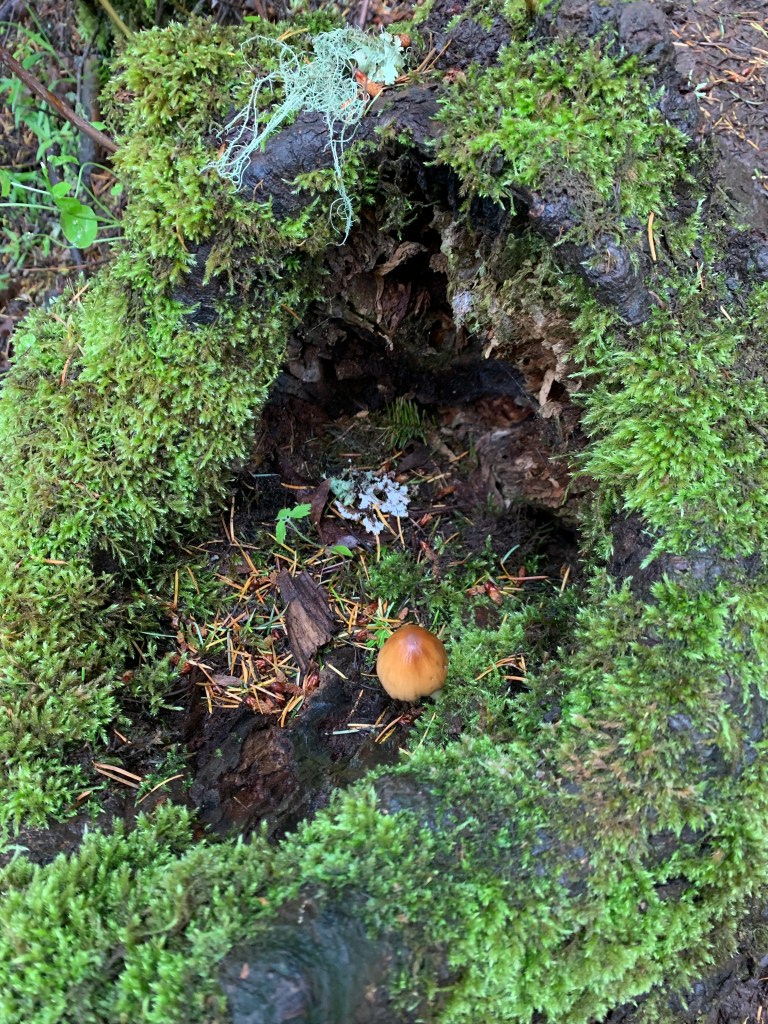
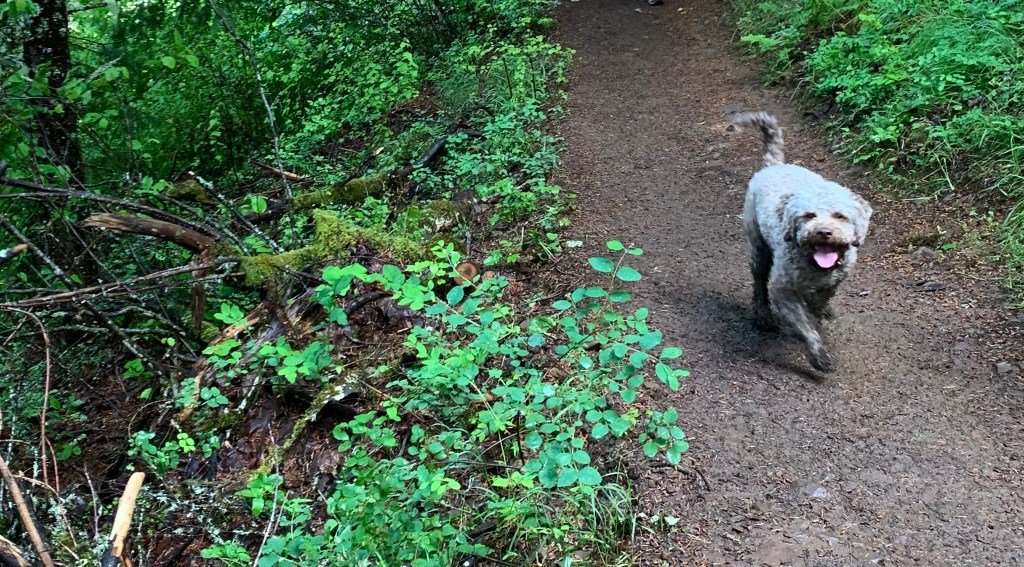
We hike heavy and slow. The speedy locals wear shorts or tights, wicking tops, and a rain jacket. I wore two layers under an insulated rain jacket, gloves, hat, scarf, and wind-protective glasses. The weather had temperatures in the mid forties, rain, and extreme winds. The young folks have to keep moving or they’d freeze. We step off trail and adjust our layers, catch our breath, snap fungus or flower photos, snack, add sunblock, and absorb the forest peace. So the eponymous dogs climbing the trail charged past us, followed by fit young folks. You may think poodles belong in the salon eating macarons, but we saw some fit athletic poodles, wearing the trail mud with obvious delight.
You Want Some of What He’s Having
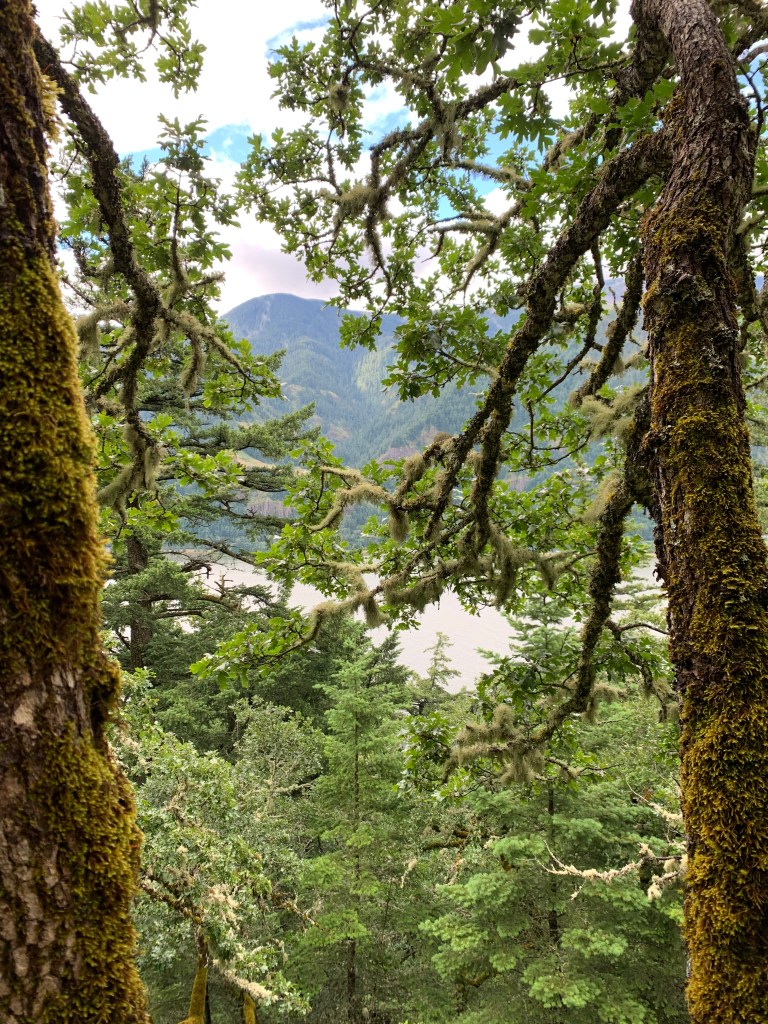
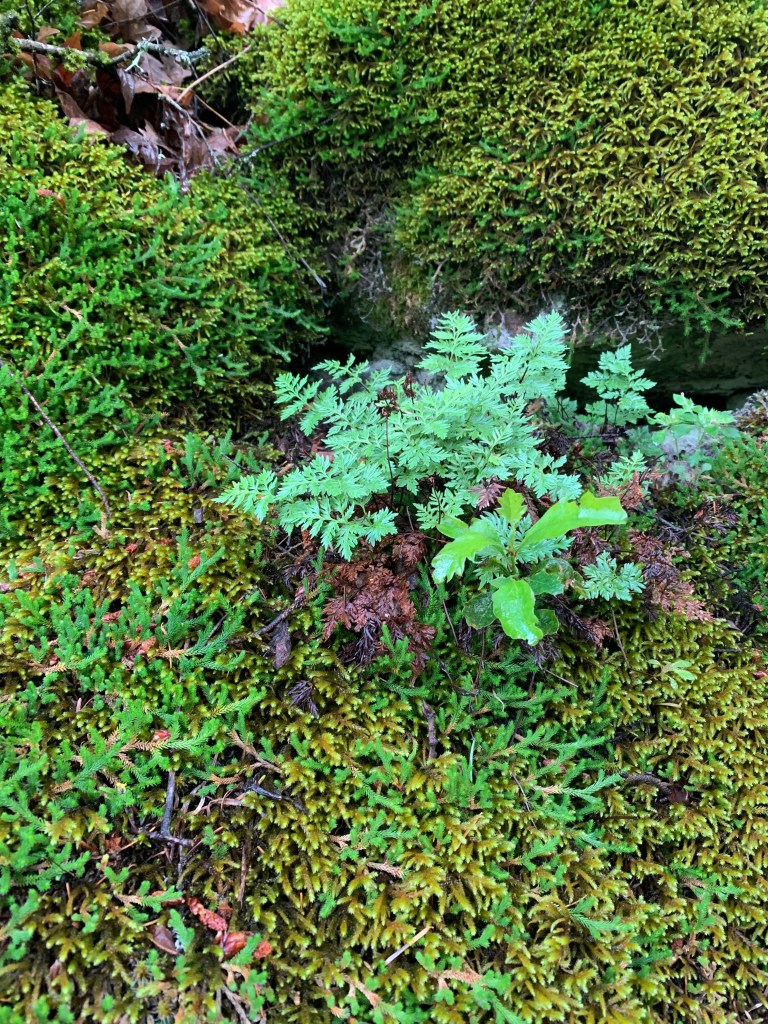
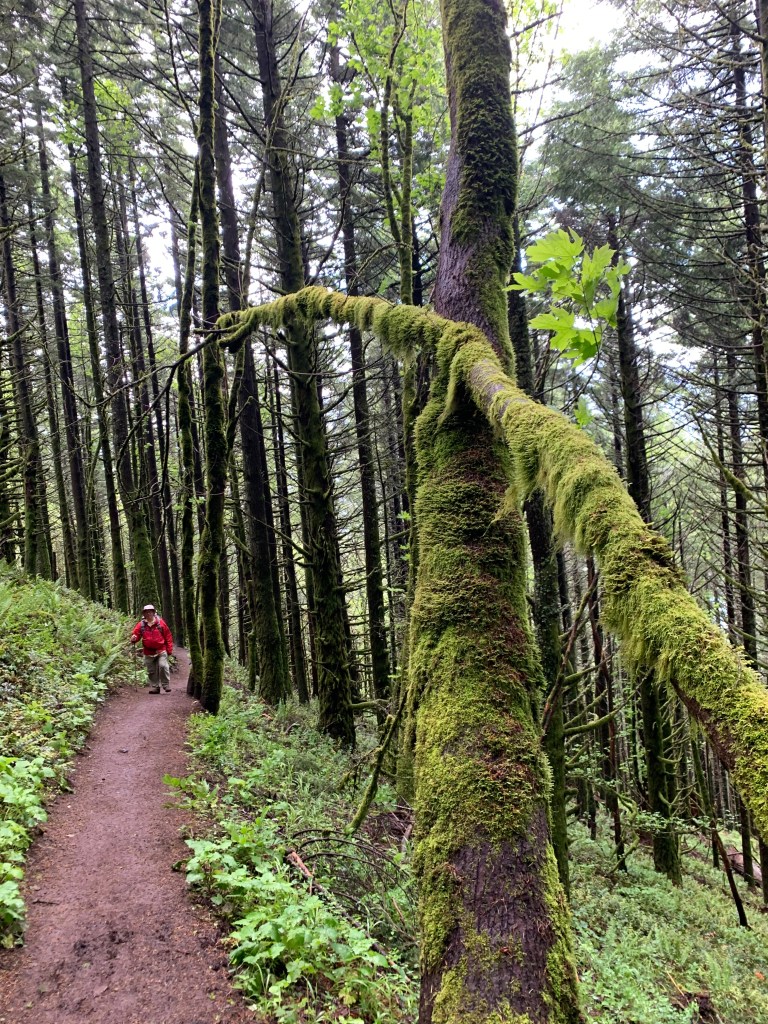
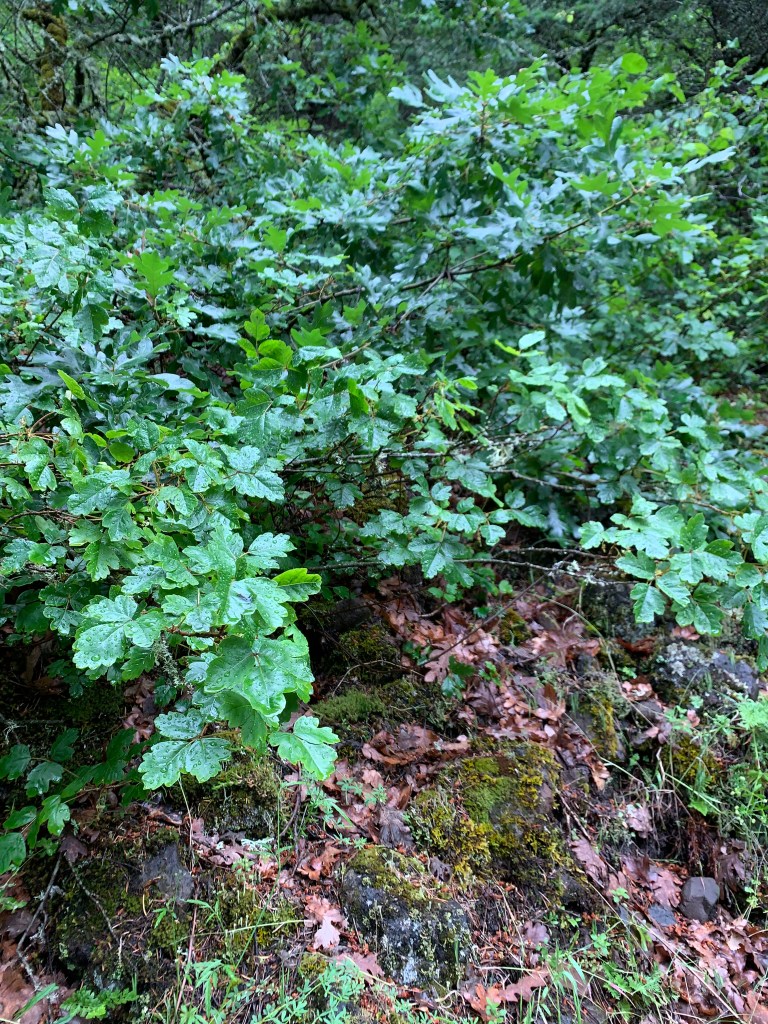
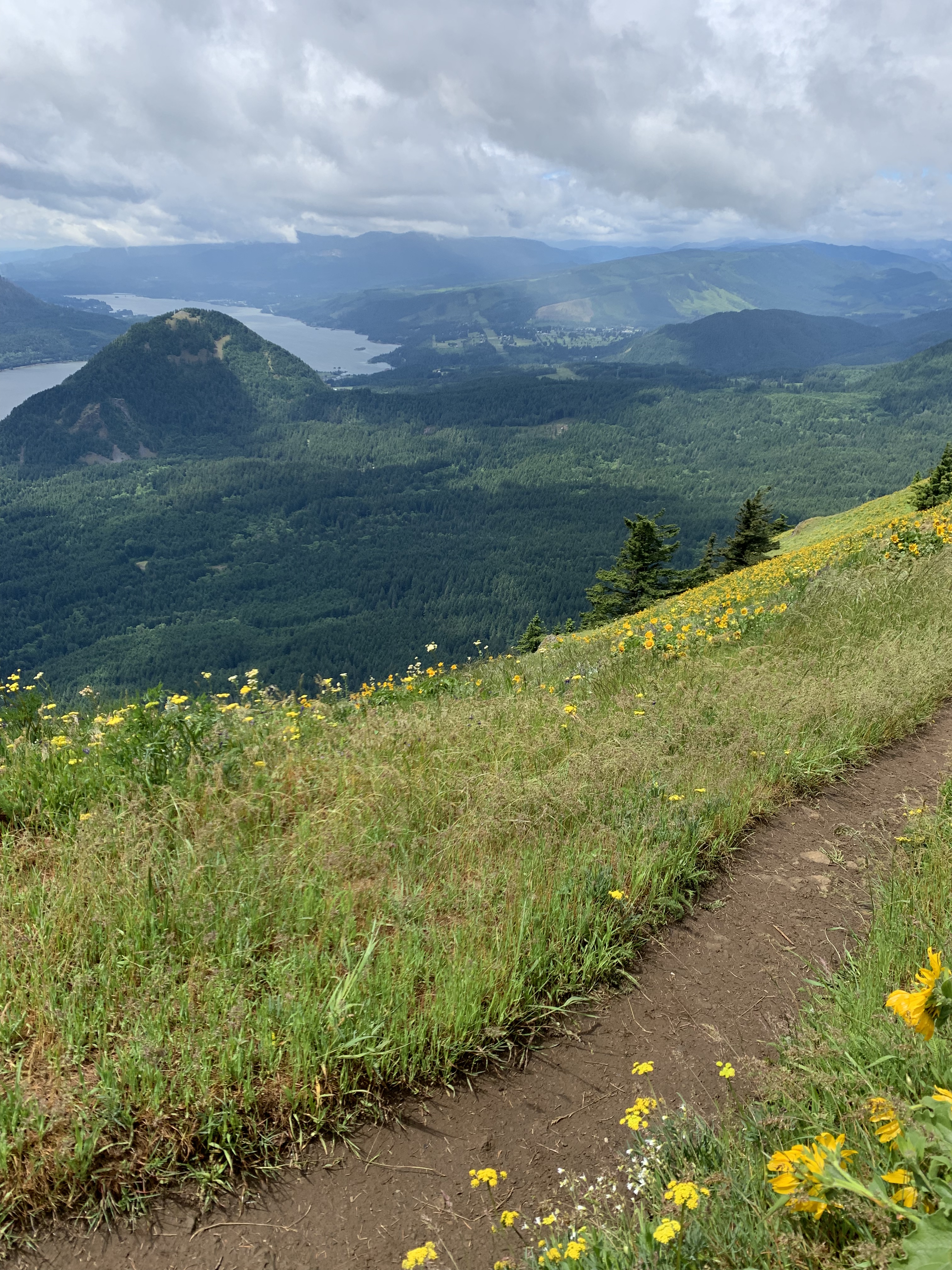
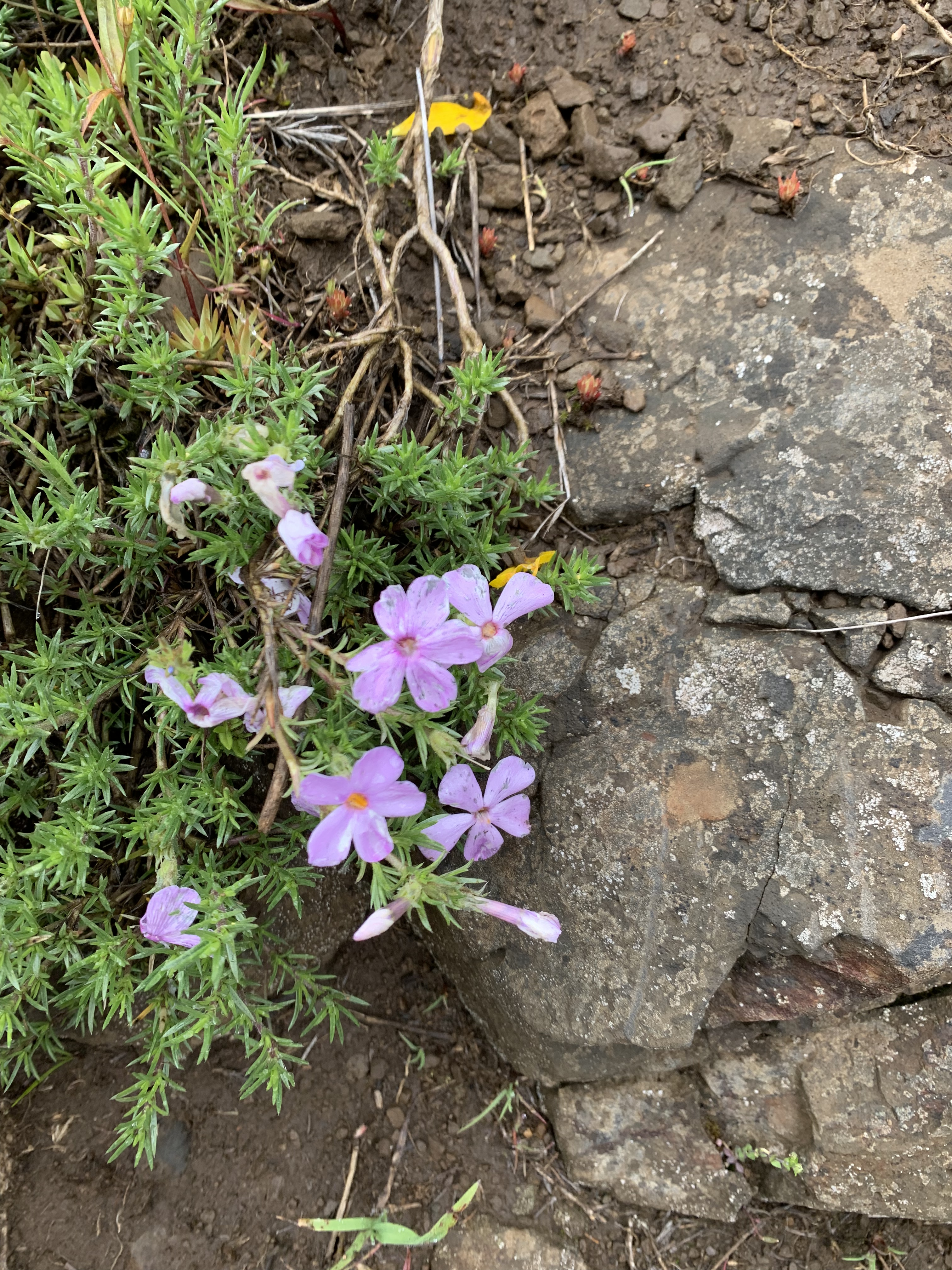
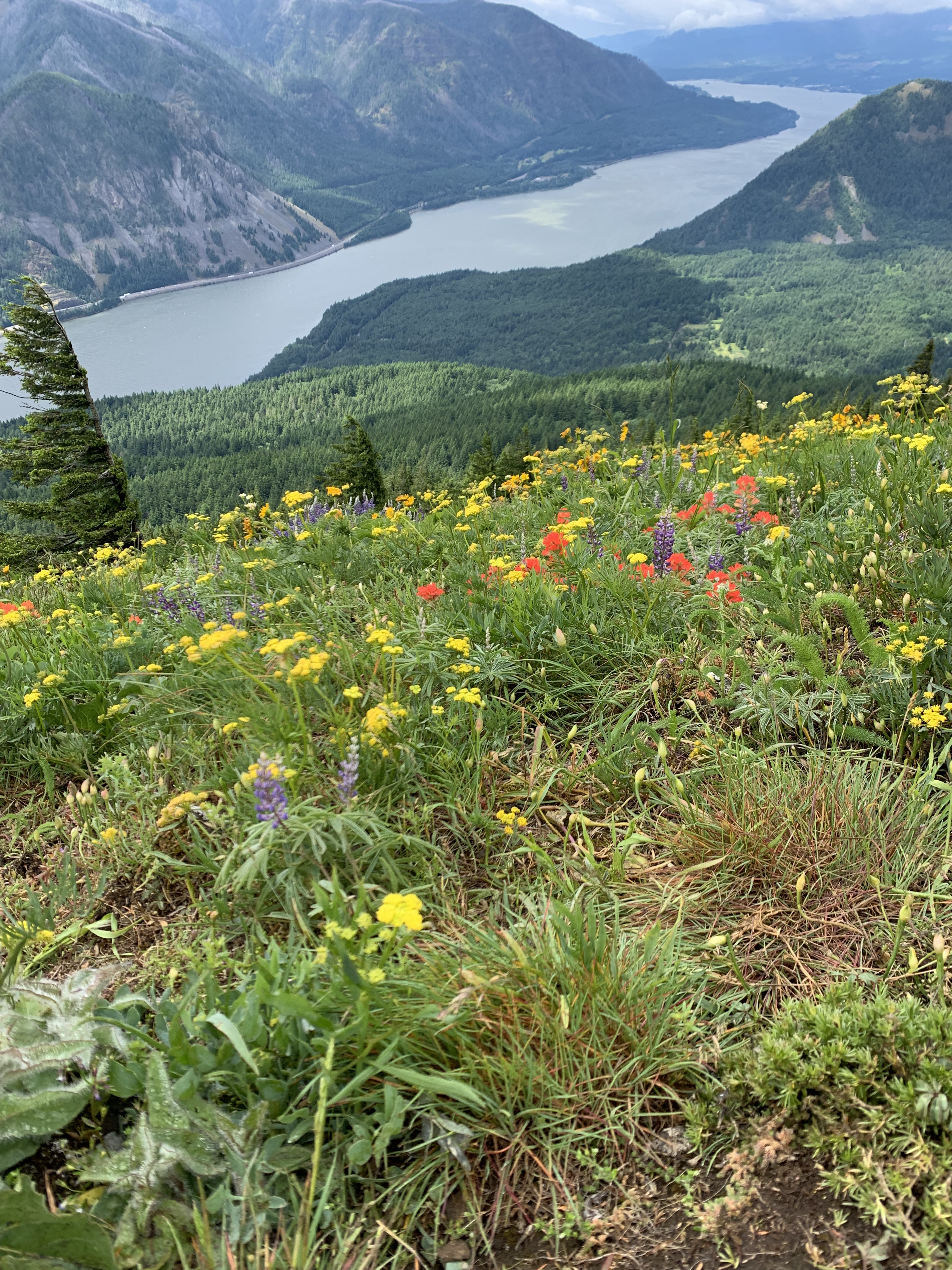
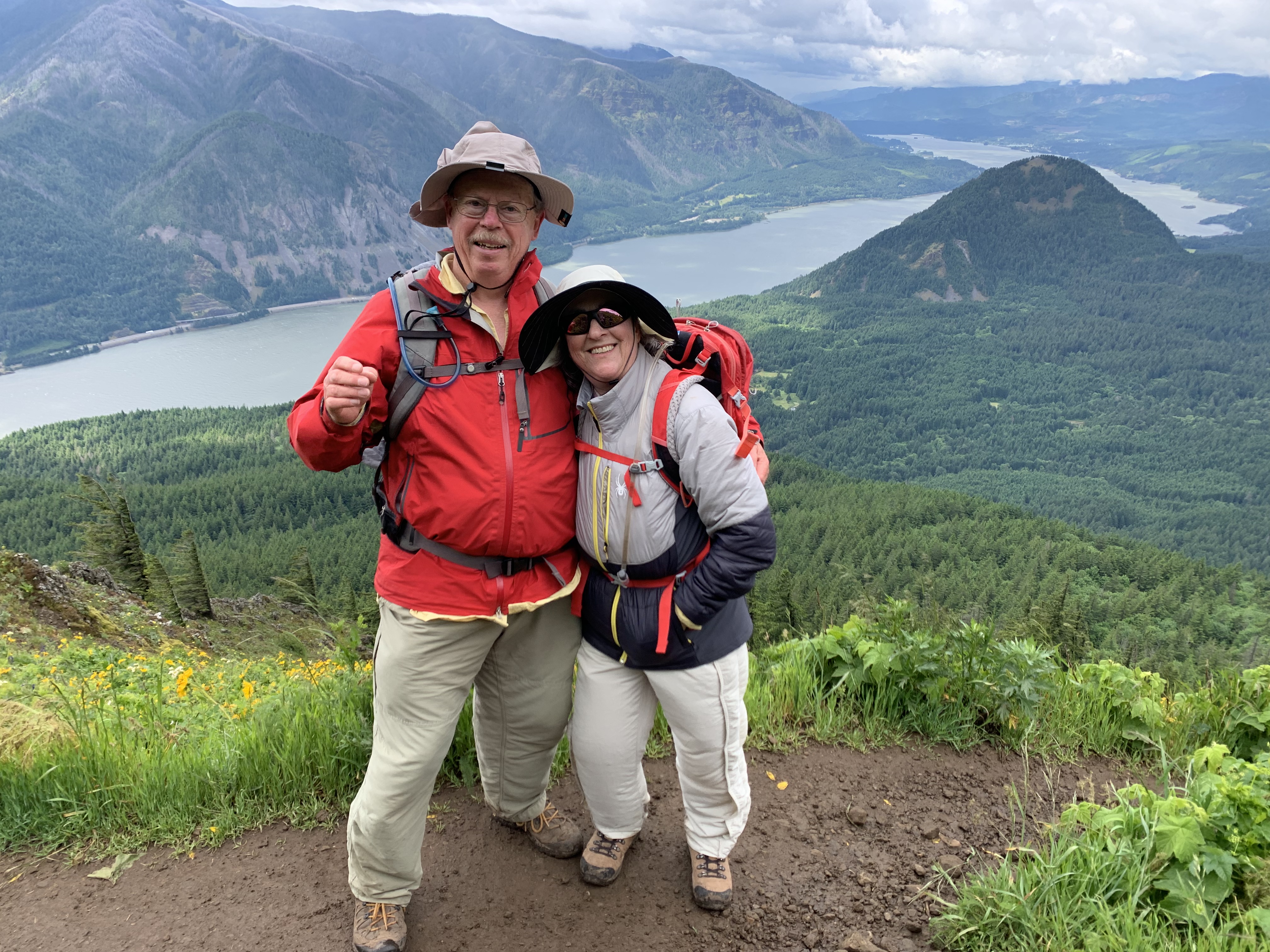
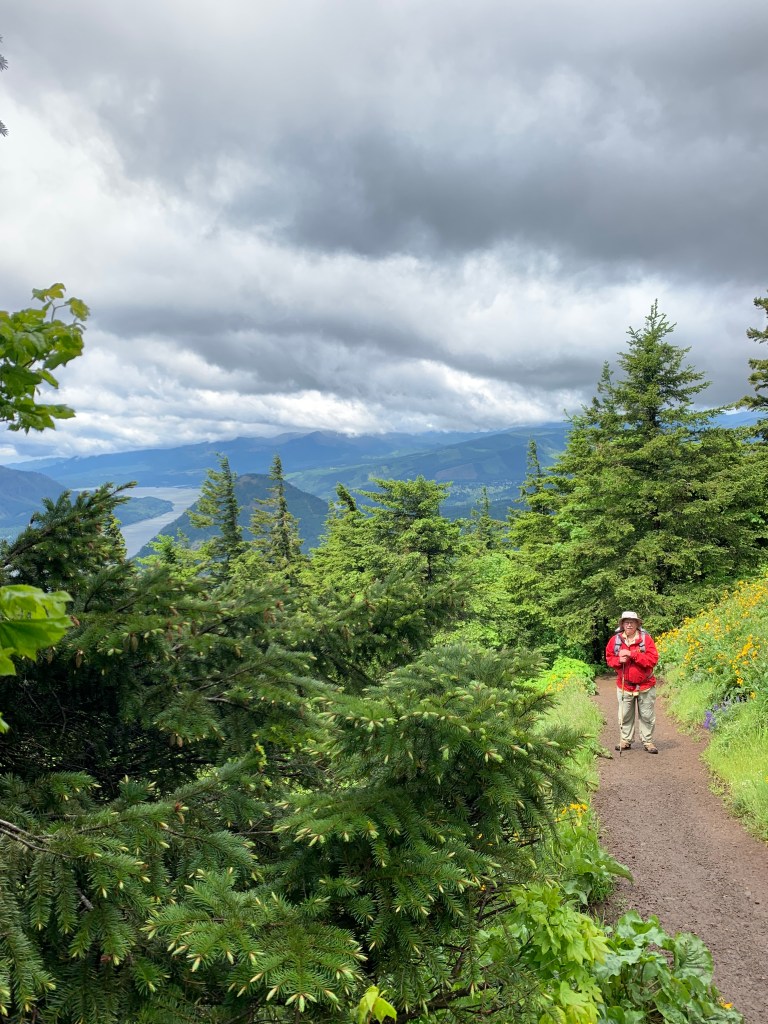
Dog Mountain, in the Columbia Gorge National Recreation Area, is a famous, popular hike on the Washington side of the Gorge. I’d compare the elevation gain to the trail up Mount Ralston from Twin Bridges, off US 50, into the Desolation Wilderness. It has got steep switchbacks through the forest, but unlike the rocks of Mount Ralston the trail is soft and smooth underfoot. And the forest is amazing. First we saw oak, maple, poison oak, and rock gardens. Then we climbed, turned into a protected valley, and found ourselves in a PNW temperate rain forest of mossy fir, hemlock, vine maple, huckleberry, Solomon Seal, and more. Then we turned again at Puppy Point, after the dogs had long since turned around, to climb the last mile through fields dominated by golden-flowered balsam-root but also showing purple lupine, blue phlox, and red paintbrush. We climbed 2820 feet to the summit as tracked by JG’s App.
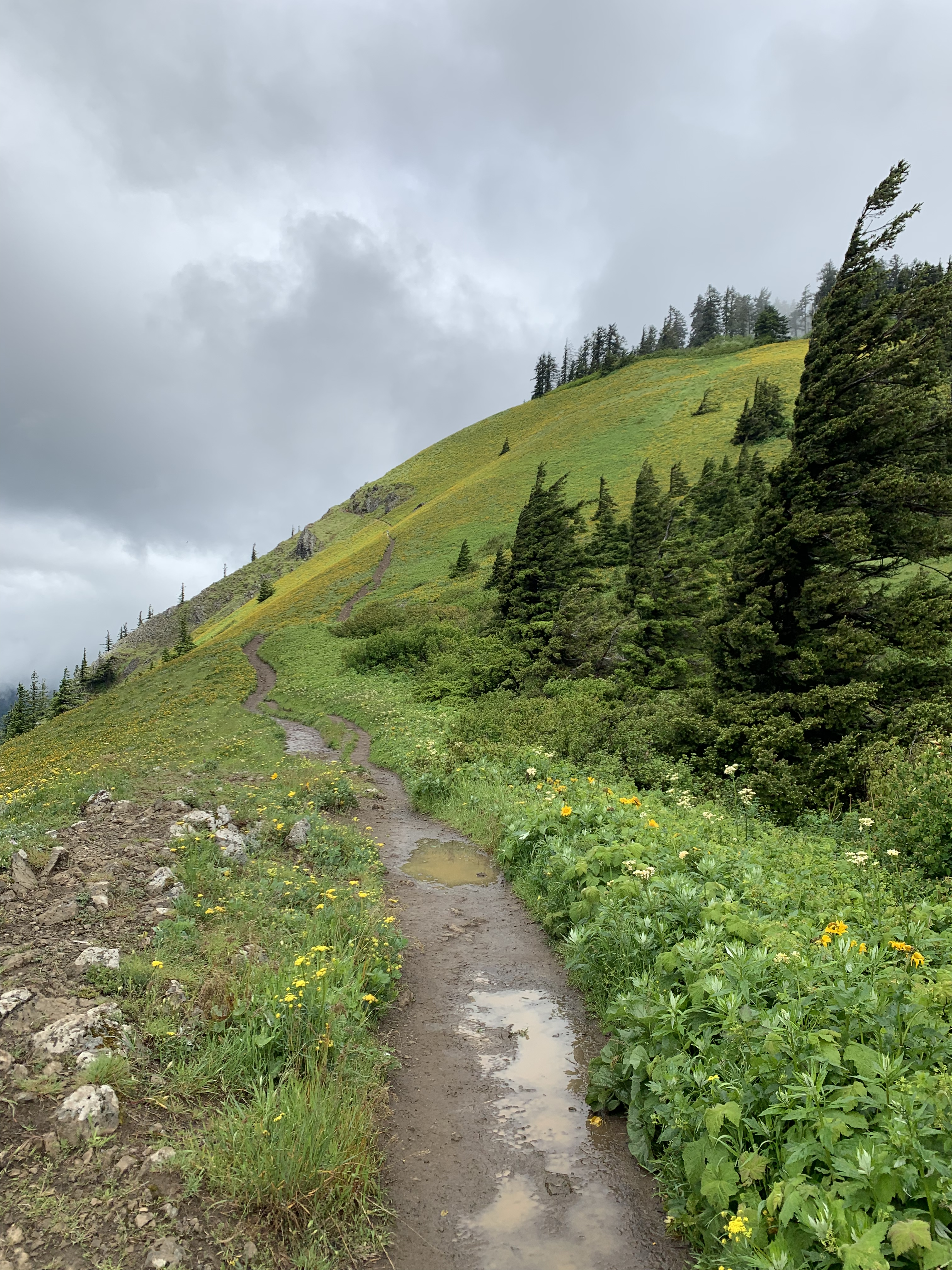
In the mild Soquel climate, we get either wind or fog, but not both at the same time. In the Columbia Gorge, wind and fog coexist all the time. Maybe another day we might have seen Mount Hood to the Southeast, or Mount Adams to the East, or even Mount St. Helens to the Northwest. On our hike we braved strong headwinds to summit and saw only mist. The less popular hike back down to connect to the Augspurger trail, pronounced “Ogsburger” and amusingly autocorrected to Asperger, meant squelching through deep slick mud on a narrow steep slope in a headwind. We reminded ourselves that we were having fun as we picked our way down.
Then finally we ambled easily for the last few miles on a gentle grade of a quarter mile per contour line, meeting folks hiking uphill, including a few backpackers. We arrived at the trailhead tired, muddy but ebullient. Another epic adventure.
Repugnantly over-visited and overcrowded describes the Waterfalls Scenic Corridor in the Columbia Gorge National Scenic Area. For the experience of waiting in a line of parked cars to register with the ranger at the kiosk for your appointed one-hour timed entry slot, booked ahead for $2 on Recreation.gov, you are entitled to drive to each scenic parking lot, wait for a parking space to open up, park, walk to the Falls Viewpoint, look at lots of people’s backsides and try not to get clobbered by Selfie sticks while in line for your turn for a Selfie with the named waterfall in the background, pose and click, walk back, then dodge incoming cars to get back in your car and drive to the next photo op. In 2018 I took a tour bus to these spots while JG read guidebooks with Marco. That’s how I know what takes place at each of five Falls Viewpoints. It’s densely crowded, yet visitors want to pretend that they alone are posing in front of the falls. It’s like going to Disneyland and imagining you have a private rendezvous with Mickey, without all those fat interlopers barfing Pineapple Whip after Space Mountain. Unlike in Yosemite, where the scenery is everywhere you turn, waterfalls’ viewpoints concentrate the foot traffic to one little overlook. But it looks like a Brueghel the Younger peasant scene, not a landscape by Caspar David Friedrich. Why write about what we didn’t see? I am a caretaker and cheerleader for wild places. I used to believe that getting more people to hang out in nature would result in more people respecting natural forces and becoming more attentive stewards of the earth. Now I think time in this National Scenic Area is just one more commodity to be bought, queued up for, and posted about.























 JohnandJanet'sJourney