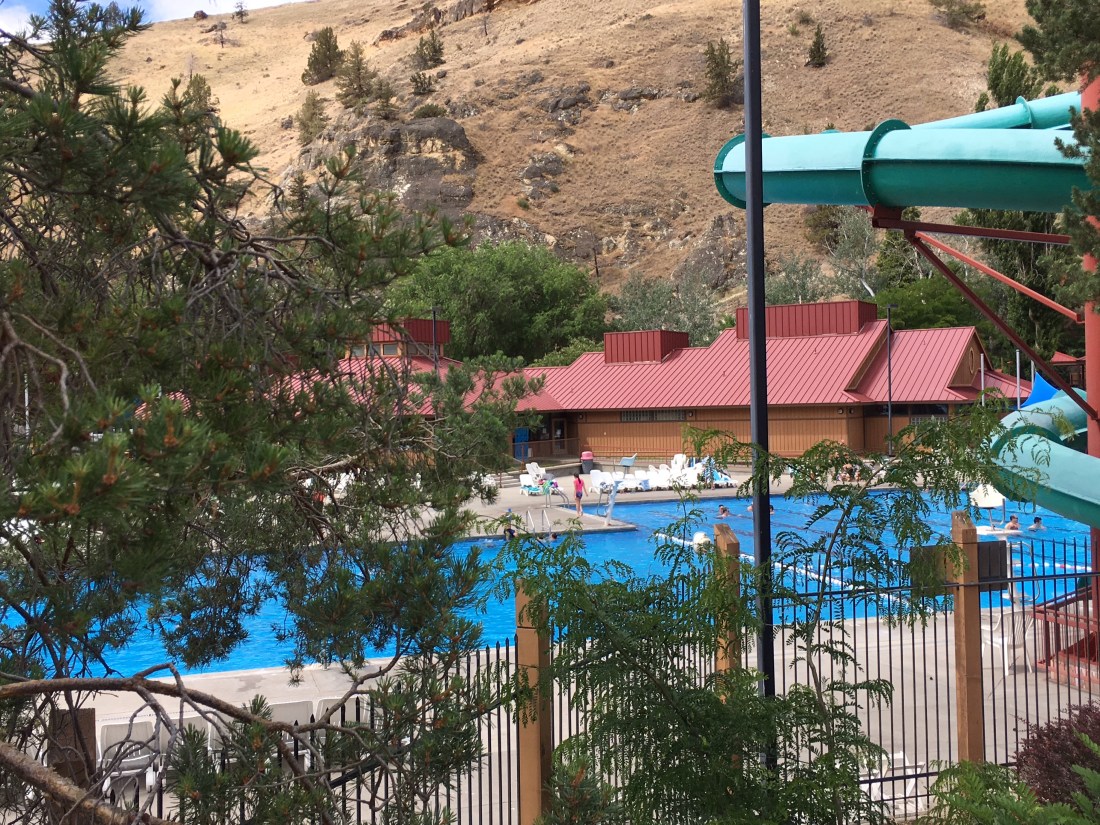
 Activities observed around Kah-Nee-Ta Resort in Warm Springs, OR: children scrambling up steep hills, running full tilt on pavement, playing ball in the parking area, and bouncing on air mattresses. And of course children were also playing more conventionally in the pool, at mini-golf, and at the playground. I’m glad there are a few family-friendly spots like this where kids create their own fun (Pool Day Use: $10 per kid, $15 per adult, free when you stay in the resort). There are two water slides, one tame and open, one steep and dark. The pool has reasonable rules: no food or drink, no float toys in the deep end, no prolonged underwater swimming. An additional rule states, “Please refrain from overly affectionate behavior, as children and families are present.” At least a couple of the lifeguards watching the pool were covertly occupied with their phones. Hoody up, shades on, eyes down on the screen hidden behind the rescue float. It was lovely warm chlorinated mineral water, geothermal heated to 130, then cooled to 90 or 91 degrees. There were the tan Indian children and the white children, the lavishly tattooed and the opulently wrinkled, the hairless and the hairy, the pregnant and the beach-ball pregnant. I got mugged by an inflatable flamingo piloted by a cackling teen girl but frontier justice prevailed later that evening. The flamingo rider had tried to toss the float toy over the sharp iron railing enclosing the pool. Of course the pikes impaled the flamingo’s neck and there she hung, hissing air. That’s the sound of 20 bucks leaving. I know that price because that’s what the mom said when she saw the deflated girl and bird.
Another day, and the lifeguard is paying attention. In fact, I approached the lifeguard and asked him (always a male) to intervene when I saw a situation I didn’t like. A muscled white dad, in his thirties, University of Washington (that’s U-Dub to locals) cap, stubble, was trying to get his six-year old son to go down the 184- foot, enclosed water slide. The little boy was crying and ran away from his dad at the top of the slide. The boy, whose name was Conrad, was not four feet tall, so he was too small by the pool rules to use the slides. The mom and boy were at the top of the slide and before the lifeguard could blow his whistle, she had put him in the slide. Down he whooshed, where he dad was waiting to shower him with praise for his “bravery.” Snort. Conrad continued to cry, but he cheered up when the lifeguard told his parents he was too small to use the slide. “Oh, he’s huge,” said the U-Dub dad when the lifeguard questioned his size. But they were banned from the slide after that. Of course, as with many frightening experiences, the first time is the scariest. But these folks forgot that it’s not fun being coerced. I don’t like it when parents hurt their children in the name of toughening them up.
While relaxing in the warm mineral water, a few memories of swimming pools surfaced. The float toys included a shark, a swan, an island, a race car, a doughnut, a raft, “Ducky-momo,” and a few cartoon characters I didn’t recognize. It reminded me that I was the one who popped my sister’s inflatable dolphin, Flipper. The second memory is of an example I learned from school. More drownings occur where ice cream is sold. But correlation is not causation, so ice cream does not cause drowning.
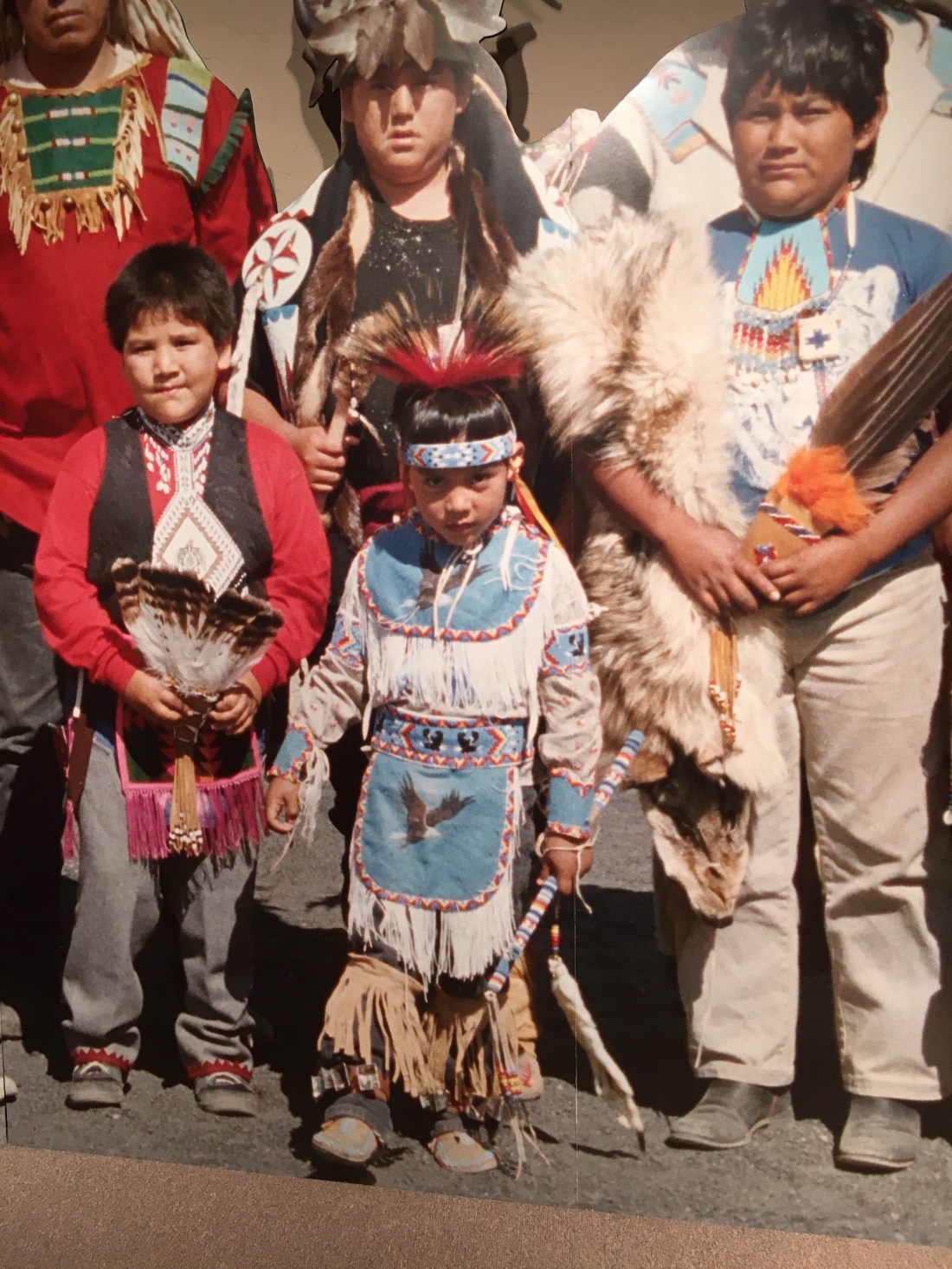
Now on to the Indian part of Warm Springs. Here’s a look at dressed-up young uns from a photo in the museum.
Kah-Nee-Ta means “Root Digger” in Sahaptin, one of three tribal languages barely surviving on the Warm Springs Reservation. We were guests of the Confederation of Warm Springs Tribes, one of the best established Reservations in the West. Thanks to a morning spent at their museum, I can narrate a bit of their history. In 1853 the Warm Springs Tribal Chiefs signed a Treaty with the USA, relinquishing 10 million acres in exchange for 640,000 acres. They gave up north-central Oregon, from the Hood River to the Deschutes River. They retained the right to fish and harvest in the National Forests where JG and I had been camping and hiking. We had seen signs prohibiting huckleberry picking unless we were tribal members. The other staples of their traditional diet were camas, bitterroot, biscuitroot, acorns, and salmon. Two other tribes, the Wasco and the Northern Paiute, joined the Warm Springs Confederation after a few violent skirmishes in 1879 and 1881 left them without recourse. The US Cavalry captured over 100 Northern Paiute warriors and their Chief Paulina, and threatened to hang them unless they relocated their people to Warm Springs. Several generations later, the Indians started to modernize. They wished to be more independent. They had sold their logging rights before, now they wanted to cut their own trees. They bought themselves a sawmill in 1942. They diversified their industries. In 1948, they built a hydroelectric dam on the Deschutes. They won a $4 Million settlement from the USA in the 1960’s when the USA built a dam upstream from their reservation. In 1972 they got into the tourism and hospitality business with Kah-Nee-Ta. Later they opened a casino on Highway 26 between Bend and Portland. In 2012 they opened a fancy new casino, called the Indian Head Casino, a mile north of the old one. As a federally recognized Indian tribe, the Warm Springs Indians have their own government within the USA, not answerable to the USA in many respects: property tax and ownership, law and judicial process, education, land use. A council of eleven chiefs, three serving life terms, eight serving three year terms, is chosen by popular vote. The council makes all decisions for the tribe at open meetings where any member can speak. The Warm Springs Indians are Northeastern Oregon’s largest employer, with over 1500 employees in 2015, even more than tire magnate Les Schwab. Other aspects of life on the reservation: we saw horses grazing on the unfenced grassland, apparently left to forage. There seems to be lots of communal property, small scale socialism. And thanks to the activism of the Warm Springs band in 2001, the Oregon legislature outlawed the term “Squaw” for any place names. “Squaw” is a perjorative term for a Native woman. This necessitated the renaming of over 89 Squaw Creeks. We camped along one near Sisters, now named Wychus Creek.


 When the lumber mill outside Leavenworth, WA closed in 1972, the town elders decided to court tourists with theme events and architecture. They Bavarianized the town. Every building is styled as if Opa and Oma had lavished care on the ancestral mountain home. I saw painted Baroque trompe–l’oeil window sashes like in this photo, window boxes planted with geraniums, folk art wall paintings of couples in traditional dress: the Herr in Lederhosen and the Fräulein in Dirndl. It was prosperous Bavaria without the xenophobia, welcoming tourists with beer and cheer. I noted a few houses that looked half-timbered, the traditional way of building, but were actually modern stucco with a half-timbered facade. Potemkin half-timbering! The German term for half- timbering, in which the wooden support structure shows in a contrasting dark color, is Fachwerk. That translates to “skilled craft work.” The motivation behind half-timbered houses was to show off the skill of the builder and the wealth of the owner with beautiful dovetail joints, built for the snow as well as for the ages. One aspect of German culture I love is this pride in handiwork.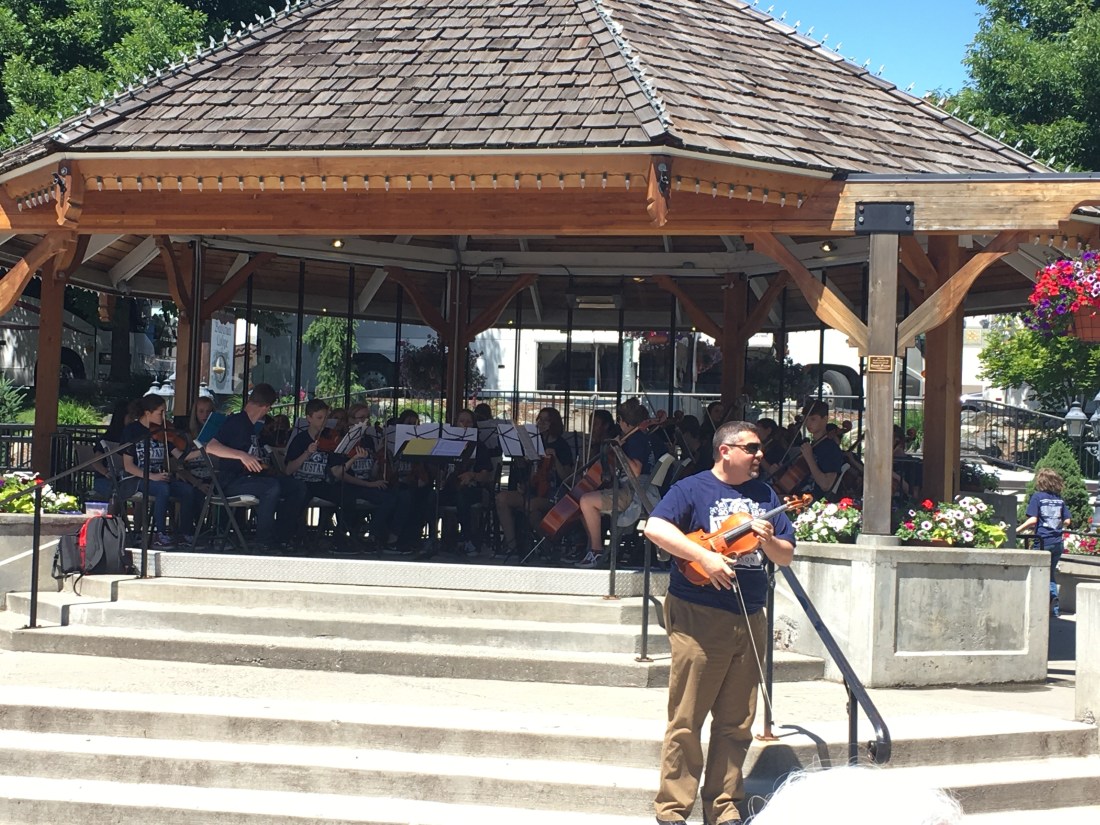
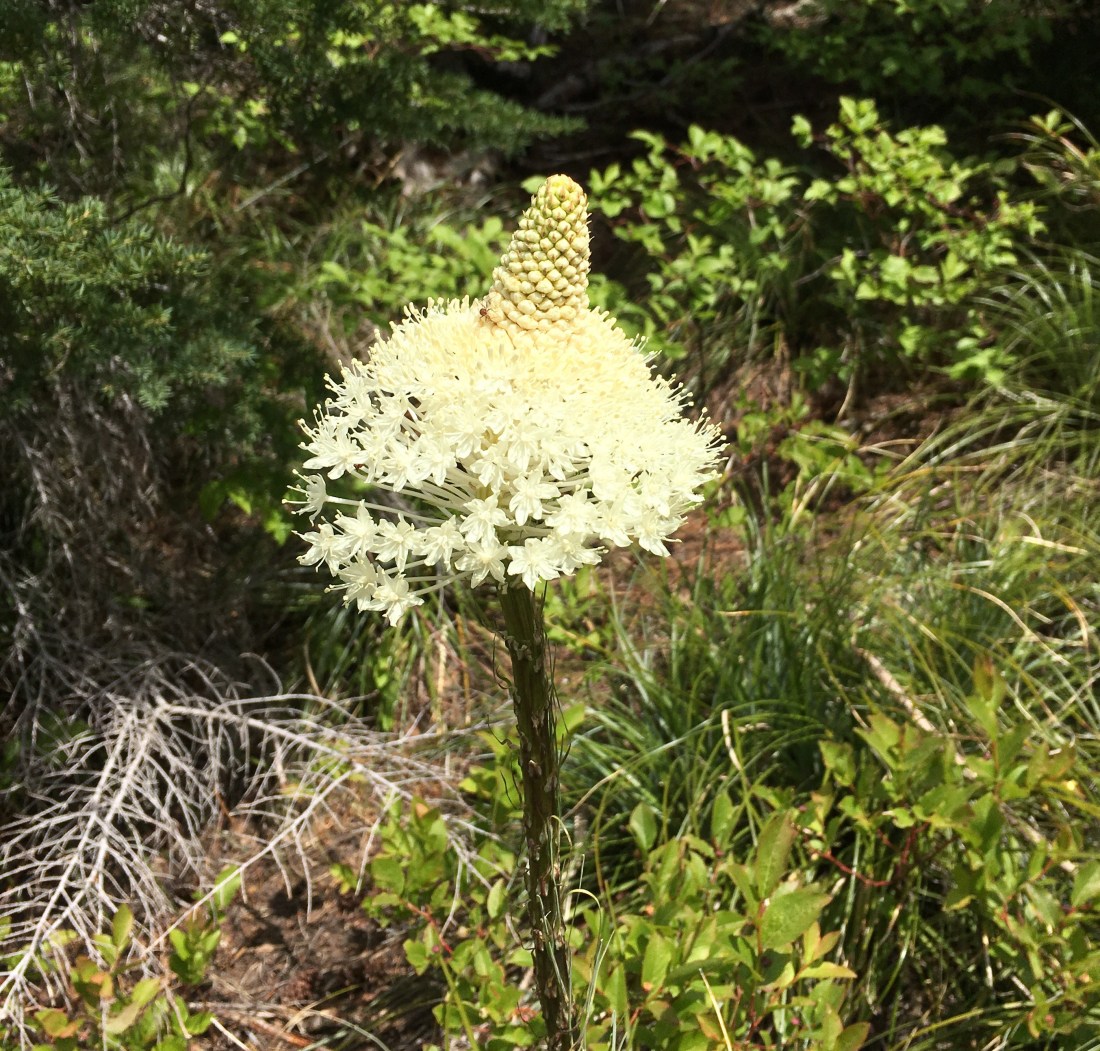
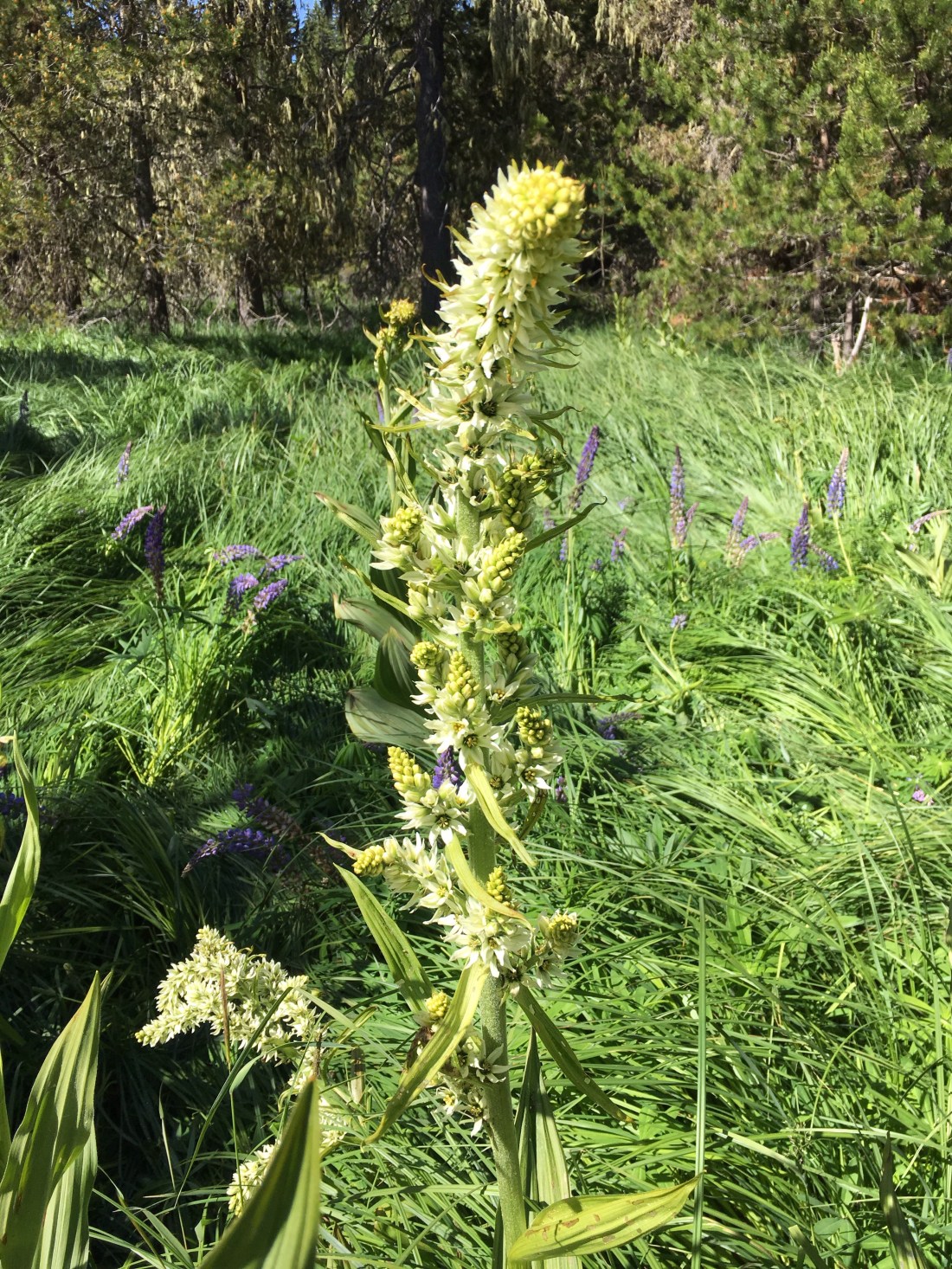 Veratrum? Corn Lily? At Little Crater Lake, Mt. Hood National Forest


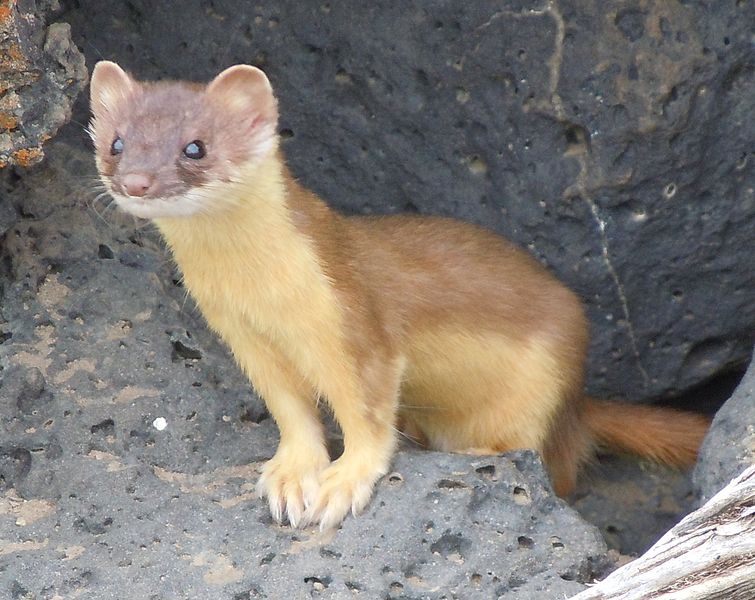 Why would anyone equate a double-talking politician with this fierce little predator? I think “weasel” should be a compliment. To weasel something should mean to take on and subjugate something much bigger than oneself. At Peshastin Pinnacles today, the rock formations, usually cause for delight, took second place to the weasel sighting. We also saw a marmot, but because certain Tahoe trails like Mt. Tallac are crawling with marmots every summer it hardly held our attention. This weasel fixed his bold predator stare on Marco, daring the pampered housepet on the bungee leash to approach and face certain doom. The marmot at least got out of our way. Of course Marco has tried to chase and eat every Golden-Mantled Protein Nugget that he smells. But the leash thwarts him. In other wildlife sightings, I saw a deer and an antelope on the Oregon range. No, they weren’t playing. But seeing the antelope was exciting, as they don’t live in Santa Cruz. And watching mosquitoes buzz and biff against the rig’s screens counts as wildlife sighting. I hope to see a mountain goat and a beaver, but no luck so far.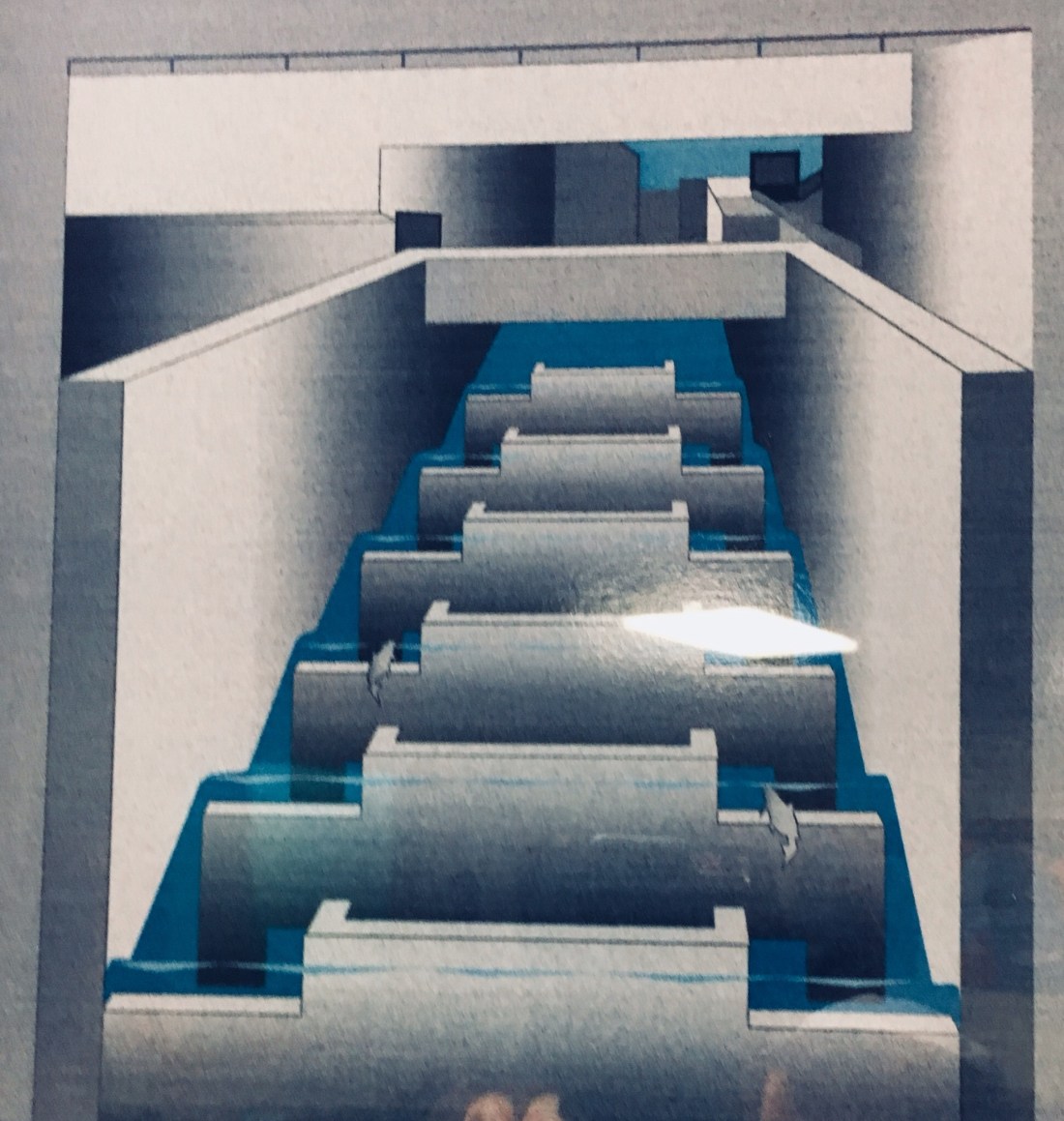
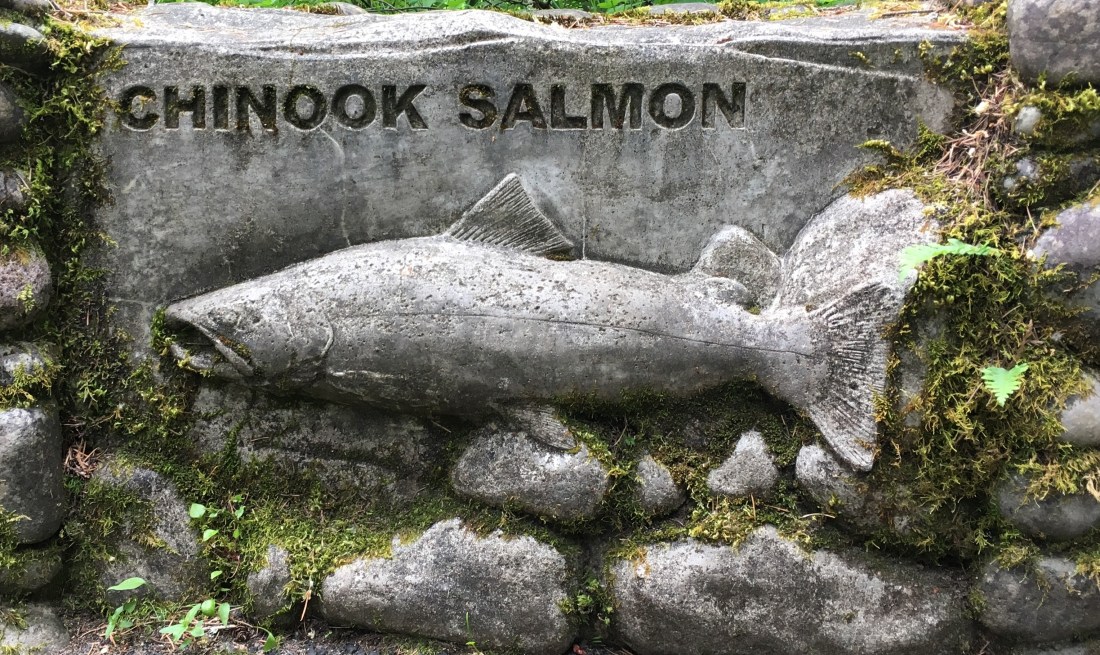
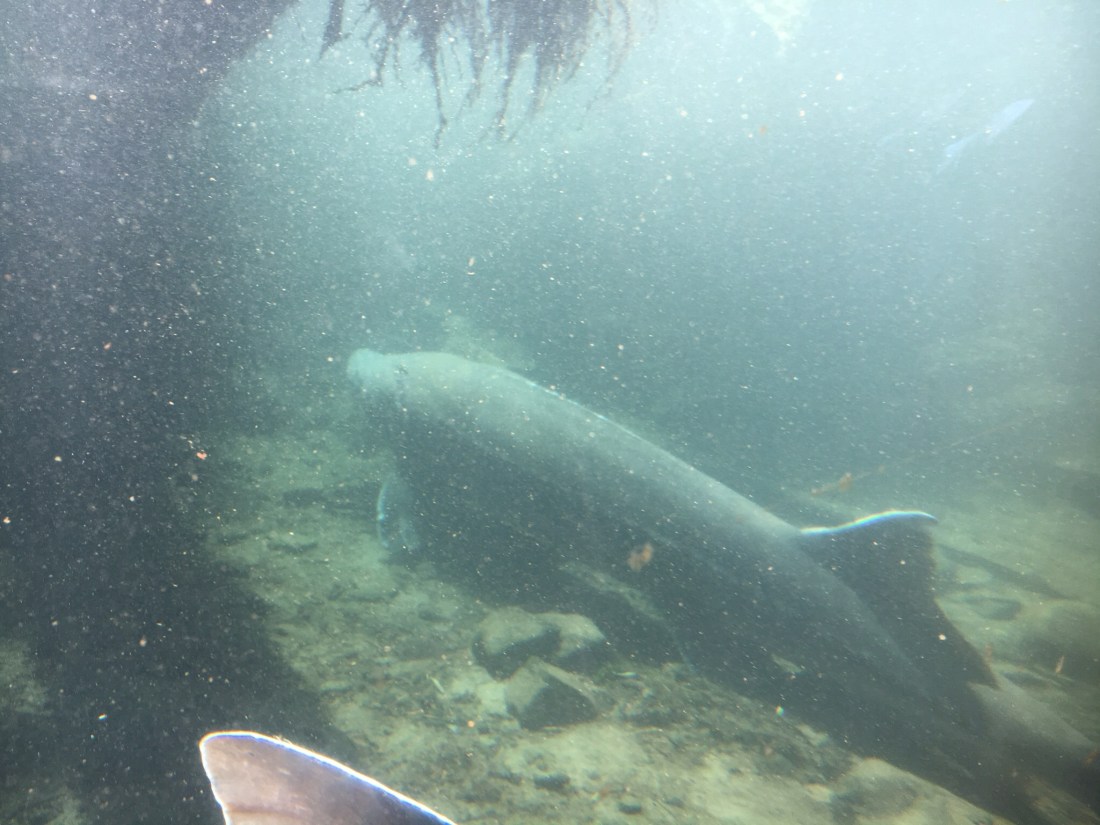 Take that, Spongebob. Herman was not evacuated last September during the Eagle Creek fire, although his keepers were worried about him. The Bonneville Dam wildlife specialists also have a program to protect salmon from the predations of the Northern Pike Minnow.

 JohnandJanet'sJourney