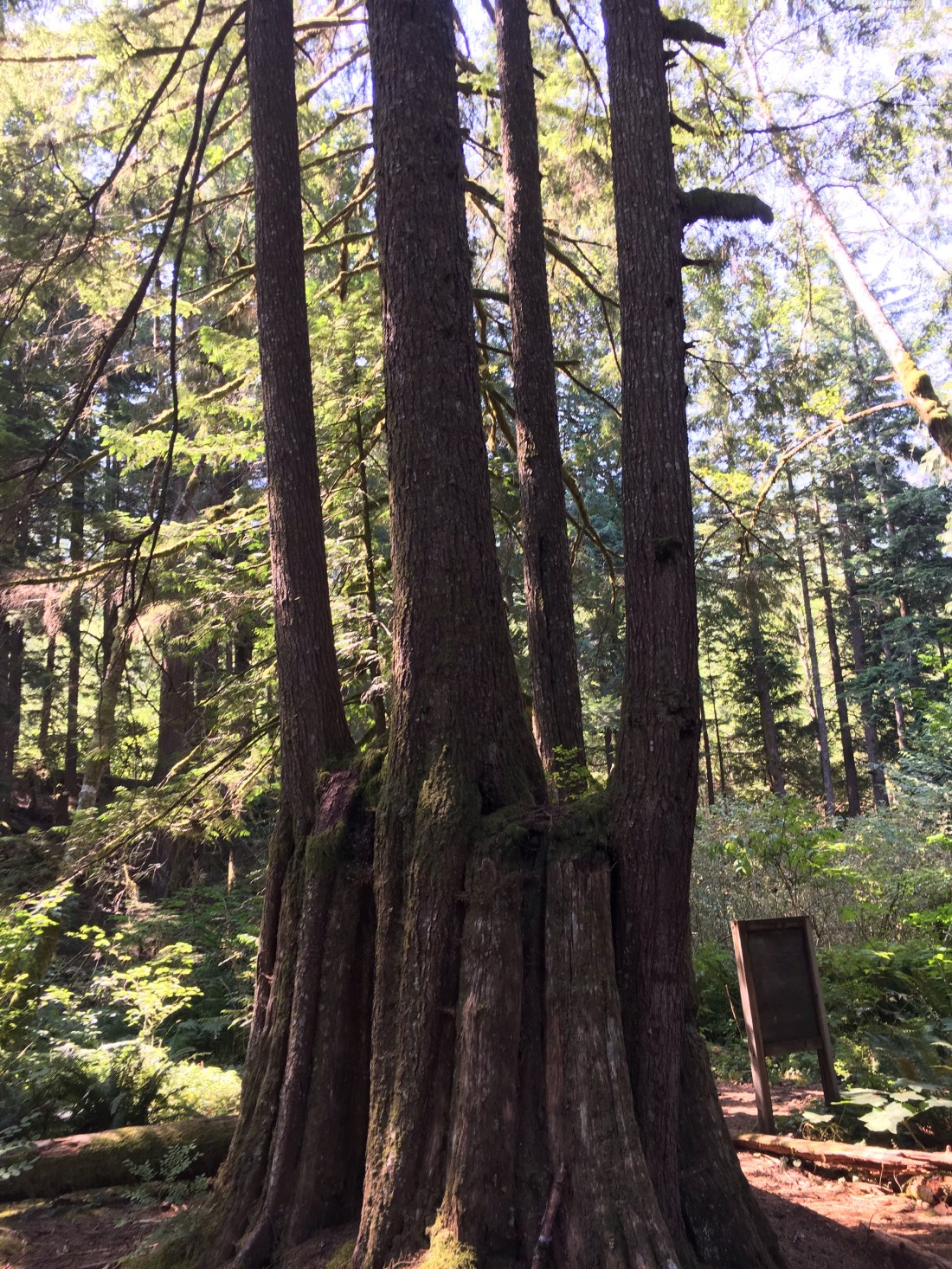
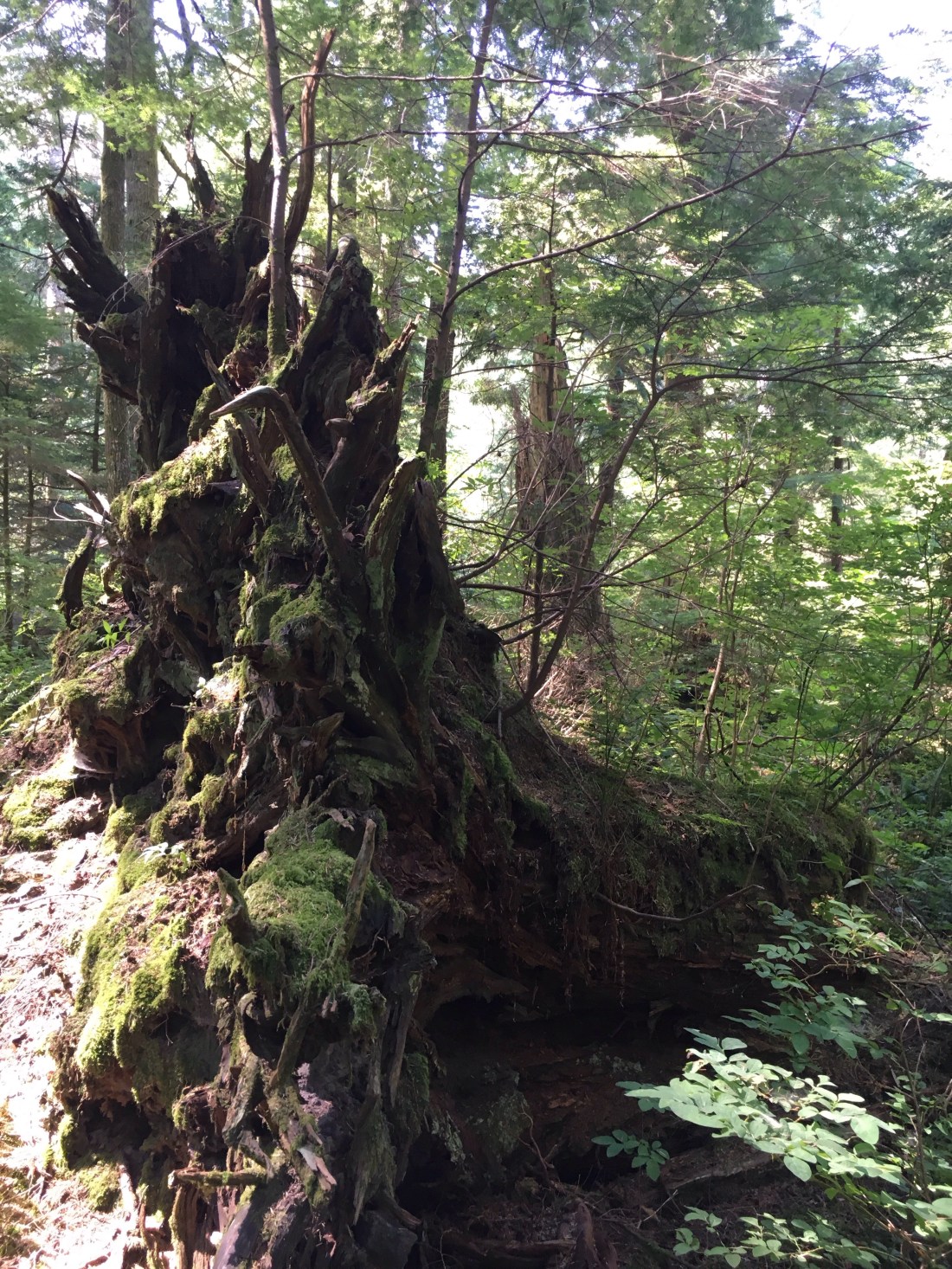
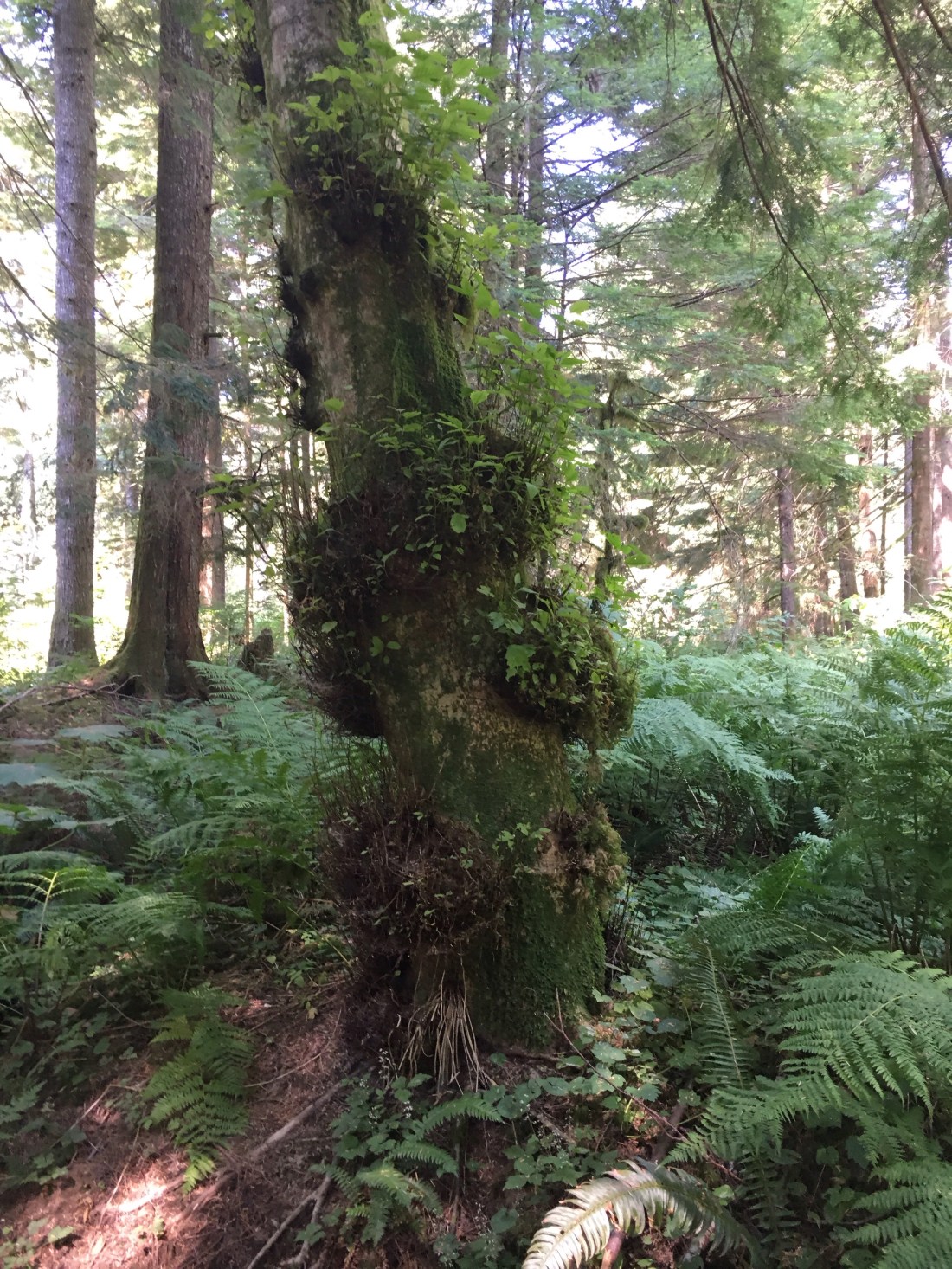
Enchanted Dragons

Dragon at Olallie State Park, WA

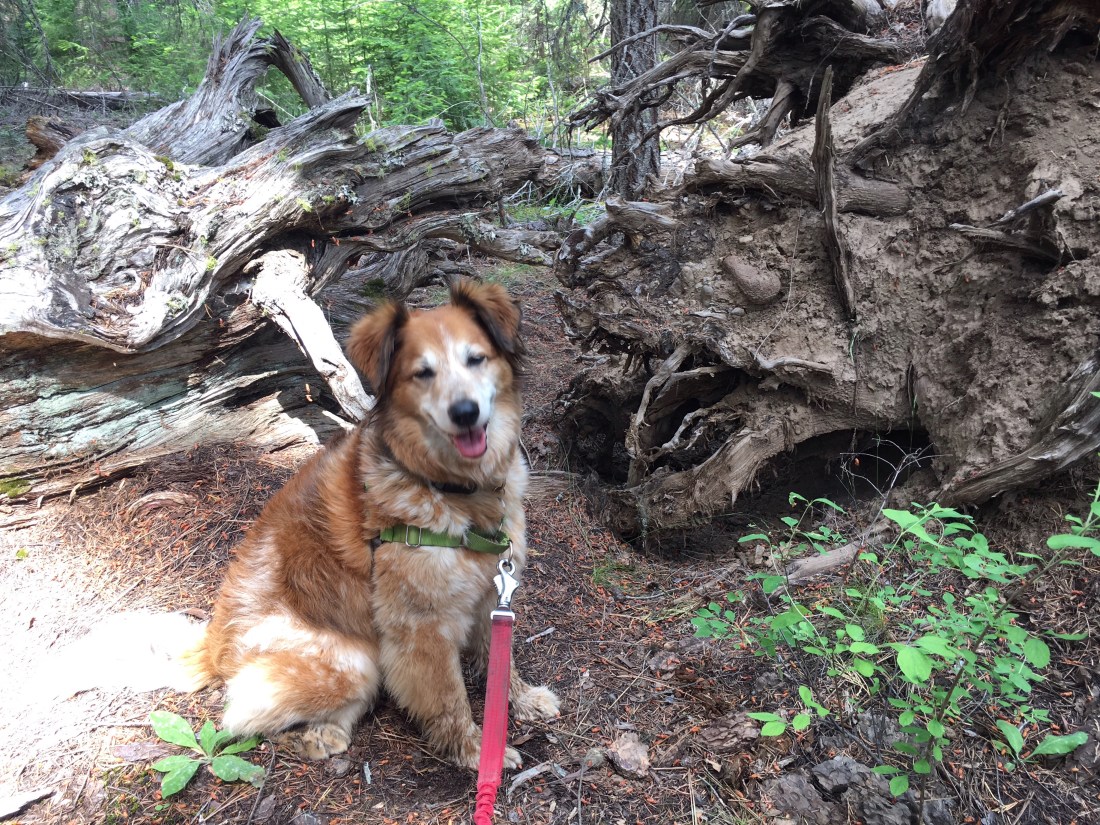
Two Conversing Dragons Behind the Dog: Wizard Falls Fish Hatchery, OR

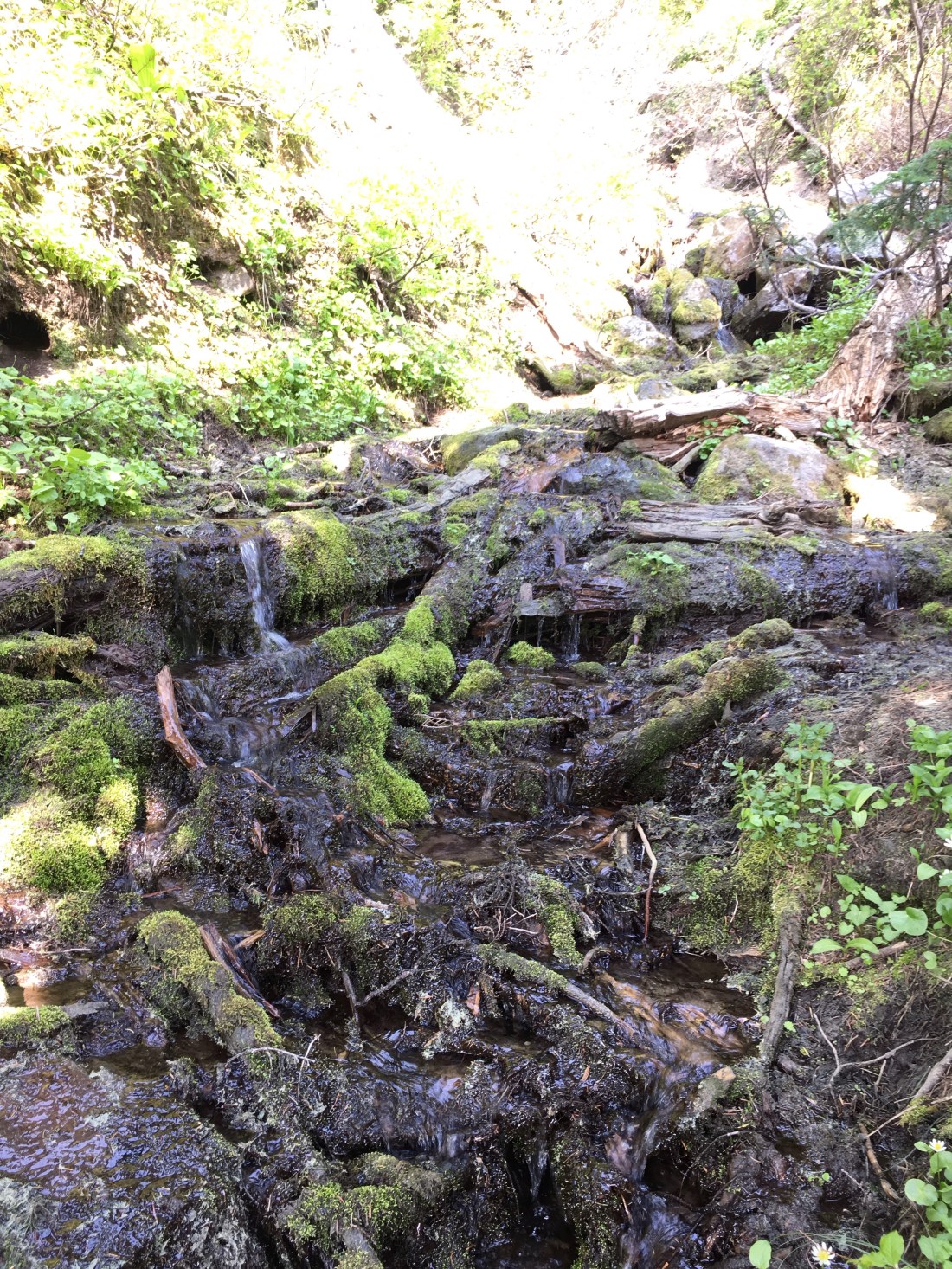
Melted Dragon: Trail to Sahalie Falls, Willamette National Forest, OR

Crying Komodo Lizard, Kootenay National Park, BC

Lower Canyon Creek Campground, Deschutes National Forest, OR

New Year’s Parade Dragon: Hong Kong Museum 2015

Olallie State Park

We explored some old growth forest, which really could be called old decay forest, since the decay side is at least as prevalent as the growth. It was a path less trodden: we had the place to ourselves.

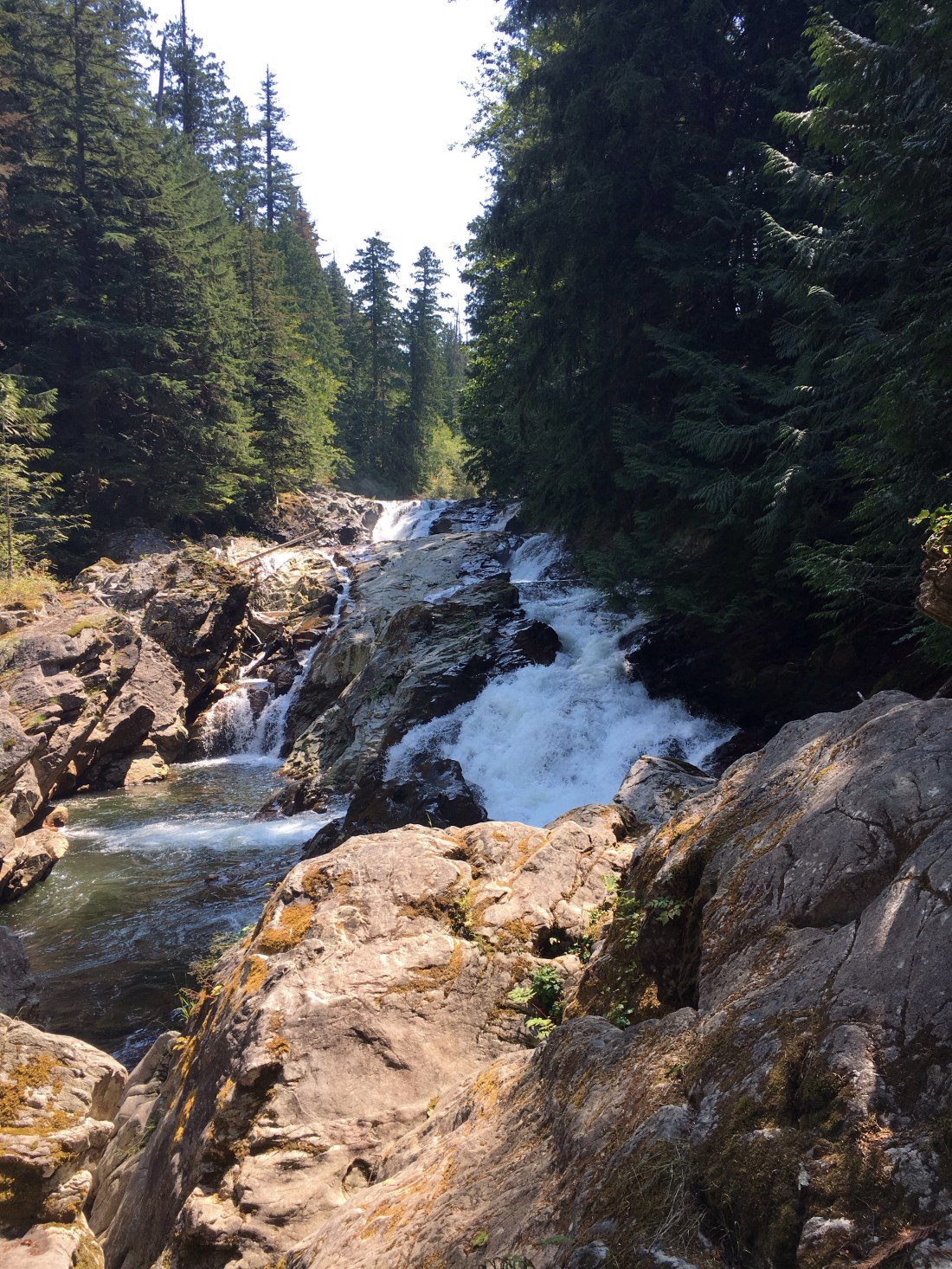
Weeks Falls, Olallie State Park, WA

Regenerative Power

Nursery Stump

Ferns in the Forest

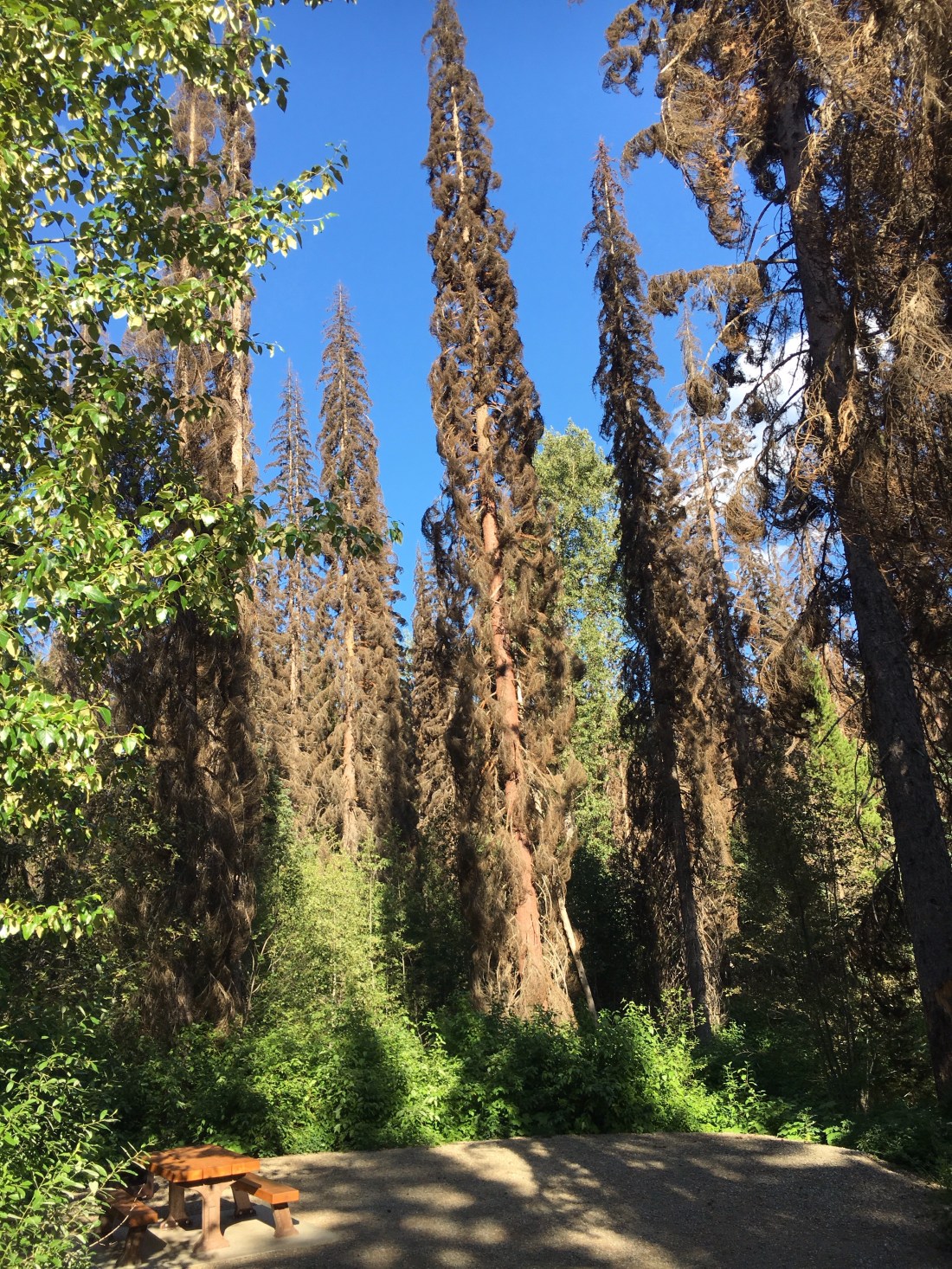
Climate Change, Wildfires

Pine Beetle Infestation at Manning Park, BC

I took the photo last month, before the area was consumed by wildfire. Central BC has had a state of emergency due to 533 wildfires as of 8-14-18. When we left the smoky province the count was at about 40. Canadian troopers and the Royal Canadian Mounted Police have been called in to assist firefighters. I did not mean to sound facetious or dismissive in my recounting of BC wildfire. They are no joke. Folks are being evacuated. Sure, we heard Canadians crack wise about “California, eh? You bring the wildfires?” Or ” the smoke is blowing up from California,” as one wag put it. But the forest was tinder-dry. It hadn’t rained hard in weeks, being the driest year on record. It was a record-setting heat wave. Lightning strikes set fires all over the steep forested terrain. Firefighters trench and back-burn to save communities. We were lucky we could just drive south to get out of the way.

Kootenay Rockies

Kootenay National Park, BC

Once we headed north from Cranbrook and away from broad river valleys, the scenery got steeper and rockier. Good bye, agriculture. Hello subalpine pines and at higher elevations, mixed conifers. Former fur trading towns became mining towns became lumber towns became tourist towns. The railroad was built through Marysville and Kimberley, leaving Fort Steele to founder. Fort Steele had been a defensive structure against the Kootenay Tribe, the Ktunaxa, (Tu N’ Sha), who are still around but deemed harmless. See ktunaxa.org. Today Fort Steele is a non-profit organization dedicated to 1890’s historical reenactment. Visitors watch bakers, blacksmiths, tailors, farmers, saloonkeepers, shopkeepers, etc. go about their trades. Costumed actors lead tours or hold pretend gunfights. Although I was interested in visiting the massive Clydesdales that pull the carriage tours through town, the horses alone were not enough of a draw to endure the historical education. Our daughter calls this “Old Timey Times.” It’s the sanitized TV version of the 1890’s where the ability to wear a corset and garter belt outweighs actual knowledge of the history. Even the Clydesdales snort and roll their eyes at the tall tales. So we skipped Fort Steele in favor of Marysville and Kimberley.

Marysville Falls, BC

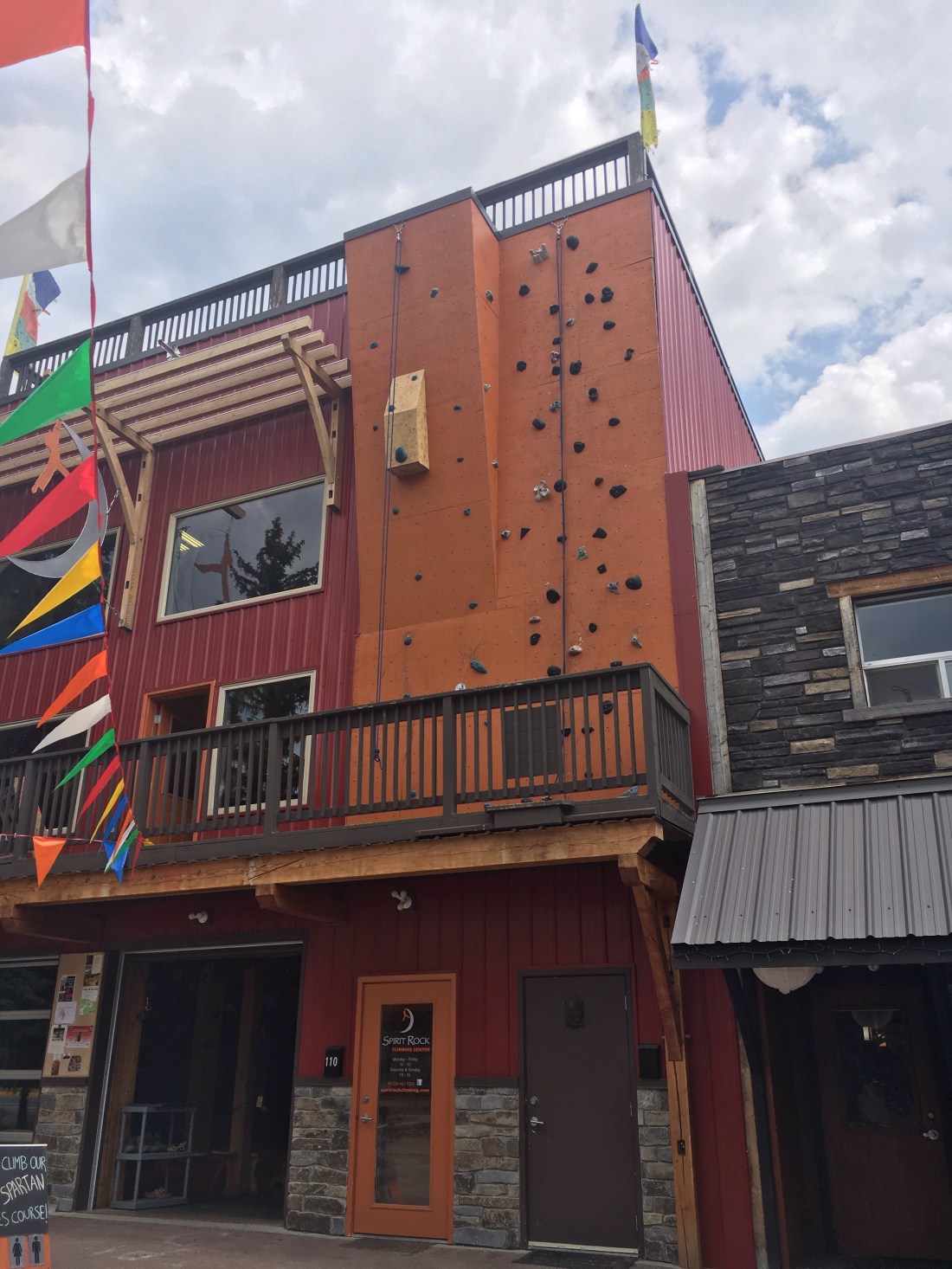
We stayed outside small but classy Kimberley, a ski town / golf town. It, too, like Leavenworth, had styled itself Germanic. Its pedestrian zone was called the Platzl and what had been Old West architecture was recast as Swiss mountain town. I think they sell more beer that way. I dropped off my used books at the library, picked up several more and chatted with the middle-aged ladies there. We ate lunch in the Platzl, where our British server knelt to love up Marco when he came to our table. We watched children playing in the creative fountain. When a cloudburst dampened us, they kept playing. A climbing school was located next door:

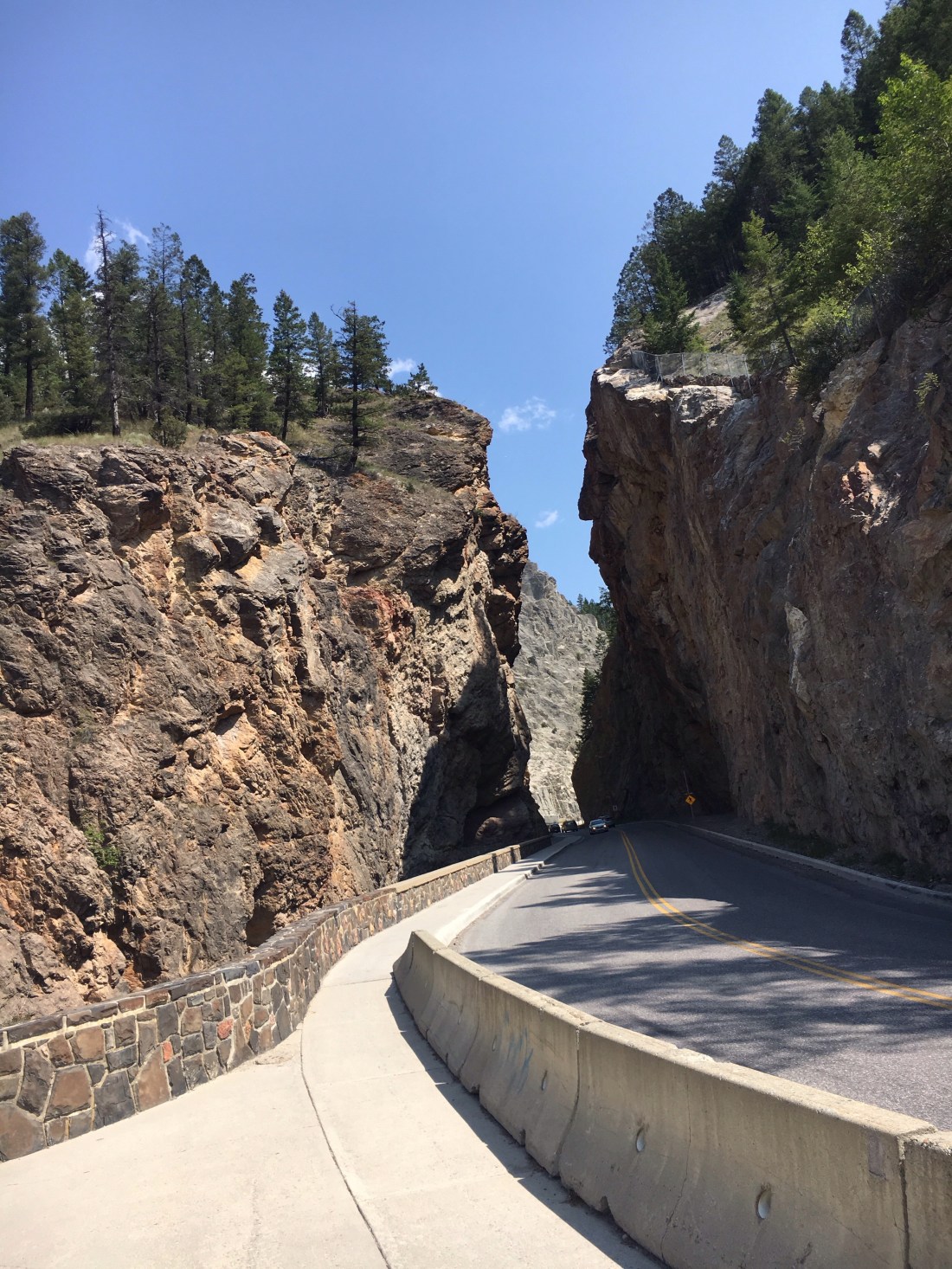
From Kimberley, we drove north to Radium Hot Springs, gateway to Kootenay National Park. Here we biked into the park. The hot springs were quite hot, 104 degrees F, and even the cold pool was warm on a sunny day. The crowd was international, including a bus group from Japan. I chatted with a Rumanian, Mikhail, and admired the rocky cliffs around the pools.

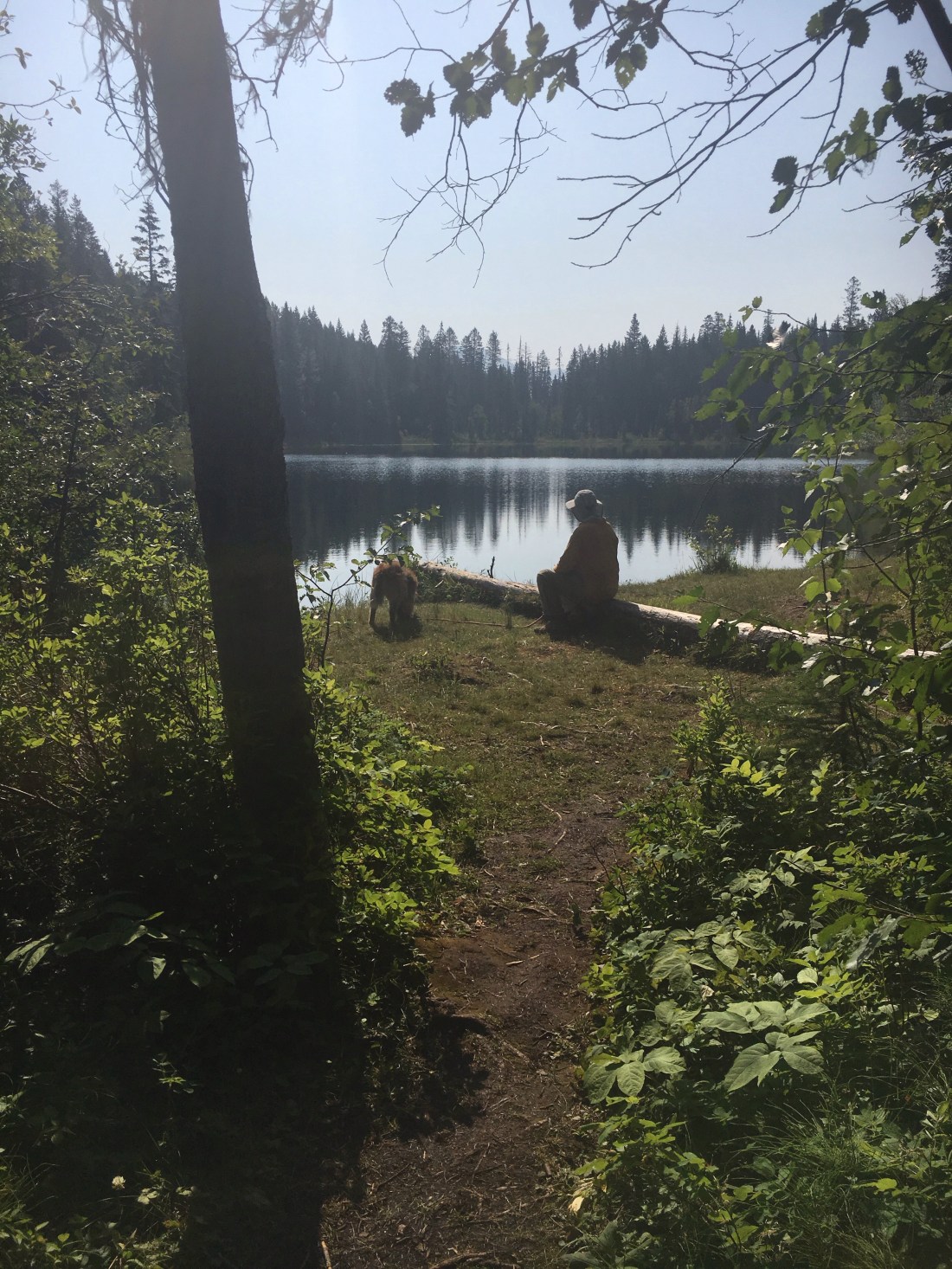
Unlike in US National Parks, Marco is permitted to hike the trails here. We hiked to unprepossessing Cobb Lake and had the somewhat overgrown trail to ourselves. It was hazy with smoke from wildfires in the Columbia River plain.

Our Kootenay Rockies trip ended abruptly the following day. Lightning strikes caused over 30 more wildfires in the area. Suddenly grimy firefighters appeared in the grocery store, buying granola bars and cereal. Suddenly the air went from smoky to choky. I was having trouble with my airways. When the highway into Banff closed due to wildfires, it was time for us to make new plans. What about the Olympic Peninsula?Let’s go to the rain forest to get away from the wildfires! South we drove to Norbury Lake Provincial Park, still under the haze. Then back west to Creston. In Creston we gave away our meat to the RV park proprietor and threw away our vegetables to make the US border crossing easier. I had seen the US guards pull the RV’s aside for further searches. I remembered the California border control guard to whom I surrendered my orange peels so I could keep the fruit. Early the next morning we motored into Idaho. I was relieved to put smoky Canada behind me.

Risky Behavior in BC Provincial Parks

Lightning Lake, EC Manning Park, BC

We spent a few weeks tooling around provincial parks in Southern British Columbia. From Washington, we crossed into Abbottsford. The first remarkable difference between the rural US and rural Canada was the latter’s apparent prosperity. Where the US farms sported dilapidated barns and rusty hulks of former vehicles (“it’s not clutter, it’s decor” as I used to tell the children), just across the border farms boasted greenhouses and late-model pickups. Same general climate and soil conditions: WA farmers were growing alfalfa and potatoes. BC farmers were growing cucumbers and tomatoes. Guess who had the most lucrative yield per acre.

First we stayed at Maple Bay in Cultus Lake Provincial Park. It was a beautiful lake, developed for tourism, bobbing with power boats, edged with summer homes. I swam in the lake and JG and Marco walked. I watched light-skinned Canadian speed boaters roast to extra-crispy while drunkenly singing along to Toby Keith’s honky-tonk anthem to graceful aging, “I Ain’t as Good as I Once Was.” It was all I could do to restrain myself from swimming over with the sunblock between my teeth. I hate to watch people get hurt. But I vowed no more trail-momming except in emergencies or for kids. I’m trying to let people have their own experiences with nature, even if nature hurts them.

Then we drove east, roughly paralleling the border, through Chilliwack and Hope, to EC Manning Provincial Park. This was our first ever experience with first come, first served (FCFS) camping. What thrills JG: spontaneity, the adventure of the unknown, has drawbacks if you’re a planner like I am. I worry about uncertainty. Turns out we had no trouble finding a campsite at Manning Park at nearly-empty Hampton Campground. All it took was a posted warning about non-potable water and the crowds stayed away. A little internet sleuthing later revealed arsenic as the culprit. Could it be that giant metals miner Teck, located upstream, discharged contaminants? I did not have the bandwidth, as they say, to research the question, but I’ll cheerfully cast aspersions.

The rolling hills, vineyards, and orchards between Manning Park and our next stop charmed me. It looked like Corralitos 40 years ago. In the 70’s and 80’s the orchards around Aptos were converted to vineyards and housing, for a more lucrative yield per acre. We stopped in Keremios at Orofino winery and found some very good red blends. I noted that winery names come in two basic styles. The names aimed at baby-boomer drinkers reference a family name or a nature-y setting. The names aimed at millennials evoke the emotions the wine will provoke: love, passion, crazy good times. I now expect my millennial readers to chime in, saying they like nature-y names, too. They are mature for their years.

Beaver Creek Provincial Park sprawls next to the Columbia River, close to Trail. We saw moose gamboling across the highway. Moose! Also bicyclists frequent the highway here. I clucked with worry for them: no road shoulders, no bike lanes. But if we never took risks we’d all just stay home and get even more narrow-minded and broad-seated. Meanwhile, we had a few conversations with Canadians. Although I gushed with praise for their beautiful country, the ones I talked to were not very friendly. Think Philip Seymour Hoffman or Kathy Bates in “Misery.” I should have praised the Blue Jays or the Maple Leafs. Then we could have a chat about something that would animate them more than — shrug — trees, animals, rivers, and wetlands. It took about a month before I met a friendly Canadian up for a chat. Tom the Camp Host and I talked about the weather. He said, ” Y’know, you can’t believe them weather reports. Fake weather reports are like fake news, eh? You can’t believe ’em.” I laughed. Neither of us had seen any weather reports, being in an area devoid of cellular service. But he was better at reading the clouds than I was. In Soquel, reading the clouds means gazing at the Capitola fog bank, which recedes around midday. I was glad to be around actual weather and someone who pays attention to clouds before, say, launching a canoe.

Sunset at Kikkomun Provincial Park

From Beaver Creek we continued east with the goal of spotting endangered wildlife. Hidden Lake at Kikkomun hosted many Western spotted turtles. In the photo they look like lumps on a log, but they are much more exciting in real life. The little ones hoist themselves on top of the big ones, who either oblige and make room or not. It reminded me of the sea lion scene below the Santa Cruz wharf. Everyone wants to haul out and rest, and the bigger ones claim the best spots. Then they pretend to sleep so they don’t have to get up for the little ones. Or at least that’s what I used to do.

After Kikkomun we turned north and laid in at Creston, BC. Here JG visited the local museum and I spent an afternoon at the indoor pool. I was surprised to see such potentially dangerous equipment as a jetted hot tub, 12 foot climbing walls and diving boards. Our local pool at Simpkins Swim Center has no diving board and its climbing wall is 4 feet tall. The Creston lifeguards walked up and down and actively paid attention, rather than perch in an elevated chair. The hearty Canadians’ tolerance for risk and, judging by the repeated belly-flops off the diving board, pain, is greater than that of the litigious pansies of California. Interestingly, footwear of any sort is forbidden in the locker rooms and around the pool deck. Those brave souls fear neither slip-and-falls nor foot fungus. Living on the edge, I removed my flip-flops and took a risk.
Twin Forks, OR

IMG_1130
Demonstration Garden Resident

IMG_1126

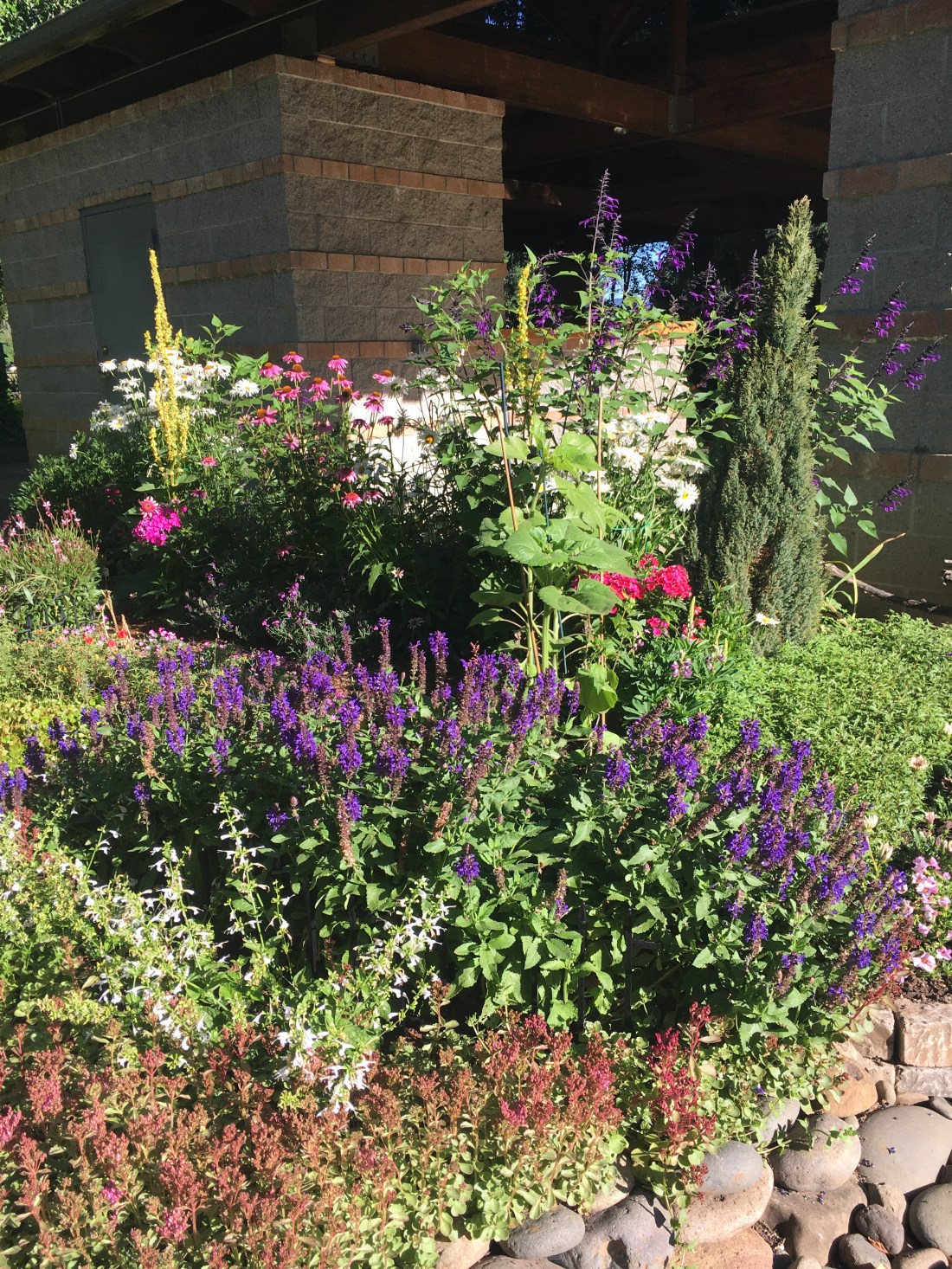
The three of us toured a serene, artful demonstration garden maintained by volunteers from nearby  Roseburg. A docent named Jan talked to us as she cut back her bloomed-out coreopsis. Originally the garden held community work days and everyone planted, clipped, raked, and mulched in unison. But the volunteers weren’t happy.  So a new manager came in and allowed each person total control of a small plot of soil within the garden. Some experimented, some stuck to traditional garden tried-and-true favorites. The garden looks glorious. The parallel to the failure of Soviet collectivization should escape no one.


Pioneer Spirit

The Seven Summits Learning Centre in Rossland, BC, Canada

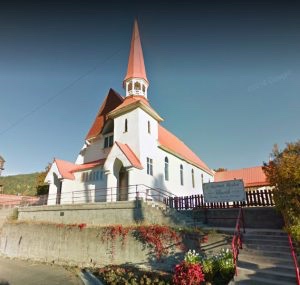
This post will be about spiritual paths in Canada. I notice less flagrant religiosity than in the USA: no Jesus-themed tattoos, billboards, car decals, or hood ornaments. One of the games JG and I have played on this trip in the Northwest is: “Name the Denomination of that Church.” Square, brick, stolid, no cross, outskirts of town: LDS, or maybe Seventh Day Adventists. Fanciful, gingerbread, center of town , with iconography: Catholic. Without iconography: Presbyterian. “Name that Denomination” is almost as much road trip fun as “Name that Carcass,” which requires a different skill set. So Canada, in its stolid, prosperous, practical way, stumped us by combining denominations in 1925. United Church of Canada was formed by the union of the Methodist, Congregational, and a majority of the Presbyterian Churches. Later they were joined by another Protestant sect, the Evangelical United Brethren. Each denomination didn’t have enough separate congregants and needed to pool resources. According to Wikipedia, “congregations from Indigenous communities were an important factor in the effort toward church union.” The United Church of Canada defends Palestinian rights in Israel and is silent about the massacre of Rohingya Moslems or the persecution of Christians by Isis. But with 2 million adherents they may take a few wrong turns. The former church above was captained by a beloved Father Pat, to whom a statue is dedicated. Now it is a fancy non-denominational private school, Seven Summits Learning Centre, which competes in a league against the Catholic schools.

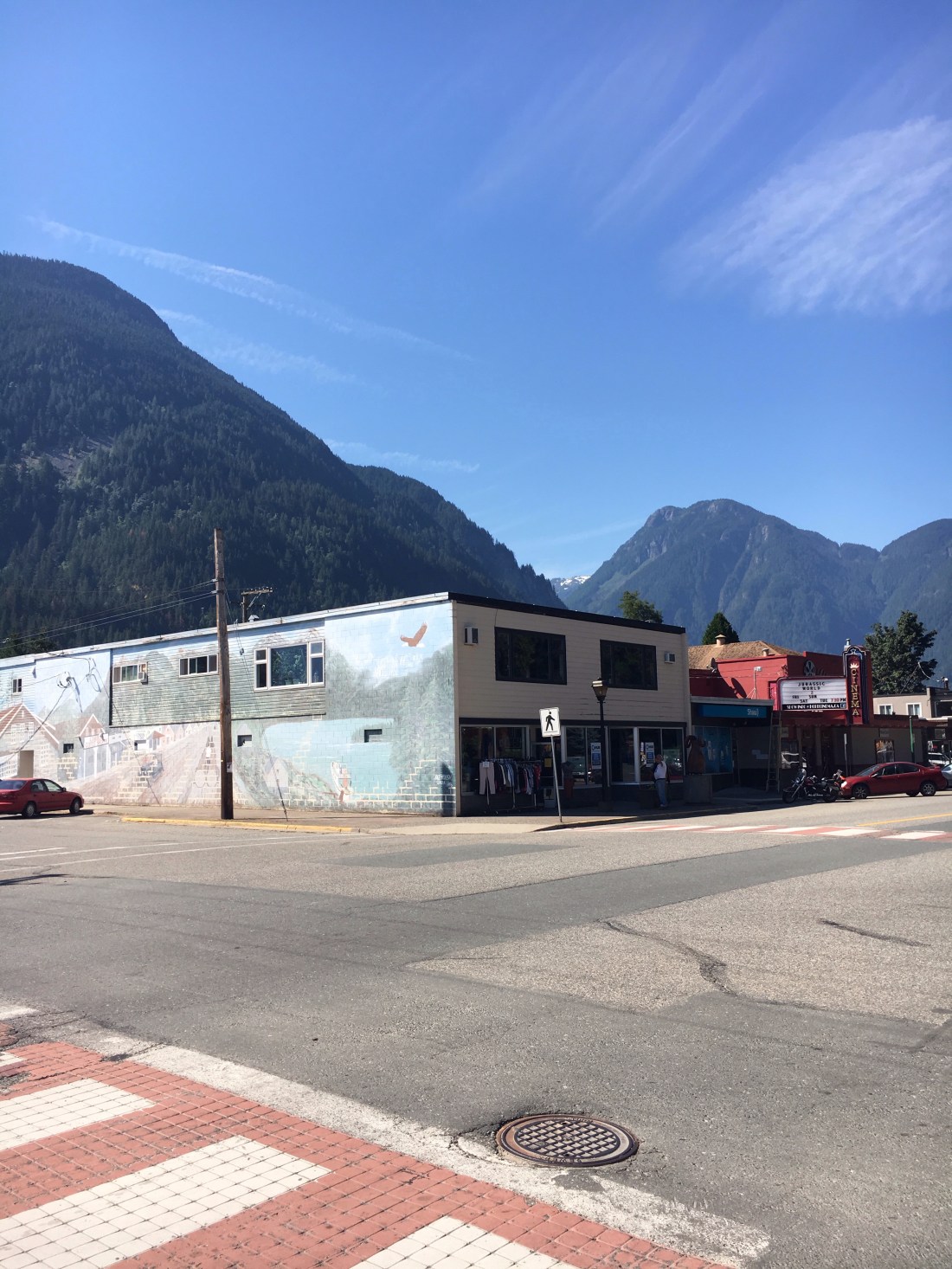
Now I need to describe an altruistic act I witnessed that put me in mind of faith-based action. In Hope, BC I was browsing in a small shop, looking for a cap. An older gentleman came in and asked if the proprietress had his size in jeans. She said she didn’t, but offered him a sandwich from a cooler behind the counter. Then she apologized for not having any cookies today. After he left with his egg salad sandwich, she told me the background story. Every morning she makes about 34 sandwiches: peanut butter and jam, ham and cheese, or egg salad. An 83 year old neighbor makes a tray of cookies every day, usually rice krispy treats. She gives them away to anyone who asks. JN: Are you a church? Shopkeeper: Ah no. We just do this, my husband and me. JN: Why do you give sandwiches out? Shopkeeper: Because people are hungry and the nearest food bank is in Chilliwack. (She points to two jars of change on the counter. One is labeled “For the Hungry” and one is labeled “Pay it Forward.”) The community supports us. Here is her shop:

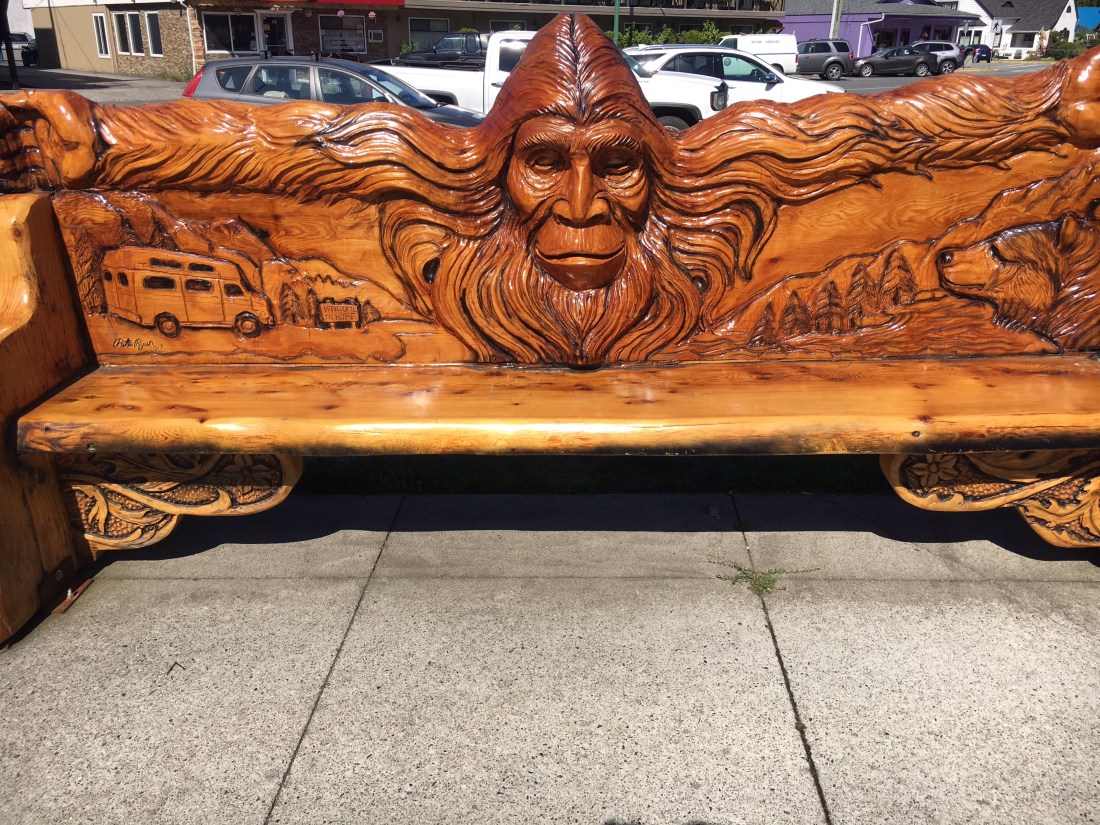
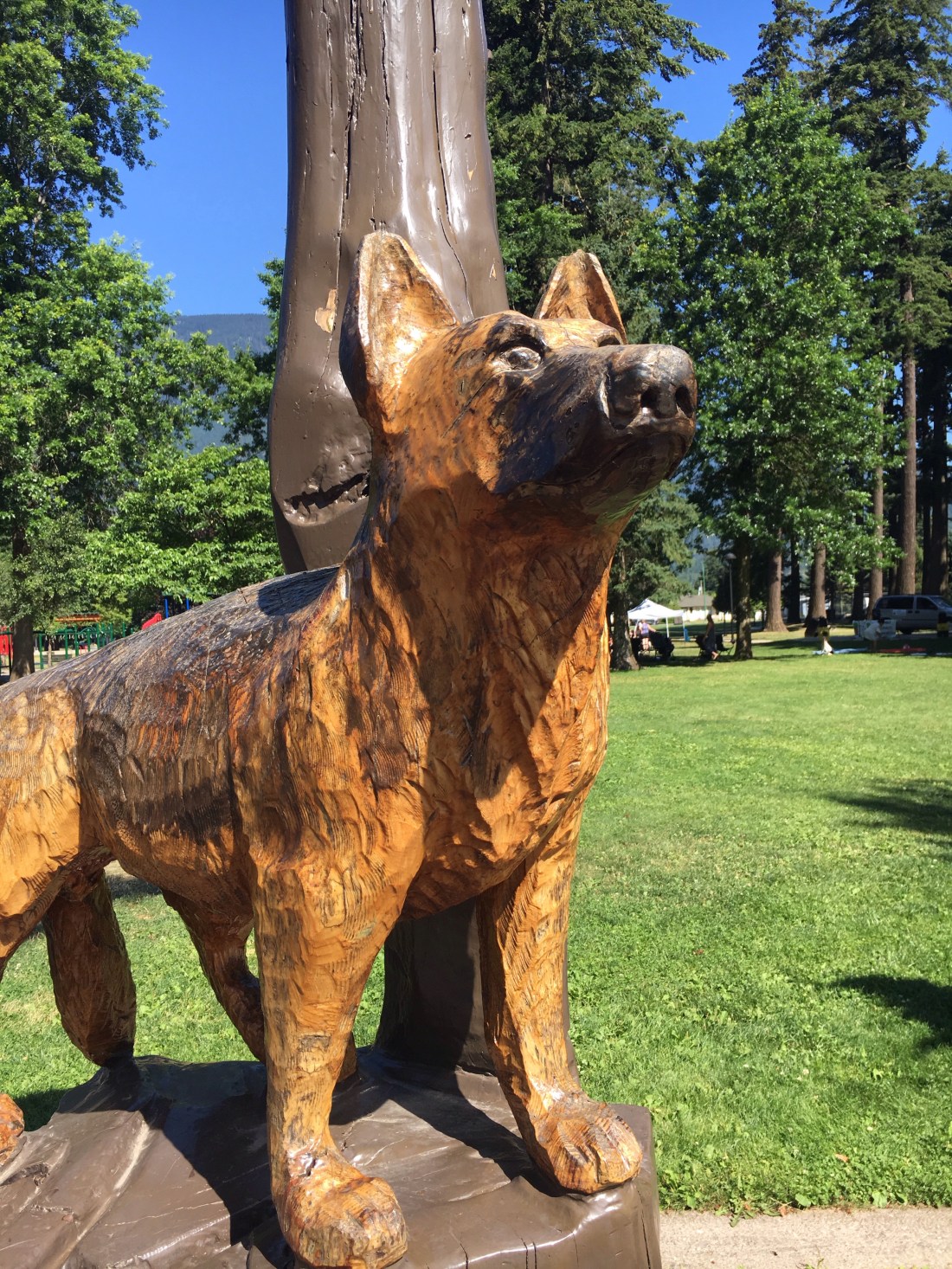
Besides Hope was home to some lovely works of chainsaw art.

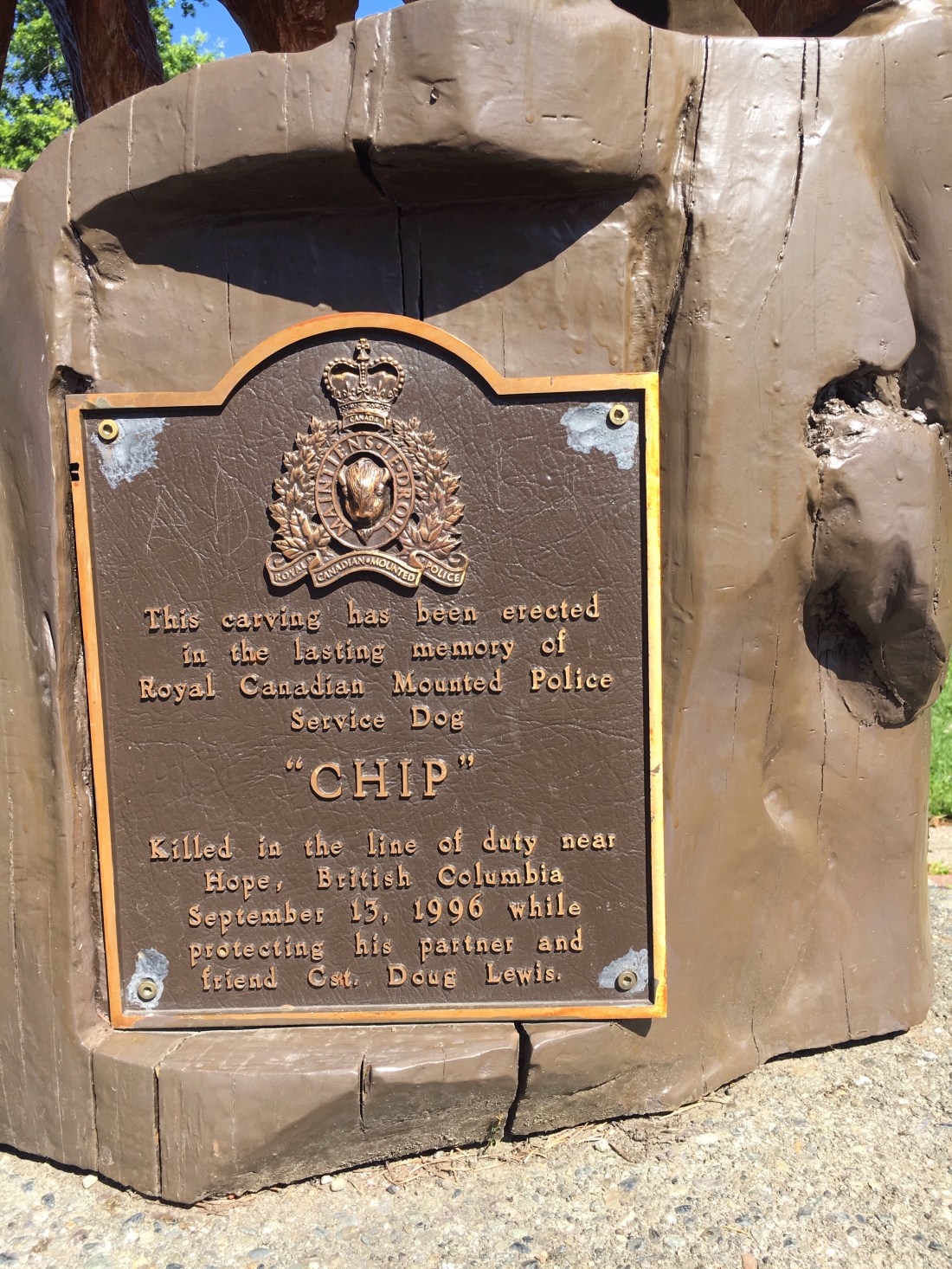
And not to be overlooked, there is a statue of Chip, a brave Mountie dog, who gave his life in the line of duty and saved his partner and friend, Constable Doug Lewis. Our daughter loved the stories about hero dogs, so here’s Chip:

Department of Misnomers

One of my pastimes while traveling is collecting misnomers. Here is an invitation to my readers to add to this collection in the Comments Section, please, if you have some to share.

RV Park: Let’s start with RV Park. It turns out “park” is a verb, not a noun. What we get for our $40 or more is a slot with hook-ups for power, water, and sometimes a drain for sewage. Sometimes we get use of a picnic table.

Tree of Heaven: Ailanthus altissima is one stinky, obnoxious tree. It’s a Class C (most widespread, greatest danger) Noxious Weed on Washington’s List of Invasive Species.

Paradise Point State Park: our campsite was located 50 feet from busy Interstate 5 with all the ambiance and amenities of a roadside pull-out. It was worse than a Rest Area. We forfeited our prepaid reservation and drove on.

Desolation Wilderness: is the most visited Wilderness Area in the nation. It has instituted a permit system, by destination, to limit traffic.

Pacific Crest Trail: it is nowhere near the Pacific and almost never on a crest. It does not travel along the Divide of the Sierras.

Oregon Grape: (Mahonia aquifolium) is the state shrub of Oregon. In a plot by the breweries to discredit the wine industry, Oregon Grape is not a grapevine. It is a sour, seedy little berry related to our Toyon.

Washrooms: in Canada, what Americans call bathrooms are called washrooms. Even vault toilets are called washrooms. Surprisingly, the individual vault toilets are identified by gender, “Men” and “Women,” perhaps so that the gents may leave the toilet seat up undisturbed.

Lake Koocanusa

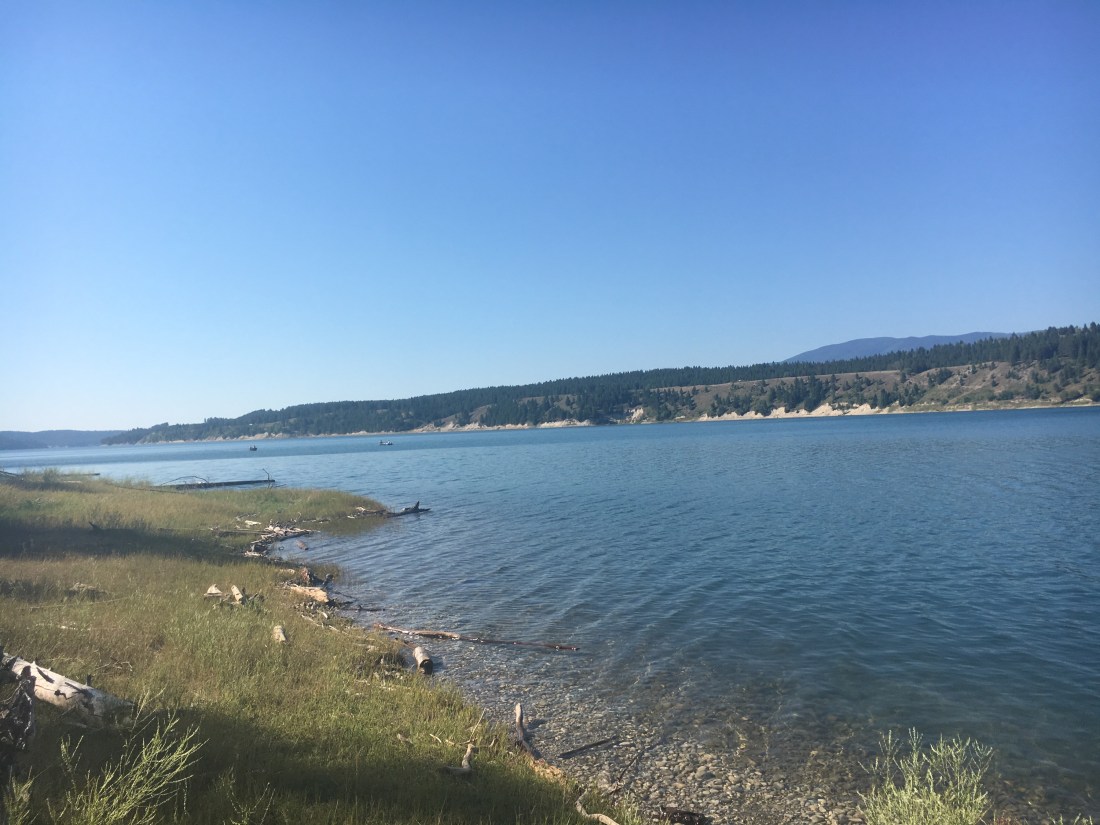
Koocanusa is a portmanteau word: Koo from Kootenay, the river, Ca from Canada, and USA for our great nation. We are camped at this 90 mile (144 km) long lake, created by the Libby Dam in Montana, because I wanted to see the Western Painted Turtles that call Kikomun Provincial Park home. JG has better photos of them. Mine look like bumps on a log. Turtles qualify as my favorite reptile: slow-moving, small, cute, unthreatening. They live in several smaller, warmer lakes created by glacial indentations. The turtles are endangered and don’t much care to reproduce. And their eggs are tasty to many predators.

Kikomun is a popular park with urban boat owners from Edmonton and Calgary. I am at pains to think of good things to say about power-boaters, but here’s one: they gather together socially. For one thing, it takes two to launch or trailer a power boat. While I was swimming in Koocanusa I helped a teen girl whose rudder had gotten stuck in the launch ramp. I helped her lift it out before her dad could return and yell at her. Making family memories.

Okanagan River

Okanagan Falls, or sx̌ʷəx̌ʷnitkʷ , is pronounced “s’hoch’neet” and means “little falls.” The Nsilxcim (pronounced Skeltchen) word is coming back into use, thanks to the Okanagan Nation, who are the S’yilx (pronounced s’yil h). Sure, its spelling is not for sissies. But consider the crimes committed by the European settlers, not least was forbidding Native children to speak the language of their people. Reparations are in order, and because of my European descent I will learn some of their language. I will refrain from snark about their aversion to vowels. The apostrophe signals a glottal stop. In Osoyoos, pronounced O-sue-yuss, we plan to benefit from the hospitality of the First Nations again, after Kah Nee Ta, by staying at the Nk ‘Mp (pronounced Ink a Mip) RV Park. We like to spend our tourist money on locals. You can’t out-local the First Nations. My father used to say he couldn’t be out-oldtimered in Santa Cruz. That’s because the Costanoan Indians weren’t around to gainsay him. One fascinating aspect of our trip through the Pacific Northwest has been more prominent evidence of native tribes.

The Okanagan lakes, river, and grasslands are like nothing in Santa Cruz. Broad and swift through the hills, then flattening to marshlands, the river supports diverse ecosystems. Mega fauna like grizzlies and moose browse here. We were excited to see moose above the Columbia, on Highway 3, between Warfield and Rossland. The locals treat them the way we treat mule deer: great big garden pests and road hazards.

We stopped in at the Creston Valley Wildlife Management Area’s Discovery Centre. The CVWMA former nature center closed in October 2017 due to lack of funds. We visited a small trailer used for outdoor education about the 7,000 hectares (one hectare equals 2.47 acres) of wetlands overseen by the CVWMA, now funded in part by BC Hydro, the power company. On the trail, I spotted a snake before leashed Marco did. It was a kind I’d never seen in California: about 24 inches, grayish-yellow, under a tree near the swamp. Thanks to the internet I identified it later: an Eastern Racer, Coluberconstrictor. Venomous but not deadly.

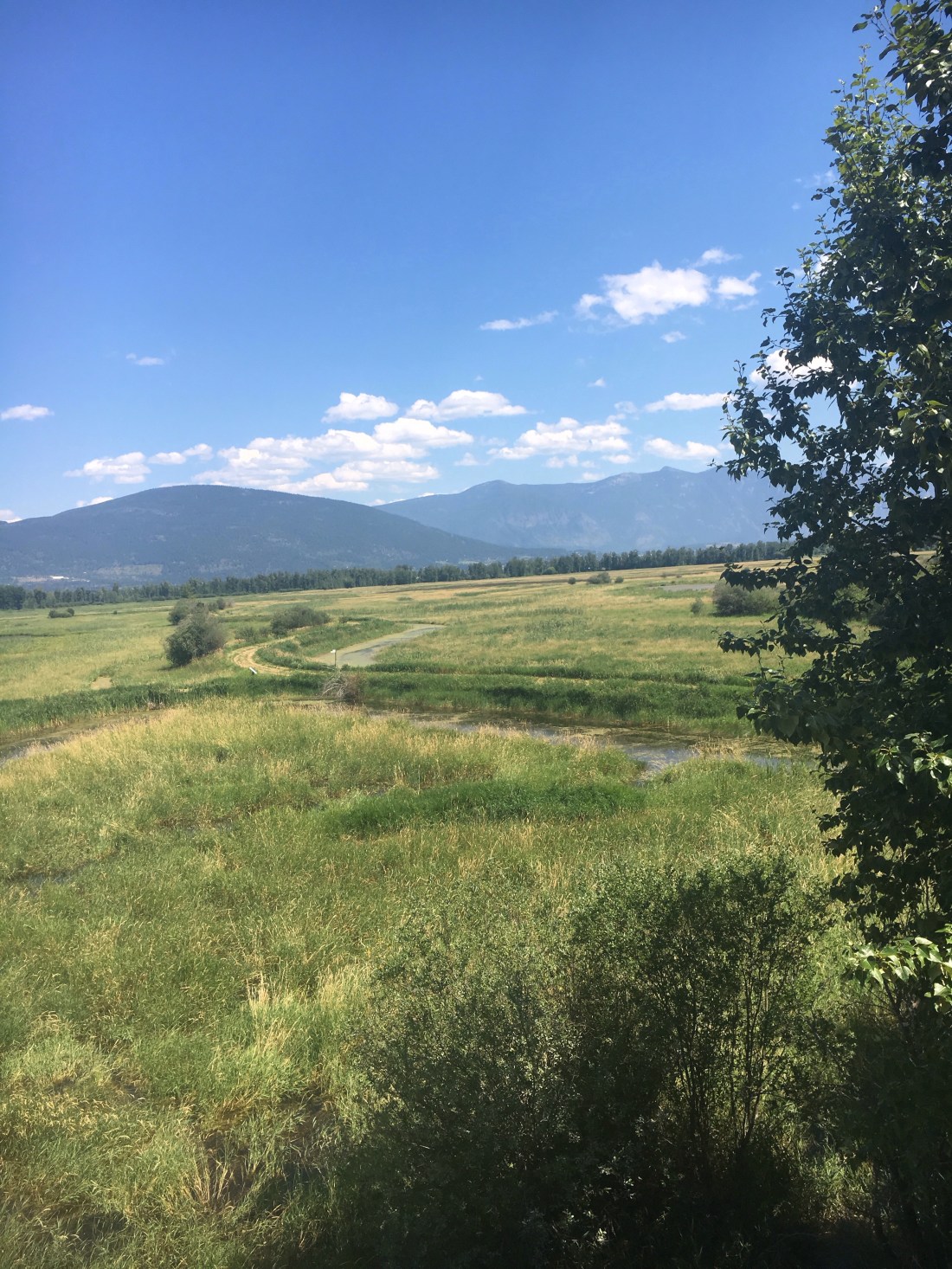
I appreciated the outdoor education materials. Here’s a nifty mnemonic, courtesy of our BC swamp educators: Sedges have edges, rushes are round, grasses have segments and roots in the ground.” Here you see how expansive the wetlands are around Creston: