Collecting Toads and Cars

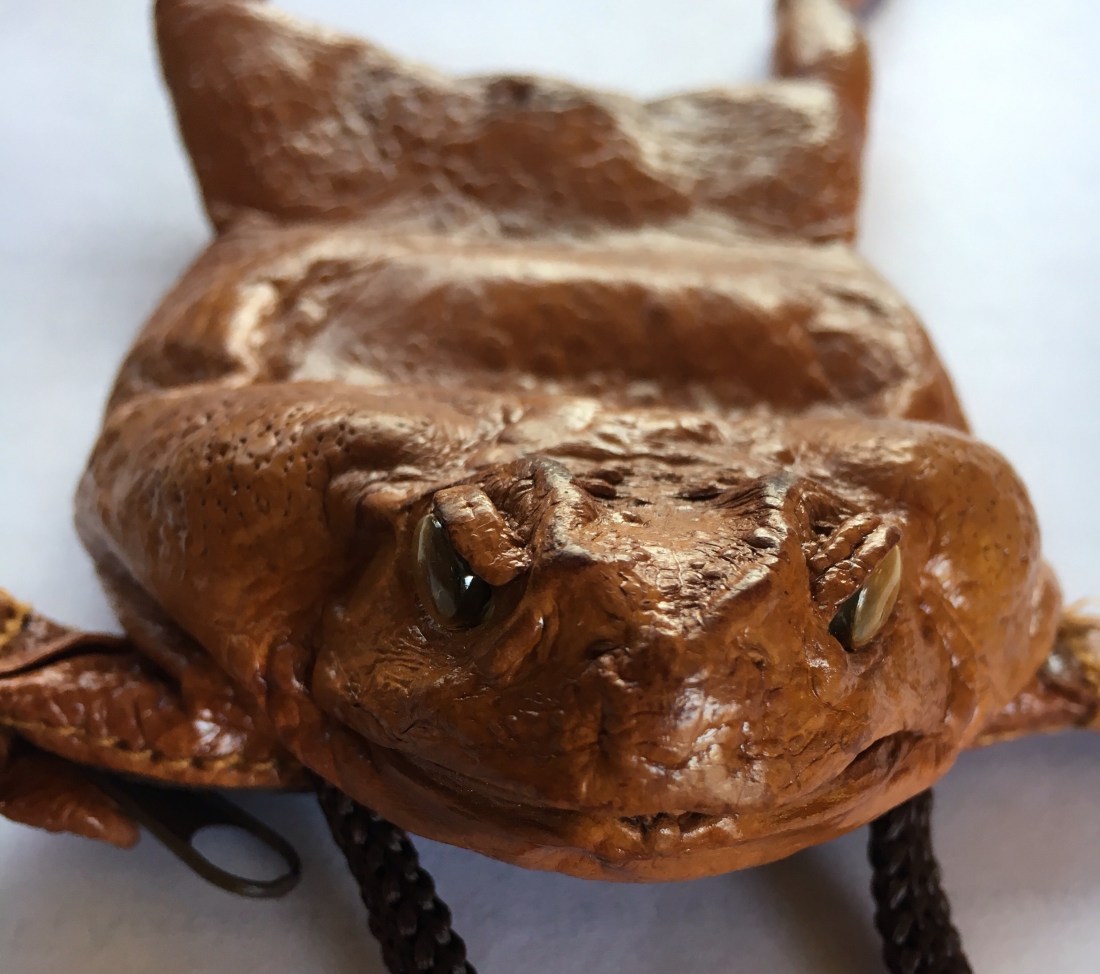
Cane Toad Coin Purse in Bonner’s Ferry, ID

Now that we’re headed home, I’m summarizing the best parts of the trip. What can’t be found in Santa Cruz? Here is a small surprise that combines my interests in small-scale commerce and protecting the environment. Steve in Bonner’s Ferry traps poisonous cane toads (Bufo marinus) and creates coin purses out of their tanned hides. He uses his ingenuity to reduce the toad population, makes a useful product out of the worse-than-trash, then markets his handiwork for $10 a piece at the local farmers’ market. Long may he thrive!

Cane toads are native to South America. They eat almost everything and breed constantly. They were imported to Australia in 1935 to eat the beetles in the sugar cane fields, then rampaged unchecked across the continent. They are classified as a worst offender invasive species in the USA and Canada. Unless you live in California, you can buy a live cane toad for $14.99 plus shipping. Who is demented enough to buy those? Watching kitten videos is the gateway to pet addiction. When feeding pigeons no longer satisfies, the doting animal lover can order a rapacious, poisonous cane toad. “My toad is an eating machine!” raves a satisfied reviewer on Backwater Reptiles.com. America is the land of opportunity for invasive species and those who love them.

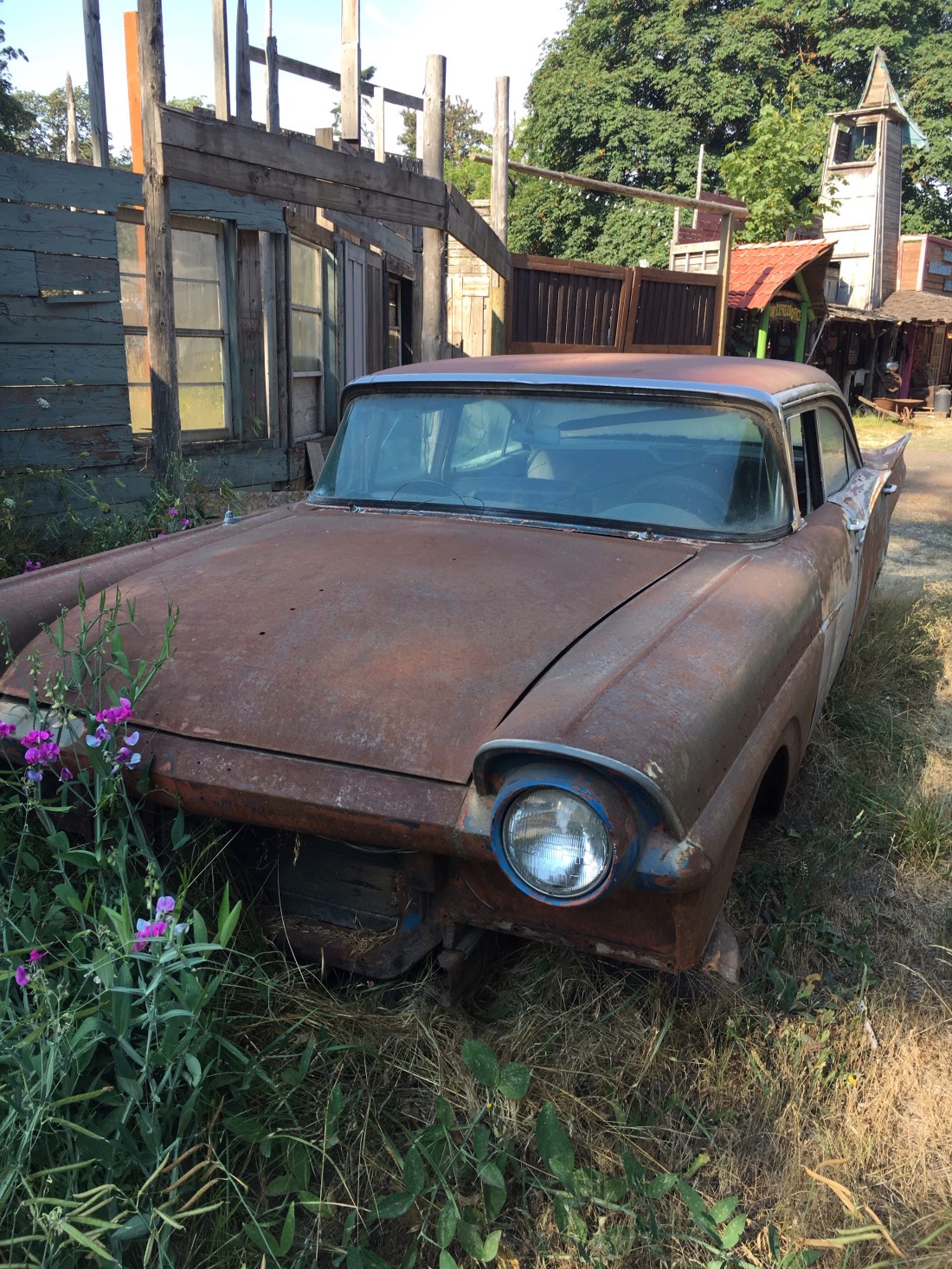
1957 Ford Fairlane, Cascadia, OR

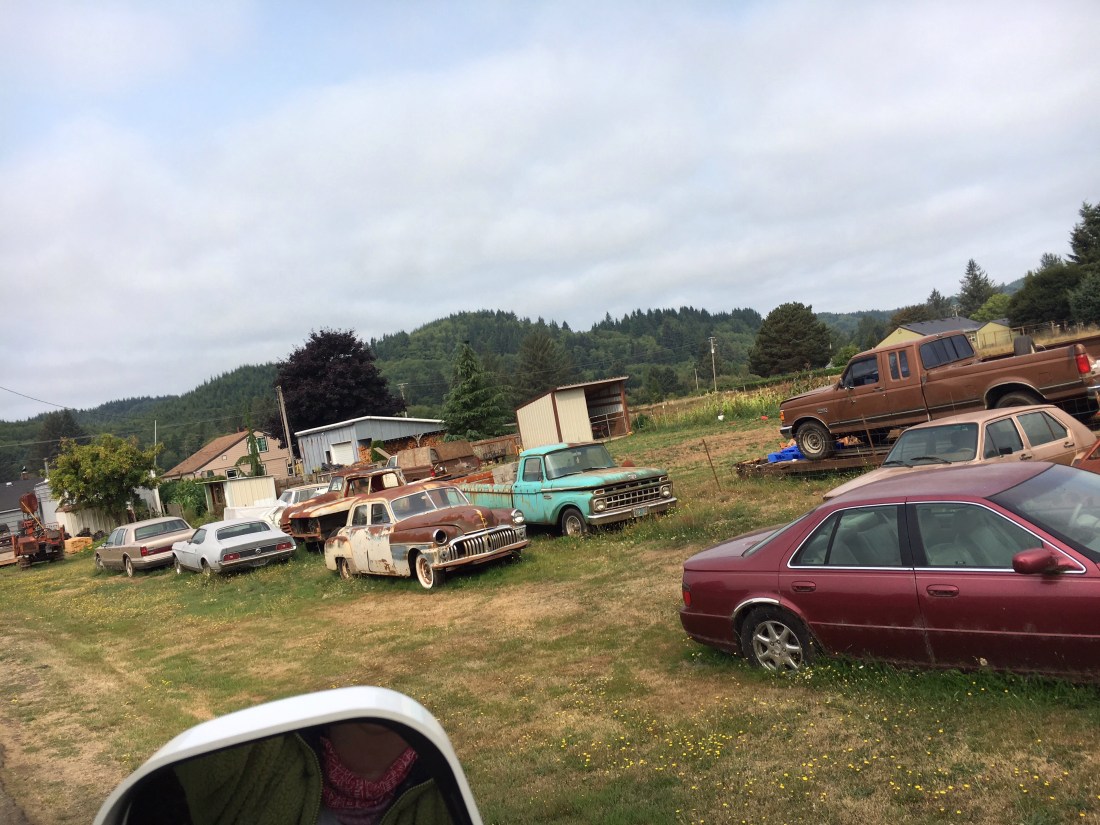
Once we left the populous areas of Northern California, I was surprised at the number of folks who keep old cars in their yards. Why do Americans collect rust buckets? At first maybe it’s sentimentality, the wish to keep old faithful servants who have been put out to pasture. Later, maybe it’s fear of running out of parts for the other automobiles. And it costs money to have the heap towed away. Unlike where we live, rural land is cheap and plentiful. And there are no nosy neighbors to petition the County to make the property owner remove the eyesore. Finally, the rusted relics become decor, a way to personalize the space, a reflection of time passed. In Pleasant Valley, OR:

And on the subject of old cars, here’s a reminder to the young marrieds that California is a community property state ( S. Lake Tahoe, CA)

Beware the bitter ex with an acetylene cutting torch.

Gardens of Interest

Lost Creek Rest Area outside Creston, BC

I am interested in how people alter, enhance or subdue the natural world to create a garden. Here at Lost Creek, passers-by have arranged river rocks into small shrines dedicated to a loved one’s memory, to a couple’s love, or just to the world. I wandered amid the tributes, not letting Marco pee on them, reading inscriptions. I wondered about the anonymous devotées who expressed themselves in a stack of rocks and then drove away. It’s awe-inspiring to see a small personal monument. Acts of faith need not be grand to be cherished.

Another wonderful garden, in Twin Forks, OR, captivated me because it was built to teach children about plants. I wrote previously about its parallel to failed Soviet collectivization: the garden succeeded once it was subdivided and each gardener assumed responsibility for a plot. But I appreciate outdoor education in any form, and the OSU Demonstration Garden invites schoolchildren in to dig and reap.

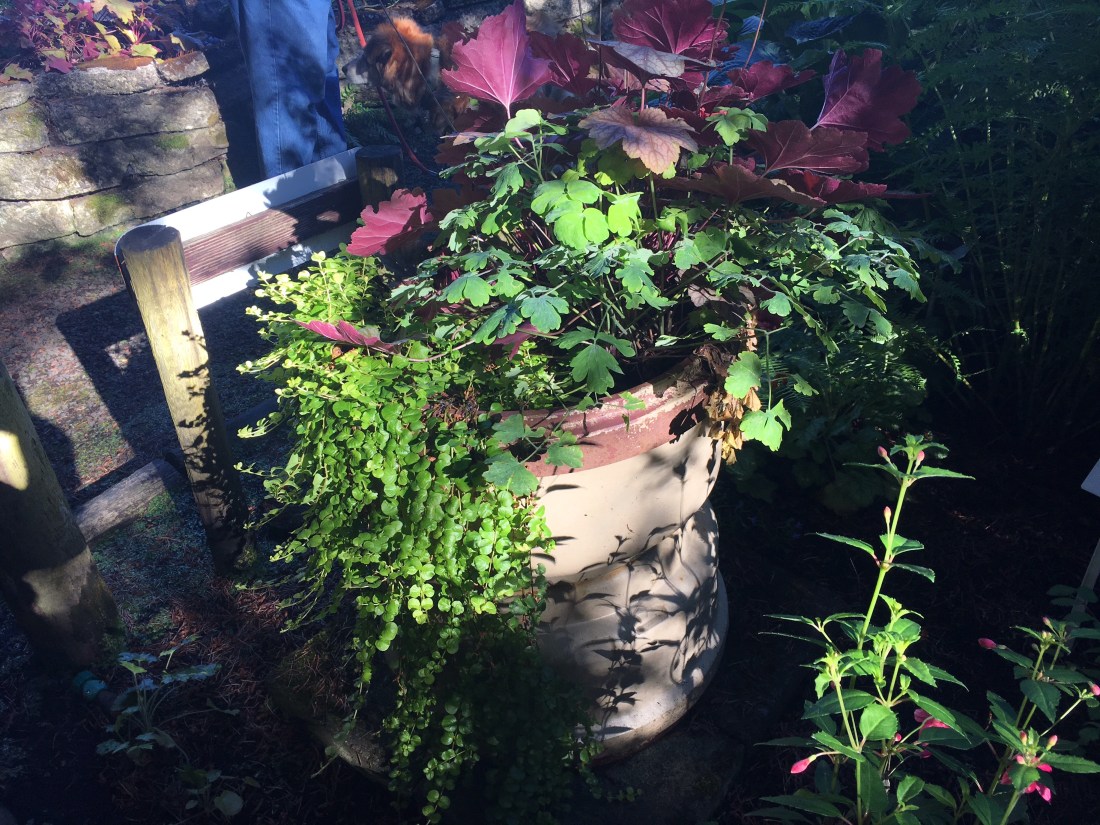
They repurpose truck brake drums as planters. An idea to borrow:

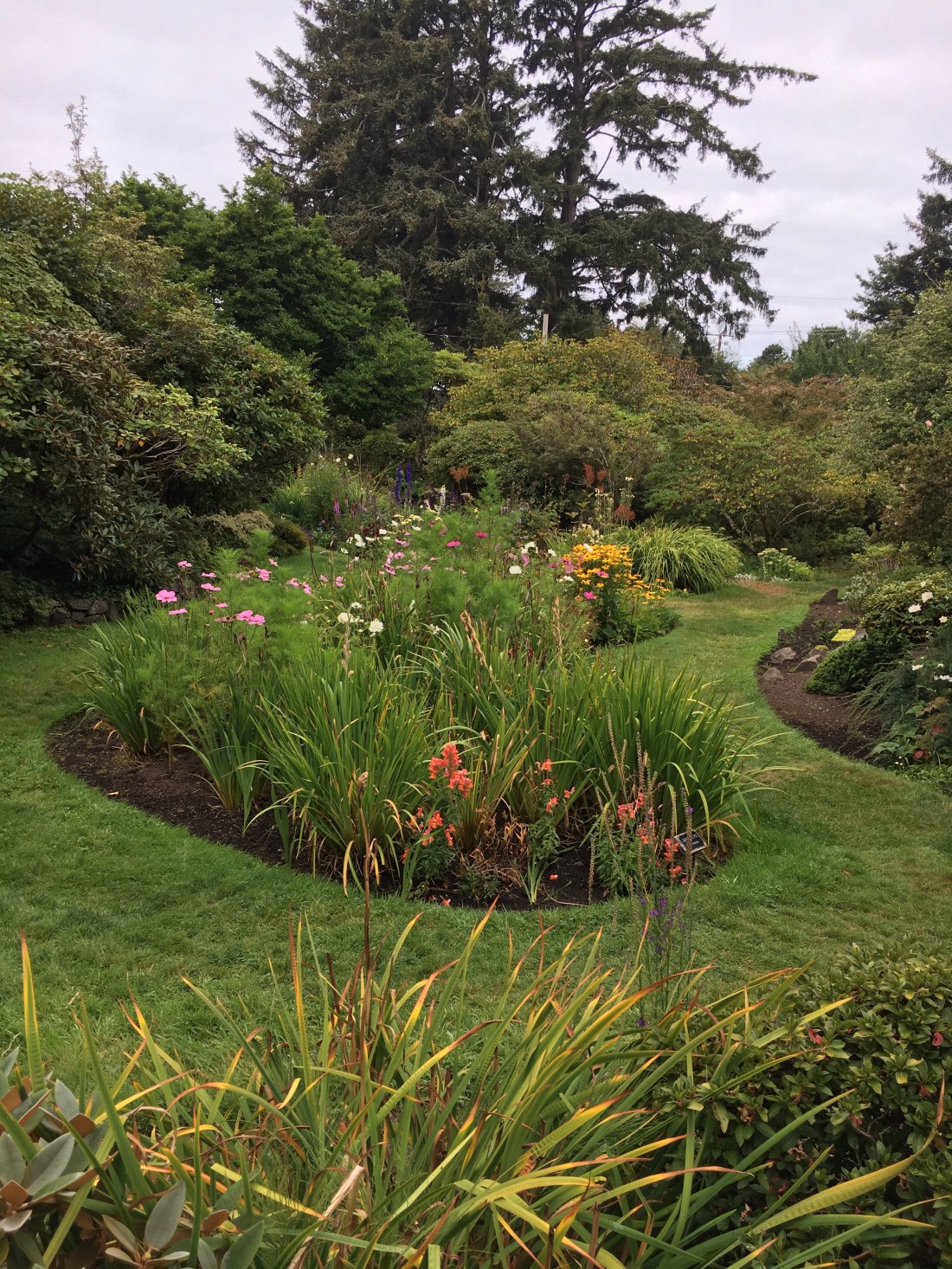
The Connie Hansen Garden in Lincoln City, OR is a private non-profit that exists to add natural beauty to the surroundings.

I thought it looked pretty good for its size. But the gardeners just move plants in and out from their off-site greenhouse. That’s the easy, expensive way to garden. The almost 80 year old volunteer at the Hansen Garden was eager to talk. She’d bought the Lincoln City cottage 20 plus years ago and retired to it after practicing law. She told us too much about some of her clients and also shared a lot about herself. Chatting with visitors keeps her in shape.

In Keremios, BC, I visited the private, non-profit Old Grist Mill Garden. Here’s a volunteer at work:

Gardening is one way to be good to the earth, to replenish the soil, to restore where we’ve depleted. I like gardeners and felt quite at home chatting about gardening, or pitching in with deadheading, all over the Northwest. Tell me about your choices! Tell me about your pest control strategies!

Sometimes a garden looks like a collection of fairy houses: low maintenance and visually appealing.

Politics

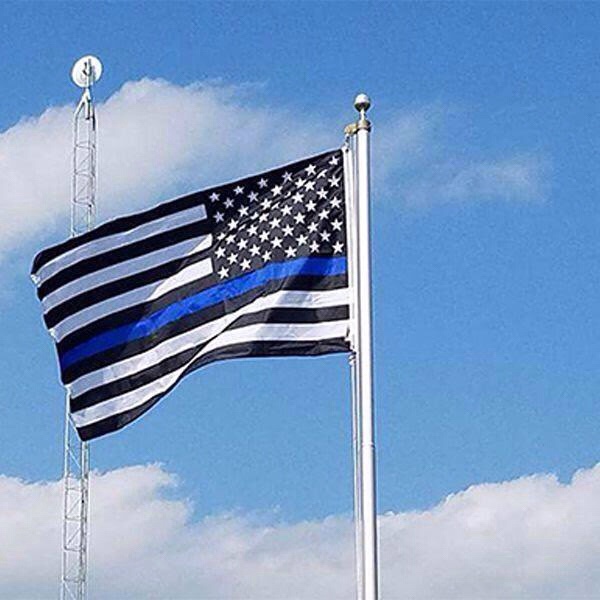
This T-shirt, pinned to the wall in Newport, OR, makes up for the one I was too chicken to photograph. It was being worn by a beefy sunburnt white guy in Miller-Sylvania State Park, WA. It read: “I believe in FAITH, FLAG, FAMILY, and FIREARMS.” It got me pondering my own alliterative slogans: I believe in Peace, People, Pluralism, and Poetry. Or maybe: Doubt, Diversity, Disruption, and De-escalation. How about: Conservation, Cooperation, Complexity, and Cleanliness? I’ve got nothing against faith unless it’s all caps FAITH. Then I want to let the air out of its tires for its puffed-up arrogance: FAith. Psshht. And flag is fine with me, too, as long as it’s not used as a signifier to denote white supremacy. Here is the Blue Lives Matter flag I saw flying over several RV’s and RV Parks, for example in Moro Bay, CA and Camp Sherman, OR:

I despise this corruption of the US flag to connote white power. I don’t like giving them our money for park fees. Other messages from the White is Right contingent include those celebrating the military, such as Freedom isn’t Free or the P.O.W. — M.I.A. flag. From a Tillamook, OR restaurant where we chose not to proceed:

I’m all for open-mindedness when exposed to other subcultures. That’s part of traveling. But I also want my tourist admiration and my tourist dollars to promote my view of the world: multi-layered and welcoming of differences. I knew once we left the Bay Area I’d be subjected to the vocal Christian Right. But I figured I’d talk weather or recipes, not Right to Life or Right to Concealed Carry.

A big disappointment for me has been how little respect the campers around me have for written rules. It doesn’t matter if they’re called “Things to Remember” (WA State Parks), “Courtesy Guidelines” (OR State Parks) or “Park Rules” (CA State Parks), the scoundrels, young and old, ignore them. First, they’ll try to get away without paying their fee. Next, they’ll get noisily, crazily inebriated. Further, they’ll set campfires and walk away from them or go to bed with the fires burning. Also, they have the misconception that the campfire pit is a great place to discard beverage containers or trash. It is a failure of the US education system that so many campers think bottles and cans might burn. Finally, they rely on the obedience to rules from others to allow themselves the freedom to disregard rules. For example, an off-leash dog is not a problem by itself, only to the leashed dogs it pesters. When I find myself rooting for the coyotes to take out the nippy off-leash Yorkie next door, or touchy Mr. Constant Yapper across the way, it’s time to take a deep breath and summon all my charitable thoughts to dispel the negativity. At least OR and WA State Parks allow dogs on trails.

Impressive Trees

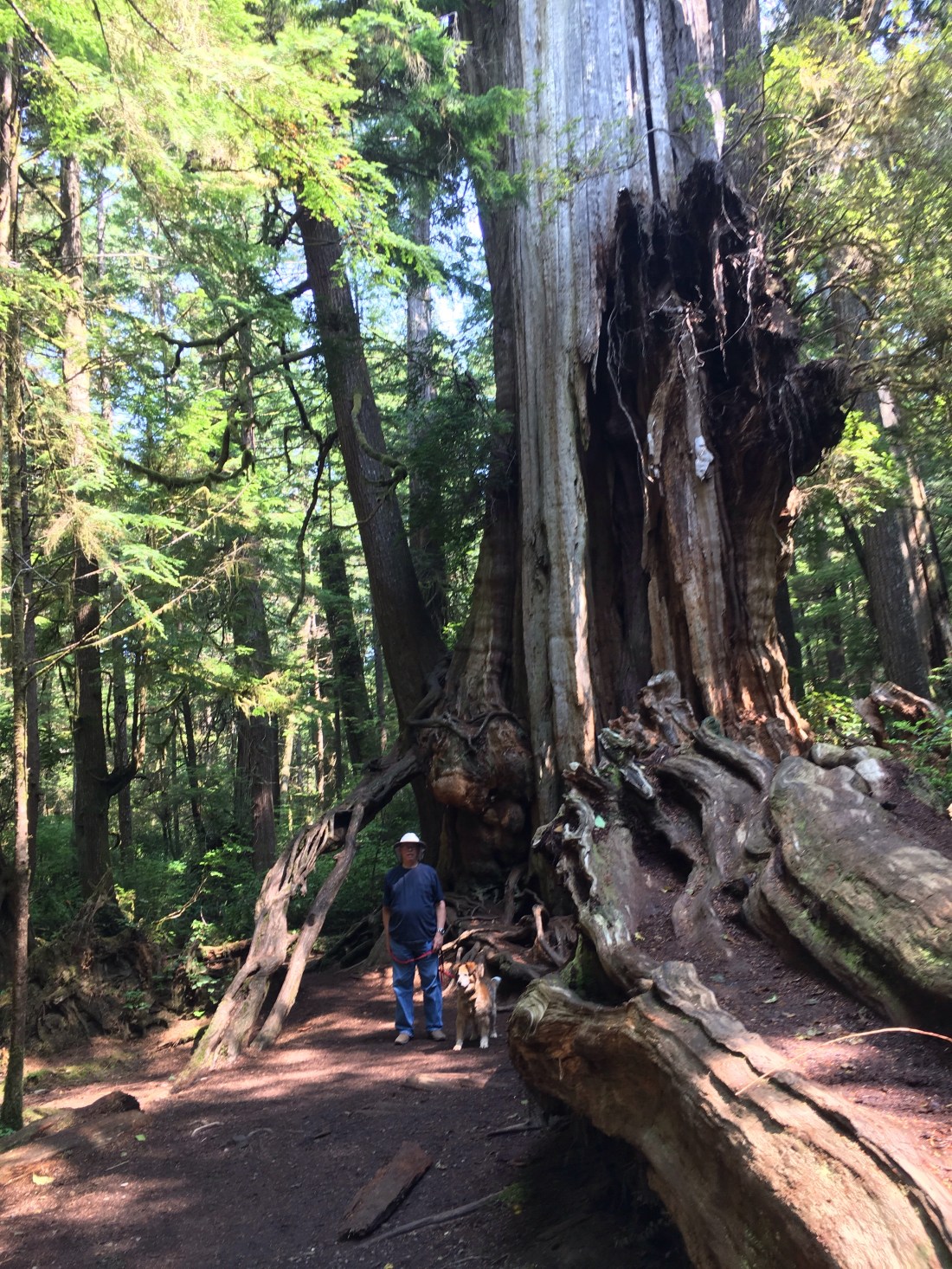
Big Cedar in Olympic National Park, outside Forks, WA

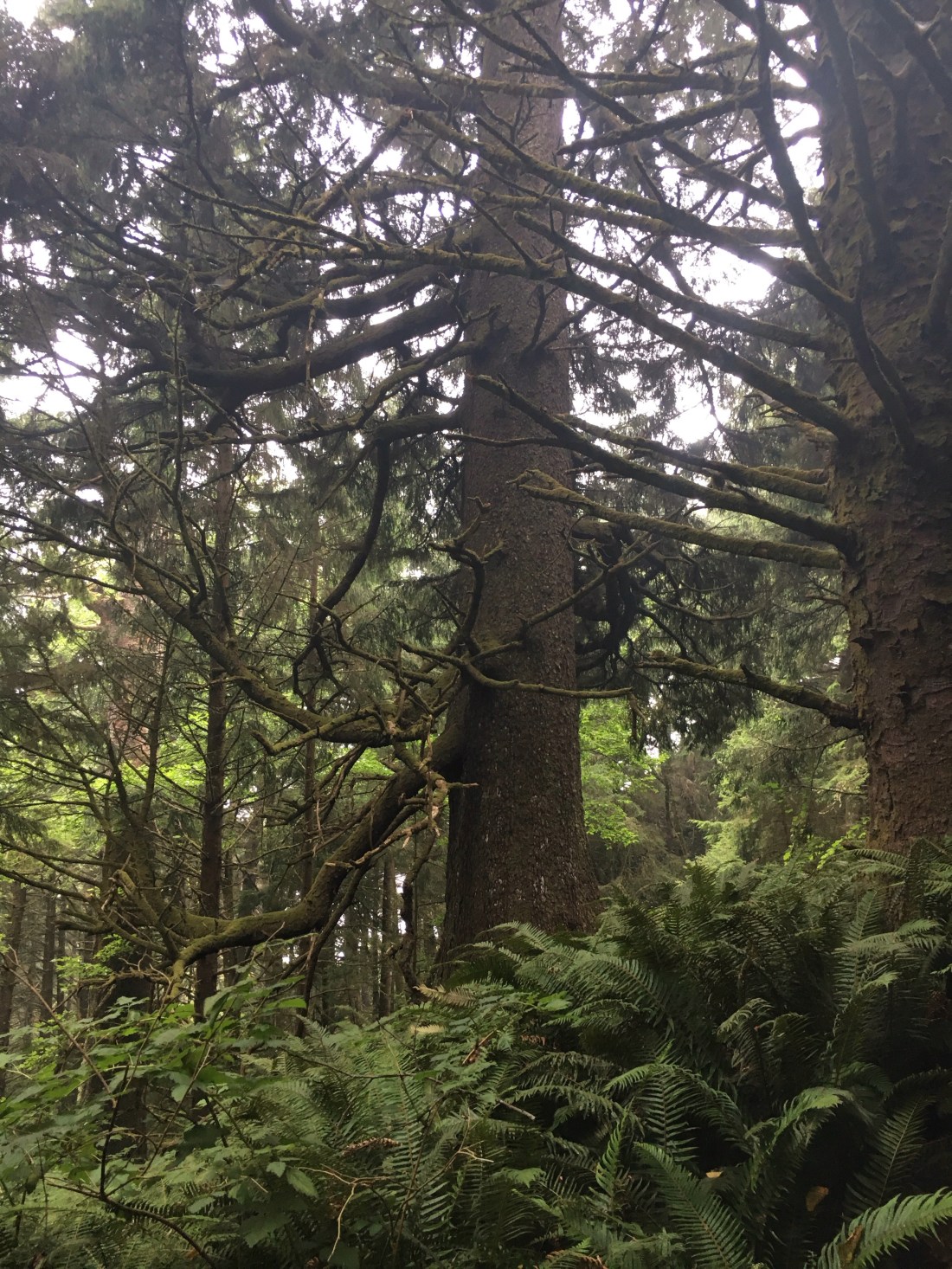
Spruce in Ecola State Park, OR

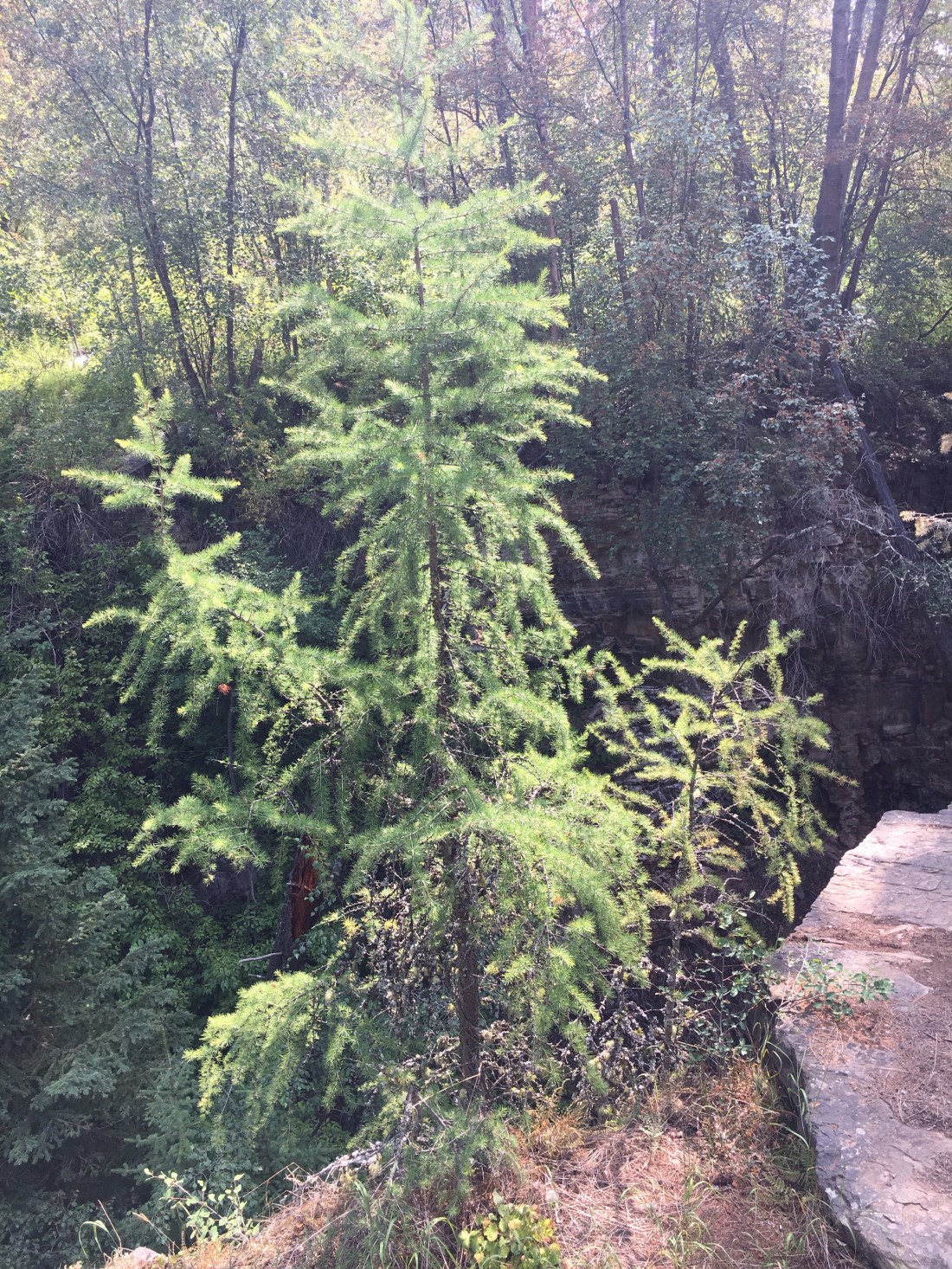
Larch in Marysville, BC

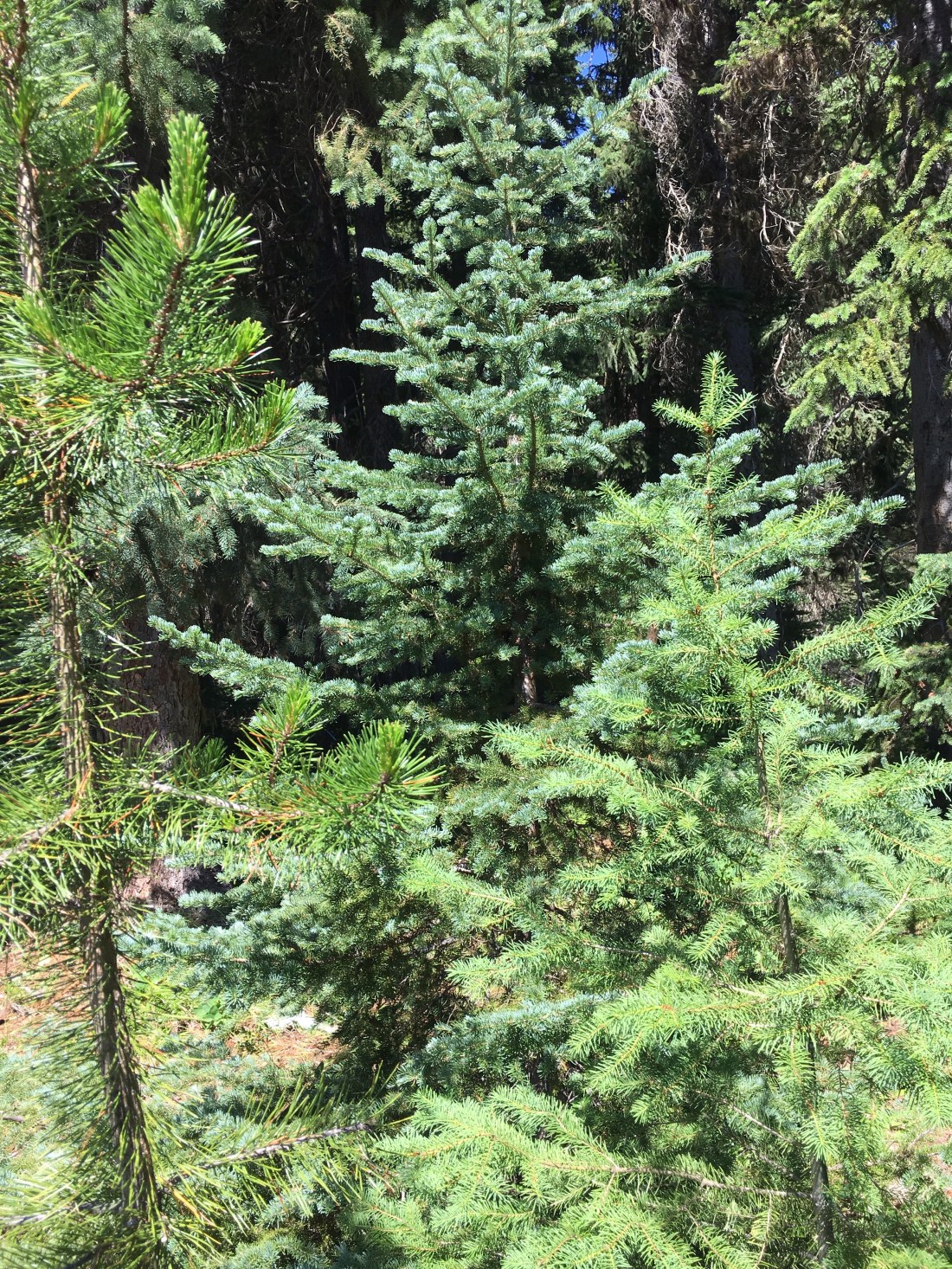
L to R: Pine, Spruce, and Fir in Manning Park, BC

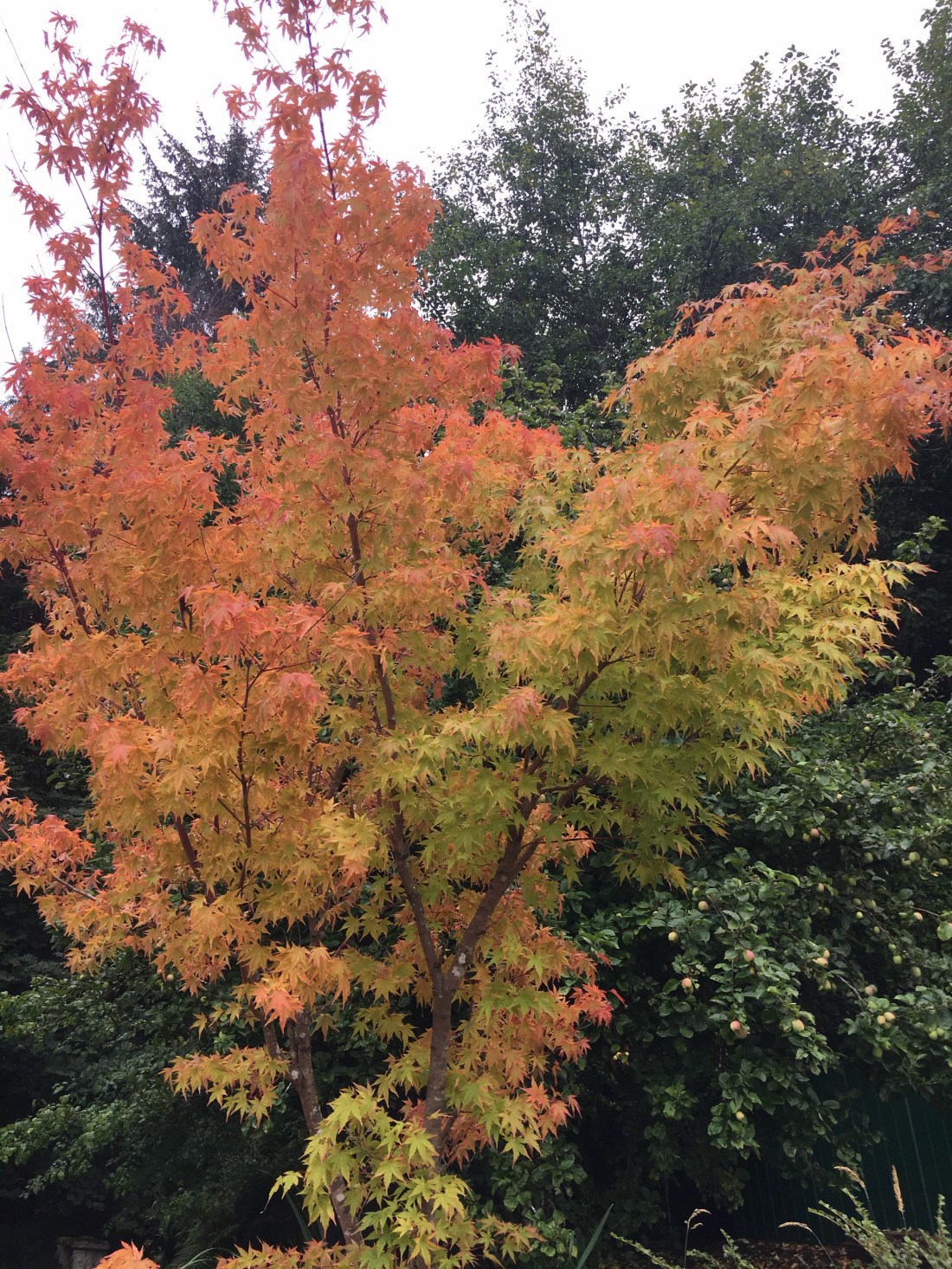
Japanese Maple in Forks, WA

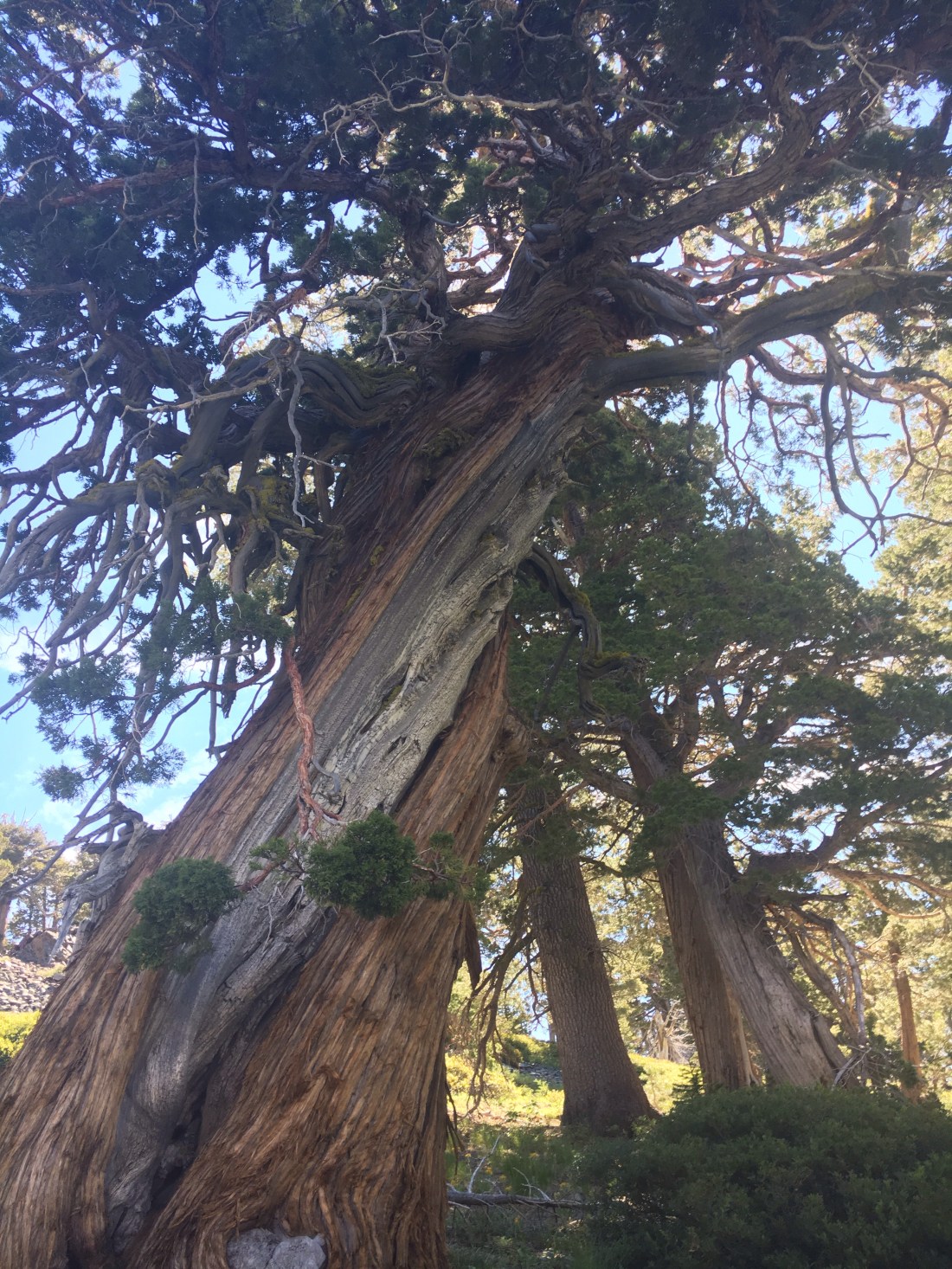
Western Juniper by Gilmore Lake, CA

Every landscape looks better with trees in it. This trip has broadened my appreciation for trees, those stalwart, long-lived contributors to air, soil, water, and animals. The Northwest offers wide expansive forests that stretch as far as the eye can see. Although the redwoods of home are special to me, I admire the mixed conifers covering the mountains, with deciduous oaks, alder, and maple along the creeks. The forests, though free of poison oak, are not inviting for cross country walks because a bushy understory occupies the middle space. And because the forests are so vast, the scenery doesn’t change much as one walks. But the trees can get really large here, and each old tree has a more distinct look than the young ones. Not a bad metaphor for aging. Here’s some pine reforestation in the Deschutes National Forest, a beginning to end with:

Foggy Oregon Coast

Tolovana State Beach, OR above. We continued to drive south, crossing the imposing Columbia River into Oregon. Then we stopped along the scenic coast, exploring towns like Seaside, Cannon Beach, Tillamook, Agate Beach, and Newport and many beautiful bays, beaches and cliffs. Seaside attracts families with its merry-go-round, bumper cars, and arcade. Cannon Beach targets the older set with its upscale boutiques. Garibaldi is for fishing. Tillamook has a major creamery, maker of famous cheddar, that offers tours and samples. We skipped it but enjoyed people-watching from across the street. The Oregon Coast, in contrast to the Washington coast, has protected beaches but lots of development next to them. The recreational boaters in Washington frequent Puget Sound, not the Pacific. In Oregon the coast has many bays, deltas, and rivers that appeal to boaters and fishermen. The soil looks sandy and volcanic. Here’s a wonderful European horse chestnut tree.

We’ve been taking walks on the beach and in the hills and dunes next to it. It’s stunningly beautiful.
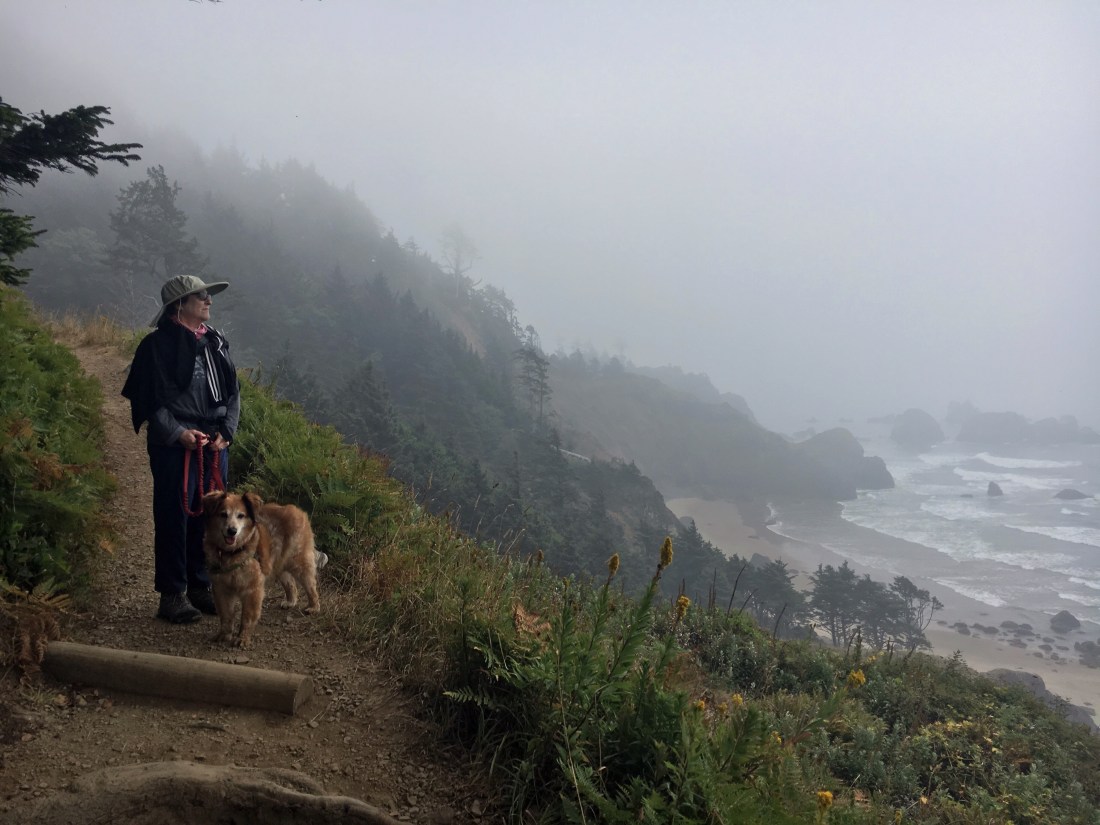
Ecola State Park, OR

Yesterday in Newport we saw orcas lurking just past a rock where the seals had hauled out to rest. We watched for a while. Marco, under the bench, thought, “Big Whup.” He’d had a heap of frustration resisting the tame rabbits hopping around the Pleasant Valley RV Park. One couple, former Californians and park residents, get a 10 pound bag of carrots from Safeway every week to feed the rabbits.”$10 a week,” the husband told me with pride. So the place was overrun with bunnies, sleek gentle bunnies that didn’t scurry away from Marco. How unnatural.

Coast Oregonians will talk with me. The friendly ones come from California, like Landon described below. Or Jae, who sold us delectable cupcakes in Cannon Beach. The born-here locals often project animosity once they hear where I’m from. I hear a diatribe about real estate, politics, high prices, traffic, or drugs. If it’s bad, it’s from California. I’ve come to enjoy these rants. I’m a former referee and I miss the unearned scoldings that came with the profession. JG has many talents, but ass-chewing is not among them. To summarize, Californians have too much money and are buying up local real estate. They have created repellent programs called Apps, chief among them AirBnB, which distort God-given relationships in markets. They bring their abhorrent liberal politics and influence local elections for the worse. They clog the main roads. The wildfires burning in Central Oregon started in California. Californians are responsible for the drug epidemic and profit from Oregonians’ marijuana consumption. And yesterday I heard that a plague washed up from California a few years ago and killed off all the starfish. Poor Oregon, destined never to have a novel vice or original bad idea. Again: Oregon population is 4.15M, California population is 39.75M.
Today we are staying in Agate Beach, former home of composer-humanist Ernest Bloch (1880-1959), to whom an Oregon Wayside is dedicated.

He was a child prodigy on violin, then a masterful composer, then he taught music at Cal. Originally Swiss, disavowing his Germanic antecedents except in his music, he lived in New York and performed throughout Europe. He taught Yehudi Menuhin, among others. There is an Ernest Bloch Society in New York which burnishes his legacy. He is Agate Beach’s most famous citizen and fled Berkeley, California.

As we were stopped on 101 for a construction delay, I jumped out of the rig to go buy a bag of chanterelles from the roadside. I stuffed $5 into the honor system lockbox and jumped back in the rig. That evening I spent a little time on the internet investigating what I’d bought. Thus I convinced myself that I had indeed real chanterelles and sautéed them in butter with faro.

Another food adventure began with JG patiently pulling over in Garibaldi, near Tillamook Bay because I wanted some fresh crab. I trotted down to a dock with a crab shack and a store.
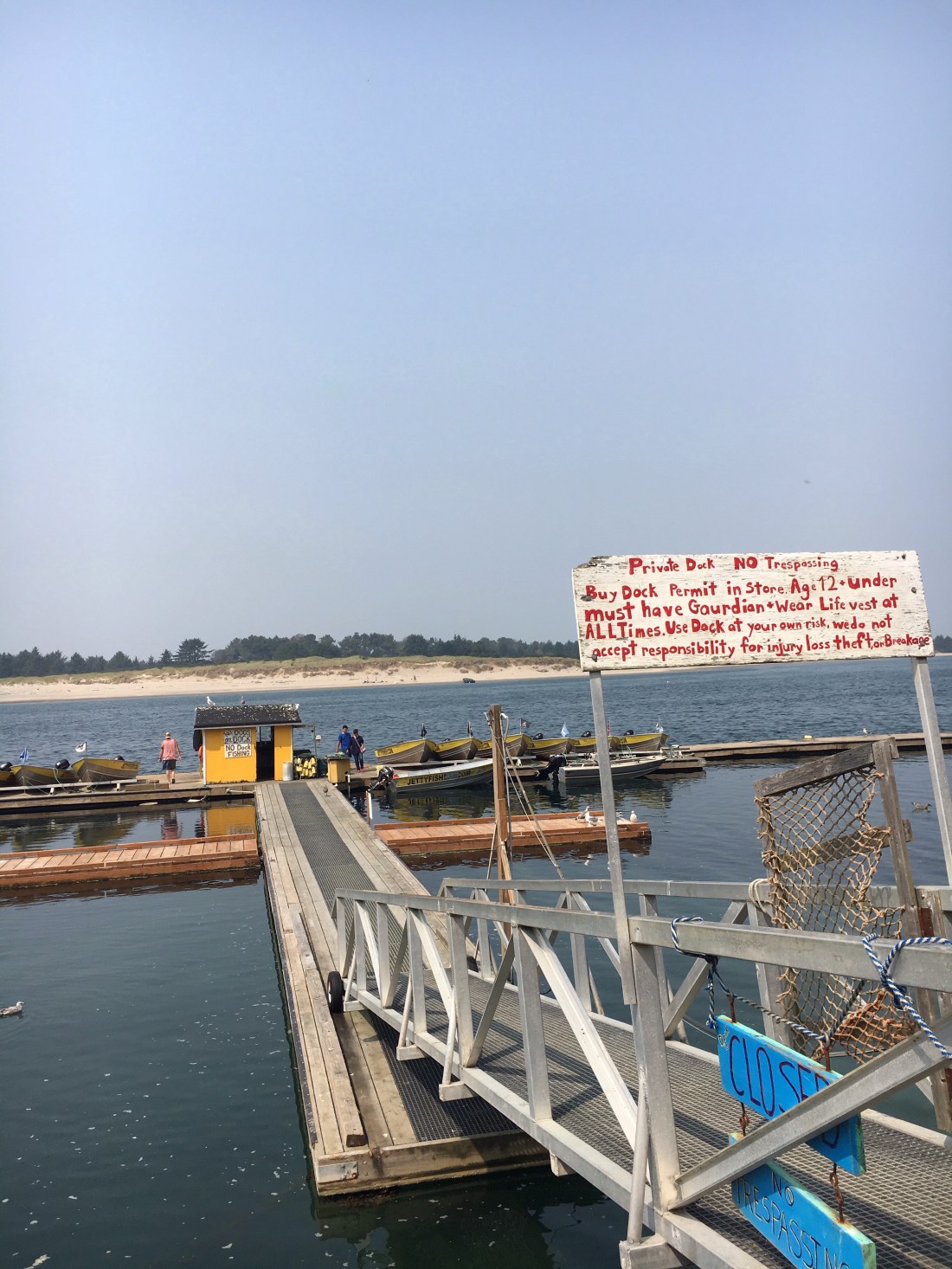
From a tank, I picked out a couple of live crabs which Landon the crab boiler weighed for me. He threw them into a net labeled M and told me to check back in 20 minutes. I paid the dock owner and brought Landon my receipt. He fished net M out and hosed down the crustaceans to cool them enough to handle. He gutted them for me. Using the pointy tip of a crab leg, he speared a crab heart and offered it to me with a flourish. Hm. I’m not in the habit of accepting organs from strangers. But Landon looked so proud, I could not disappoint him. Here’s Landon at work:
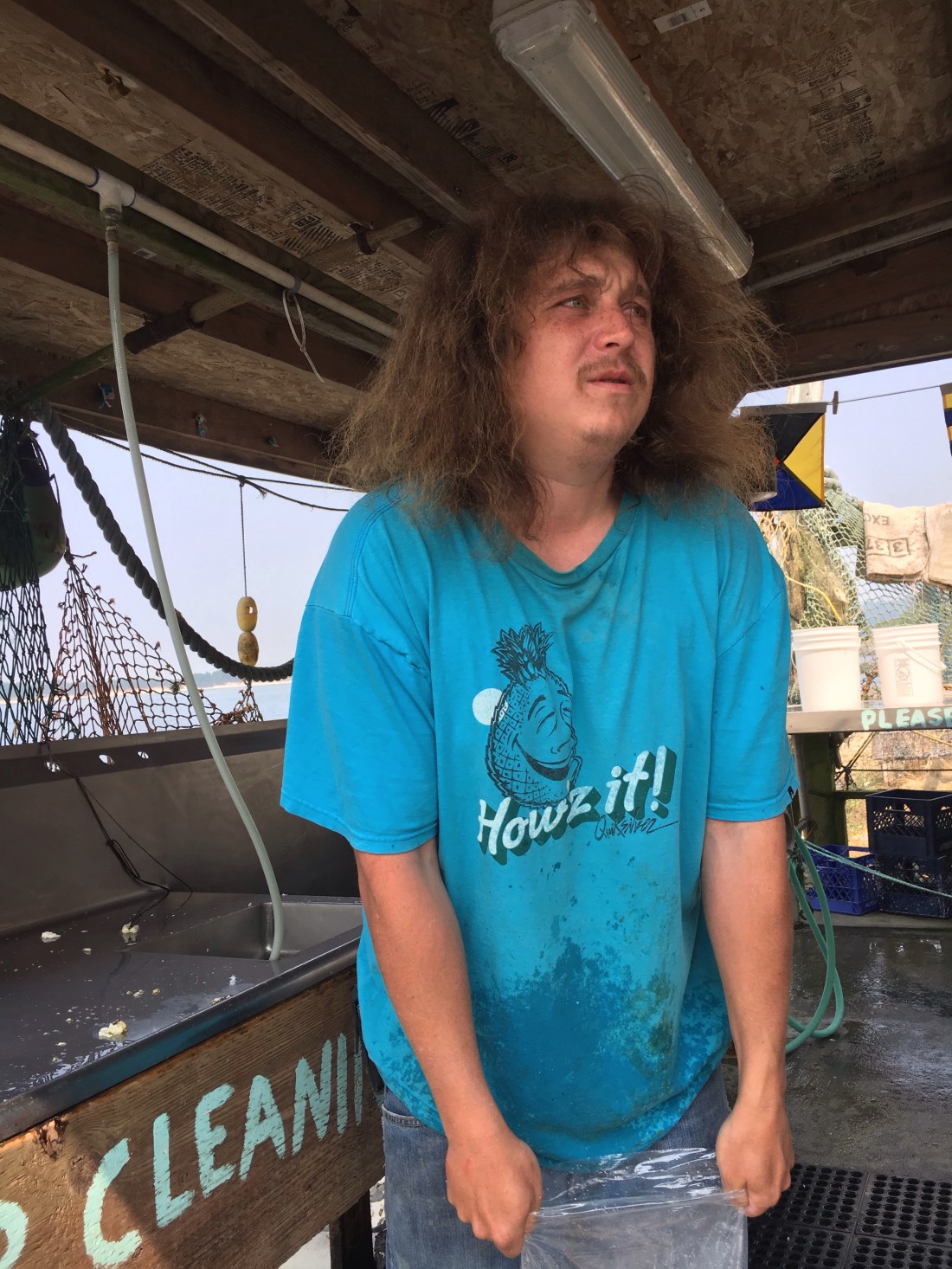
I rock that 80’s hair, too.

Now that I had eaten of the crab heart I could feel myself getting grumpier. Just don’t cross me. I’m in no mood for any foolishness.
Hurray for Small Businesses

There’s only so much scenic grandeur a girl can take. So when I find myself sighing with torpor at the sight of Munson Creek Falls, (almost 45 seconds of thrill), or refusing to photograph yet another dramatic vista, it’s time for small business to entertain me. Small scale commerce is the beating heart of every county, capitalism at its finest. As a formerly fervent flea-market and estate-sale shopper, I’m interested in what’s for sale even if I’m just browsing. Even without buying anything, I can appreciate the variety and uniqueness of many Northwest small businesses I’ve seen advertised. Here’s a sampling of businesses you won’t find in Santa Cruz. From the inland mountains: Game Butchery, Horse Portraits, Taxidermy, Shree Raini (Bollywood star) Gas Station in George, WA. From the coast: Pacific Breeze the Smell Good Guys, Fish Compost for Sale, Shellfish Farms, Moss Control, Cats Pajamas A BnB for Cats, and U Pick Oysters. Sometimes two revenue streams combine in one small business. I saw the combination of bike shop and beer pub several times. And I saw kayak rental combined with yoga studio. Just thinking I live in a world where someone makes a living creating horse portraits or selling U Pick Oysters cheers me up.
As we’ve driven through countless small towns, I notice some similarities. In the USA, every town with over a thousand inhabitants has a gas station, a bar, a tackle and ammo shop, and a fabric shop. Flies and guns for him, quilting supplies for her. Stories will be told. Advice will be offered. Small businesses like these blend the social and the commercial.

Most of the RV parks we’ve visited are privately owned, which accounts for the broad range of prices, facilities, rules, and signage. Poodles seem to be favored as greeter-dogs by the park owners, which may account for the restrictions on dog breeds or sizes. One park didn’t want any dogs over 35 pounds. Maybe because they’d outweigh the poodles. Most parks forbid pit bulls or Rottweilers. But the German shepherds and husky mixes, just as aggressive by reputation, have better PR and are allowed. I’ve never seen so many standard poodles as on this trip. Nor so many snarky signs about customer service: “I can only help one person a day. Today is not your day. Tomorrow doesn’t look good either.” “If you can find the same item at a lower price, bring it in and we’ll cheerfully admit it.” “$5 charge for whining. $10 for being a real pain in the ass.” Maybe it’s the sensitive poodles who put up the signs. Locals may see a good selection of these signs, without poodles, at the Santa Cruz Diner on Ocean Street.

A town’s businesses reflect its particularity. When Californians get a chance to partially repeal Proposition 13 in 2020, I will vote no. The so-called split roll initiative would increase property tax on businesses, not residences, to current market value, thereby generating approximately $11B for underfunded principalities. Even if the business is irksome, even if it’s got surly and slovenly owners, even if sells a product I don’t use, it enriches my world to have old and diverse businesses. Proponents point to businesses like Target and say they should pay more property tax. Why should E-commerce pay zero property tax in my community and Capitola Produce get assessed for thousands? I think of the old businesses around me and I’m glad they get a break on property tax.

Washington Coast

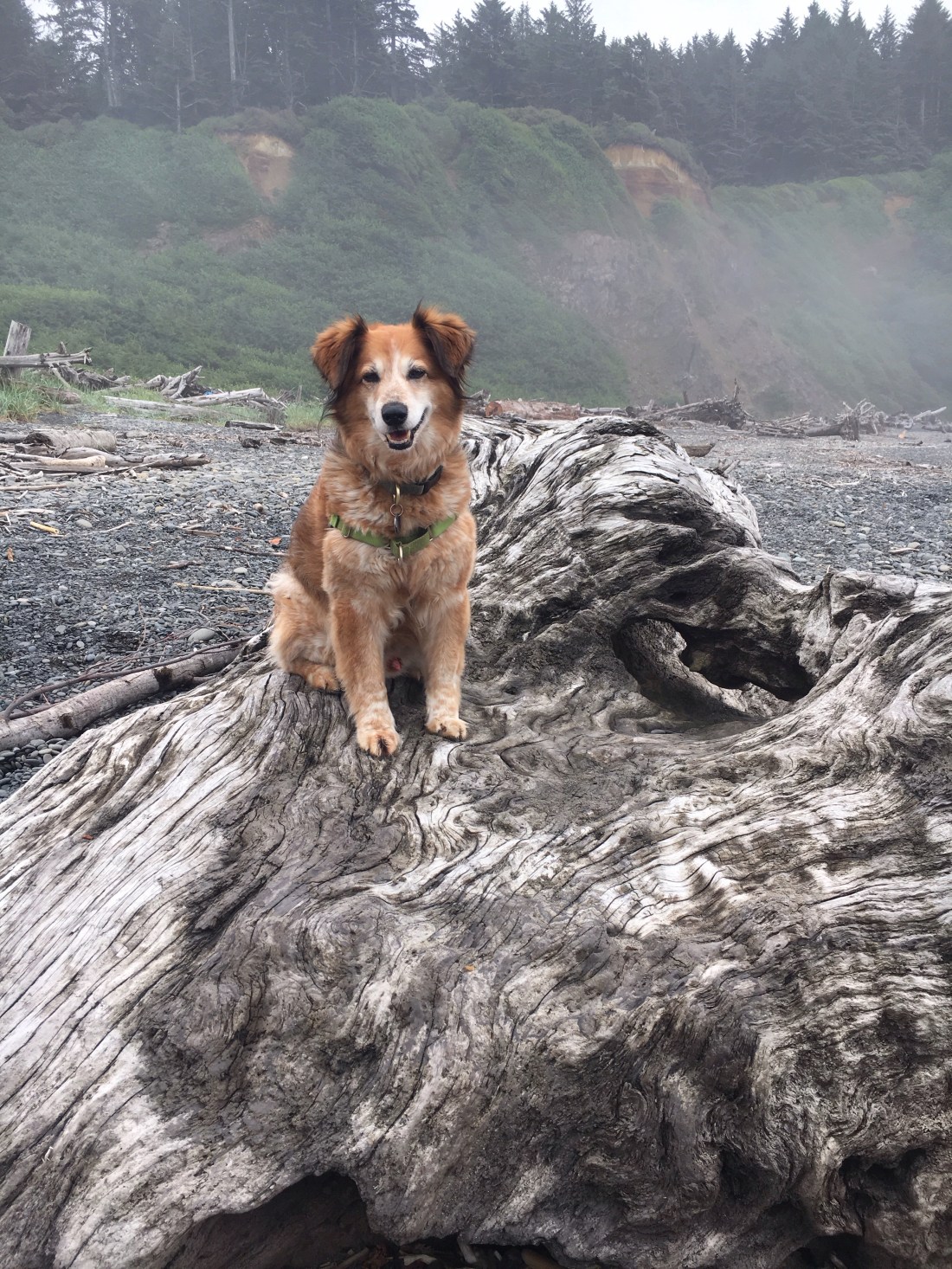
We turned southwest to visit the Washington Coast, the thumb of mitten-shaped Washington. Most of the coast here is protected, part of Olympic National Park. That means no dogs. So we stayed at First Beach in an RV Park run by the Quileute Tribe. Since the Quillayute River empties here, I guess that’s how to say Quileute. First Beach allows dogs, so Marco romped freely. Dyslexics of the world, untie! Once off leash, he circled us three times in his I Got No Strings dance. Then he got down to dog business: harassing seagulls, chasing receding waves, rubbing up on cormorant remains, peeing on driftwood stacks. Times like that make up for all the time we won’t let him chase Golden Mantled Snacky Bites. He posed for his photo op.

Other than stroll the cool, foggy beach, there was not much to do in LaPush. We visited the Forks Timber Museum, celebrating the logging life. As a card-carrying (Sierra Club card) tree fancier, I was drawn to one slogan: “Hug a logger. You’ll never go back to trees.” I learned about the Fords, who were the first white settlers, who traded with the Quileute. Because the name “Fords” was taken, the town became Forks. It’s still a logging town, with new fame as the setting for the teen vampire romance trilogy, Twilight. It rains a lot in Forks:

Dear Milennials, that is a pay phone. A toupéed pay phone, but it still works.

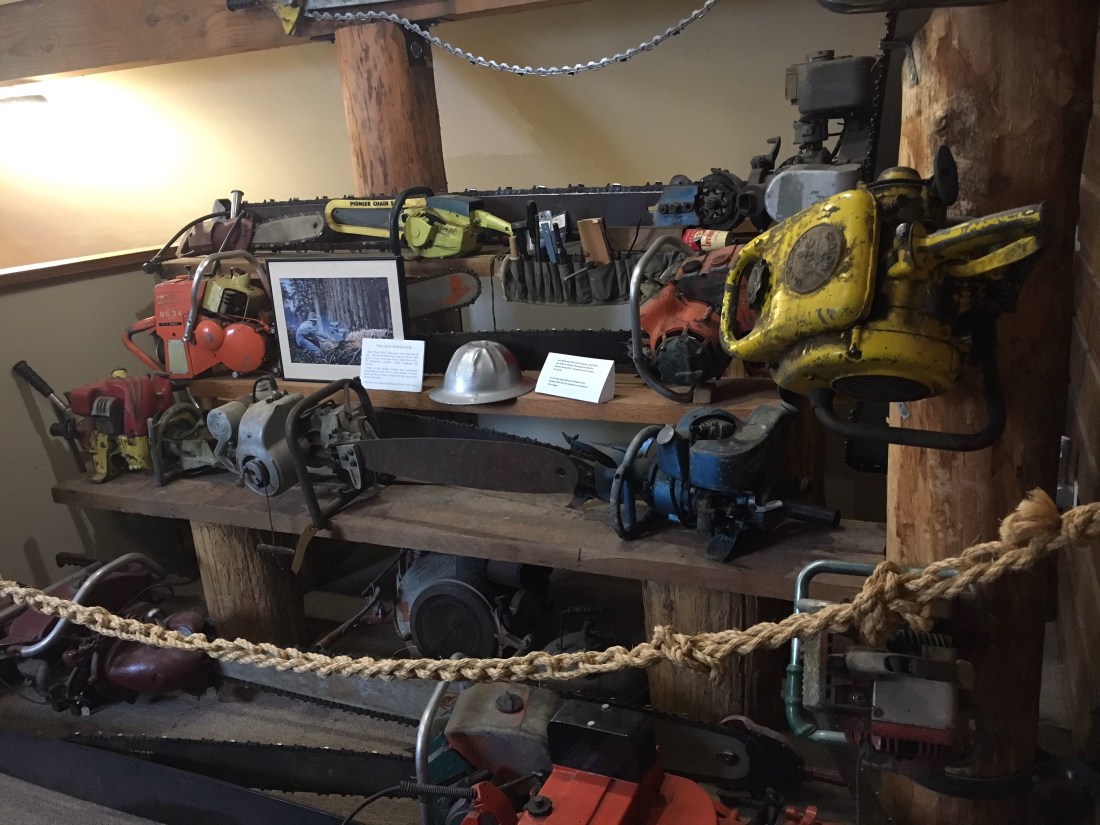
Here’s something you don’t find in Santa Cruz: a chainsaw collection:

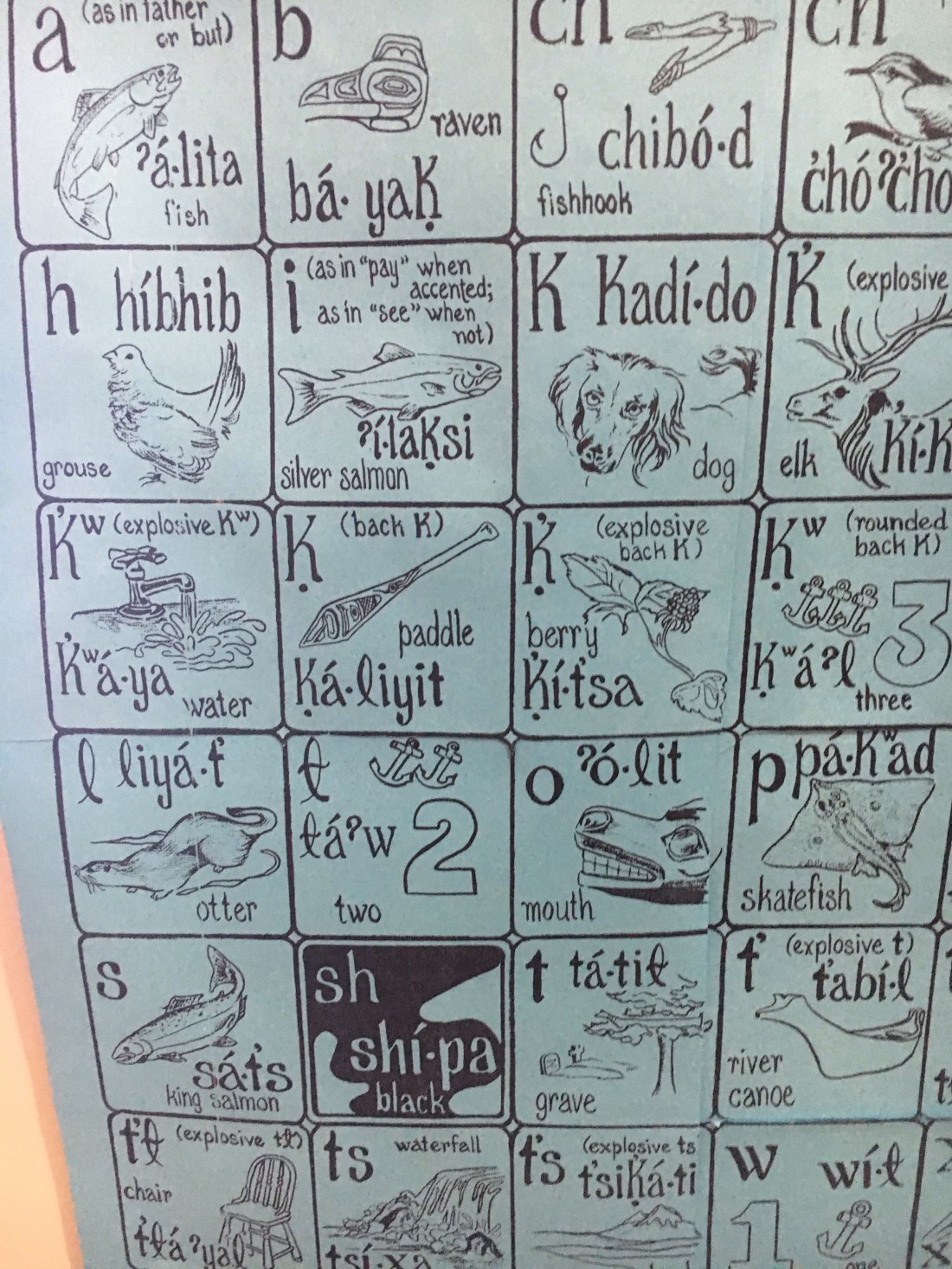
Here’s a poster on the local language:

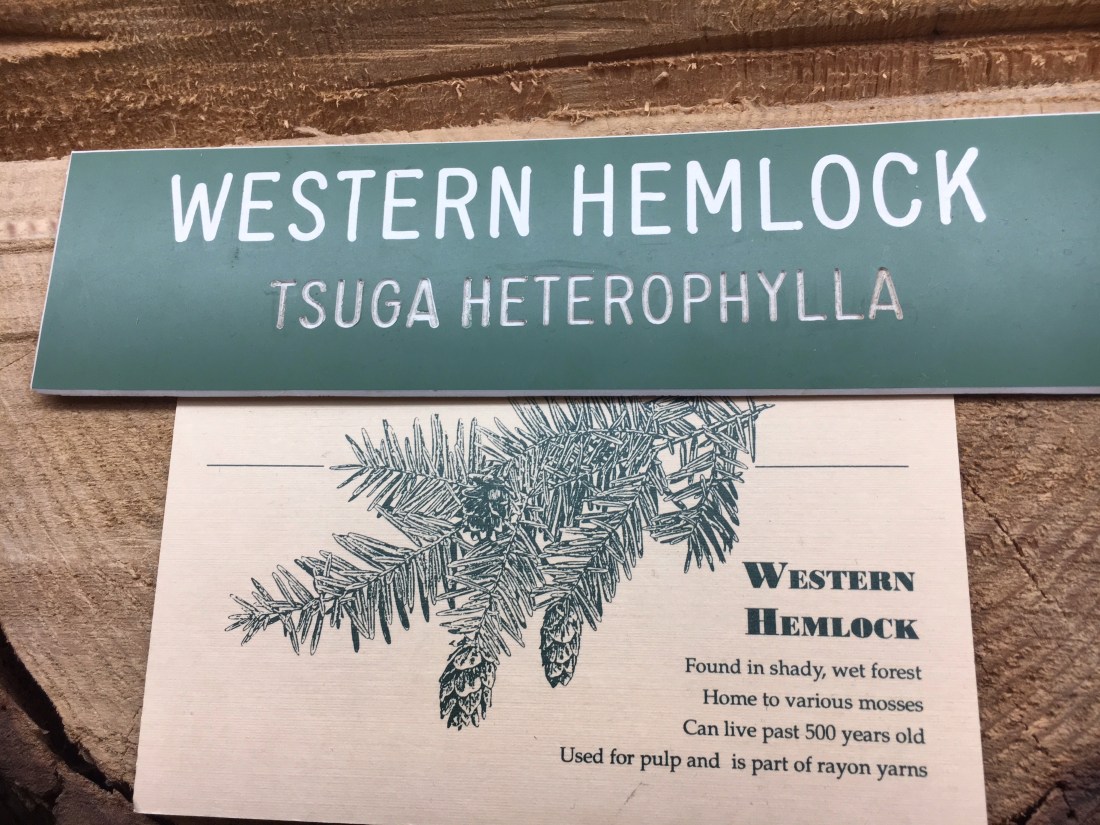
Add an homage to trees, which are harvested as timber, which when it’s cut becomes lumber, which when it’s used becomes wood. Here’s one of my favorites, the western hemlock. It is processed into pulp, then fiber. Its tip droops, like a stocking cap, making it easy to spot from a distance.

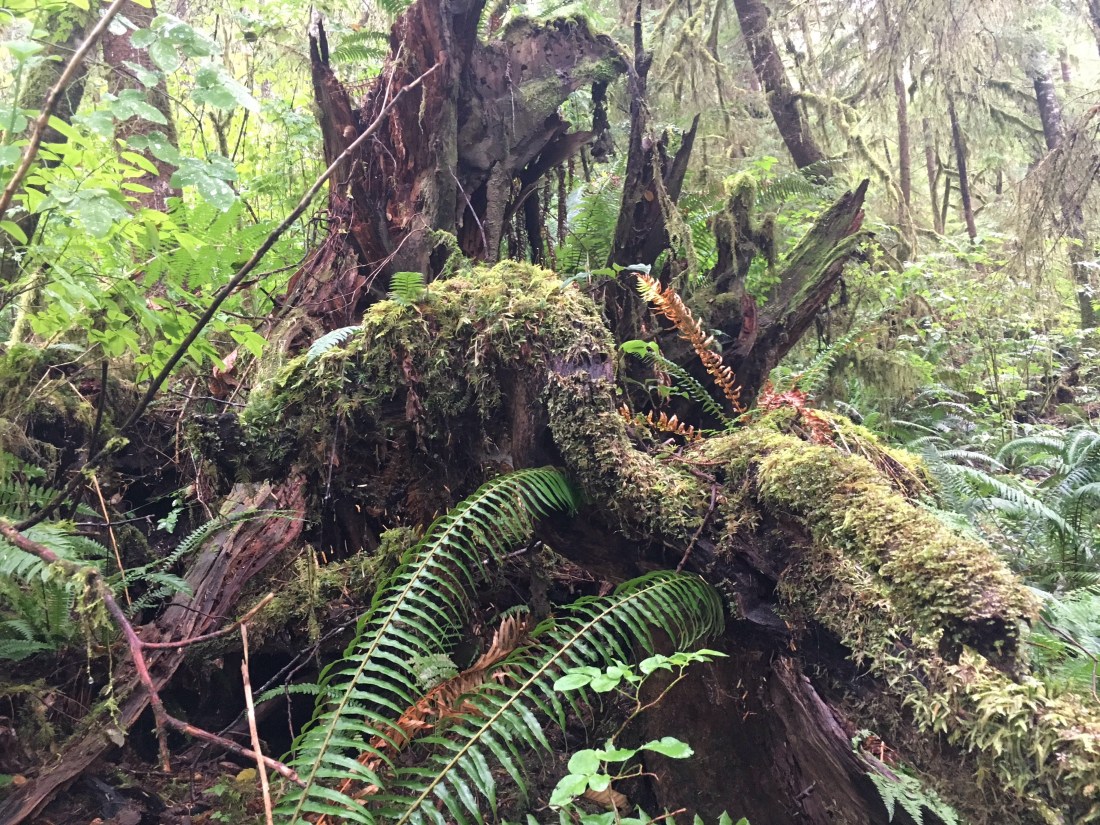
Finally, no trip through Forks would be complete without a rain forest photo:

From Forks, we continued south, exploring the isolated Washington coast. Our next two stops blur together in my mind: Ocean City, WA followed by Long Beach, WA. We stayed in private RV parks run by quirky owners, first Susan, then Terry, who both had standard quirky poodles. Terry especially had the beleaguered mom vibe, posting signs in the restrooms: Clean up after yourself! We don’t make a mess in your rig, so don’t make a mess in our home! Don’t waste water! It shouldn’t be a sauna in here! Close the door in this weather! And for God’s sake take your dog poop to the dumpster, don’t be lazy and throw it out here! Both parks had mostly long term tenants, with overnighters like us the exception. In Ocean City, we reached the sand on a footpath through a dense flat jungle of myrtle and pine. In Long Beach, we walked along the road to get to the vast, empty beach. Uh huh. Ocean , check. Sand, check. Clamming is out of the question: all that work and then you might end up with razor clams which nobody likes unless they’re deep fried. No dead pinnipeds to delight Marco, no squealing children, no romping dogs, and alas, no half-naked surfers. Not much to do in Long Beach besides sneakily undermine the bathroom signs. So we visited the Cranberry Museum, which taught us all about cultivation of this local treat. Shout out to Mark, our favorite cranberry expert!

Olympic National Park

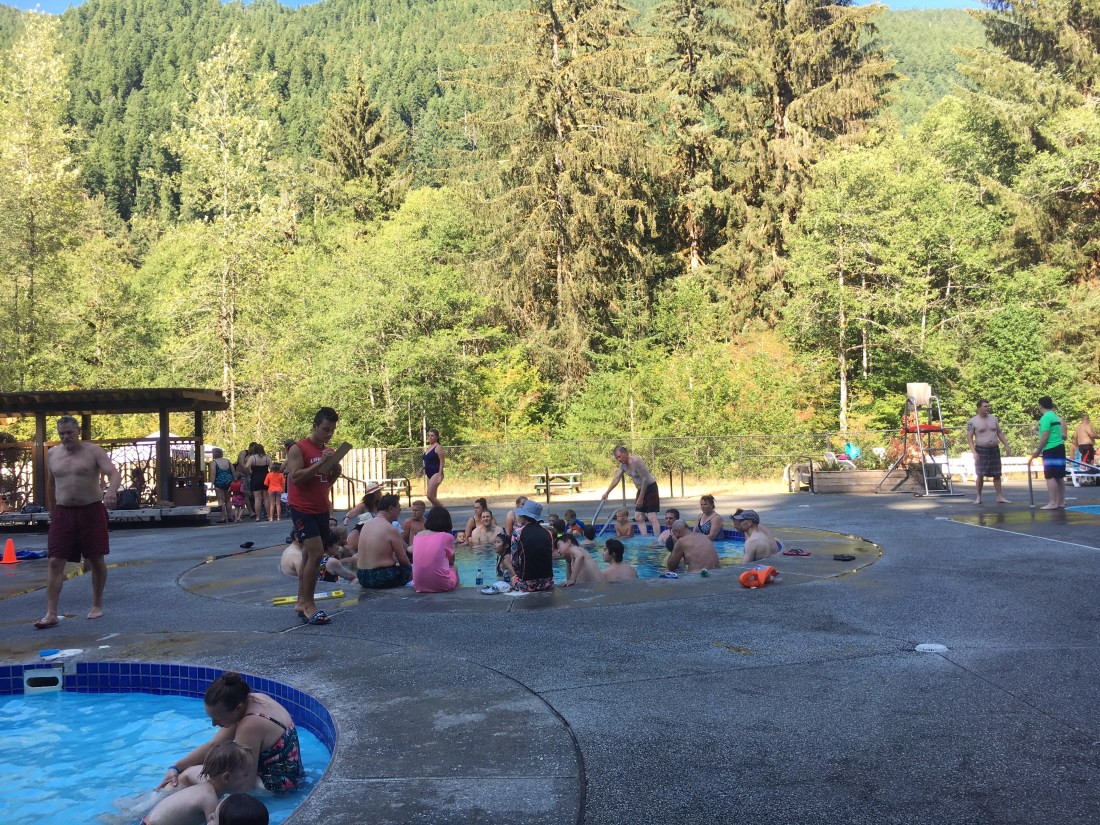
We had managed to reserve a campsite for three nights at Sol Duc Hot Springs. I enjoyed the warm mineral pool and the cool swimming pool.

It was quite the international crowd, as at Radium Hot Springs in BC. Slavic speakers, Europeans, and Japanese sat around steaming like dumplings in soup. I noticed casual US life guarding. A little girl of about 5, wearing floaties, was practicing holding her breath under water in the shallow pool. She did this in the face-down, dead man’s float position. I kept a close eye on her. I found a pair of eyeglasses on the bottom of the deep pool and turned them in. They were later claimed by the owner in a happy reunion.

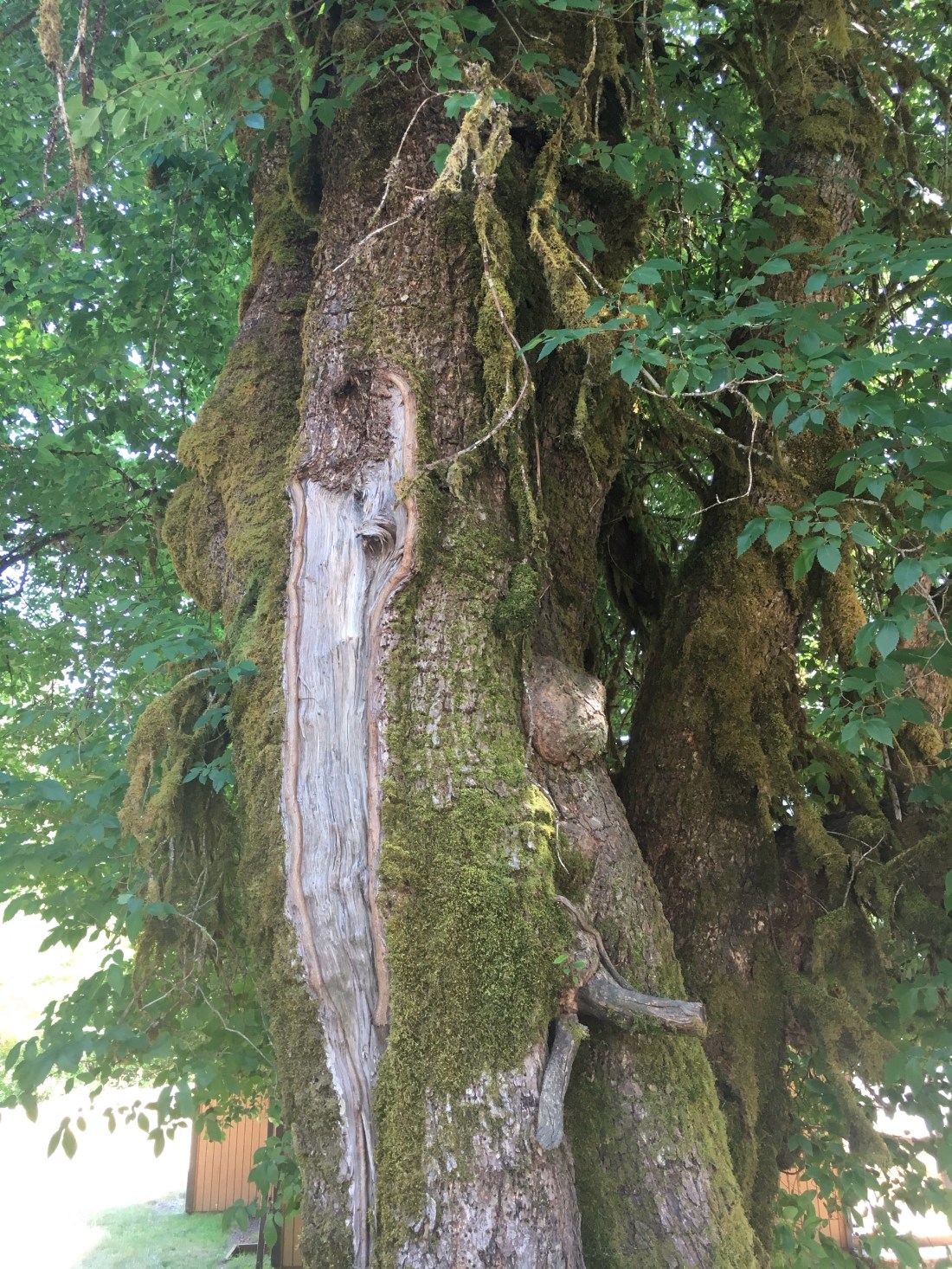
One of the best parts of these preserved areas is the chance to see really old trees. Here’s a red alder that has been through a lot:

JG hiked along the North Fork of the Sol Duc River after biking to the trailhead. The following day, I hiked to Little Divide from the Sol Duc Resort. On my hike, I saw a white-tailed deer. I had seen my first one at Norbury Lake in BC. They are reddish brown and flick a creamy white, twitchy tail. At first when the deer turned around I thought a squirrel was riding on its backside. I am used to the mule deer and black-tailed deer of the Santa Cruz mountains or Sierras.

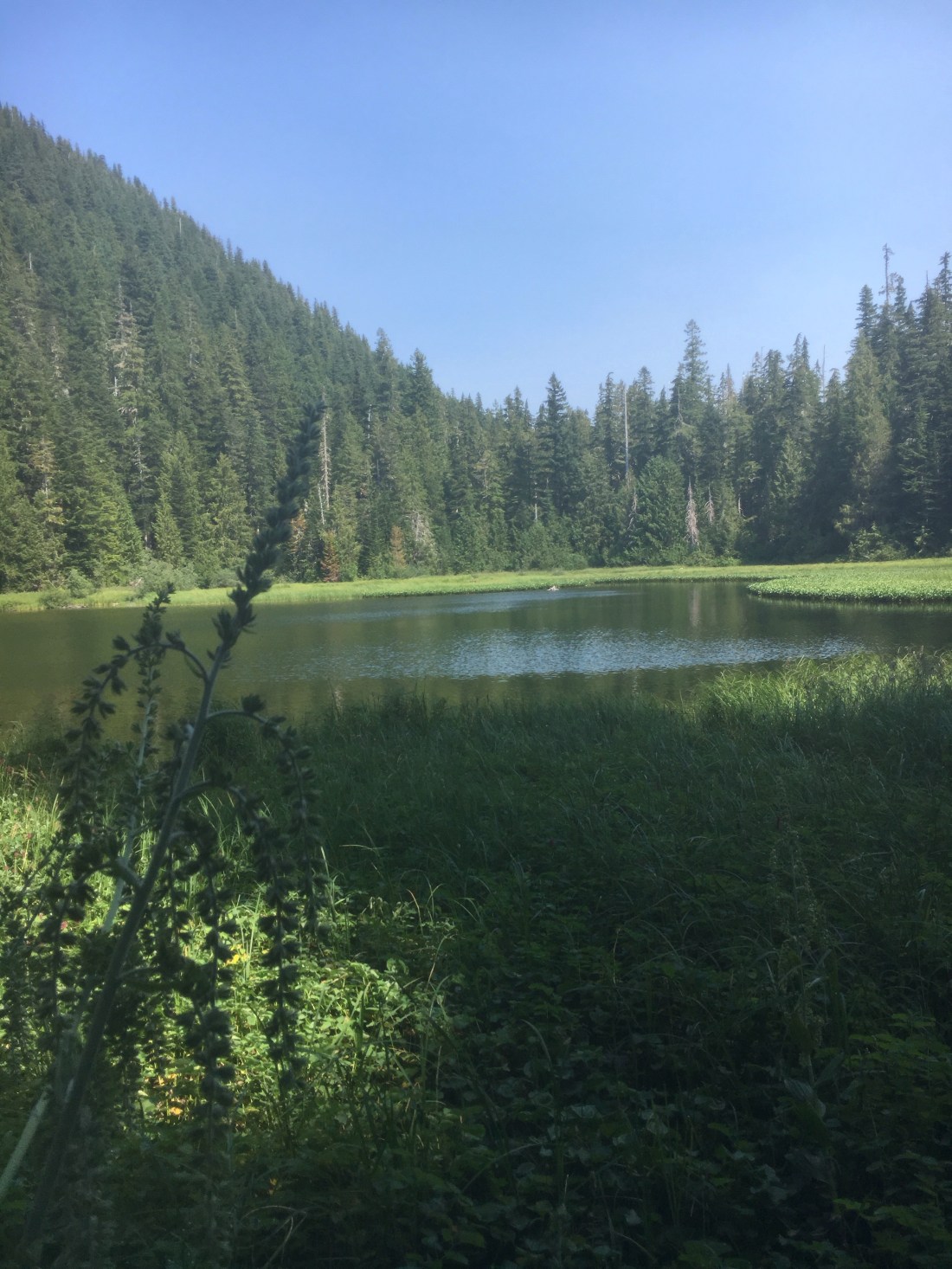
There was a white family in polo shirts and Bermuda shorts on the first quarter mile of the trail who gazed in hushed awe at a squirrel. A gray squirrel, a bushy-tailed forest rat, an enemy of the homeland security patrol. Not everybody lives surrounded by them like we do. I may have felt superior. But later I was gazing in awe, too, watching fish jump in Mink Lake. Here’s Mink Lake, WA.

Why do trout jump? I watched them, trying to figure it out. It wasn’t to catch insects. Nor was it to scratch the sea lice off their backs. From what I could tell, the trout were juveniles and they were playing. Plink plink. Splash. Pitta pitta splash. Happy kiddos.

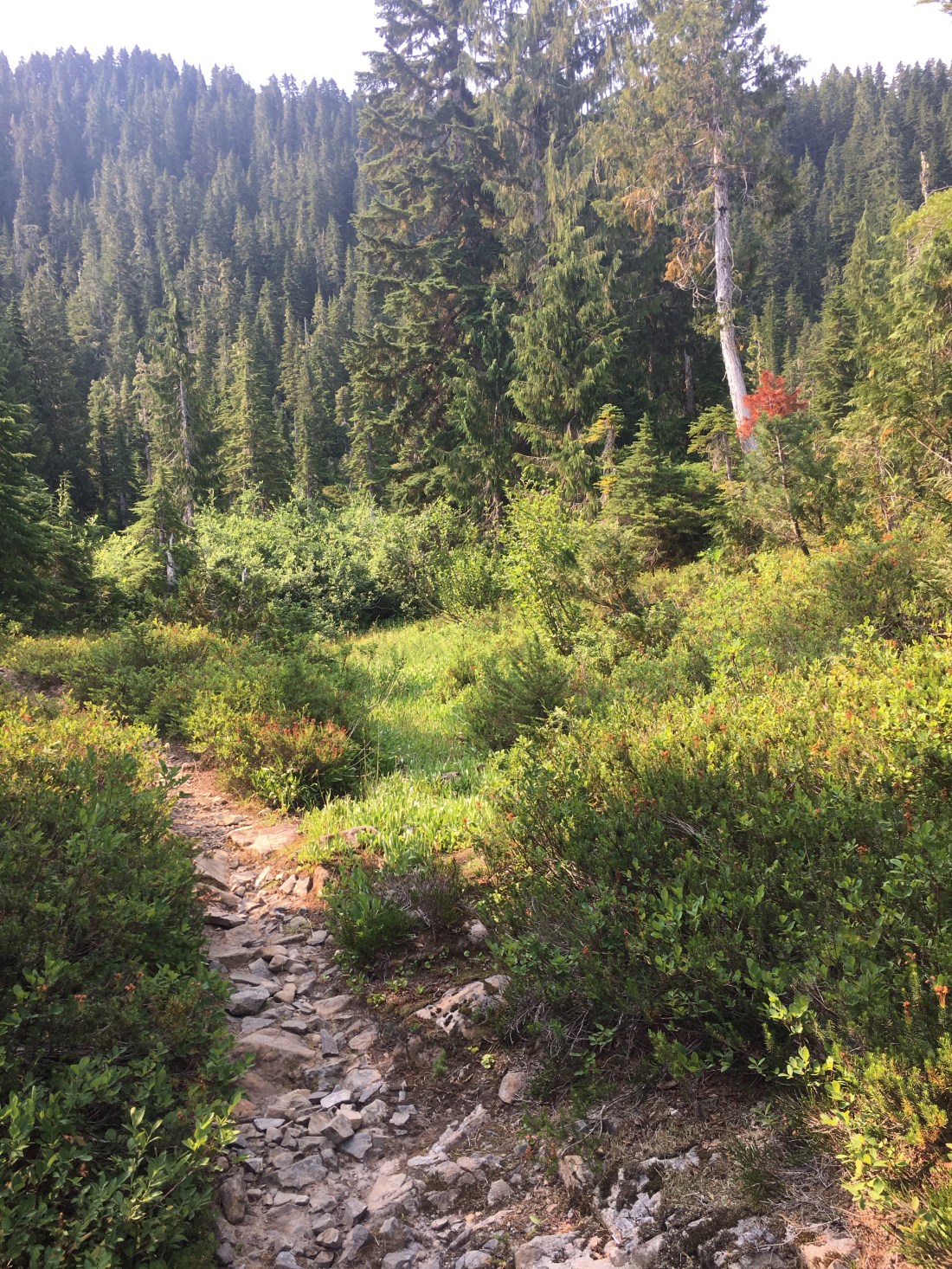
Here’s a trail photo. There was almost nobody on it. I saw about 13 people all day, mostly when I was returning to camp. That’s a contrast to the trailhead at Sol Duc Falls, which had about 100 cars and many hikers.

It was hazy from the wildfires hundreds of miles away.

Good Berries, Bad Berries

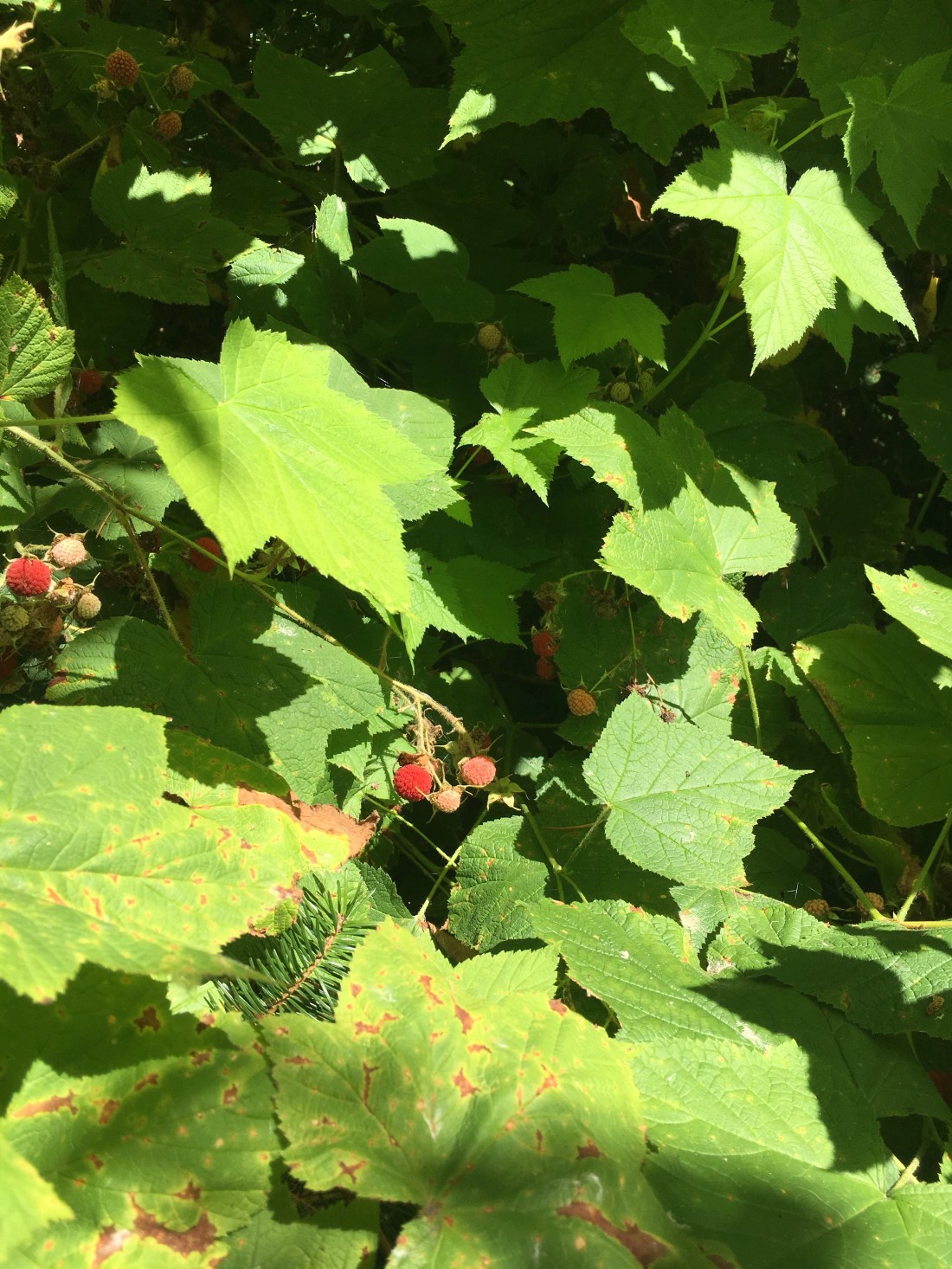
Once it’s no longer wildflower season, it’s berry season. Thimbleberries at Lake Sammamish:

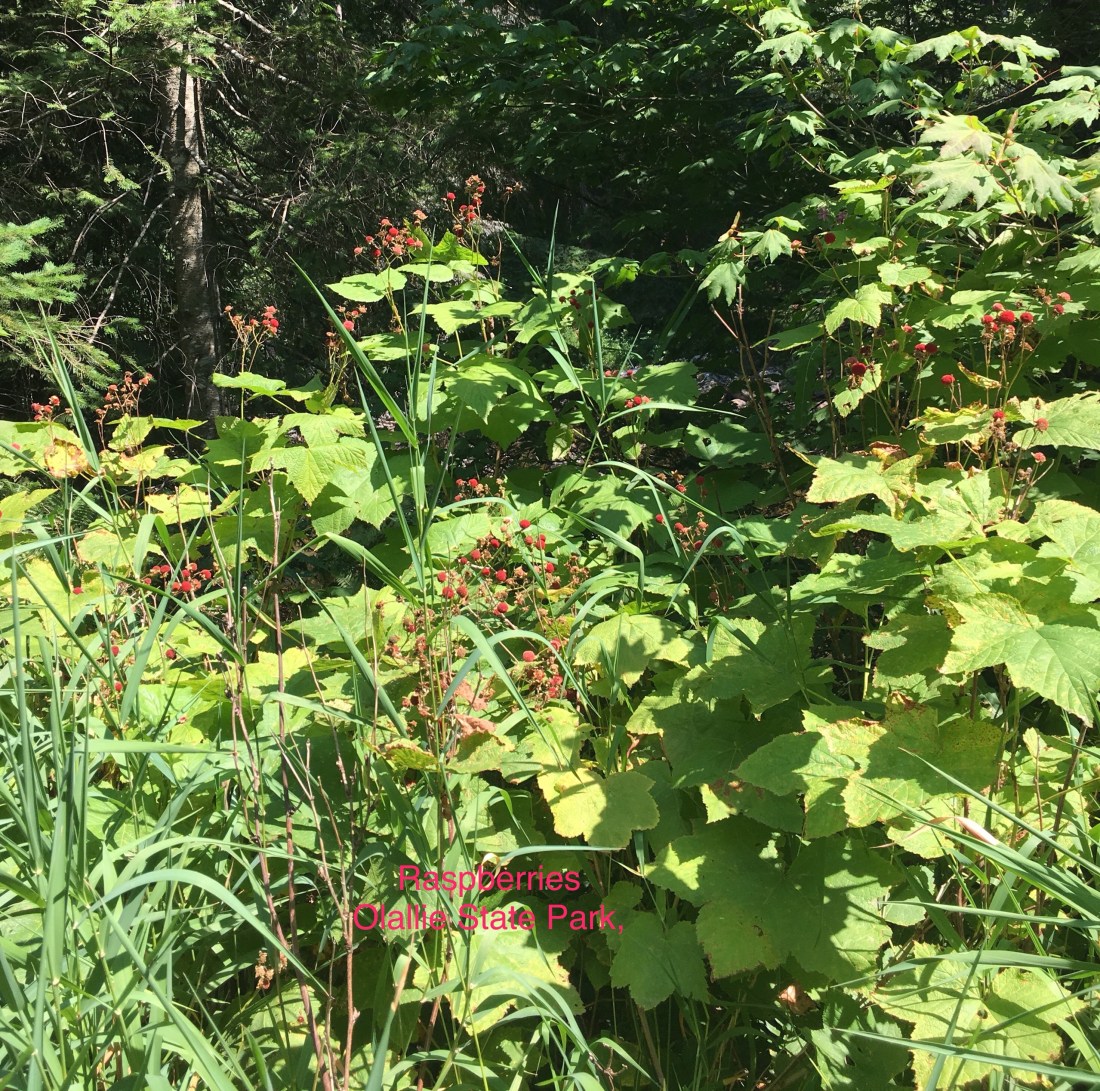
I like the many varieties of wild berries. Tasty raspberries in August at Olallie:

In Marysville BC, we found red huckleberries:

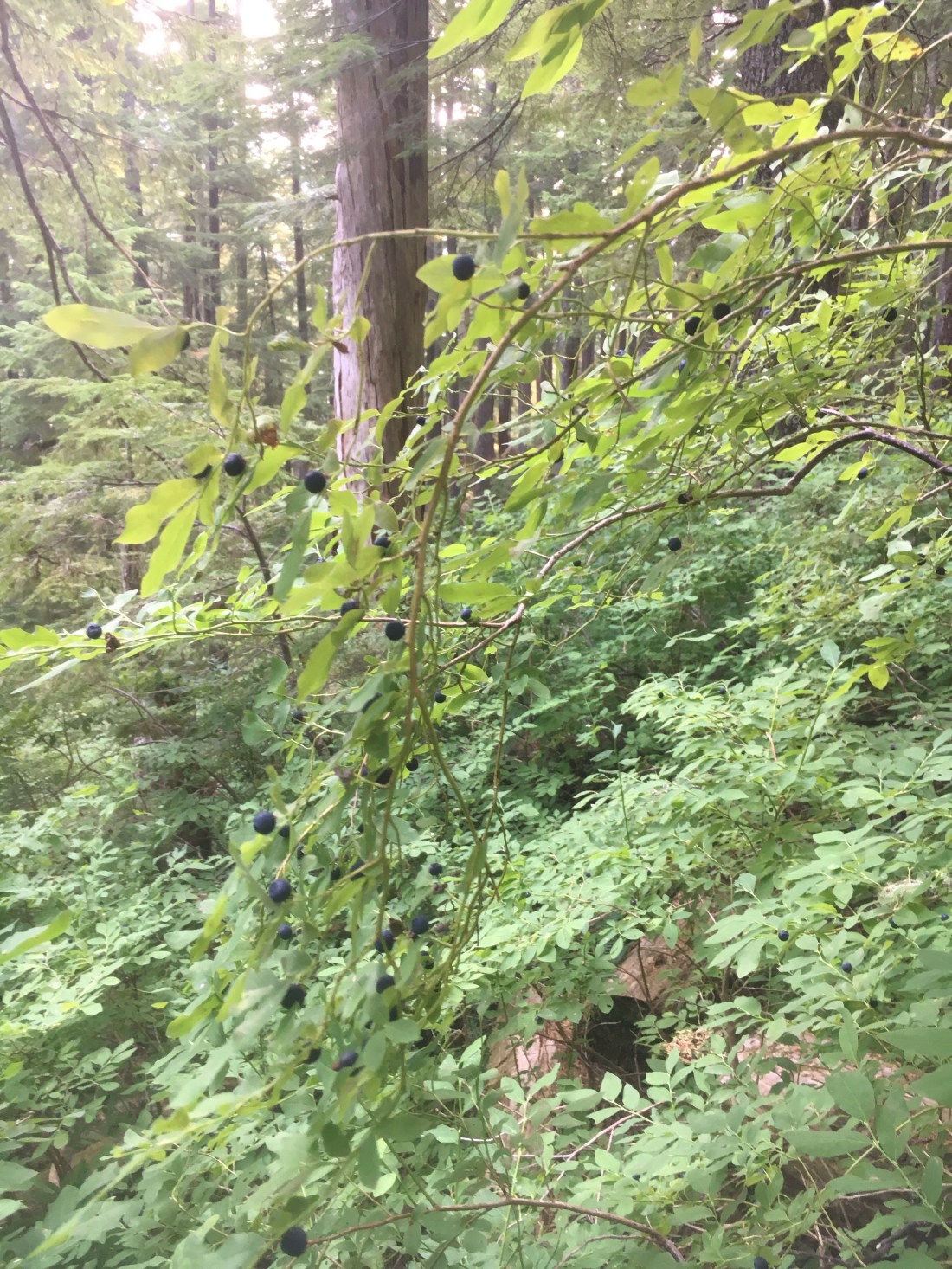
Blue huckleberries are everywhere under the canopy of mixed conifer forests.

That huckleberry photo is from Olympic National Park. And here’s a cranberry bush, which is related to the low bog cranberries cultivated commercially:

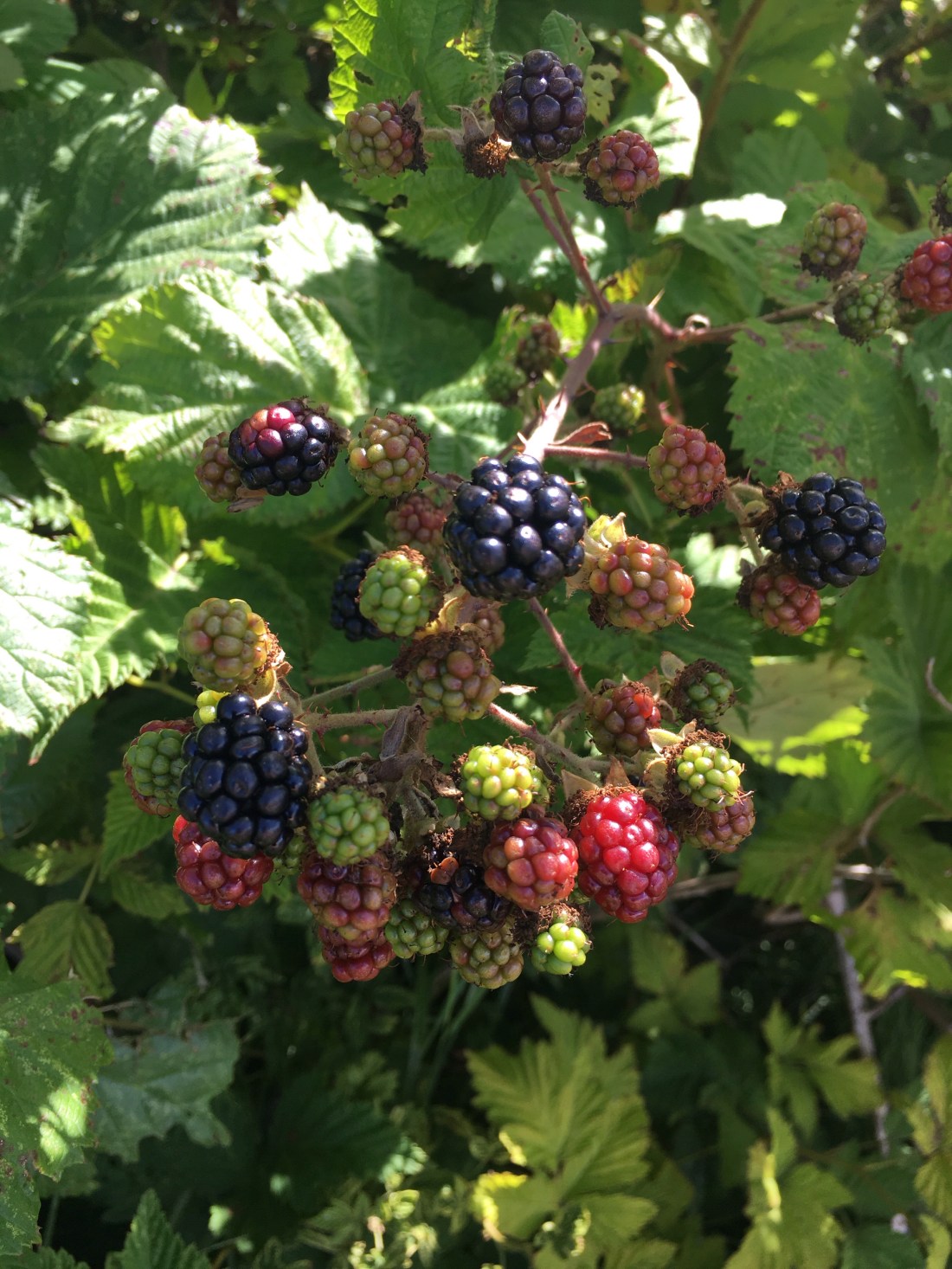
Finally, the invasive species berry that’s taking over WA, my old nemesis at Skyview, the prickly Himalayan blackberry. Here’s a photo from Oceanside, WA in mid August:

I like living in a world of beautiful, edible berries. But the Himalayan blackberries are a ubiquitous scourge upon the disturbed parts of the earth. They spread by suckers, by seed, and by growth. They crowd out the native vegetation. Their thorns make them poor habitat and difficult to eradicate. They are a Class C (worst) Invasive Species in Washington. And they’re prevalent along roads, in hedges, along wetlands. The one good thing I have to say about them is from Ecola State Park, OR. The dense thatch of blackberries along the coast there has kept foot traffic to a minimum and preserved the sandy soil from erosion. But mostly Himalayan blackberries invade and conquer.

Across ID and WA

Stuffed Beaver, Sand Point Museum, ID

Our story continues with a drive south through the Idaho Panhandle. We stopped in Bonner’s Ferry, Sand Point, Pend Oreille River, and viewed the Albeni Dam. Then we wound up in Deer Park, WA, just north of Spokane. Idaho is the fastest growing state by percent population expansion. Its population was 1.7M last year. It seemed to house all those former CA, UT, and WA residents whose states have gotten too crowded. Oregonians, on the other hand, just move to Bend. Just a reminder: California’s population is 39.75M, and all of Canada has 37M. Oregon has 4.15M. (If overcrowding breeds rudeness, why are the Japanese so polite?) One of the themes of our trip has been hanging out in beautiful vast empty places. Idaho qualifies. I would have liked to spend more time around Sand Point, but we had to cross ID and WA in four days to make it to a reserved campsite in Olympic National Park. So we’ll come back someday.

In Deer Park, WA I attended a quilt show. The Fat Quarter Ladies hold an annual display and competition. A fat quarter is a yardage term for a quarter yard of fabric. For $1 admission and some raffle tickets I was in among peers. There were about 25 ladies of a certain age and one bored guy in a corner on his smartphone. The quilts I liked best were the repaired ones. Someone took a musty, threadbare heirloom and added new patches to revive it. Quilting is not quite the communal activity it once was, but still overwhelming female. Smart, tough sewing machines obviate the need for tedious hand quilting. Even piecing, or putting the top together, is usually done by machine. But the ladies find ways to make it social: holiday parties, stitch ‘n’ bitch, and competitions. For instance, each quilter receives a bag of mixed fabric scraps and comes back the following month with what she did with them. Or each quilter produces a quilt on an assigned theme like “patriotism.” Or the quilters draw lots with flower names and each creates a potholder to represent the flower. I lost the raffle, which benefited the local ambulance service, but walked away with a cloth tube with drawstrings on either end, designed to hold plastic bags ready for re-use. At $1, a bargain. I overlooked the quilters’ dreadful politics (photos of them participating in the March for the Unborn — Oy) and tried to adjust my subculture-filter to Wide. For just an hour, I can practice nice. Longer than that: iffy.

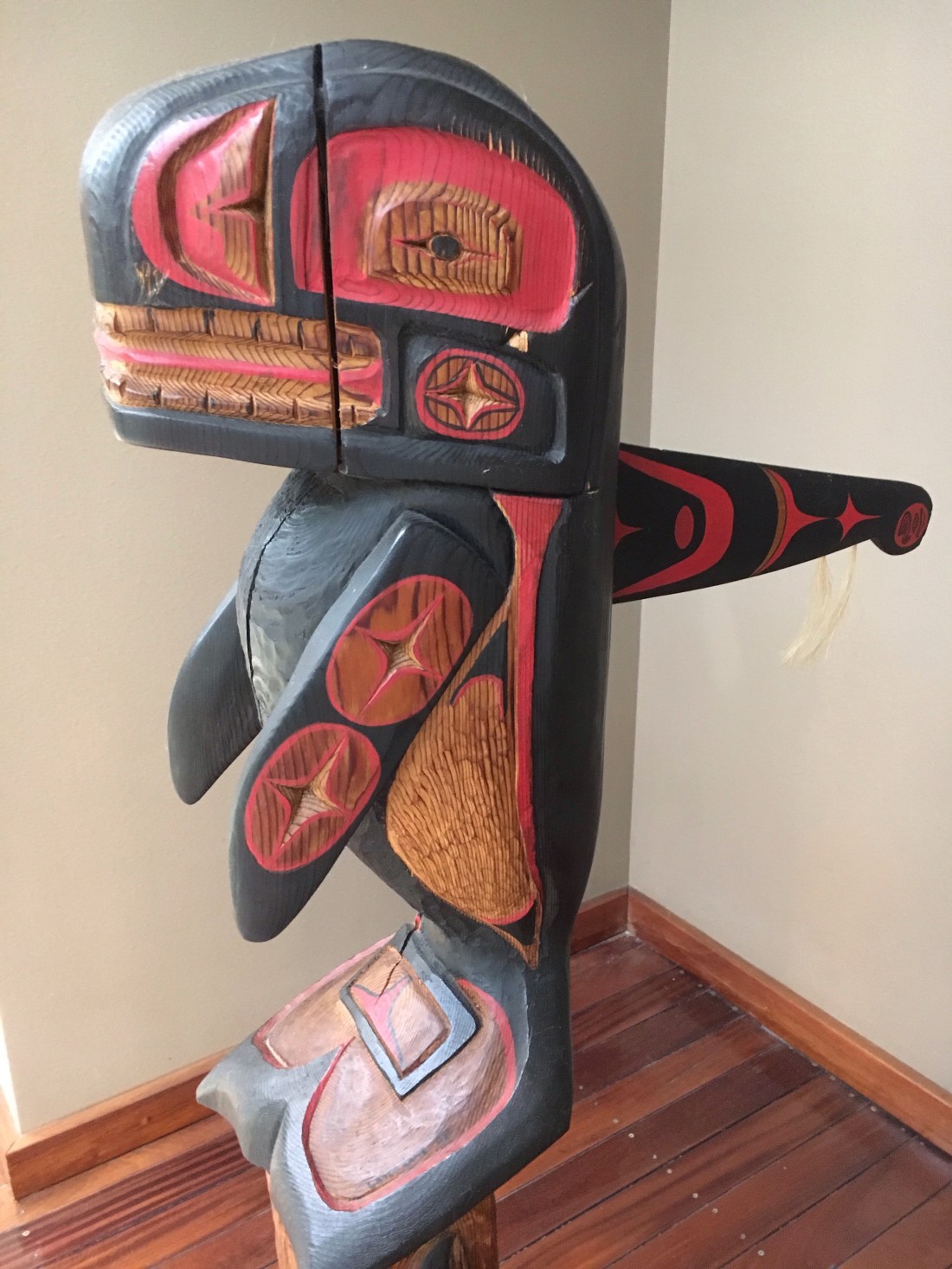
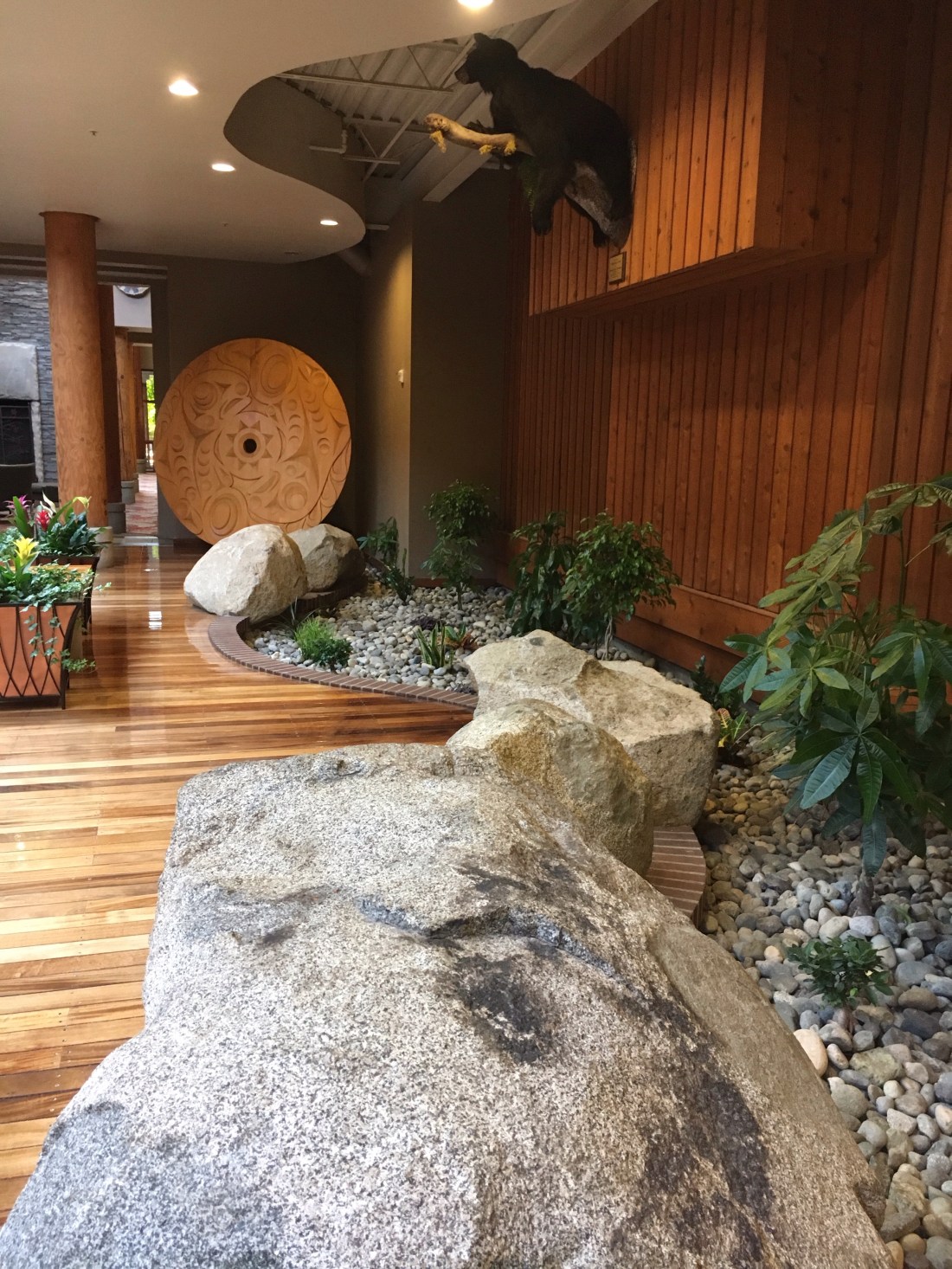
Then we joined the flow on I-90, which laterally bisects Washington. A primitive stop in Ellensburg on the Yakima River left us with souvenir mosquito bites. Then we headed toward Puget Sound, overnighting with a tribe at Little Creek Casino in Shelton. Great buffet. Great taxidermy. Those are unrelated observations.

Whale at Little Creek Casino, WA

The stylish hallway at Little Creek. Note Bear at top.

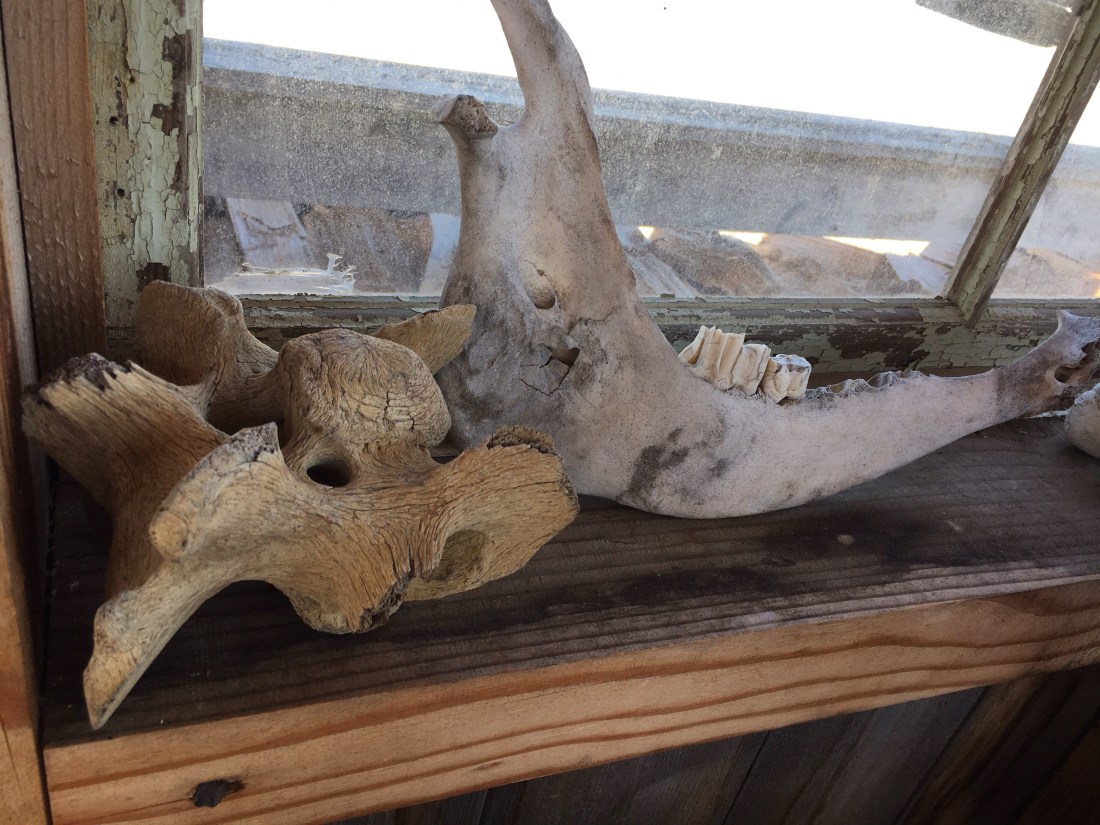
From Shelton we headed north along the Hood Canal. We stopped for oysters at Hama Hama. JG is no friend of bivalves and preferred crab cakes. I liked looking out at the oyster farms, of which only floats and bits of rope are visible. What a great, green industry. Here’s the decor at the oyster place:

We overnighted in Sequim, pronounced Squim, famous for beautiful bays, dry weather in the rain shadow of the Olympics, and lavender.