
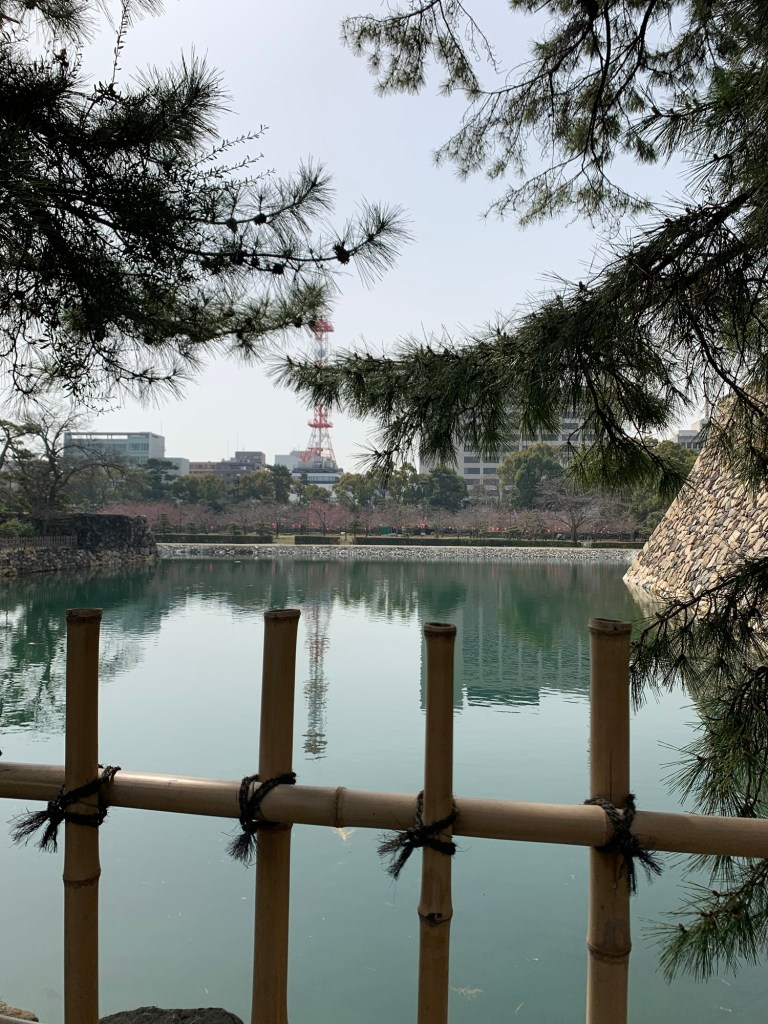
In this city of 420,000 we visited a park built on the ruined castle of Tamamo and its adjacent history museum. We had beautiful weather and about had the place to ourselves. Here’s one reason why. As JG was pointing Google Translate at the inscription on a boulder, a threesome of Toronto folks we knew from our ship hailed JG from afar to ask for directions to the entrance. Because the man said, “Excuse me, Sir!” when I was standing right next to JG, I did not reply, letting Sir answer. JG did not know the way in, but I did. I let them walk away in the wrong direction. No more trail-momming! So this is the only the second port in which I have not been asked for directions.
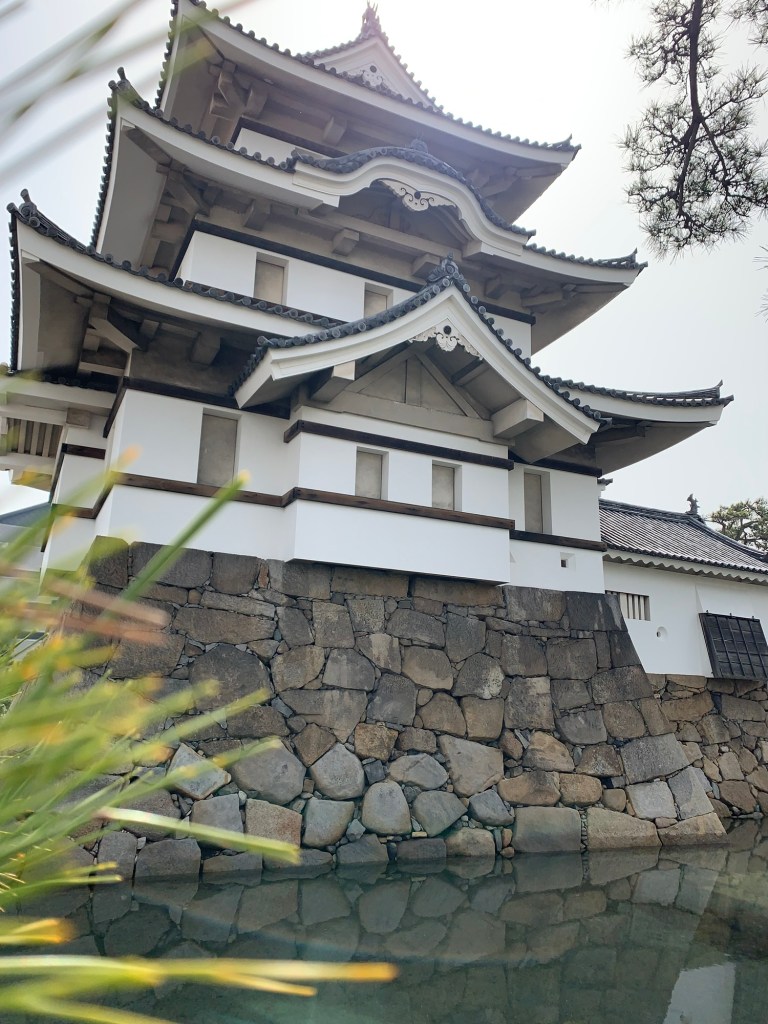
The castle was one of only three seaside castles in Japan. It had two saltwater moats around a keep with a freshwater lake fed by an underground spring. The Ikoma clan built it in 1590, getting rich from rice farming, then the Emperor gifted the fiefdom to the Matsudaira clan. I couldn’t find out what the Ikoma did wrong. Matsudaira owned it for twelve generations through the Edo period, (1660-1868) and beyond. We learned that castles were built of wood and built to impress. We’d call it a palace. Castles were not built for defense. Warring clans burned down their rivals’ palaces and surrounding samurai housing. The Takematsu castle had been restored several times, most recently after Allied bombing in 1945.
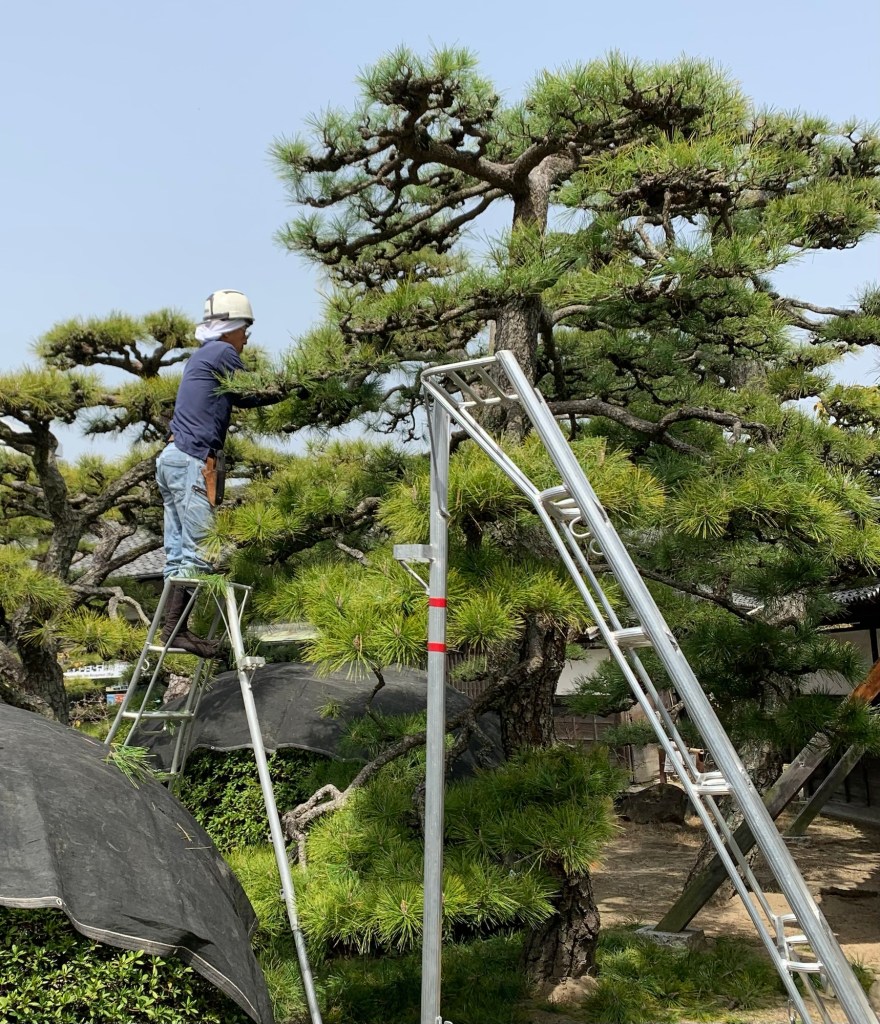
This morning the park hosted almost as many gardeners as tourists. The style of gardening does not appeal to me. The workers clip from the interior of the tree. Those leaves will die back naturally. Then they rake up every bit of fallen leaf litter, removing the humus layer that shelters insects. At our house we have many insectivorous birds who peck in the leaf litter. Here I noticed only two birds, a crow and a hawk.
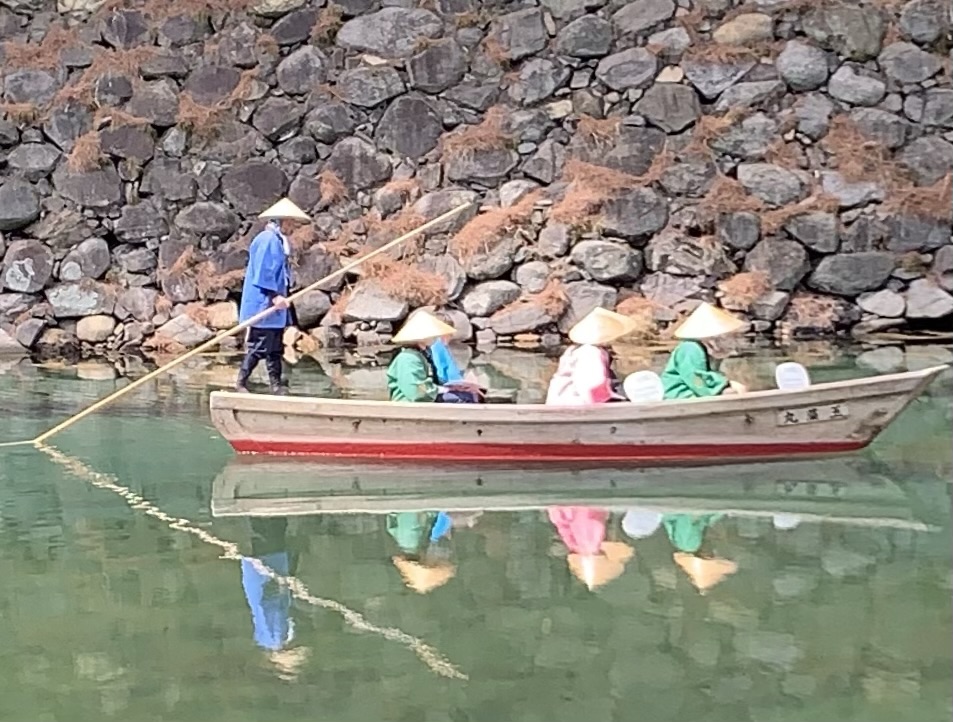
There was a pleasure boat concession selling sedate boat rides. The passengers dress up in kimonos and cone hats, then climb into a wooden boat propelled by a gondolier. I thought that one daughter would like it if she could pole the boat herself, but not if she could only sit.
Carp are lucky in Japan. They are especially lucky if you pay ¥100 for a handful of fish pellets that you throw to the waiting fish in the innermost moat. I enjoyed this activity. It reminded me how one girl liked to drop her fish food just so, to favor the littlest ones. A red sea-bream had joined the carp and pushed them around. I told the red sea-bream there was plenty of luck to go around.

There is a lot of symbolism in Japanese gardens relating to the transitory nature of life: stepping stones, rock islands, bridges, and sand patches are also about the passage of time. When these elements are built on top of a ruined castle they become even more meaningful in an Ozymandias way: how the once mighty have fallen.
The once mighty Matsudaira swam daily and dictated that all subjects must learn to swim. To this day there is an annual all-comers swim event. The current Matsudaira family head has registered a special swim stroke as intellectual property.
Japanese swimming, called Nihon Eiho, is a classical folk sport. Swimming is “squid style,” never timed, and practiced all life long.
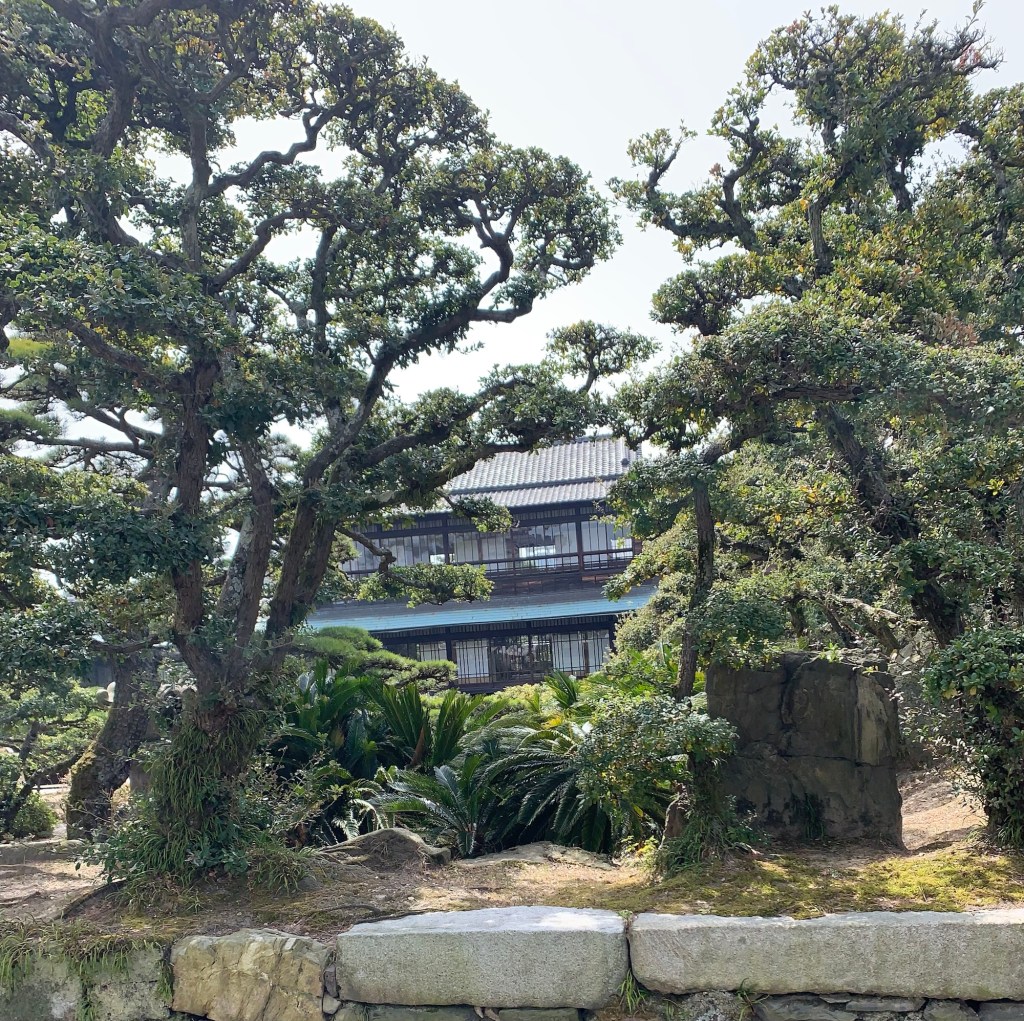
The history museum showed us a really good video of how the castle used to look in animated diagrams. We also saw some original downspouts shaped like frolicking carp, a theme from Kobe. The gift shop offered a large selection of takeaway Bonsai treelets.
Interesting to note that there were no rubbish bins around the park. I picked up trashlies and then gave them to the cashier at the entrance.
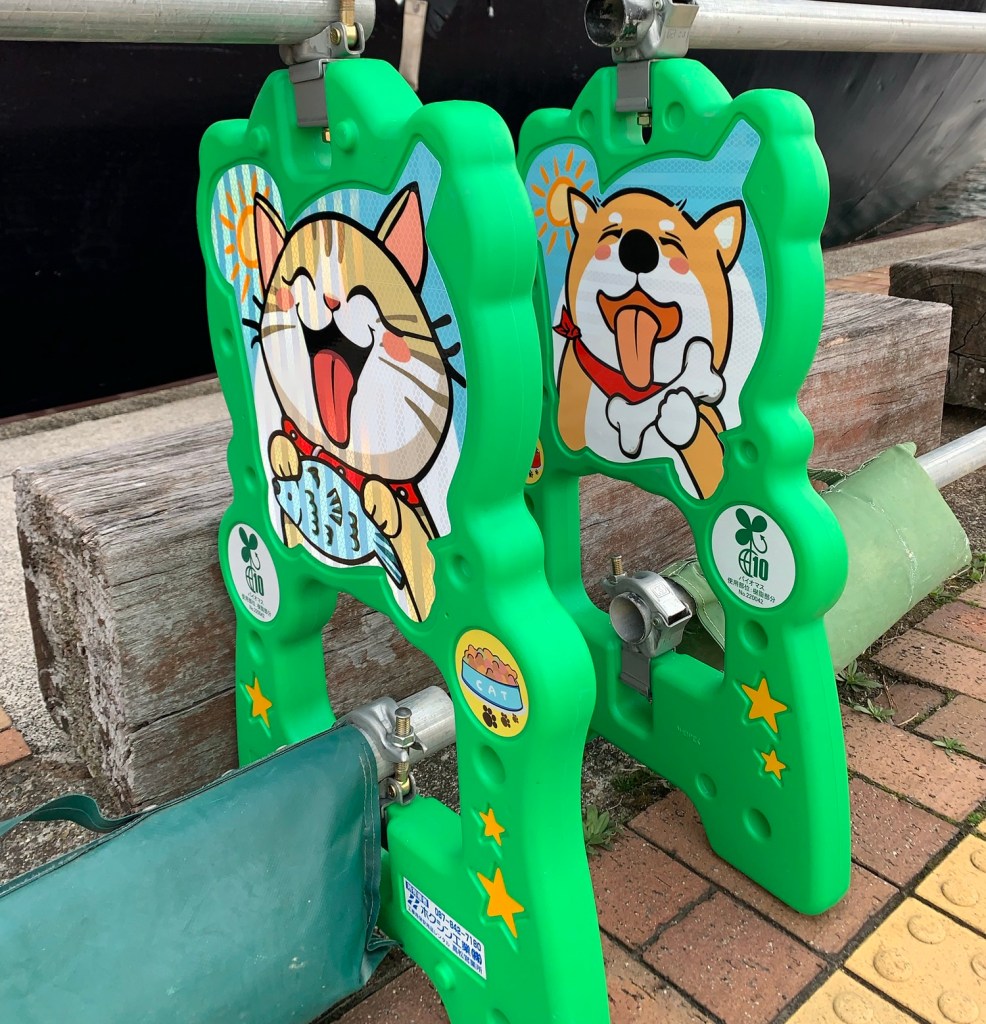
The port of Takematsu sported some of the cutest bollards I’d ever seen. Cartoon characters illustrate all kinds of ads and signs here.
 JohnandJanet'sJourney
Wow, I had never heard of Nihon Eiho, very interesting. I looked up a video. And Simon is a fan of the cute bollards!
LikeLike
Feeding the fish sounds nice! I’m glad you were thoughtful in the distribution of your bounty.
I think all gardens come to symbolize impermanence, sooner or later. One might as well embrace it.
LikeLike