

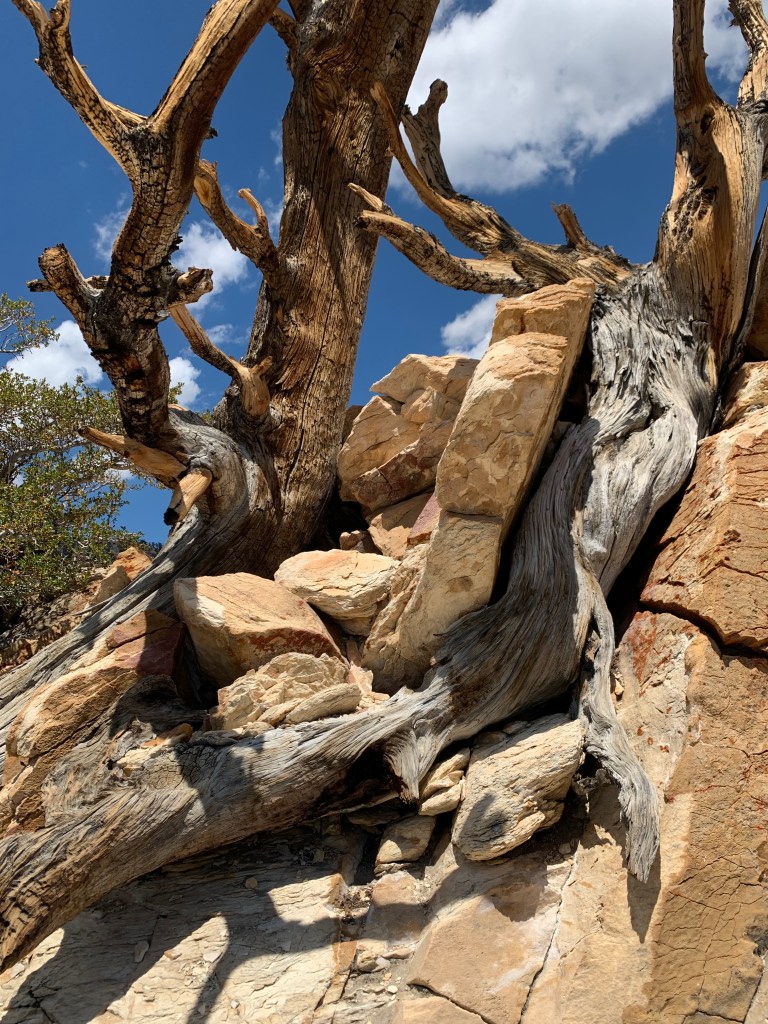
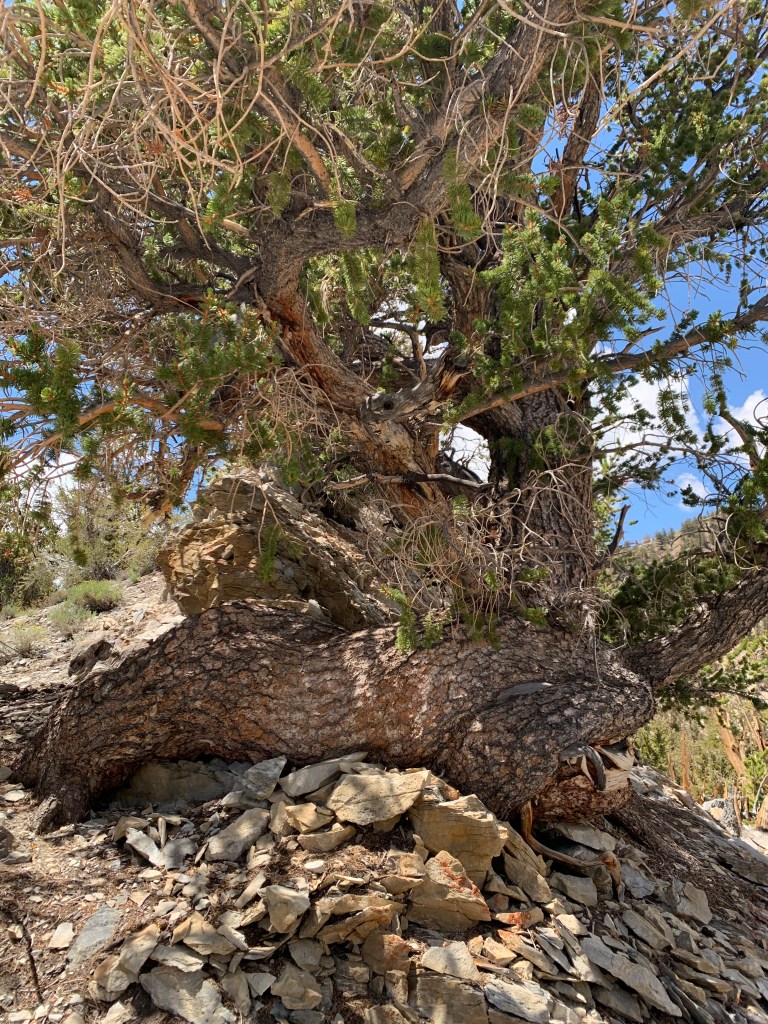
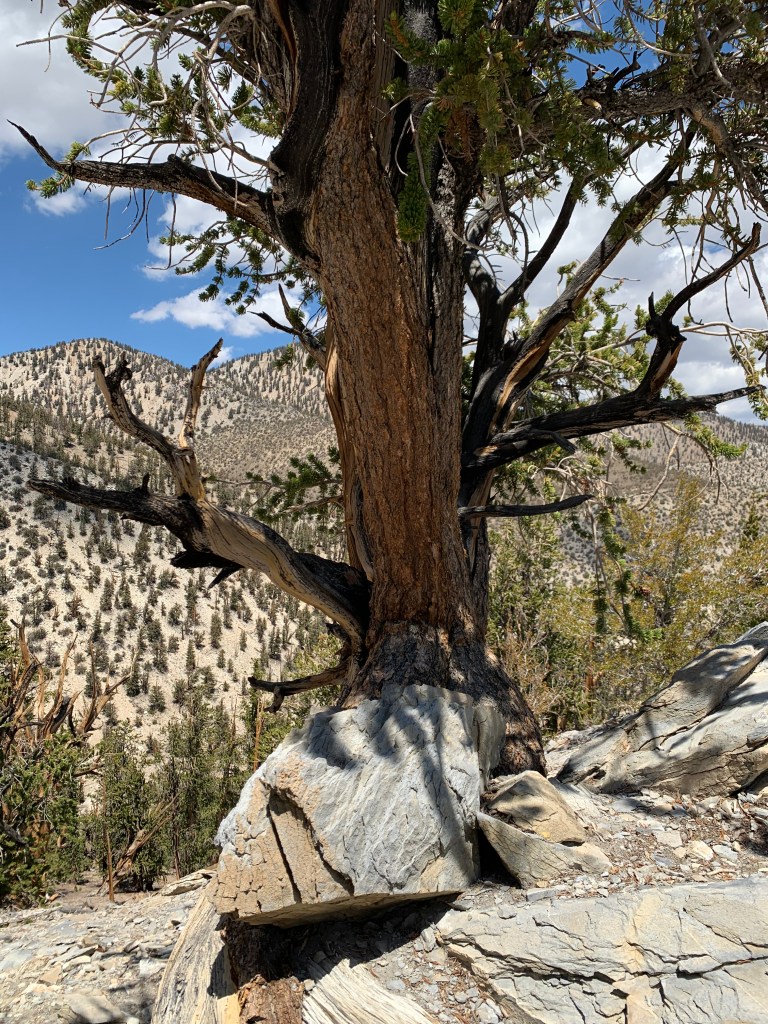

From Mammoth Lakes we drove south, then east to Schulman Grove. Because we had so enjoyed the Ancient Bristlecone Pines in 2021, we had promised ourselves to return. Growing at around 10,000 feet in the steep dry Dolomite soil of the White Mountains, the ancient Bristlecone Pine forest is a feast for those starved for a good metaphor. The Bristlecone Pine motto is, “What Doesn’t Kill Me Makes Me Change.” These trees live thousands of years thanks to a number of specific useful adaptations. Their roots can grow down or out to thwart erosion, a low branch can become a root and take in nourishment from the soil. When a storm topples the upper part of a tree, the lower part can keep living. When lightning strikes the main trunk and burns the inside of the tree, the outside can continue to grow. If wind and drought dry out the more exposed branches, the tree stops sending nutrients to the dead part in order to feed new growth elsewhere. So whereas the pampered Monterey Pine native to Pebble Beach winces, coughs daintily, and expires at the first bark beetle infestation or dry spell, those tough Bristlecone Pines shrug, adapt, and soldier on.

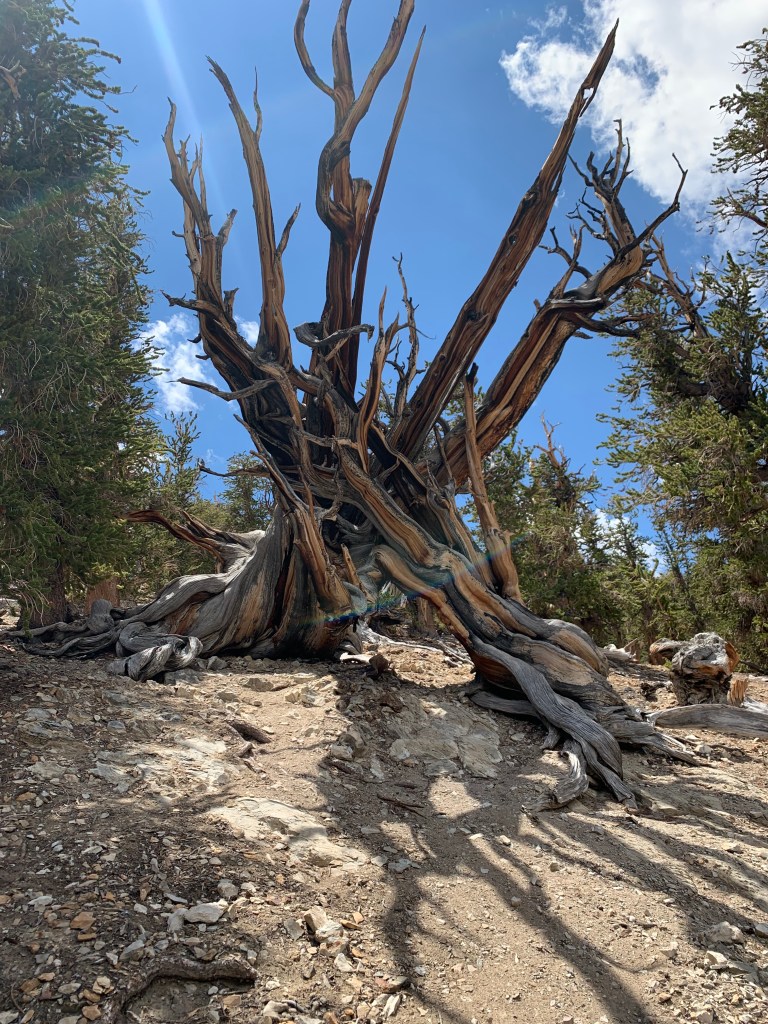
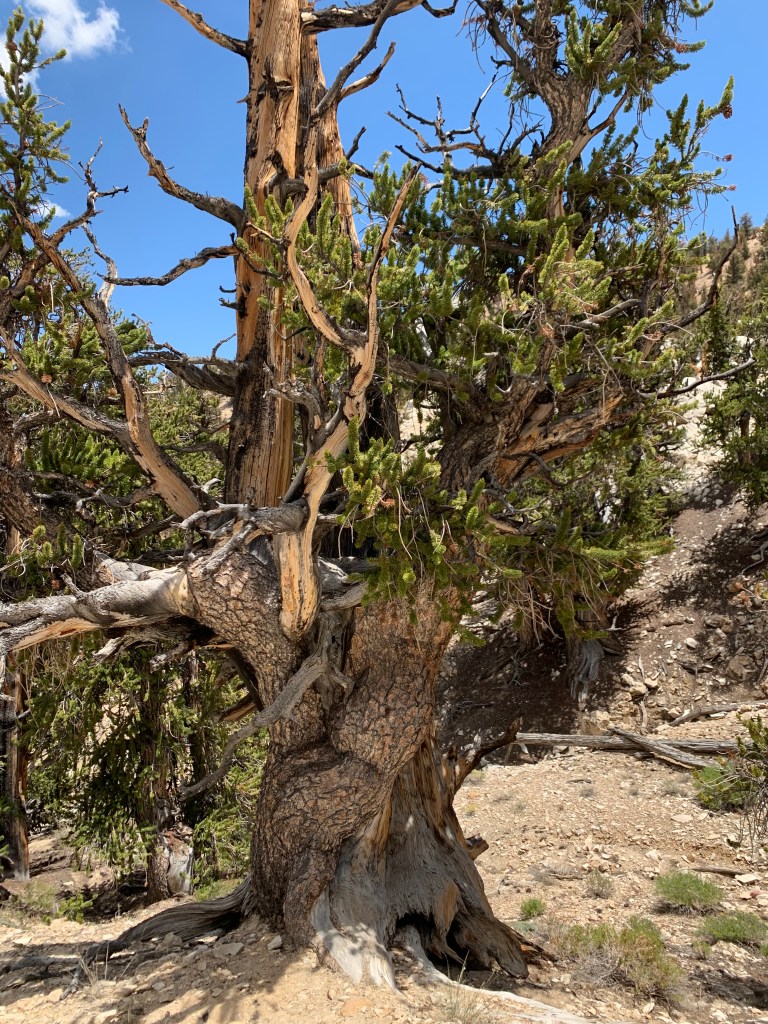


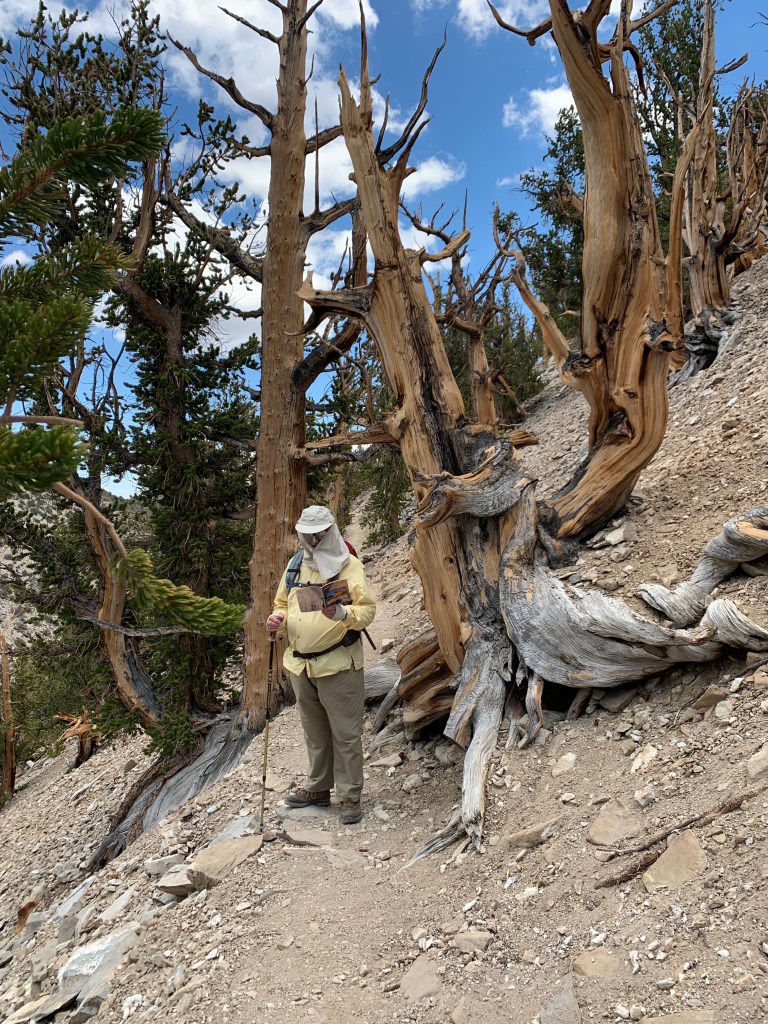

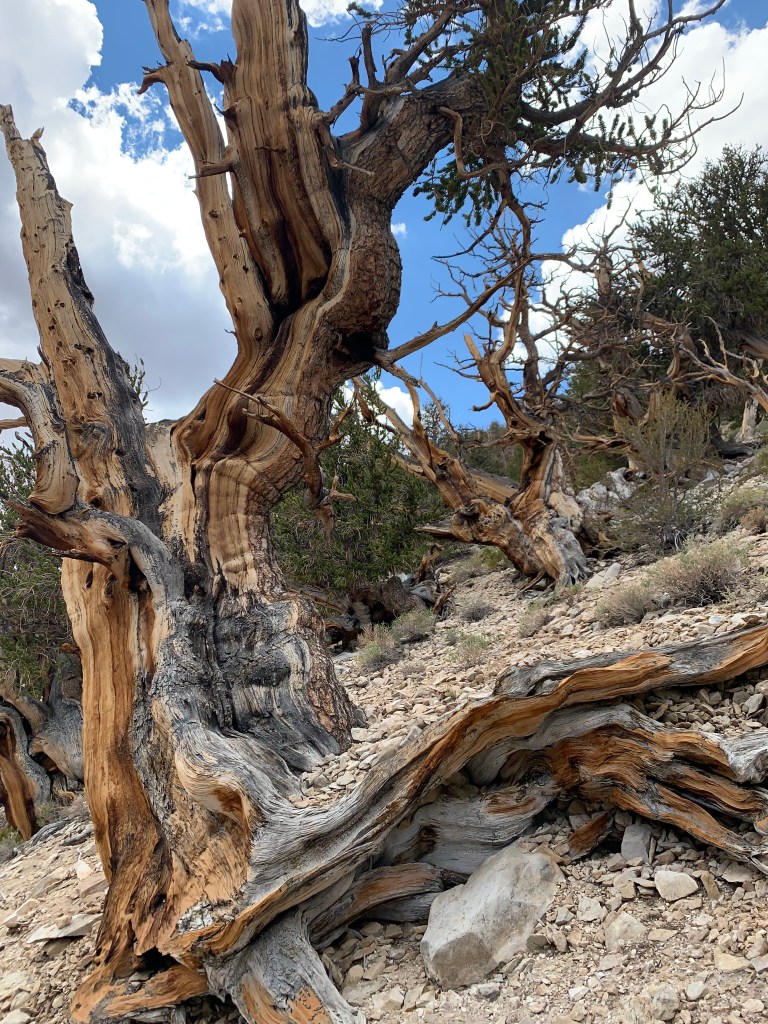

I find a lot of beauty and mystery in these trees. But thoughtless people are everywhere, even in remote corners of California like this one.
The Methuselah Tree is said to be over 4,847 years old. We walked past it on the Methuselah Trail, but it is not identified. It seems foolish hikers chipped away a souvenir for themselves, thereby creating the one danger an Ancient Bristlecone Pine could not overcome: human greed. The federal caretakers quickly removed any identification around Methuselah. His brother and sister trees are at least 4,000 years old, making our Sequoia Sempervirens, and even Sequoia Giganteum, look like babies. And by obscuring Methuselah’s identity he was saved from wanton pillaging.
There is an interesting obscure science called Dendrochronology which links tree rings to historical events. Thanks to the wonder of Dendrochronology, a shipwrecked whaling ship that went missing in 1858 was recently identified. How Tree Rings Helped Identify a Rhode Island Whaler Lost at Sea.
On 19 July we were interviewed by Bloomberg Science Writer Faye Flam. Here’s her article on the Ancient Bristlecone Pines: https://www.bloomberg.com/opinion/articles/2022-07-19/washburn-fire-isn-t-the-only-threat-to-the-world-s-oldest-trees?leadSource=uverify%20wall You’ll meet a paywall, but you can listen to the article without subscribing.
Must be a slow news day when the Bloomberg editors send Faye to fly across the country to LAX, then to motor up to the Schulman Grove in a rented SUV. She was hanging out with the scientists, gathering material for her podcast, and chatting with determined tree lovers like us. In the universally-understood language of hikers, I gave her some chocolate. She spoke like a TV news personality, polished and upbeat. I am not usually one to talk to the Press, but I made an exception for Faye because we were about the only tourists around, so slim pickins for the podcast. Shout out to Faye for her slow research and quick mind!
 JohnandJanet'sJourney
I love all the tree photos (and captions)! The sea witch is my favorite. I’m glad you made an exception to talk to Faye!
LikeLike