
My mother liked stories where the working people band together to improve their lot. My spouse likes stories where the engineers are the heroes. I like stories of cooperating with nature. There’s something for all of us at the Bonneville Dam and Fish Hatchery. Built in the 1930’s by the Army Corps of Engineers and the Works Progress Administration, the dam harnesses the Columbia River for hydroelectric power. But first, they had to build the fish ladder, which is a set of baffles with openings cut in them, around the dam for the returning salmon. 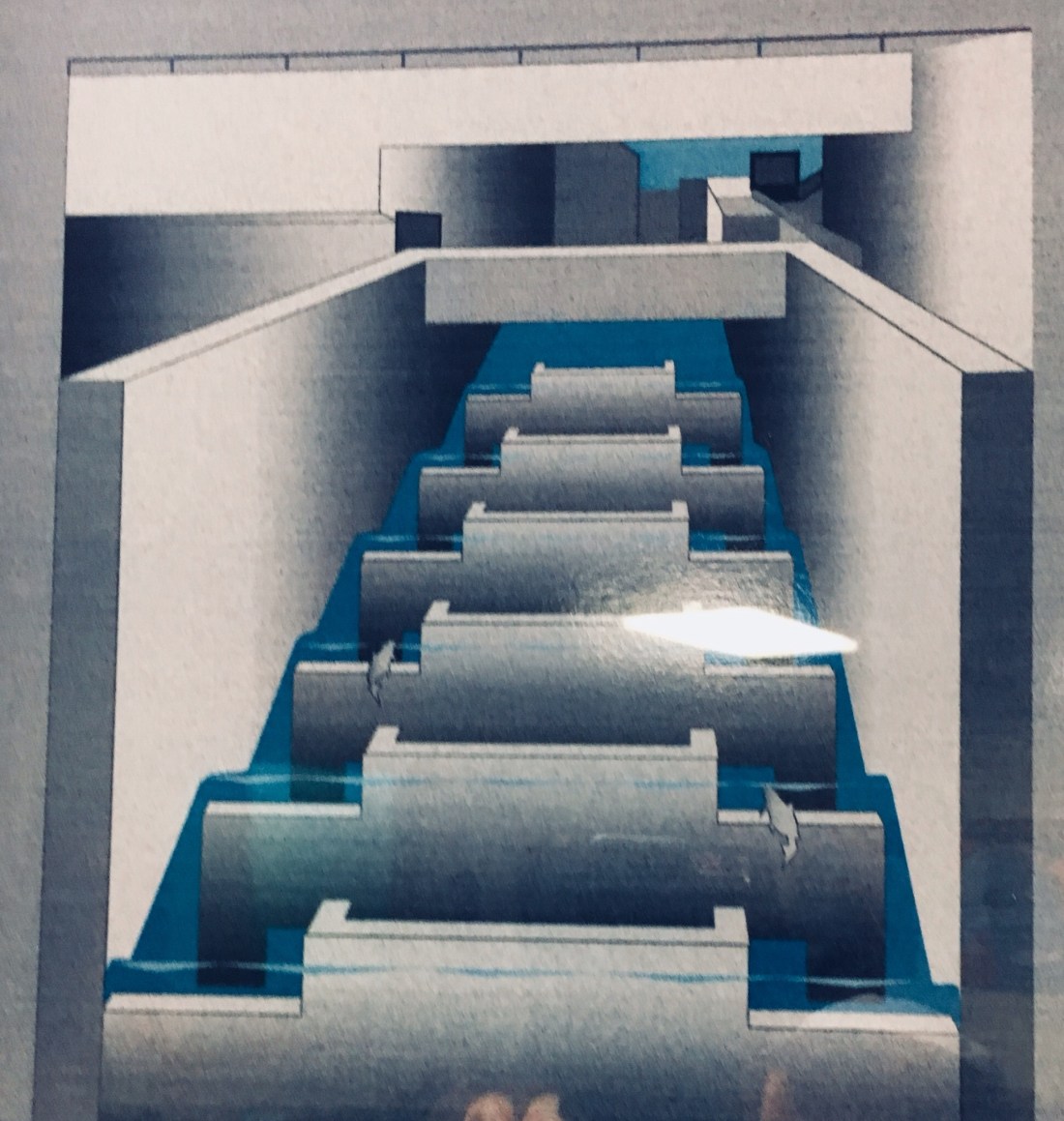
And while they built the fish ladder, they added ponds for the fish. Ichthyologists harvest the fish eggs, throw the parent carcasses back into the river for the wildlife to eat, and allow the fertilized eggs to hatch in enclosures topped with netting to keep out predators. When the fry are big enough and have had a good snootful of the smell of home, they are released back into the Columbia through a pipe, guarded by double sprinklers so the birds don’t just pick them off. Meanwhile, the Columbia churns massive turbines to fuel the power grid. And, not to be overlooked, there is a set of locks to allow marine traffic up and down the river. While I watched, a tugboat guiding a barge of fir logs downstream took its turn in the locks. The fish ponds are teeming with fry and large fish. For a quarter you can buy a handful of fish food and throw it in a pond to show your fish love. And there is a local celebrity, beloved by schoolchildren, named Herman the Sturgeon in the sturgeon tank and pond. Eleven foot long Herman was chillin’ with some buds when I took his photo.
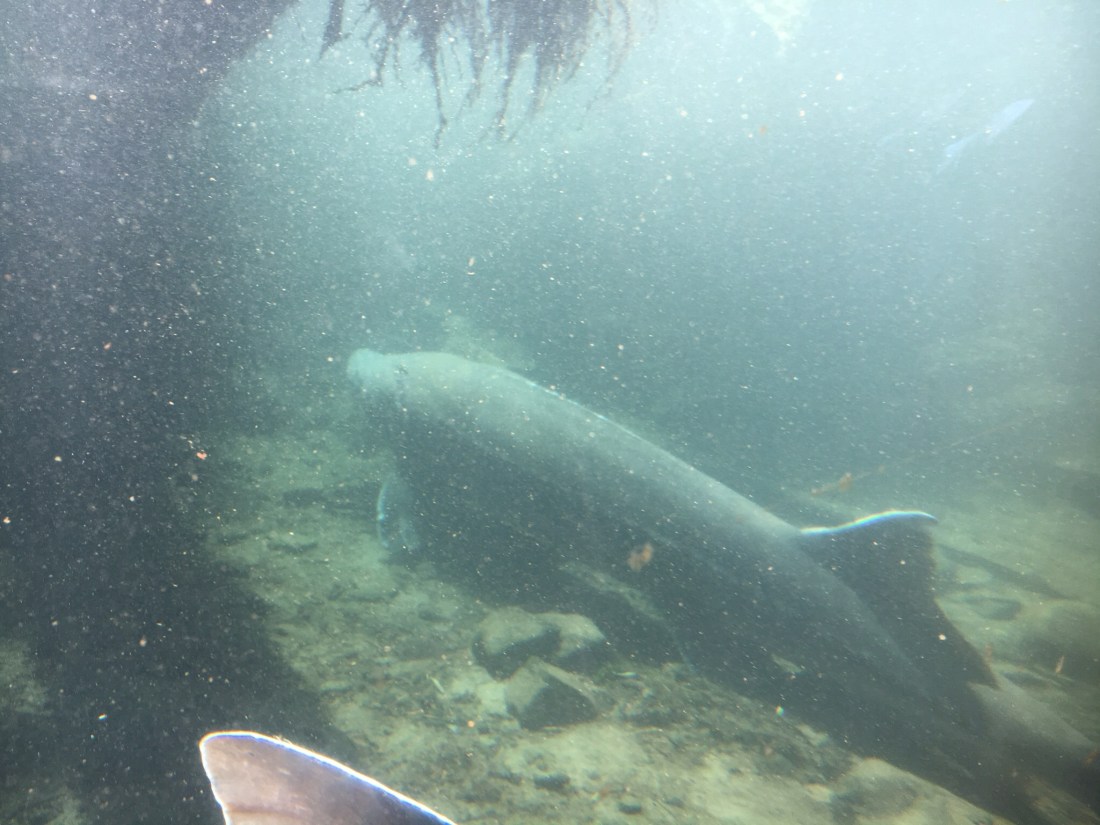 Take that, Spongebob. Herman was not evacuated last September during the Eagle Creek fire, although his keepers were worried about him. The Bonneville Dam wildlife specialists also have a program to protect salmon from the predations of the Northern Pike Minnow.
See http://www.pikeminnow.org The Fish and Wildlife Department offers a bounty on every pike minnow 9 inches or longer. It’s $6 each for the first 200, then $8 apiece. Catch a tagged fish and redeem it for $500. Each year there is an on-line leaderboard so the top twenty anglers get bragging rights as well as cash. This is a great example of managing both sport fishing and wildlife.
 JohnandJanet'sJourney